Rare 1817 Half Dollar Errors (List & Pictures)
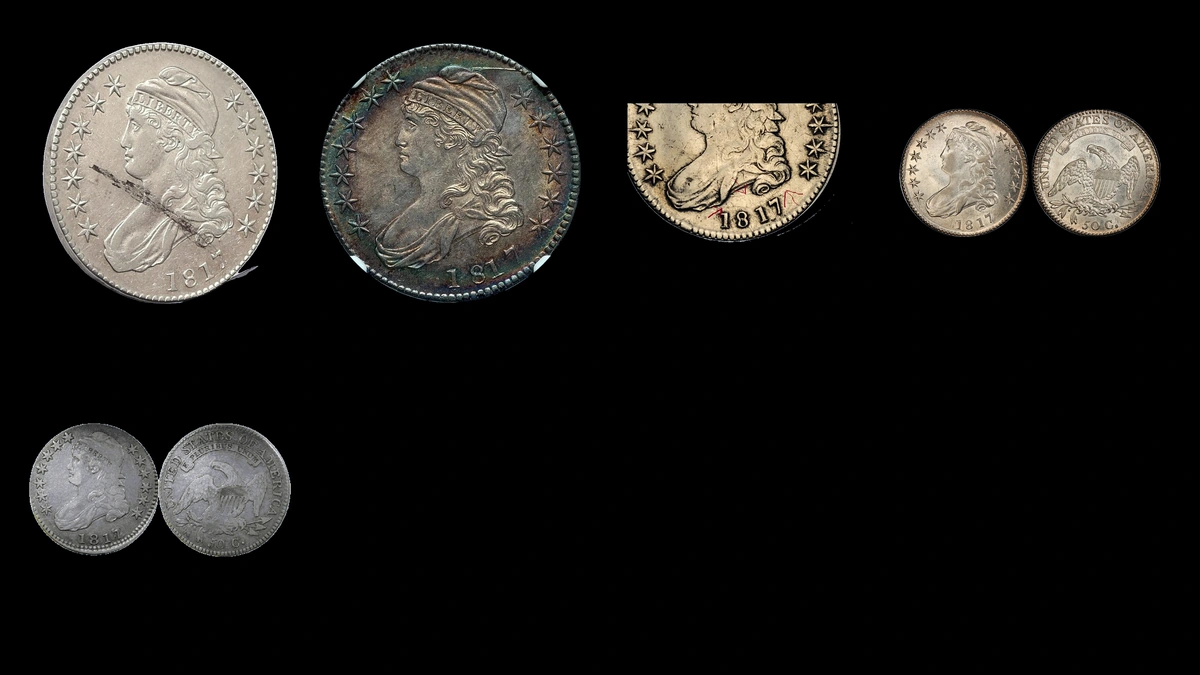
The six-figure prices attached to some 1817 Capped Bust half dollar errors need one important explanation: they belong to the rare 1817/4 overdate. An ordinary half with a small crack is a different price comparison.
A PCGS VF20 1817/4 sold for $288,000 in August 2024. Estimated ranges below run from $100–$350,000, with the coin’s variety and condition kept beside each figure.
Begin with the lettered edge, then inspect the surface and the position of both designs.
| Inspection route | What to look for |
|---|---|
| Read the edge | A second word sequence or completely missing lettering |
| Examine the surface | A peeling layer, blocked detail, or the Comet Head ridge |
| Compare the two pictures | A clash, flipover strike, or off-center blank |
| Check the rare 1817/4 separately | The Farley coin’s crack, shifted front, and rotated back |
The original standard was 13.48 grams and roughly 32.5 mm across, in an alloy about 89.24% silver. These Philadelphia halves have lettering around the edge, and wear can reduce their weight.
The O-numbers below identify different pairs of stamping tools. They help keep separate examples and their features from being mixed together.
1. 1817 Half Dollar A Second Word Sequence Appears: Repeated Edge Lettering Error
Catalog records include an ordinary-date O-105a and an 1817/3 O-101 with inverted repeated edge lettering. Neither requires a second portrait to explain the extra words.
The blank received edge lettering before the faces were struck. Another pass through the lettering machine could add a second sequence, with its direction reversed if the blank was turned over.
How to Identify
Read the words all the way around instead of judging which way they face relative to Liberty. Normal edge lettering can face either direction.
Use overlapping photographs to follow two separate sequences through several letters. The catalog records do not specify the exact overlapping words for these examples.
Turn a photograph to read an inverted second sequence when needed. One repeated stroke is weaker evidence than a second word that continues around the edge.
What It’s Worth
$250–$1,000 is the estimate for circulated ordinary-date examples with readable repetition. Comparable 1817/3 pieces may fall around $400–$1,600, including the overdate’s value.
A cleaned 1834 doubled-edge half in Fine Details sold for $220 in July 2026. That later worn and impaired coin is a comparison, not a recorded sale of either 1817 example.
2. 1817 Half Dollar No Words Remain around the Edge: Reported Missing Lettering Error
A 2006 Downey catalog reports a plain edge on an 1817 O-103. If the blank missed the lettering step, the front and back could still receive normal designs.
The listing also notes rim bumps. Local impacts are separate damage and cannot by themselves explain an entirely missing inscription.
How to Identify
Examine the full circumference under a magnifier for shallow letter bases. A worn area or a holder support can hide details without making the whole edge plain.
Check diameter and weight, then look for circular file marks or reduced edge metal. Normal measurements help but do not prove the edge is untouched.
Use several angles around a sealed holder rather than opening it. Record each rim bump separately from the claim of missing lettering.
What It’s Worth
$400–$2,200 is the estimate for a circulated 1817 with an original completely unlettered edge. Cleaning and rim damage lower its appeal.
The $220 cleaned 1834 doubled-edge sale gives only modest context for an edge abnormality. It does not establish equal rarity or value for missing lettering, and no sale amount is supplied for the 2006 O-103 entry.
3. 1817 Half Dollar A Front Layer Appears to Peel: Lamination Candidate Error
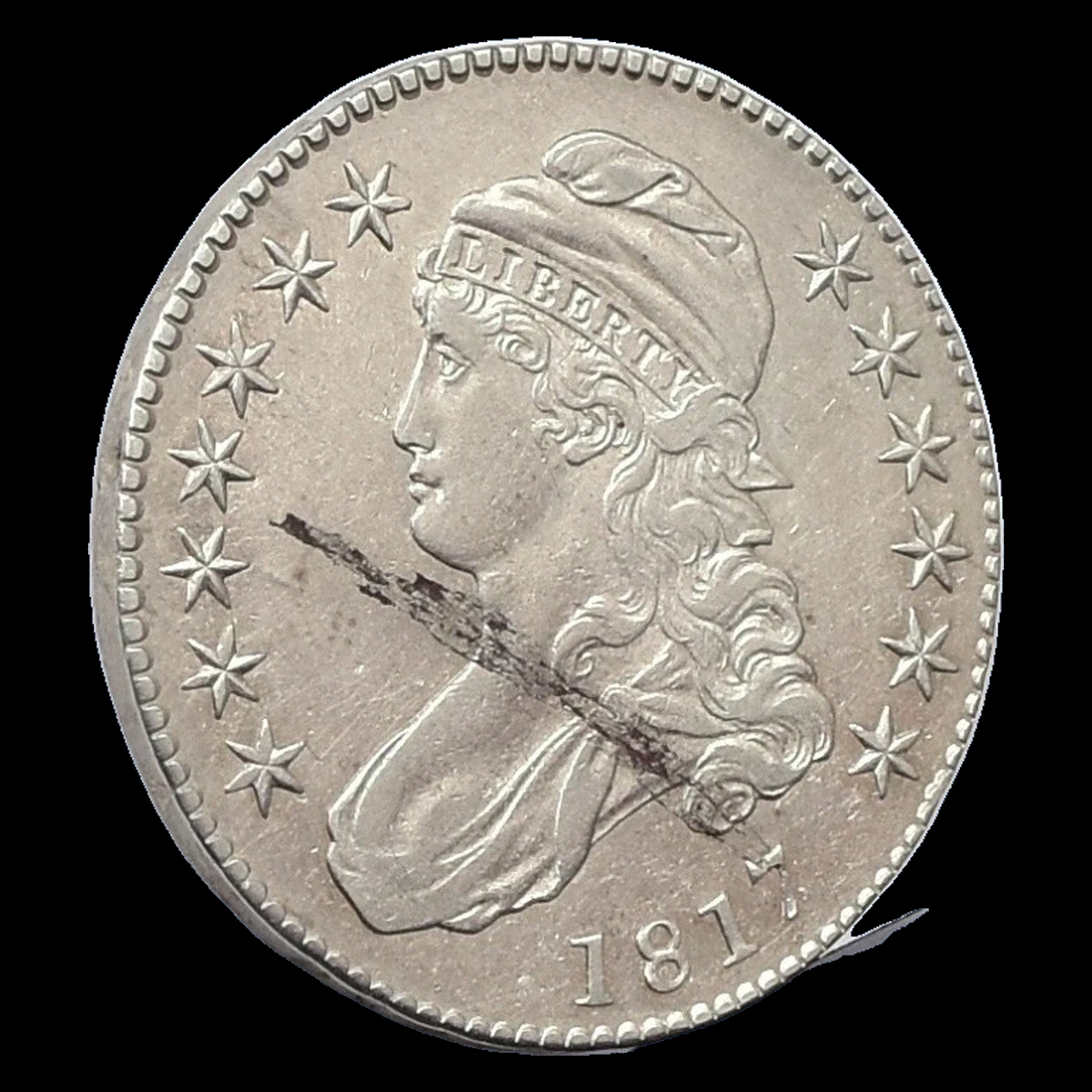
A seller describes an 1817 using both “damage” and “lamination.” Those are different explanations for an affected surface, so the label alone cannot decide the cause.
Lamination involves a weak layer separating within the original metal. Cutting or an impact can instead remove sound silver from a finished coin.
How to Identify
Inspect the boundary of the seller-reported feature. Look for a thin layer separating roughly parallel to the surface rather than a deep gouge with metal pushed to its sides.
Corrosion often leaves scattered pits instead of a peeling sheet. Do not lift an attached flap, because its original connection helps explain the separation.
What It’s Worth
$100–$450 is the estimate for an ordinary circulated 1817 with a modest genuine front lamination. This range is conditional on the feature being established.
An 1834 rim clip in XF40 sold for $263.25 in February 2026. It is a different blank defect on another date, not confirmation or a sale price for this seller’s coin.
4. 1817 Half Dollar A Local Patch Loses Detail: Reported Grease Strike-Through Error
A Downey sale record describes a grease strike-through on an 1817 O-107. Grease or debris filling the die’s recesses can prevent metal from forming the usual details.
The record does not identify the affected letters or location. A weak area on another coin cannot supply those missing specifics.
How to Identify
Compare the weak patch with nearby design of similar height. A local interruption beside sharper detail can differ from wear across exposed high points.
Use low light to look for polishing or deliberate smoothing. A normal O-107 comparison also helps rule out ordinary softness in the strike.
Weight and size can remain normal. The useful evidence is the transition between missing and well-formed detail without scraping marks.
What It’s Worth
$150–$500 is the estimate for moderately to lightly worn coins with a clear local interruption. A faint soft patch usually has less visual appeal than an obvious obstruction effect.
An 1833 half graded AU55, with central front grease streaks, sold for $253 in January 2006. That older result compares another year and is not a sale of the 1817 O-107.
5. 1817 Half Dollar A Ridge Extends from the Cap: Comet Head Error
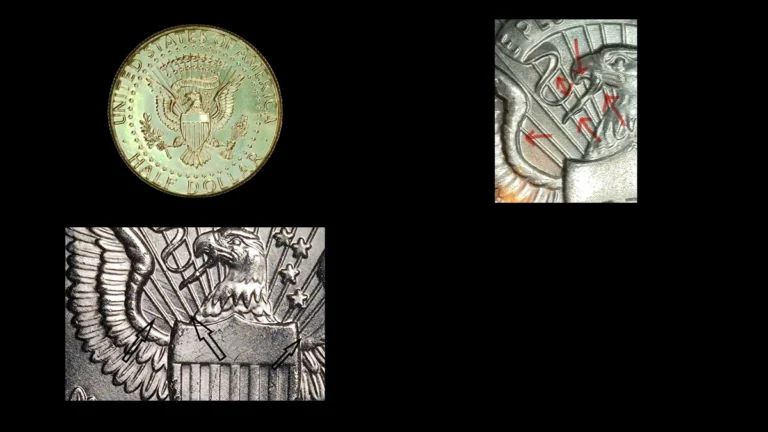
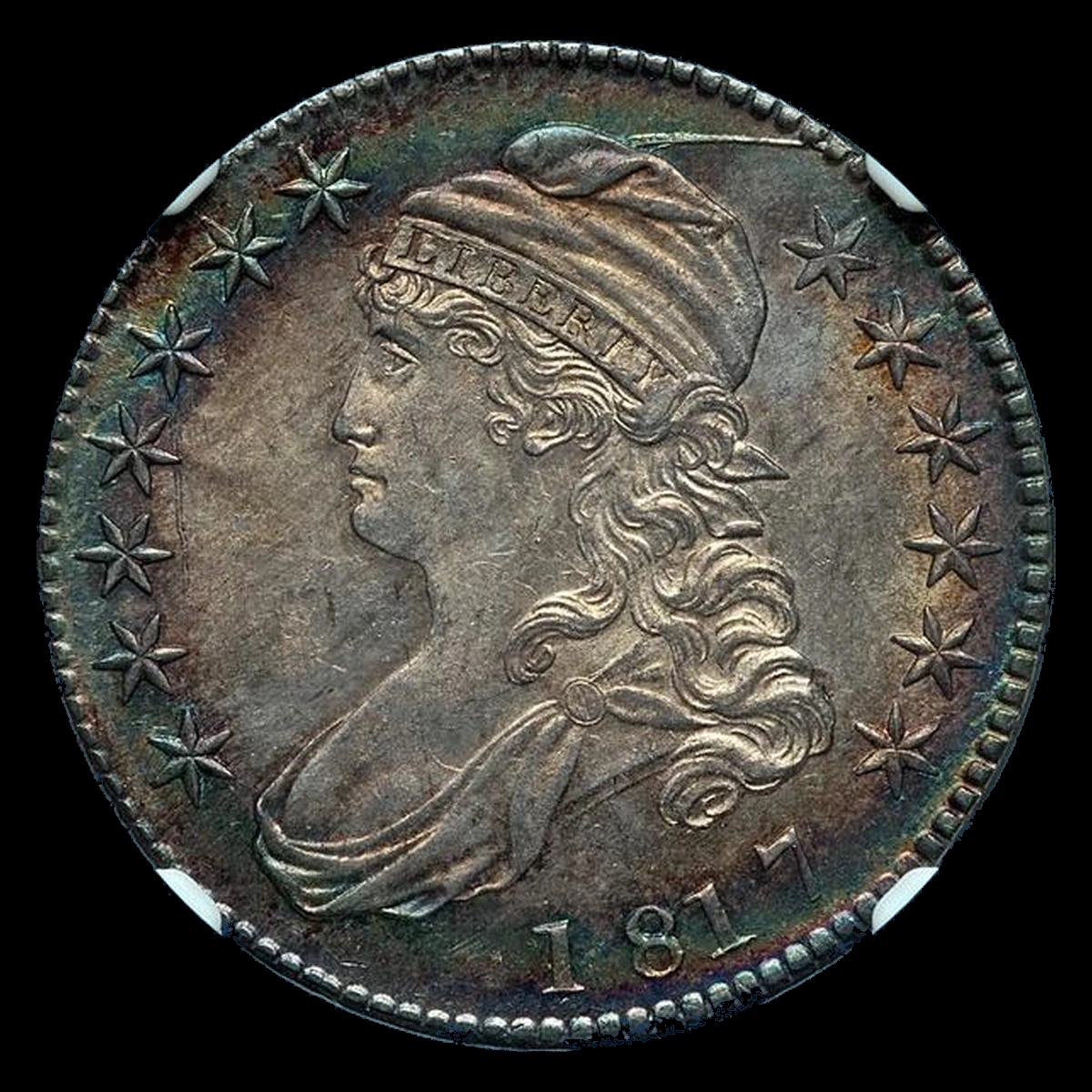
A heavy raised line runs from the top of Liberty’s cap toward the border above star eight. This repeated die defect gives the O-106 family its Comet Head nickname.
The ridge is not part of the intended portrait. Its shape alone does not establish exactly how the die was damaged.
How to Identify
Locate star eight and trace the ridge from the cap toward the border. Side lighting should show raised metal rather than a scratch cut into the coin.
Check for an attached deposit without cleaning the area. Compare the complete O-106 design, not just a bright line above the head.
Some associated examples lack an upper olive leaf on the back. That reverse feature needs a separate check and should not be assumed from the cap ridge.
What It’s Worth
$200–$1,000 is the estimate for ordinary circulated O-106 coins. Exceptional unworn Comet Head examples have a much higher estimated range of $25,000–$40,000.
A PCGS MS66 O-106 sold for $32,900 in September 2021. That figure prices a superb complete coin, rather than a fixed premium for one ridge.
6. 1817 Half Dollar Faint Opposite-Side Shapes Appear: Die Clashes Error
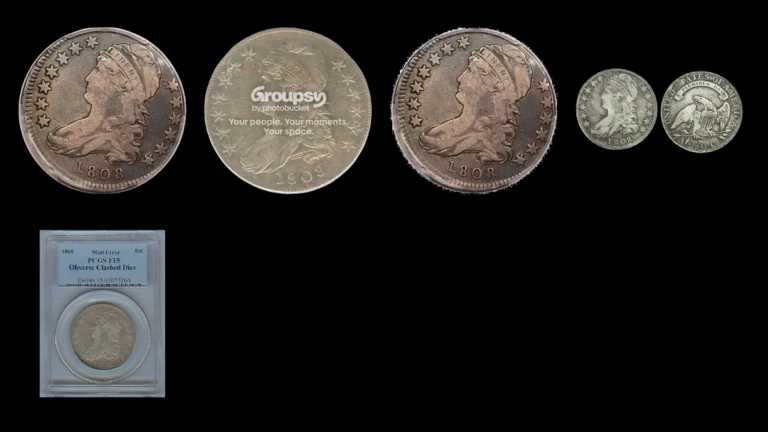
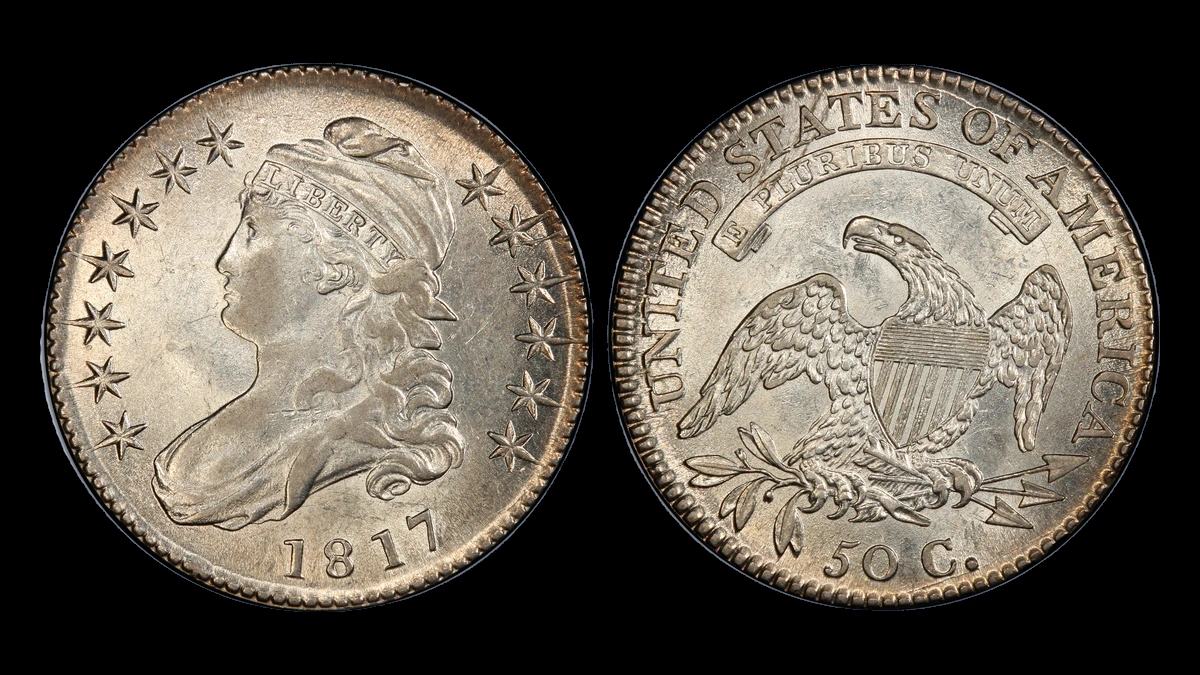
The buyer of the Newman 1817/3 described clash marks on both faces of the NGC MS64 coin. A clash forms when the two dies touch without a blank between them and exchange design traces.
The underlying 3 in the date came from a separate operation. It is part of the overdate, not a transferred clash mark.
How to Identify
Compare both designs and search for recognizable fragments copied from the opposite side. The buyer’s account confirms visible marks but does not map their exact positions.
Use several low lighting angles to distinguish physical detail from dark toning boundaries. Do not borrow another variety’s clash locations to complete this example’s description.
What It’s Worth
$300–$1,500 is the estimate for circulated 1817/3 examples with visible clashes. Similarly desirable unworn coins have an estimated range of $20,000–$35,000.
The Newman MS64 sold for $28,200 in November 2013. Its price includes the overdate, preservation, appearance, and collecting history; it does not isolate the value of its faint clash marks.
7. 1817 Half Dollar Liberty and Eagle Details Share a Face: Flipover Double Strike Error
A coin can flip between blows and meet the opposite die during the second strike. Parts of the front and back designs may then survive together on one side.
A recorded O-103 graded PCGS Fine12 shows this error. O-103 is also called Punctuated Date, but the small dot-like date feature is separate from evidence that the coin flipped.
How to Identify
Identify each surviving shape as part of Liberty’s side or the eagle side. Follow recognizable raised details through their overlaps instead of relying on isolated marks.
A sunken mirror image suggests a different kind of contact. Simple die-clash traces are usually fainter than the separate struck impressions needed here.
The listing does not name individual surviving letters or feathers. Use the matching coin’s photographs before assigning precise locations.
What It’s Worth
$450–$1,800 is the estimate for circulated examples with understandable overlapping designs. A worn coin can still display the sequence clearly.
The Fine12 O-103 sold for $528 on December 23, 2024. That recorded result shows why visible remnants matter alongside grade.
8. 1817 Half Dollar Both Pictures Miss Part of the Blank: Off-Center Strike Error
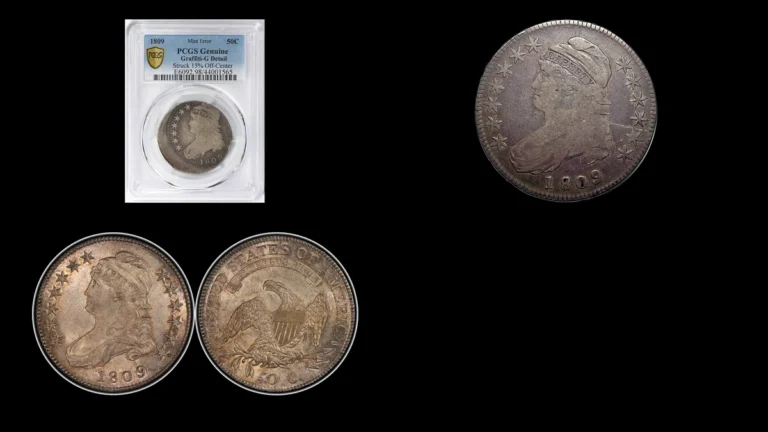
The Logan collection catalog described an O-105a as about one-eighth off center in 2002. Part of the design missed the metal while an area outside the dies remained unstruck.
This describes where the blank sat, not the angle of the eagle. The catalog provides no clock direction for the shift.
How to Identify
Keep the complete outline visible in photographs of both faces. Compare each design’s center with that same physical edge.
A misplaced blank affects both pictures, while one shifted die can leave the other face centered. Inspect the boundary of the bare area for original surface rather than later removal.
Check the edge lettering separately. A cropped image can make normal border detail seem missing.
What It’s Worth
$1,500–$5,000 is the estimate for a circulated 1817 with confirmed displacement around the reported amount. A readable date and an undamaged blank area improve the comparison.
An 1827 Square Base 2 O-128 struck 10% off center sold for $2,640 in September 2025 in VG8 condition. That heavily worn same-series coin is a different-year reference, not the price of the Logan example.
9. 1817 Half Dollar A Fine Raised Line Crosses the Rare Overdate: Die Crack Error
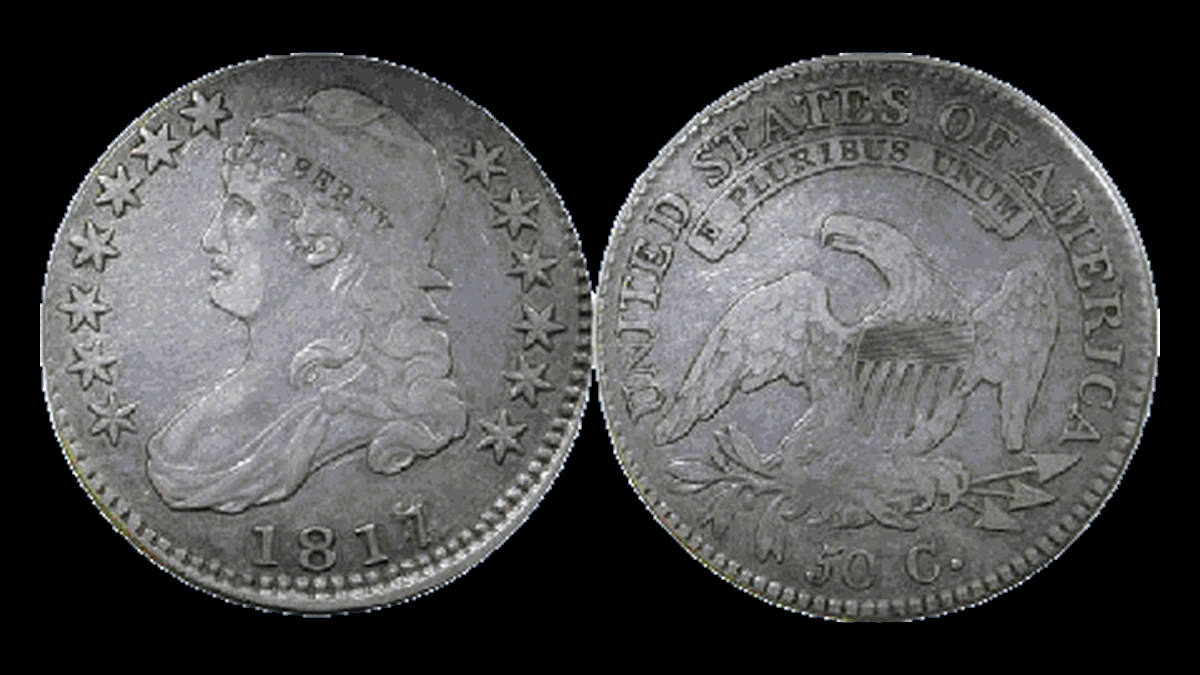
The Farley 1817/4 has a fine front crack running from above the cap toward the border beside the date. Silver entered a narrow opening in the die and formed a ridge on the coin.
This example’s rare date is crucial to its price. An ordinary 1817 with a line across the portrait is not equivalent to an 1817/4.
How to Identify
Establish the underlying 4 before comparing the crack. The rare overdate also needs specialist authentication.
Sweep low light across the cap and portrait to trace the raised path. A scratch cuts into the surface, while a toning streak changes color without creating a ridge.
Reverse cracks reported on O-106a belong to other dies. Their routes should not be borrowed from this front-side example.
What It’s Worth
$200,000–$350,000 is the estimate for comparable genuine, moderately worn 1817/4 coins. The exceptional rarity of the overdate drives this range.
A separate PCGS VF20 1817/4 sold for $288,000 in August 2024. The Farley coin itself sold for $132,000 in 2002.
These are whole-coin prices, not premiums for a thin crack. Ordinary-date coins require their own grade and variety comparisons.
10. 1817 Half Dollar Liberty Shifts but the Eagle Stays Centered: Misaligned Front Die Error
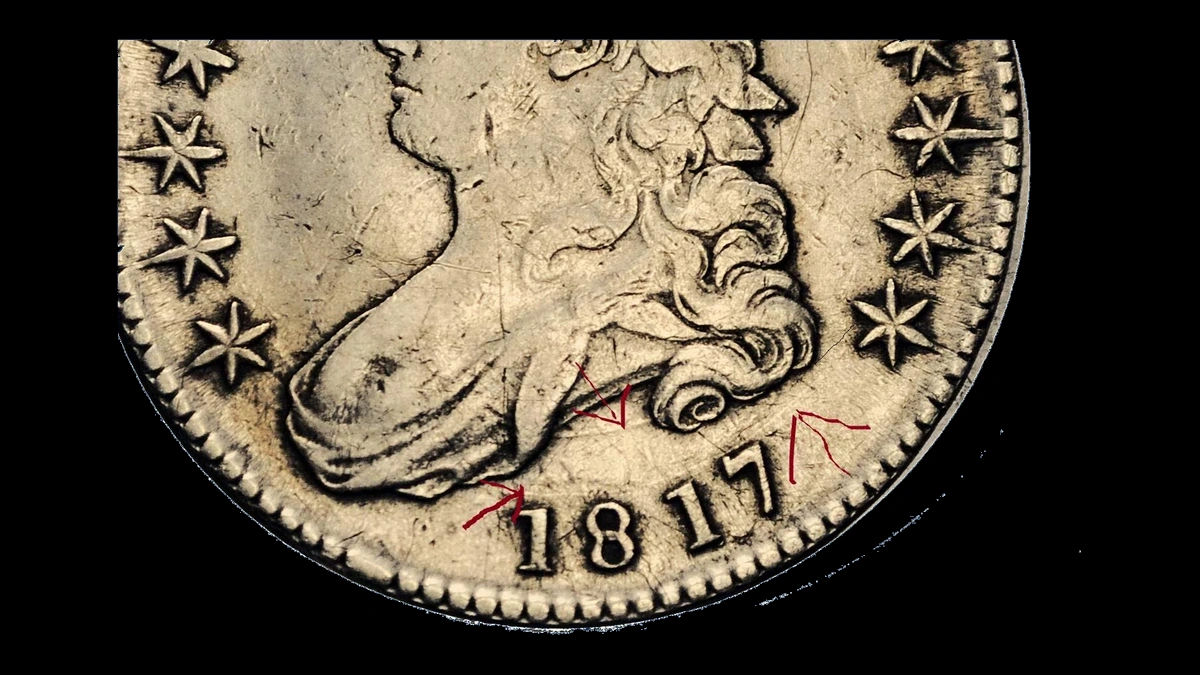
On the Farley 1817/4, Liberty is displaced toward eleven o’clock. About a millimeter of bare metal shows below the date, while the eagle remains centered.
One die sat sideways relative to the other. The same coin also has the crack above and a rotated reverse, but those features answer different questions.
How to Identify
Align the photographs by the coin’s outer edge, not by centering each picture separately. Compare Liberty and the eagle against that fixed outline.
The key pairing is a shifted front and a centered back. If both pictures move together, investigate an off-center blank instead.
Inspect the bare area below the date for scraping. A wider rim alone cannot distinguish these causes.
What It’s Worth
$200,000–$350,000 remains the comparison range for the rare Farley overdate at a comparable worn grade. This is the same whole-coin range used above, not another amount to add.
An ordinary 1817 with a demonstrated modest front shift would instead have an estimated range of $200–$800 in moderately to lightly worn condition. A one-sided shift does not create the value of the rare date.
11. 1817 Half Dollar The Back Finishes at an Angle: Rotated Reverse Error
The Farley coin’s reverse is reported about 30 degrees counterclockwise from normal. That angle is separate from the sideways position of Liberty on the front.
A die can turn in its mounting while its picture remains centered. The Farley catalog account records the relationship on this particular coin.
How to Identify
Hold Liberty upright and flip straight from top to bottom without twisting sideways. A normally aligned coin should finish with the eagle upright.
Repeat against a fixed vertical line and measure the remaining tilt. Separately straightened photographs hide the relationship rather than demonstrating it.
A different 1817 needs its own measurement. Neither the Farley angle nor its minting history should be assigned by resemblance alone.
What It’s Worth
$150–$600 is the estimate for an ordinary circulated 1817 with similarly clear moderate rotation. Condition and surface quality affect that practical comparison.
The genuine Farley 1817/4 remains in the $200,000–$350,000 comparison range because it is the same rare overdate discussed in the previous two sections. Its crack, shifted front, and rotated back do not produce three separate six-figure values.
Conclusion
The edge can reveal an error even when both faces look normal, and the faces can preserve several different minting events on one coin. Follow each feature’s physical evidence instead of treating every unusual line as the same problem.
Most importantly, establish the date variety before using the largest price ranges. The Farley example’s three listed features belong to one rare 1817/4 and one whole-coin valuation.