Rare 1920 Half Dollar Errors (List & Pictures)
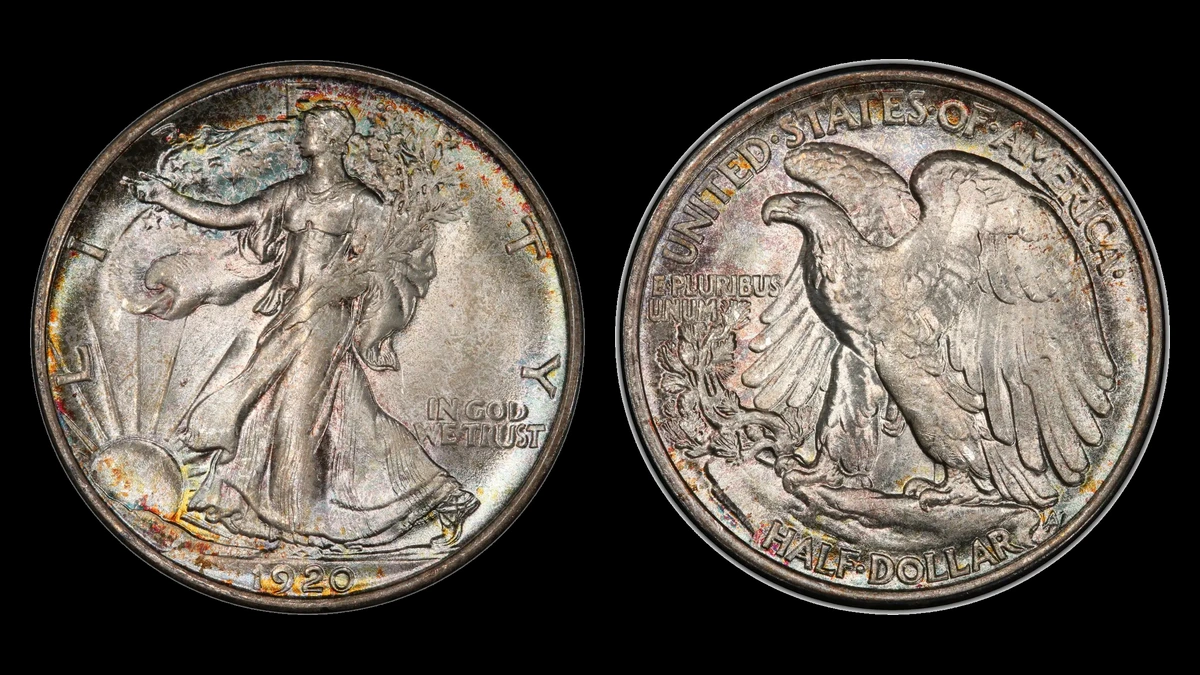
A missing piece of silver and a missing piece of design point to different causes. That distinction is a useful start when investigating the 1920 half dollar errors discussed here.
Candidate estimates span $75–$15,000, informed by other Walking Liberty examples including an undated double strike sold for $11,400 in August 2025. Inspect the outline and overlapping designs first, then compare small front and back details.
| Observation | Area to check | Candidate type | Estimated value |
|---|---|---|---|
| A section of metal is absent | Rim, gap, and opposite border | Clipped planchet | $75–$350 |
| Plain metal opposite design loss | Both faces | Off-center strike | $3,000–$12,000 |
| Two displaced impressions | Large design details and rims | Double strike | $5,000–$15,000 |
| Extra raised front outlines | Date and lettering | Doubled die obverse | $100–$2,500 |
| Extra raised back outlines | Eagle and reverse letters | Doubled die reverse | $100–$2,200 |
The supplied comparisons do not establish confirmed 1920 specimens or same-year sale results for these candidates. A normal half is 90% silver, weighs 12.50 grams before wear, measures about 30.6 mm, and has a grooved edge.
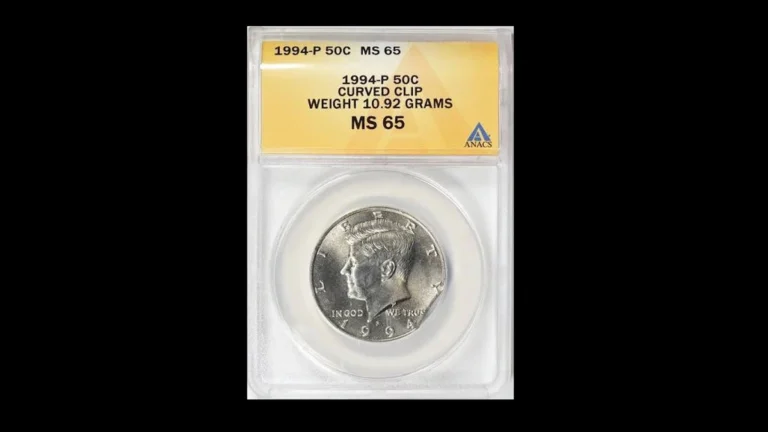
1. 1920 Half Dollar Silver Missing From the Outline: Clipped Planchet Error
A planchet is the blank prepared for striking. If blank-cutting equipment overlaps an earlier hole in the strip, it can produce a curved gap; the strip’s edge can produce a straight or irregular missing portion.
The incomplete piece then receives its design around that boundary. Cutting a section from a finished half dollar creates a different surface history.
How to Identify
Inspect the gap under low lighting from the front, back, and edge. Saw marks, freshly sharp metal, and crushed lettering suggest work done after the design was struck.
The weight should be below the unworn standard in a way consistent with the missing silver and circulation wear. Measure across an undamaged portion to assess the original diameter.
Check the rim opposite the clip for supporting weakness, called the Blakesley effect. It can help an assessment, but its presence or absence is not a complete authentication test.
What It’s Worth
Comparative estimate: $75–$350 for an identified 1920 candidate. The clip’s size, surface quality, mint, and underlying coin grade all affect that estimate.
A 1942-S rim clip graded ANACS MS62 brought $81.90 including fees in May 2025. That later, unworn comparison is not a 1920 sale.
2. 1920 Half Dollar Blank Metal Opposite Missing Design: Off-Center Strike Error
A blank positioned partly outside the dies can keep an unstruck crescent while losing part of the intended design beyond its edge. The missing element is the impression, so the coin can still retain close to its normal weight.
A readable 1920 date is needed to apply this year’s comparison. An undated shifted design cannot acquire a date from its appearance alone.
How to Identify
Follow both designs to the points where they run off the metal. Their losses should agree with the position of the untouched crescent.
A wide coin retaining all its design suggests another striking issue. One shifted face with a centered opposite face instead points toward die misalignment.
Examine the unstruck area for grinding that may have erased an existing design. Photograph the surviving date, whole outline, and both faces together in the inspection record.
What It’s Worth
Comparative estimate: $3,000–$12,000 for an authenticated candidate with a readable date and clear displacement. Percentage alone cannot determine its price.
A ten-percent off-center 1918 graded PCGS MS65 sold for $10,575 in April 2013. Its strong unworn condition and different date remain essential limits on the comparison.
3. 1920 Half Dollar Two Large Design Impressions Overlapping: Double Strike Error
A coin that stays in the press can receive another blow. Movement between the blows changes the position of the second impression, allowing parts of the first design to survive beside or beneath it.
Large portrait, eagle, and rim details can reveal that movement more clearly than one small doubled letter. A doubled die, discussed below, already contains its repeated detail before making a single strike.
How to Identify
Trace a large surviving element from each impression separately. Check how the two sets of rims, designs, and any blank areas fit together.
Look for places where the later blow covered or flattened the earlier image. Impressions from squeezing finished coins together may be sunken and mirror-imaged instead.
Keep both faces, readable date, and mintmark available for review. A substantial strike can change the outline, so measurements should document the object rather than force it into normal dimensions.
What It’s Worth
Comparative estimate: $5,000–$15,000 for a substantial authenticated 1920 double strike. No same-year completed sale is supplied.
An undated San Francisco Walking Liberty double strike sold for $11,400 in August 2025. It was PCGS AU53 with the second impression ninety percent off center.
That dramatic arrangement explains the comparison’s appeal. It neither dates the coin to 1920 nor makes a ninety-percent second shift a requirement for every double strike.
4. 1920 Half Dollar Extra Raised Strokes in the Date or Letters: Doubled Die Obverse Error
The front, or obverse, offers practical places to examine a candidate in its date and lettering. Repeated design in the steel die can produce an extra outline on the coin without requiring two blows.
No fixed direction or mint is established for 1920 in this general entry. A genuine local feature also need not repeat across every part of Liberty’s portrait.
How to Identify
Follow a suspicious letter from its main stroke into the extra shape. Look for rounded separation or a real notch rather than a low flat ledge.
Compare nearby features and a normal 1920 front under the same light. Wear and bright reflections can make a false edge appear convincing in a large photo.
Use magnification on the metal itself and record the mint. The test is whether the specific repeated shape is real and consistent, not whether the whole coin looks generally doubled.
What It’s Worth
Comparative estimate: $100–$2,500 across conditions for an identified candidate. Genuine repeated detail and the coin’s underlying grade are both required for a useful valuation.
A 1939-D FS-101 graded NGC MS67+ realized $2,160 in April 2025. Its exceptional unworn grade belongs to that later established variety, not a routine price for any doubled-looking 1920 letter.
5. 1920 Half Dollar Repeated Reverse Letters or Eagle Detail: Doubled Die Reverse Error
On the back, examine HALF DOLLAR and the eagle for an actual extra stroke or repeated junction. These are inspection areas rather than confirmed diagnostic markers of a named 1920 variety.
Repeated detail in the reverse die can leave rounded additional shapes. Movement during an individual strike may instead produce shallow shelves beside the design.
How to Identify
Set a normal reverse beside the candidate at equal size. Pick one specific feature and compare its shape instead of judging the many crowded eagle lines together.
Move the lamp to rule out a reflection and inspect whether the main stroke has been flattened or narrowed beside a shelf. A convincing duplicate should have raised design character that remains visible under different lighting.
Verify the front’s date and retain the reverse mintmark in photographs. The well-known 1946 doubled reverse illustrates the category but cannot supply an attribution for 1920.
What It’s Worth
Comparative estimate: $100–$2,200 for an identified 1920 candidate. Strength of the actual feature and overall preservation determine the appropriate comparison.
A 1946 DDR FS-801 graded NGC MS65 brought $2,040 at Heritage in November 2024. That later recognized variety in a high unworn grade informs the upper estimate without establishing a 1920 sale.
Conclusion
First decide whether metal is absent, design is displaced, or two impressions overlap. Then investigate small repeated shapes for evidence of a doubled die rather than movement during striking.
The $75–$15,000 candidate estimates use explicitly labeled comparison coins from other dates or an undated example. A readable 1920 date, verified feature, and matching condition are necessary before applying those ranges to a particular half dollar.