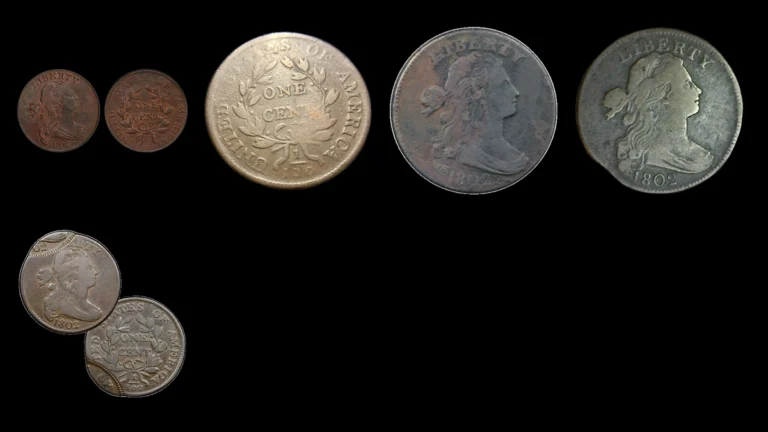
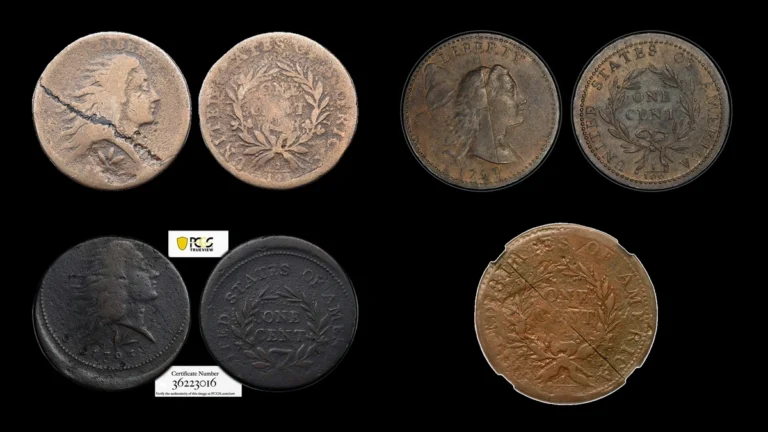
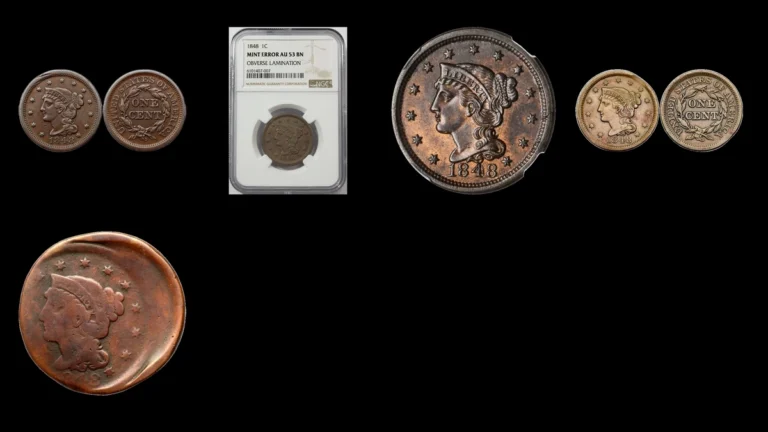
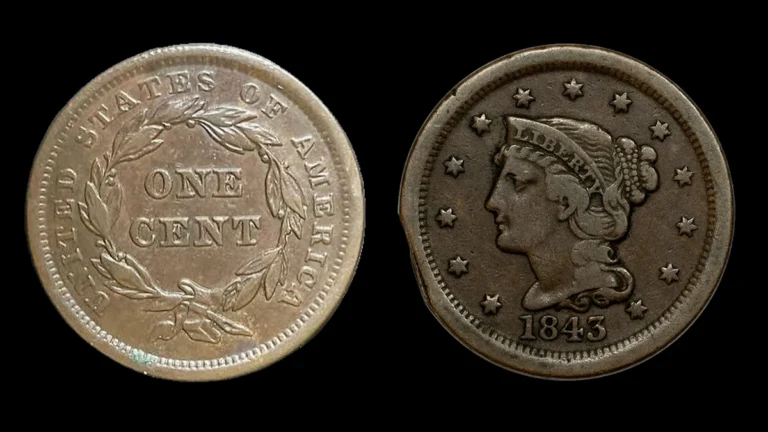
Rare 1973 Penny Errors (List & Pictures)
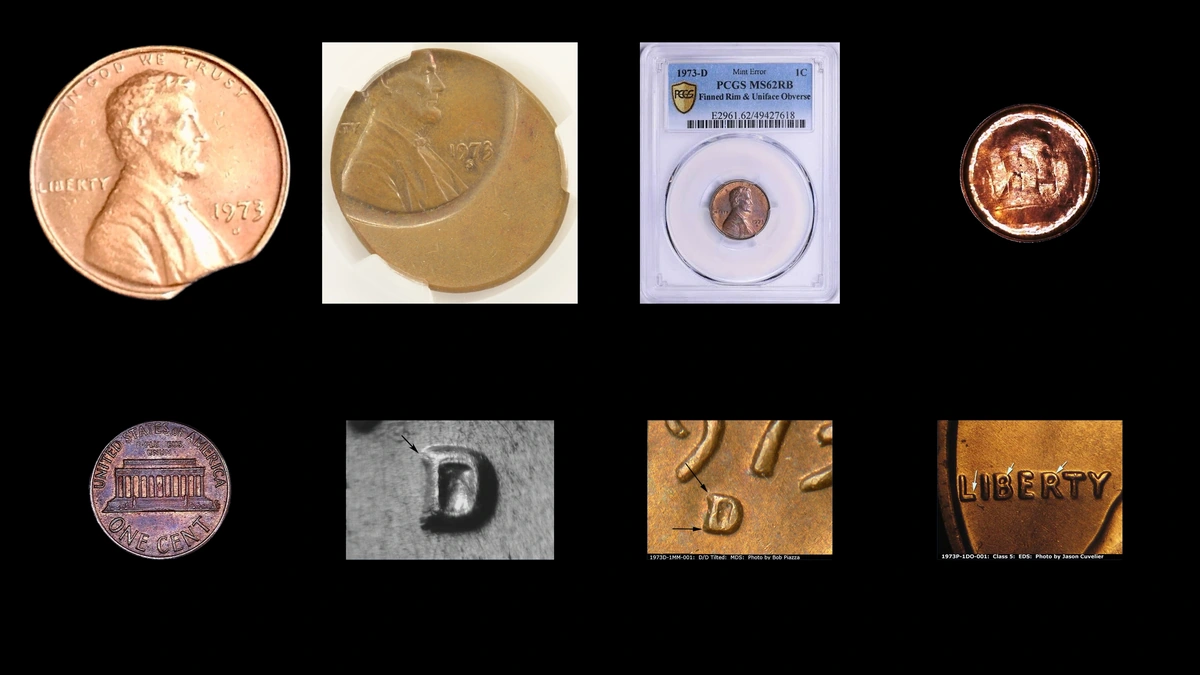
Two denominations on one piece explain the strongest recorded sale among these 1973 penny errors: a Denver cent struck over a finished dime brought $4,560 in July 2022. A small oddity in the D can be worth only a few dollars.
The estimated span is $1–$6,000. Check the metal and surviving designs first, work around the outline and interrupted surfaces, then inspect the small letter details.
| What stands out | Possible cause | Estimated value |
|---|---|---|
| Dime detail under cent detail | Double denomination | $1,000–$6,000 |
| Small pale disc with cent designs only | Dime planchet | $200–$3,000 |
| Thin disc with split texture | Split before striking | $10–$300 |
| Section absent at edge | Clipped blank | $10–$250 |
| Large unstruck area | Off-center strike | $15–$750 |
| Overlapping cent impressions | Double strike | $100–$4,500 |
| One face blank-looking | Uniface strike | $50–$450 |
| One face softened and stretched | Late-stage cap strike | $25–$400 |
| Depression interrupts design | Struck-through debris or fragment | $10–$600 |
| Raised patch or letter-space bar | Die break or BIE | $3–$1,500 |
| D has split-looking tips | Damaged mintmark punch | $1–$25 |
| Recognizable additional D strokes | Repunched mintmark | $3–$100; questioned mark $1–$15 |
| Extra front lettering or digit detail | Doubled die obverse | $5–$200 |
| Notches in Memorial-side letters | Doubled die reverse | $5–$150 |
Ordinary 1973 cents use copper alloy throughout, weigh 3.11 g, and measure 19.05 mm across a plain edge. A scale, calipers, and a 10× magnifier help document an accessible coin without cutting, scraping, or polishing it.
1. 1973 Penny Dime Detail Survives beneath Lincoln: 1973-D Double Denomination Error
Look for an older design crossing the cent impression. A finished dime that entered the cent press already carried a portrait and lettering before receiving Lincoln and the Memorial.
This sequence makes the coin a double-denomination error. The PCGS-certified Denver specimen in the record came from the Fred Weinberg Collection.
How to Identify
Trace one unmistakable dime feature into other surviving details on both faces. Random scratches cannot establish the earlier design, and the dime’s date must be read separately from the cent’s date.
A clad dime starts near 2.268 g and 17.9 mm, although striking with larger cent dies can spread it. Smaller pale metal without recognizable earlier design instead fits an unused dime blank.
What It’s Worth
Authenticated cent-over-dime pieces have an estimated $1,000–$6,000 range. Clear remnants of both denominations make the unusual sequence easier to demonstrate.
Heritage sold the PCGS MS63 example for $4,560 in July 2022. Its price belongs to a struck dime receiving a cent design, not every cent on dime-sized metal.
2. 1973 Penny Cent Lettering Runs beyond a Small Pale Disc: 1973-D Dime Planchet Error
A planchet is a prepared blank before it receives coin designs. If a dime planchet reaches the cent press, its smaller area may leave outer Lincoln or Memorial details without enough metal.
Several Denver specimens are recorded. Unlike the double denomination, these need no underlying Roosevelt design.
How to Identify
Compare dimensions and composition with the clad-dime references above, allowing for expansion. Inspect the layered edge and design limits rather than relying on white color.
Added plating can change a normal cent’s appearance without producing the correct metal or dimensions. Professional testing can establish composition without scraping the edge.
What It’s Worth
The estimated range is $200–$3,000. Differences in preservation and surviving design help explain the varied recorded results.
A PCGS MS62 example brought $336 in July 2022, while a cleaned 2.29 g piece brought $312 in September 2024. A separate NGC MS64 coin brought $2,440 in June 2026; the 2.29 g measurement belongs only to the cleaned specimen.
3. 1973 Penny Design Covers Rough Internal Metal: 1973-D Split before Striking Error
The recorded 2.00 g cent is substantially lighter than an intact copper-alloy blank. A weak internal layer separated before the remaining metal received its designs.
Struck detail can therefore lie over the rough split surface. The ICG description also notes damage, a separate issue from the original manufacturing fault.
How to Identify
Follow the design across the exposed internal texture to establish which came first. A finished coin losing a layer afterward has a different relationship between separation and design.
Inspect thickness and edge for grinding that could also reduce weight. Another genuine split piece need not match this specimen’s exact 2.00 g.
What It’s Worth
Identified split-before-strike cents have an estimated $10–$300 range. Clear split texture and undamaged surfaces support stronger comparisons.
The auction index records $11 in December 2008 for the damaged 2.00 g example. Its unworn Details assessment recognizes damage rather than granting an ordinary straight grade.
4. 1973 Penny A Piece Is Missing from the Boundary: 1973 Clipped Blank Error
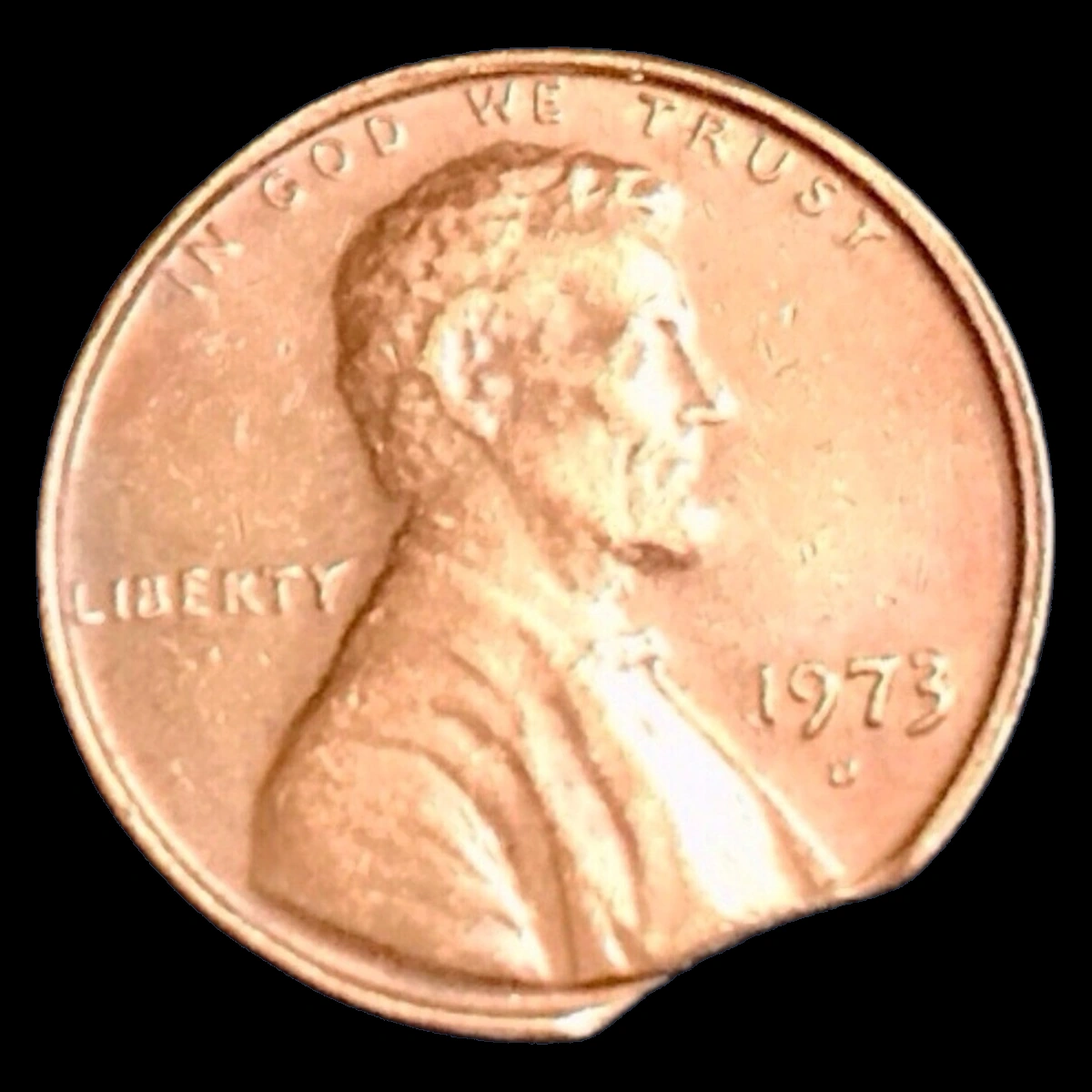
An incomplete blank can receive a normal strike after metal was omitted during blank cutting. A curved bite may result when the punch overlaps an earlier hole in the strip.
Straight missing sections can have a different preparation origin. The year report does not require one mint, shape, or clock position.
How to Identify
Examine how nearby letters and rim approach the gap. Gentle fading or stretching fits missing metal before striking better than a saw cut through fully formed lettering.
Check the opposite rim for related weakness where appropriate and inspect the missing boundary edge-on. Neither low weight nor a smooth notch proves authenticity alone.
What It’s Worth
Genuine clips have an estimated $10–$250 range. Size, recognizable date, and quality of the remaining surface affect the comparison.
No transaction is assigned to a specific illustrated 1973 clip in the supplied report. A dramatic later cut remains damage regardless of the amount removed.
5. 1973 Penny Most of the Metal Never Meets the Design: 1973 Off-Center Strike Error
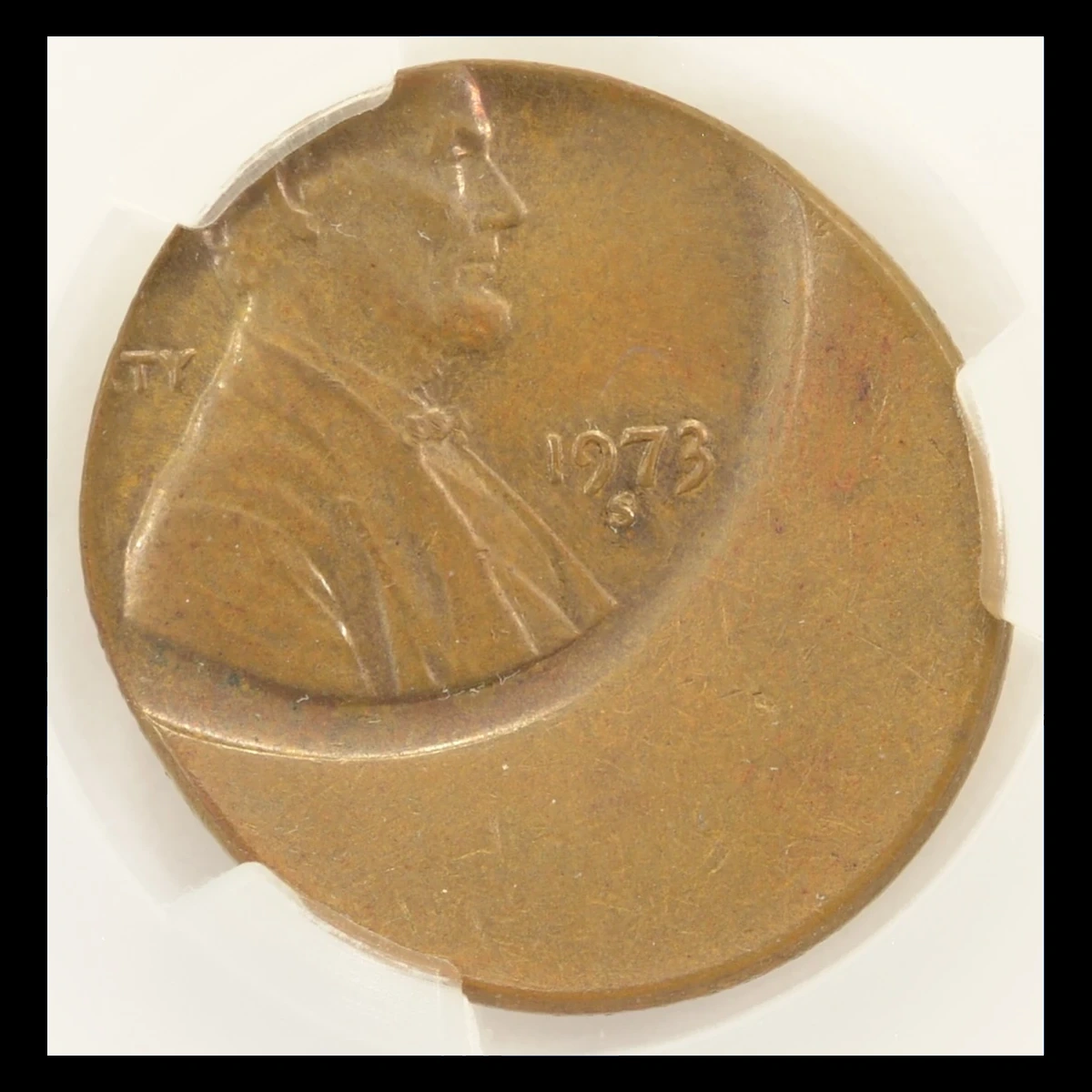
The documented Philadelphia coin has a small struck area after landing about ninety percent off center toward ten o’clock. The rest of the disc remains present as unstruck metal.
This is one displaced strike. A large blank area does not itself prove the coin received two blows.
How to Identify
Read the surviving date and follow one coherent impression on each face. A second strike requires its own repeated or overlapping design evidence.
Inspect the boundary between struck and blank metal for abrasion. Removing an ordinary design afterward produces a different surface history.
What It’s Worth
Identified off-center examples have an estimated $15–$750 range. A readable date and pleasing surviving detail can matter as much as displacement.
The ninety-percent Philadelphia coin in ANACS MS63 Red and Brown brought $396 in January 2022. That sale concerns the single-strike example, not the separate Denver double strike discussed next.
6. 1973 Penny Separate Cent Impressions Overlap: 1973 Double Strikes Error
A San Francisco Proof received two off-center blows, first about fifty percent toward seven o’clock and then about twenty-five percent toward five. No blank separated those blows.
Separate Denver coins include a flipover with one side blocked on the second strike and another with its second strike ninety percent off center. They represent different movements of the coin between blows.
How to Identify
Trace each impression independently; a flipover can put Lincoln and Memorial traces on the same face. Inspect blocked areas in the Denver examples without transferring those features to the Proof.
The Proof’s S missed the metal, while its collector finish supports the mint attribution and the curved top of the last digit helps identify 1973. Do not invent a visible mintmark where none survived.
What It’s Worth
Denver double strikes have an estimated $100–$1,500 range; comparable Proof errors are estimated at $2,000–$4,500. Finish and the clarity of each impression make a substantial difference.
The NGC PR65 Red Proof brought $3,000 in August 2020. The MS65 Brown Denver flipover brought $1,320 in November 2020, and the separate ninety-percent second-strike coin brought $396 in January 2022.
7. 1973 Penny One Face Lacks Its Normal Design: 1973-D Uniface Strike Error
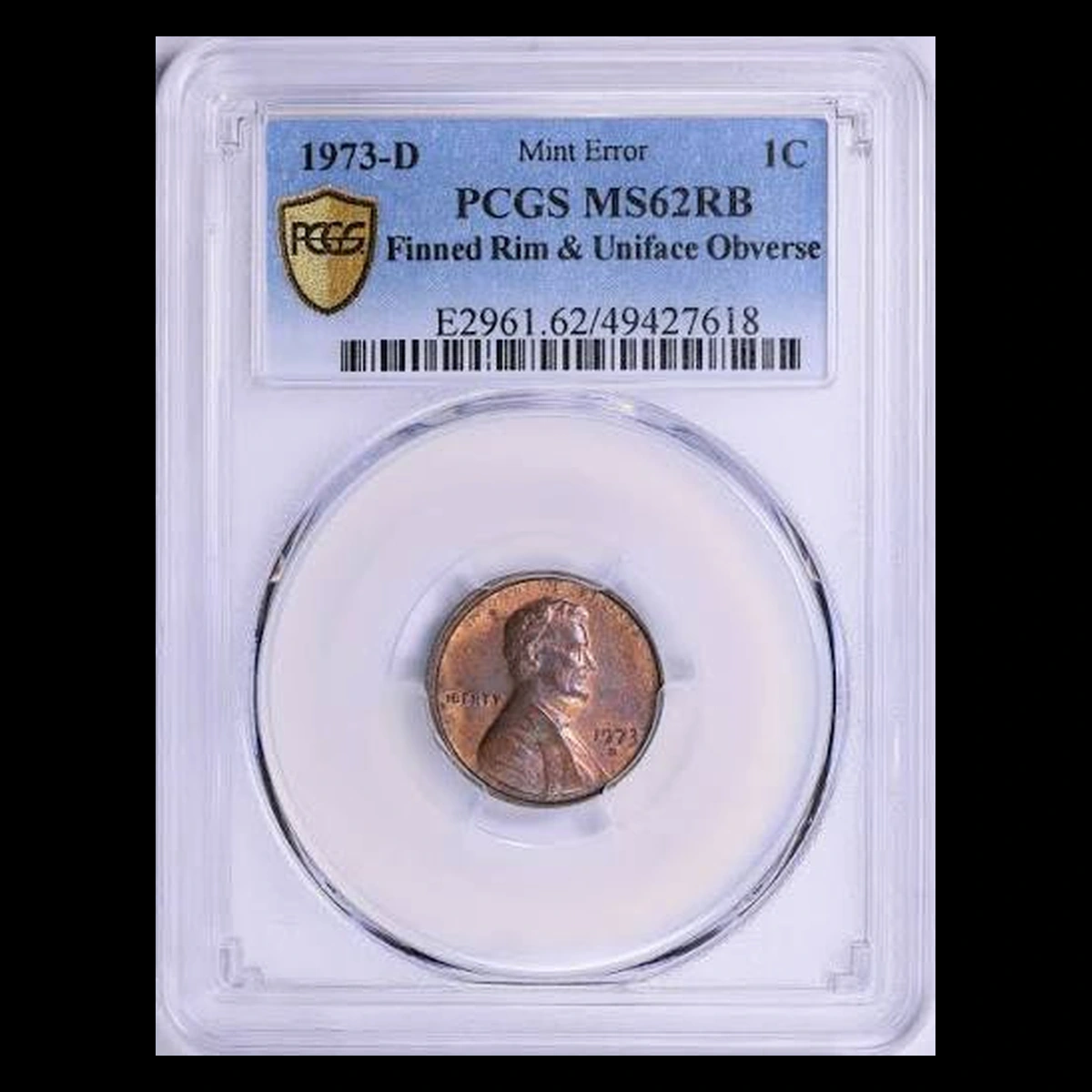
A blank can block one die when two discs enter the striking area together. One coin then receives a strong design on its exposed side while its other face presses against blank metal.
The listed Denver example is described as “uniface reverse.” That label must be read alongside both faces before deciding which surface was blocked.
How to Identify
Photograph the design-bearing face and the smooth-looking face as parts of the same object. Where a date or mintmark is not visible, retain the holder’s attribution without claiming to see it.
Look for original texture continuing into the edge and inspect for grinding grooves. Artificially smoothing a finished coin can imitate the broad appearance.
What It’s Worth
The estimated range for identified one-sided strikes is $50–$450. Preservation of the blocked surface is especially relevant to evaluation.
The auction index records $80 in August 2004 for the NGC MS65 Brown example. That old result concerns an unworn certified coin rather than a mechanically smoothed penny.
8. 1973 Penny A Soft Stretched Design Faces a Clearer One: 1973-D Late Cap Strike Error
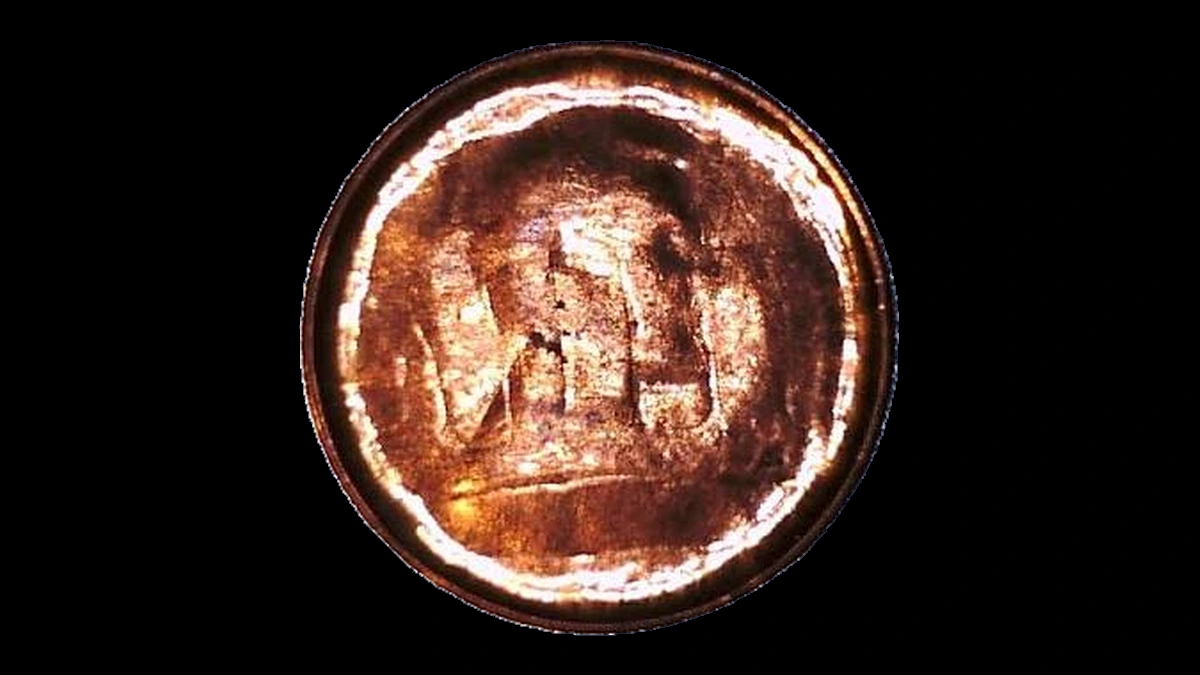
A previously struck coin can stick over a die and become a cap. As repeated strikes thin that covering, the underlying die design begins to show through it more clearly.
The recorded Denver cent received a strike through such a late-stage covering. It is the coin beneath the cap, not necessarily the cup-shaped cap itself.
How to Identify
Compare both faces under the same light and follow soft or stretched design into clearer areas. The relationship between the surfaces is more useful than one weak letter.
Wear tends to affect exposed high points, while polishing leaves its own surface disturbance. Neither should be confused with detail formed through a thin metal covering.
What It’s Worth
Identified late cap strikes have an estimated $25–$400 range. Stronger visible distortion can help explain the error when original surfaces survive.
A PCGS AU58 example brought $31 in October 2022. Its slight circulation wear and relatively modest result do not establish the value of an actual deep cap.
9. 1973 Penny A Depression Interrupts the Design: 1973-D Strike-Through Error
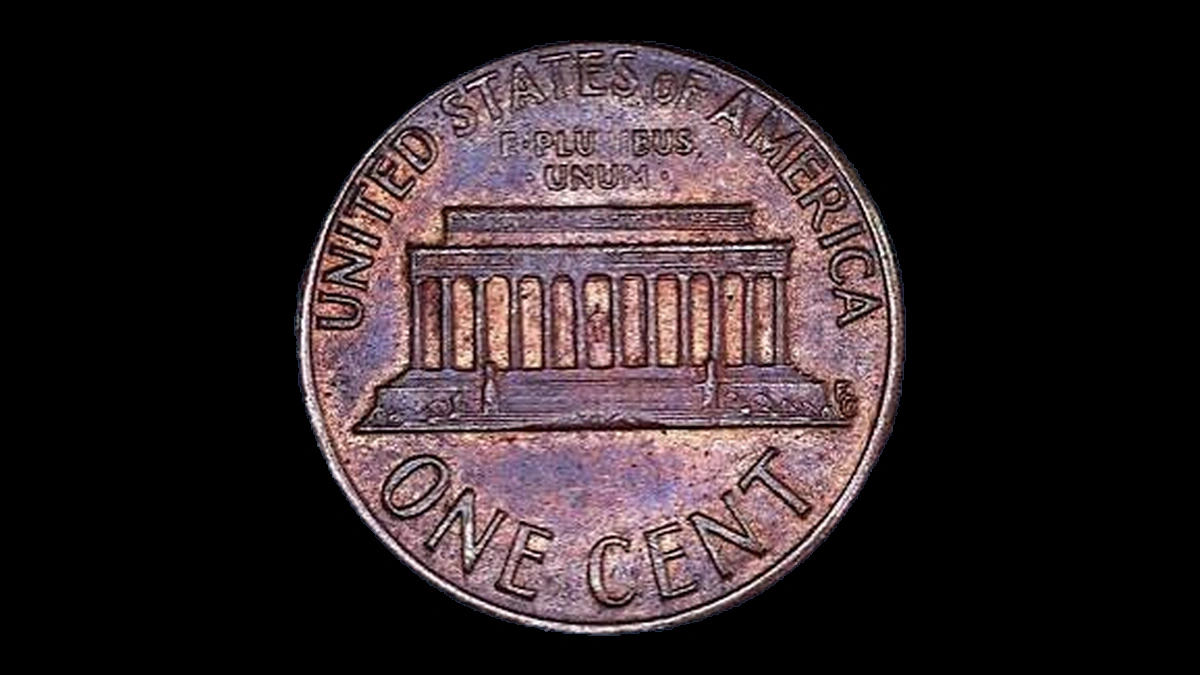
Foreign material between a blank and die can leave a hollow after it falls away. One Denver record identifies a previously struck fragment, while another concerns detached debris.
A fragment may retain or transfer recognizable coin detail. Ordinary debris need not leave such an identifiable pattern.
How to Identify
Study the hollow’s boundary for design interrupted during formation. Fresh burrs or a gouge cutting finished lettering suggest a later impact.
Only name a struck fragment when recognizable evidence supports that identification. An empty depression does not prove an object is still retained or identify its material.
What It’s Worth
Detached-debris impressions have an estimated $10–$150 range, while identified struck-fragment examples are around $100–$600. Clear transferred detail can make the latter more distinctive.
The fragment example in NGC MS65 Brown brought $228 in June 2023. The separate AU53 detached-debris coin brought $16 in March 2010; these amounts describe different pieces.
10. 1973 Penny Raised Metal Replaces Detail: 1973 Die Breaks and BIE Error
A broken die leaves space that coin metal can fill, creating a raised patch. Denver front-break listings include LC-73D-11 and LC-73D-13B, which have different outlines.
The small BIE form occupies the gap between B and E in LIBERTY. A larger break earns the term cud only when it connects to the rim.
How to Identify
First locate the feature: letter gap, interior design, or rim. Then follow its complete shape rather than matching one corner of a catalog photograph.
Check for attached material without picking at the surface. Do not combine the two Denver catalog patterns or price a small BIE as a major front break.
What It’s Worth
Modest BIE chips have an estimated $3–$25 range; larger identified breaks are around $50–$1,500. The amount of design replaced can create a large difference in visual appeal.
A large Denver front break in NGC MS61 Brown appears at $990 in March 2021 in the auction index. Its grade and substantial feature do not describe every raised spot.
11. 1973 Penny The D Has Split Tips and an Odd Top: 1973 Damaged Punch Error
Two top lines and split-looking tips can be built into the mintmark’s shape. Damage to the small punch used to add D to the die can reproduce those features without a second shifted impression.
Some older repunched-mintmark listings were replaced when this distinction became clear. An old variety number alone cannot settle the cause.
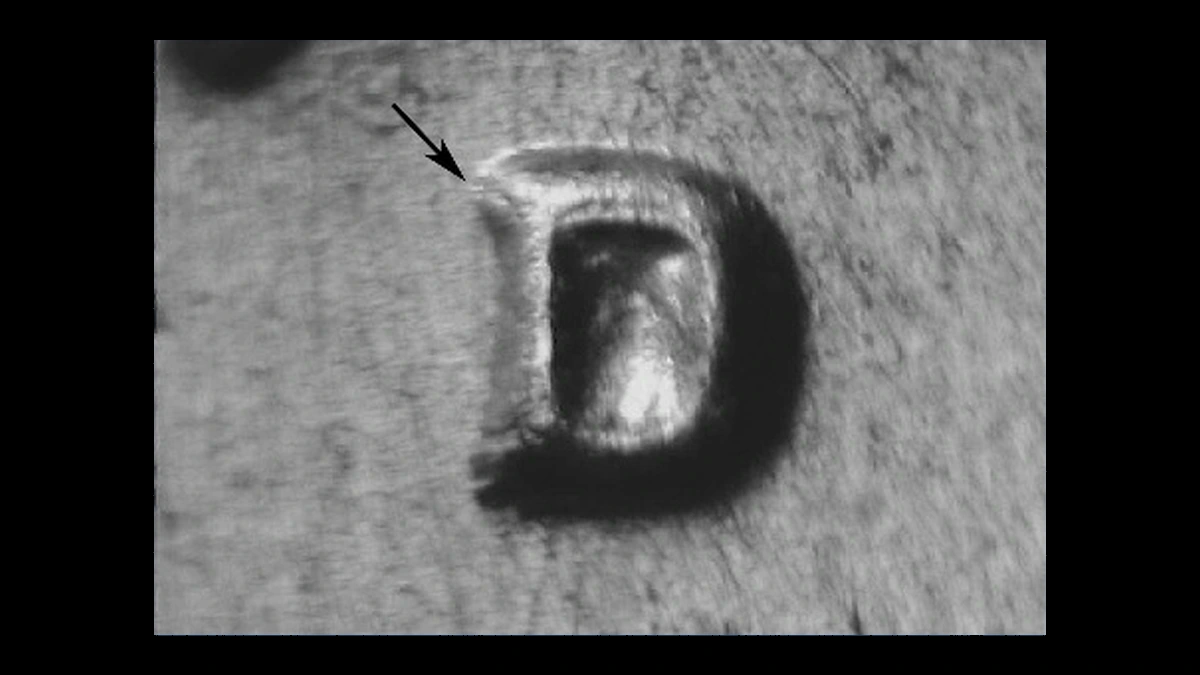
How to Identify
Inspect the top bar together with the ends of the upright stroke. The combination matters more than one bright line or an isolated rough corner.
Compare it with the separate-letter evidence used for genuine repunching. Wear may hide the small split tips rather than turn the pattern into a different error.
What It’s Worth
Identifiable damaged-punch examples have an estimated $1–$25 range. The upper end assumes clear detail and good preservation.
No cataloged sale is supplied for this estimate. The pattern should be described for its actual cause before applying prices for stronger repunched mintmarks.
12. 1973 Penny Another D Stroke Appears Nearby: 1973-D Repunched Mintmark Error
Repeated hand punching can leave part of a second D in the die. Recorded patterns include rotated impressions and remnants toward the south or southeast.
The current WRPM-001 is rotated, unlike the damaged-punch pattern formerly assigned that number. WRPM-006 remains questioned because its eastern line may be a die scratch.
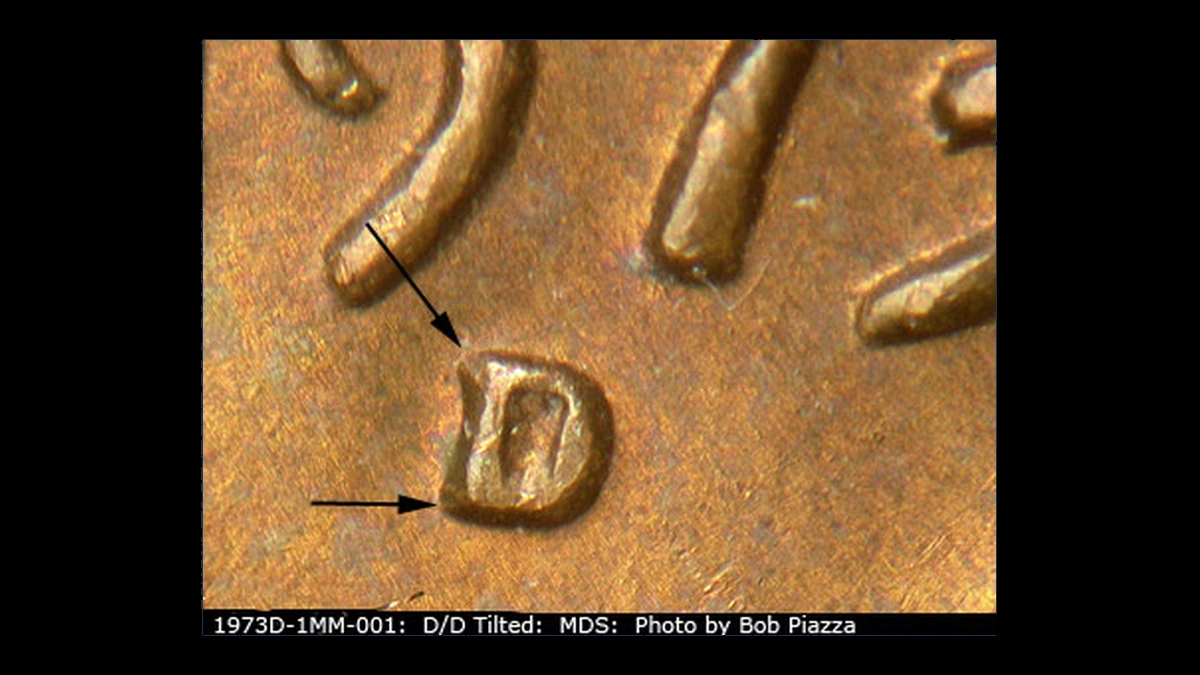
How to Identify
Match the remnant’s direction and letter shape before checking supporting marks. Current WRPM-001 includes marks near the N of IN, the W of WE, and below UNITED’s D.
Wexler’s current listings distinguish the patterns. A lone eastern line or an obsolete label is insufficient evidence for a true second letter.
What It’s Worth
Clear confirmed repunches have an estimated $3–$100 range. The questioned WRPM-006 mark has a provisional $1–$15 comparison range.
The provisional estimate does not resolve the scratch-versus-repunch question. Separation, condition, and a correct modern attribution matter more than a general “doubled D” description.
13. 1973 Penny Front Letters or Digits Carry Extra Detail: 1973 Doubled Dies Error
Philadelphia WDDO-001 has slight clockwise doubling in the motto and the first five LIBERTY letters; WDDO-002 instead thickens motto, LIB, and date details. Denver WDDO-001 shows detail above the 7’s top stroke.
The ordinary San Francisco WDDO-001 has detail beneath the middle of 3. These separate dies contained repeated design before striking a coin.
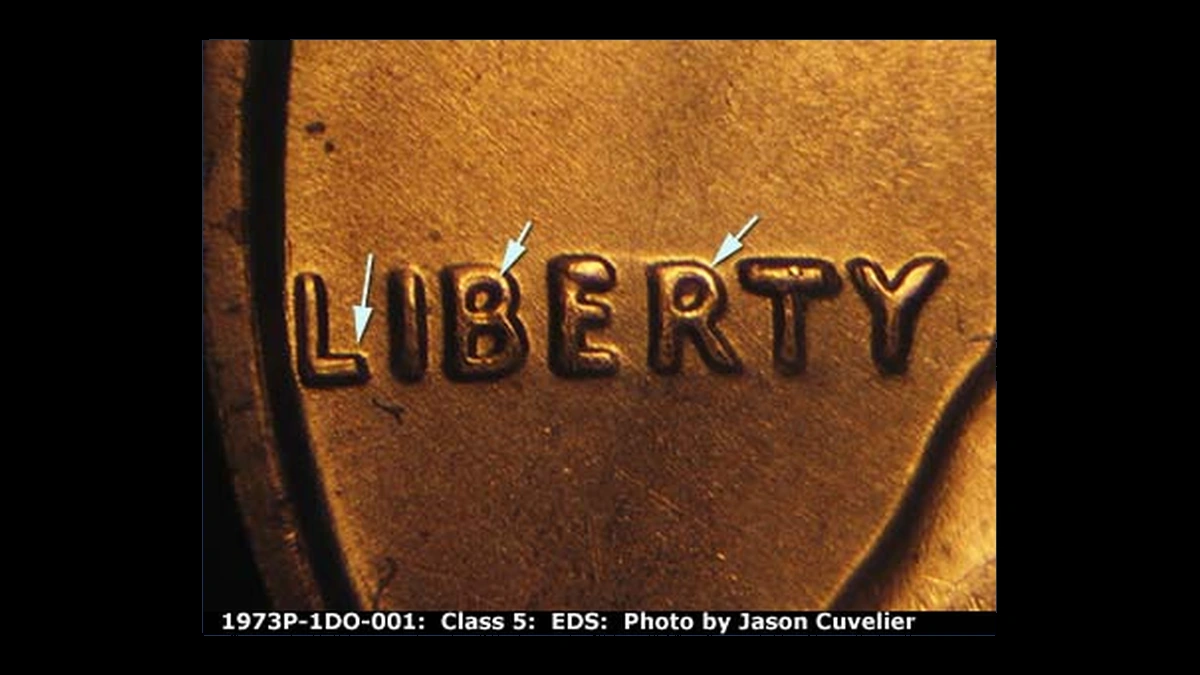
How to Identify
Select the mint and match its particular lettering or digit before using supporting lines. Philadelphia WDDO-002 has a diagonal die line near CENT, and Denver’s example has a line northwest from GOD’s D.
The San Francisco example has a hair crack turning toward WE’s W. That S-mint variety is an ordinary issue, and none of these coins must combine every listed diagnostic.
What It’s Worth
These minor front doubled dies have an estimated $5–$200 range. Strong attribution and preserved detail support the better comparisons.
No individual auction results are assigned to the four entries here. Thick-looking letters need a match to a real pattern rather than an assumption based on sharp lighting.
14. 1973 Penny AMERICA Has Notched Corners: 1973 Doubled Memorial-Side Letters Error
The Philadelphia WDDR-001 pattern includes small notches in AMERICA’s R and C. Related extra detail appears in ONE CENT and the tiny designer’s initials FG.
The repeated features belong to the reverse die. They are subtle fixed shapes, not broad moving shadows around every letter.
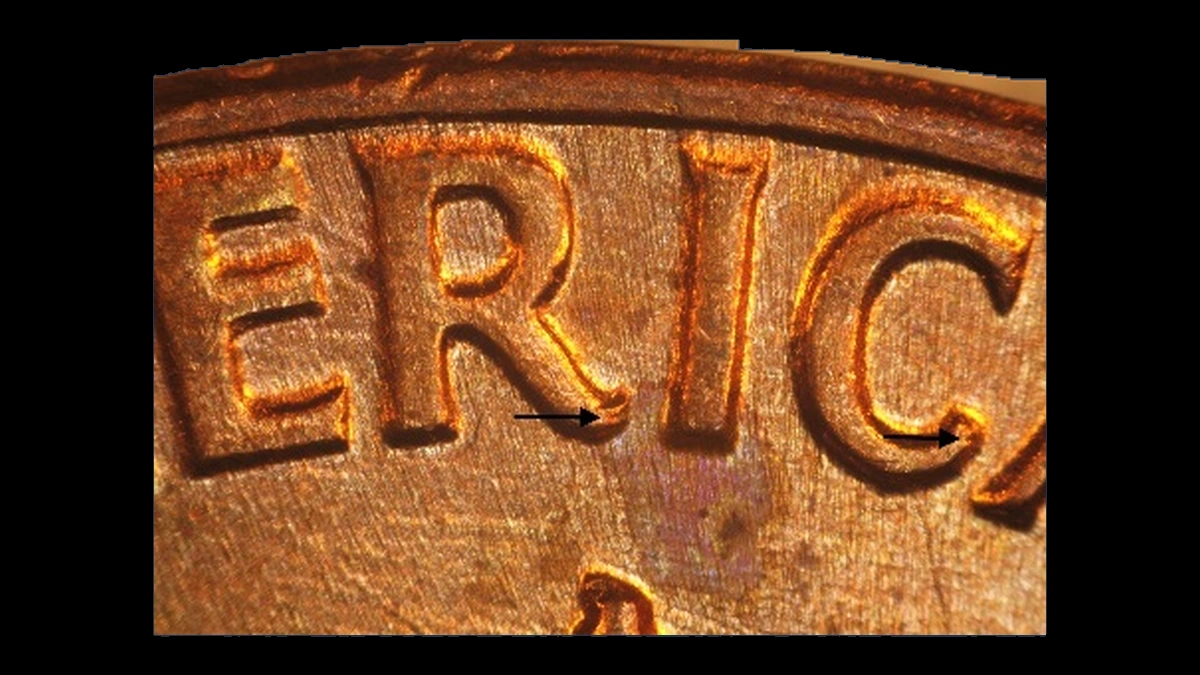
How to Identify
Locate the R and C corners, then compare ONE CENT and FG to see whether the features agree. Moving the light separates reflections from detail that remains physically in place.
Confirm the ordinary Philadelphia coin’s lack of a mintmark before choosing this comparison. Sharpness alone does not establish doubled design.
What It’s Worth
A confirmed match has an estimated $5–$150 range. Unworn original surfaces can preserve the small notches better than cleaned or heavily handled metal.
The figure is a variety estimate rather than a recorded WDDR-001 auction result. Photographs should show the named details clearly enough to support attribution.
Conclusion
The $1–$6,000 estimated span includes both small die varieties and coins that followed an unusual route through the press. A finished dime beneath the cent design needs different evidence from an unused dime blank.
Keep that same precision at smaller scale: punch damage differs from repunching, and each doubled die has its own details. Preserve both-face photographs, measurements, and any holder information so the comparison stays tied to the actual coin.