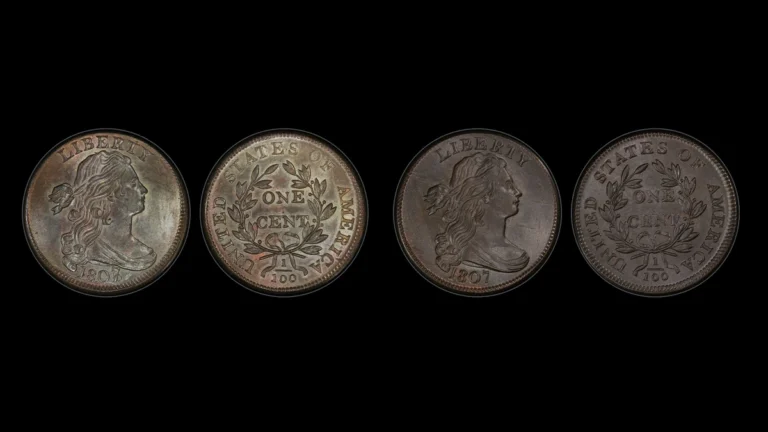
Rare 1822 Penny Errors (List & Pictures)
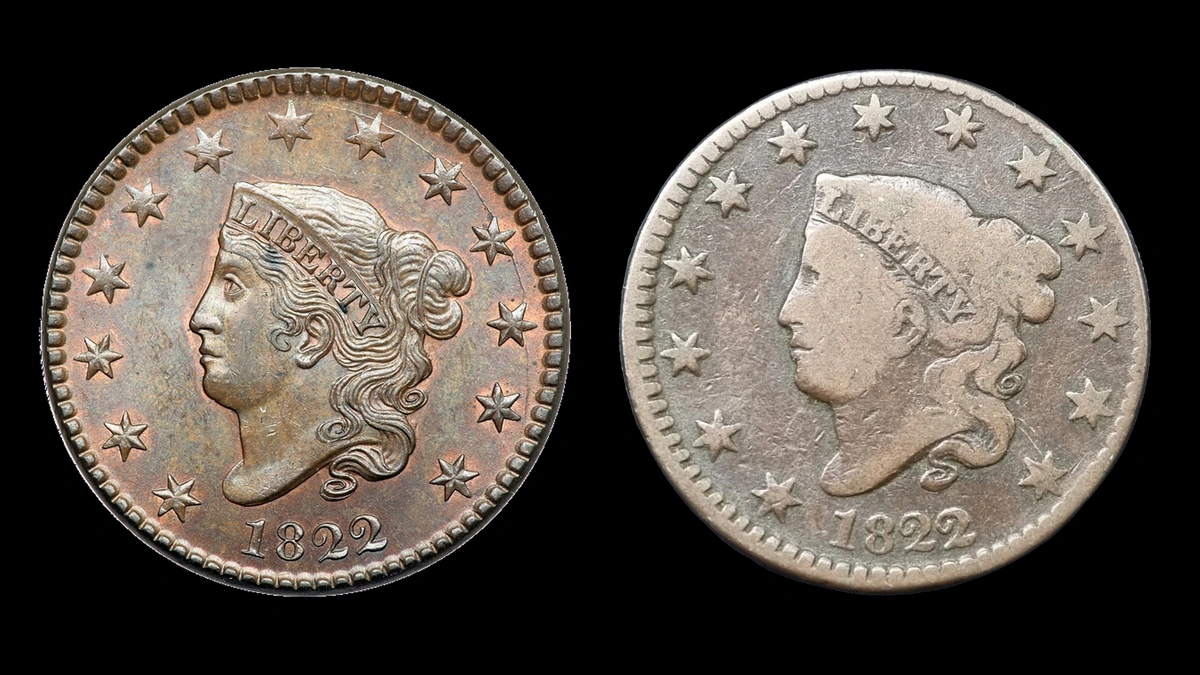
The last three letters of STATES can reveal the progress of a broken die on an 1822 cent. Other reported 1822 penny errors involve missing blank metal or a design struck partly beyond the coin.
Estimated whole-coin values span $30–$3,000. A different-date off-center cent attributed to 1808 sold for $6,462.50 in February 2018, providing context rather than an 1822 sale record.
Examine the raised reverse detail first, then distinguish an absent edge section from unstruck copper still present on the blank.
| Visible clue | Reported error | Estimated whole-coin value |
|---|---|---|
| Raised line or broad patch above TES | N-9 die crack or cud | $40–$1,000 |
| Missing section of the outline | Clipped planchet | $30–$700 |
| Displaced design beside bare copper | Off-center strike | $200–$3,000 |
1. 1822 Penny Raised Metal above TES: Die Crack and Rim Cud Error
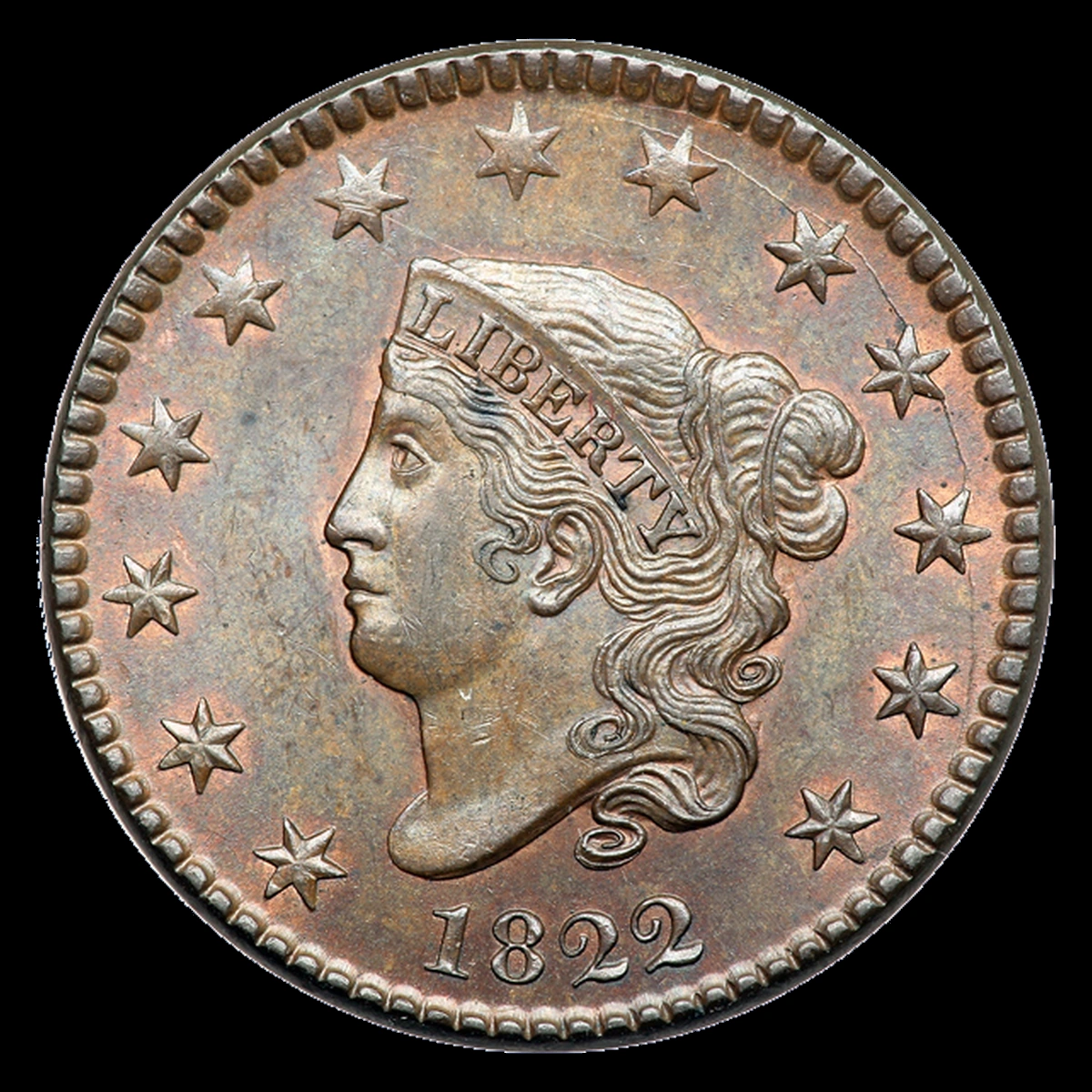
The Early American Coppers grading guide describes a crack across the tops of TES in STATES on 1822 N-9 cents. N-9 identifies a particular pairing of dies, the steel tools that struck the front and reverse designs.
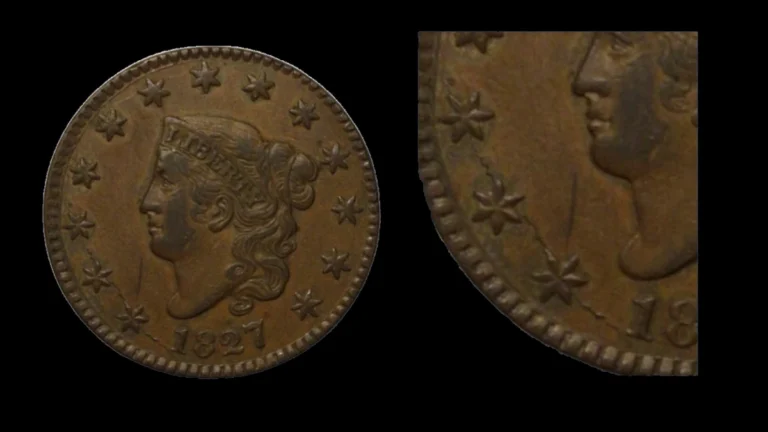
Coins made while the die was cracked show a raised line where copper entered the opening. When the section between that line and the rim broke away, it produced a larger rim-connected patch called a cud.
How to Identify
Locate TES on the reverse and follow the metal along the tops of the letters. An earlier stage may show only a ridge, while a later stage fills a broader area extending toward the edge.
Move the light across the feature to establish that it rises from the struck surface. A scratch has a cut center, and a blob of added material may have a different boundary or texture.
Inspect the edge beside the patch for a blow that pushed rim metal inward. The cud should fit the described die failure rather than a dent in a finished cent.
What It’s Worth
$40–$200 is estimated for a worn cent with a clear crack, increasing to $200–$1,000 for a stronger cud on an attractive coin. Small cracks may contribute little beyond the cent’s ordinary value.
An 1829 large cent with three cuds sold for $810 in September 2020. Its different date and break arrangement provide a comparison without establishing a sale price for N-9.
2. 1822 Penny Part of the Copper Outline Is Absent: Clipped Planchet Error
A seller listed an 1822 N-1 cent with a clipped blank. The missing section was attributed to the original metal disc being incomplete before it received the design.
The N-1 attribution names the dies, not the gap’s size or position. The supplied report establishes no clock direction for the missing section.
How to Identify
Keep the date and full outline in the photographs before enlarging the opening. Examine both ends and the wall of the gap for saw marks, repetitive filing or a cut through finished design.
The rim opposite an original clip may be weak, although wear can obscure that supporting feature. The relationship between the gap and surrounding struck metal matters more than any single clue.
For loose coins that can be handled safely, compare weight with the normal 10.89 grams and intact spans with roughly 28–29 millimeters. Missing copper can reduce weight, but a later cut can do that too.
What It’s Worth
$30–$200 is estimated for genuine worn clips, with $200–$700 for clearer, better-preserved examples. These are complete-coin estimates, not a separate clip premium.
An unworn 1852 clipped large cent brought $384 in June 2024. That different-date result is not a recorded transaction for the reported 1822 N-1.
A readable date and original boundary improve the usefulness of a comparison. Heavy scratches or corrosion can reduce appeal even if the incomplete blank is genuine.
3. 1822 Penny The Design Misses Part of the Blank: Off-Center Strike Error
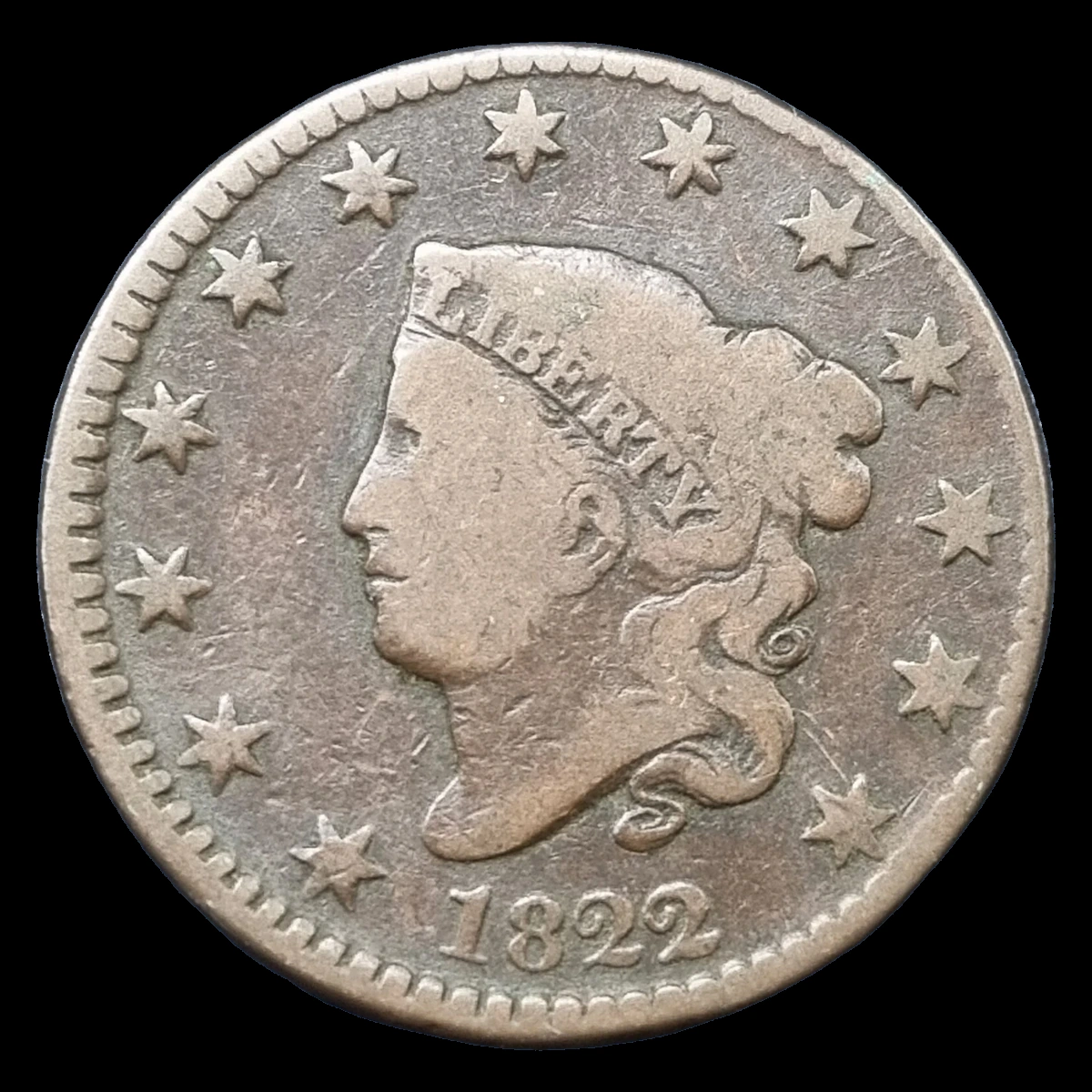
A Heritage auction index records an 1822 cent struck 20% off center with an NGC Details description noting front scratches. The out-of-position blank received design on only part of its available copper.
The scratches occurred separately from the misplaced strike and affect condition. Neither a shift direction nor a match to another seller’s specimen is established by the supplied index.
How to Identify
Find the date, then compare how the struck design and bare area occupy the complete outline. The unused portion still contains metal, which distinguishes it from a clipped gap.
Both faces should fit the same misplaced blank. If only one design is shifted, another cause such as die misalignment needs consideration.
Inspect the unstruck area and plain edge for grinding, cutting or other later alteration. Record the front scratches independently so they do not become part of the mint-error description.
What It’s Worth
$200–$800 is an estimate for a worn, dated off-center cent, with $800–$3,000 for sharper and more attractive pieces. The recorded coin’s scratches would influence its position within a comparison.
An undated cent attributed to 1808, struck 30% off center and showing very light wear, sold for $6,462.50 in February 2018. Its different date, condition and displacement make it a higher contextual example rather than an 1822 valuation.
No realized amount is supplied for the indexed 20% specimen. That percentage alone cannot account for readability, surface quality and overall preservation.
Conclusion
On an 1822 Coronet Head, also called Matron Head, cent, three simple distinctions guide the examination: raised metal above TES, copper absent from the outline, or copper present without design. Each points to a different production problem.
Preserve the full coin in photographs and keep later scratches separate from mint-made features. Whole-coin value depends on the original error together with the date’s readability and the condition of the copper.