Rare 1804 Quarter Errors (List & Pictures)
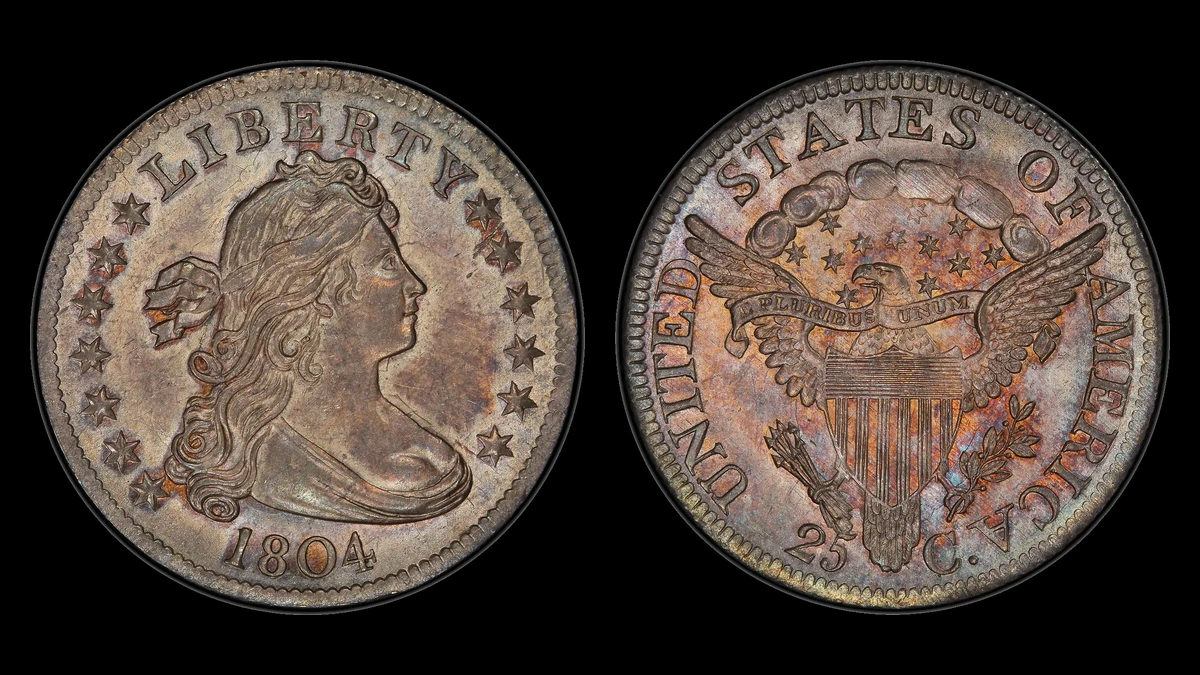
The scarcity of an 1804 quarter can matter more than a small flaw on its surface. Supplied whole-coin estimates for 1804 quarter errors range from $1,000 to $75,000, including conditional estimates for reported major errors.
An 1804 quarter graded PCGS XF40 sold for $27,600 in January 2022 as a condition comparison, not a measured error premium. Begin with original metal flaws and known B-1 die features before investigating unusual outlines or repeated strikes.
| Clue | Identification | Estimated whole-coin value |
|---|---|---|
| Original pits or rough metal by stars | Planchet flaws | $1,000–$20,000 |
| Raised mapped lines through date and portrait | B-1 die cracks | $1,500–$30,000 |
| Wing-shaped traces beside neck and bust | B-1 die clash | $1,500–$30,000 |
| Original curved gap | Reported clipped blank | $3,000–$35,000 if authenticated |
| Lost design beside untouched metal | Reported off-center strike | $5,000–$50,000 if authenticated |
| Two connected design positions | Reported double strike | $7,500–$75,000 if authenticated |
1. 1804 Quarter Pits or Rough Silver Appear near the Stars: Original Planchet Flaws Error
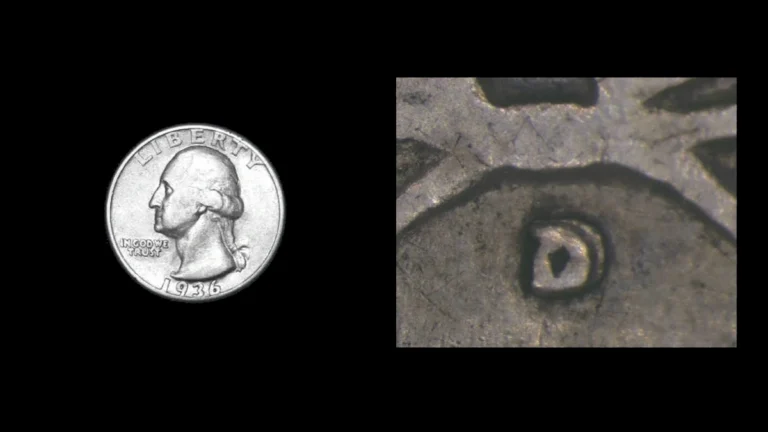
A documented B-2 quarter has a small flaw at star 3 and a tiny hole near star 4. A separate B-1 has rough metal between stars 3–4 and Liberty’s curl.
These descriptions concern irregularities in the original blank, without establishing a peeling layer. The B-1 coin’s scratch from behind the head toward L is separate later damage.
How to Identify
Count Liberty’s left-side stars upward from the bottom and compare the affected area with the correct specimen’s photographs. B-1 and B-2 name distinct die pairings, so their flaws should not be merged.
Inspect irregular boundaries for later puncture lips, scattered corrosion, or scraping. Leave holes and fragile metal untouched while documenting the surrounding design.
What It’s Worth
$1,000–$20,000 is the supplied estimate for circulated examples with original metal flaws. The B-2 PCGS VF20 quarter sold for $9,900 at Heritage in November 2017, including the buyer’s fee.
The result values the complete scarce coin. An original flaw can reduce visual appeal, so a larger hole does not automatically increase the price.
2. 1804 Quarter Raised Lines Connect the Date and Portrait: B-1 Die Cracks Error
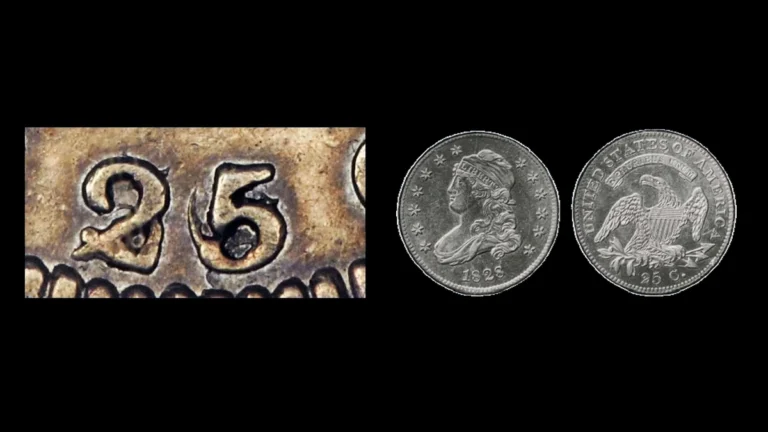
One B-1 crack passes through the date’s 0 toward the bust. Another enters from the right rim between the second and third stars counted from the bottom, while a further path crosses clothing near the hair, neck, and chin.
The silver entered openings in the die and formed raised traces. These routes describe a developing crack pattern rather than separate broad error types.
How to Identify
Begin at 0 and follow the raised connection before comparing the right-rim and portrait routes. Light from the side helps separate ridges from scratches cut through a finished surface.
The PCGS B-1 description also notes a small tool-cut mark between upper-right stars. That mark is distinct from the mapped crack paths.
What It’s Worth
$1,500–$30,000 is the whole-coin estimate for worn through lightly worn B-1 quarters with these features. The date’s scarcity accounts for much more than a fine crack alone.
The PCGS XF40 1804 quarter that brought $27,600 at Heritage in January 2022 is a condition comparison. It does not establish a separate crack premium for every matching ridge.
3. 1804 Quarter An Eagle Wing Appears beside Liberty: Die Clash Error
The B-1 has recorded wing-shaped clash traces beside the neck and bust. The dies contacted one another without a blank and acquired portions of the opposing design.
How to Identify
Compare the suspected outline with the eagle’s wing at a similar scale. A clash may transfer only the contacting portions, so a complete eagle is not required.
Check the shape under several lighting angles and separate it from nearby crack lines. An arbitrary straight scratch does not establish an opposing-design transfer.
What It’s Worth
$1,500–$30,000 is the estimate for circulated B-1 quarters with identifiable wing-clash marks. Preservation and the scarce underlying date dominate the broad range.
The $27,600 XF40 same-year result supplies condition context, not an independently measured clash value. Do not add the clash and crack ranges when both occur on one B-1 coin.
4. 1804 Quarter A Curved Segment Is Missing: Reported Clipped Blank Error
A curved clip can originate when a blank-cutting punch overlaps an earlier hole in the metal strip. The incomplete disk then receives the quarter design.
The 1804 year guide lists this category without a particular graded specimen or gap position. A candidate therefore requires its own evidence of original blank loss.
How to Identify
Inspect the curved boundary and nearby design for metal flow consistent with a preexisting gap. Filing, saw marks, or a fresh cut through completed details suggest later alteration.
An intact 1804 quarter started near 6.74 grams, but both a genuine clip and later cutting reduce mass. Opposite-rim weakness can support some clips without being mandatory.
What It’s Worth
$3,000–$35,000 is the conditional estimate for an authenticated circulated example. No completed 1804 clip sale is supplied here.
The underlying quarter is already valuable, and a readable date and original surfaces remain essential. A later edge cut can reduce ordinary collector value instead of adding a premium.
5. 1804 Quarter Both Designs Miss the Blank’s Edge: Reported Off-Center Strike Error
A misplaced blank can leave an unstruck area opposite artwork that falls beyond the metal. The 1804 report gives no established percentage or direction.
How to Identify
Compare both faces to determine whether one displaced disk explains the incomplete designs. An uneven rim confined to one face may instead reflect die alignment.
Inspect the untouched area for grinding or traces of removed lettering. Record the surviving date and original edge, recognizing that the normal 27.5-millimeter diameter is a reference rather than a required error outline.
What It’s Worth
$5,000–$50,000 is the conditional estimate for an authenticated circulated 1804 off-center quarter. The actual displacement, date clarity, and condition would guide the comparison.
A published result of $10,200 concerns an 1891 NGC MS61 quarter struck 35% off center. That later design and measured displacement do not establish a specimen or price for 1804.
6. 1804 Quarter Two Design Positions Survive Together: Reported Double Strike Error
A coin that moves before receiving another blow can retain portions of both impressions. The repeated portrait, date, or connected lettering comes from a second strike rather than doubled detail within one die.
The 1804 report identifies no particular specimen or movement between blows. A rotation angle must not be inferred from the category alone.
How to Identify
Trace the clearest repeated feature and its neighbors into a consistent second design on both faces. The later blow may flatten much of the earlier image, so equal strength is unnecessary.
Compare outlines on copies of photographs instead of marking the coin. Inspect the surface and edge for pressing between finished coins or joining that could imitate added impressions.
What It’s Worth
$7,500–$75,000 is the conditional whole-coin estimate for an authenticated circulated 1804 double strike. Connected overlap and a readable date would be central evidence.
A different-year 1891 NGC MS62 double strike sold for $20,400 in November 2022. Its second strike followed a 90-degree rotation and was 50% off center, details belonging only to that later coin.
Conclusion
Original flaws, B-1 crack paths, and the wing clash provide different ways to examine an 1804 quarter’s surface. They must be separated from later scratches and from the coin’s substantial underlying value.
The reported clip, off-center, and double-strike categories remain conditional until an actual example is authenticated. Keep the coin uncleaned and document both faces and its edge so the metal, date, and design support the same explanation.