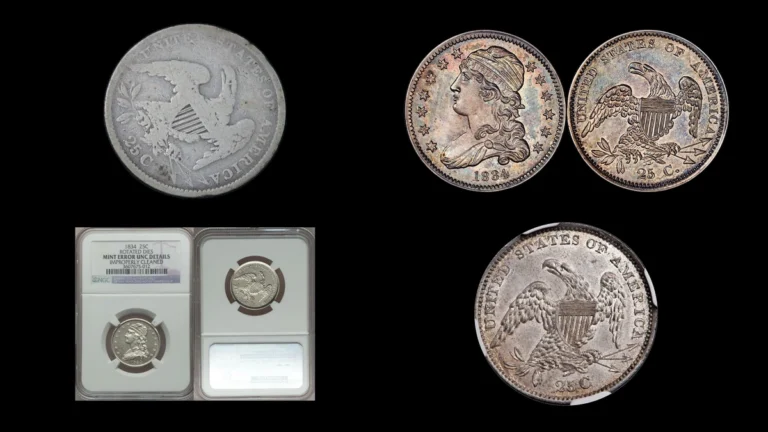
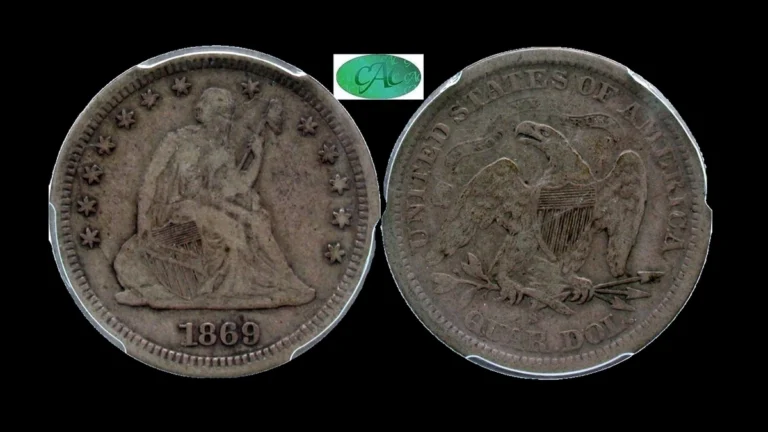
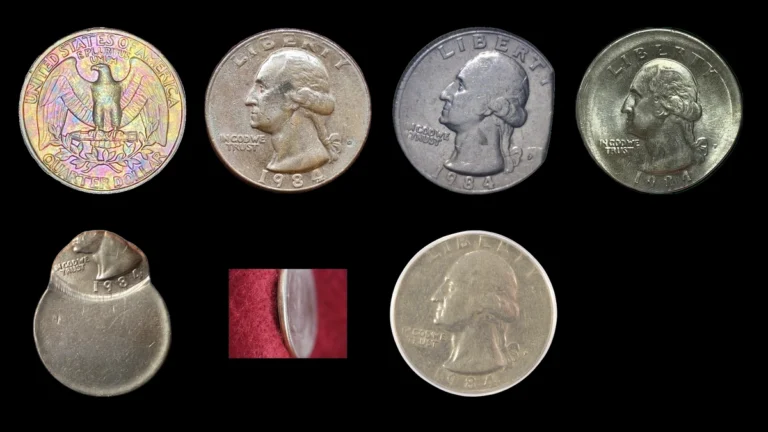
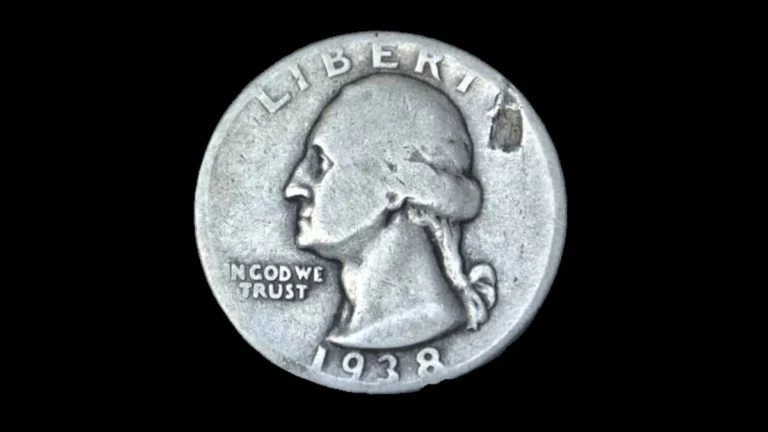
Rare 1831 Quarter Errors (List & Pictures)
The two 1s in an 1831 quarter’s date can reveal earlier, smaller digit tips. Other 1831 quarter errors involve peeling metal or raised die cracks, with estimated whole-coin values of $75–$250,000 when rare proofs are included.
A cracked-die proof graded PR66 sold for $144,000 in October 2021. Its rare manufacture and exceptional preservation explain that result far better than treating the crack as a six-figure premium.
1. 1831 Quarter Small Digit Tips beside Larger Ones: Repunched Date Error
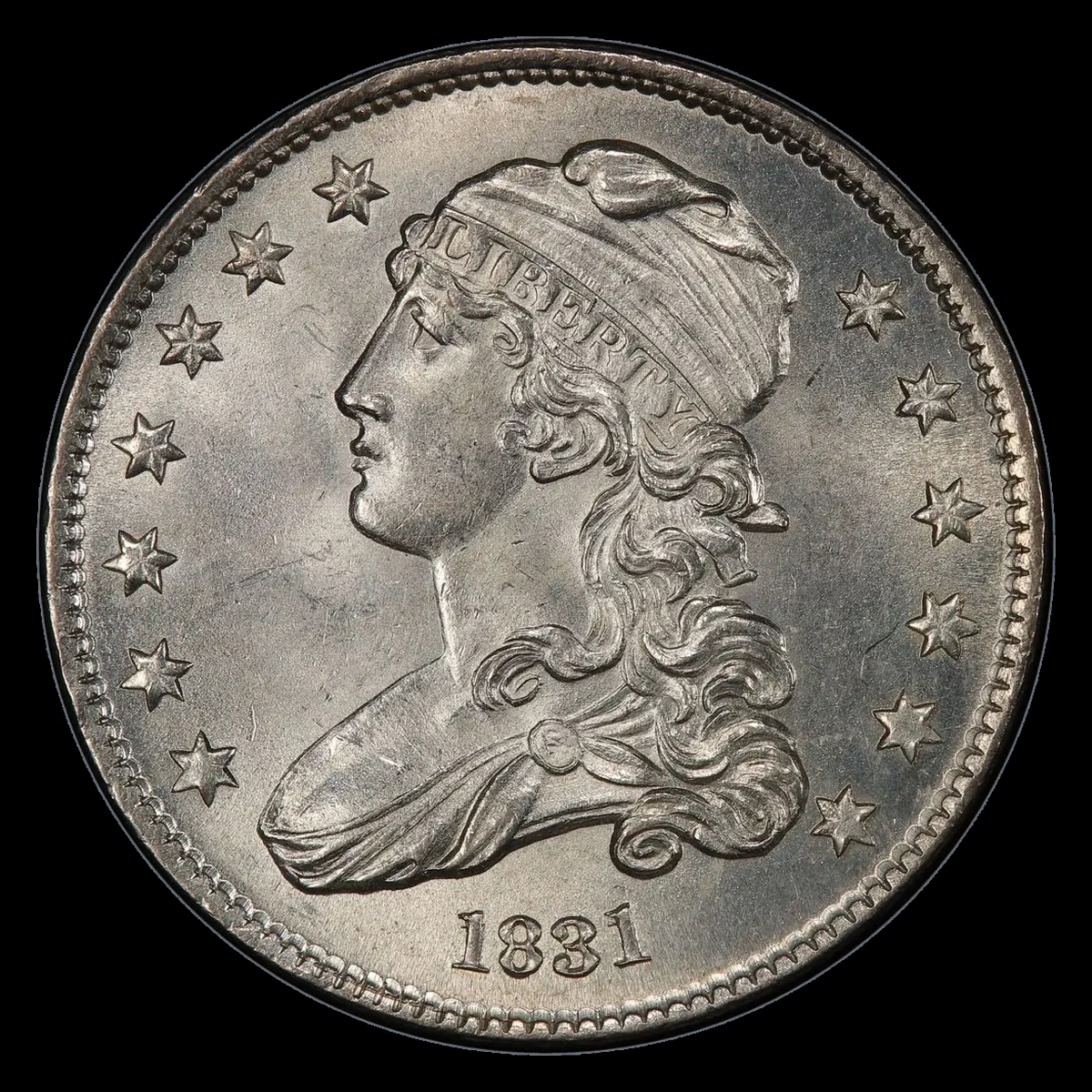
On the Large Letters B-5 variety, small earlier tips project left of the main upright strokes of both 1s. Larger date digits were punched over smaller ones in the die.
The 8 and 3 have weaker repeated detail. B-5 and FS-301 name the same variety, which exists as ordinary strikes and specially prepared proofs.
How to Identify
Inspect both 1s together and compare their small left-projecting tips with a labeled B-5 photograph. Then check the weaker details in 8 and 3.
Confirm the Large Letters reverse as part of the match. The repeated date does not by itself establish proof manufacture.
What It’s Worth
$150–$250,000 spans the ordinary and proof markets for this group. Ordinary examples are estimated at $150–$15,000, while identified proofs range around $30,000–$250,000.
An ordinary NGC MS64 sold for $3,995 in February 2016, and PCGS’s archive records $10,200 for an MS64+ example. These are complete unworn coins, not separate prices for their earlier digit tips.
2. 1831 Quarter A Thin Layer Separating on the Front: Lamination Error
A weakness inside the silver blank can let a surface layer peel away. The result may be a thin flap or a shallow irregular area where metal detached.
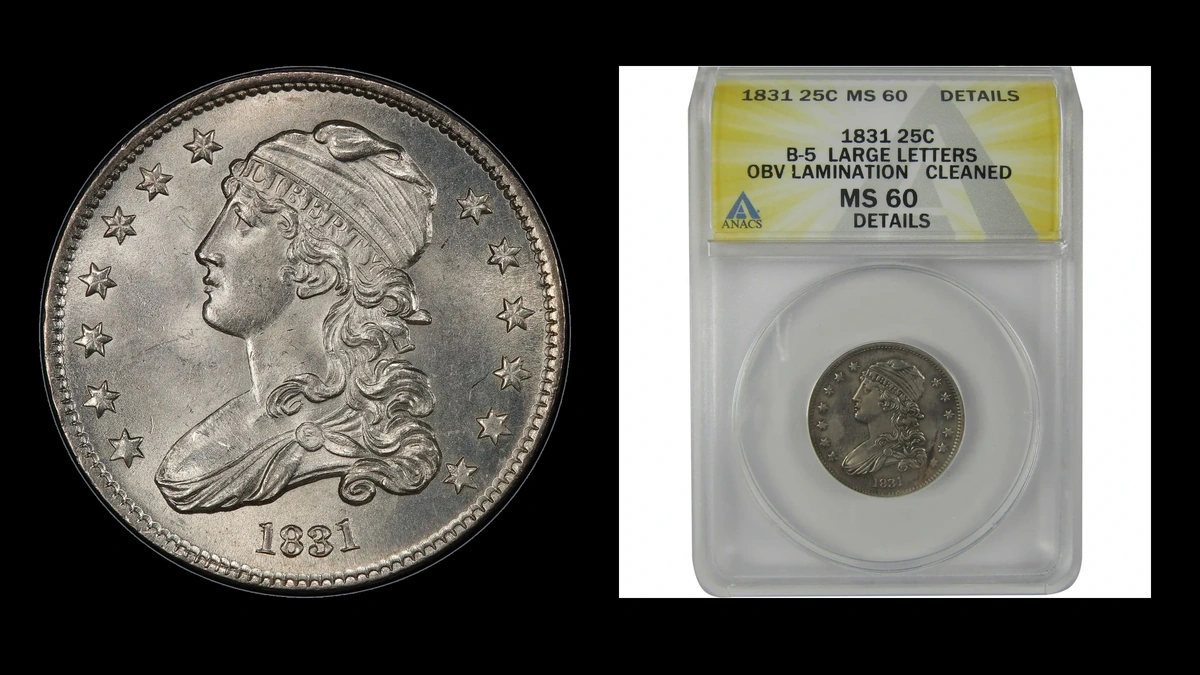
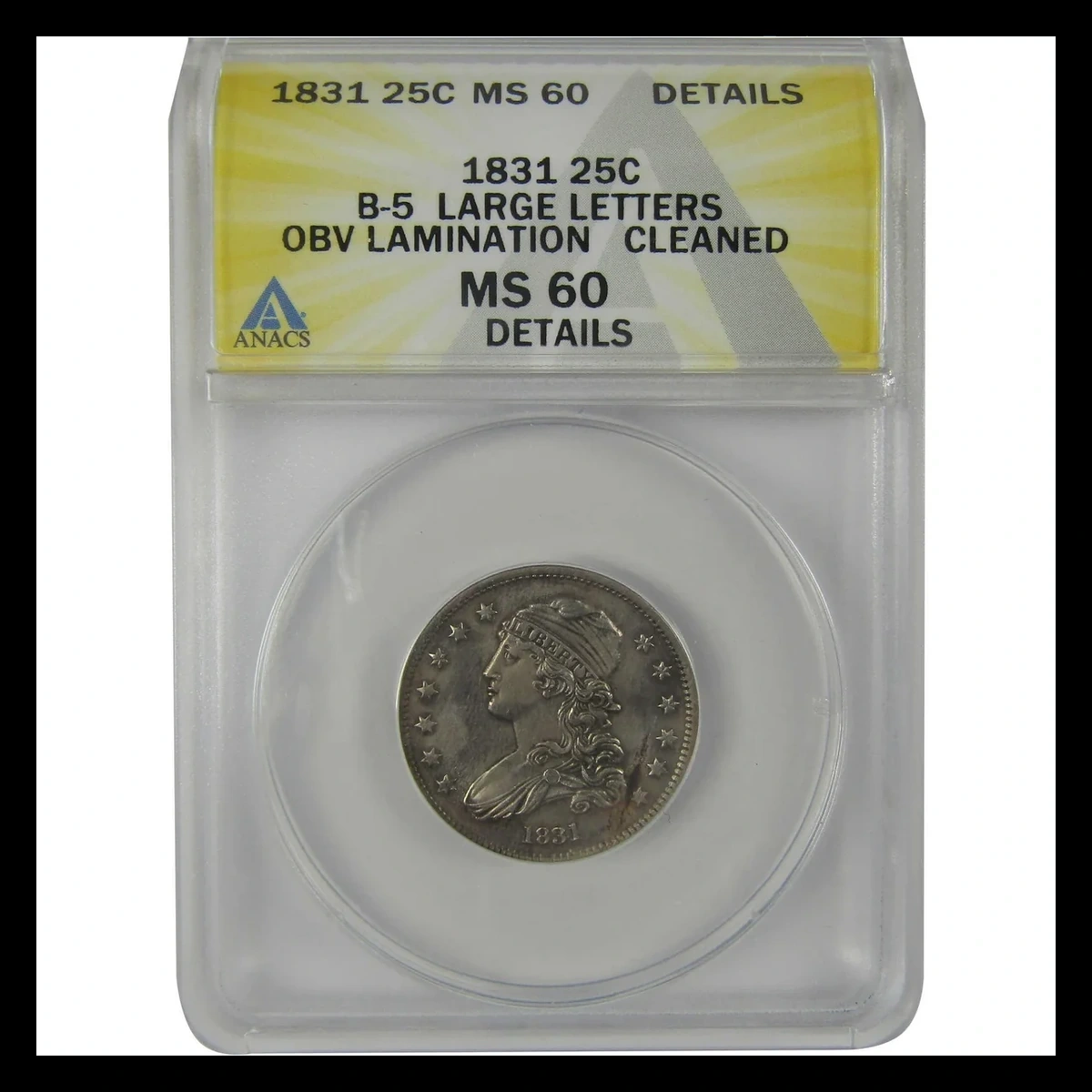
A dealer-listed Large Letters B-5 coin graded ANACS MS60 Details has front lamination and cleaning. The original metal flaw and the later cleaning are separate observations.
How to Identify
Follow the layer boundary under angled light and examine how the portrait or lettering meets it. Leave any loose flap in place.
Parallel scrape lines or corrosion pits do not alone establish peeling. Compare the dealer’s actual-item photographs and keep fine cleaning scratches separate from the larger flaw.
What It’s Worth
$200–$3,500 is the estimate for comparable circulated through lower-grade unworn examples. The cleaned MS60 Details dealer coin carries a $2,509.99 asking price.
That is not a completed sale. Any repunched-date feature on the same B-5 coin is already part of its whole-coin value and should not be added again.
3. 1831 Quarter Raised Lines through the Reverse: Die Cracks Error
Cracks in a die fill with silver and leave ridges on the coin. Different Small Letters dies developed different routes across leaves, wings, lettering, or the denomination and arrows.
The documented B-1 proof has a long line from lower leaves through the eagle’s wing and UNITED STATES. The crack did not make the coin a proof.
How to Identify
Settle the finish separately, then compare the reverse with the same die pairing. A shiny field alone does not identify a proof.
Trace the raised path under side lighting without joining separate coins’ crack routes. A scratch cuts into the silver instead of forming a continuous ridge above it.
What It’s Worth
$75–$160,000 covers this group across ordinary and rare proof examples. Ordinary coins are estimated at $75–$7,000, while comparable identified proofs occupy about $80,000–$160,000.
The NGC PR66 B-1 proof sold for $144,000 on October 7, 2021. Its rarity and preservation explain that market, not an automatic premium for the line.
Conclusion
Start with the paired small tips beside the 1s for B-5, a layered boundary for lamination, or a raised route for a die crack. Then establish the finish before applying a price range.
One quarter can combine date repunching and a metal flaw, but it still has one complete value. Rare proof results should remain separate from comparisons for ordinary worn coins.