Rare 1833 Penny Errors (List & Pictures)
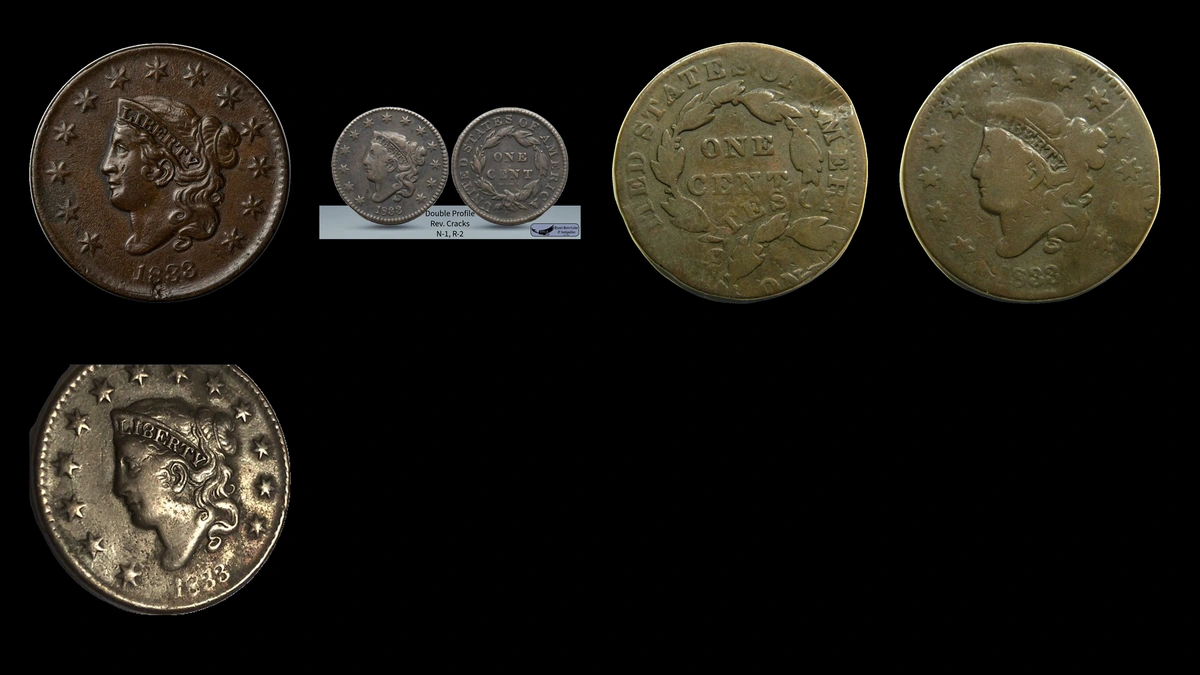
The most expensive comparison here is an 1833 cent with a tiny peel, but that flaw did not create its exceptional value. The Cardinal Collection MS65 Red coin brought $17,625 in January 2013 because it retained remarkable original color and preservation.
Estimated whole-coin values for 1833 penny errors span $20–$20,000. Begin with what the surface shows, then distinguish raised extra strikes, sunken mirrored designs, and changes in face alignment.
| Visible evidence | Possible identification | Estimated range |
|---|---|---|
| Layer boundary or peeling copper | Lamination | $25–$500 worn; $10,000–$20,000 for exceptional red whole coins |
| Small unspecified defect below date | Planchet flaw | $80–$600 |
| Raised lines through design | Die cracks | $20–$400 |
| Extra reverse strike and flattened front | Double strike; brockage maker | $500–$5,000 |
| Sunken mirror image on front | Brockage | $1,000–$8,000 |
| Reverse tilted after flipping | Rotated dies | $40–$3,000 |
1. 1833 Penny Copper Peels or Design Crosses a Lowered Patch: Lamination Error
The Cardinal N-6 has a small peel at the reverse rim near 6 o’clock. A separate heavily worn 1833 cent in an Early American Coppers catalog has broad front separations that existed before striking.
How to Identify
On the worn example, one damaged area runs from star three through the bust toward star twelve, while another crosses the hair between stars five and eight. Look for design impressed across the already lowered metal and actual layered boundaries.
Those extensive front flaws are not the red N-6’s tiny reverse-rim peel. Examine existing openings under low light and never lift a surviving sheet to make the separation easier to see.
What It’s Worth
$25–$500 is the estimate for worn 1833 laminations. Exceptional red examples belong to a very different whole-coin tier of approximately $10,000–$20,000.
The Cardinal N-6 graded MS65 Red sold for $17,625 in January 2013. Its small peel is a flaw on a valuable preserved coin, not an error premium equal to that sale price.
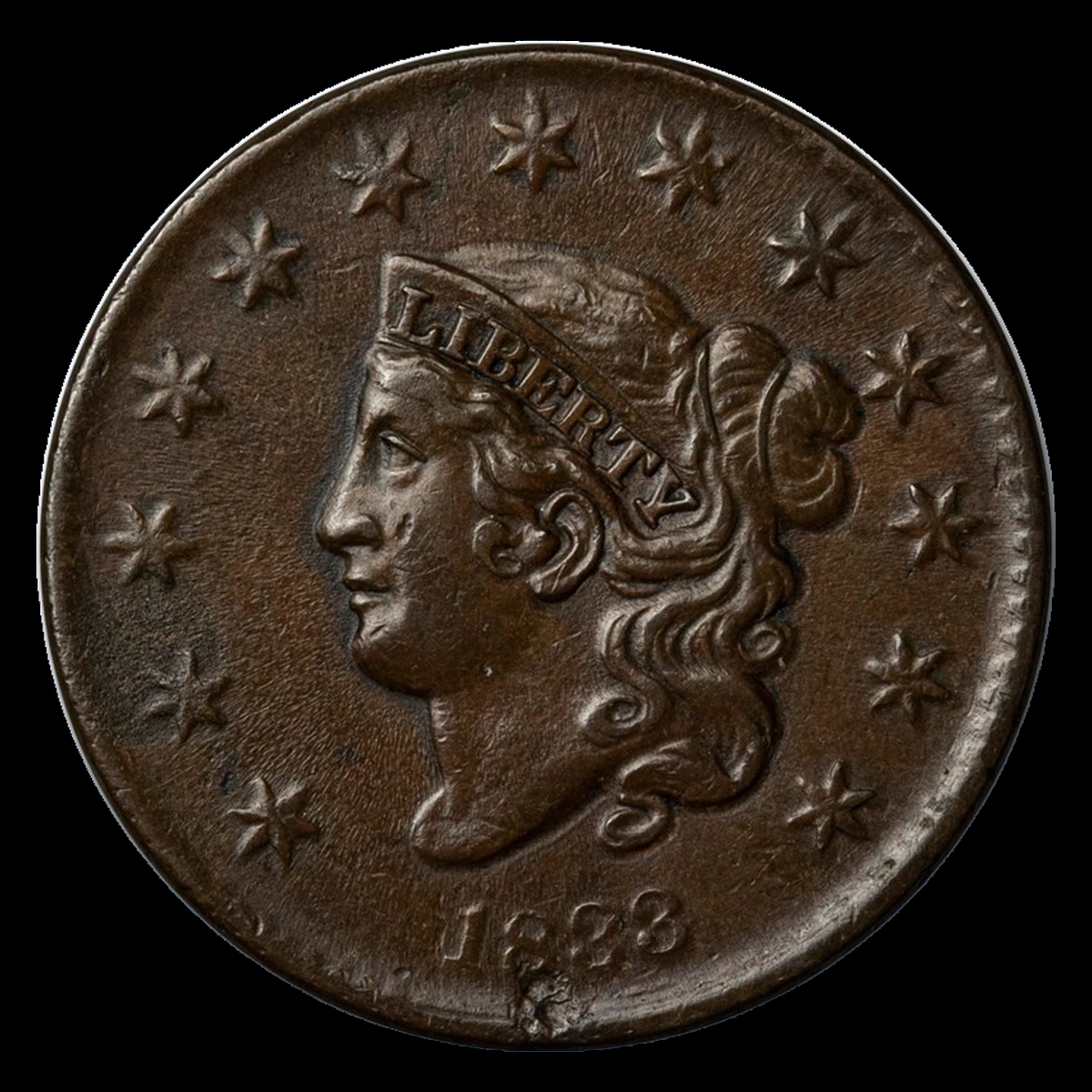
2. 1833 Penny A Small Defect Appears Below the Date: Planchet Flaw Error
APMEX describes an AU 1833 cent with a small planchet flaw below the date. The term identifies a reported blank defect without settling whether the particular feature is a hole, split, or peeling layer.
How to Identify
Keep the date and lower border visible while inspecting the depression’s boundary. Scraping, sharp cuts, and nearby corrosion can explain a hollow after striking, so location alone does not prove an original blank flaw.
Confirm that any displayed photograph shows the specifically described specimen rather than a general product image. A visible attached sheet might suggest lamination, but the seller’s broad wording does not establish that narrower diagnosis.
What It’s Worth
$80–$600 is the estimated whole-coin range for an 1833 cent with a small original blank flaw. Such a defect can reduce eye appeal rather than increase the ordinary coin’s price.
The APMEX listing describes AU condition, meaning light wear, without a sale amount used here. A mark under the date alone cannot justify the upper estimate.
3. 1833 Penny Thin Raised Lines Cross Stars or Reverse Letters: Die Cracks Error
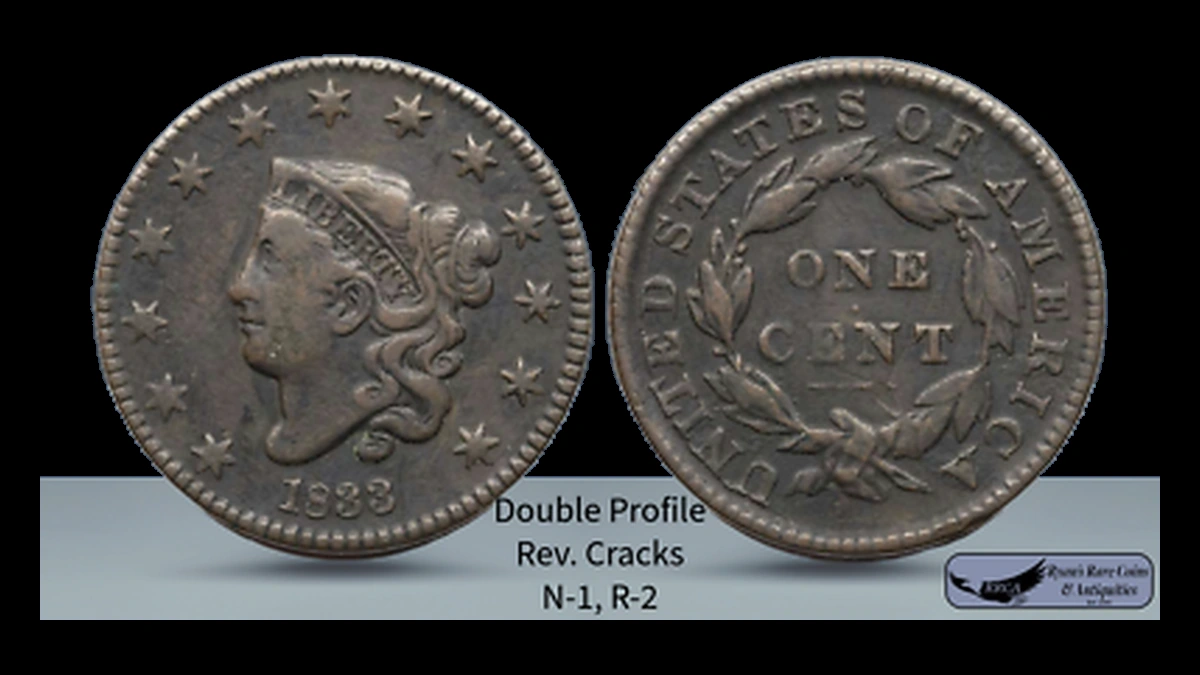
A crack in the steel die leaves a ridge where copper fills the opening during striking. Worn 1833 examples are reported with front date-and-star lines, while an N-6 auction description records cracks through reverse lettering.
How to Identify
Choose the relevant face and specimen before tracing the line. The front reports and N-6 reverse cracks need not follow the same route.
Inspect the line under light from both sides and follow it into a letter or star. A scratch can have pushed-up sides while retaining a groove at its center, unlike a continuous raised die-crack ridge.
What It’s Worth
$20–$400 is the estimate for small cracks on worn 1833 cents. Much of that value may simply be the underlying collectible coin.
An 1840 cent graded VF35 with a strong front crack and smoothed reverse sold for $288 including premium in May 2025. That different-year coin’s wear and surface alteration belong to its comparison.
4. 1833 Penny Shifted Reverse Letters Accompany a Flattened Front: Double Strike Error
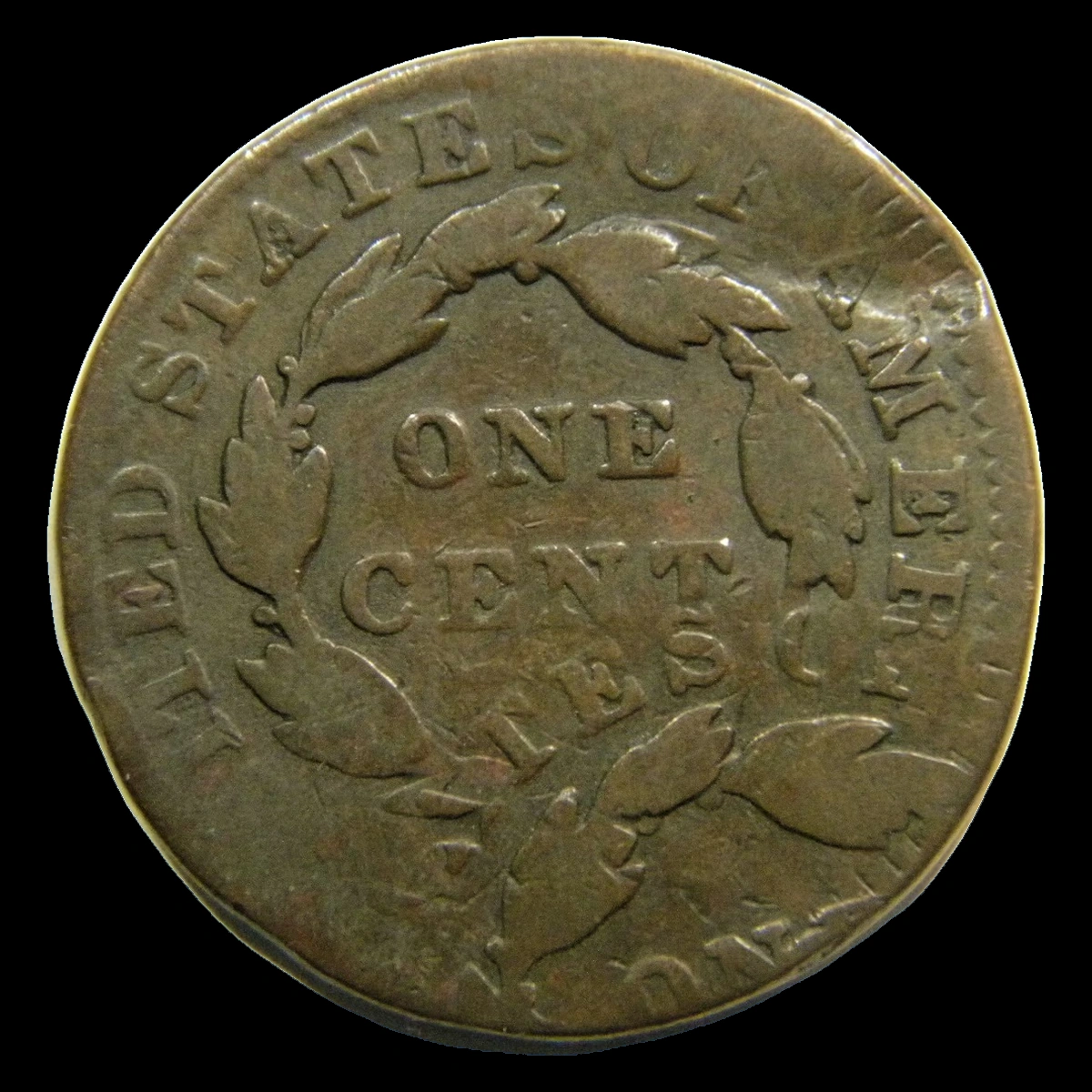
The Mervis catalog’s N-2 has a second reverse impression about 25% off-center toward 3 o’clock. Another blank entered above it before the later blow and flattened the previously struck front.
Its earlier front design could press into that incoming blank, making this coin a brockage maker. That description does not mean the maker itself carries a sunken mirror image.
How to Identify
Separate the two reverse impressions and examine the flattened front as part of the same event. One blurred letter alone cannot establish the proposed strike sequence.
Photograph both faces and the complete edge so their metal movement can be compared. The documented NGC Fine Details coin also has improper cleaning, which remains a separate condition problem.
What It’s Worth
$500–$3,000 is the estimate for a cleaned worn 1833 double strike of this type, with clearer better-surfaced examples roughly $3,000–$5,000. The strength of the two impressions helps determine the comparison.
No completed sale is assigned to the Mervis N-2 here. Its shifted reverse and flattened front are linked effects on one coin, not separate purchases to total.
5. 1833 Penny Backward Detail Is Pressed Into the Front: Brockage Error
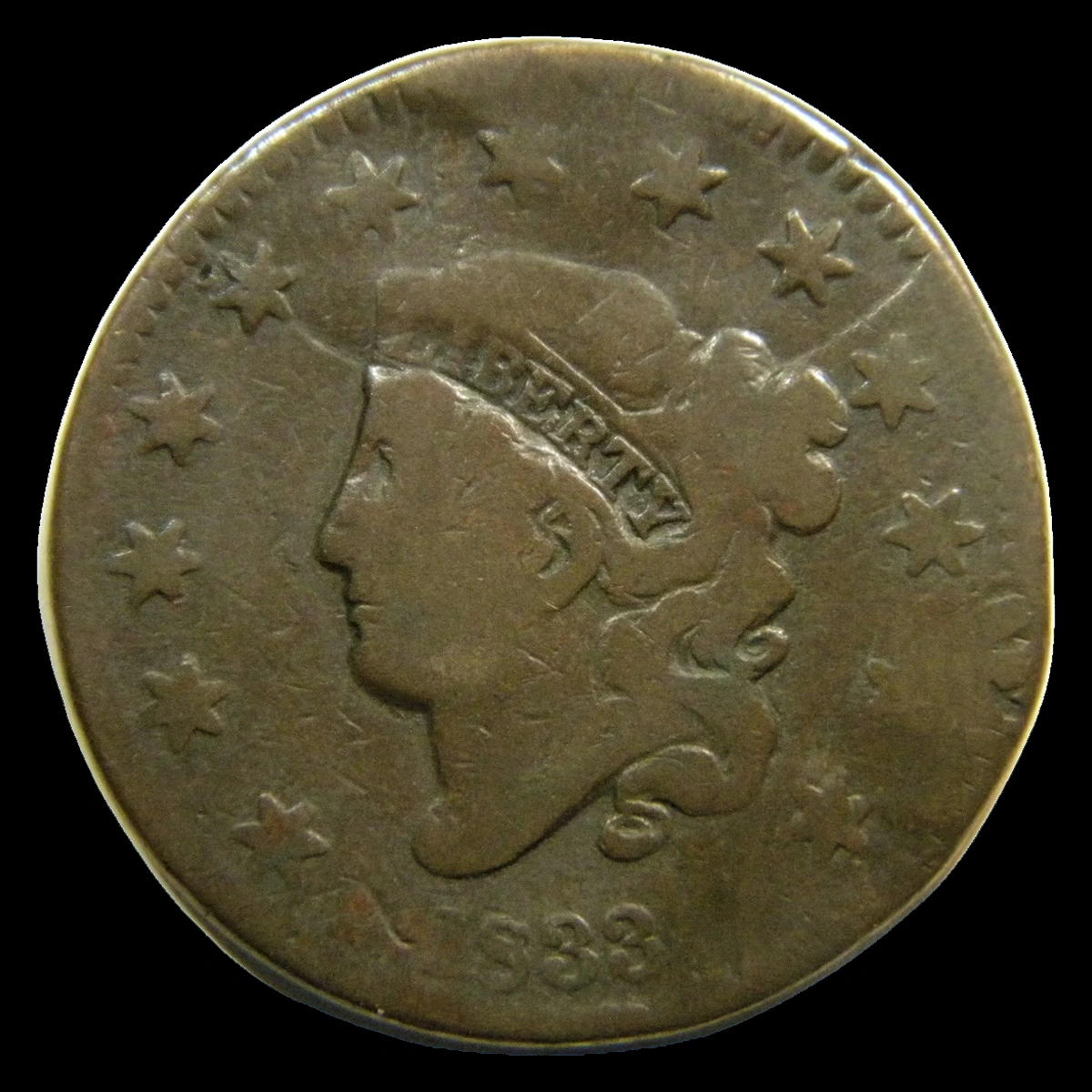
A collector reports an N-5 with a front brockage and double-struck reverse. This is the receiver of an incuse mirror image, unlike the N-2 maker that impressed its design into another blank.
How to Identify
Check that the abnormal design sinks into the front and reverses direction, comparing it with a mirrored normal design. A raised second impression has a different relationship to the surrounding surface.
Later squeezing of finished coins can also create incuse marks, so the edge and surrounding metal need expert examination alongside the double-struck back. A second collector’s brockage report does not establish whether it describes this same N-5.
What It’s Worth
$1,000–$4,000 is the estimate for a confirmed worn 1833 brockage with readable mirrored detail. Clearer impressions on better-preserved coins may fit roughly $4,000–$8,000.
The collector report supplies no certified grade or completed price used here. Its reverse double strike is part of the same whole-coin assessment rather than an additional full error value.
6. 1833 Penny The Wreath Finishes Away From Upright: Rotated Dies Error
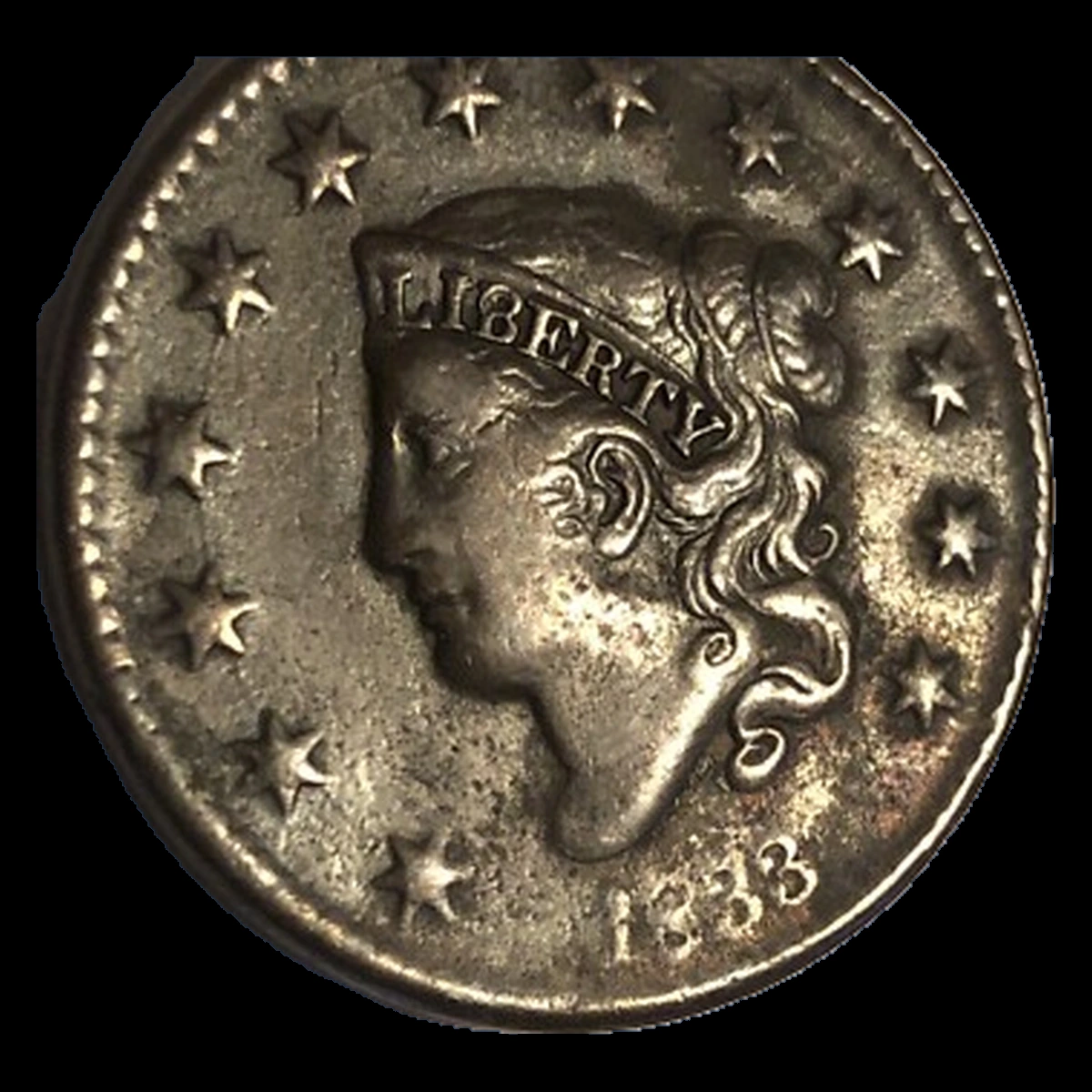
An auction listing reports a rotated 1833 reverse without an angle. A separate year guide mentions 30-degree and 45-degree examples, which cannot automatically be assigned to that auction specimen.
How to Identify
Hold Liberty upright, flip top to bottom without a sideways twist, and measure the wreath’s central line against a fixed vertical guide. Repeating the movement helps distinguish a genuine relationship from a handling error.
For safely handled loose cents, normal references are 10.89 g and about 28 mm; inspect the edge for a join while recording the actual coin. Keep measuring tools off fragile layers and certified specimens sealed, and preserve both faces’ orientation in photographs.
What It’s Worth
$40–$400 is the estimate for worn examples with a clear turn, rising to approximately $400–$3,000 with stronger preservation. The actual angle also matters.
A 2026 auction listing gave an 1833 rotated cent a $40–$400 estimate, not a completed result. A widely rotated 1852 NGC MS65+ Red-Brown cent sold for $2,350 in November 2014, a substantially better-preserved different-year comparison.
Conclusion
Read the depth and direction of unusual detail before choosing an 1833 error name. A raised ridge, separating layer, extra reverse impression, and sunken mirror image each preserve a different kind of evidence.
The $20–$20,000 estimates include an exceptional original-red coin whose tiny peel was incidental to its high value. Keep specimen identity, cleaning or other damage, and the distinction between making and receiving a brockage attached to every comparison.