Rare 2014 Dime Errors (List & Pictures)
On a 2014 dime, a tiny extra leaf edge and a copper-colored face lead to very different checks. A year guide reports a $625 result in 2016 for a Denver coin missing an outer metal layer.
Estimated values for these 2014 dime errors run from $15–$800. Begin with the surface, then use the edge and the relationship between both faces to identify larger striking problems.
1. 2014 Dime Copper Exposed Across a Face: Missing Clad Layer Error
An ordinary dime has copper-nickel outer layers bonded around a copper core. When an outer layer is absent, the copper can show on a face.
A photographed 2014-P example is missing its front layer and is graded NGC MS65. A separate Denver MS65 report does not state which face lost its layer.
How to Identify
Examine the exposed face together with the edge layers. A coating or brown stain can change color without removing any of the original structure.
A normal clad dime weighs 2.268 grams and measures 17.91 millimeters. Actual layer loss should reduce weight, but chemical stripping can remove metal too.
Check for pitting, scraping, and the boundary of remaining outer metal. Keep these clad examples separate from a 2014-S silver Proof, which normally weighs 2.50 grams.
What It’s Worth
$100–$800 is an estimated range for genuine missing-layer dimes of this year. Extent of loss and surface preservation help narrow the comparison.
The year guide reports $625 in 2016 for the Denver example. That is separate from the photographed Philadelphia coin.
The Philadelphia front-layer error sold in January 2023, but its public page does not show the price. The Denver figure should not be assigned to it.
2. 2014 Dime A Thin Flap Still Attached: Retained Lamination Error
A separation within the metal can lift a thin layer while leaving part of it attached. This is called retained lamination.
The reported Philadelphia 2014 example has an MS60 grade, meaning unworn with substantial marks or appearance limits. Its flap location is not specified.
How to Identify
Photograph the opening from a low angle and locate the attachment point. Do not lift the flap to make it easier to see.
A natural separation can expose rough texture beneath the layer. A scrape may instead push up a ridge of metal at the end of a cut.
Attached metal can leave the weight near normal. This feature is different from a whole face exposed by complete outer-layer loss.
What It’s Worth
$50–$650 is an estimated range for genuine retained flaps. Size, preservation, and a clear original attachment affect collector interest.
The range values the coin with its retained metal as one piece. Pulling the flap away changes the object being collected and can damage the evidence.
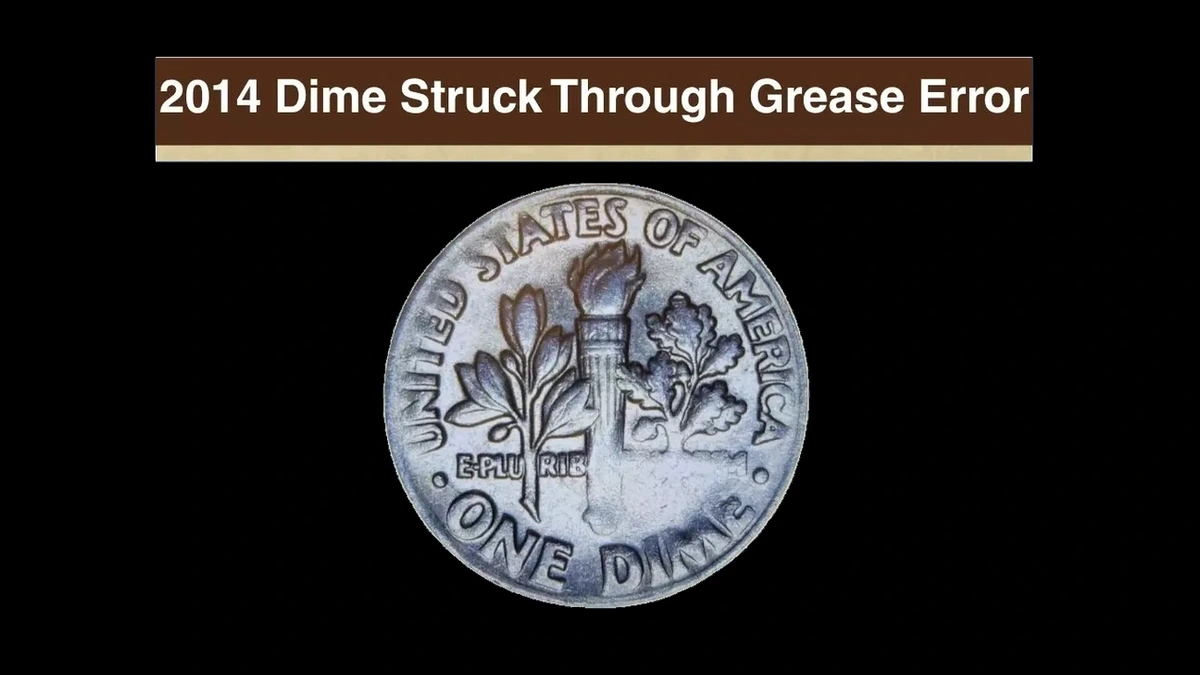
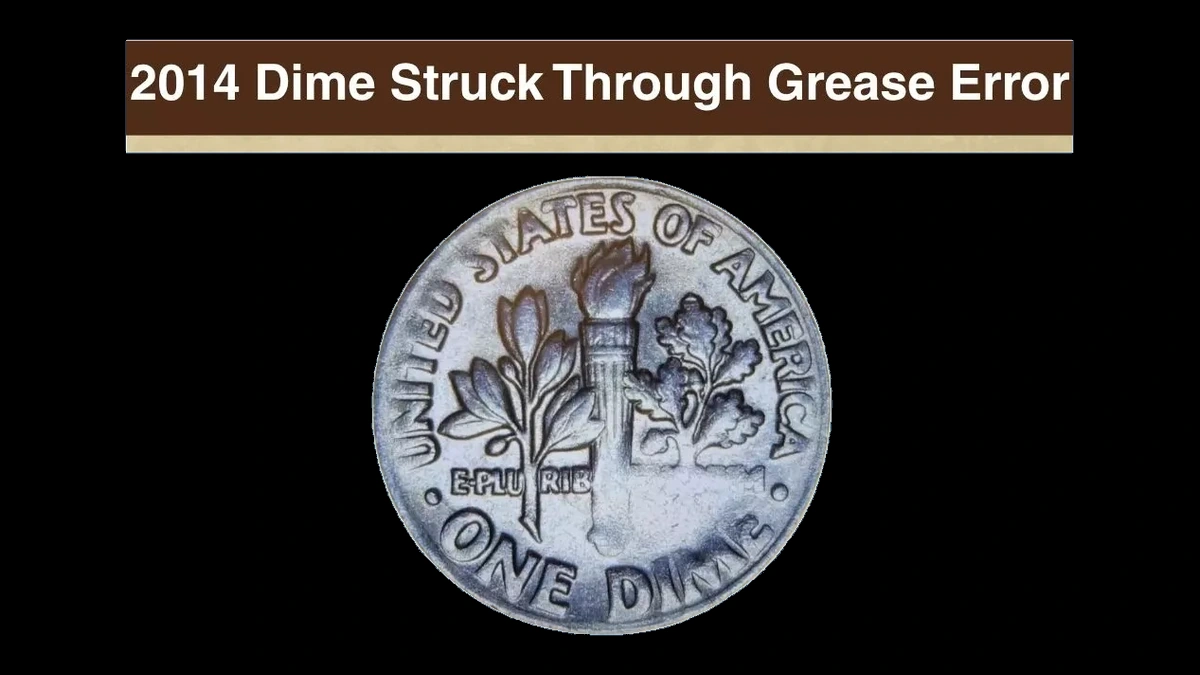
3. 2014 Dime A Broad Weak Area on the Front: Struck Through Grease Error
Grease or similar material blocking a die can stop part of the design from reaching the blank clearly. A die is the steel tool that stamps the coin.
A reported Philadelphia example has a broad weak front area and an MS60 grade. The report does not identify a wire or cloth impression.
How to Identify
Compare the weak area with sharp nearby details of similar height. Local interruption is different from circulation wear across the exposed high points.
Follow the transition into the faint design and look for an undisturbed struck surface. Sanding, polishing, and chemical damage can also remove detail.
The shape of a weak area does not reveal the exact substance by itself. Avoid assigning a specific solid object without its own supporting texture or outline.
What It’s Worth
$20–$350 is an estimated range from small faint interruptions to broader clear examples. Contrast with nearby strong design helps show what happened.
The MS60 grade alone does not create a high value. Heavy marks and a poorly defined patch can keep the complete coin near the lower end.
4. 2014 Dime An Extra Edge on an Olive Leaf: Doubled Die Error
The Philadelphia cataloged feature sits on the right side of a central olive leaf above RIB in PLURIBUS. The extra outline was present in the die before it struck the coin.
A separate Denver doubled-die report does not identify the affected face. It should not inherit the Philadelphia leaf position.
How to Identify
Find RIB on the back and move upward to the leaf. Compare its right-hand outline with Wexler’s 2014-P photographs.
Confirm the P beside the front date before applying that match. General thickness or ordinary torch-band detail is not a substitute for the extra leaf shape.
A flat shelf caused by movement during striking can look doubled too. Judge the actual formed detail instead of relying on one bright edge in a photograph.
What It’s Worth
$20–$150 is an estimated range for genuine minor doubled varieties. Sharp remaining leaf detail makes the Philadelphia pattern easier to identify.
Wear can soften this small feature. The separate Denver report needs its own matching design evidence before a variety premium is applied.
5. 2014 Dime Faint Parts of the Opposite Design: Die Clash Error
Dies can strike one another when no blank separates them. That contact can transfer design fragments between the tools.
Later coins may show those fragments beside the normal design. A Philadelphia 2014 clash is reported with an MS63 grade, but the precise transferred outline is not supplied.
How to Identify
Compare the unwanted shapes with clear pictures of both normal faces. Several connected marks should fit a recognizable part of the opposite design.
The jaw and torch areas can be useful places to inspect, but location alone proves nothing. Random scratches and polishing lines need a different explanation.
Change the lighting instead of cleaning the surface. Weak transferred detail can be easier to see from another angle.
What It’s Worth
$20–$200 is an estimated range for modest through clearly recognizable clashes. A clean surface and understandable transferred shapes help the comparison.
MS63 describes an unworn coin with noticeable marks, not the strength of a clash. The reported grade does not put every faint line in the same price range.
6. 2014 Dime A Raised Mound Joining the Rim: Cud Error
When a piece breaks from the edge of a die, metal can rise into the opening. The coin then has a rim-connected raised patch in place of normal detail.
This feature is called a cud. The supplied reports describe an MS65 example but disagree about its mint, rather than establishing two separate specimens.
How to Identify
Trace the raised area into the rim and inspect its boundary. Folded metal from an impact may retain damaged grooves or pushed-over details.
Look at the same area on the opposite face, where detail may be weak. That weakness can support the comparison but does not prove a cud by itself.
Read the mint directly from the coin or original image. The report does not justify assigning a fixed side, position, or crack path.
What It’s Worth
$50–$600 is an estimated range for genuine rim-connected breaks. A larger clearly formed patch can attract more attention than a tiny doubtful-looking bump.
The MS65 grade describes overall preservation and does not identify the cause of the mound. The inconsistent mint descriptions should not produce separate supposed Denver and Philadelphia premiums.
7. 2014 Dime A Two-Level Edge: Partial Collar Error
If only part of the blank sits inside the collar, the exposed portion can spread farther. A step forms between the normally grooved area and the less restrained metal.
A Philadelphia 2014 example is reported in MS64. Its exact edge-step position is not given.
How to Identify
Use an edge-on photograph and follow the transition around the coin. Front and back views alone may hide the two-level band.
Check how preserved grooves meet the expanded portion. Crushed grooves, a rolled rim, or bending can cause other kinds of unevenness.
A coin rocking on a table does not establish a partial collar. The natural edge structure must explain the step.
What It’s Worth
$40–$400 is an estimated range for genuine examples. A pronounced original ledge is usually easier to appreciate than slight unevenness.
Heavy edge damage can hide the relationship between the two portions. Compare the visible step and the remaining condition together.
8. 2014 Dime A Shifted Border or Turned Back: Die Alignment Error
A sideways die shift and a rotated die change different things. The first moves a design toward an edge; the second changes its angle relative to the opposite face.
The Denver MS64 report uses both kinds of wording without establishing which movement occurred. Two separate checks help resolve the difference on an actual coin.
How to Identify
First compare border widths on both sides. One displaced face with the other centered can indicate a sideways tool shift.
Then hold the front upright and flip the coin top to bottom without twisting sideways. The back should finish upright on a normally aligned United States coin.
Record the flip continuously so its actual angle remains visible. Two photographs separately turned upright cannot prove rotation.
What It’s Worth
$15–$450 is an estimated range from a slight alignment shift through a clearly demonstrated larger rotation. Those effects should not be treated as equal errors.
A small border difference may add little. The MS64 grade supplies neither a rotation angle nor a guaranteed premium.
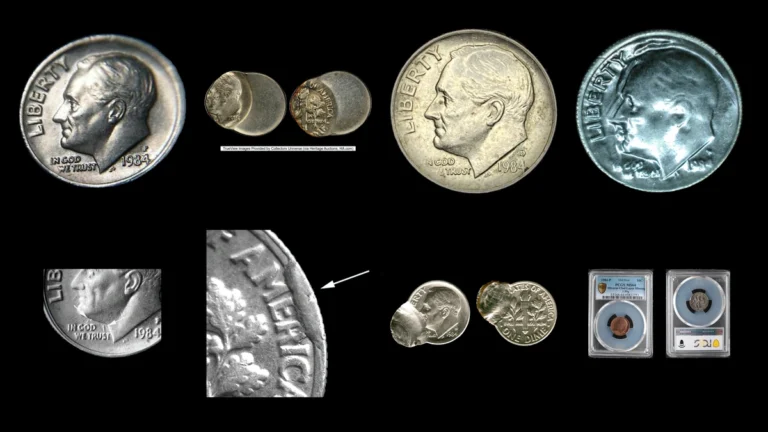
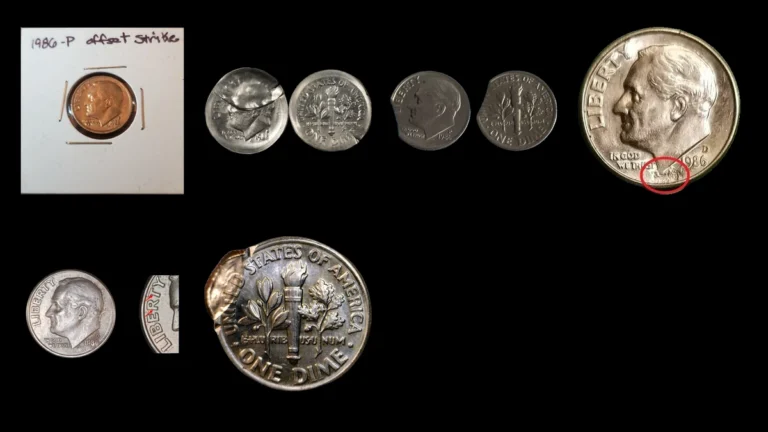
9. 2014 Dime A Blank Crescent Beside Missing Design: Off-Center Strike Error
A misplaced blank can receive only part of the intended design. It leaves an untouched crescent opposite details that run beyond the metal.
The Denver report describes a coin about 25% off center in MS63. Neither number supplies a clock direction.
How to Identify
Keep the 2014 date, D, and blank area in the same photograph. Check the other face for the corresponding boundary between struck and untouched metal.
Inspect the bare area for filing or flattened remnants of letters. An original off-center strike never formed those missing details on that area.
Another genuine example need not have the reported 25% shift. Describe the actual design loss rather than forcing every coin into that percentage.
What It’s Worth
$30–$500 is an estimated range for genuine dated examples. Clear remaining identification and attractive surfaces support better comparisons.
A 1977 dime struck 10% off center sold for $109 in June 2026. Its NGC MS64 Full Bands grade notes an unworn coin with clear torch-band separation, not a price or grade for the reported 2014-D example.
10. 2014 Dime The Whole Design Inside a Wider Outline: Broadstrike Error
A broadstrike expands beyond normal width because the collar does not contain the metal. The complete intended design remains on the coin.
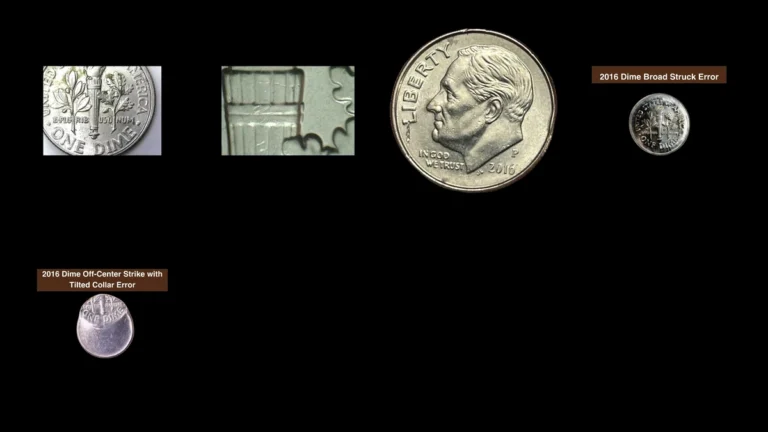
Denver examples appear in the year lists. A Philadelphia seller title uses both broadstrike and off-center wording, so its actual design fit must decide the classification.
How to Identify
Measure across several directions, then follow the outer lettering on both faces. A complete design on naturally spread metal supports broadstriking.
If the design is cropped opposite a bare crescent, use the off-center comparison instead. A smooth edge on an ordinary-size coin is not enough.
Look for hammered surfaces and crushed letters. Later flattening can widen a coin while damaging its already finished design.
What It’s Worth
$50–$550 is an estimated range for genuine 2014 broadstrikes. Clear expansion and preserved original surfaces help establish the comparison.
A 2000-P dime combining broad spreading with multiple strikes sold for $159 in September 2025. It is a different-year combined error, rather than a direct result for a simple 2014 broadstrike.
Conclusion
A useful 2014 dime inspection separates color from missing metal and an uneven border from a turned design. Each observation needs its own check rather than one broad label for anything unusual.
Estimated values span $15–$800. Keep the Philadelphia leaf variety and front-layer-loss coin distinct from the Denver reports, and protect any attached metal while comparing the complete coin.