Rare 1838 Liberty Seated Quarter Errors (List & Pictures)
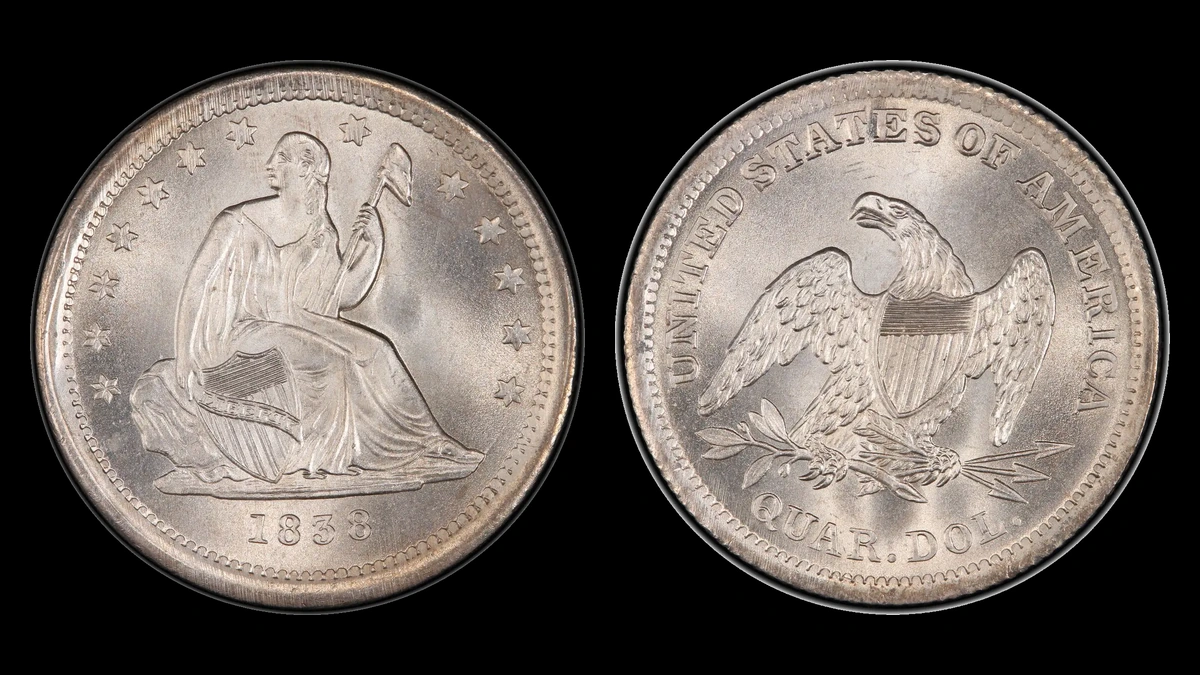
Confirm the seated figure before examining a damaged-looking rim: 1838 also saw a different Capped Bust quarter. The documented feature in this 1838 Liberty Seated quarter errors guide is a rim clip on a No Drapery example.
For genuine circulated clips, the supplied whole-coin estimate is $150–$1,000. The September 2024 catalog record identifies an ANACS F12 Details coin but hides its realized amount, so use the edge and surrounding strike to assess the feature before comparing condition.
1838 Quarter A Missing Section of the Original Edge: Rim Clip Error
GreatCollections included the 1838 Seated No Drapery quarter in the Rippere collection of clipped and incomplete-planchet errors. Its description identifies a rim clip without specifying the opening’s shape, percentage, or clock position.
A clip originates with an incomplete blank, before the coin receives its design. Metal and rim details then form around the pre-existing shortage during striking.
This is different from removing part of a finished quarter. An old-looking notch still needs physical evidence that it existed before the strike rather than appearing during later circulation.
How to Identify
Begin with the readable 1838 date, seated figure, and quarter denomination. No Drapery describes the normal design type and is not an additional error.
Photograph the whole coin and retain views of both faces before enlarging the gap. Since the short catalog description supplies no exact position, do not impose a location taken from another clipped quarter.
Inspect the missing section in profile and at its junctions with the surviving rim. Look for how the original struck border approaches the shortage rather than judging only the amount of absent metal.
File lines, cutting tracks, fresh burrs, or metal pushed up along the boundary can suggest later alteration. A naturally aged surface alone cannot eliminate those possibilities.
Normal references for a loose No Drapery quarter are about 6.68 grams and 24.3 millimeters. Wear and missing metal can reduce the actual weight, while later cutting also removes silver, so the scale result must accompany the edge examination.
Leave a certified example in its holder and use visible edge angles or recorded measurements. Preserving the original boundary is more useful than probing the missing section.
What It’s Worth
$150–$1,000 is estimated for genuine circulated rim-clipped examples. The size and clarity of the clip, surviving design, and overall surface condition all contribute to the complete coin’s price.
The Rippere collection archive lists the ANACS F12 Details example for September 29, 2024. Its accessible record does not disclose the realized amount, so it supplies an identified specimen rather than a public sale-price benchmark.
F12 indicates a worn coin, and Details records an additional condition problem whose nature is not stated in the short listing. Compare that piece with similarly worn problem coins instead of assuming cleaning, corrosion, or another specific issue.
Conclusion
The documented quarter establishes an 1838 Seated rim-clip example, while its exact notch and undisclosed sale amount require their own evidence. The normal No Drapery design should remain outside the error count.
Assess the gap together with both faces, the original edge, and the coin’s condition. Neither low weight nor an aged-looking missing section can replace a strike-based explanation of when the metal was lost.