Rare 1887 Dollar Errors (List & Pictures)
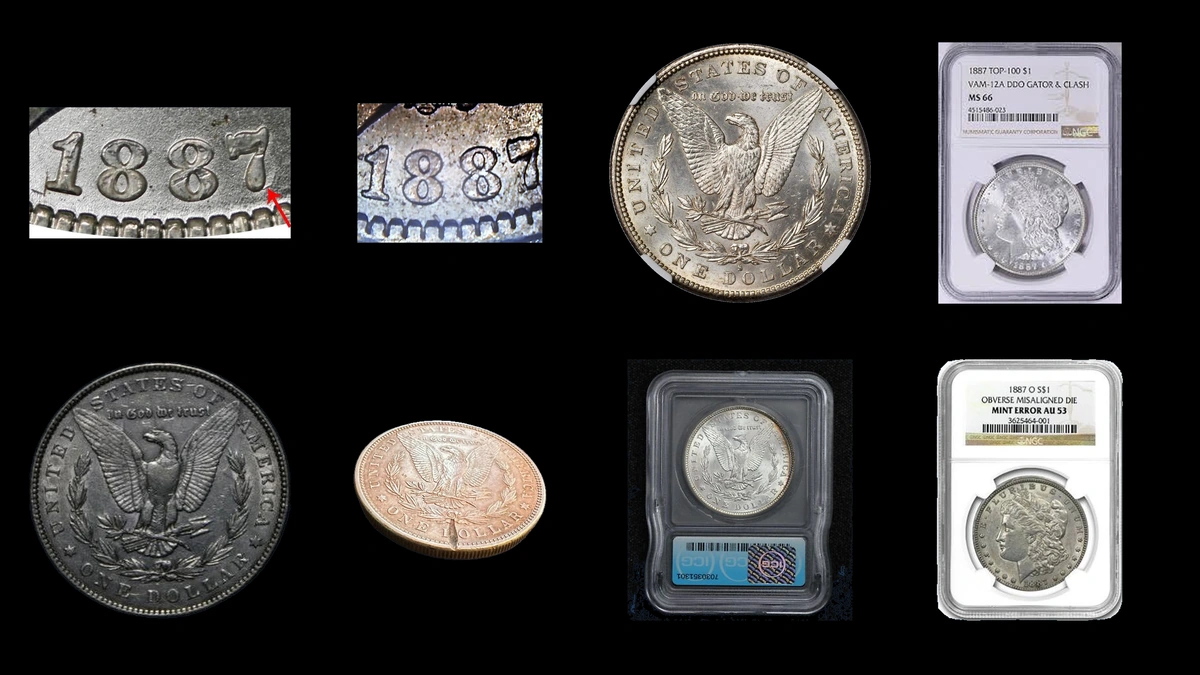
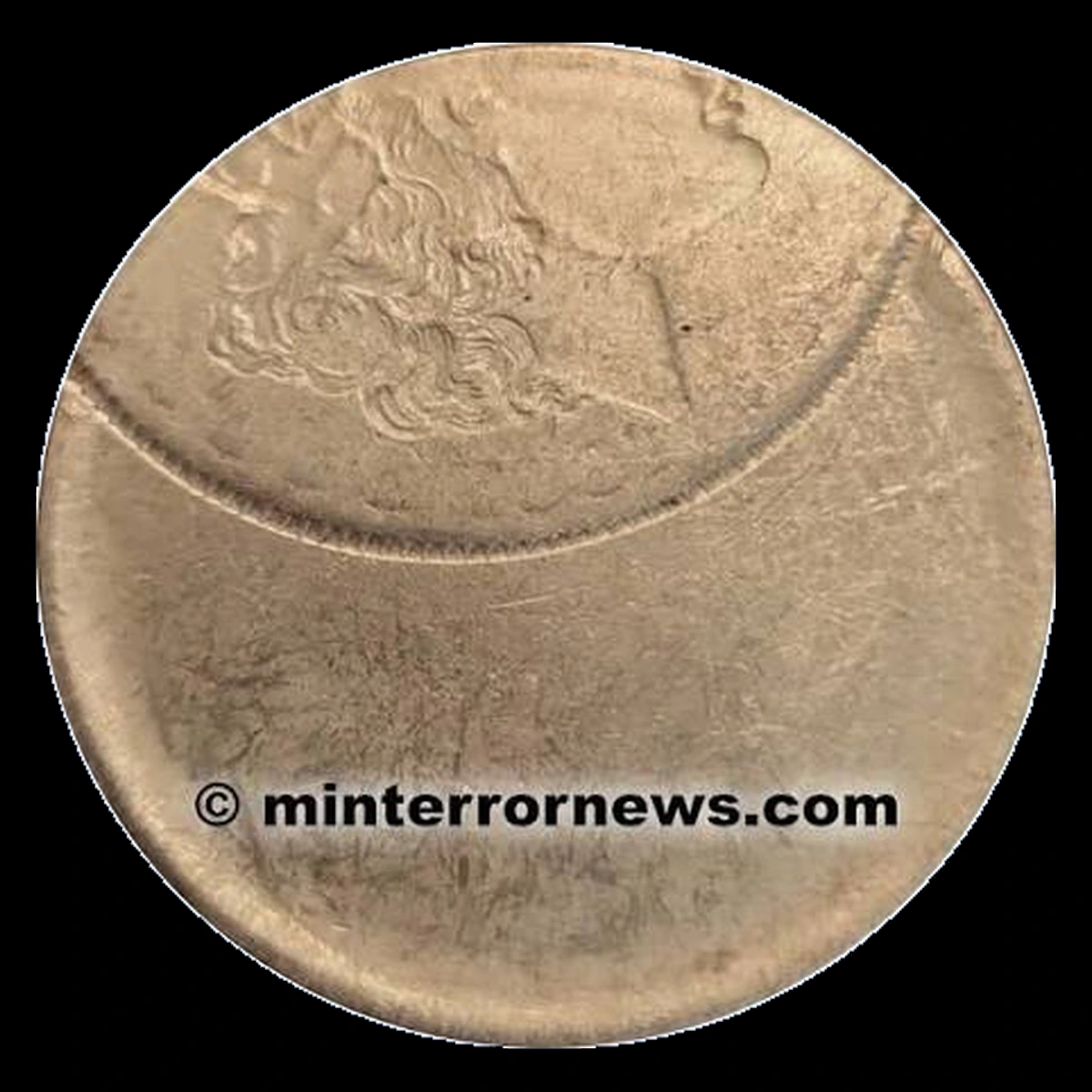
An 1887 dollar showing Liberty as both a raised portrait and a sunken mirror image sold for $78,000 in November 2024. That PCGS MS63 coin was also struck 55% off-center.
Most 1887 Morgan dollar errors are smaller clues in the date, mintmark, surface, or edge. Estimated whole-coin ranges below span $60–$90,000.
Use the mint and the kind of mark you see to choose a comparison, keeping each specimen’s grade and features together.
1. 1887 Dollar A Curve from 6 beneath the Final 7: Overdate Error
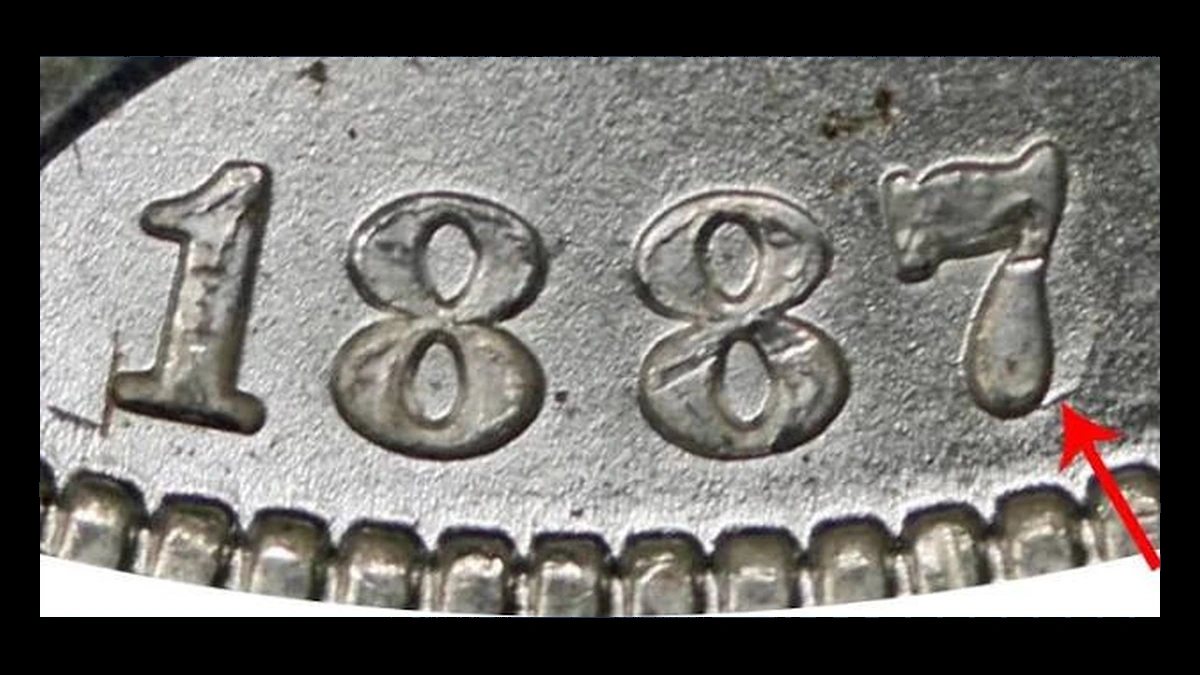
The 1887/6 date has part of an older 6 beneath the final 7. The die’s date was changed, and the later punch did not completely cover the earlier digit.
Philadelphia and New Orleans examples are known. The slash records the altered die date, not a coin that received strikes in two different years.
How to Identify
Examine the bottom of the final 7 for the old 6’s curved remnant. Compare its actual raised shape with an authenticated example rather than accepting a dark bump or scratch.
Then check beneath the wreath for an O or no mintmark. Use the corresponding mint’s variety photograph.
What It’s Worth
$75–$40,000 is the whole-coin estimate from worn overdates through exceptional unworn examples. Mint and grade account for large differences within that range.
PCGS records $27,600 for a Philadelphia MS65 overdate in July 2008. That high-grade result should not be applied to an ordinary worn piece.
2. 1887 Dollar Repeated Outlines of the Same Numbers: Repunched Date Error
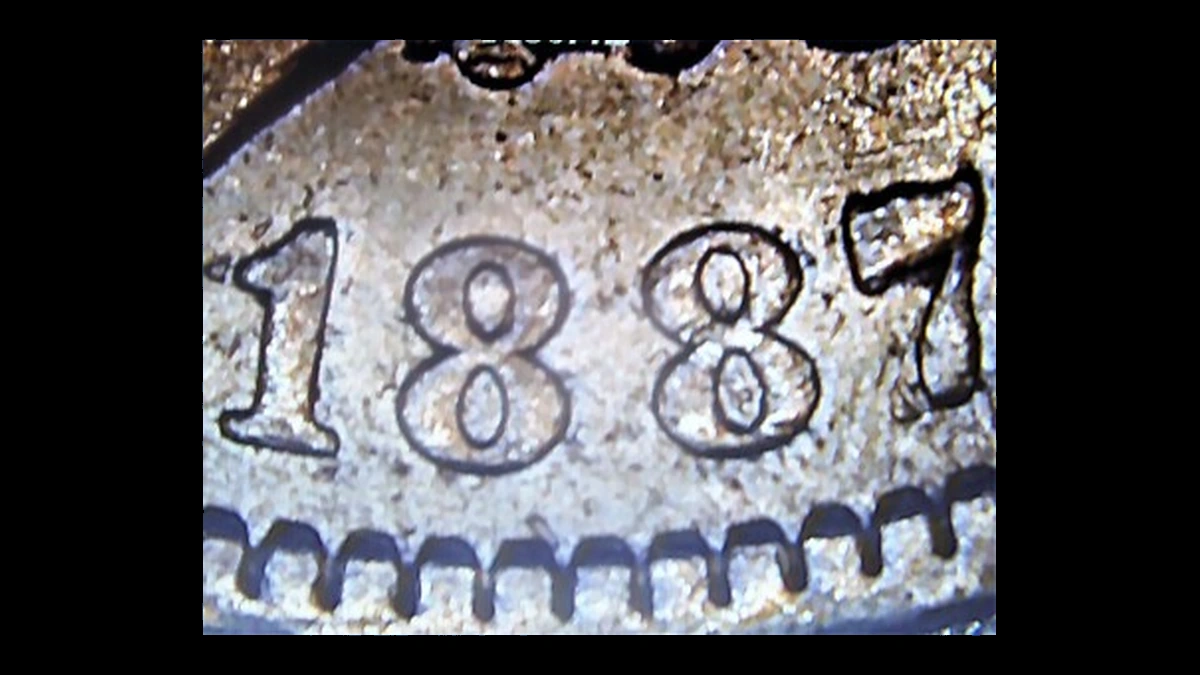
Other date varieties repeat parts of the same digits rather than preserving an old 6. Repositioning the date punch in the die left overlapping impressions.
Philadelphia reports concern the final 87. New Orleans reports point to the first 1 and final 7.
How to Identify
Identify the mint before selecting which digits to inspect. Follow the extra outline to see whether it belongs to an earlier position of the same number.
A remnant shaped like 6 requires the overdate comparison instead. Flat ledges and cuts across the date are not enough to establish either variety.
What It’s Worth
$75–$2,500 is the estimate across ordinary worn and unworn repunched-date coins. Clear remnants on original surfaces support a better comparison than faint or damaged detail.
The underlying mint and grade remain important parts of the total price.
3. 1887 Dollar An Earlier S inside the Upper Loop: Repunched Mintmark Error
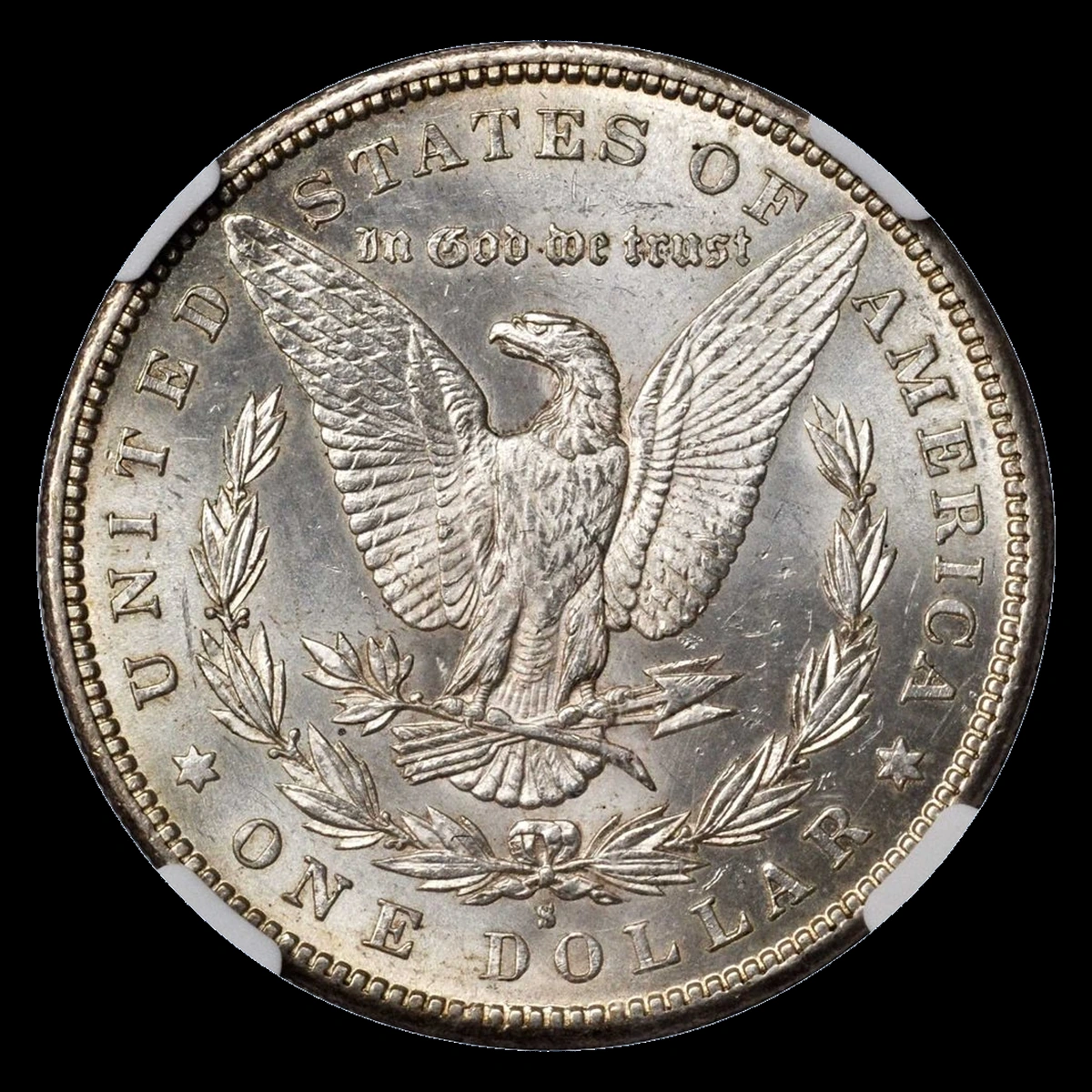
The reported 1887-S pattern has a surviving S curve inside the upper loop of the final letter. Workers applied the mintmark punch to the die more than once in slightly different positions.
Later coins copied that overlapping shape. The mark is below the wreath’s bow on the reverse.
How to Identify
Compare the upper-loop curve with a sharp authenticated close-up. Change the light to confirm that the apparent remnant is raised metal rather than a stain or reflection.
A flat shelf around the outside of S can come from striking movement. Also inspect the letter’s base and nearby surface for alteration or an added mintmark.
What It’s Worth
$100–$4,000 is the estimated whole-coin range from worn examples to better unworn pieces. The San Francisco issue and surface preservation contribute heavily to that spread.
This pattern should not receive the price of another date’s famous Micro S merely because both involve small mintmark details.
4. 1887 Dollar A Line at Liberty’s Eye or Doubled Stars: Doubled Die Error
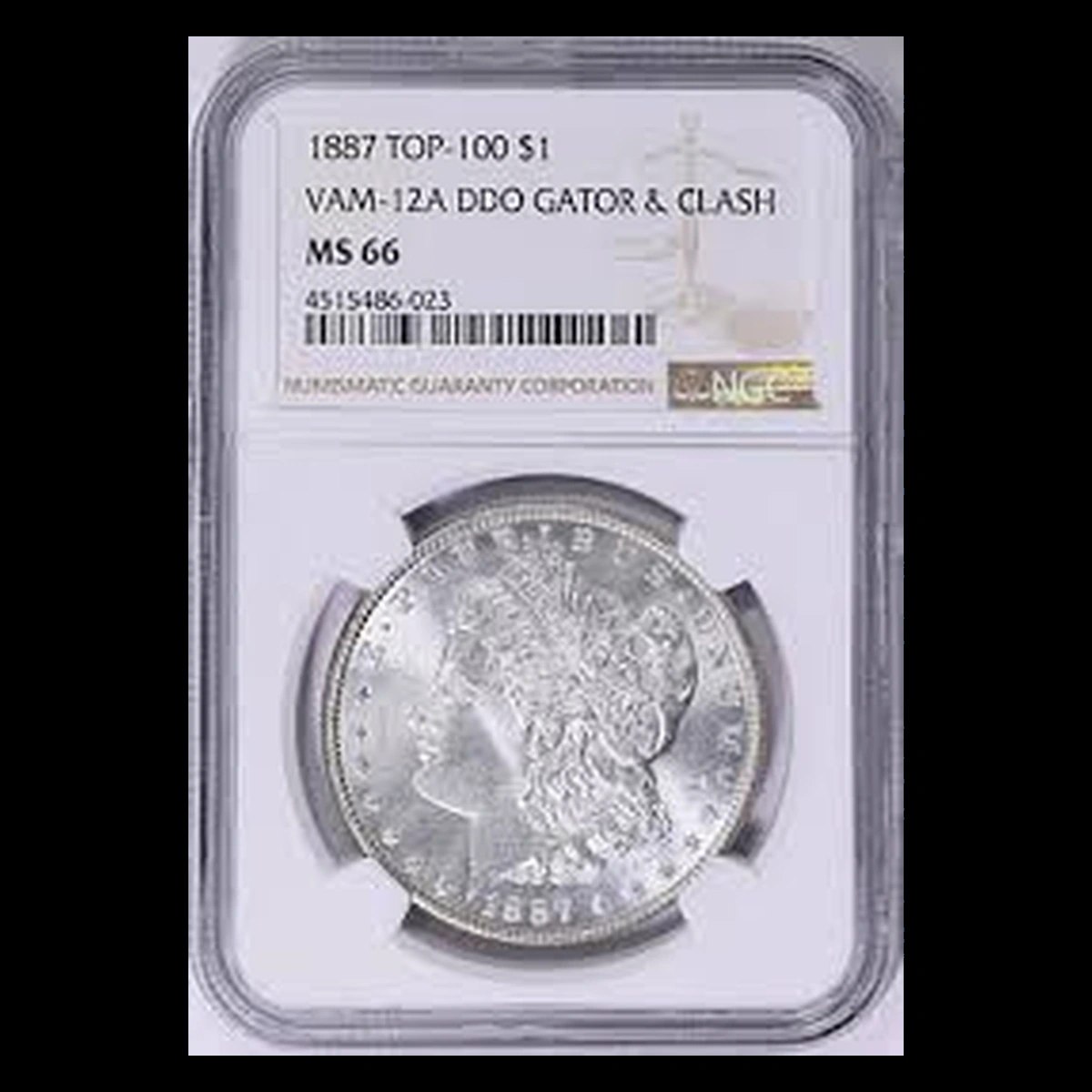
Philadelphia’s Alligator Eye has a thin extra line at the front of Liberty’s eye. It comes from a repeated design in the die, not a second strike on the coin.
Separate reports cover doubled New Orleans stars and Philadelphia reverse details. The different locations are not interchangeable tests.
How to Identify
For Alligator Eye, match the extra eye line and surrounding shape to the known Philadelphia pattern. A scratch across the eye does not qualify because it points in a similar direction.
For New Orleans stars, compare several matching points. Reverse doubling needs its own exact reference rather than front-side landmarks.
Look for rounded repeated detail that remains fixed as the light changes. Flat shelves from striking movement require a different explanation.
What It’s Worth
$75–$4,000 is the estimate for doubled-design varieties across ordinary worn through high unworn grades. Strong preservation supports the upper part.
A Philadelphia Alligator Eye graded PCGS MS67 brought $3,760 in August 2016. That result belongs to a very high-grade specimen, not every line near Liberty’s eye.
5. 1887 Dollar A Tail on D or Lumps along the Rim: Die Breaks Error
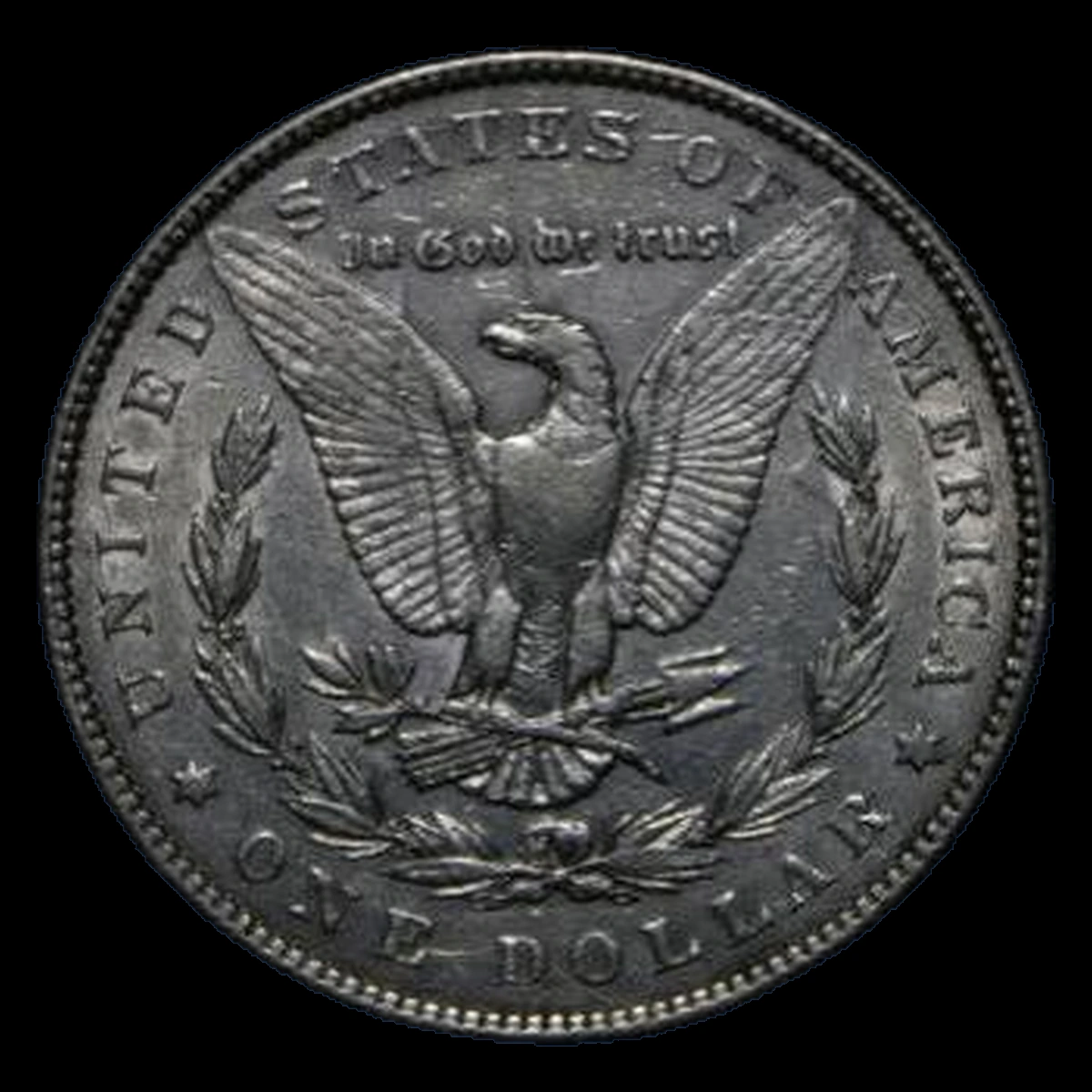
The Philadelphia Donkey Tail is a raised extension at the lower-right side of D in DOLLAR. A broken piece of die left room for the extra silver.
New Orleans reports instead describe small raised areas at the front rim and border teeth. One places several between about five-thirty and eight o’clock.
How to Identify
Use the mintmark to choose the correct face and location. Match Donkey Tail’s complete outline, not merely any blob touching D.
For an O-mint coin, compare the actual lower-front rim marks with their own reference. Attached debris or metal pushed by a later blow can also create lumps.
What It’s Worth
$75–$12,000 spans minor rim breaks through scarce, well-preserved Donkey Tail pieces. Most small rim lumps belong far below the upper end.
A PCGS-recorded Donkey Tail MS63 result is about $9,988 from April 2017. It is a Philadelphia variety price, not a comparison for every New Orleans rim bump.
6. 1887 Dollar Raised Reverse Spots: A Pitted Die Error
“Pitted reverse” describes holes in the tool on this 1887-O variety. Silver filled those small hollows, leaving bumps on the coin.
That is the opposite of corrosion eating depressions into finished silver. General roughness does not establish the variety.
How to Identify
Compare several raised points beside the same design landmarks in an authenticated 1887-O photograph. The arrangement matters more than the overall texture.
Use low light from two directions to see whether the spots rise or sink. Toning, bag marks, and corrosion can otherwise create misleading shadows.
What It’s Worth
$75–$1,000 is the estimated range for a correctly matched pitted-die variety in ordinary conditions. Original surfaces help preserve the pattern.
An 1891-O Pitted Reverse graded AU53 has a recorded $775 sale from August 2019. That different-year comparison is not a transaction involving the 1887 variety.
7. 1887 Dollar A Peeling Area on the Back: Lamination Error
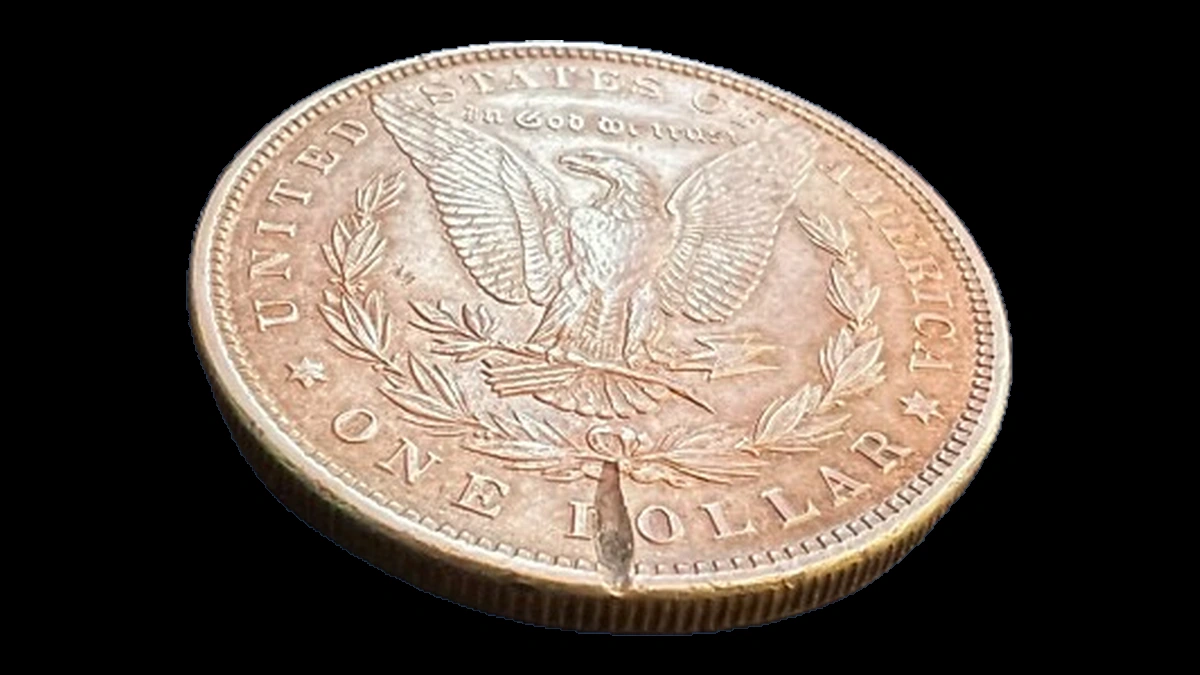
A thin surface layer can separate along a weak area within the alloy. An 1887 Philadelphia dollar graded NGC MS65+ has a recorded reverse lamination.
The flaw is local peeling, not evidence that the entire dollar split into two halves. Attached and detached flakes can have different appearances.
How to Identify
Find the boundary where the metal lifts or disappears. Look for a natural layered break instead of tool cuts or a pushed lip from a gouge.
Keep an attached flap untouched because its design and attachment help explain the separation. A small missing flake may barely change the normal 26.73-gram weight.
What It’s Worth
$75–$1,000 is the estimate for genuine 1887 laminations. The size and appearance of the separation matter as well as the grade.
The NGC MS65+ reverse-lamination coin sold for $162 on July 1, 2020. A high unworn grade does not make every small flaw extremely expensive.
8. 1887 Dollar A Hollow Interrupting the Design: Strike-Through Error
An obstruction between a blank and die can leave an impression instead of normal design detail. The shape does not always reveal what material caused it.
One reported 1887 dollar graded NGC Uncirculated Details has a front impression. A separate NGC MS63 coin has a long affected area on the reverse.
How to Identify
Follow an intact design line toward the depression and see how it stops. An obstruction prevents detail from forming, whereas a later gouge cuts through an existing design.
Check for torn metal, pushed edges, and tool marks. Do not call the impression cloth, grease, or wire without supporting evidence, and leave any retained material attached.
What It’s Worth
$100–$3,000 is the estimated range for genuine strike-throughs. Depth, shape, visibility, and surface condition influence demand.
An 1899-O dollar with retained wood on the reverse brought $504 in October 2022. That different-year, retained-object sale should not automatically price an empty 1887 depression.
9. 1887 Dollar A Small Missing Rim Section: Clipped Blank Error
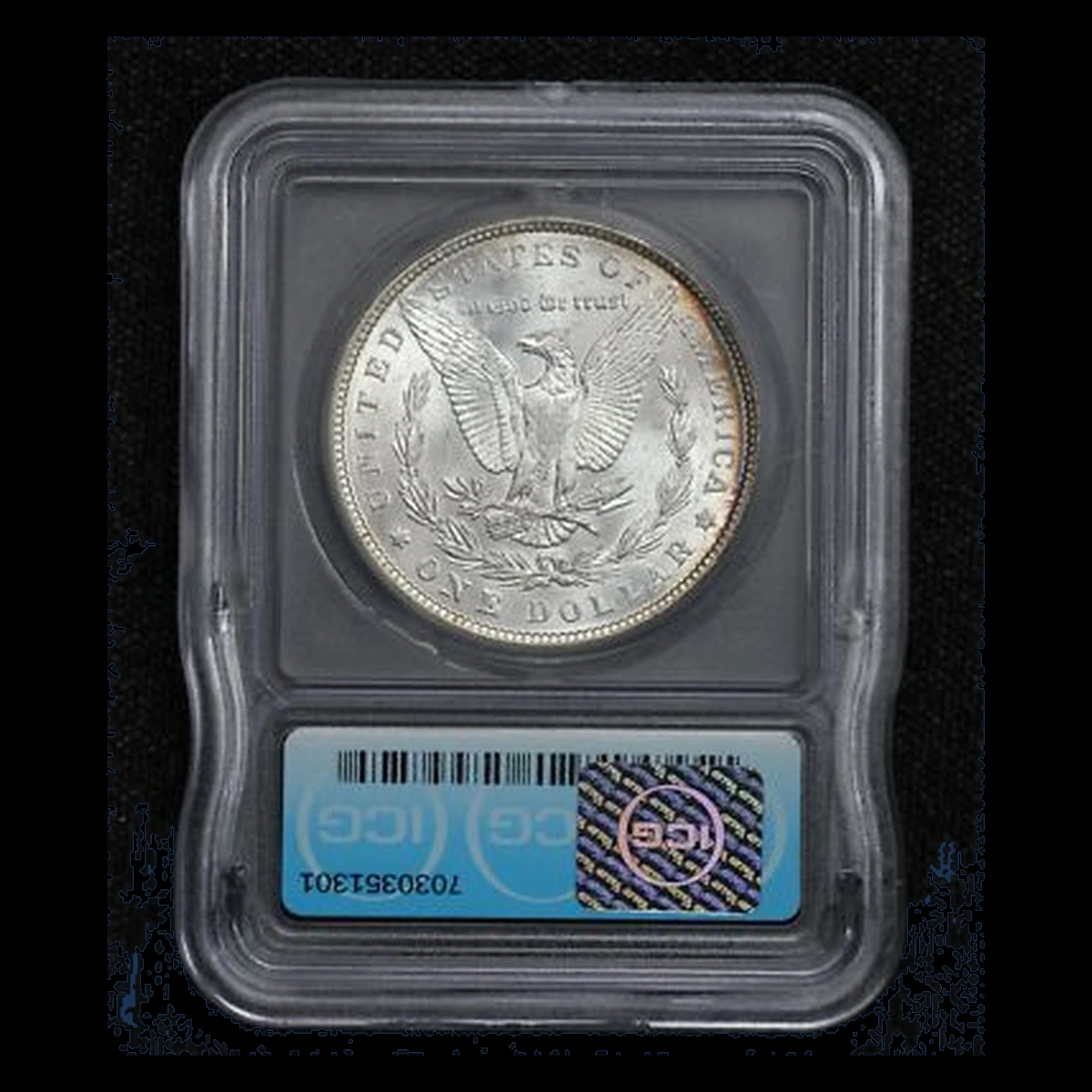
A recorded 1887-O PCGS MS64 dollar has a shallow clip near twelve-thirty. Another New Orleans clipped example is reported in an ICG MS62 holder.
The missing section was absent from the blank before striking. A later rim nick or filed area has a different production history.
How to Identify
Orient the front before comparing the PCGS coin’s upper-edge gap. Inspect both ends and the inner surface for natural transitions rather than file strokes, cuts, or bent metal.
Opposite-rim weakness can support a clip but may be faint. A tiny missing section may also have little effect on weight.
The separate ICG coin needs its own location and edge photographs. Do not transfer the PCGS specimen’s grade or position to it.
What It’s Worth
$150–$1,500 is the estimated whole-coin range for genuine 1887-O clips. Amount missing, visibility, condition, and secure identification matter.
The two holder descriptions establish separate examples, not a shared sale price or fixed clip size.
10. 1887 Dollar Incomplete or Sloping Edge Grooves: Partial Collar Error
An 1887-S dollar has grooves covering only part of its edge and sloping along it. The collar, the ring that controls width and forms the grooves, did not contact the whole edge normally.
Philadelphia MS63 and New Orleans AU55 examples are also recorded. Each has its own edge pattern and must be inspected separately.
How to Identify
Follow the grooved band around the circumference. A step or slope into smoother metal can reveal where collar contact ended.
Check for filing or crushing that removed grooves later. Both faces may look fairly normal, so an edge photograph is essential to the comparison.
What It’s Worth
$150–$4,000 is the estimate across genuine examples of this year and the recorded mints. Stronger original edge distortion can attract more interest than a subtle effect.
The San Francisco PCGS AU50 tilted-edge example sold for $252 in September 2019. Its grade and pattern do not describe the separate Philadelphia or New Orleans coins.
11. 1887 Dollar One Face Sits Unevenly: Misaligned Die Error
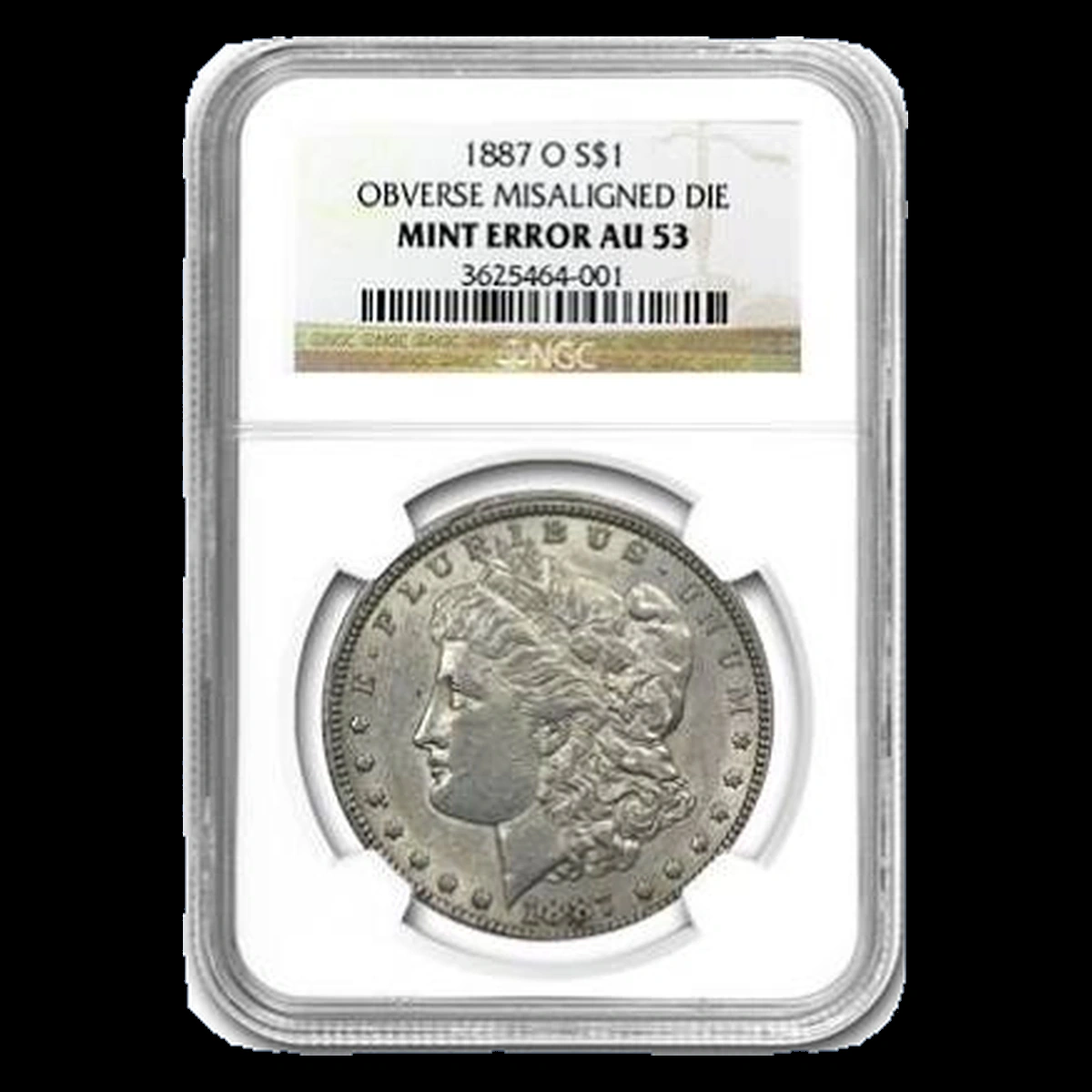
A die can sit to one side while the opposite die remains better centered. This creates a one-sided design shift rather than moving the entire blank off-center.
A documented 1887-O example was graded ANACS VG10 Details with damage. Its original shift must be separated from its later surface problems.
How to Identify
Use straight-on photographs of both faces and compare rim space around the outer lettering. Determine whether only one design has moved relative to the original outline.
Use intact rim sections for this comparison. A flattened or damaged edge can make the border look uneven without shifting the struck picture.
What It’s Worth
$60–$600 is the estimate for genuine 1887-O misalignment. Mild shifts often add little, while clear displacement on better-preserved metal is more noticeable.
The VG10 Details coin’s damage remains part of its valuation. An original mint error does not remove the effect of later problems.
12. 1887 Dollar The Eagle Tilts after a Flip: Rotated Dies Error
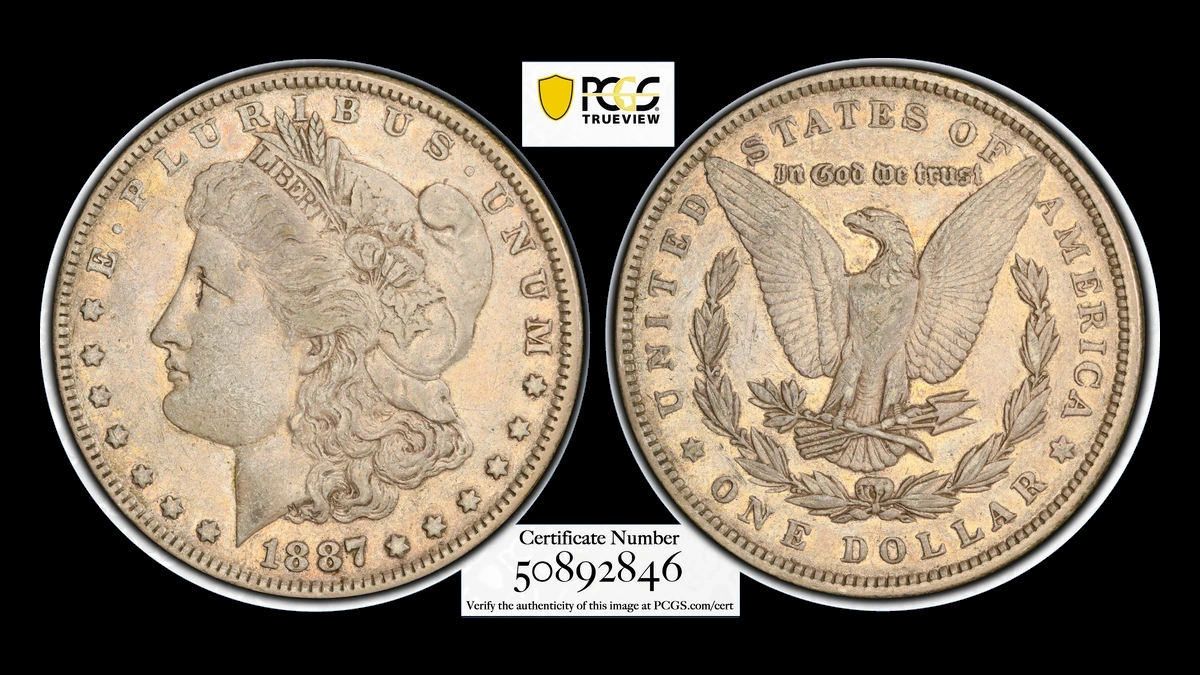
Recorded Philadelphia 1887 dollars have substantial rotations in different directions. One die turned away from the normal alignment of the pair.
Rotation changes the angle between the faces. It does not necessarily move either design toward the rim.
How to Identify
Hold Liberty upright against a vertical reference and flip the coin top to bottom without twisting. Repeat to see whether the eagle returns to the same tilted position.
Use the eagle’s body and wreath as the reverse centerline. For a holdered coin, turn the whole holder rather than opening it.
Do not straighten the two photographs independently. Record the actual repeatable angle instead of forcing the coin to match another example’s number.
What It’s Worth
$75–$800 is the estimated range for genuine rotations in ordinary worn and unworn grades. Large, clearly demonstrated angles can have more appeal than slight deviations.
A seller’s separately upright photographs cannot establish the error. The physical front-to-back relationship must support the premium.
13. 1887 Dollar A Wide Blank Area beside a Partial Design: Off-Center Strike Error
The documented 30% off-center dollar was struck toward two-thirty. Its date survives except for the tail of the final 7, and the intact reverse mintmark area has no letter.
NGC assigned AU Details with cleaning. Small oval strike-through marks on the chin and neck belong to this same coin.
How to Identify
Compare the bare crescent with the design that runs beyond the original metal. Match the partial final digit and surviving lettering to the documented specimen.
The intact blank mintmark area supports Philadelphia here. If that area were missing, a mint could not be assigned merely from the absence of a letter.
Check both faces and the edge for cutting or later flattening. Original unstruck metal remains part of the blank rather than being an area where finished detail was removed.
What It’s Worth
$3,000–$30,000 is the estimate for substantial genuine 1887 off-center strikes with identifiable dates. The whole appearance and surface condition affect the comparison.
Heritage sold the cleaned 30% example for $18,300 on January 15, 2026. Its smaller strike-through marks are included in that one coin’s price.
14. 1887 Dollar Sunken Reversed Liberty on the Back: Off-Center Brockage Error
The exceptional PCGS MS63 dollar shows normal raised Liberty on the front and a sunken mirror image on the back. Another struck coin blocked the normal reverse die and pressed its design into the blank.
This reversed impression is called brockage. The same coin was struck 55% off-center while retaining its full 1887 date.
How to Identify
Read the back image first: it should be recessed and reversed, showing Liberty rather than the normal eagle. Compare it with the raised front and large unstruck area.
Later squeezing of finished coins can also make reversed impressions. Authentic striking needs the correct metal flow and connected design relationships, not a mirror image alone.
Match both faces with photographs of the certified coin. It is separate from the cleaned 30% off-center example described above.
What It’s Worth
$40,000–$90,000 is the estimate for a comparable major dated off-center brockage. The full date, strong displacement, and readable mirror image work together.
The PCGS MS63 combination realized $78,000 at Stack’s Bowers on November 19, 2024. It receives one overall value, not separate off-center and brockage prices added together.
Conclusion
The first useful distinction is between a repeated design, extra raised metal, missing metal, and a shifted strike. Each points to a different set of checks on an 1887 dollar.
Keep mint, grade, and specimen details together when comparing photographs or auction results. The major mirror-image coin is exceptional, while smaller varieties still need an exact match rather than a familiar nickname or an unusual-looking mark.