Rare 1866 Quarter Errors (List & Pictures)
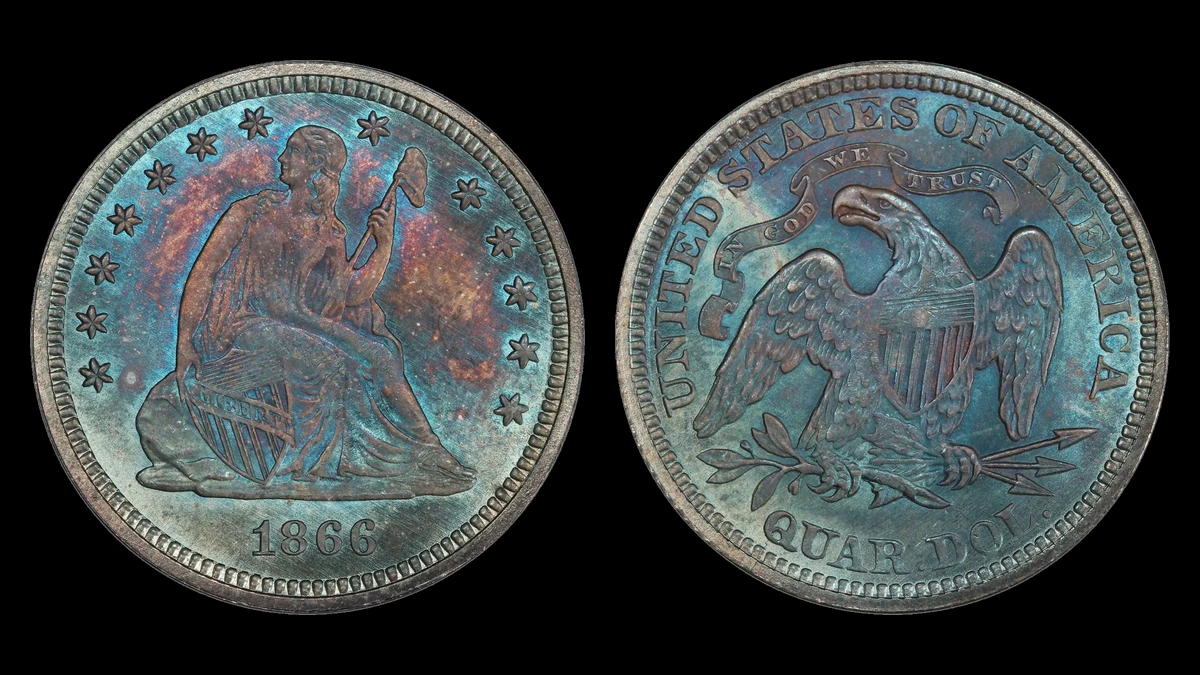
One useful clue on an 1866-S quarter connects two landmarks: the eagle’s arrows and the last A in AMERICA. This 1866 quarter errors guide covers that documented raised crack, with estimated whole-coin values of $500–$20,000.
The recorded PCGS MS62 example sold for $2,990 in September 1999. Its scarce date and unworn condition are central to that historical price, rather than the thin line alone.
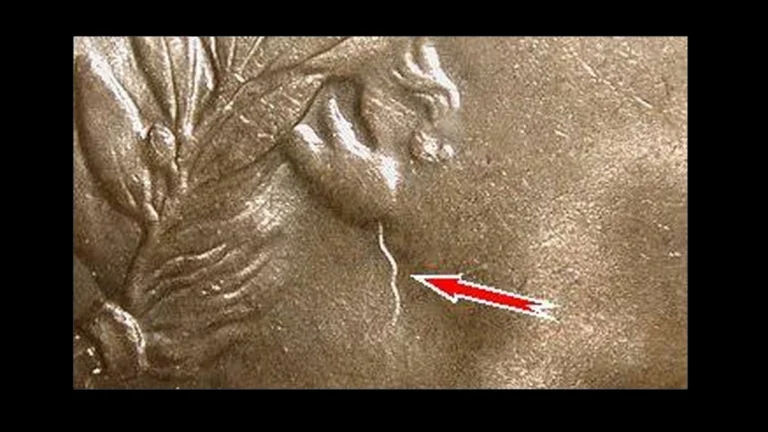
1866 Quarter A Raised Line from the Arrows through AMERICA: Die Crack Error
The documented line begins around the eagle’s arrows and passes through the final A in AMERICA. Its position helps distinguish this example from an unrelated mark elsewhere on the reverse.
A die is the steel tool used to strike a coin. When that tool cracked, silver entered the opening and formed a raised copy of the break on the quarter.
The coin itself did not need to split along that line. A later scratch works in the opposite way by cutting into already struck silver.
The recorded example is a San Francisco ordinary strike graded PCGS MS62. That grade means it has no circulation wear but does have noticeable marks.
How to Identify
Locate the arrows and the last A before zooming in. Keep both in one photograph so the entire route remains visible.
Bring light across the surface from a low angle and inspect the line’s height. A ridge above the neighboring silver supports a die crack, while a trench suggests a scratch.
Pay particular attention to the crossing at the A. A dark streak in the open field or a short burr beside a letter does not establish the full documented path.
Turn the light and check the same section again. Toning can exaggerate a line in one photograph, so follow the actual raised metal rather than its darkest edge.
Include the S beneath the eagle in the full reverse view. Both the San Francisco identity and the arrows-to-A route belong to this comparison.
What It’s Worth
$500–$20,000 is the estimated whole-coin range across worn and attractive unworn examples. The scarcity of the 1866-S issue accounts for much of that value.
Heritage’s historical list records the cracked MS62 coin at $2,990 in September 1999. The main coin on that later auction page is a different, higher-grade specimen.
Do not transfer the later page’s grade to the historical cracked coin. The amount and grade need to stay attached to the same example.
A visible crack does not cancel cleaning, wear, or scratches. An ordinary worn candidate should not receive an exceptional-grade price because it preserves the same raised route.
Conclusion
The arrows and final A give you a specific path to compare, with the S confirming the mint. Establish that the line is raised before treating it as a feature copied from a cracked die.
The old $2,990 result records one MS62 coin. Any closer estimate must account for the complete quarter’s preservation and scarce-date value, not only the survival of the crack.