Rare 1989 Dime Errors (List & Pictures)
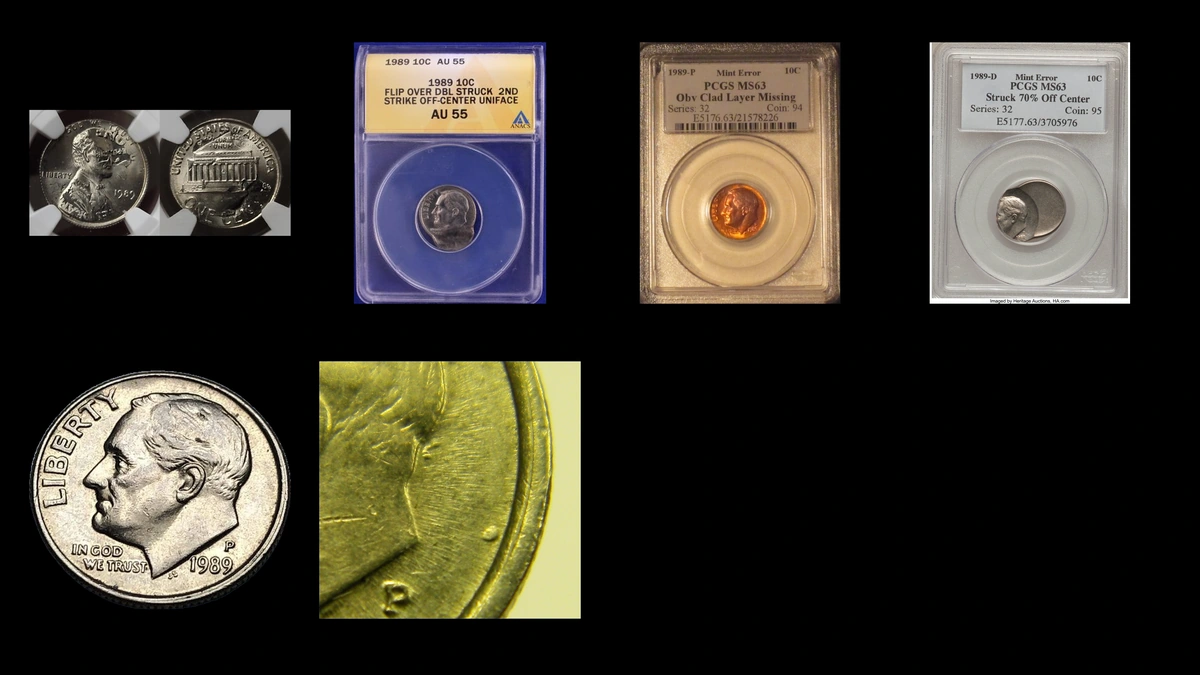
A large blank crescent and two denominations on one coin can produce very different prices among 1989 Roosevelt Dime errors. A Philadelphia off-center dime brought $45, while a 1989-P dime later struck with a 1990 cent design reached $2,160 in September 2025.
Estimated values below span $5–$3,000. Follow the designs and metal first, then inspect the edge and small die features to choose the appropriate comparison.
1. 1989 Dime Lincoln Overlies Roosevelt’s Earlier Design: Cent over Dime Error
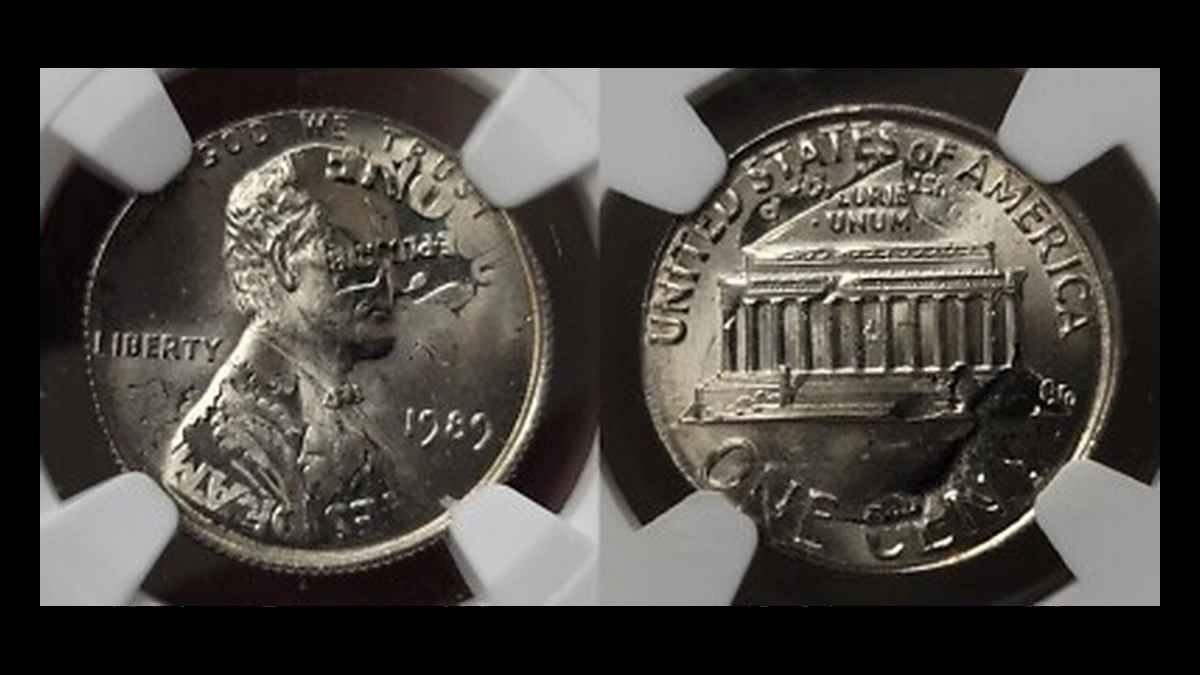
The starting coin was an already struck dime that entered a cent press. The later blow added Lincoln and the Memorial over the earlier Roosevelt and torch designs.
One listed combination has a 1989 cent design over a 1989-P dime, while another has a 1990 cent design over a 1989-P dime. Both are described as ANACS MS63, but that shared grade does not establish one specimen.
How to Identify
Find recognizable cent details and trace the earlier dime design beneath them. Read each surviving date separately to establish whether the later cent strike is 1989 or 1990.
The original metal belongs to a clad dime, whose normal starting weight is 2.268 grams and diameter 17.91 millimeters. A cent’s 2.50-gram standard is not the correct starting reference for this direction of overstrike.
Inspect remaining edge grooves and the outline changed by the cent strike. This is not a dime design on an unused cent blank.
What It’s Worth
Comparable identified cent-over-dime errors are estimated at $900–$3,000. Clear remnants of both designs help explain the sequence and support collector interest.
The 1990 cent over a 1989-P dime sold for $2,160 on September 29, 2025. No sale amount is supplied for the separate same-year 1989 combination.
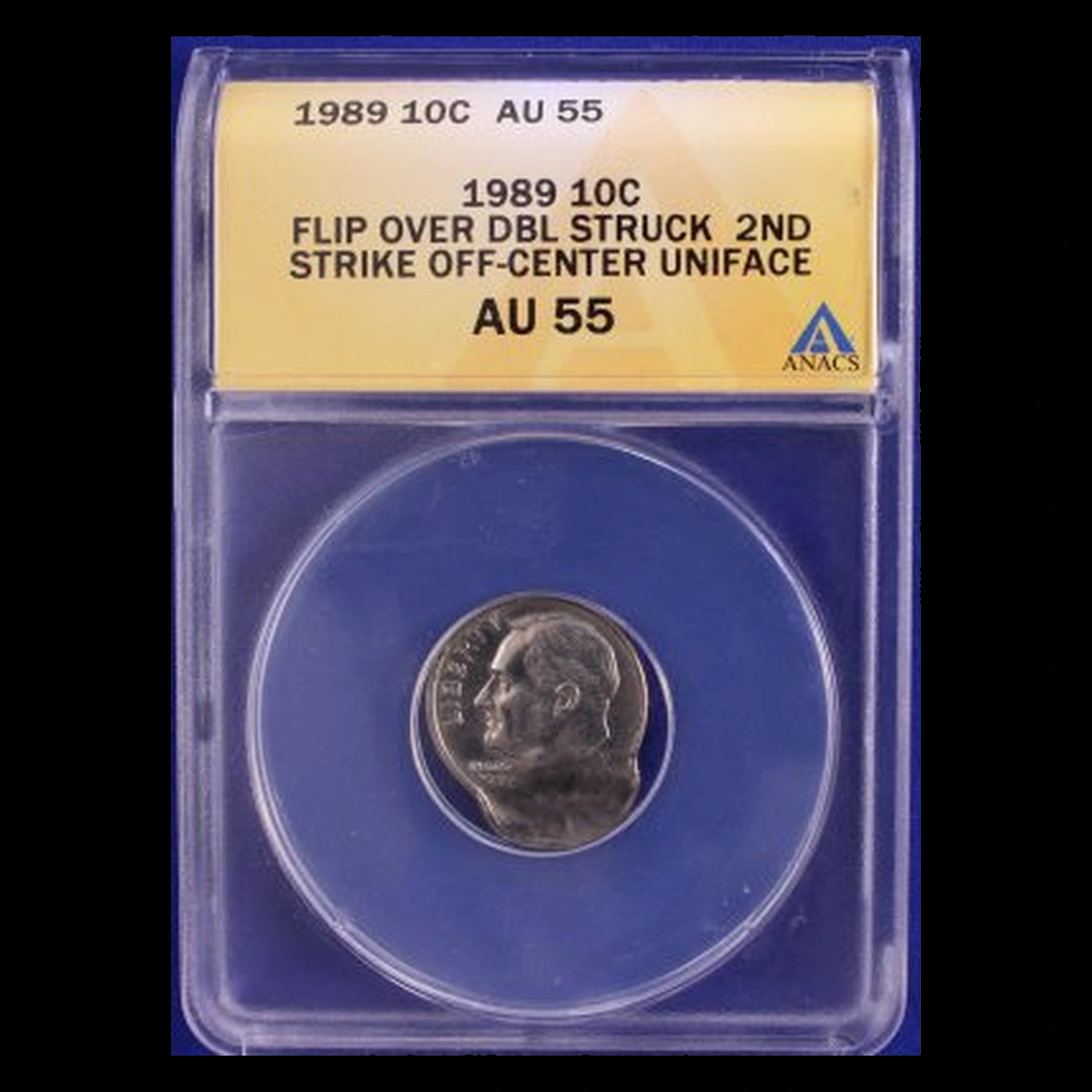
2. 1989 Dime A Date Appears on the Reverse: Flipover Double Strike Error
The owner-reported coin received a strike, turned over, and received an off-center second blow. A strong date appears near the upper reverse, while a blocked area covers the earlier date on the front.
The owner’s description and photographs identify a flipover double strike with one face blocked during the later blow. They supply neither a confirmed mint nor a displacement percentage.
How to Identify
Locate the unexpected reverse date and compare it with the blocked region over the earlier front date. Opposite-face details and overlapping impressions should explain the flip together.
Keep both faces in their original orientation when photographing them. Do not import a mint, percentage, or turning angle from another specimen.
Faint traces alone might reflect a die clash instead. The proposed double strike must account for the displaced date and the later obstruction as parts of one coherent sequence.
What It’s Worth
A genuine readable example is estimated at $250–$1,200. The reported piece has some wear and should not be compared as a pristine high-grade coin.
No completed price is assigned to it here. The off-center and blocked-face features belong to the whole coin’s value rather than separate amounts to add.
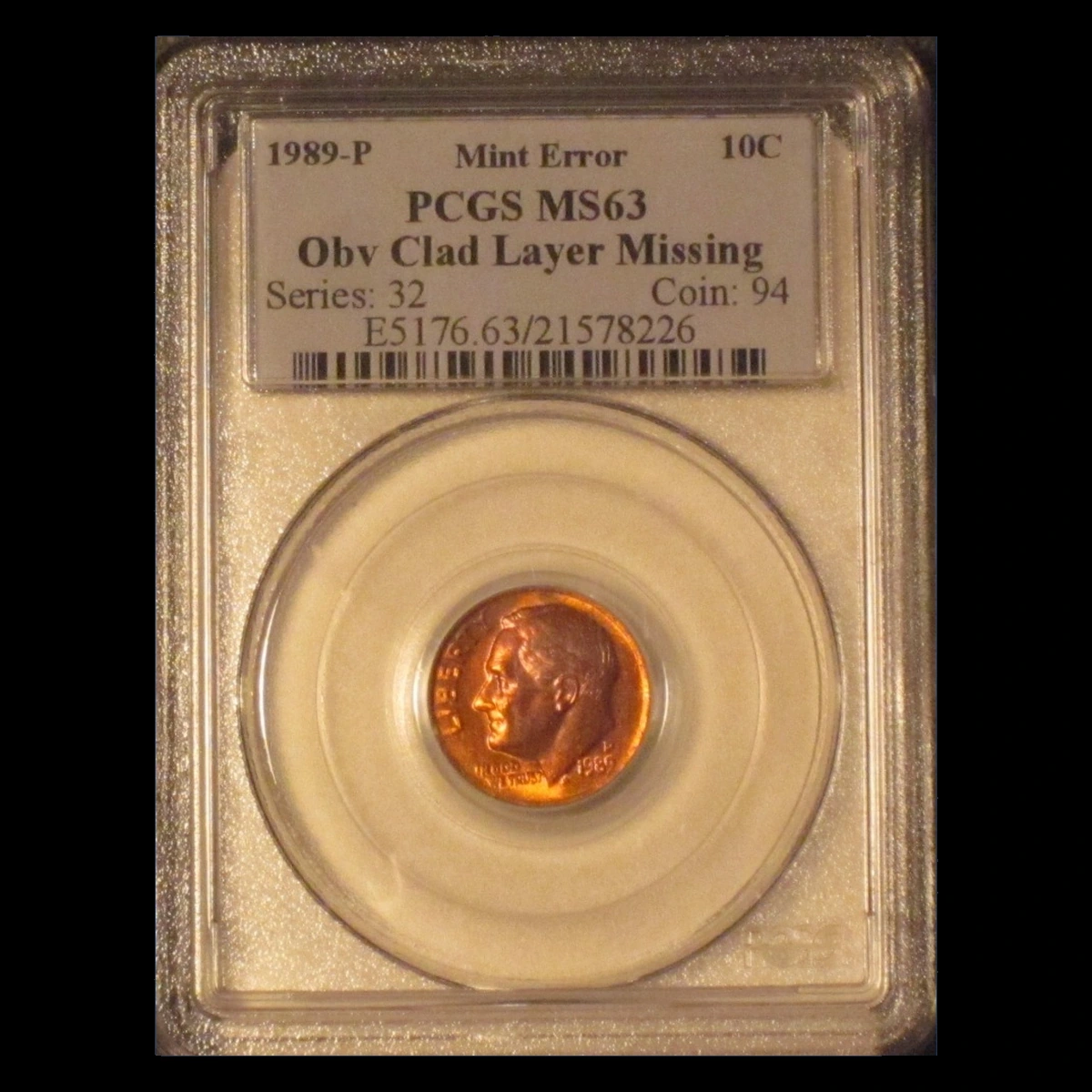
3. 1989 Dime An Orange-Red Face Exposes the Copper Center: Missing Clad Layer Error
The documented Philadelphia ANACS MS63 dime has an orange-red front where an outer layer is missing. Its thinner blank helps explain weak detail near the border.
The catalog also notes a fine scratch below the date. That scratch is later damage, while a separate Denver missing-layer report supplies neither a specific face nor a measured weight.
How to Identify
Inspect the remaining layers at the edge and compare them with the exposed copper face. Physical layer loss should fit the coin’s construction and reduced mass, not just its color.
Check for chemical etching, pitting, or artificial removal. A generic table’s 2.268-gram dime standard is not a measured weight for the error.
The Philadelphia scratch is not a required diagnostic for every missing-layer coin. Do not transfer its front description, grade, or damage to the unmeasured Denver report.
What It’s Worth
Genuine single-layer losses are estimated at $60–$400. The Philadelphia specimen brought $92 on August 23, 2004.
A cleaner exposed surface can be more appealing than a scratched or spotted one. The Denver report has no sale result from which to assign its own exact value.
4. 1989 Dime A Gap Removes Part of the Disc: Clipped Planchet Error
The reported category includes Philadelphia clips without a fixed position. Curved, straight, and irregular openings are possible forms of incomplete blanks, not proof of three separately certified 1989 examples.
On an original clip, the design formed around a shortage that already existed. Cutting a finished dime reverses that sequence.
How to Identify
Photograph both endpoints where the intact rim returns and inspect how the design approaches them. Fresh cuts, file tracks, or compressed metal can reveal later removal.
Look for supporting weakness on the opposite rim without treating it as a universal requirement. Weight loss only confirms a shortage; the struck boundary needs to establish its timing.
What It’s Worth
Genuine clipped examples are estimated at $15–$200. Readable identity, remaining condition, and a clear original gap support stronger comparisons.
The shape and number of openings are features of the same coin. Several clips do not justify adding several full estimated prices.
5. 1989 Dime A Large Bare Area Borders a Partial Design: Off-Center Strike Error
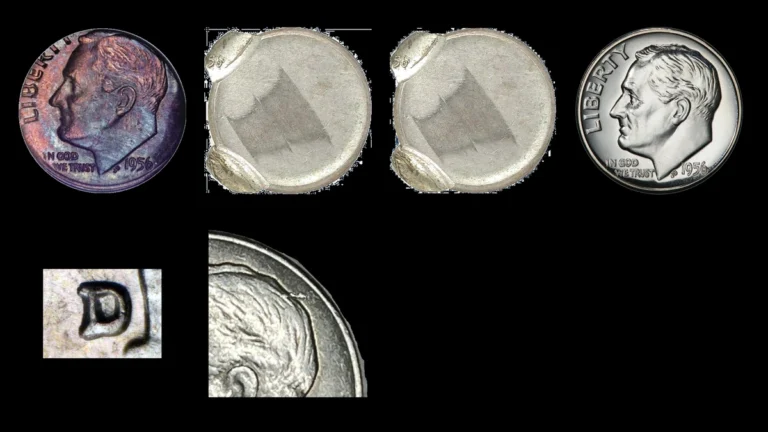
The Denver ANACS MS64 specimen was described as 50% off center toward 1 o’clock. It appeared in a two-coin lot with a separate higher-graded 1986-D dime.
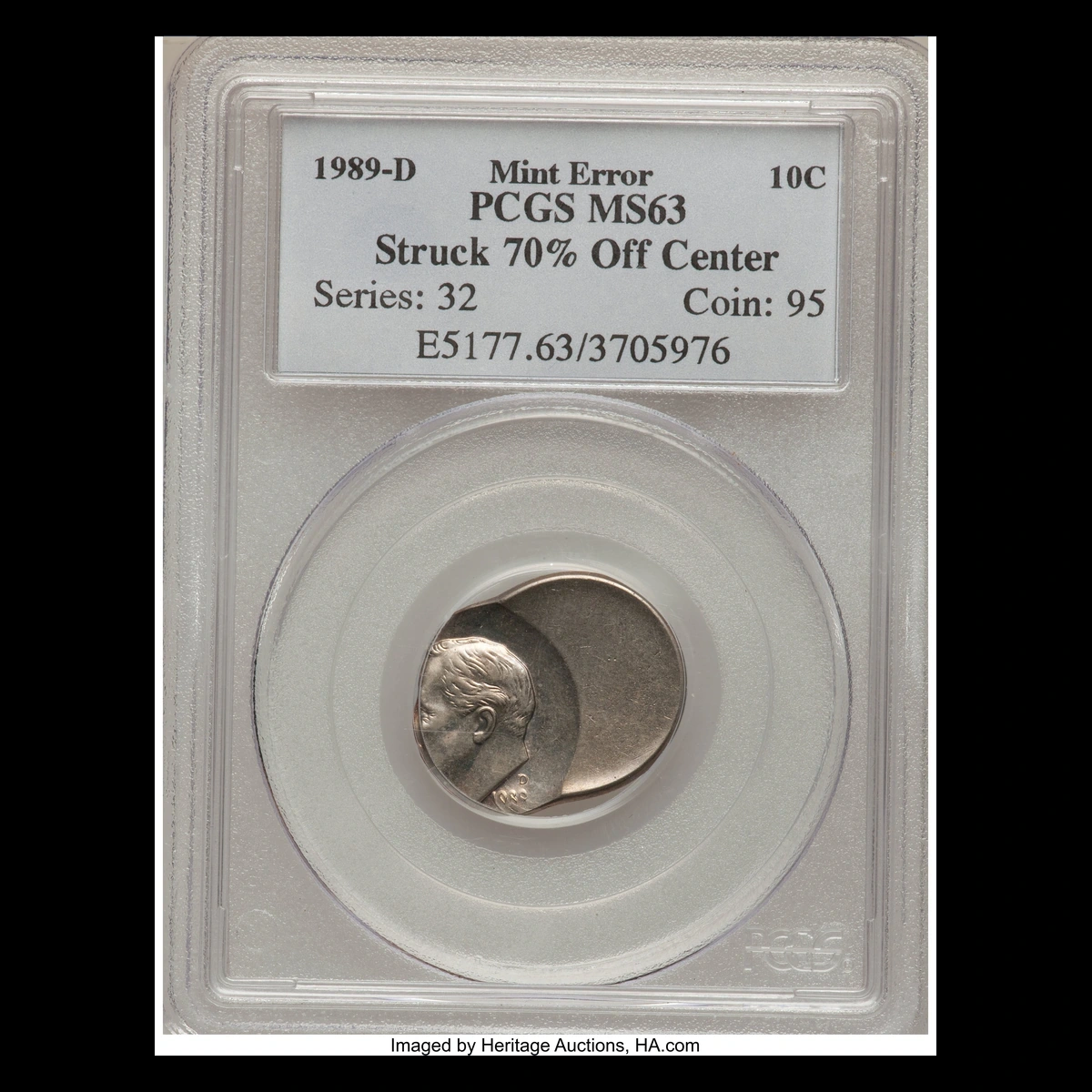
A different Philadelphia example is 70% off center and graded PCGS MS65. Its mint, displacement, and grade must remain distinct from the Denver coin.
How to Identify
Read the surviving year and mintmark before judging the displacement. Orient the front upright when comparing the Denver coin’s reported direction.
Both faces should fit the same misplaced blank, with design missing opposite untouched metal. A shift limited to one face can involve die alignment instead.
Inspect the transition for natural struck and unused surfaces rather than design ground away later. A large bare area alone cannot establish the original sequence.
What It’s Worth
Comparable genuine off-center dimes are estimated at $30–$350. The 70% Philadelphia coin sold for $45 on July 13, 2014.
That result shows why more displacement does not automatically mean a higher price. Any amount attached to the Denver two-coin lot must remain a group total rather than a standalone 1989-D sale.
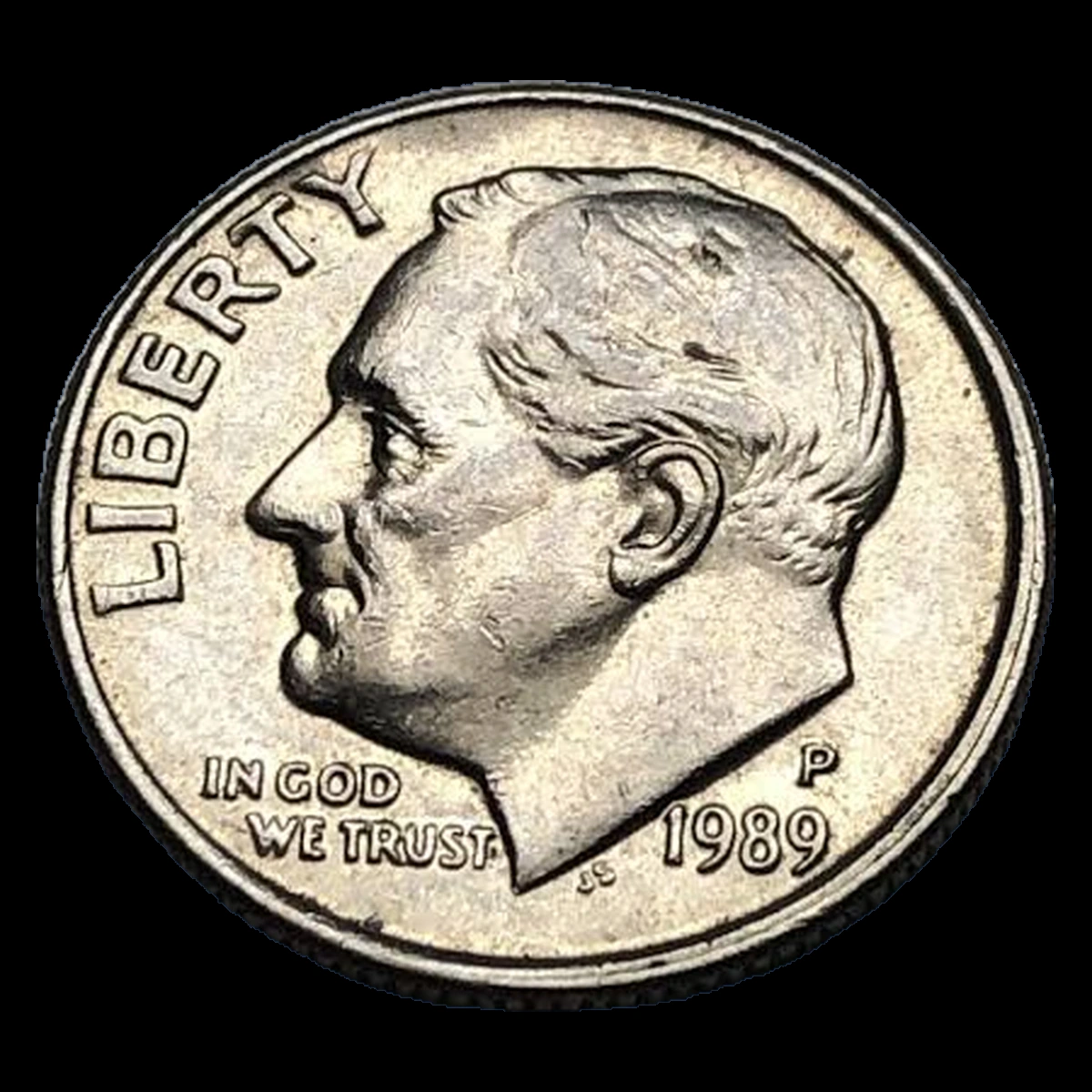
6. 1989 Dime The Design Remains Complete on a Wider Disc: Broadstrike Error
If the collar fails to contain a strike, the blank can spread beyond its normal width while retaining all the design. The collar is the surrounding ring that normally shapes the edge.
The 1989 report supplies no measured specimen or established mint. A Philadelphia attribution must come from the actual coin’s P rather than a generic year list.
How to Identify
Measure several spans and follow all the lettering around both faces. An off-center strike instead loses part of the design beside an unused arc.
Inspect the expanded margin and edge grooves for pressure marks or crushed lettering. Later flattening can enlarge a finished dime without original broadstriking.
What It’s Worth
Genuine broadstrikes are estimated at $30–$300. Clear expansion and original surfaces matter more than size alone.
A 2000-P dime combining multiple strikes and broadstriking brought $159 in September 2025. That compound error is an other-year reference rather than a sale of the unspecified 1989 type.
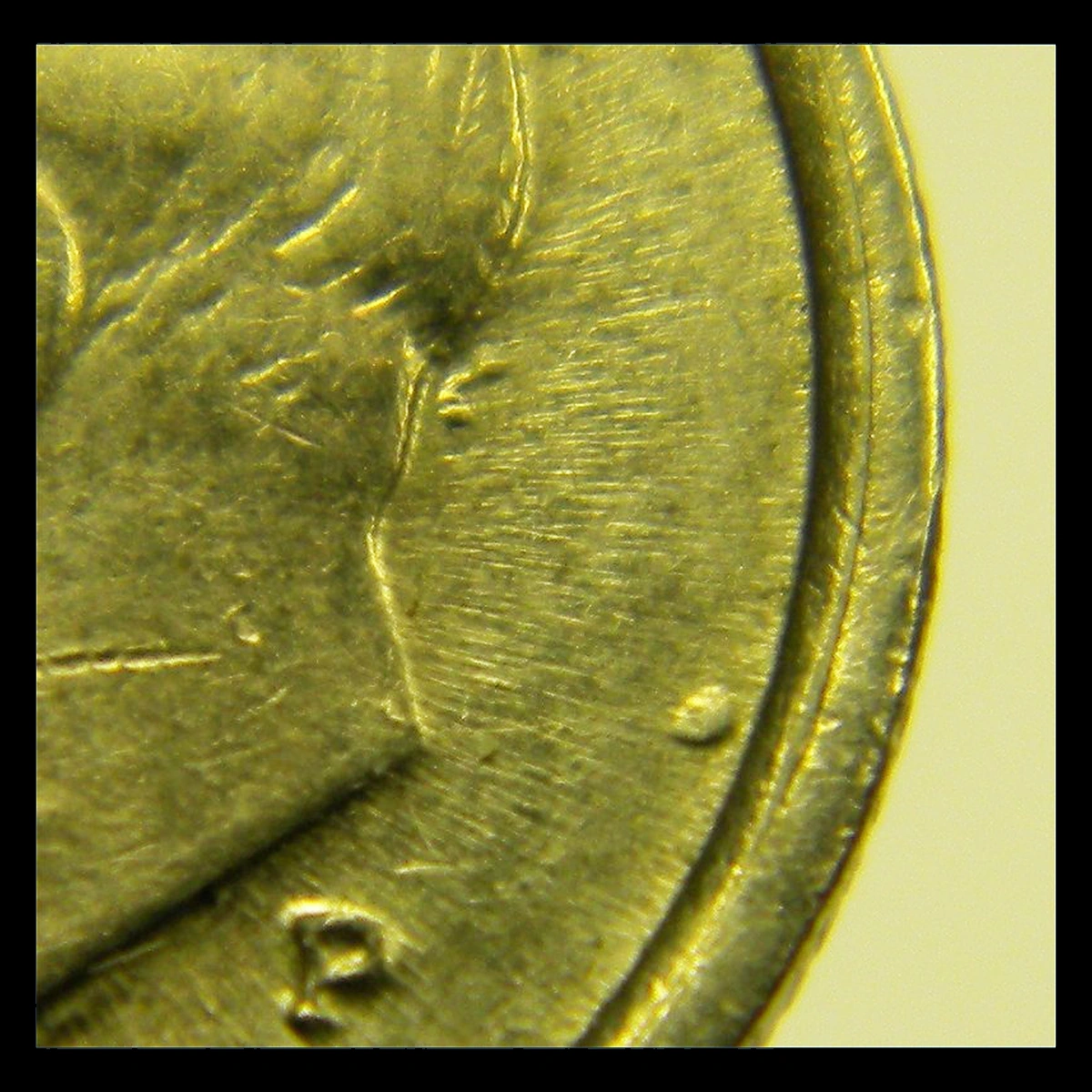
7. 1989 Dime A Small Lump Changes the Portrait or Lettering: Die Chip Error
A small piece breaking from a die creates an opening that fills with metal during striking. The result can be an extra raised patch within the normal design.
The Denver report mentions portrait and lettering areas without fixing one location. It does not establish a long crack or a large rim break.
How to Identify
Compare the exact area with an ordinary dime and inspect whether the lump is continuous with the struck surface. Dirt or solder may have a separate boundary.
Check for a nearby dent that pushed metal upward after minting. Record the D and actual location rather than expecting every chip to appear on the same cheek, neck, or letter.
What It’s Worth
Minor genuine chips are estimated at $5–$75. A tiny bump on a worn coin generally sits below a distinct shape on an attractive surface.
No individual sale is supplied for the general Denver report. The premium requires raised metal formed during striking rather than a later deposit or impact.
8. 1989 Dime LIBERTY or the Motto Has Another Outline: Reported Doubled Die Error
Philadelphia reports direct attention to LIBERTY and IN GOD WE TRUST. A doubled die carries repeated detail before striking, allowing one blow to reproduce more than one outline.
No exact letter or spread direction is established here, and the report supplies no confirmed Denver counterpart. Its description should not be applied automatically to a D coin.
How to Identify
Confirm the P and compare several related letter contours with an identified example. Photograph the added shape under more than one lighting angle.
A flat shelf may come from movement during striking, while reflections can create temporary extra edges. Do not import a direction from a different year to fill a gap in this report.
What It’s Worth
A genuine minor identified doubled die is estimated at $15–$100. Stronger readable detail on an unworn coin provides a better comparison than vague thickening.
Two thick-looking words establish neither two separate varieties nor a higher combined value. A precise repeated shape is needed before a premium is meaningful.
9. 1989 Dime A Second Letter Shape Borders the Mintmark: Reported Repunch Error
A repunched mintmark originates when the mint letter enters the die in more than one position. Coins struck from that die can reproduce remnants of both punches.
The 1989 year listings identify no particular mint, direction, or catalog pattern. An isolated bump beside P or D is only a starting observation.
How to Identify
Trace the suspected stroke into a plausible earlier position of the same letter. A genuine match should agree with an identified image in both the extra outline and nearby details.
Inspect neighboring lettering for flat shelves that could explain striking-related doubling. Damage or a small chip near the mintmark can also imitate one extra curve.
What It’s Worth
A genuine clearly matched repunched mintmark is estimated at $20–$150. Recognizable earlier letter segments and clean surrounding surfaces support stronger comparisons.
The general listing establishes no rarity or fixed price for an unnamed pattern. A multiple-punch label needs visible letter-shaped evidence before it supports a premium.
Conclusion
The original design sequence separates the most unusual 1989 pieces from modest surface varieties. A cent over a finished dime differs from a flipped dime, and both differ from missing clad metal or an incomplete blank.
Keep lot totals and individual sales distinct, and preserve each specimen’s own date, mint, and grade. Normal 1989 collector Proof dimes are clad as well; there was no silver Proof version that year.