Rare 1873 Dime Errors (List & Pictures)
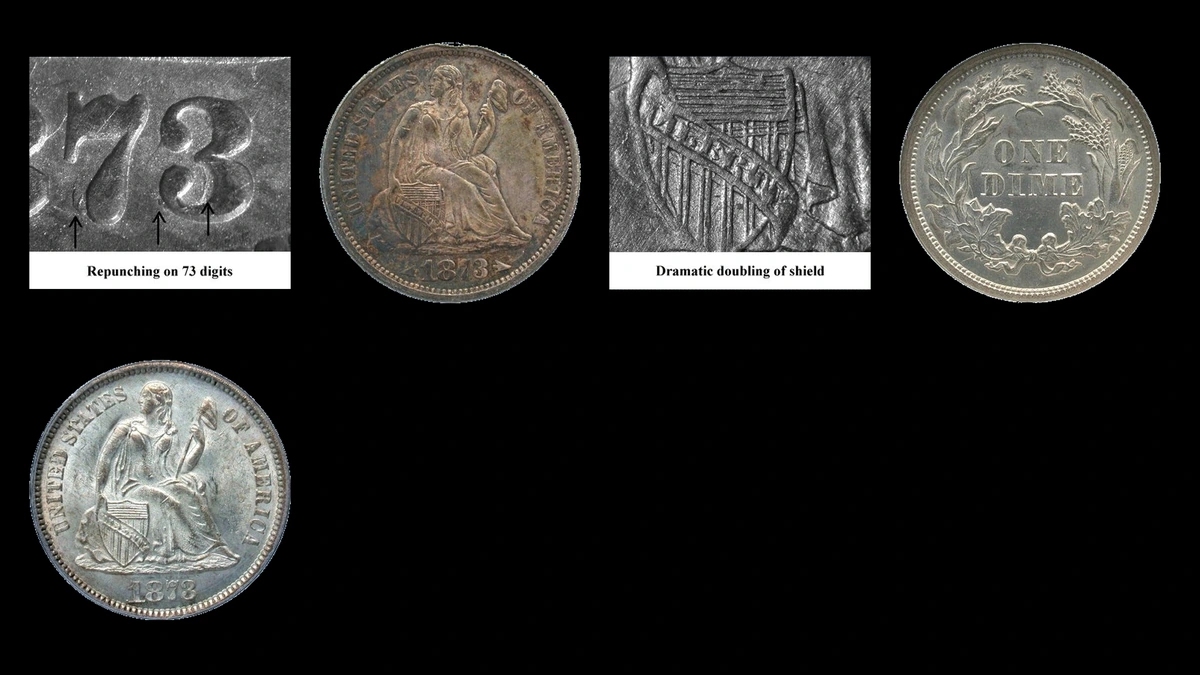
The unique 1873-CC No Arrows dime sold for $3,600,000 in January 2023, but its die crack is not what makes an ordinary dime worth millions. Estimated values across these 1873 dime errors span $50–$4 million, with the highest range reserved for that single Carson City rarity.
Identify the mint and date arrows first, then compare numeral remnants, shield doubling, raised cracks, and the full striking outline.
| Feature | Relevant identity | Estimated whole-coin range |
|---|---|---|
| Repunched date | Specific Philadelphia or San Francisco issue | $75–$1,500 |
| Doubled shield and misplaced 3 | Philadelphia With Arrows FS-101/F-103 | $1,000–$10,000 combined |
| Reported clash | Ordinary Philadelphia circulation coin | $75–$1,000 |
| Die crack | Philadelphia; CC With Arrows; unique CC No Arrows | $50–$500; $2,000–$50,000; $3–$4 million respectively |
| Off-center strike | Documented With Arrows type | $1,500–$5,000 |
No Arrows dimes normally weigh 2.49 grams, while With Arrows dimes use the 2.50-gram standard. Both measure 17.9 millimeters with grooved edges; confirm ONE DIME so a half-dime reference is not mistaken for the same denomination.
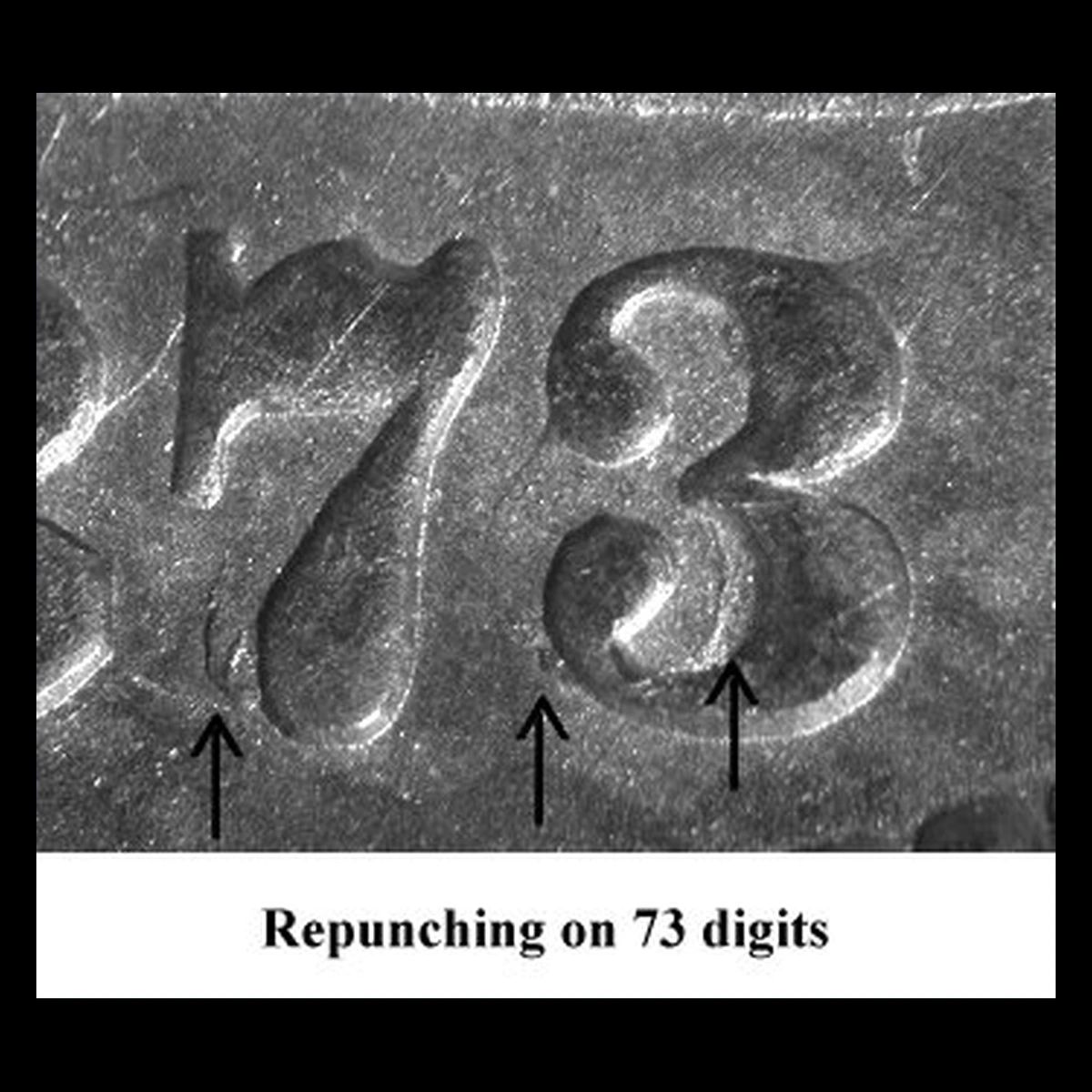
1. 1873 Dime Extra Pieces beside Date Numerals: Repunched Date Error
Philadelphia No Arrows Closed 3 examples show earlier date remnants toward the lower left of the numerals. Philadelphia With Arrows instead directs attention to 1 and 8, while San Francisco With Arrows has a reported extra piece above the base of 1.
Each pattern records repeated use of the date punch in its own die. Open 3 and Closed 3 are normal numeral styles, not proof of repunching by themselves.
How to Identify
Include the whole date, arrows when present, and mintmark in the reference views. Only then compare the additional strokes at the positions appropriate to that issue.
The earlier pieces should be raised and shaped like parts of numbers. A shelf, scratch, or ordinary Closed 3 outline does not establish the same feature.
What It’s Worth
Attributed examples are estimated at $75–$1,500 from circulated through moderately marked unworn condition. A reported secondary-market sale of an 1856-O repunched date graded VF35 at $132.50 is a related comparison, not an 1873 transaction.
Philadelphia and San Francisco also have different underlying coin values. Clear remnants and original surfaces are needed for a useful match.
2. 1873 Dime A Small 3 among the Rim Teeth: Misplaced Date Error
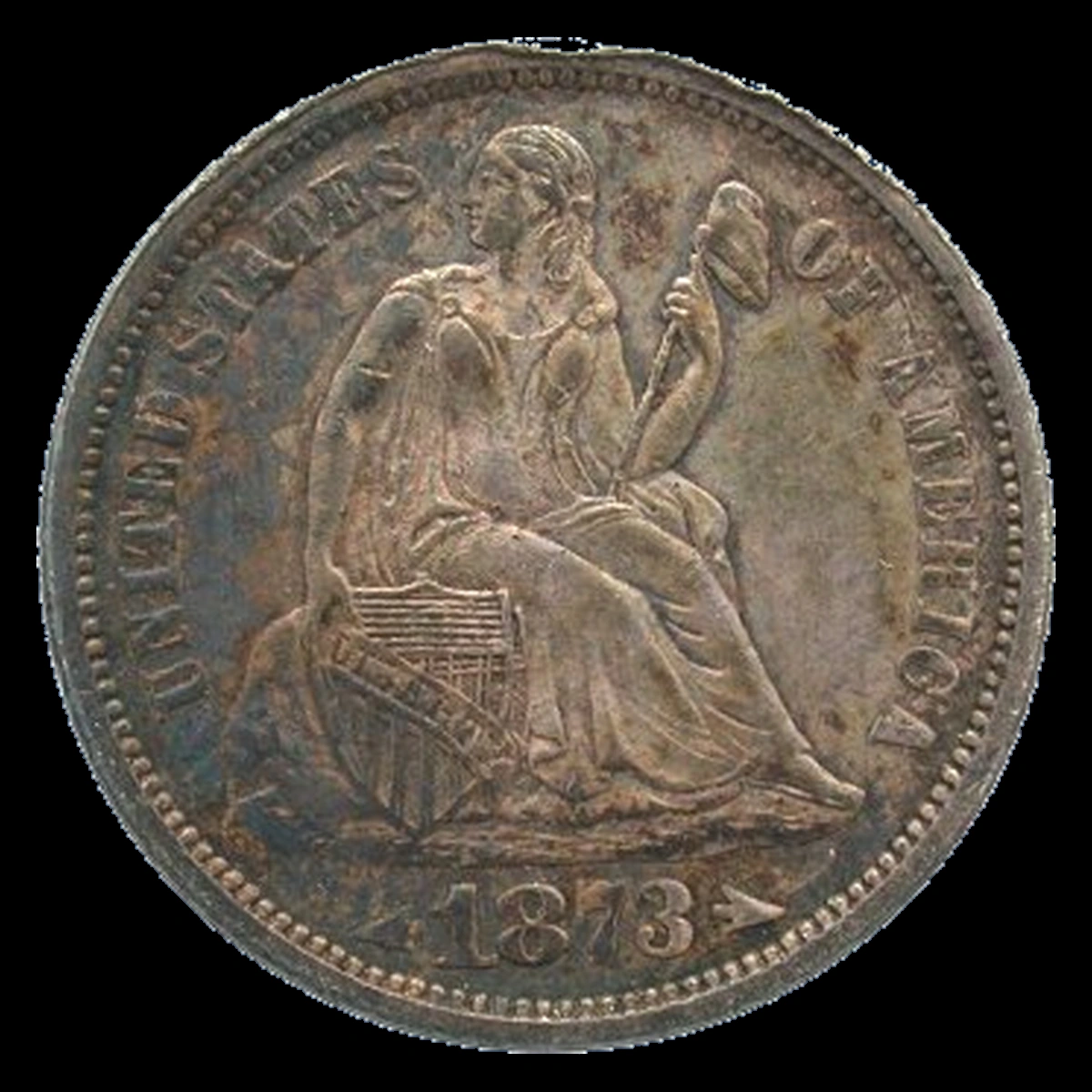
The top of an extra 3 appears below the normal date on the Philadelphia With Arrows doubled-shield variety. A misplaced date punch left the lower remnant in the die.
Shield doubling on the same die arose through a different part of die preparation. The two features can identify one coin without sharing one immediate cause.
How to Identify
Keep 1873 and both arrows in the frame while examining the rim teeth below them. Match the upper curve of the extra 3 rather than a shapeless bump or a damaged tooth.
Check the shield on that same face for the companion doubling. An unrelated date fragment does not automatically identify this combined variety.
What It’s Worth
The combined doubled-shield and misplaced-date coin is estimated at $1,000–$10,000. A PCGS F15 example brought $2,081.25 at GreatCollections, with both features already included in its single whole-coin price.
3. 1873 Dime Repeated Shield Lines and Ribbon Details: Doubled Die Obverse Error
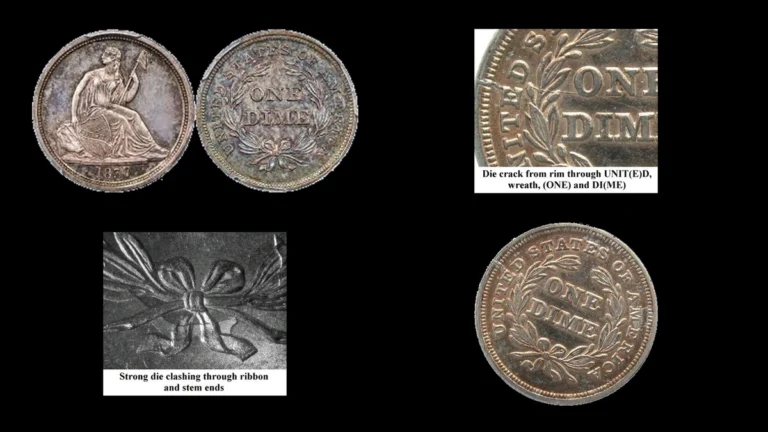
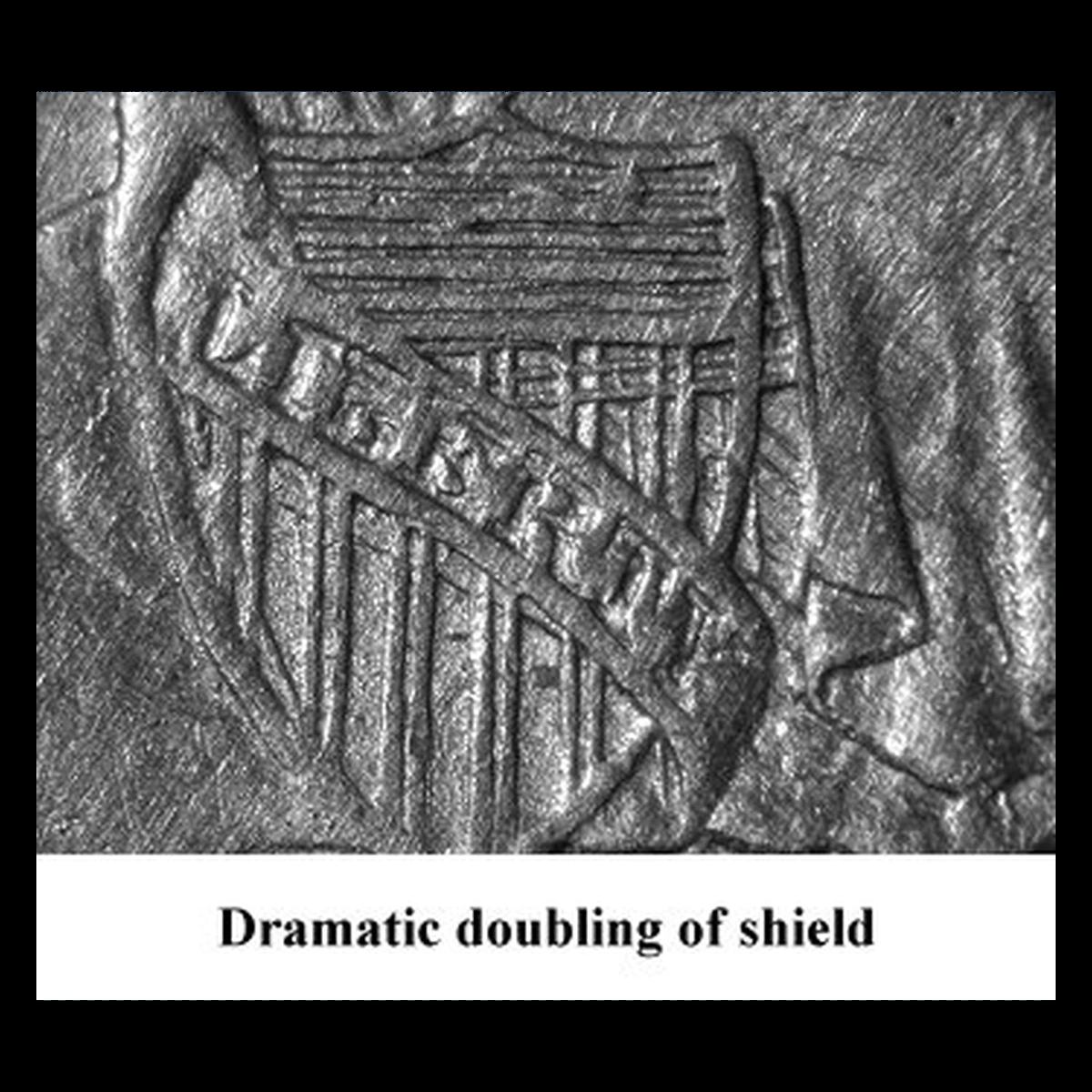
Inside the shield, along its right edge, and across the ribbon, the FS-101/Fortin 103 variety shows repeated raised design. The die carried the duplication before it struck the coin.
This is a Philadelphia With Arrows pairing associated with the extra 3 described above. Liberty’s entire figure need not be displaced for the doubled design to appear.
How to Identify
Compare the complete shield and ribbon with a known example, separating doubled contours from normal ribbon folds. A thin shelf produced during striking does not reproduce the same rounded repeated shapes.
Then confirm the extra 3 below the date as supporting evidence. Both major design doubling and the misplaced numeral should belong to the same correctly identified coin.
What It’s Worth
The working whole-coin range is $1,000–$10,000. The GreatCollections record lists the PCGS F15 at $2,081.25.
This repeats the same combined-variety result, not a second price to add for the shield. A much higher AU Details offer mentioned in the guide was an asking price and involved a condition problem.
4. 1873 Dime Faint Opposite-Design Shapes: Reported Clashed Dies Error
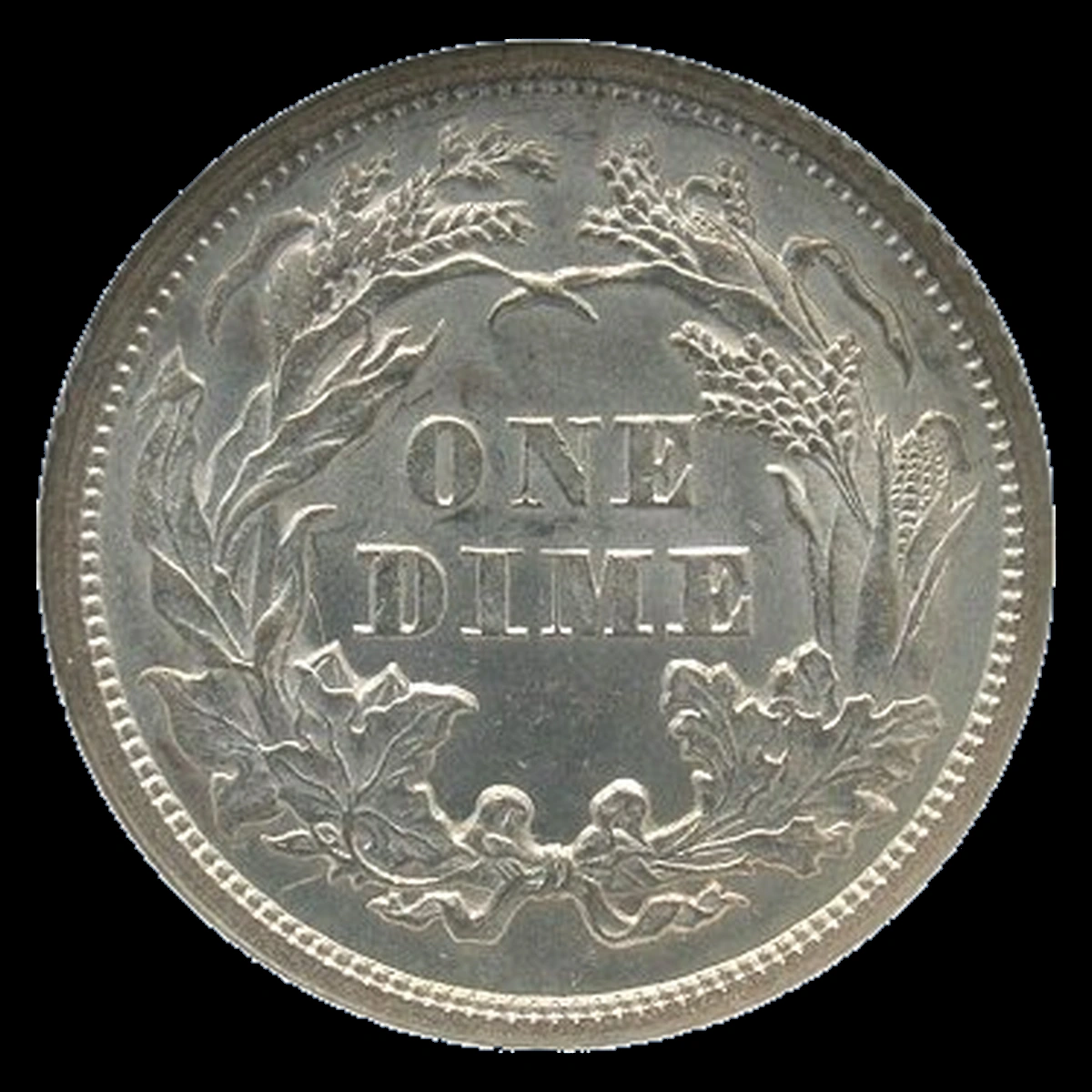
When dies meet without a blank, each can receive marks from the other’s design and transfer them to later coins. A general 1873 guide reports this category without fixing one specimen’s mint, arrows, and exact pattern.
How to Identify
Compare the suspect shape with a meaningful fragment of the opposite face, using images that preserve the designs’ relationship. Thin scratches or polish lines need not correspond to anything in that design.
The report supplies no precise diagnostic location to assign to every 1873 dime. Identify the coin type first and leave unmatched faint lines undesignated.
What It’s Worth
For an ordinary Philadelphia circulation coin with a genuine clash, the estimate is $75–$1,000. A documented 1855 dime with reverse shield and scroll traces illustrates a related mechanism, but supplies no 1873 sale.
This comparison range excludes scarce Carson City issues. A generic guide entry alone does not establish a valuable clash on a candidate coin.
5. 1873 Dime Raised Lines through the Mintmark or Design: Die Cracks Error
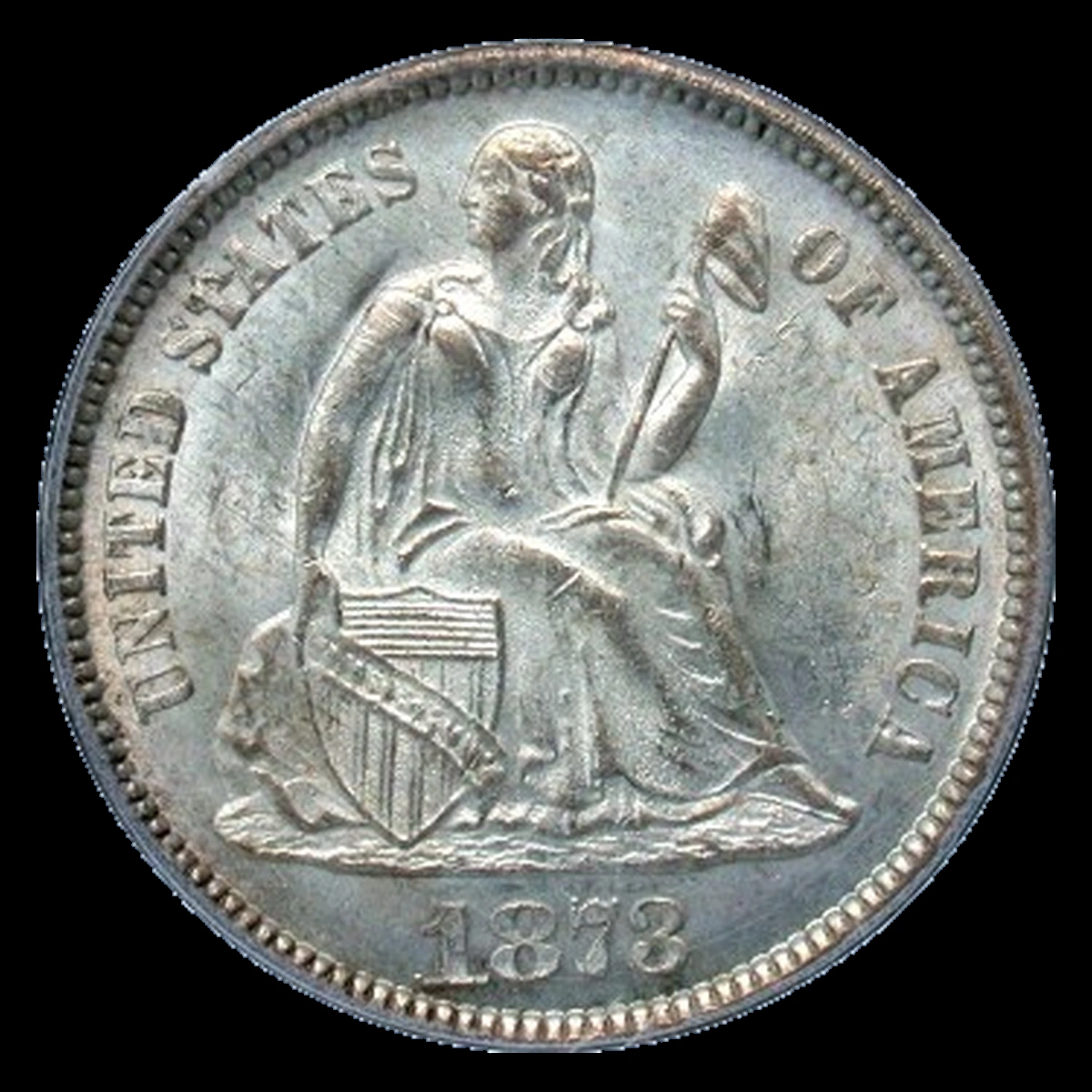
The unique Carson City No Arrows dime has a crack crossing CC, and its reverse die also struck With Arrows coins. That shared tool history does not give the two issues equal rarity.
A separate Philadelphia No Arrows Closed 3 example has cracks on both faces. Its own paths need separate reference photographs from the Carson City mintmark crack.
How to Identify
Establish mint and arrows before following a ridge, and verify that it rises above the surface. On the Carson City reference, trace the line through genuine CC letters toward the wreath ribbon.
Added or altered letters cannot be authenticated by a nearby crack-like mark. The unique coin requires its complete identity and provenance, not merely one line in the right area.
What It’s Worth
Ordinary circulated Philadelphia examples are estimated at $50–$500, and circulated Carson City With Arrows coins at $2,000–$50,000 depending on condition. The unique No Arrows MS65 sold for $3,600,000 on January 12, 2023.
The $3–$4 million estimate applies only to that one coin. It reflects the rarity’s identity and history, not an ordinary die-crack premium.
6. 1873 Dime A Blank Margin beside Missing Design: Off-Center Strike Error
The published With Arrows example is graded PCGS AU55 and labeled 12% off center. A misplaced blank left some original silver untouched while part of the intended design missed the opposite edge.
The description does not establish a clock direction. Its percentage and arrows belong to this specimen rather than the separate No Arrows issue.
How to Identify
Match the full coin with the label before examining the blank margin. Both faces should show the same displaced striking event, with original surface between the design and edge.
Inspect remaining grooves for cutting or filing. A centered reverse paired with a shifted obverse may involve a moved die instead of the blank placement described here.
What It’s Worth
A genuine With Arrows example of this general quality is estimated at $1,500–$5,000. No completed sale is supplied for the AU55 12% coin.
A historical $2,700 dealer ask for an 1855 AU50 struck 10% off center provides related context. It remains an offer for another date and grade, not an 1873 auction result.
Conclusion
For 1873 dimes, arrows and mintmark determine which comparisons are meaningful before any small defect is priced. The shield doubling and misplaced 3 belong to one combined variety, while the unique Carson City No Arrows coin occupies its own exceptional value category.
Describe the actual raised shapes, date remnants, or displaced design, and never let a shared crack transfer one rare coin’s identity or price to another.