Rare 1996 Half Dollar Errors (List & Pictures)
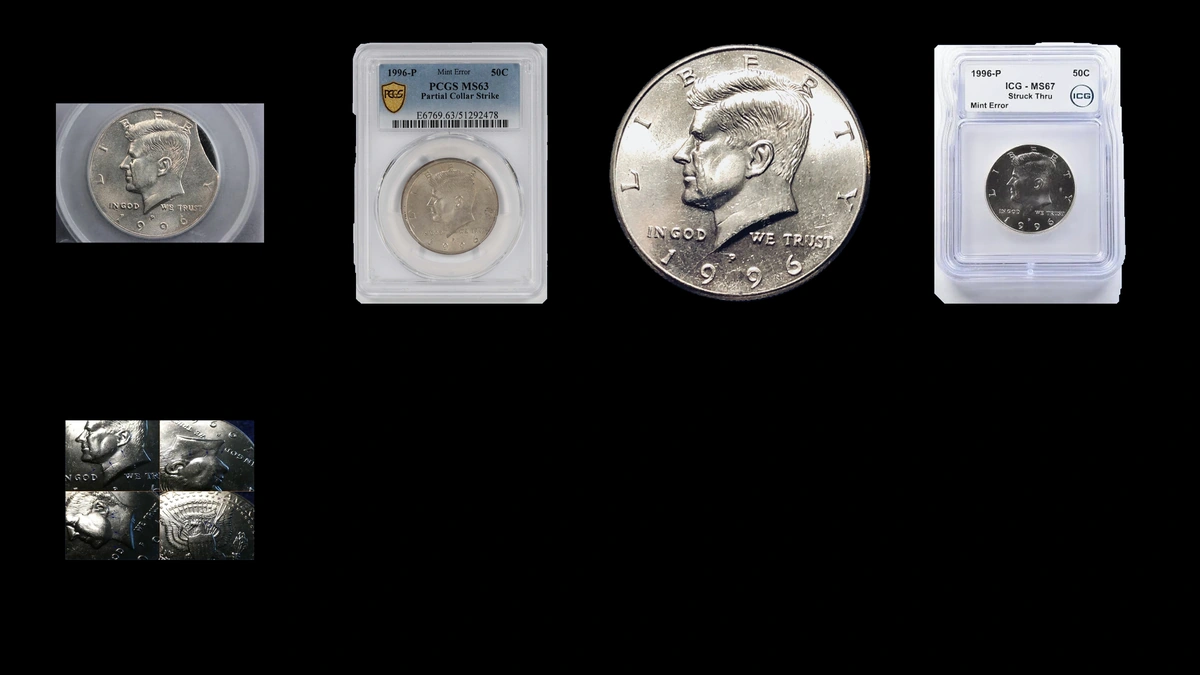
Small rim gaps and faint portrait-side marks make 1996 half dollar errors easy to overlook. The supplied estimates range from about $5 to $300, with a different-year struck-through half providing a documented $114 auction comparison.
Two certified 1996 errors were separately offered for $135 in 2016; those were asking prices, not auction results. Start with the outline and edge, then use magnification to investigate raised lines, weak patches, and unexpected outlines.
| Where to look | Clue | Estimated range |
|---|---|---|
| Outline | A curved clip or multiple clips | $20–$200 |
| Both faces | A small off-center shift | $100–$250 |
| Lower rim and edge | Indent with tilted partial collar | $125–$300 |
| Portrait to rim | “Spike Head” die crack | $5–$20 |
| Front design | Grease-filled weak area | $10–$50 |
| Neck or eagle area | Die-clash outlines | $25–$150 |
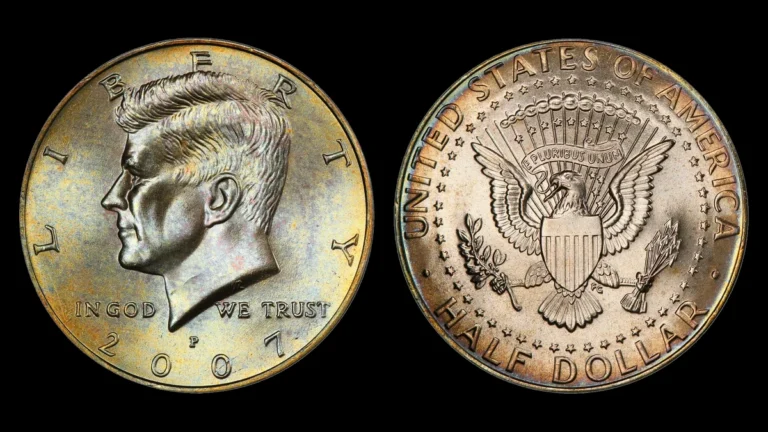
An ordinary 1996 clad half weighs 11.34 grams and is about 30.61 millimeters wide. Its copper-colored core normally shows between the outer layers along a grooved edge; that stripe is not itself an error.
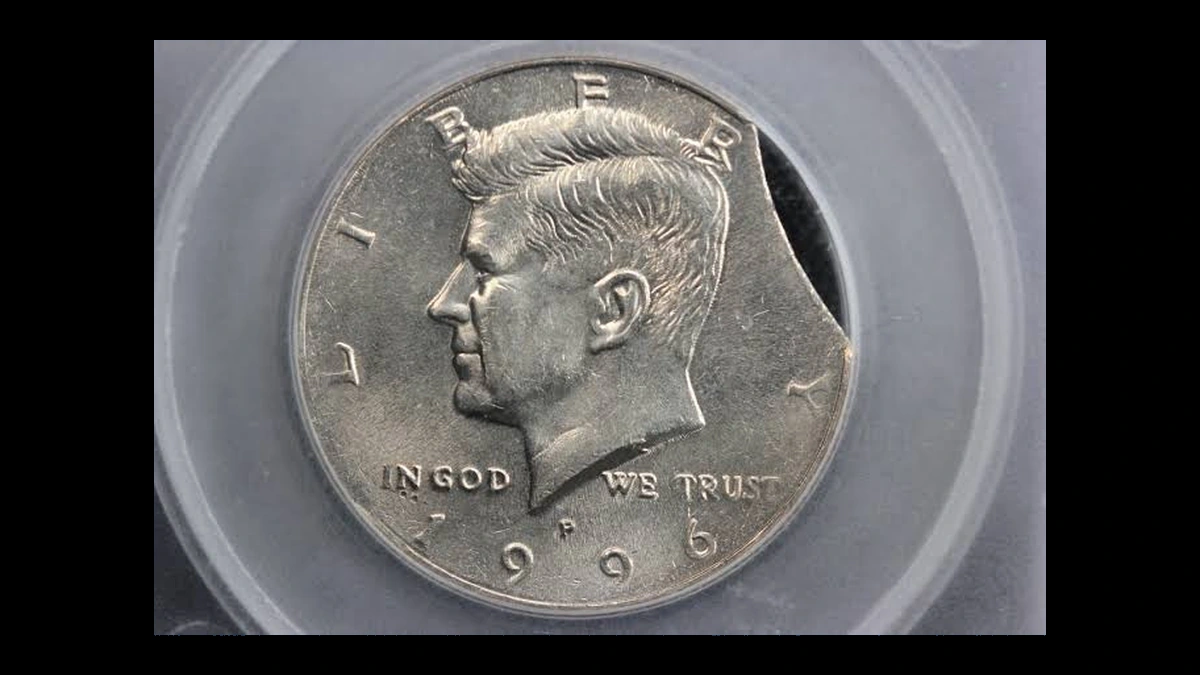
1. 1996 Half Dollar A smooth bite out of the rim: Clipped planchet Error
A curved missing section can originate when a new blank is punched partly across a previously emptied hole in the metal strip. The resulting incomplete blank receives its design afterward, so the border around the clip can preserve evidence of striking.
How to Identify
Inspect where the curve meets the normal rim for smooth transitions rather than saw teeth, filing, or fresh burrs. A weak rim across from the clip, often called the Blakesley effect, is useful supporting evidence.
The documented 1996-P example has a 10% curved clip and an NGC MS66 grade. A separate double-clip report also exists, but neither that grade nor that mint identification should be transferred to it.
If there are two missing sections, examine both borders independently. Weight loss should agree with absent metal rather than a merely dented rim.
What It’s Worth
Ordinary curved clips are estimated around $20–$100, with larger, multiple, or especially well-preserved examples around $60–$200. The size and number of gaps matter alongside the coin’s condition.
The NGC MS66 1996-P from the Rippere collection appeared at GreatCollections in December 2024. The supplied record does not provide a usable realized price, so it supports the coin’s existence rather than a specific valuation.
2. 1996 Half Dollar A narrow blank margin on one side: Off-center strike Error
A slight off-center strike may leave only a modest plain area beside a design pushed toward the opposite edge. One 1996 example was certified PCGS MS64 with a 5% offset.
How to Identify
Compare the two faces to see whether the design displacement belongs to the whole strike. An uneven border on just one face can instead reflect a die alignment issue.
The dealer description called the front semi-prooflike, meaning it showed some mirrorlike reflectivity. That appearance does not turn the coin into a proof, and the supplied record gives no mintmark or clock direction for its offset.
What It’s Worth
About $100–$250 is a working estimate for a similar unworn 1996 half with a small, clear offset. A much larger displacement needs its own comparison rather than a proportional increase from this range.
Fred Weinberg listed the PCGS MS64, 5% off-center coin for $135 in 2016. The figure records a historical offer, not a confirmed sale.
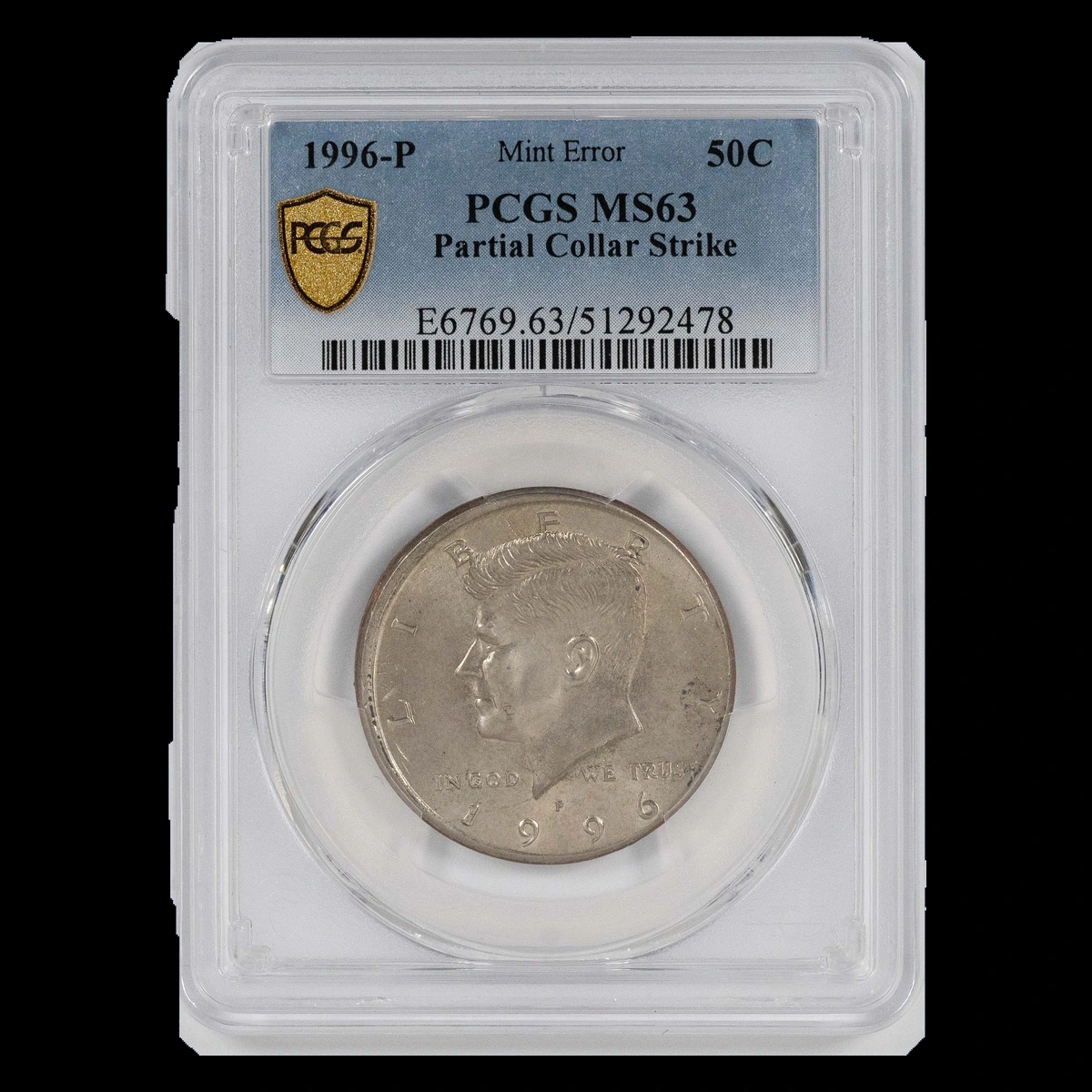
3. 1996 Half Dollar A lower-rim depression with an uneven edge: Indent and tilted partial collar Error
One reported 1996 half combines a 5% indent near 7 o’clock with a tilted partial collar error. An overlapping blank can block part of the strike to create the indent, while uneven collar support produces an irregular edge.
How to Identify
Examine the lower-left perimeter for the depression, then follow the edge all the way around. A tilted partial collar can produce changing steps or different heights of edge grooves as the blank meets the collar unevenly.
The face indentation and edge structure should support the combined explanation. One battered rim patch is insufficient, and an indent need not remove metal or cause the weight loss expected from a clip.
What It’s Worth
The combined error is estimated at $125–$300 for the whole coin. Its two features belong to one specimen and should not be valued by adding two independent error prices.
A PCGS MS64 example was offered for $135 in the 2016 Fred Weinberg listing in Mint Error News. This is a separate coin from the 5% off-center half, despite the matching grade and asking price.
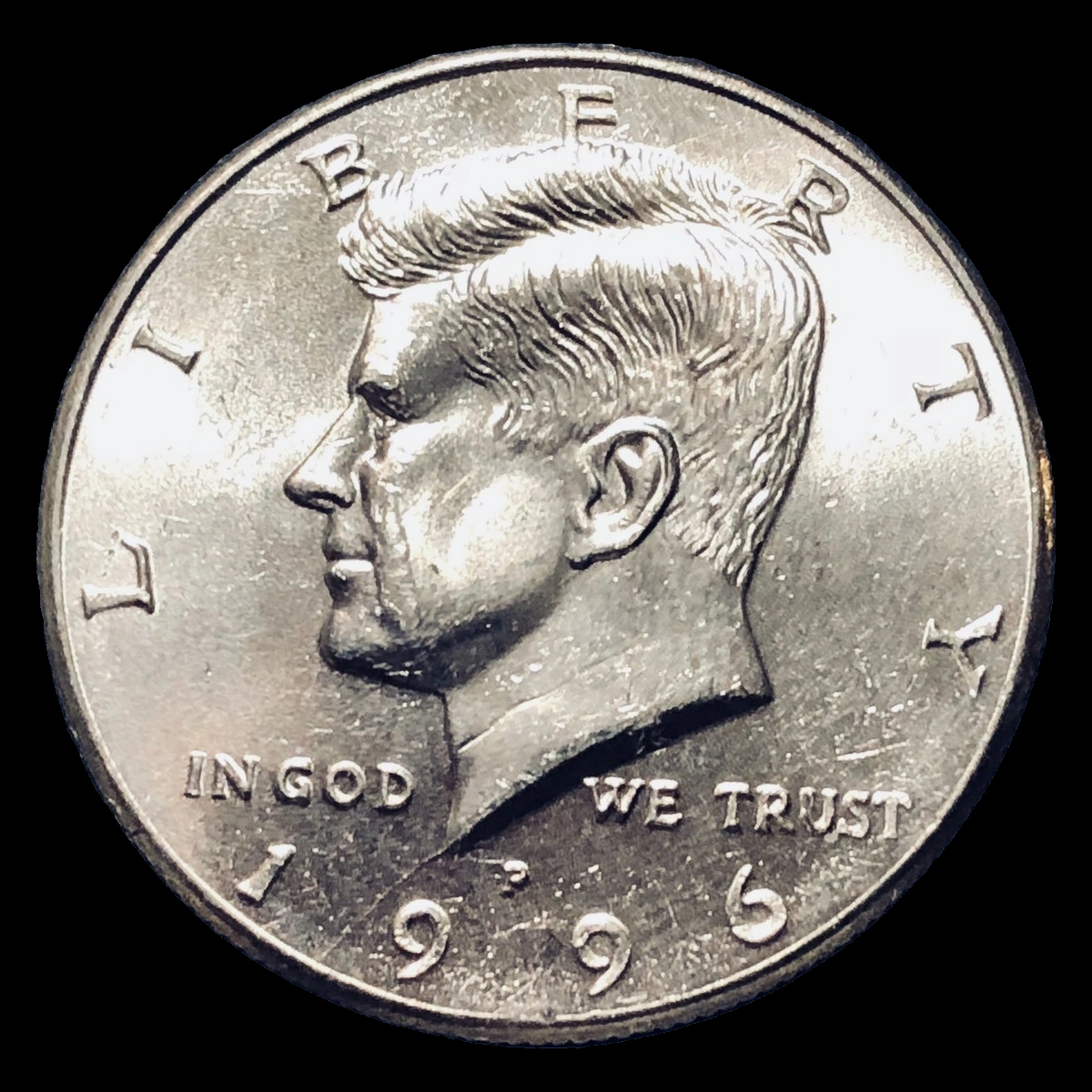
4. 1996 Half Dollar A raised line extending from Kennedy’s head: “Spike Head” die crack Error
The name “Spike Head” describes a reported 1996-P die crack running from the portrait toward the rim. A split in the die allowed metal to form a narrow raised line during striking.
How to Identify
Use angled light to establish that the line stands above the coin. A scratch cuts a channel and can push small ridges up along its sides, so examine the center as well as the borders.
The supplied report does not establish an exact clock position or a cataloged variety. Treat the nickname as a description until the physical feature has been checked.
What It’s Worth
A genuine small crack of this kind is estimated around $5–$20. It is a modest collectible feature, with visibility and overall preservation affecting interest.
The 1996-P “Spike Head” seller listing supplies the report, but no certified grade or completed auction result accompanies it. A seller’s chosen name does not establish rarity.
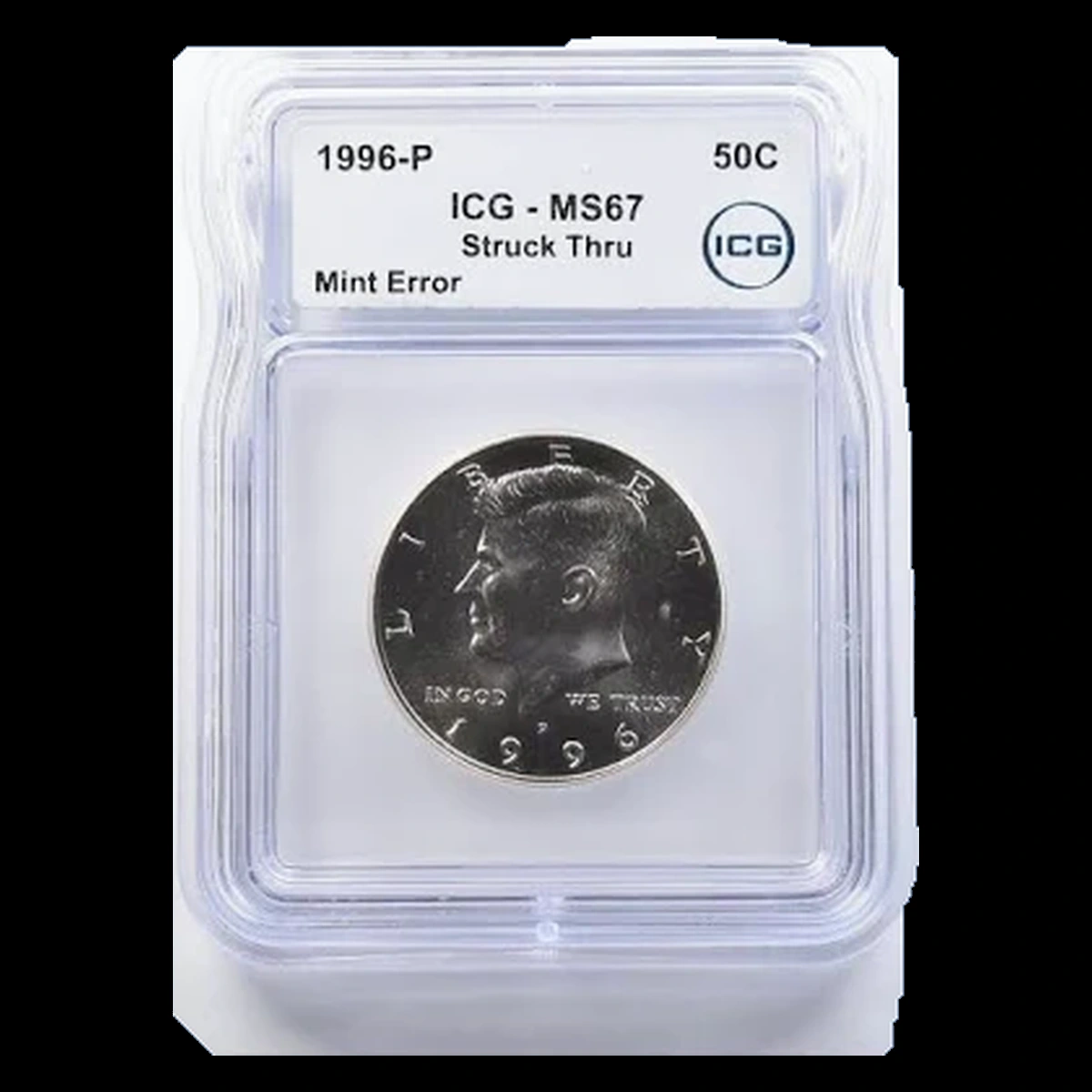
5. 1996 Half Dollar Weak front details beside sharp ones: Struck through grease Error
A localized soft patch surrounded by normal detail may result from grease filling part of the die’s recessed design. The blocked recesses cannot form the intended raised details on the coin.
How to Identify
Compare the weak patch with neighboring lettering and portrait detail. Broad wear should affect exposed high points, whereas a grease obstruction can interrupt a limited area while nearby features remain sharp.
Look for scraping or disturbed texture that would suggest later removal of detail. Robinson’s CoinTown described the reported 1996-P as brilliant uncirculated, but supplied no numerical grade or specific missing letter.
What It’s Worth
Small, clearly identifiable grease interruptions are estimated around $10–$50. A vague weak strike with no convincing localized obstruction belongs at a different level of certainty.
A 1976-D struck-through half affecting both faces sold for $114 in March 2025. That broader, different-year error provides context only and is not a recorded result for the reported 1996-P.
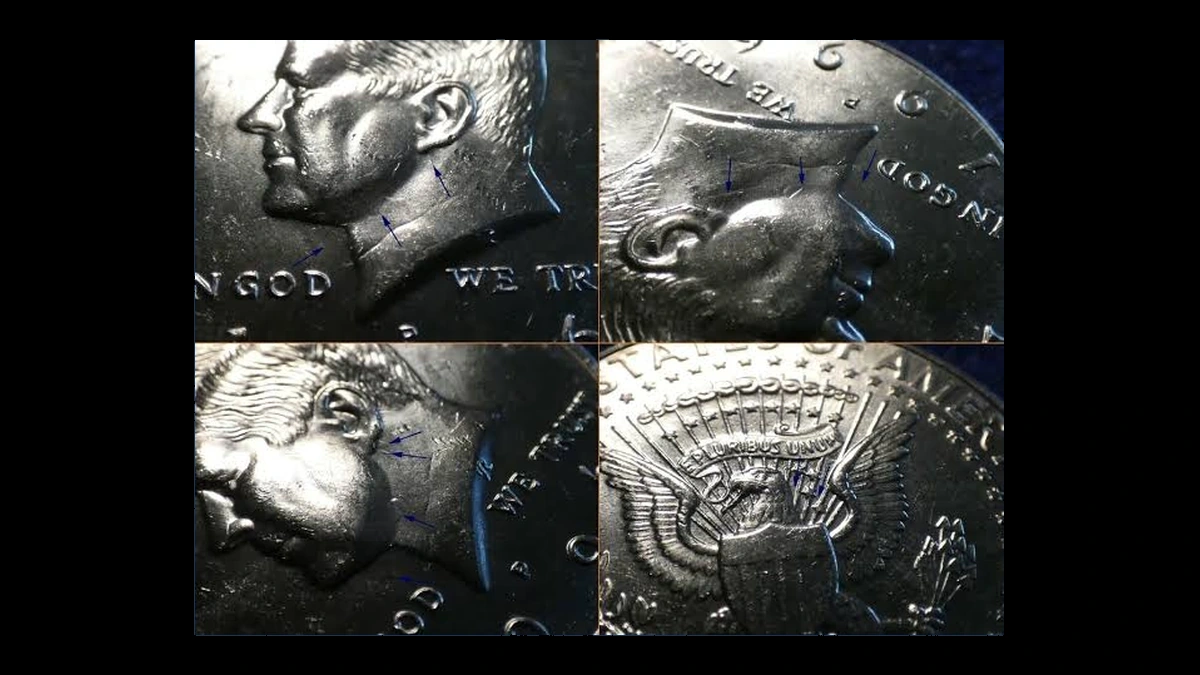
6. 1996 Half Dollar Unexpected outlines near the neck or eagle: Die clash Error
A faint extra shape near Kennedy’s neck or beside the eagle may come from the opposite die. When the dies collide without a blank between them, they can mark each other and later transfer those marks to coins.
How to Identify
Try to relate the extra outline to an element on the opposite face. Random scratches and contact marks do not normally form a coherent fragment of the other design.
Turn the coin under light because a weak clash can disappear at one angle. The supplied report does not establish a single mintmark or an exact pattern shared by every 1996 example.
What It’s Worth
Clear clashes on ordinary clad examples are estimated around $25–$150, with faint traces attracting less interest than easily recognized outlines. Surface marks and wear can reduce their visibility.
The supplied 1996 half dollar guide provides the category and general valuation context. No individually identified 1996 clash auction in the evidence establishes a fixed price.
Conclusion
On a 1996 half, the shape of the evidence matters more than an impressive error name. A clip removes metal, an indent depresses it, and a die crack adds a raised line through the striking process.
Photograph the edge as carefully as the faces when the rim looks unusual. Keep dealer offers, guide estimates, and actual auction results separate when deciding what a confirmed error might be worth.