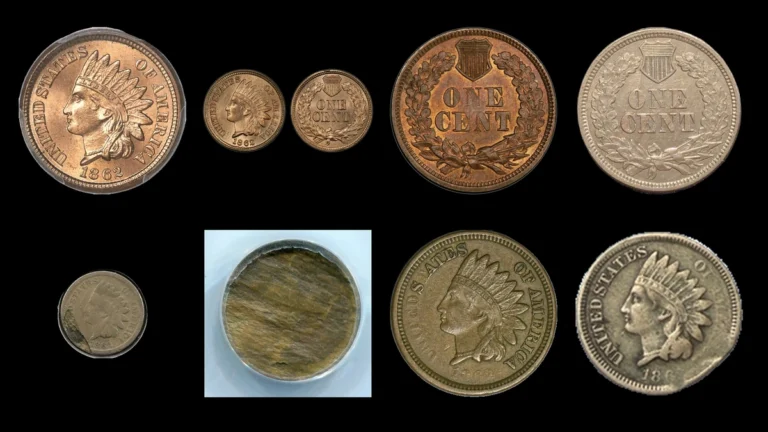
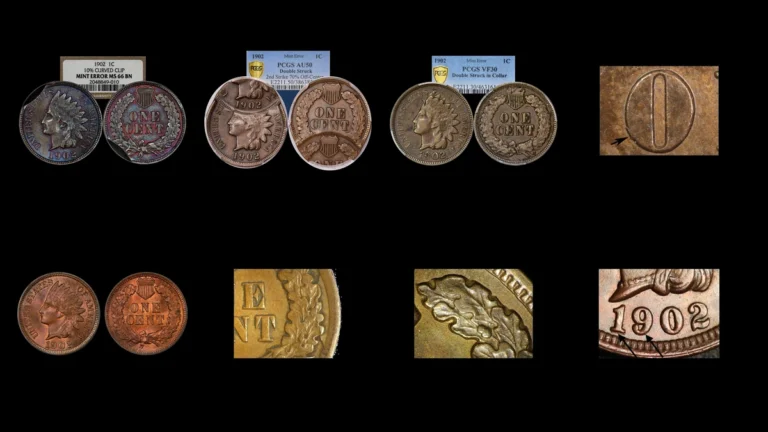
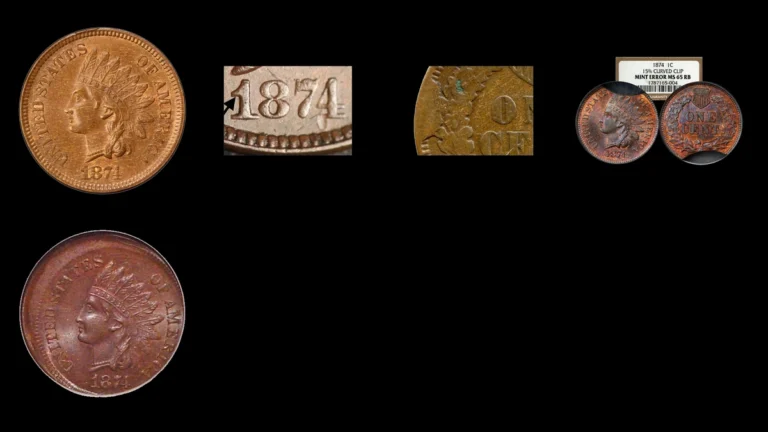
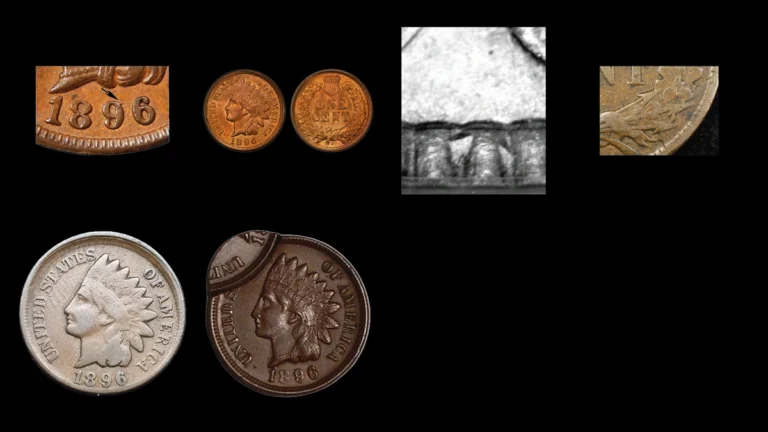
Rare 1880 Penny Errors (List & Pictures)
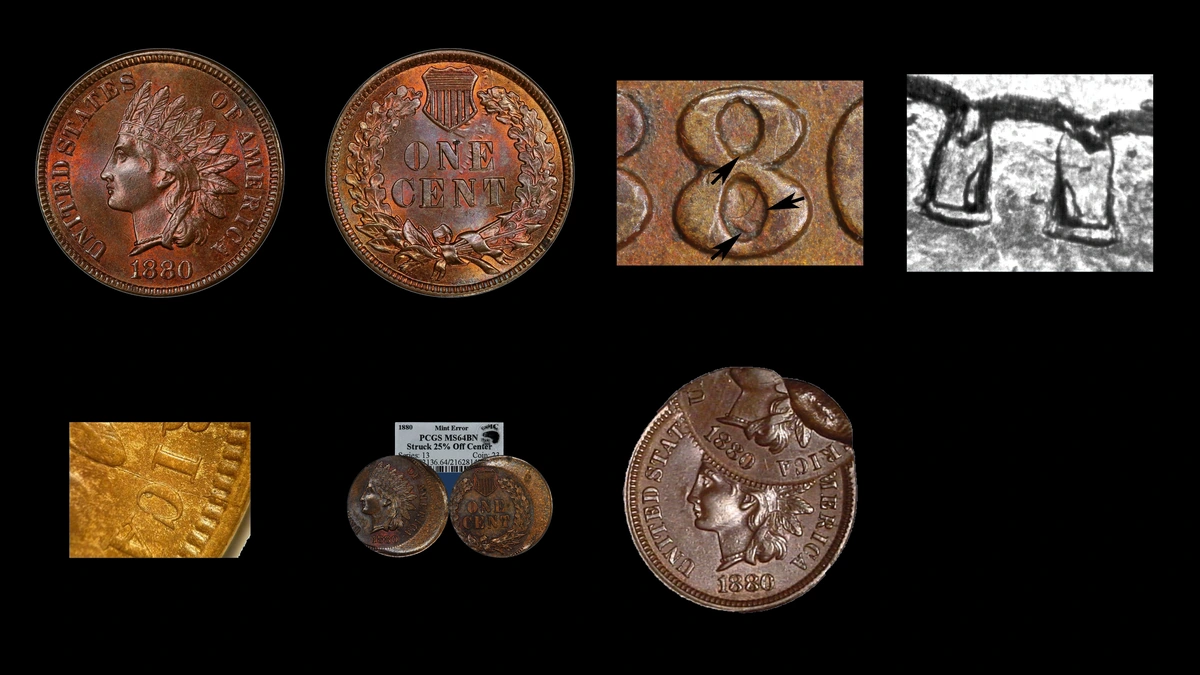
Turn an 1880 Indian Head cent over after checking the headband: a recognized variety combines doubled front lettering with unusual transferred shapes on the back. A high-grade example sold for $3,450 in 2007.
The estimated range for 1880 penny errors is $5–$5,000, and the highest supplied completed comparison is $4,080 for a different-year 1908 double strike. This guide separates added design, missing detail, surface flaws, and altered outlines before considering prices.
| Clue | Likely area of study | Estimated value |
|---|---|---|
| Repeated headband letters and strange reverse outlines | Doubled die and off-center clash | $100–$4,000 for the combined variety |
| Extra date strokes or border fragments | Repunched or misplaced date | $15–$2,500 |
| Raised marks, weak shield, or peeling metal | Die damage, filled die, or lamination | $5–$2,000 |
| Missing edge, displaced image, or two strikes | Clip, off-center strike, or double strike with indent | $25–$5,000 |
1. 1880 Penny Extra Outlines in LIBER: Doubled Die Obverse Error
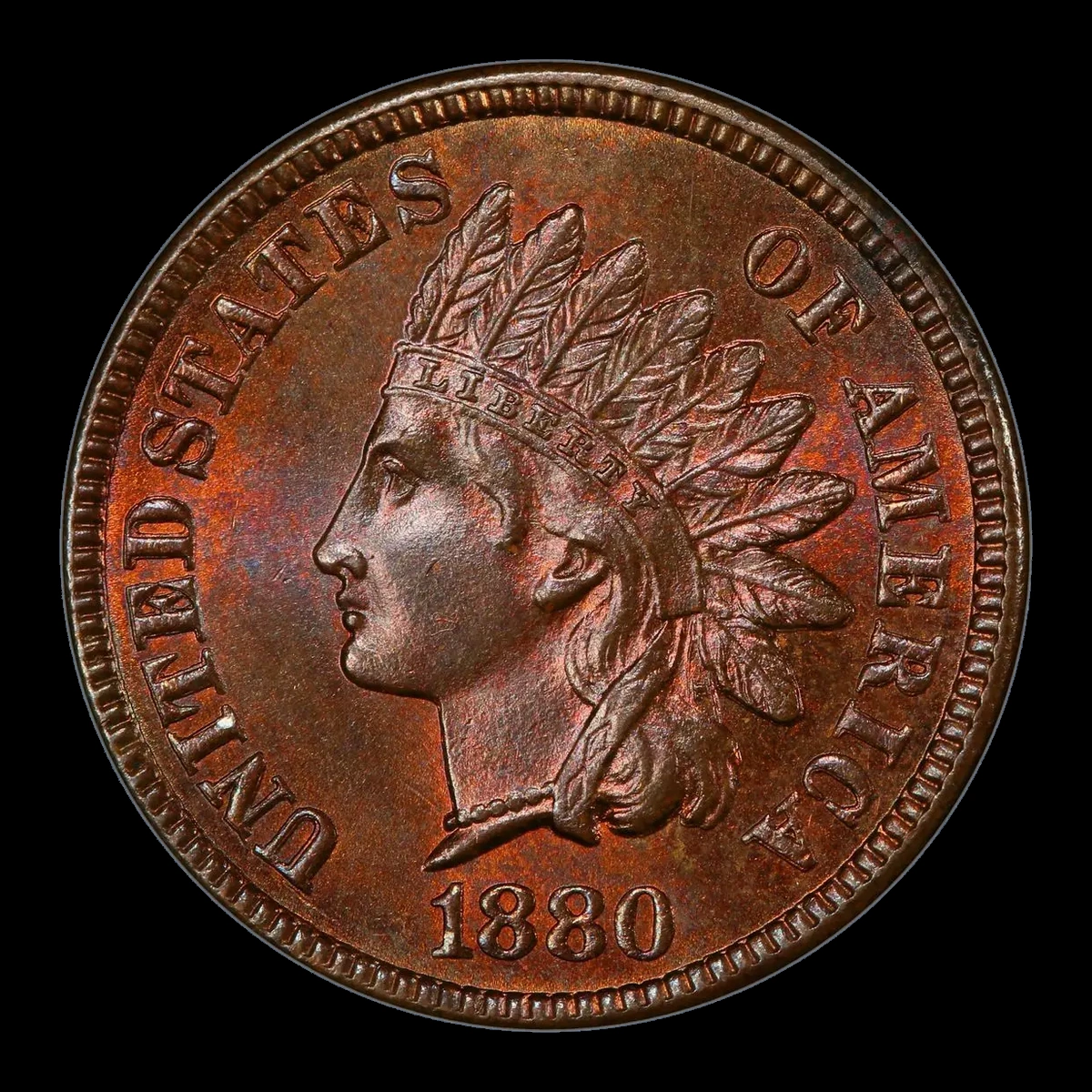
The small headband letters deserve a sharp closeup because FS-101, also called Snow-1, shows repeated detail within LIBER. The doubling was built into the front die rather than caused by striking the coin twice.
How to Identify
Follow the raised letter edges as the light changes, separating genuine repeated outlines from reflections or flat shelves. A vaguely thick headband letter is insufficient for this attribution.
Inspect the reverse for the distinctive off-center clash described next. Both features occur on the recognized combined variety, so matching both sides is more useful than relying on one letter.
What It’s Worth
$100–$4,000 is the estimated range for identified examples in different conditions. High prices require clear attribution and strong preservation.
PCGS records a $3,450 Heritage sale on August 8, 2007 for an MS65 Brown example. That unworn coin’s price includes its reverse clash as well as its doubled headband.
2. 1880 Penny Border-Like Shapes Cross the Shield: Off-Center Clash Error
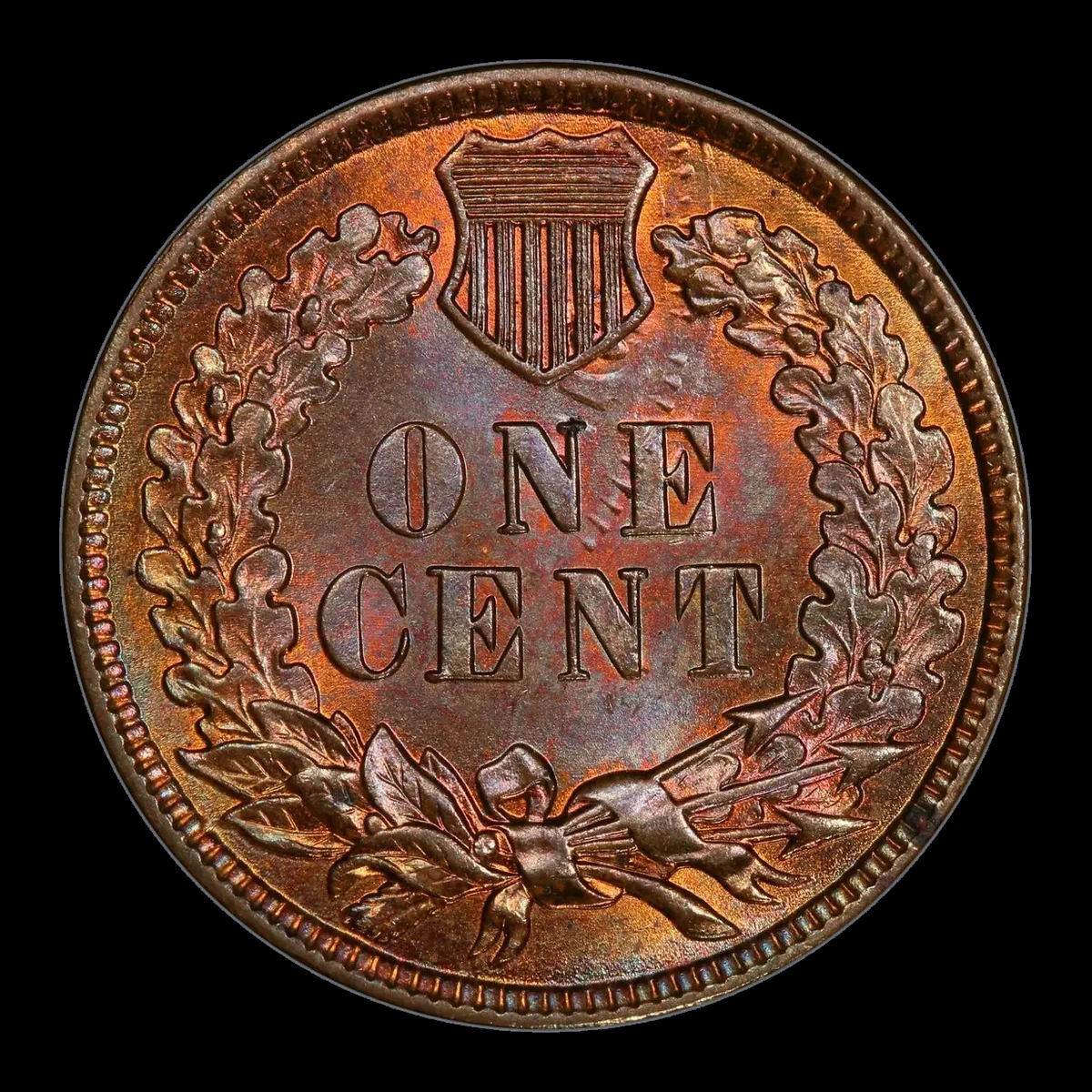
Shapes resembling border teeth can appear inside the reverse design, extending inward from around 1 o’clock. They are transferred traces from contact between the dies at an offset position.
The recognized pattern crosses the shield area, upper-right wreath, and ONE CENT. The exact circumstances of the die contact remain debated, even though the transferred design can be examined directly.
How to Identify
Compare the unusual teeth and letter fragments with the documented 1880 clash pattern. Follow their path through the existing reverse design, then confirm the doubled headband on the front.
A coin bearing an off-center clash can still have a centered normal strike. It differs from an off-center strike that loses part of the intended design beyond the available metal.
What It’s Worth
$100–$4,000 is the estimated whole-coin range for the identified FS-101/Snow-1 variety with this clash. A random raised streak or ordinary clash is not the same attribution.
The $3,450 August 2007 Heritage result belongs to the same MS65 Brown coin discussed under the headband doubling. It is not another amount to add to that coin’s value.
3. 1880 Penny Inner Date Curves Appear Twice: Repunched Date Error
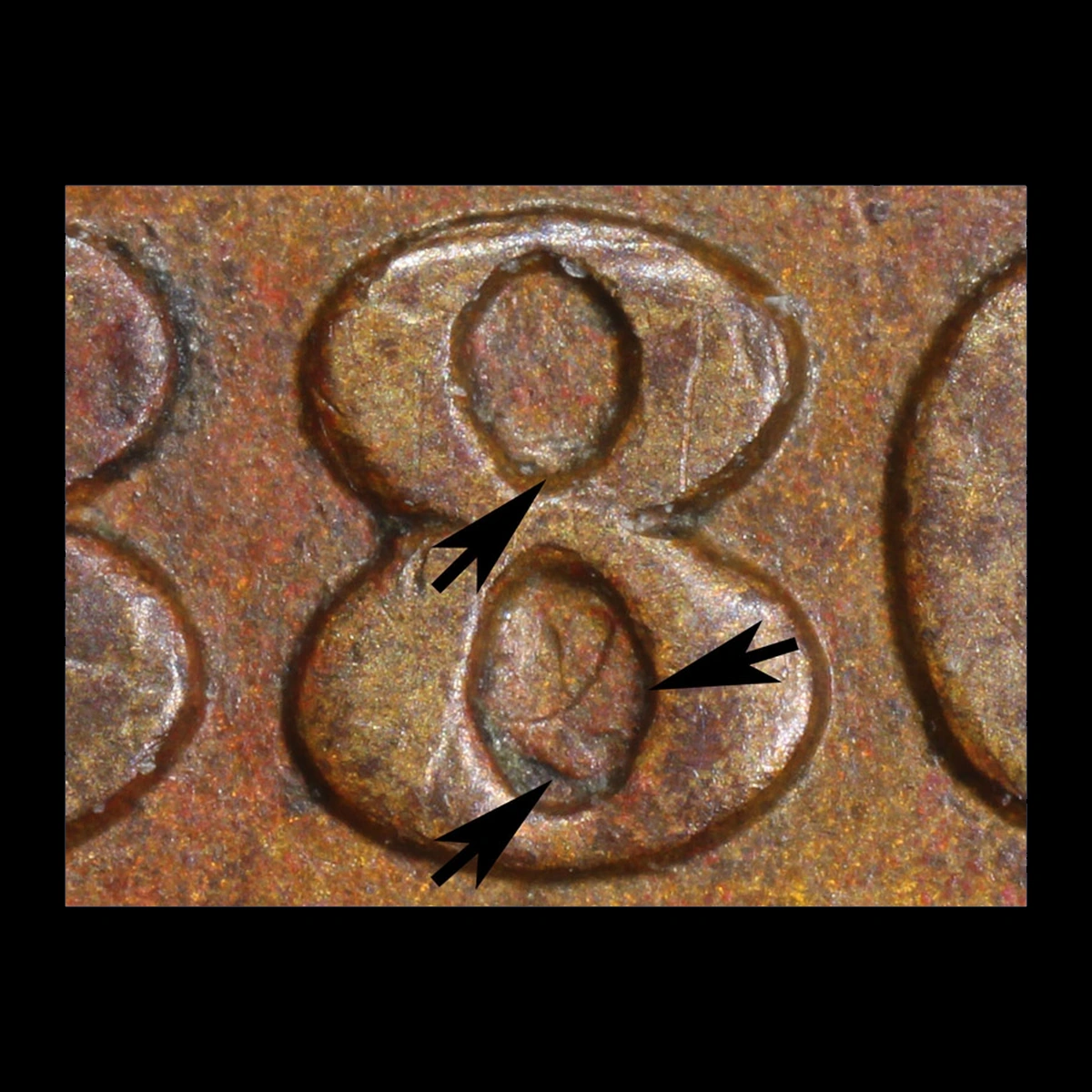
Inspect the inner outline of an 8 for a surviving curve from an earlier date-punch position. A second placement of the punch could leave part of the first impression uncovered in the die.
How to Identify
Match the complete date pattern against a photograph of the appropriate circulation variety. This local date-punch effect differs from doubling elsewhere in the design.
A listed Proof example instead has an extra trace below the 1. Proofs were specially struck for collectors, so their date features must be compared with the correct Proof reference.
What It’s Worth
$15–$500 is the estimate for circulation examples, while a Proof has a separate whole-coin range of $400–$2,500. Much of a Proof’s value may come from its finish and condition.
A 1904 FS-301 repunched date graded MS64 Brown sold for $168 in January 2019. That different-year unworn comparison is not an auction result for an 1880 date pattern.
4. 1880 Penny Two Extra Curves Below the Date: Misplaced Date Error
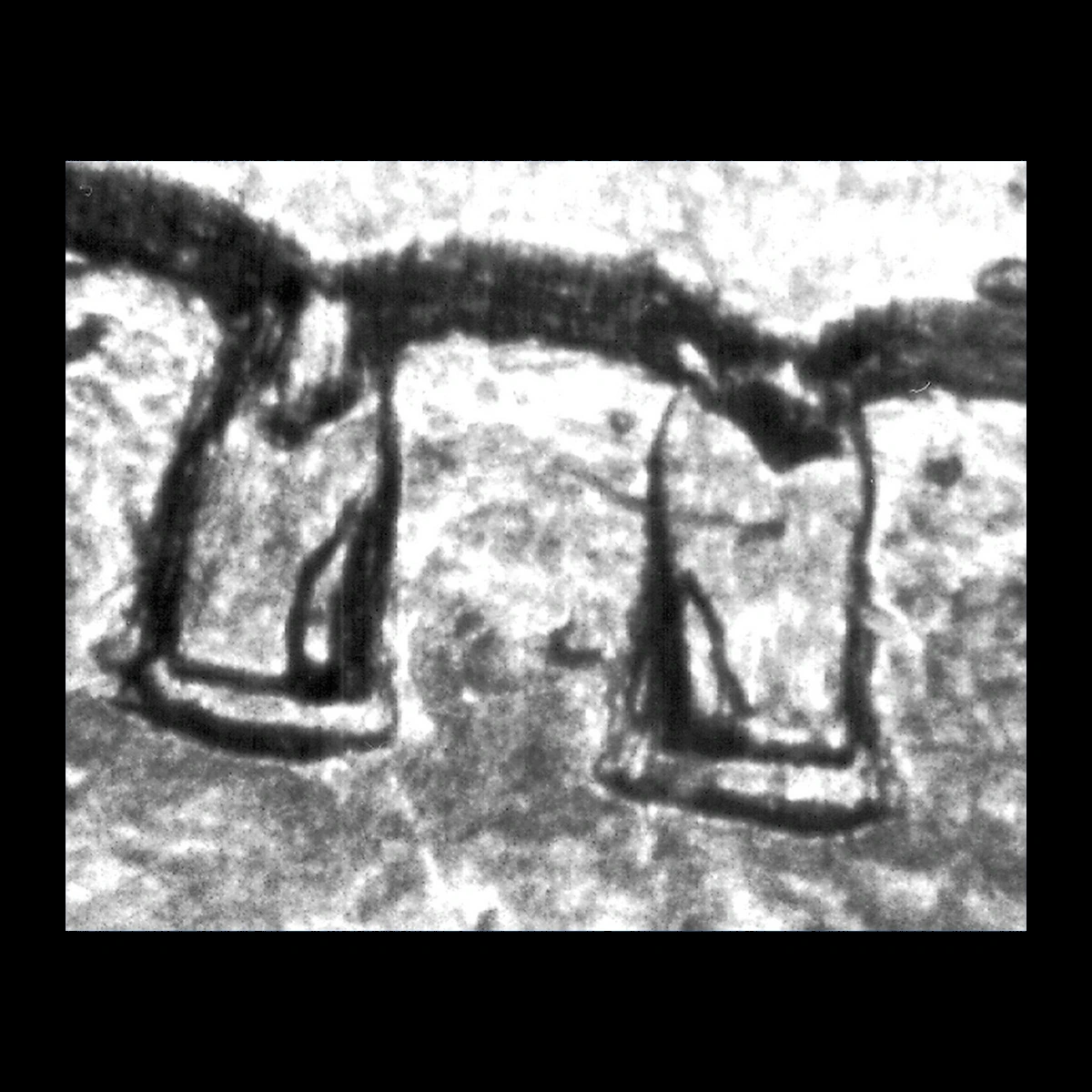
The border below and left of the normal 88 can contain fragments of two additional 8s. Their position records an incorrectly placed date punch whose traces remained after the proper date was entered.
How to Identify
Keep both normal 8s visible while moving down and left into the border teeth. Compare the spacing and curves of the extra fragments with one documented 1880 example.
Ordinary border teeth can look crowded under uneven lighting. Rotate the light to confirm raised digit shapes rather than treating every irregular tooth as a misplaced number.
What It’s Worth
$25–$700 is the estimated range for ordinary 1880 examples with a clear match. Strong fragments and good surfaces support more interest than a faint worn trace.
A 1908 FS-301 cent graded MS65 Red and Brown has a recorded $1,187 eBay price from December 2021. That higher-grade different-year variety supplies context rather than an 1880 sale.
5. 1880 Penny Ridges, Letter-Area Lumps, or an Upper Rim Patch: Die Damage Error
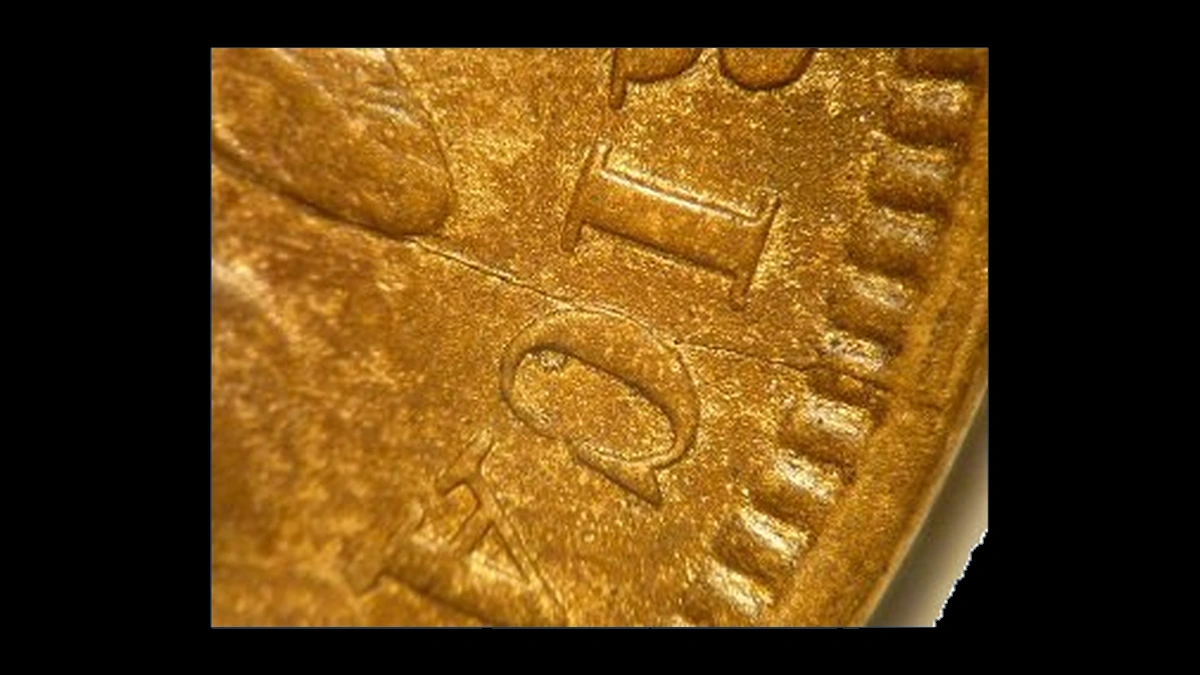
Raised marks can be copied from openings in a cracked or chipped die. A larger broken section can create a rim patch, and a piece that remains in place temporarily can leave a retained break with some design still visible.
How to Identify
Recorded 1880 patterns include a front crack entering from about 4:15, a retained reverse rim break around 11:30–12:45, and smaller defects near the E in ONE or CENT. These describe separate examples.
Under low-angle light, distinguish a raised ridge from a scratch with an incuse center. Check a rim patch for original design inside its boundary and for evidence of later squeezing or added material.
What It’s Worth
$5–$500 is the estimated whole-coin range for these cracks, chips, and rim breaks. A bold identifiable break generally attracts more attention than a fine crack on a worn penny.
No separate completed sale is supplied for each listed pattern. Corrosion or heavy wear can obscure the evidence needed to identify the defect.
6. 1880 Penny The Shield Is Locally Weak: Filled Die Error
Compare the reverse shield with the wreath and letters around it. A reported MS65 Brown 1880 cent has localized shield weakness described as a filled-die effect.
Grease or compacted debris can block recessed detail in a die, preventing that area from forming normally on the coin. The supplied description does not establish the exact obstructing material.
How to Identify
Look for concentrated missing detail beside stronger surrounding design. Similar smoothing across the whole reverse is more consistent with general wear than a local blockage.
Scraping and polishing can also erase detail, so inspect the surface around the shield for those traces. A naturally weak strike remains another possibility when the physical evidence is incomplete.
What It’s Worth
$5–$100 is the estimate for a modest filled-die feature on an ordinary worn coin. The reported MS65 Brown example has a separate whole-coin estimate of $250–$800.
The larger figure reflects its well-preserved unworn condition as well as the defect. Neither estimate represents a documented sale of that specimen.
7. 1880 Penny A Surface Sheet Splits Away: Lamination Error
A lamination exposes a weakness inside the original bronze strip. A thin layer may lift or detach where impurities or other interruptions prevented the metal from bonding properly.
How to Identify
Study an existing layer boundary without pulling up any loose flap. A stain lacks that separation, while a gouge cuts through solid metal and may push it aside.
The reported CAC Grading MS66 Red and Brown example has a front-side lamination, and a separate worn example is also listed. A shallow peel need not reach the edge to be genuine.
What It’s Worth
$15–$200 is the estimated range for a worn 1880 cent with a clear peel. The high-grade front-lamination coin has a separate whole-coin estimate of $1,000–$2,000.
APMEX’s $1,359 listing is an asking price for the MS66 Red and Brown coin, not a completed sale. Its preservation and remaining red color contribute substantially to that figure.
8. 1880 Penny A Section of the Rim Is Absent: Clipped Planchet Error
A lightly worn 1880 penny was described in an auction listing as having a rim clip. A genuine clip begins in the blank before striking, sometimes when the blank-cutting punch overlaps an earlier hole or reaches the strip’s edge.
How to Identify
Confirm that metal is actually missing, then inspect how the border formed at both ends of the gap. Natural weakness near the gap, sometimes accompanied by weakness opposite it, differs from a cut through finished detail.
A normal loose bronze cent provides reference measurements of 3.11 g and about 19 mm across, with wear and missing metal affecting the result. Measure an intact span, avoid fragile areas, and leave certified coins inside their holders when considering these or the following shape errors.
What It’s Worth
$25–$300 is the estimated range for genuine 1880 clips. The recorded coin’s clip size and clock position are not established in the supplied description.
It appeared in a six-coin lot, so that group cannot furnish an individual sale price. A different-year 1939 clipped cent graded MS64 Brown sold for $180 in January 2023.
9. 1880 Penny Left-Side Lettering Runs Off the Coin: Off-Center Strike Error
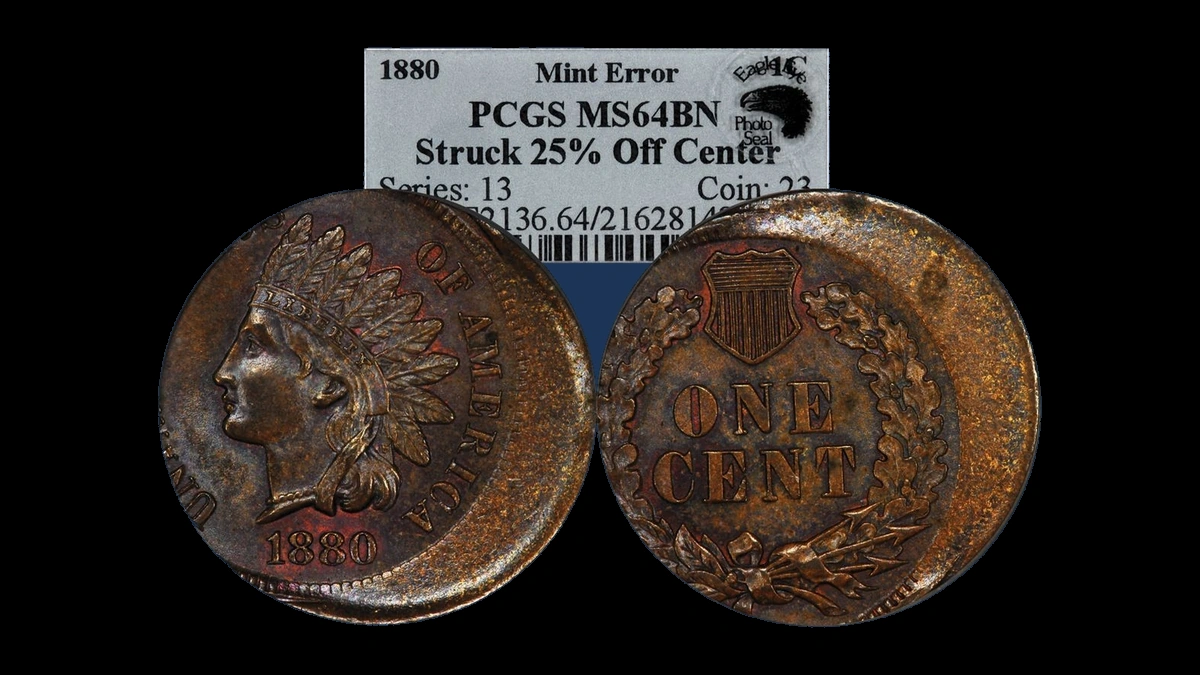
The recorded 25% off-center 1880 cent loses most of UNITED and nearly all of STATES. Its blank was displaced toward 10 o’clock when the dies struck.
How to Identify
With the date upright, compare the lost inscription with the surviving unused metal and the reverse strike boundary. Both faces should fit the same displaced blank.
The PCGS MS64 Brown specimen retained traces of copper color in protected areas. Its actual off-center strike should not be confused with the extra reverse clash traces on an otherwise centered FS-101 coin.
What It’s Worth
$150–$2,000 is the estimate for genuine dated 1880 off-center cents in varying conditions. Readable dates and attractive surfaces improve the comparison.
The 25% off-center MS64 Brown example brought an $850 hammer price on January 7, 2006. The listing specifies an additional buyer’s premium, so $850 is not the all-in purchase total.
10. 1880 Penny A Second Design Meets a Small Depression: Double Strike with Indent Error
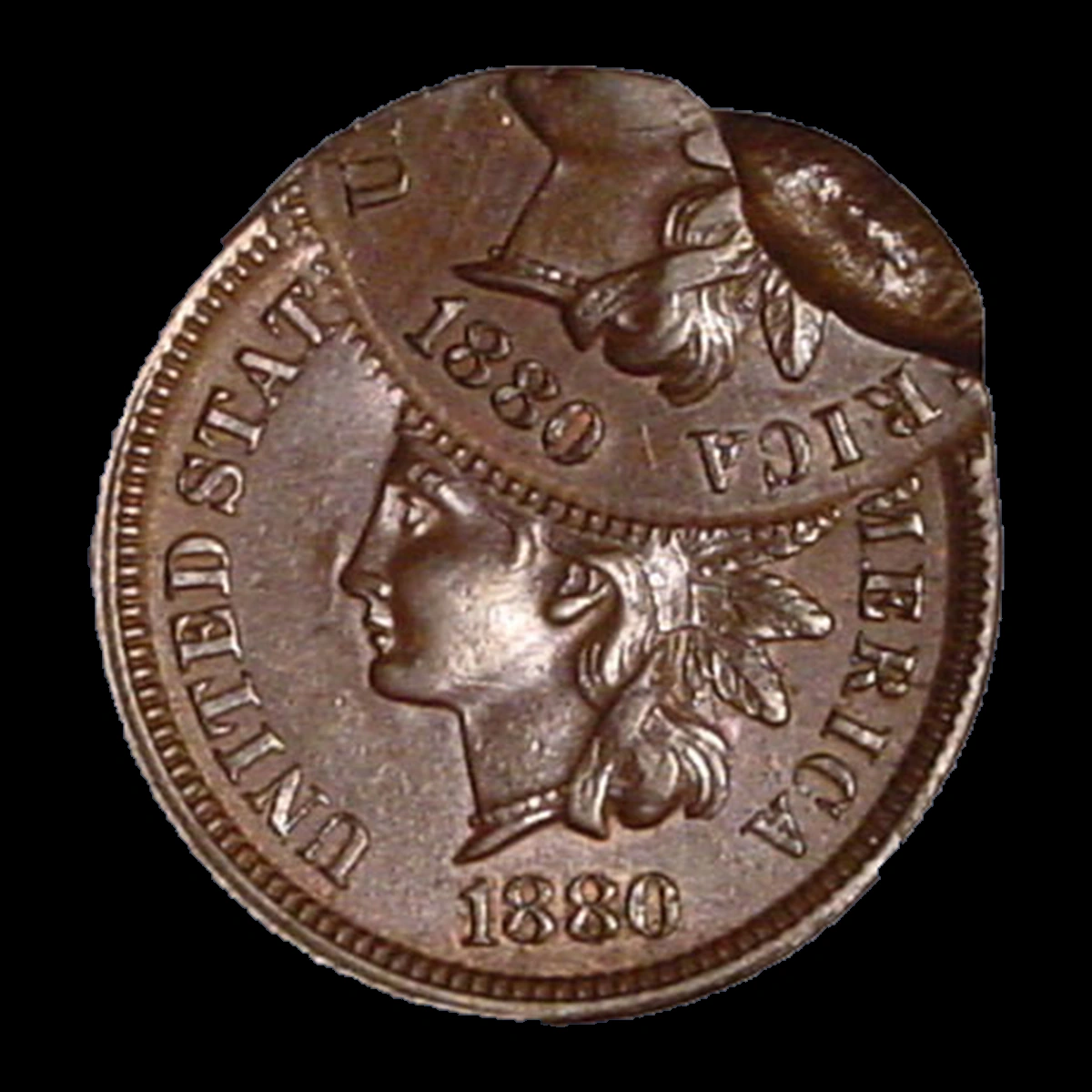
The documented 1880 compound error has a centered first strike and a second strike 55% off-center toward 1 o’clock. Another overlapping blank blocked about 5% of that later strike, leaving an indent.
How to Identify
Trace recognizable details from the centered first image into their separate positions in the later impression. Then locate the distinct depression that interrupts the second-strike area.
The illustrated example is graded NGC AU58 Brown, indicating very light wear. The overlap of two struck designs and the blank-made depression are separate features on that one specimen.
What It’s Worth
$500–$5,000 is the estimated range for a genuine 1880 double strike with an identifiable indent. No completed price is supplied for the pictured AU58 Brown piece.
A double-struck 1908 cent graded MS62 Brown sold for $4,080 in June 2024. That different-year comparison does not establish the price of the 1880 compound error or a separate premium to add for its indent.
Conclusion
Two descriptions can refer to one collectible 1880 penny: the headband doubling and unusual reverse clash are a clear example. An overlapping strike and an indent can also share a specimen without creating two independent prices.
Use the visible pattern to identify the feature, then compare the coin’s finish, wear, and surfaces. A high-grade asking price, a group-lot result, and an individual completed sale provide different kinds of evidence.