Rare 2002 Half Dollar Errors (List & Pictures)
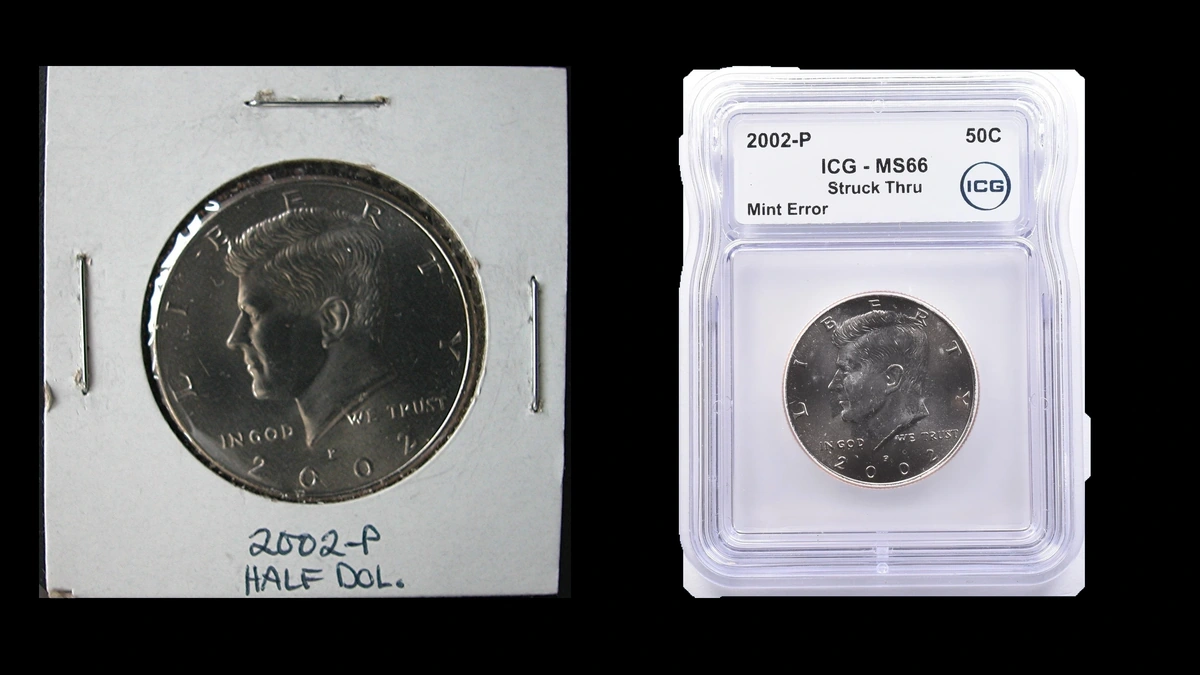
A silver 2002-S Proof is supposed to be heavier than a regular half dollar. Knowing that difference helps you avoid a false alarm when searching for 2002 Kennedy half dollar errors.
The estimated ranges below span $15–$5,500, including a conditional wrong-blank category. The upper comparison is a Kennedy attributed to 1964 on a quarter blank, which sold for $5,040 in January 2025.
Start with the front, turn to the eagle, and finish with the edge and measurements.
| Visible clue | Possible cause | Estimated value |
|---|---|---|
| Raised line above the head | Cracked die | $20–$300, depending on type |
| A weak patch among sharp details | Strike-through | $20–$200 |
| Extra front letter outlines | Front doubled die | $30–$250 |
| Repeated back details | Reverse doubled die | $25–$500 |
| A small edge projection | Chipped collar | $15–$125 |
| Bare metal beside an incomplete picture | Off-center strike | $50–$350 |
| Size and metal fit a different blank | Wrong blank candidate | $1,000–$5,500 if authenticated |
A Proof is a specially made collector coin, often with mirror-like areas around the portrait. Regular layered-metal halves and clad Proofs weigh 11.34 grams; the 2002-S silver Proof weighs 12.50 grams.
Both types measure about 30.61 mm across and have grooved edges. Keep the mint letter, finish, and metal type with any notes or photographs.
1. 2002 Half Dollar A Raised Line from the Head: Die Crack Error
The best-known crack here runs from the upper middle of Kennedy’s portrait to the top rim. It earned a 2002-S silver Proof the name “Spiked Head.”
A split in the steel stamping tool let coin metal enter the narrow gap, producing a raised line. The reported coin came from a purchased Proof set.
Philadelphia reports also describe smaller lines near the neck and the eagle’s right wing tip. Those are separate examples within the same broad error class.
How to Identify
For Spiked Head, follow the line toward twelve o’clock and confirm that it stands above the surface. A scratch sinks into the coin, while a loose fiber merely rests on it.
Check the S mintmark and silver-Proof identity before using the Spiked Head comparison. A Philadelphia neck crack does not become that variety simply because it also forms a raised line.
A narrow crack reaching the rim is still a crack. A larger lump caused by a piece breaking out of the die is a different stage of damage.
What It’s Worth
$100–$300 is the specialist estimate quoted for the silver-Proof Spiked Head example in the original report. It was an expert valuation, not an auction result.
Modest Philadelphia cracks have an estimated whole-coin range of $20–$50. Their ordinary finish and smaller features make them a different price comparison.
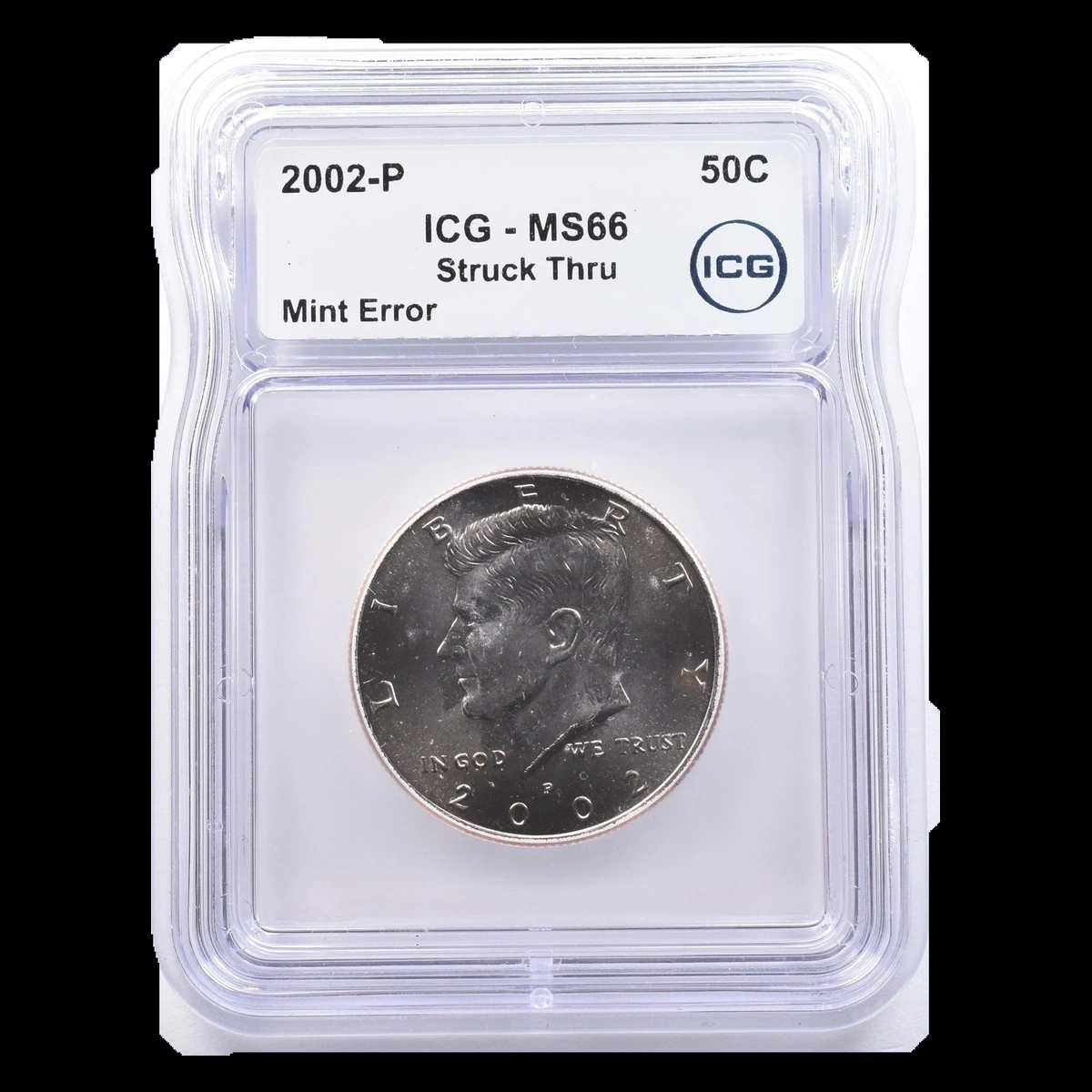
2. 2002 Half Dollar Soft Detail beside Sharp Detail: Strike-Through Error
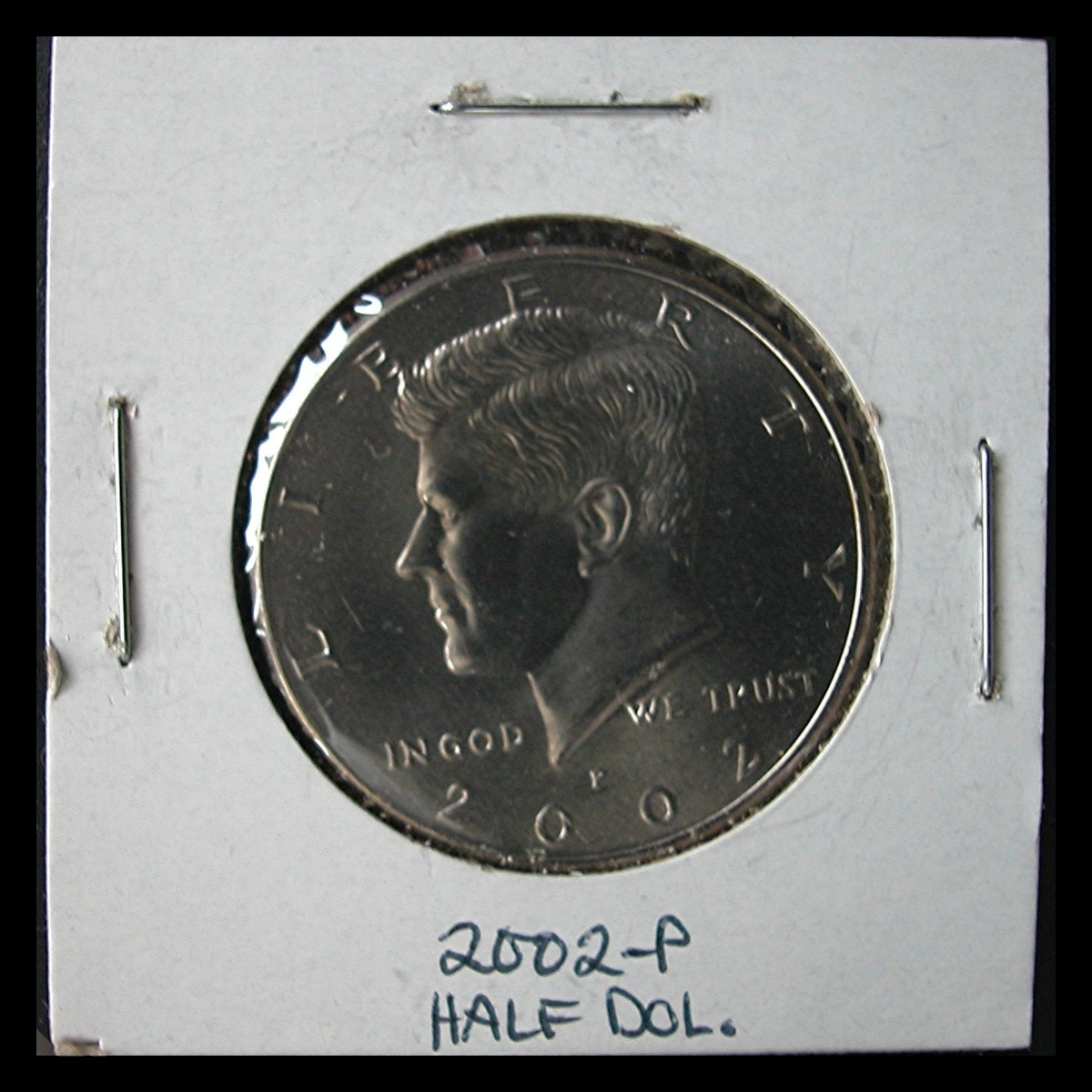
A localized weak area deserves a closer look when nearby letters and design remain crisp. Grease or other material between the die and blank can stop part of the picture from forming.
CONECA illustrates a 2002-P described as struck through grease. Another supplied account combines blocked detail with an edge-ring defect, showing that two kinds of mistake can occur on one coin.
How to Identify
Begin where the weak area meets the normal design. Under magnification, look for original struck texture rather than rubbing lines or rough chemical damage.
Ordinary wear usually affects exposed high points as the coin circulates. A blocked die can instead leave a local interruption beside much sharper detail.
The coin does not have to lose weight for this error to occur. The obstruction prevented detail from forming; it did not necessarily remove any metal.
What It’s Worth
$20–$200 is the estimate for clearly identified blocked-die detail, with stronger and more visible effects tending to draw more interest. One slightly soft letter belongs in a different comparison from a large blank-looking patch.
A 1976-D Kennedy struck through material on both sides sold for $114 in March 2025. That is a same-series comparison from another year, not a sale of the illustrated 2002-P.
3. 2002 Half Dollar Extra Outlines in Front Letters: Doubled Die Error
The reported front doubling focuses on LIBERTY and IN GOD WE TRUST. The source does not assign a mint, finish, or direction to the extra detail.
A doubled die has repeated shapes in the stamping tool before it makes the coin. Those shapes can appear in the same positions on other coins struck from that die.
How to Identify
Use a normal coin of the same mint and finish as your first comparison. Then examine the letters for rounded extra contours or split corners.
Move the light so that a shadow or reflection cannot imitate a second stroke. Flat shelves and rough, widened edges can have other causes.
A repeatable match to a known example is more useful than several letters that merely look thick. Keep the whole front in your photographs so the year and mint remain connected to the close-up.
What It’s Worth
$30–$250 is the estimated range for modest but clearly identified front doubling, from ordinary condition through attractive unworn examples. The estimate assumes a real doubled die has been established.
A recognized 1974-D doubled die graded MS64 sold for $49 in May 2026. It offers a modest same-series comparison, without identifying an unnamed 2002 variety.
4. 2002 Half Dollar Repeated Eagle or Letter Details: Reverse Doubled Die Error
The Denver report moves the search to the back of the coin. It concerns extra outlines in the eagle or lettering, but gives no verified map of one particular feather or letter.
This is still a die variety: the extra detail is in the tool. It differs from a double strike, which applies the picture to the coin a second time.
How to Identify
Check the front for both 2002 and D, then inspect the suspected back detail under a magnifier. A close-up without the matching front cannot establish the year and mint.
Look for rounded repeated contours that stay visible as the lighting changes. A flat ledge beside a smaller-looking letter can result from movement during striking.
Compare a Denver coin with the correct layered-metal issue. A silver 2002-S Proof has a different mint and composition.
What It’s Worth
$25–$500 is a comparison estimate for clearly identified 2002-D reverse doubling. More obvious detail, firmer variety identification, and better preservation support the higher part of the range.
A recognized 1964 FS-801 reverse doubled die in MS66 sold for $720 in December 2024. Its established variety and silver composition make it background evidence, not a direct 2002 price record.
5. 2002 Half Dollar A Tiny Projection between Edge Grooves: Collar Chip Error
Inspect the edge itself for this feature. A chip in the collar, the ring surrounding the blank during striking, can leave a small projection among the grooves.
A studied group of 2002-P halves showed matching chip shapes at different positions relative to the face designs. That pattern supported the conclusion that the damaged collar moved.
How to Identify
Light the edge from the side and examine the projection near the back rim. Most of the surrounding grooves should remain normal.
A burr from an impact often accompanies crushed or pushed metal. Record the shape of the feature and where it sits relative to Kennedy and the eagle.
One coin can show the chip’s effect, but cannot prove collar movement by itself. The Error-Ref study uses matching shapes across several coins to make that comparison.
What It’s Worth
$15–$125 is the estimate for an individually matched collar-chip coin. Visibility and preservation matter more than the mere presence of a tiny bump.
A 1976-D Kennedy with a larger break in its back design sold for $256 in June 2026 in MS65 condition. That face break is not a collar-chip sale and does not set the value of every small edge projection.
6. 2002 Half Dollar Part of the Picture Misses the Coin: Off-Center Strike Error
An incorrectly positioned blank can receive only part of the intended design. The remaining metal shows an untouched margin beside the incomplete picture.
The year guide reports this category without naming a certified specimen, mint, or measured shift. A dramatic-looking coin still needs its own readable date and matching features.
How to Identify
Include the entire outline in straight-on views of both sides. Look for corresponding missing design and bare metal on the two faces.
If only the front is shifted while the back stays centered, a moved die may explain the effect instead. Grinding or pressing an ordinary coin smooth can also imitate a blank patch.
Read 2002 directly from the coin. A shift that removes the whole date also removes the easiest way to assign the piece to this year.
What It’s Worth
$50–$350 is the estimate for moderate, identifiable examples, based on the guide’s roughly $50–$300 figures. A readable date and a clear unstruck margin help present the error.
This is a guide range rather than a recorded 2002 auction result. The size of the shift alone does not decide the price.
7. 2002 Half Dollar Size and Metal Do Not Fit: Wrong Blank Candidate Error
Both normal 2002 compositions must be ruled out before proposing the wrong blank. A 12.50-gram silver Proof is a regular product, even though it is heavier than an 11.34-gram clad half.
The supplied guide discusses historical Kennedy wrong-blank errors without documenting a specific 2002 example. This entry is therefore a category to investigate, not an identified 2002 specimen.
How to Identify
Combine weight, diameter, and metal evidence. A smaller blank from another denomination gives the half-dollar design less room, so outer details can run naturally beyond its edge.
A modern quarter blank starts at about 5.67 grams and 24.3 mm across. Striking it with half-dollar dies can spread its final outline, so the measurements must be interpreted together.
Inspect for trimming, filing, and chemical damage before drawing a conclusion from low weight. Those changes can alter a normal half without changing the blank on which it was originally struck.
What It’s Worth
$1,000–$5,500 is the estimated comparison range for an authenticated Kennedy half on a smaller blank intended for another denomination. It is conditional on the blank and error actually being established.
A Kennedy attributed to 1964 and struck on a clad quarter blank sold for $5,040 in January 2025 in MS64 condition. That older example supplies context for the upper range; it is not evidence of a 2002 sale.
Conclusion
The edge-chip study and Spiked Head silver Proof give especially specific features to compare. For the broader reported categories, let the visible design, mint, and metal guide the identification rather than a seller’s label.
Photograph the whole coin before taking close-ups. Keeping the date, mintmark, edge, and unusual feature together makes both identification and later price comparisons much easier.