Rare 1892 Nickel Errors (List & Pictures)
A reported 1892 nickel on a bronze cent blank brought $5,040 in April 2020. Estimated values for 1892 Liberty nickel errors range from $500–$6,500 across the three types below.
Keep the date in view while comparing the original outline, the metal and any backward impression; each points to a different event in the press.
| Feature | Error to investigate | Estimated whole-coin range |
|---|---|---|
| Incomplete designs beside untouched metal | Off-center strike | $500–$3,500 |
| Smaller brown disk carrying nickel designs | Cent-blank strike | $2,500–$6,500 |
| Sunken backward design and an edge step | Brockage with partial collar | $800–$2,500 |
An ordinary Liberty nickel weighs 5 grams and measures 21.21 millimeters across its plain edge. Use measurements from the actual loose coin to support the design evidence; a distorted outline alone cannot identify the cause.
1. 1892 Nickel The Date Survives but CENTS Does Not: Off-Center Strike Error
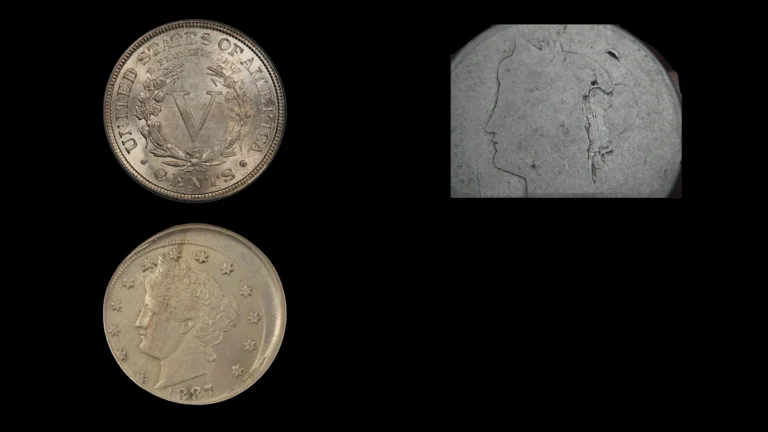
The documented 1892 example was struck 40% off center toward 1 o’clock. Its date remained on the coin, while the reverse word CENTS missed the blank.
The blank sat too far from the intended center when the dies came together. Some metal received no design at all, while part of each die’s image fell beyond the available disk.
PCGS graded the example AU50. Heritage’s description noted light hairlines and mildly grainy gray surfaces, which belong to this particular specimen’s condition.
How to Identify
Find all four digits of 1892 before estimating the displacement. A complete year connects the unusual strike to this date rather than to an undated Liberty nickel.
Compare the original unused metal with the design lost on both faces. One misplaced blank should account for both, rather than an unrelated injury on each side.
Inspect the boundary under side lighting for grinding or lettering scraped away after striking. On the recorded coin, CENTS is absent because of the offset, not because the Mint used a special reverse without that word.
What It’s Worth
Dated 1892 off-center nickels are estimated at $500–$3,500. Preservation, displacement and readable identity determine which comparisons fit.
The 40% off-center AU50 coin sold for $2,585 on January 10, 2013. Its full date is an advantage when collecting errors by year.
A still larger shift need not bring more if it removes the year or leaves damaged surfaces. The visible percentage should never replace a whole-coin condition comparison.
2. 1892 Nickel A Brown Blank Too Small for the Nickel Design: Cent-Blank Strike Error
An unused bronze cent blank can enter the nickel press and receive Liberty and the nickel reverse. The smaller disk cannot accommodate the same outer detail as the correct blank.
The reported 1892 example is graded NGC MS63 Brown. MS63 indicates an unworn coin with noticeable marks, while Brown describes its copper-alloy surface color.
That color is consistent with the bronze blank but is not sufficient proof. A coating or chemical change can make a normal nickel brown without changing its underlying construction.
How to Identify
A period bronze cent blank starts near 3.11 grams and 19.05 millimeters. These are reference specifications, not recorded measurements for the auctioned MS63 specimen.
Compare the candidate’s own weight and metal with its naturally cropped design. Striking can expand a smaller blank, so diameter must be read together with the other clues.
Examine the edge for plating, trimming or grinding that could imitate a smaller copper disk. The nickel image should have been formed on the original smaller blank rather than reduced afterward.
An unused cent blank needs no earlier Lincoln or Indian Head design beneath Liberty. Surviving older coin detail would call for a different description involving an already struck host.
What It’s Worth
Authenticated 1892 cent-blank nickels are estimated at $2,500–$6,500. Remaining date, original surfaces and condition influence their appeal.
Mint Error News reports $5,040 for the MS63 Brown example in Heritage’s April 2020 Central States auction. Its unworn preservation is part of that comparison.
A normal-weight nickel merely made brown later does not qualify for the range. Metal identification and the way the design meets the edge must support the same explanation.
3. 1892 Nickel A Sunken Mirror Image and Edge Step: Brockage with Partial Collar Error
An already struck coin can press its raised image into another blank, leaving a backward recessed design. This is called brockage.
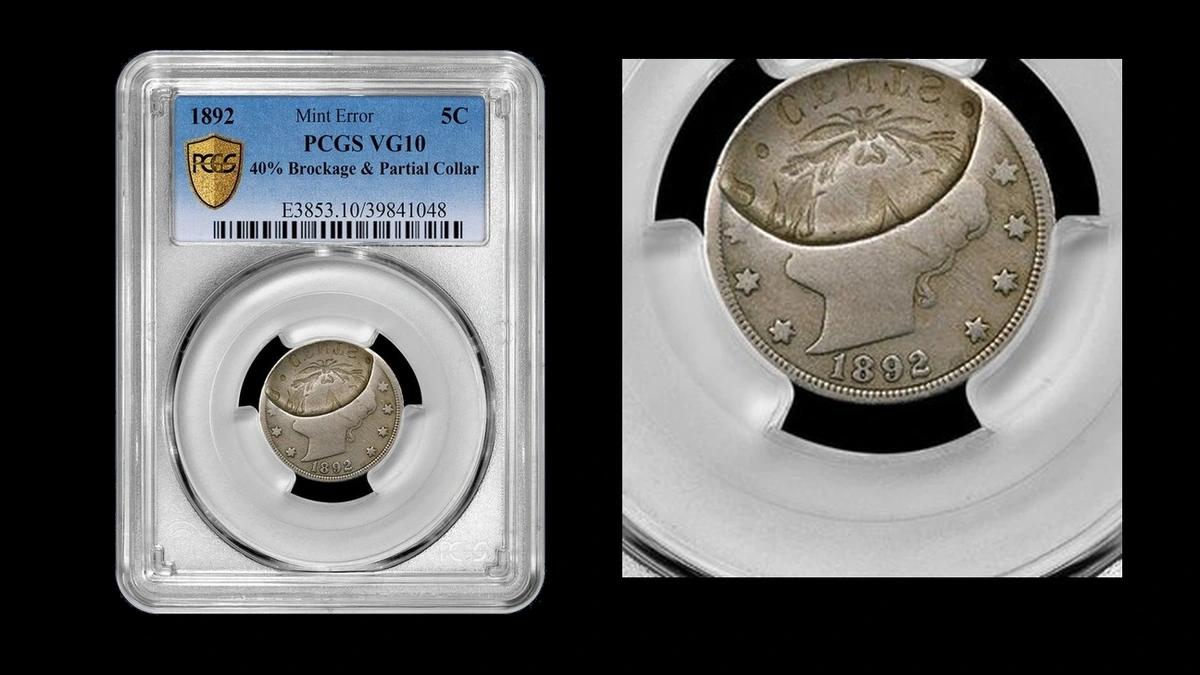
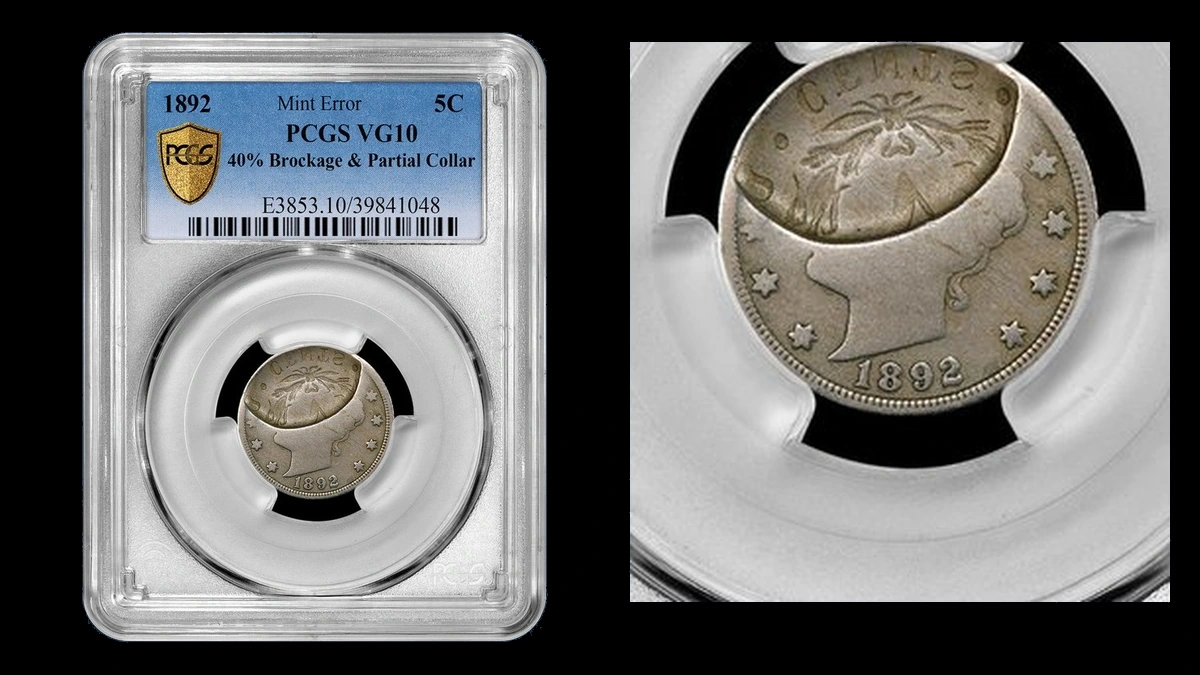
An owner reported an 1892 coin in PCGS VG10 with a label describing 40% brockage and a partial collar. VG10 indicates a heavily worn coin with recognizable major detail.
The partial collar concerns the ring that restrains the blank’s width. When only part of the edge is contained, a step can form between restrained and expanded metal.
How to Identify
Locate a recognizable abnormal letter or design and confirm that it is both backward and sunken. Two overlapping raised impressions from repeated strikes do not automatically make brockage.
Then examine the edge step separately under side lighting. Grip marks or later squeezing can damage an edge without showing original partial restraint.
Keep the complete date attached to both views of the same coin. A grading label can guide the comparison, but the surface and edge must display the features being described.
What It’s Worth
A genuine recognizable partial brockage of comparable quality is estimated at $800–$2,500. The edge step belongs to that same whole-coin valuation.
The owner’s account provides no completed sale for the VG10 specimen. Collector opinions in the discussion are not auction records.
Value the combination once rather than adding two maximum ranges. Clear surviving mirror detail is more useful than an impressive description without readable evidence.
Conclusion
These 1892 errors become easier to separate when the design and metal are examined together. An off-center coin loses design beyond its blank, a cent-blank strike starts with the wrong disk, and brockage transfers another coin’s image backward into the surface.
Preserve the date and complete edge in photographs. Use reported sales for the actual specimens they describe, while keeping the owner-reported brockage estimate separate from a completed auction result.