Rare 1914 Dime Errors (List & Pictures)
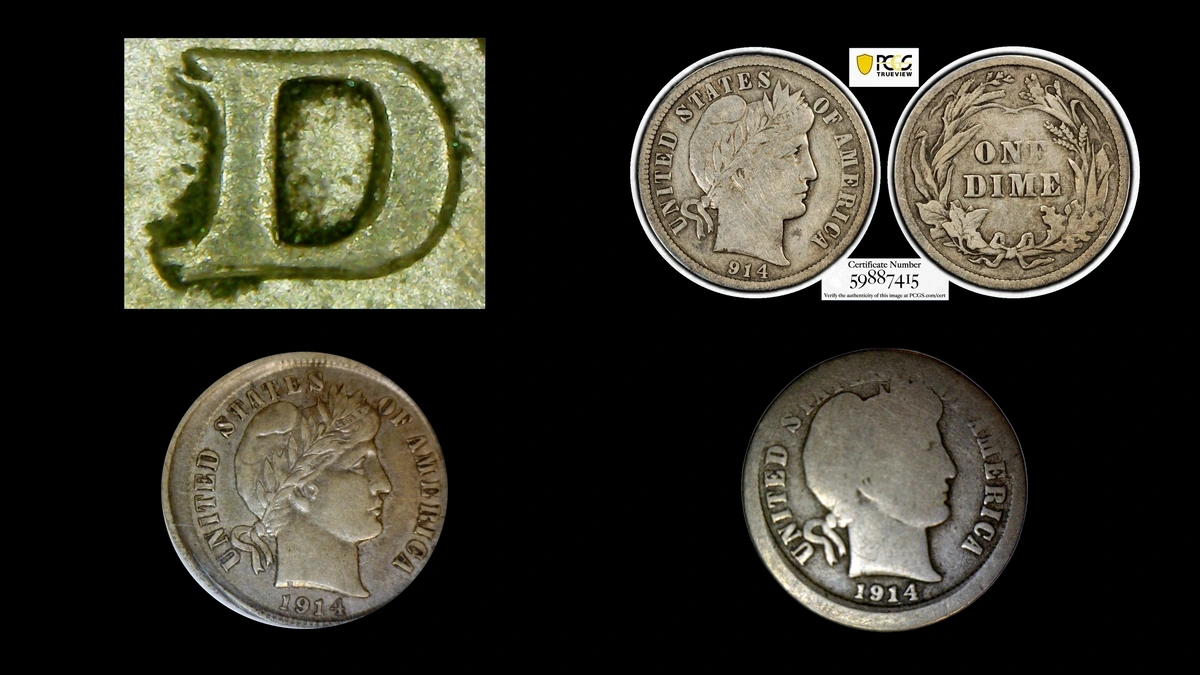
A Denver broadstrike sold for $373.75 in 2008, and a Philadelphia lamination brought $317 in June 2026. These 1914 dime errors span estimated values of $20–$1,500; a different-year 1902 off-center example adds a higher documented $561.20 June 2026 comparison.
Check the mintmark and date, inspect raised or peeling surfaces, then compare the full outline to distinguish clips, broadstrikes, and off-center strikes.
| Observation | Error category | Estimated range |
|---|---|---|
| Extra D or S stroke | Repunched mintmark | $30–$800 |
| Local weakness in date | Strike-through | $30–$300 |
| Raised reverse line | Die crack | $20–$200 |
| Layered reverse separation | Lamination | $30–$500 |
| Missing edge segment | Clip | $40–$400 |
| Wide outline, complete design | Broadstrike | $150–$1,200 |
| Blank margin, incomplete design | Off-center strike | $150–$1,500 |
The normal dime contains 90% silver, weighs 2.50 grams before wear, and measures about 17.9 millimeters with a grooved edge. This is a single silver-copper alloy, not a modern coin with bonded copper-nickel outer layers.
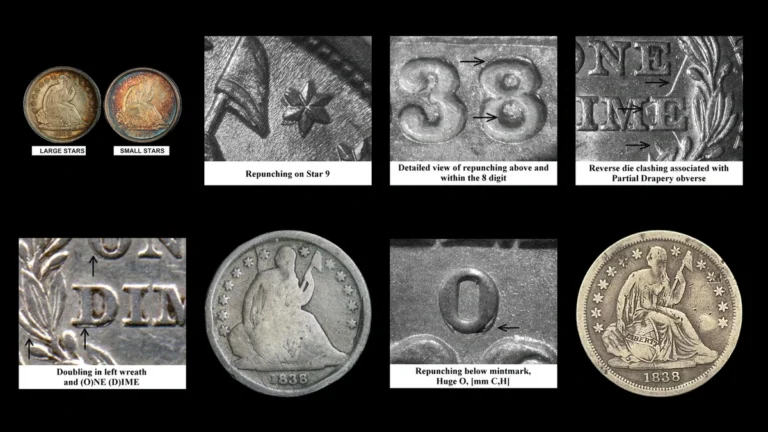
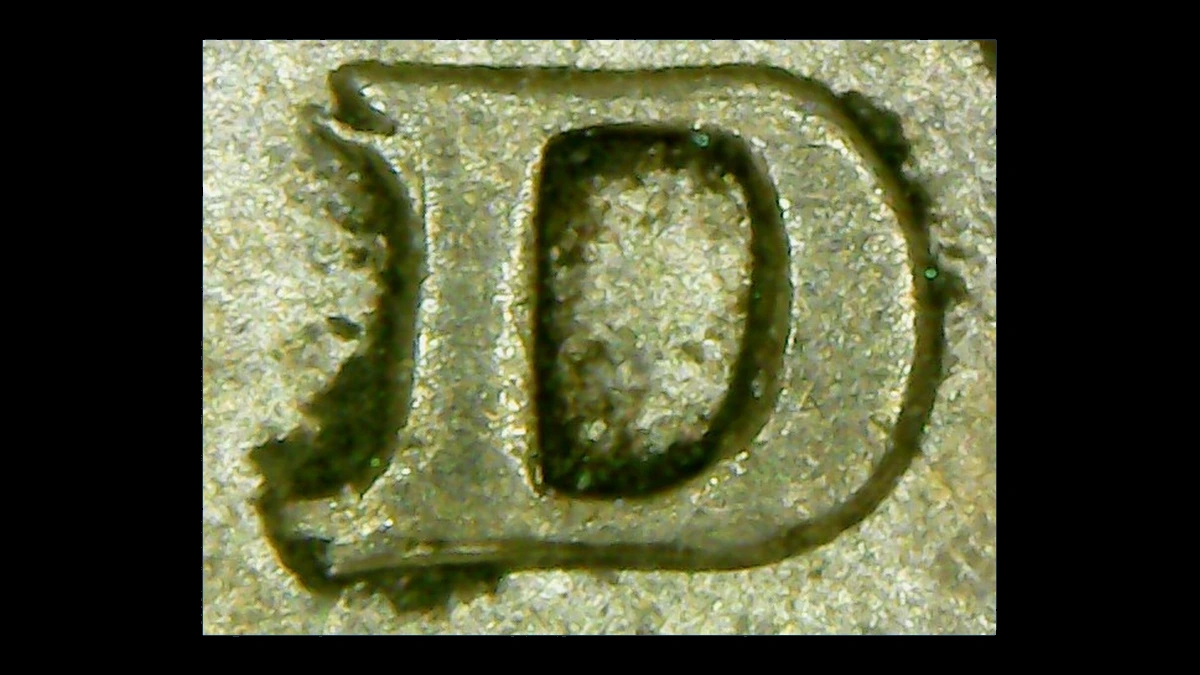
1. 1914 Dime A Small Earlier D toward the Wreath: Repunched Mintmark Error
The Denver variety preserves part of an earlier D above and to the right of the main letter. Its small lower finishing stroke, or serif, extends toward the wreath.
Repeated punching into the die left the extra outline for ordinary strikes to reproduce. A reported San Francisco repunched mintmark has its own pattern and cannot be assigned the Denver direction.
How to Identify
Keep the bow, D, and surrounding field together while comparing the mintmark-guide photograph. Follow the earlier serif and rounded letter pieces rather than relying on thickness alone.
A flat shelf caused during striking or a nick with displaced metal is a different feature. For an S-mint candidate, switch to an appropriate S/S reference.
What It’s Worth
Attributed examples are estimated at $30–$800 from worn through lower unworn grades. An 1899-O repunched mintmark with slight wear and a condition problem sold for $115 in May 2023, a general Barber comparison rather than either 1914 variety’s sale.
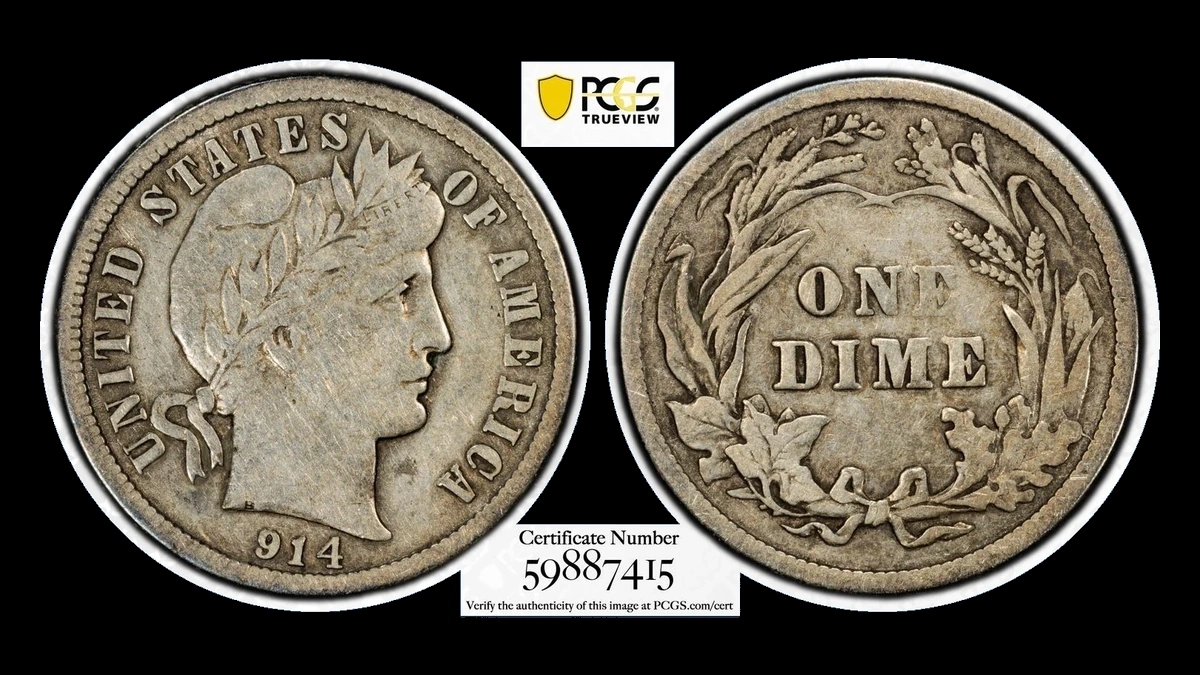
2. 1914 Dime One Date Area Failed to Form: Struck Through Material Error
The year guide describes a VF30 dime with interrupted date detail but gives neither the mint nor the particular numeral affected. Material between die and blank prevented part of the intended design from forming.
A hard obstruction can leave a hollow, while softer material may suppress detail without a sharply bounded depression. The description does not identify the material or say it remained attached.
How to Identify
Compare the affected stroke with nearby numerals and other raised details to distinguish localized weakness from general wear. Inspect for scraping, cuts, or added material hiding a finished date.
Keep the entire date and reverse mintmark area in photographs. Do not name grease, cloth, or a particular missing digit without evidence from the actual specimen.
What It’s Worth
Estimated value is $30–$300 for circulated through lightly worn examples. The supplied VF30 description has no sale result; a seller’s $300 ask for an 1896-S with multiple strike-throughs concerns another coin and was not a completed transaction.
3. 1914 Dime A Raised Line from the Reverse Rim: Die Crack Error
A Denver report describes a line extending inward from the reverse rim without mapping its exact path through the wreath. A crack in the die allowed silver to rise into the opening during striking.
How to Identify
Confirm D below the bow and follow the full raised route from the edge. Side lighting helps separate the ridge from a scratch cut into the surface.
Normal wreath stems and dark corrosion boundaries can also resemble lines. The report does not support assigning a particular branch or letter crossing to every example.
What It’s Worth
A genuine circulated Denver crack is estimated at $20–$200 for the whole dime. No completed sale is supplied, and the Philadelphia lamination result below concerns a different mint, condition, and mechanism.
4. 1914 Dime A Separating Layer on the Back: Reverse Lamination Error
The Philadelphia MS65 has a reverse separation within the original silver-copper alloy. This lamination can leave the boundary of a lifted or detached flake without implying that the coin lost modern cladding.
How to Identify
Examine where intact surface meets the separated area without lifting any remaining flap. Thin metal continuing beneath the boundary is more useful evidence than a shallow hollow alone.
A gouge can leave tool lines and displaced metal, while corrosion can remove silver without a distinct separating layer. Retained metal may leave nearly normal weight even when the flaw is obvious.
What It’s Worth
The estimated range is $30–$500. The NGC MS65 reverse-lamination example sold for $317 at Heritage in June 2026, pricing its original flaw and high preservation together.
A larger separation does not automatically command more if it removes important design or reduces visual appeal. The surrounding surfaces still matter.
5. 1914 Dime An Original Gap in the Outline: Clipped Planchet Error
The Rippere Collection clip was struck on a blank already missing part of its outer edge. The older ANACS holder reads Uncirculated Details with a net AU50 assessment, indicating a condition problem rather than ordinary problem-free AU50 wear.
How to Identify
Study both ends of the shortage and the nearby rim to see whether the design formed around an incomplete blank. Saw marks or a cut through finished detail suggest later removal.
The catalog title supplies no percentage or location, so those should be read from the actual images. Low weight alone is insufficient, and opposite-rim weakness is helpful only when present.
What It’s Worth
Comparable clips are estimated at $40–$400. The Rippere listing documents the coin, but no completed sale price is supplied here.
An undated, unstruck silver dime blank with a clip brought $59 as PCGS MS60 in March 2025. That is a different object from the finished 1914 dime.
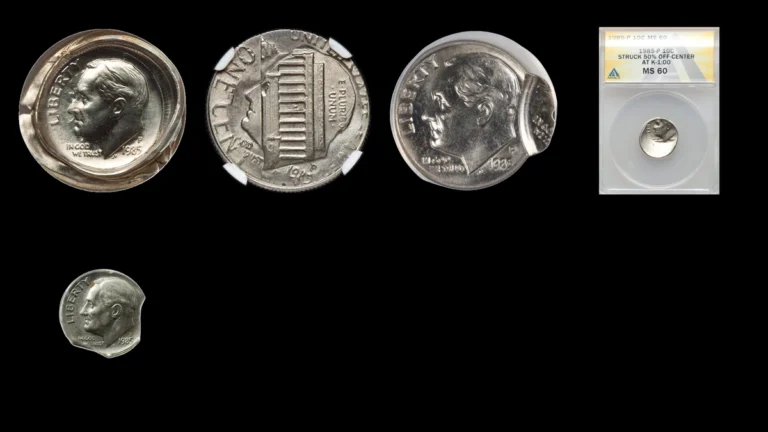
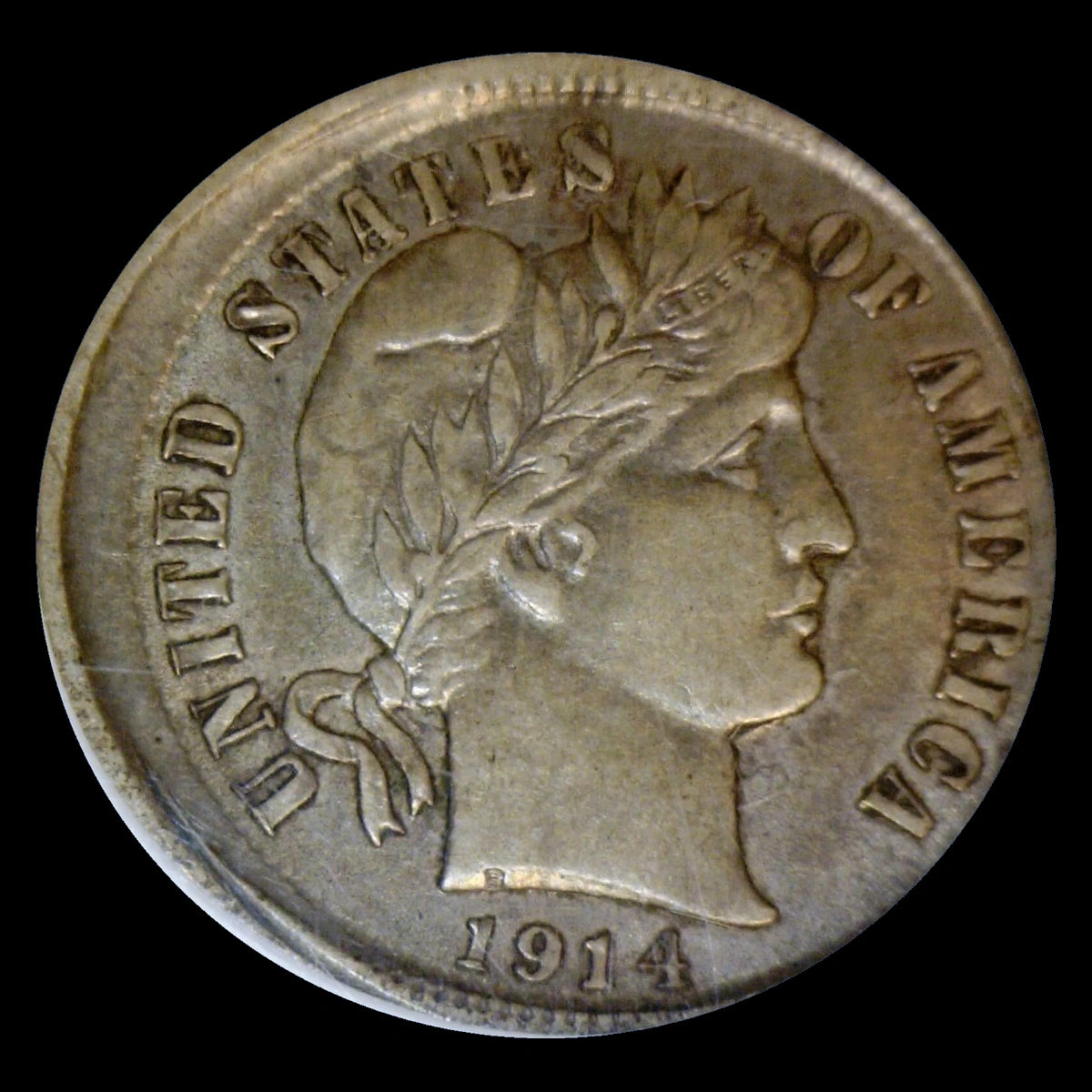
6. 1914 Dime A Wide Uneven Border with Full Design: Broadstrike Error
The Denver MS64 has its design toward 2 o’clock and an expanded margin near 8 o’clock. Despite that uneven placement, the entire design remains on the coin.
The collar normally restrains width and forms the edge grooves. Incomplete collar support allowed this blank to spread during striking.
How to Identify
Follow all outer design on both sides before judging the asymmetry. The combination of expansion and complete designs distinguishes this broadstrike from a genuinely off-center strike.
Check the edge for outward metal flow and incomplete normal grooves. Hammering can also widen a coin but commonly flattens the already struck details.
What It’s Worth
Denver examples are estimated at $150–$1,200 from circulated through attractive unworn condition. The PCGS MS64 sold for $373.75 on August 1, 2008.
A separate 1900-S VF30 broadstrike has an indexed $342 result from March 2026. Its different mint and noticeable wear limit the comparison to the better-preserved Denver coin.
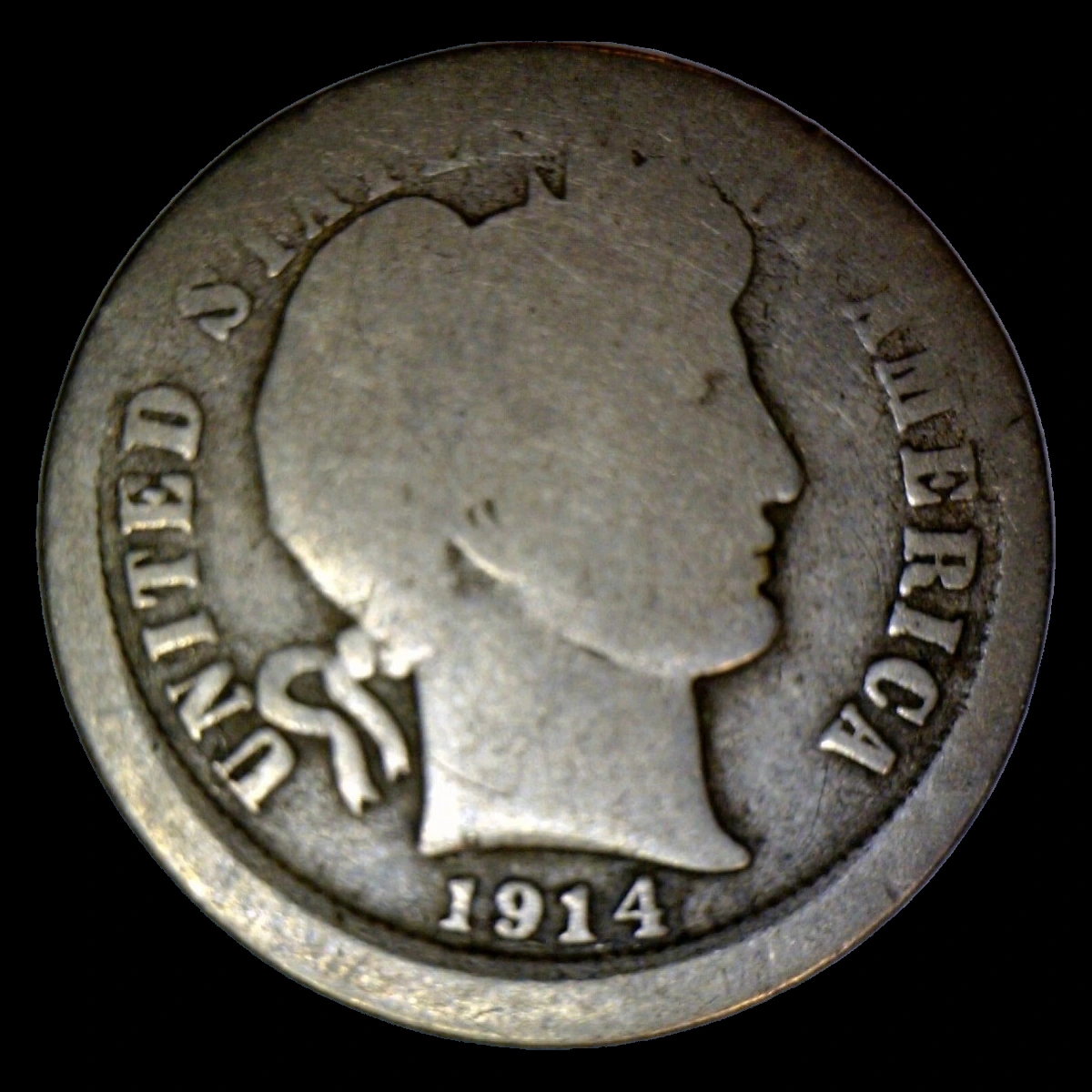
7. 1914 Dime Missing Outer Design beside a Blank Margin: Off-Center Strike Error
A Denver PCGS XF40 is listed as 5% off center, and the year guide separately reports a 10% example. Both involve blank placement that left some design beyond the metal.
The blank margin lies opposite the direction the design shifted. Neither percentage establishes a direction without viewing the specific coin.
How to Identify
Read 1914 and D, then compare the original unstruck area and incomplete design on both faces. The XF40 listing documents the modest 5% specimen.
Look for original blank texture rather than abrasion from grinding. A shift on only one face can indicate a different die-alignment problem.
What It’s Worth
Readable-date examples are estimated at $150–$1,500. No price is supplied for the XF40 listing; a 1902 Barber off-center strike graded ANACS AU50 brought $561.20 in June 2026.
That recent result belongs to another year and is not a sale of either described 1914-D example. Compare wear and displacement together.
Conclusion
Begin with relief and boundaries: extra letter contours, raised cracks, interrupted date detail, and separating alloy each point to different events. Then use the full outline to tell a clip from a broadstrike or an off-center strike.
Retain every specimen’s mint, condition, and measured displacement with its price record, particularly where a Details holder or an unpriced listing limits the available comparison.