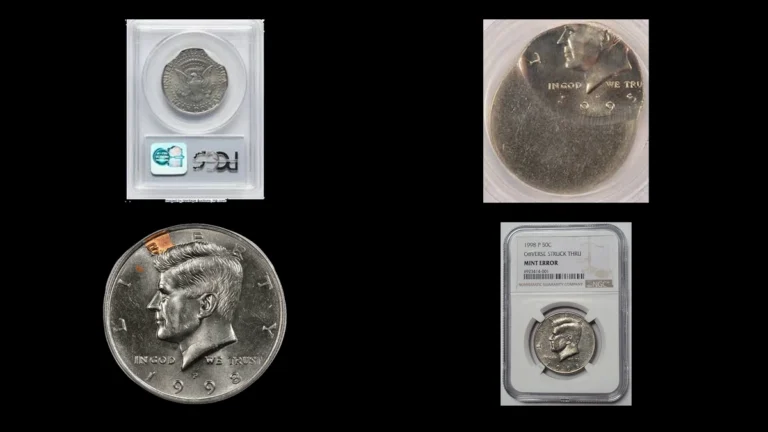
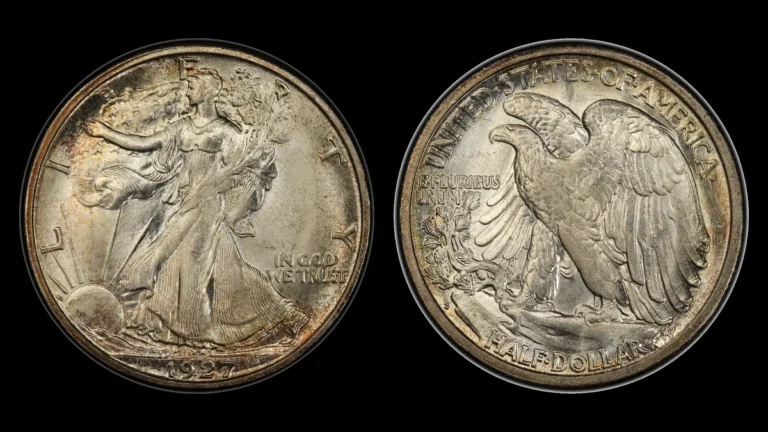
Rare 1903 Half Dollar Errors (List & Pictures)
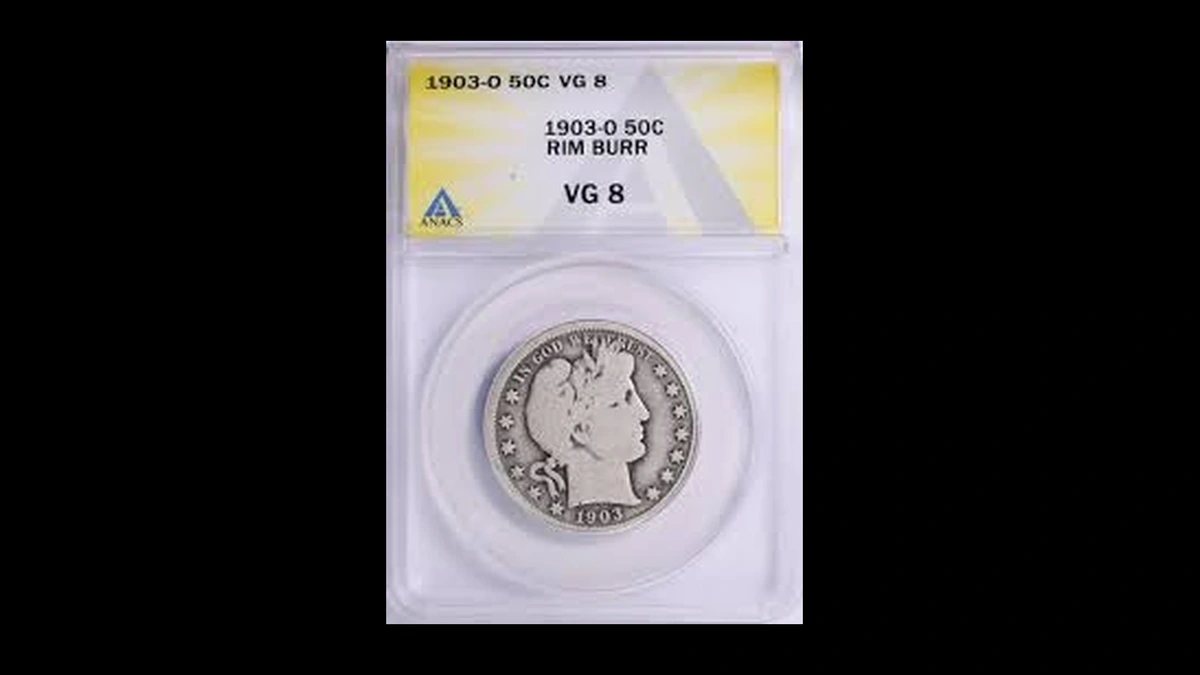
A small rim projection and a superbly preserved portrait with fine cracks sit at opposite ends of the 1903 half dollar errors covered here. The overall estimated span is $75–$46,000.
The documented $46,000 result belongs to the exceptional Duckor 1903-O sold in August 2010. Use full-face views first, move into the date and stars, then turn the coin sideways to examine its edge.
| View needed | Visible clue | Category | Estimated value |
|---|---|---|---|
| Both complete faces | Small blank margin and design loss | Five-percent off-center strike | $500–$2,000 for comparable AU Details coins |
| Last two date digits | Extra 03 below the final digits | Repunched date | $1,800–$2,600 at MS65 |
| TRUST, stars, and bust tip | Two raised crack paths | Obverse die cracks | $28,000–$46,000 at exceptional MS67 |
| Rim seen from the side | A small projecting piece of metal | Rim burr | $75–$200 for a similar certified VG08 |
The O beneath the eagle identifies New Orleans; the Philadelphia examples here have no mintmark. A normal half dollar starts at 12.50 grams, about 30.6 mm across, with narrow grooves around its edge.
1. 1903 Half Dollar A Narrow Blank Margin: Five-Percent Off-Center Strike Error
Compare the border all the way around both faces. A slightly misplaced blank can lose some of the small toothlike border detail while leaving an unstruck margin opposite it.
Northeast Numismatics listed a Philadelphia 1903 struck five percent off center in a PCGS AU Details holder. The listing describes cleaning, a later surface problem separate from the original striking error.
The die is the steel tool that impresses the design. An off-center blank sits partly outside the intended position between the two dies, so their designs do not fit completely onto it.
How to Identify
Find the narrowest part of the border and check what design is actually missing. An uneven rim alone does not establish that the blank was off center.
Repeat the inspection on the other face. If one design is displaced while the other remains centered, movement of one die may explain the difference.
Read 1903 and inspect the mintmark area below the eagle to match the Philadelphia listing. The source gives no direction for the shift, so the photographs must supply that observation.
Include the entire outline when documenting the coin. A close crop may exaggerate a small offset or conceal the opposing blank margin.
What It’s Worth
Estimated range: $500–$2,000 for an authenticated five-percent example with AU detail and cleaning. AU indicates little circulation wear, while the Details label flags the surface problem.
No quoted sale price is supplied for the listed 1903. A 1976 Kennedy half struck fifteen percent off center brought $480 in December 2025, graded NGC MS64.
That newer coin was unworn, had a larger shift, and belongs to a different series. It provides broad context without establishing what the older, cleaned Barber should sell for.
2. 1903 Half Dollar Small 03 Strokes Beneath the Date: Repunched Date Error
Once the complete outline has been checked, enlarge the final two date digits. The reported 1903/03 has remnants of an earlier 03 beneath the final impression.
The Barber Coin Collectors’ Society survey describes the repunching as southward, meaning lower when the date is upright. It records one reported example.
Both punch impressions contain the same digits. Their incomplete overlap in the die created repeated date detail rather than a change from one year to another.
How to Identify
Examine the lower edges of both 0 and 3 with the nearby border still visible. The useful evidence is a matching older 03, not one isolated bump below either digit.
Check that the coin is the Philadelphia issue with no mintmark. Then compare a clear image of the reported variety before assigning a catalog description to a similar-looking date.
A nick can displace silver beside a numeral, and die movement during striking can leave a flat ledge. Neither effect becomes repunching merely because it appears south of the digit.
Lighting from the side should help reveal the raised numeral fragments. Their shape and relationship to both final digits are more useful than their brightness in one photograph.
What It’s Worth
Estimated range: $1,800–$2,600 for a verified 1903/03 graded around MS65. MS65 describes strong preservation without circulation wear.
An ordinary Philadelphia 1902 Barber graded PCGS MS65 sold for $1,920 in January 2025. The nearby-year result supplies condition context, not a repunched-date price.
The survey provides no transaction for its reported 1903/03. A single recorded report does not establish a fixed rarity premium on top of the ordinary coin’s value.
3. 1903 Half Dollar Raised Lines Between Stars: Obverse Die Cracks Error
On the Duckor 1903-O, follow the final T in TRUST toward stars seven through ten. A separate segment runs from star thirteen to the tip of Liberty’s bust.
The first path is interrupted, so visible gaps belong in the description. The auction recorded these front cracks without corresponding cracks on the back.
Each ridge marks silver that entered a narrow opening in the die during striking. The resulting added metal stands above the coin’s surface.
How to Identify
Use the O below the eagle to confirm New Orleans, then compare the front with the documented Duckor specimen. A different mint’s cracked half dollar does not share this attribution automatically.
Trace the T-to-stars route and the star-thirteen-to-bust segment separately. Do not connect stains, scratches, or gaps to make an uninterrupted line the source does not describe.
Move the light across each segment to judge height. A scratch is cut into the metal, even when one of its edges catches the light brightly.
Inspect the back as part of the comparison. Its lack of described cracks is useful context for the documented coin, alongside the two front routes.
What It’s Worth
Estimated range: $28,000–$46,000 for an exceptional MS67 example of comparable quality. This is a very high unworn grade, far removed from an ordinary circulated half.
PCGS records the Duckor coin’s Heritage sales at $46,000 in August 2010 and $28,200 in August 2015. The two figures concern the same specimen.
The price reflects preservation, color, ownership history, and bidding interest as well as the date and mint. Identifying one of its crack paths on another coin would not establish the same quality or value.
4. 1903 Half Dollar A Projection Visible From the Side: Rim Burr Error
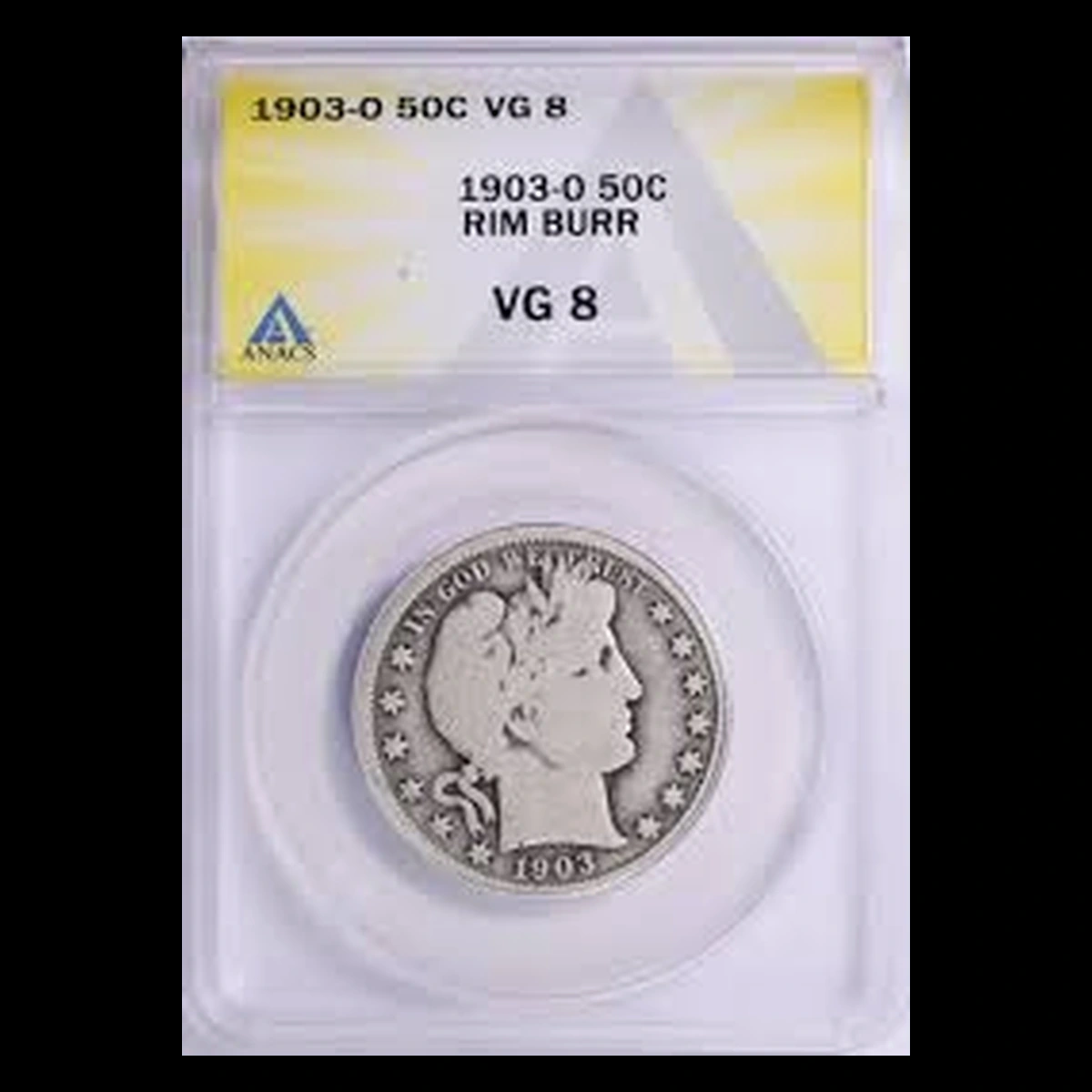
The edge is the final viewing angle for a 1903-O listed by GreatCollections as a rim-burr mint error. Its small projection was recorded in an ANACS VG08 holder.
VG08 describes heavy circulation wear. The listing names the error but does not explain how the burr formed, so its cause should not be guessed from the label.
How to Identify
Photograph the coin from the side, showing where the projection joins the rim and how the neighboring edge grooves look. A straight-on face picture may hide the feature’s shape.
Leave the projection in place while checking it under magnification. Scraping, solder, a seam, or metal disturbed by a rim impact can point to a later source for a similar-looking bump.
Match the O mintmark and the complete coin to the certified reference. The ANACS identification supports that specimen, not every protruding rim on a Barber half.
What It’s Worth
Estimated range: $75–$200 for a similar certified VG08 example. GreatCollections sold the referenced coin on November 30, 2025, but the public page does not show the realized price.
A worn 1912-S Barber with a retained metal peel sold for $89 in March 2026, graded PCGS VG8. That is a different minor error and year, offering only broad price context.
Conclusion
Match the view to the feature: complete faces for displacement, a date enlargement for extra digits, the named stars for cracks, and a side view for the burr. This keeps small unrelated marks from being grouped together.
The $75–$46,000 estimates span heavy wear through exceptional MS67 preservation. The Duckor sales belong at the high end because of the whole coin’s quality, not a fixed price assigned to its thin cracks.