Rare 1909 Wheat Penny Errors (List & Pictures)
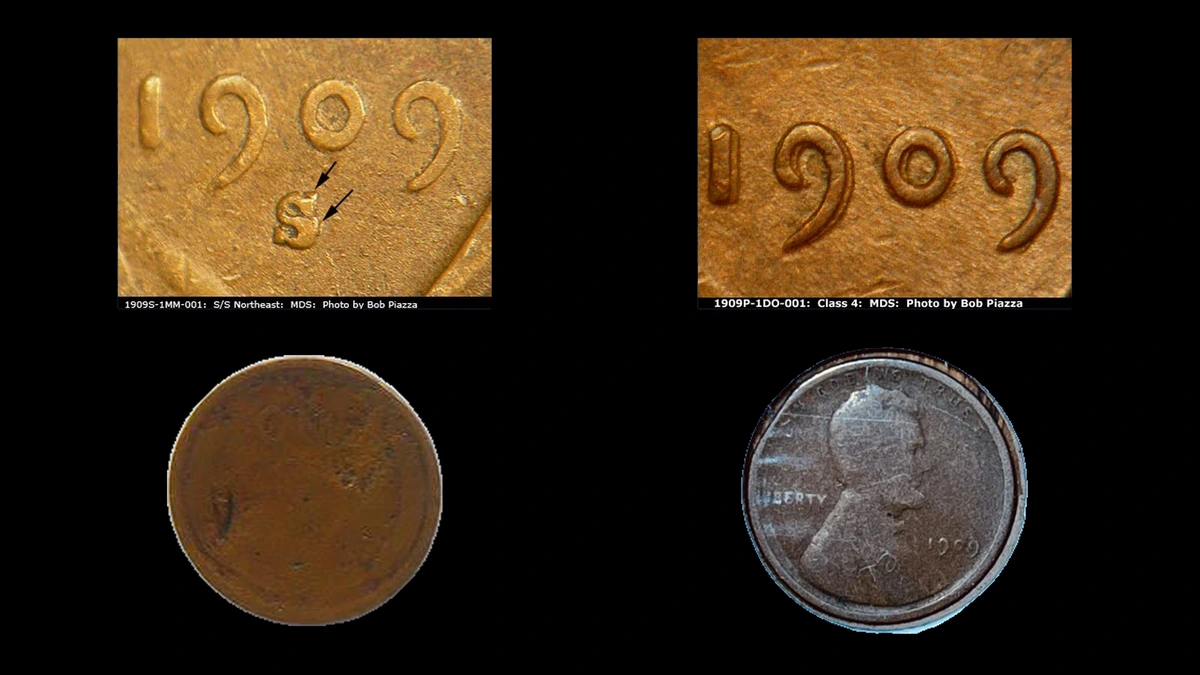
Check the back of a 1909 Lincoln cent before naming its variety. The doubled-front coins discussed here have VDB initials, while the S over horizontal S belongs to the San Francisco version without them.
These 1909 Wheat penny errors span estimated whole-coin values of $5–$33,000. An exceptional red horizontal-S example sold for $32,900 in July 2022; most worn or minor errors belong far below that level.
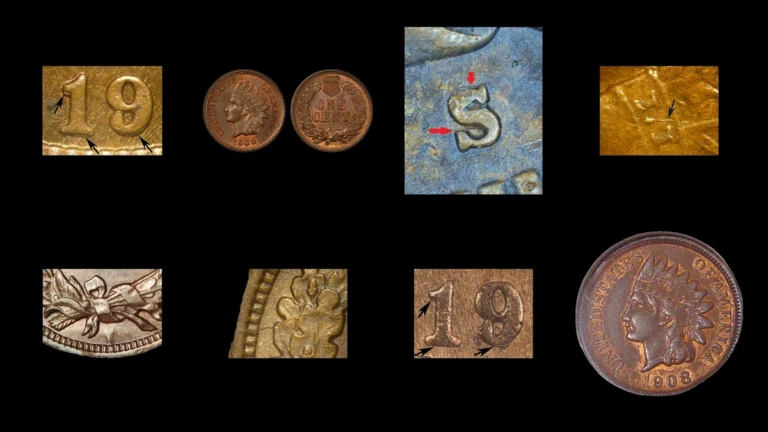
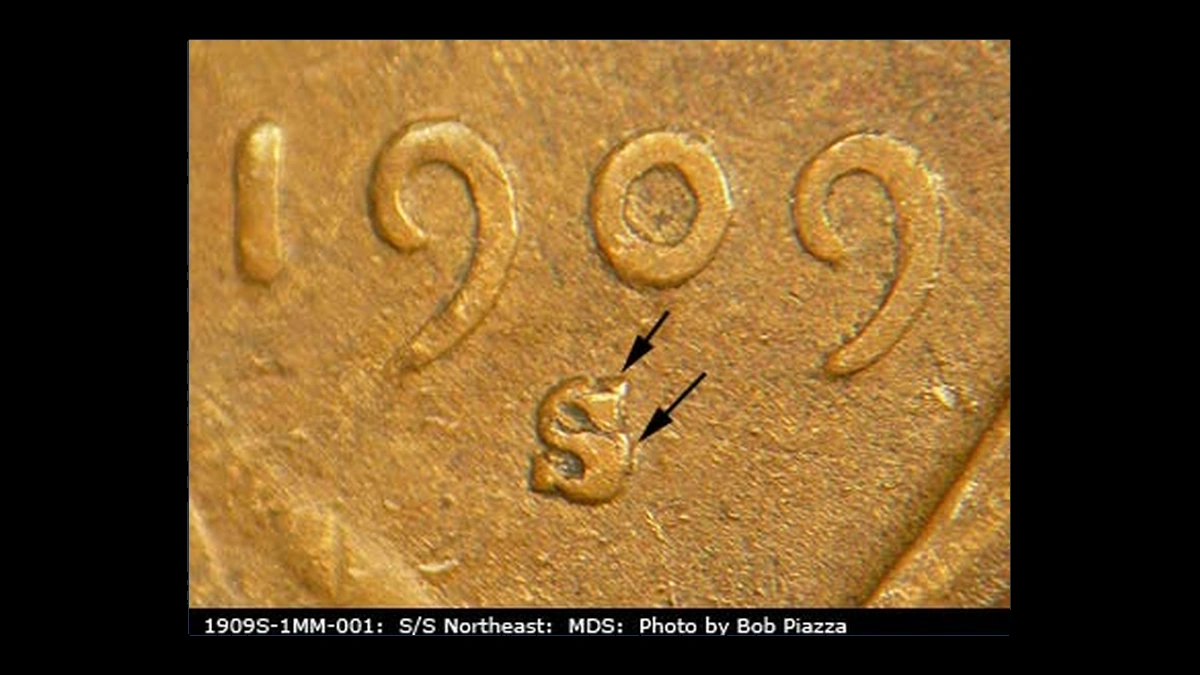
1. 1909 Penny A Sideways S Remains beneath the Upright S: Repunched Mintmark Error
An earlier S was punched sideways into the die before another S was placed upright over it. Small surviving curves from that first position can appear beside the finished mintmark.
How to Identify
Confirm that the coin is a Lincoln cent with an S and no VDB initials at the bottom of the back. The same-year Indian Head cent and the VDB Lincoln version are different coins.
Keep the date upright while comparing the extra curves with an attributed example. An isolated lump or flat shelf does not reproduce the recognizable parts of a sideways S.
This variety records two positions of a small punch on the die. It does not mean the entire penny turned and received another strike.
What It’s Worth
$130–$4,000 is an estimated range for many circulated through better unworn examples; exceptional high-grade coins can fall around $4,000–$33,000. PCGS records the $32,900 July 2022 sale for an MS67 Red example.
That grade and red color describe unusually strong preservation. A worn mintmark with the same basic variety does not inherit the record price.
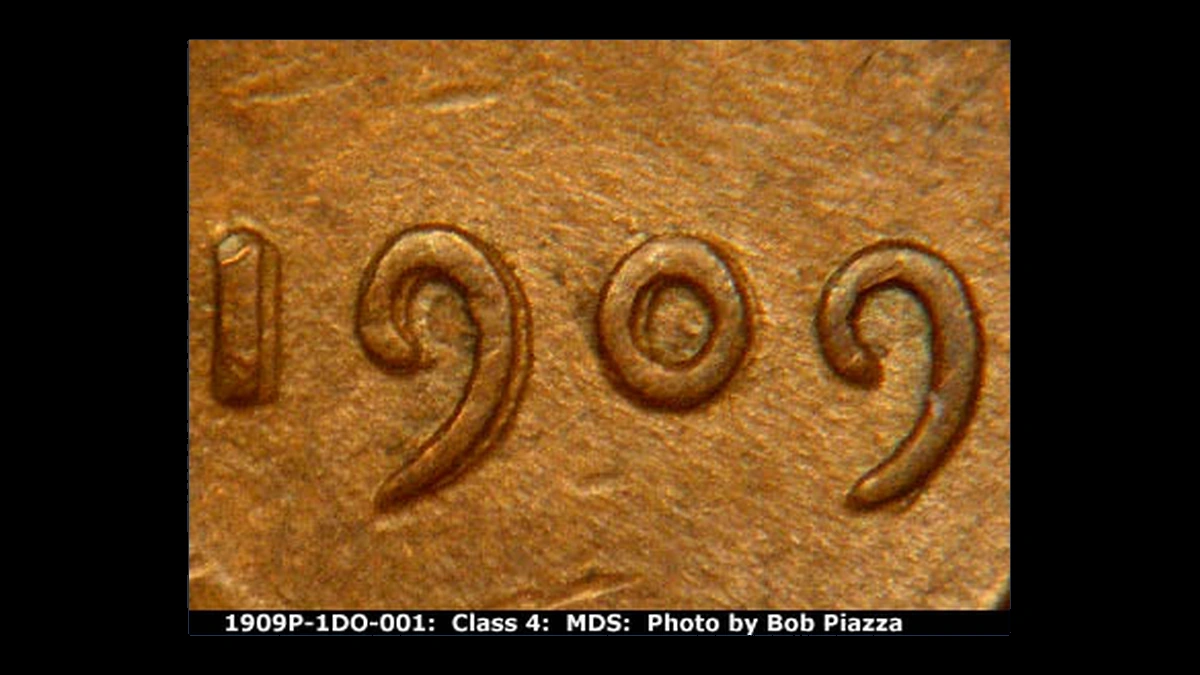
2. 1909 Penny The Date and LIBERTY Have Repeated Outlines: Doubled Die Error
The stronger Philadelphia VDB doubled-front variety shows extra design at the date and RTY in LIBERTY. The repetition was already present on the die when it struck the coin.
How to Identify
Find VDB at the bottom of the back and confirm the absence of a mintmark. Then match the repeated outlines to the correct variety rather than to any thick-looking 1909 lettering.
A second recognized form has its own features and may also carry clash marks. Those two varieties cannot be identified from one shared close-up.
Follow the height and shape of a clear letter ending. A flat low shelf beside a narrowed letter can result from movement during striking instead of a doubled die.
What It’s Worth
$150–$6,000 covers an estimated range of matched circulated and better unworn coins, with exceptional examples around $6,000–$32,000. A PCGS MS67+ Red example sold for $31,200 in May 2023.
Color, condition, and the specific variety account for much of that difference. A coin that also has a clash receives one overall value, not the sum of two maximum estimates.
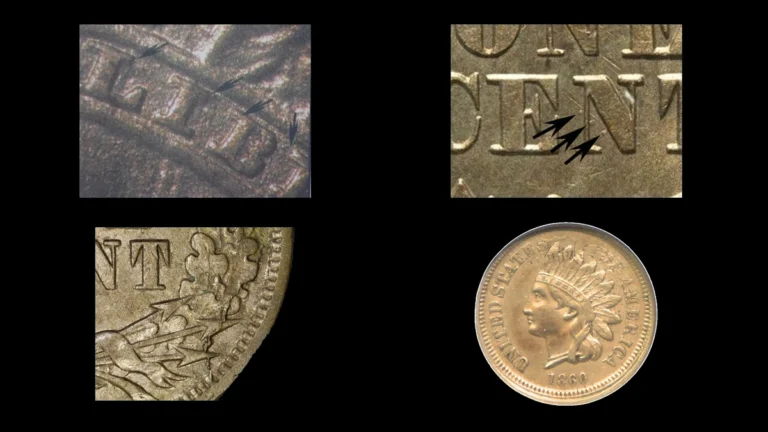
3. 1909 Penny Faint Opposite-Design Traces Appear: Die Clash Error
Reported VDB clash marks lie near Lincoln’s chin and below the C in CENT. They can occur when the dies hit each other with no blank between them and later pass those marks to coins.
How to Identify
Locate the traces in full-face views before enlarging them. Their shapes and positions should fit the opposing designs, not just resemble random lines.
Compare the front and back in their proper alignment. Freely turning each trace until something looks similar can create a false match.
Some supplied examples also have a doubled front. Keep the clash and repeated raised lettering as distinct features on the same specimen.
What It’s Worth
$20–$500 is a working estimate for a clear clash on an otherwise ordinary example. The 1909 version and condition still contribute to the whole coin’s value.
No separate clash-only transaction is supplied here. A high price for a doubled-die coin that also shows a faint clash does not measure the value of the clash by itself.
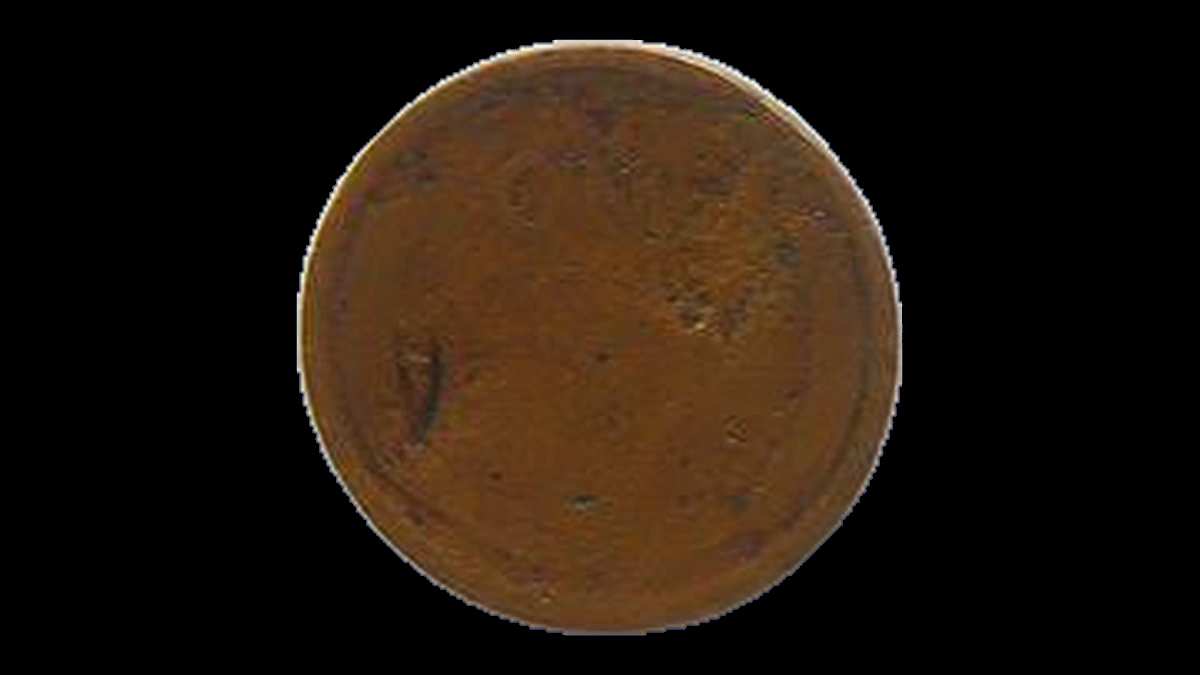
4. 1909 Penny A Local Patch Fails to Form: Grease-Filled Design Error
Grease or debris packed into a die can prevent part of the design from appearing normally. The supplied VDB example carries an ANACS MS60 Details grade.
How to Identify
Read the full Details description because it indicates a condition problem in addition to the unworn level of remaining detail. Do not treat it as a problem-free MS60 comparison.
Check the actual affected area against nearby letters and portrait detail. The error label alone does not specify a missing letter or exclude ordinary wear and polishing.
Missing VDB is especially easy to misread: normal 1909 cents were deliberately made without those initials. Their absence does not establish a grease blockage.
What It’s Worth
$5–$100 is an estimate for a genuine minor grease-filled design. A small weak patch may add little to an ordinary penny.
The supplied auction appearance provides an example but no realized amount used here. Its condition problem needs to remain part of any comparison.
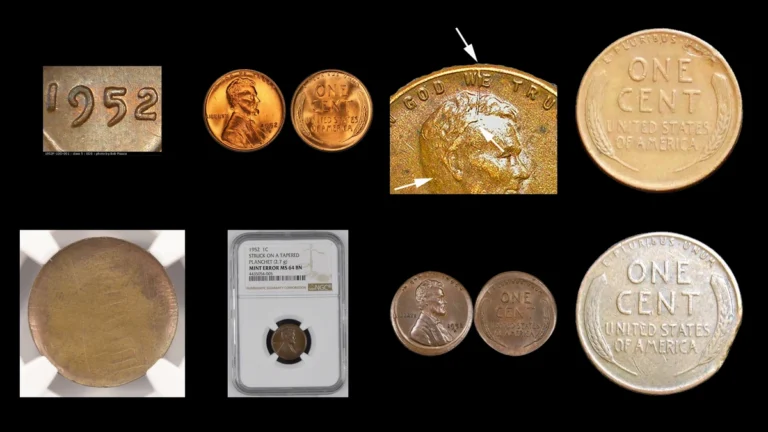
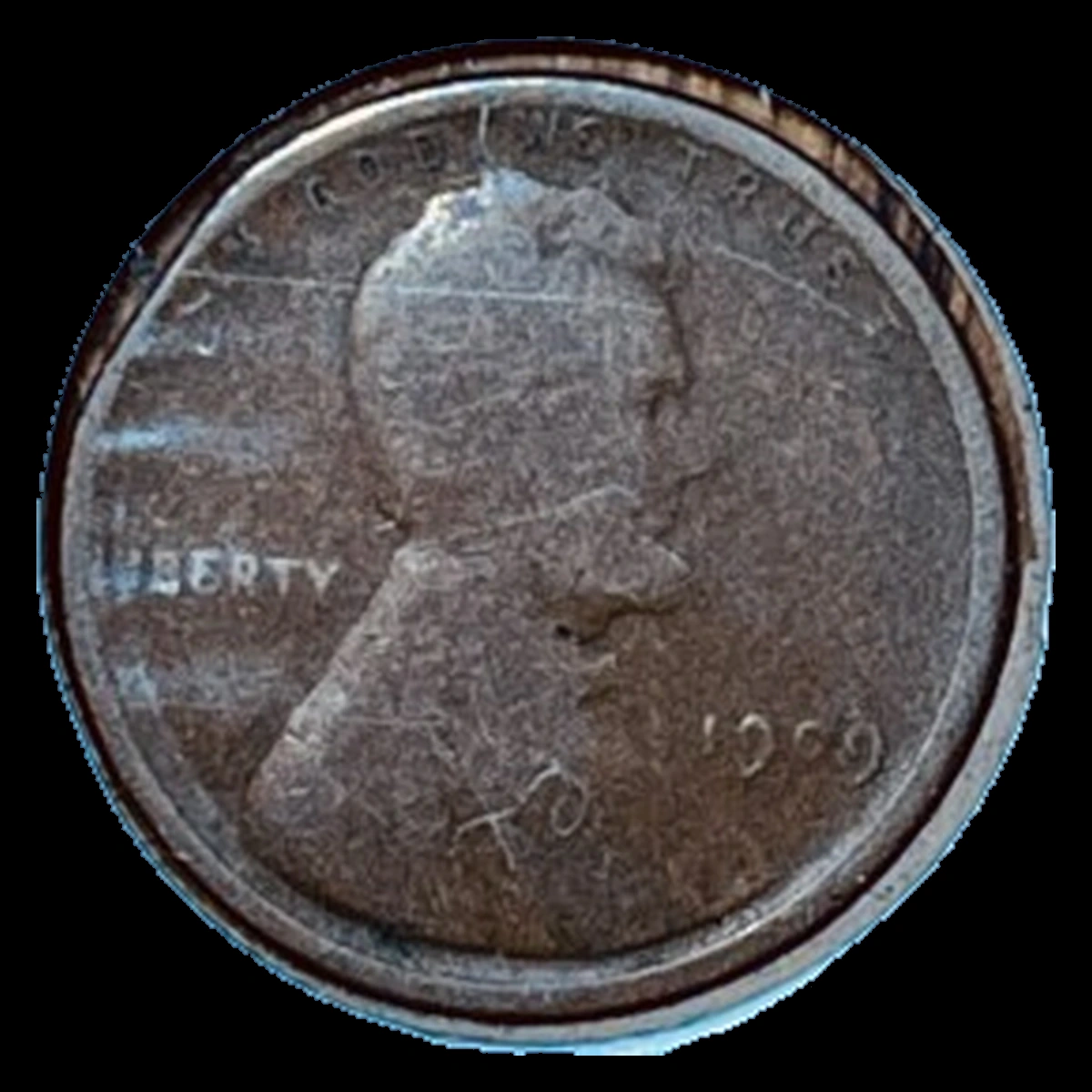
5. 1909 Penny Part of the Original Blank Is Missing: Clip Error
An incomplete blank can still receive Lincoln’s design. Its original missing section may be curved, straight, or ragged, depending on how the blank was formed.
How to Identify
Inspect the two junctions between the gap and the surviving rim. The design should fit metal that was missing before striking, rather than a later cut through finished detail.
The general 1909 report does not establish one mint or VDB version. Record the actual date, mintmark, and back initials with the edge photograph.
A normal cent weighs about 3.11 grams and is 19.05 millimeters across. Missing metal lowers the weight, but a later cut does too; rim weakness opposite a gap is a supporting clue rather than a required feature in every case.
What It’s Worth
$15–$100 suits many small clips on ordinary Philadelphia coins, with larger or better-preserved examples around $100–$350. The underlying version needs a separate identification.
These are general clipping estimates, not a sale attributed to an unspecified 1909-S or VDB rarity. Later edge damage does not earn the same mint-error premium.
6. 1909 Penny The Border Is Wider but All the Design Fits: Broadstrike Error
The collar normally contains the metal as the dies strike. If that surrounding ring does not do its job, the penny can spread outward while keeping the complete design.
How to Identify
Compare the entire border with a normal cent of the same version. The L in LIBERTY naturally sits near the rim, so that letter’s position alone does not demonstrate a broadstrike.
Check both faces for complete intended lettering and inspect the expanded margin for crushed detail or an added ring. Later flattening can widen a coin too.
The supplied category does not set one mint or VDB status. Those details must come from the particular coin, not the broadstrike name.
What It’s Worth
$20–$500 is an estimate for an ordinary Philadelphia broadstrike. Original expansion and preservation guide the comparison.
A 1920 example graded MS62 Brown by NGC sold for $119 in March 2026. It is a later Wheat cent sale, not a price assigned to a particular 1909 version.
7. 1909 Penny The Picture Misses One Side of the Blank: Off-Center Strike Error
An off-center coin has incomplete design beside unused metal. The blank was not properly positioned when the press closed.
How to Identify
Read the surviving date before choosing a 1909 price comparison. On an undated Lincoln cent, genuine VDB at the bottom of the back can support a 1909 identity.
VDB at Lincoln’s shoulder belongs to later designs and cannot do the same job. A missing mintmark area also does not establish that a valuable S was once there.
Both faces should fit one displaced blank, and the plain crescent should show original surface rather than grinding. Keep the year attribution and mint question separate if only one can be resolved.
What It’s Worth
$50–$1,500 is a working range for ordinary Philadelphia-type examples. A readable date and clear displacement help, while an assumed rare mint identity does not.
A 1916 Philadelphia cent struck 20% off center sold for $210 in January 2022. It compares the striking mechanism, not the value of an identified 1909-S rarity.
8. 1909 Penny Front and Back Designs Overlap: Flipover Double Strike Error
A penny can turn over before receiving another blow. Earlier Lincoln details then meet a later wheat design, and earlier back details may remain on the new front.
How to Identify
The listed 1909 VDB example is graded XF40 by PCGS and preserves readable remnants from the two strike positions. Map the older and newer features in whole-face photographs before interpreting an isolated mark.
Their crossings should fit a coin that flipped and was struck again. A sunken mirror copy pressed in by another coin is a different mechanism.
Inspect the edge for a join between separate pieces and keep a certified holder intact. The identification needs one genuinely repeated strike sequence, not a collection of unrelated ridges.
What It’s Worth
$1,000–$4,000 is an estimate for comparable authenticated flipover pieces. The XF40 example was offered for $2,250 in a Fred Weinberg dealer price list.
That is an asking price, not a completed auction result. Readable earlier design, the VDB identity, and the coin’s wear all belong in the comparison.
Conclusion
For 1909, the version is part of the identification: Lincoln or Indian Head, Philadelphia or San Francisco, VDB or no VDB. A correct error description cannot exchange those details between coins.
Use the surviving design to establish that identity, then match the actual mintmark strokes, doubling, or striking shape. Record prices belong to exceptional complete coins, while the dealer’s flipover figure remains an offer to sell.