Rare 1916 Barber Dime Errors (List & Pictures)
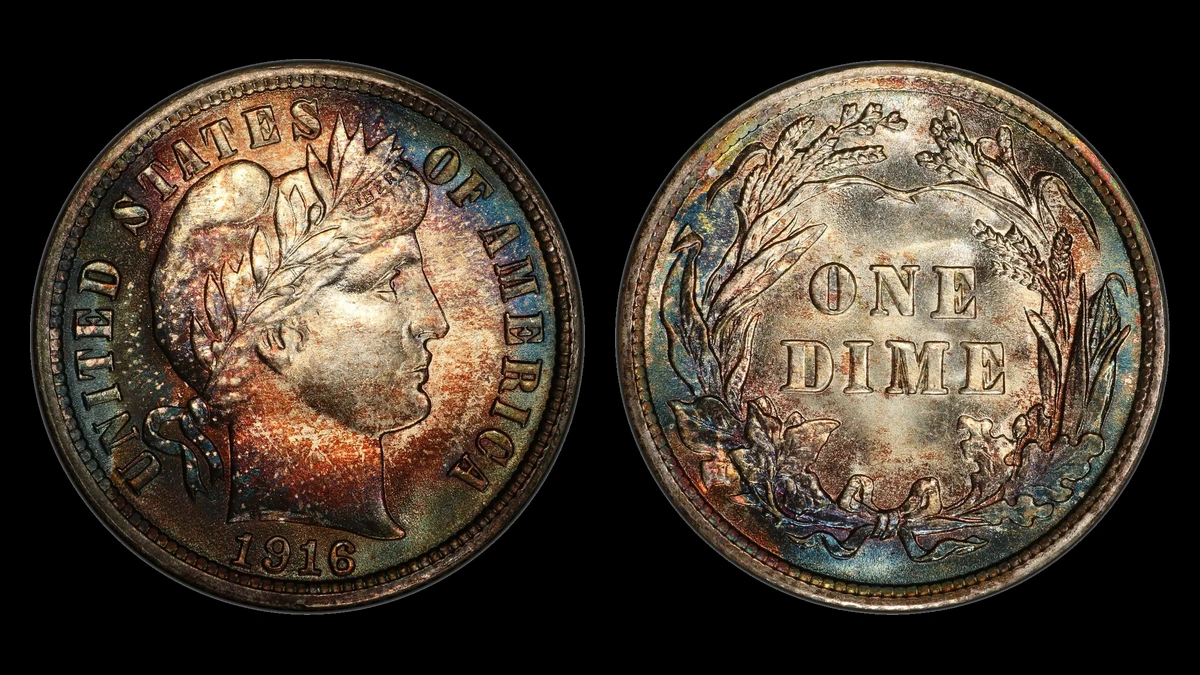
Keep the portrait in view when comparing 1916 Barber Dime errors, because Mercury dimes were also made that year. The five Barber groups below have estimated values of $25–$2,000.
Two separate 1916-S examples each brought $1,150: one was off center, while the other was an uncentered broadstrike. Their equal prices do not make them the same error; begin with small surface clues and work outward to the edge.
| Visible clue | Possible error | Estimated range |
|---|---|---|
| Raised front mark | Die failure | $25–$100 |
| Local interruption in detail | Strike-through | $50–$250 |
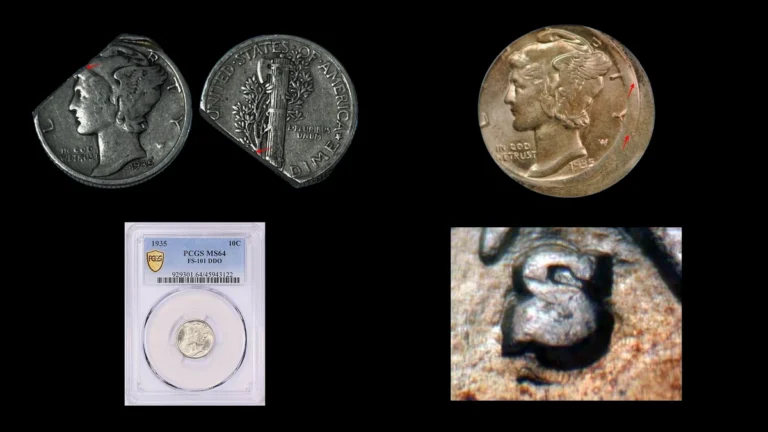
| Missing edge section | Clipped blank | $75–$350 |
| Complete design in a wide outline | Uncentered broadstrike | $400–$1,750 |
| Design missing beside bare metal | Off-center strike | $250–$2,000 |
A normal Barber dime weighs 2.50 grams and measures about 17.9 mm. Read the date on the front and the mintmark below the reverse wreath before matching any error photograph.
1. 1916 Dime An Original Raised Mark Interrupts the Front: Die Failure Error
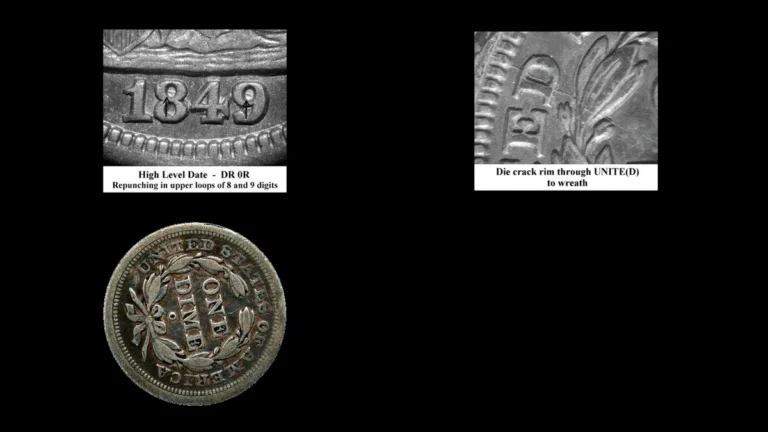
The San Francisco report describes damage to the front die without naming a precise crack route. It also does not establish a large break connected to the rim.
A damaged die can leave an opening for silver to fill, producing raised metal on the coin. A narrow ridge and a broad break are different forms, so the visible shape should guide the description.
How to Identify
Move light across the feature and decide whether its center rises or cuts into the surface. A raised line can fit die damage, while a trench or peeling flap needs another explanation.
Confirm the Barber portrait, 1916 date, and S below the wreath. Avoid borrowing a specific location or dramatic cud diagnosis that the report does not supply.
What It’s Worth
$25–$100 is an estimated range for a worn coin with modest, identifiable front-die damage. The source’s approximate $46 figure is an estimate, not a verified auction result.
A fine ridge generally attracts less attention than a large break covering design. The reported feature should not automatically receive the price of that more dramatic error.
2. 1916 Dime A Local Patch Lacks Normal Detail: Strike-Through Error
Material between a blank and die can leave a hollow or prevent fine detail from forming. The year guide reports a 1916-S in XF45 without identifying the object or exact location.
That means a specific grease, wire, or cloth explanation should not be guessed. The useful first evidence is the interruption itself.
How to Identify
Compare the affected patch with the design immediately beside it. A local obstruction can leave neighboring details much clearer than the blocked area.
Inspect both faces under changing light for a gouge, corrosion, or peeling metal. A sharp lip beside a cut suggests something removed from the finished coin rather than something present during striking.
What It’s Worth
$50–$250 is an estimated range for a worn example with a clear local strike-through. The guide reports more than $110 for the XF45 coin without an original auction record.
Keep that amount as a reported result. General wear or a soft strike does not automatically qualify for the same error allowance.
3. 1916 Dime A Piece Was Missing before Striking: Clipped Blank Error
An old error catalog lists a Philadelphia clip as Choice AU+, meaning the seller considered it attractive and nearly unworn. The catalog does not establish the gap’s size or whether it was curved or straight.
A genuine clip leaves an incomplete blank to receive the design. The nearby rim and letters can show how the metal flowed around the existing gap.
How to Identify
Examine both ends of the missing section for naturally struck transitions. Filing lines or a cut through finished detail point toward later removal.
A weak opposite rim can support the finding, but it varies. Do not require a curved shape when the report gives none, and do not treat reduced weight alone as proof.
What It’s Worth
$75–$350 is an estimated range for genuine worn through lightly worn Philadelphia clips. Readable identity and attractive original surfaces improve the comparison.
The old catalog supplies no selling price here. Choice AU+ is a seller description, not a modern numerical certification.
4. 1916 Dime A Wide Uneven Border Contains the Whole Design: Uncentered Broadstrike Error
The documented 1916-S spread outward unevenly but retained its full design. The collar, the ring that normally controls width, did not properly restrain the metal during striking.
NGC identified the coin as an uncentered broadstrike and graded it MS65. Its uneven border does not by itself mean part of the picture missed the coin.
How to Identify
Follow all outer lettering and other intended details on both faces. The complete picture should sit within the expanded metal, as in the published MS65 example.
Measure several widths and inspect the wide areas for natural striking. Later flattening can enlarge a dime while crushing high details or leaving pressure marks.
Incomplete edge grooves can support failed collar contact. An intact blank should also retain close to its normal weight, allowing for wear.
What It’s Worth
$400–$1,750 is an estimated range from lightly worn through attractive unworn examples. Mint Error News reports $1,150 for the MS65 coin in its February 2009 auction results.
That strong-condition result does not value every widened dime. Original shine, clear expansion, and undamaged detail remain important.
5. 1916 Dime Both Designs Miss Part of the Blank: Off-Center Strike Error
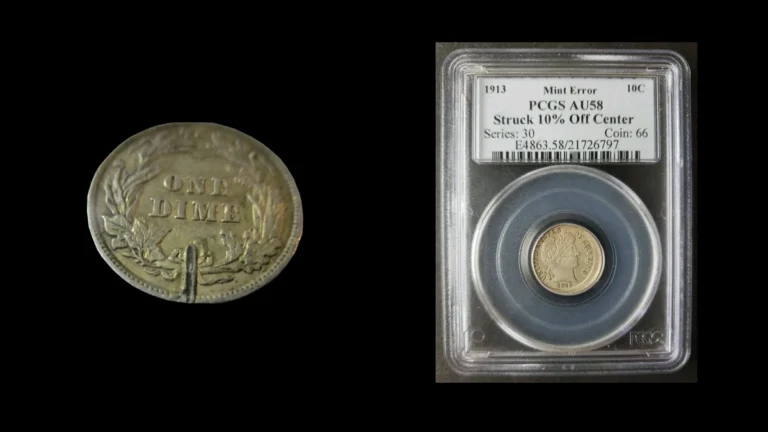
The blank sat too far to one side, leaving untouched silver beside incomplete design. A recorded PCGS AU55 1916-S was struck 7% off center.
Separate examples are reported at 3% in AU58 and 10% in NGC MS62. Their different percentages and conditions belong to their own coins.
How to Identify
Compare design loss on both faces with the corresponding bare area. A full design in a wider outline suggests broadstriking, while only one shifted face calls for a die-alignment check.
Read the surviving 1916 date and S below the wreath, then inspect the remaining edge for trimming. Original bare metal should not show grinding that erased a completed design.
What It’s Worth
$250–$2,000 is an estimated range for readable-date examples across circulated through attractive unworn condition. The 7% AU55 sold for $1,150 in January 2005.
The 3% and 10% examples do not automatically receive the same price. Surface quality and surviving identity matter alongside the amount of displacement.
Conclusion
Verify the Barber design before comparing any 1916 dime photograph. Then decide whether the unusual area is raised metal, blocked detail, missing blank metal, or a change in the whole design’s position.
For a wide uneven coin, account for the complete picture on both sides. That single check helps separate an uncentered broadstrike from an off-center strike even when past examples happened to sell for the same amount.