Rare 1934 Nickel Errors (List & Pictures)
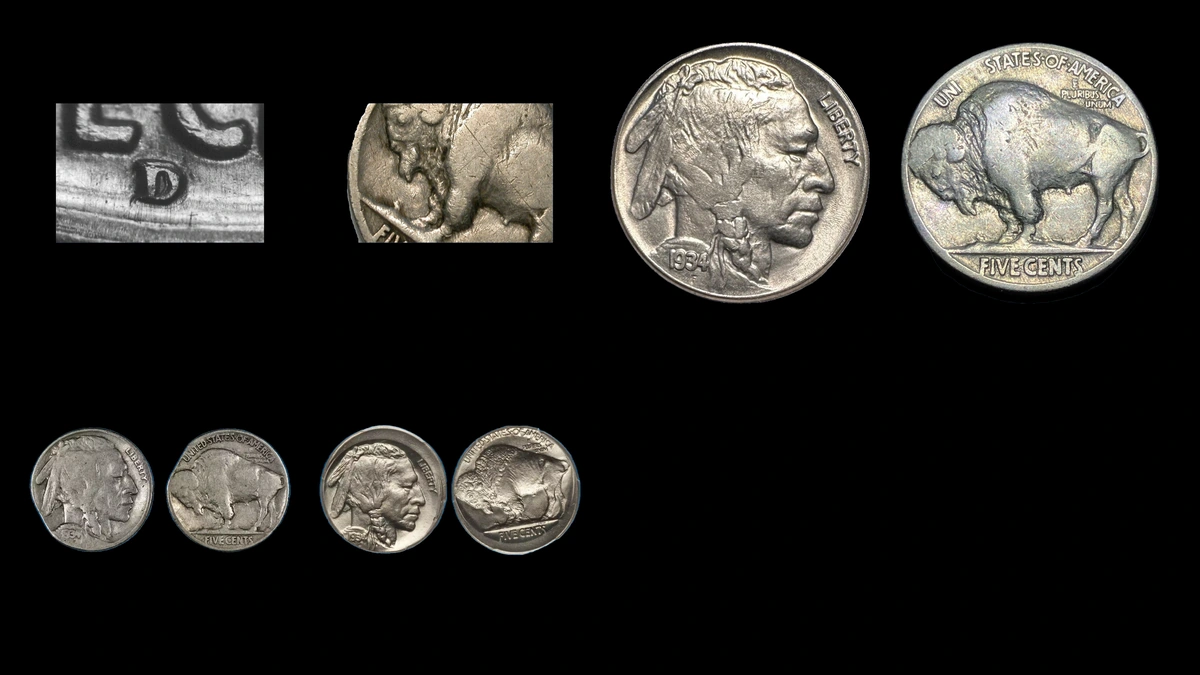
A soft buffalo, an unusually large D, and a wide border can each occur without proving the error a seller names. The useful evidence is how the feature relates to nearby design and the original edge.
Estimated values for 1934 nickel errors span $5–$7,000, including a cent-planchet example sold for $4,600. Work from the mint letter and surface details toward the outline and the metal itself.
| Visible feature | Category to investigate | Estimated range |
|---|---|---|
| Another D stroke | Repunched mint mark | $20–$250 |
| Repeated raised design | Doubled die | $20–$300 |
| Raised line or rim-connected lump | Die crack or cud | $5–$150 |
| Interrupted patch | Strike-through | $15–$300 |
| Uneven expansion with complete design | Uncentered broadstrike | $75–$350 |
| Missing edge section | Clipped planchet | $40–$600 |
| Blank crescent and lost design | Off-center strike | $75–$800 |
| Design on a smaller copper blank | Cent-planchet strike | $3,000–$7,000 |
1. 1934 Nickel A Second D Stroke Survives below FIVE CENTS: Repunched Mint Mark Error
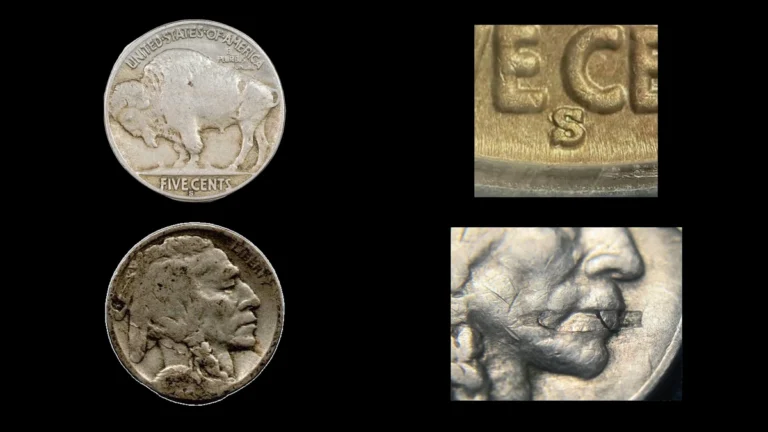
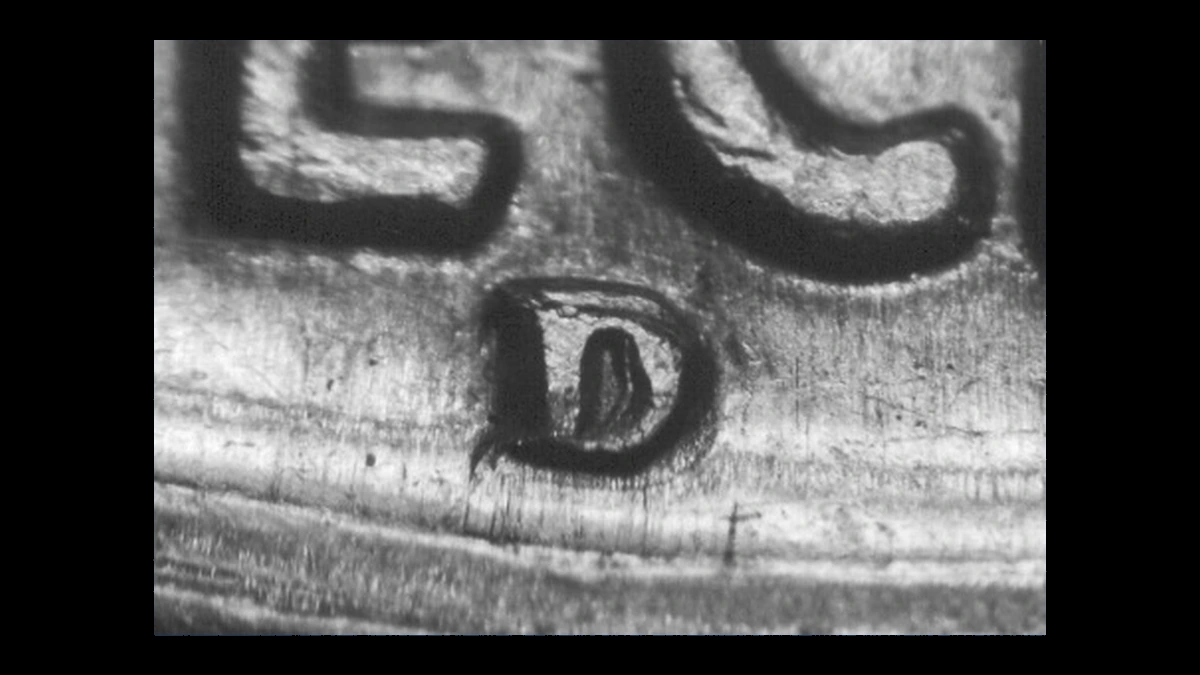
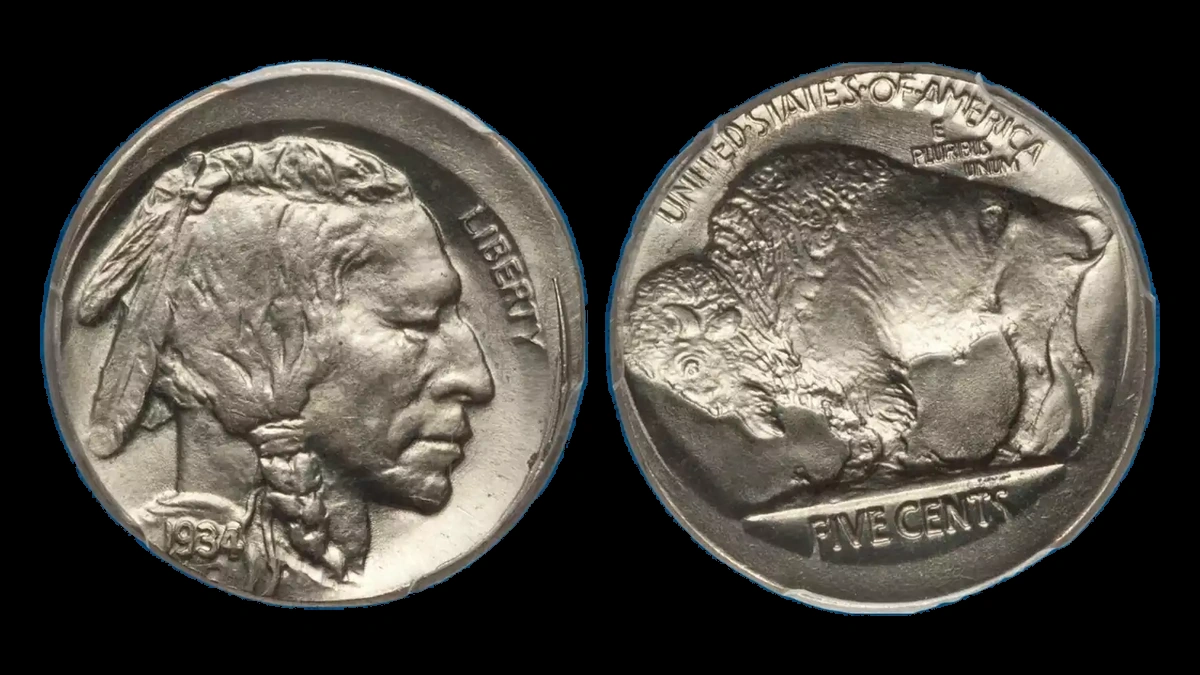
The Denver mint mark sits beneath FIVE CENTS on the reverse. Repeated hand punching into the die could leave portions of an earlier D beside the final letter.
How to Identify
Trace the stem and curved side of the secondary impression and compare the full pattern with an attributed example. Reports include multiple directions, so one generic D/D description does not identify every specimen.
The size of the main D can reflect the punch used and is not proof of repunching. The small F below the obverse date is the designer’s initial, unrelated to the mint mark.
What It’s Worth
$20–$250 is an estimated range for correctly identified examples, with strong separation and preservation supporting better comparisons. Reported offers around $21 and $185 are asking prices, not completed sale records.
2. 1934 Nickel Letters or Buffalo Details Have Raised Repetition: Doubled Die Error
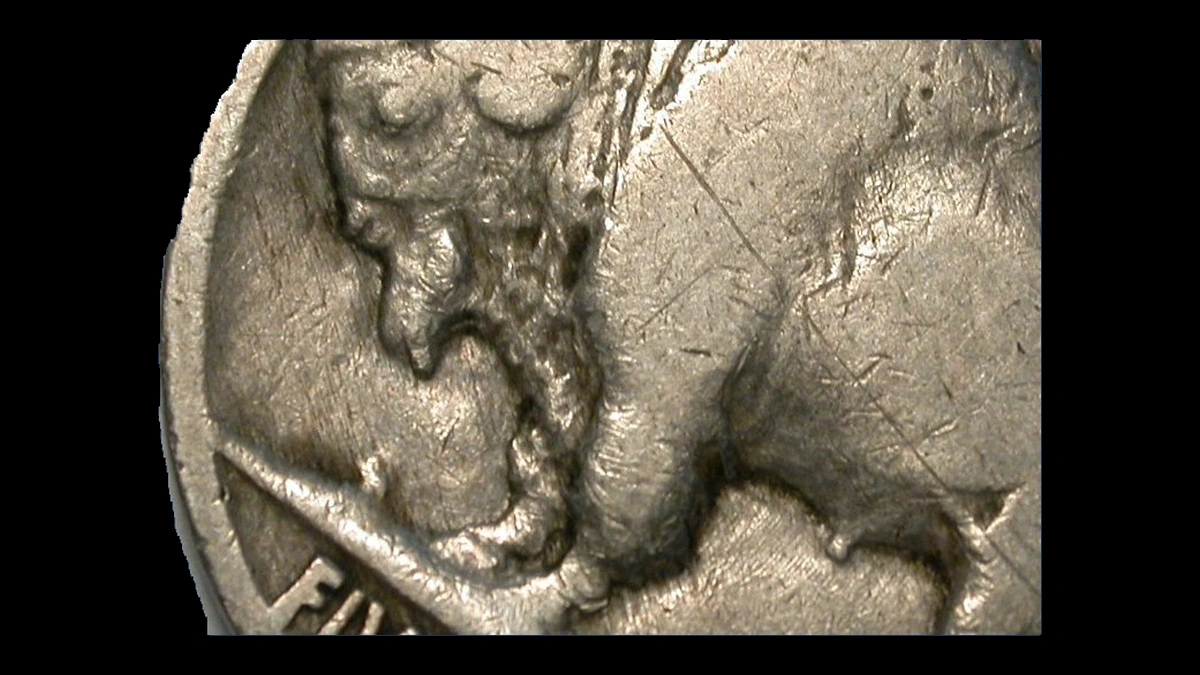
Reported Philadelphia varieties involve either face, with the date and LIBERTY among the suggested obverse checks. Denver reverse reports mention E PLURIBUS UNUM and the buffalo’s hind leg and tail area.
How to Identify
Select a comparison from the same mint and face, then match several raised outlines or split letter ends. The repeated pattern originated on the die before the coin was struck.
Worn dies, circulation wear, or flat movement-doubling shelves can make details look thick without establishing that pattern. A single broad letter needs more evidence than its size.
What It’s Worth
$20–$300 is a cautious estimate for subtle, correctly attributed 1934 doubled dies. The supplied reports provide no completed sale for every pattern, and prices for the much stronger 1935 doubled reverse should not be transferred to slight 1934 thickening.
3. 1934 Nickel Raised Lines or Rim Patches Replace Normal Detail: Die Cracks and Cuds Error
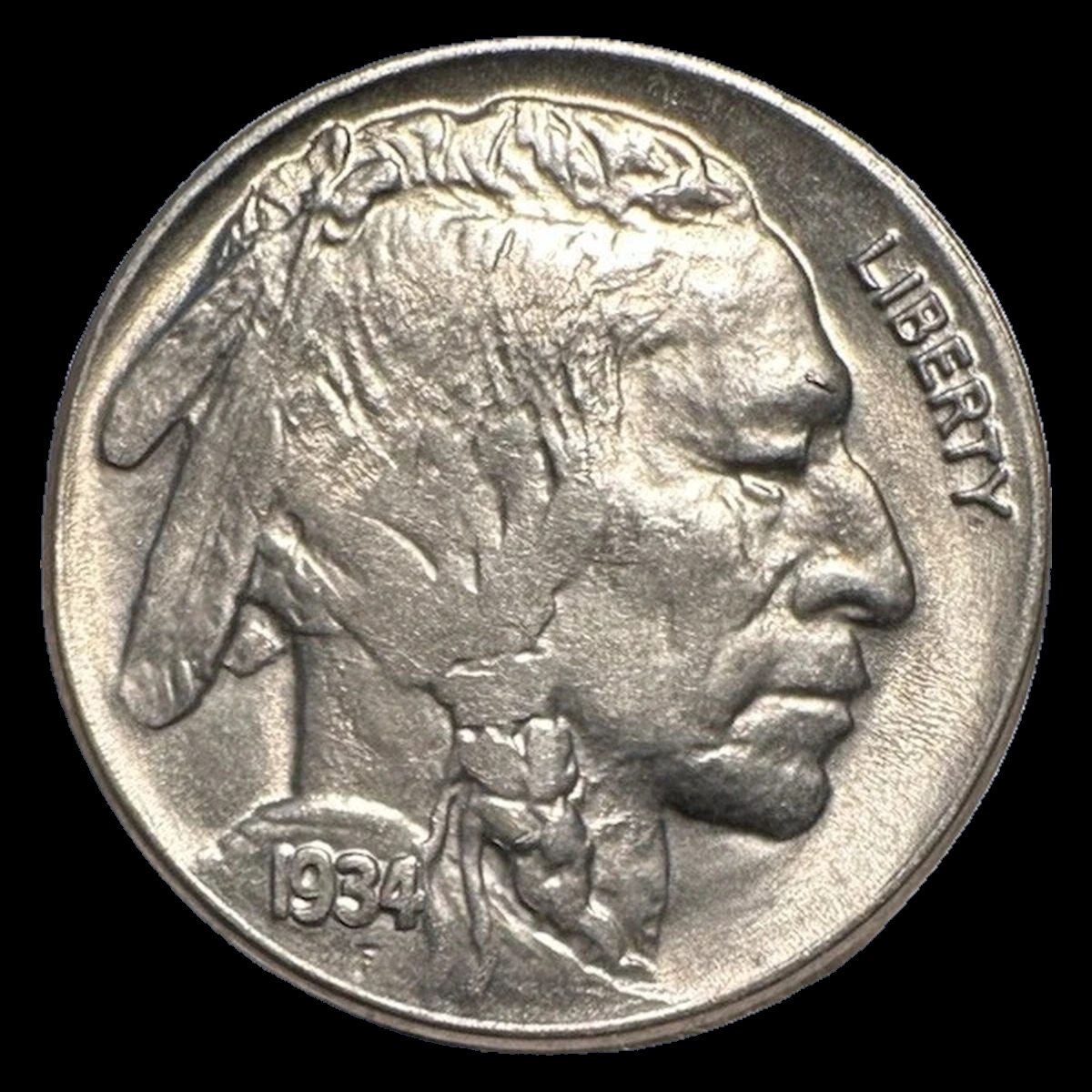
Metal entering a cracked die creates a ridge, while a piece missing from the die’s edge can create a larger rim-connected patch. That larger form is called a cud.
How to Identify
Check whether the feature rises naturally from the coin and how it crosses neighboring letters or design. A cut with pushed-up margins, an attached lump, or a seam needs a different explanation.
A cud must connect to the rim; an isolated bump is not automatically one. The year reports establish no universal route or position for these 1934 features.
What It’s Worth
$5–$30 is an estimate for small genuine cracks, with clear rim cuds around $50–$150. These are practical ranges for reported types, not individual auction records, and the underlying coin’s preservation still contributes to the price.
4. 1934 Nickel One Patch of Design Fails to Form: Struck Through Material Error
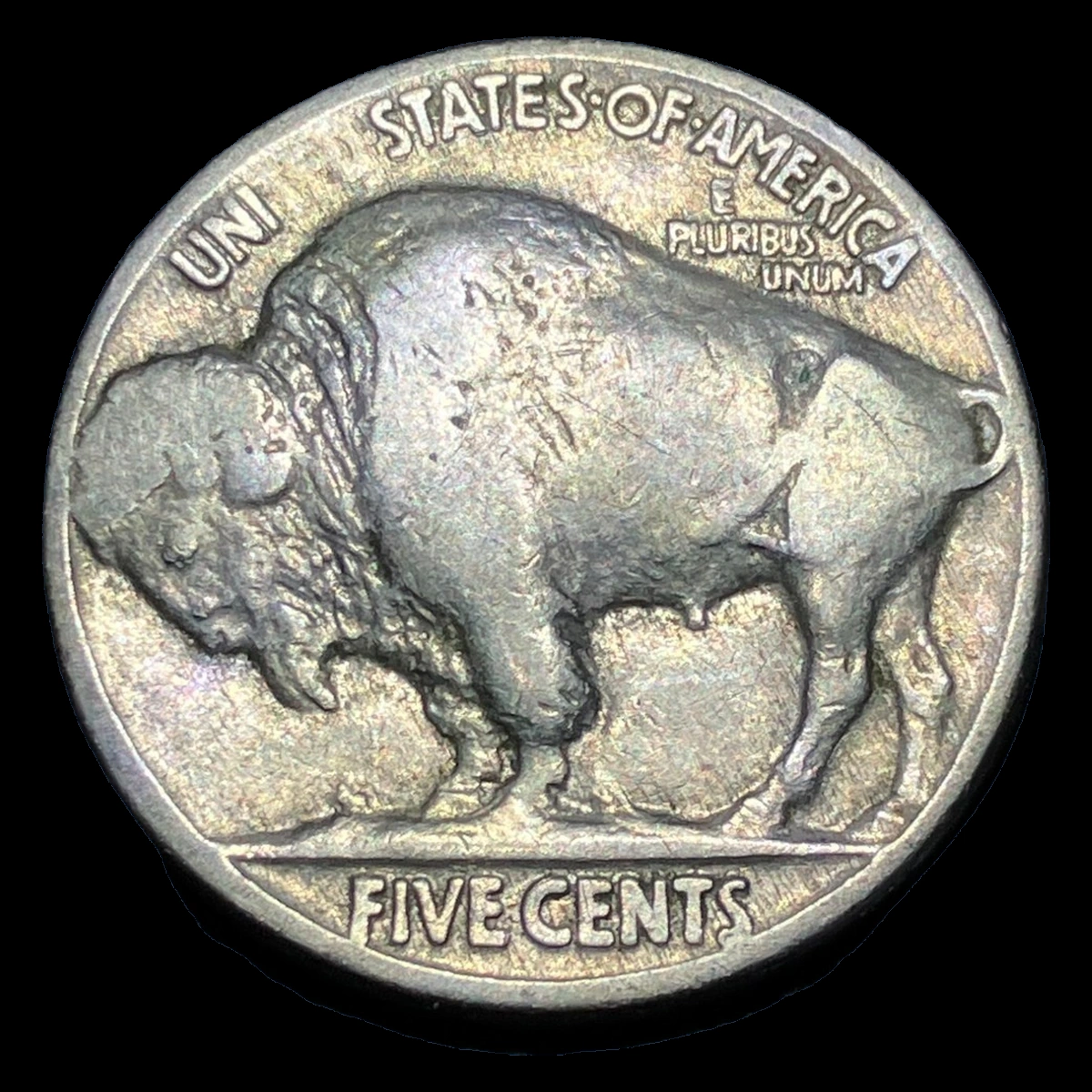
An obstruction between die and blank can leave a depression or prevent local details from forming. The supplied reports include a strong Philadelphia obverse strike-through and a separate Denver depression on the buffalo’s upper back.
How to Identify
Compare the affected patch with neighboring relief and look for a boundary that fits an interrupted strike. Ordinary weak centers are common enough on Buffalo nickels that a soft buffalo alone does not establish an obstruction.
The collector’s Philadelphia AU55 example does not establish the obstructing material’s shape or identity. Keep its obverse feature separate from the Denver reverse report.
A later dent can push metal into a lip around its boundary. Examine that possibility before interpreting a hollow as the imprint of a particular object.
What It’s Worth
$15–$300 is an estimated range for confirmed 1934 strike-throughs, depending on visibility and original surfaces. The Philadelphia AU55 record has no supplied individual sale, and its grade does not identify whether cloth, grease, or another material caused the feature.
5. 1934 Nickel A Wide, Uneven Border Preserves the Whole Design: Uncentered Broadstrike Error
An unrestrained blank can spread outward during striking, especially unevenly if it is not centered. When the full intended design remains on the expanded metal, the result can be an uncentered broadstrike.
How to Identify
Follow the outermost letters, date, and LIBERTY around both faces. Their completeness distinguishes this result from an off-center strike that loses design beyond the edge.
A loose normal nickel weighs about 5 grams and measures 21.21 millimeters, with a plain edge. These references can document spreading, but crushed relief or hammer marks would suggest the finished coin was enlarged later.
What It’s Worth
$75–$350 is an estimate for genuine 1934 broadstrikes. The supplied year guide reports a Philadelphia PCGS AU55 example selling at Stack’s Bowers for $199.75 in 2014.
That reported sale concerns a lightly worn specimen. It should not establish one fixed price for every coin with a wide border.
6. 1934 Nickel Part of the Blank’s Edge Is Absent: Clipped Planchet Error
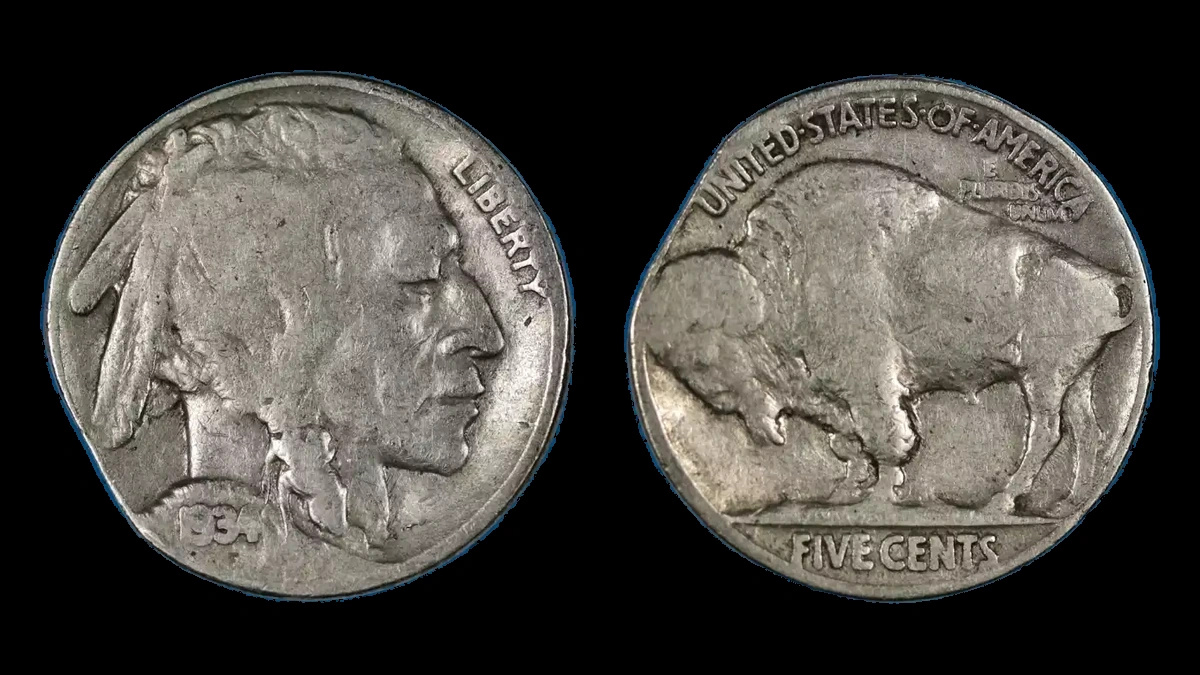
A coin can be struck on a disk that was already incomplete. Reported 1934 clips are not restricted here to one curved, straight, or irregular shape.
How to Identify
Examine where the rim approaches both ends of the missing section. The design should have formed around the original gap, rather than being cut through afterward.
Saw grooves and fresh filing favor damage, while weakness on the opposite rim can support a clip. Reduced weight helps document missing metal but does not establish its timing.
What It’s Worth
$40–$300 is an estimate for modest genuine clips, with larger attractive examples potentially reaching $600. The supplied reports give no particular certified coin’s sale, percentage, or clock position.
7. 1934 Nickel Unstruck Metal Sits beside an Incomplete Design: Off-Center Strike Error
An off-center blank receives only the portions of the design that fall over its metal. The 1934 category is reported, but one often-repeated 10% example has conflicting 1934 and 1935 descriptions.
How to Identify
Read the actual date before estimating displacement, especially because Buffalo nickel dates wear readily. Both faces should support the same shifted strike, with original unused metal opposing the missing design.
A shift confined to one face may instead be die misalignment. Ground-off details or a complete design within an uneven border also fail to establish the same mechanism.
What It’s Worth
$75–$800 is an estimated range for clearly identified 1934 off-center coins. The repeated $580 claim for the example with conflicting dates is excluded as a reliable 1934 comparison.
Readable identity, preservation, and surviving detail matter alongside the size of the shift. The disputed coin’s percentage and grade should not be assigned to a verified 1934 specimen.
8. 1934 Nickel The Nickel Design Appears on Copper-Colored Cent Stock: Wrong Planchet Error
The documented PCGS MS63 coin received a well-centered nickel strike on a blank intended for a cent. That smaller copper-rich disk could not accommodate the full nickel design in the usual way.
How to Identify
A period cent blank normally weighed about 3.11 grams and measured 19.05 millimeters before striking. Those are comparison standards; the supplied auction information gives no actual weight for this specimen.
Compare the natural truncation or stretching of peripheral design with the metal and edge. Copper plating or grinding can imitate individual clues without recreating the original strike on a smaller blank.
No earlier Lincoln design is required because the cent blank was unstamped. A separate guide’s MS62 reference should not automatically be merged with the recorded MS63 coin.
What It’s Worth
$3,000–$7,000 is an estimate for comparable authenticated 1934 cent-planchet errors. The PCGS MS63 example sold for $4,600 at Heritage on August 21, 2004.
Its unworn condition and surviving design contribute to the comparison. Copper color alone does not support that value without the correct blank and striking evidence.
Conclusion
For a 1934 nickel, establish the readable year and mint before deciding what an unusual feature means. A large D can be normal, weak central detail can occur without an obstruction, and an expanded outline needs a complete-design check.
Separate reported examples from disputed records, particularly the conflicting off-center date. The strongest comparison preserves each coin’s actual grade, metal, and visible pattern instead of combining details from different specimens.