Rare 2014 Nickel Errors (List & Pictures)
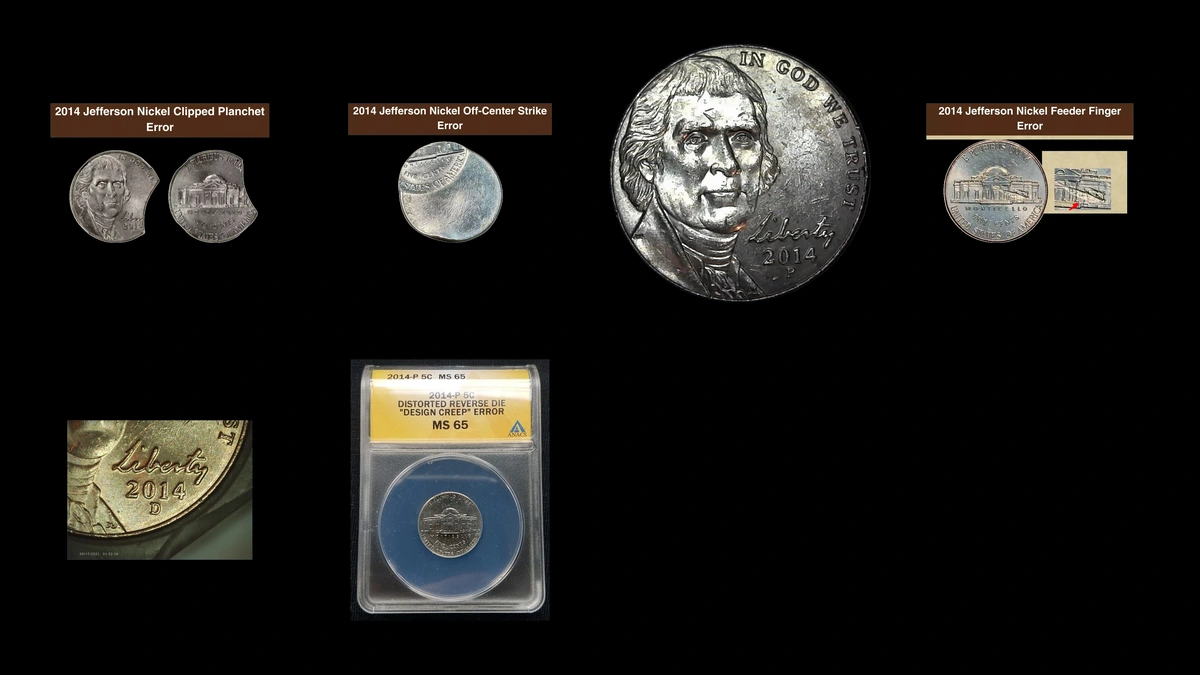
The largest listed 2014-P example carries a $4,500 asking price, while a different-year annealing error sold for $119. Estimated values for 2014 Jefferson nickel errors span $5–$5,000, depending on the actual mistake.
Begin with the outline and surface, then compare the small design details under magnification.
| What looks unusual? | Possible explanation | Estimated value |
|---|---|---|
| A missing section | Clipped blank | $15–$250 |
| Solid unused crescent | Off-center strike | $25–$350 |
| Oval outline | Elliptical blank | $75–$400 |
| Peeling original metal | Lamination | $5–$200 |
| Strange surface color | Improper annealing | $15–$150 |
| Extra ridges or small lumps | Die cracks, chips or feeder marks | $5–$125 |
| Repeated nose or doorway detail | Doubled die | $10–$100 |
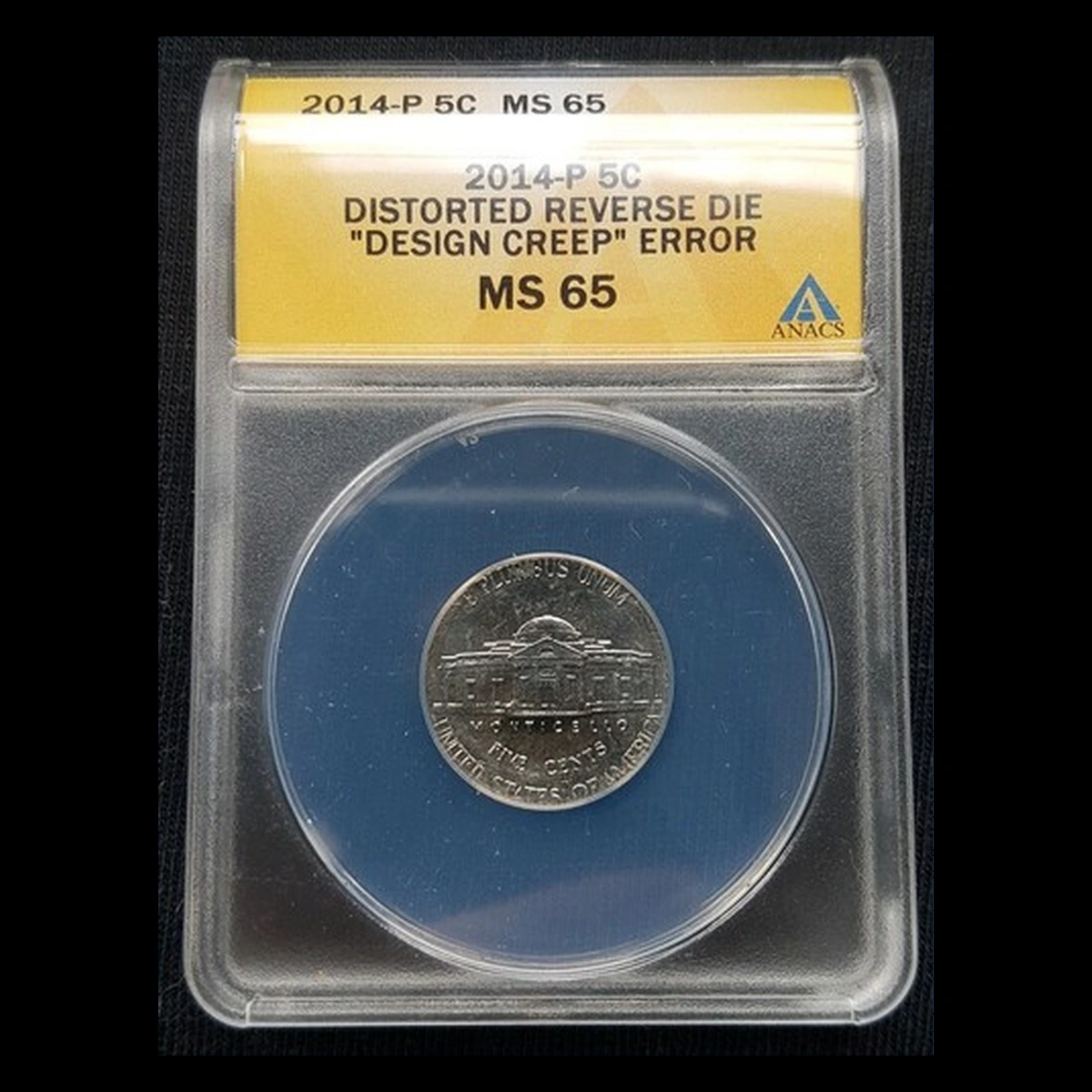
| Outer words spread outward | Design creep | $30–$500 |
| Dime details beneath nickel designs | Double denomination | $2,000–$5,000 |
A normal nickel weighs 5 grams and measures 21.21 millimeters across its plain edge. Record both faces and the edge before inspecting a loose candidate with a scale, calipers and a 10× magnifier.
1. 2014 Nickel A Gap in the Outline: Clipped Blank Error
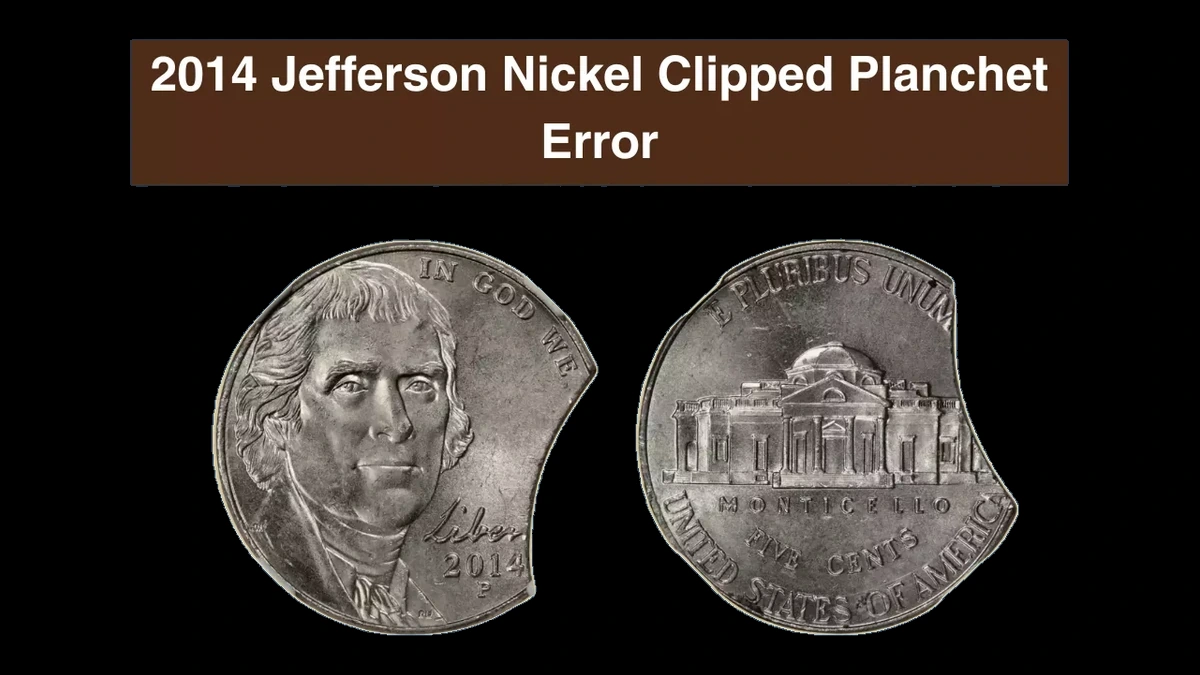
Look through the opening first: a clip has missing metal, not a smooth solid crescent. The gap can originate when a blank-cutting punch overlaps a previously punched hole.
A 2014-D clip is reported, but its shape and percentage are not established. Do not assign those details from a different coin’s photograph.
How to Identify
Inspect the gap’s edge for file marks or sharp cutting burrs. On an original clip, nearby design can soften or flow toward the incomplete boundary.
A weak rim opposite the opening can support the identification. Reduced weight alone cannot distinguish a Mint clip from later removal.
What It’s Worth
Estimated values are $15–$100 for smaller genuine clips and $100–$250 for larger attractive pieces. A clear date helps establish exactly what survives.
A 1997-P nickel with a 20% curved clip sold for $124 in March 2025. That comparison does not supply the missing description of the reported 2014-D example.
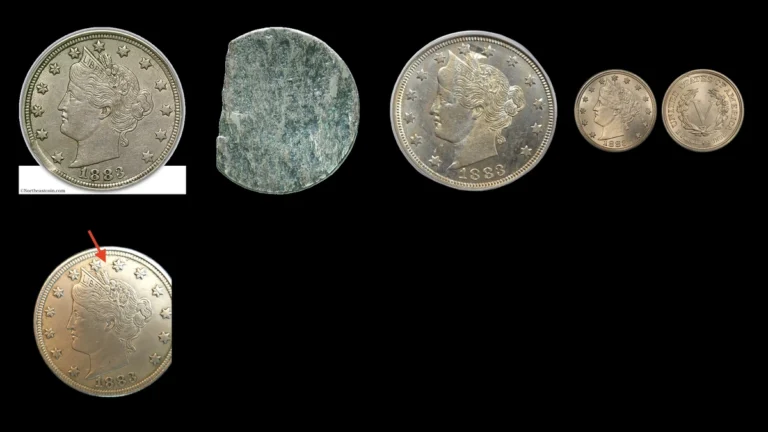
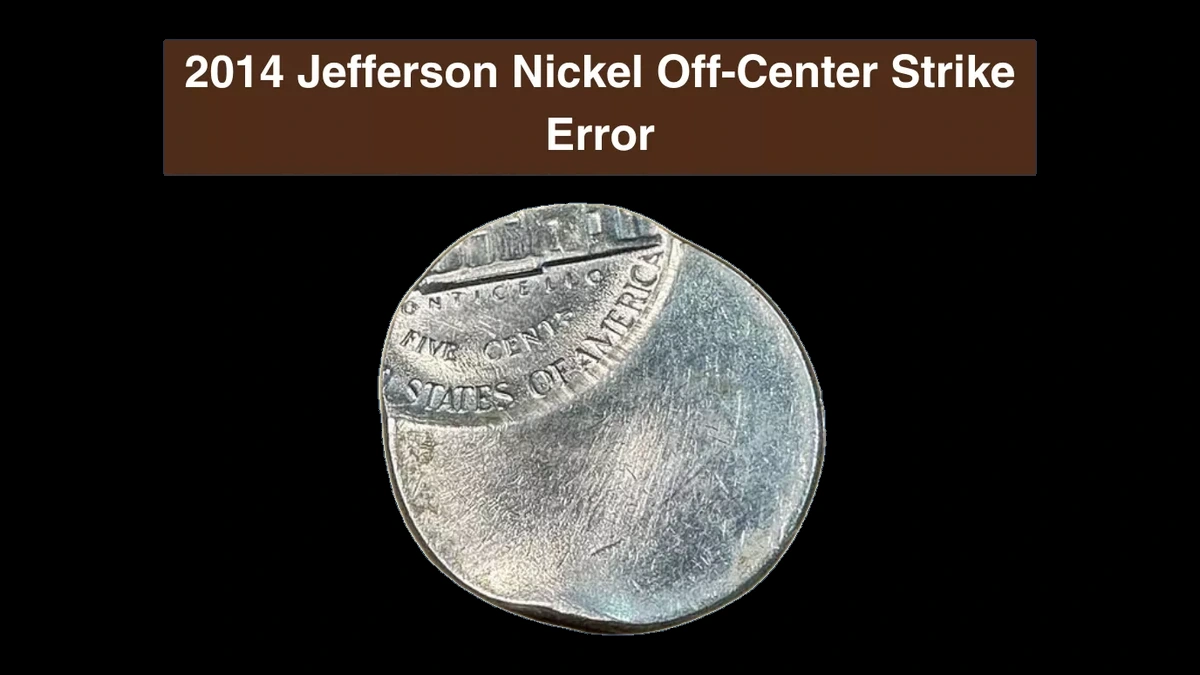
2. 2014 Nickel Design Beside an Unused Crescent: Off-Center Strike Error
A Philadelphia nickel is reported about 10% off center. The blank sat away from the intended striking position, leaving part of its solid surface outside the design.
The report gives no fixed clock direction. Both faces should be consistent with the same misplaced blank.
How to Identify
Keep the date upright in photographs and show the entire unused crescent. Check that the design is actually missing beyond the edge on both faces.
A narrow front rim with a centered back can indicate die misalignment instead. Grinding can also create a smooth-looking patch, but usually disturbs the original surface.
What It’s Worth
Allow approximately $25–$100 for a modest off-center example and $100–$350 for a stronger, appealing piece. The upper range is not a documented sale of the reported 10% coin.
A 1999-P nickel struck 15% off center brought $64 in March 2025. Compare preservation and remaining design as well as the percentage.
3. 2014 Nickel An Oval Coin: Elliptical Blank Error
An oval outline needs a straight-down view before it needs a price. A camera angle can make a perfectly round nickel appear elongated.
A collector’s registry records a 2014-P elliptical-blank nickel graded PCGS MS64. The listing supplies neither weight nor dimensions.
How to Identify
Measure the longest and shortest spans and inspect how the design meets the boundary. An original oval blank differs from a completed nickel flattened by rollers or squeezing.
Look for crushed rims and stretched detail, using the collector’s registry photograph as a type comparison. Do not adopt measurements from another year’s example.
What It’s Worth
An authenticated elliptical-blank piece is estimated at $75–$400. The 2014-P registry entry is not a completed sale.
A 2001-D example weighing 4.06 grams sold for $104 in August 2006. Its weight belongs to that individual coin.
4. 2014 Nickel A Flap or Shallow Opening: Lamination Error
A separation in the original alloy can leave loose metal or a rough recess. The reported 2014-D lamination concerns this internal weakness.
Nickels have a copper-nickel mixture throughout, rather than a copper core covered by separate outer layers. A lamination therefore does not require a clad layer to peel away.
How to Identify
Photograph an attached flap from the side without lifting it. Check whether the opening extends into the coin’s own metal and whether any design continues across the affected area.
Peeling plating, corrosion and scraping can resemble a lamination in a small photograph. A nearly normal weight is possible when the separated metal remains attached.
What It’s Worth
Small original flaws are estimated at $5–$50, with larger clear examples around $50–$200. The reported Denver piece has no confirmed individual sale in the supplied evidence.
A stable attached flap can show the flaw clearly. Enlarging it by hand damages both the coin and its evidence.
5. 2014 Nickel Unusual Color: Improper Annealing Error
Heating softens blanks before they enter the press. Trouble during this process, called annealing, can produce an unusual surface color.
A 2014-P example is reported, but brown color by itself cannot establish Mint heating. Later chemicals, fire and burial can produce similar appearances.
How to Identify
Examine protected spaces around letters for deposits, corrosion or coatings. Compare both faces with an ordinary nickel under neutral light.
Original shine may survive in dark areas, but shine and normal measurements do not date the color change. Preserve the surface for examination rather than polishing a test patch.
What It’s Worth
A properly identified annealing error is estimated at $15–$150. The estimate depends on an original surface, not merely a dark shade.
A 2005-D nickel labeled improperly annealed sold for $119 in December 2022. It is a different-year comparison, not proof that a discolored 2014 nickel has the same cause.
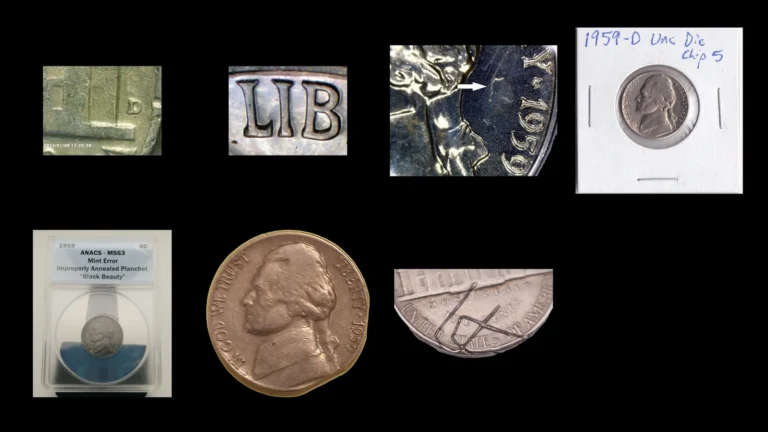
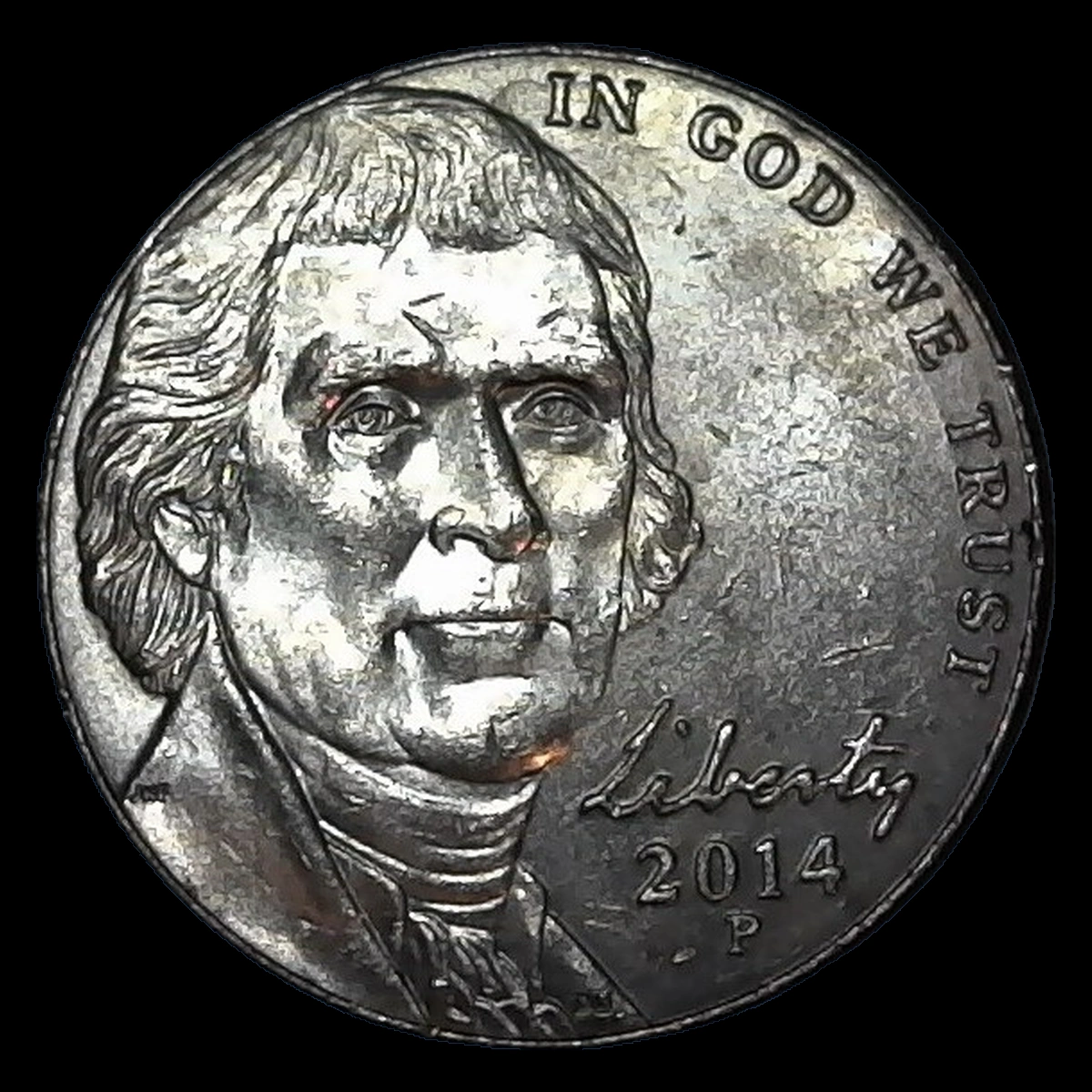
6. 2014 Nickel Raised Lines or Lumps: Die Cracks and Chips Error
Turn the coin under a low light to distinguish ridges from cuts. Cracks in a die, the steel tool that stamps the design, can leave raised lines on the coins it makes.
A small missing piece of die steel can produce a raised lump instead. Both forms are reported for 2014-P without a single diagnostic location.
How to Identify
Follow the whole feature rather than judging its brightest edge. A scratch can have a raised lip beside a sunken center, and an impact can push metal into a lump.
Check nearby detail and the opposite face for damage. Leave suspected dirt in place instead of scraping it to see whether metal lies underneath.
What It’s Worth
Modest original die cracks and chips are estimated at $5–$50. Visibility and preservation matter more than simply finding an extra bump.
No individual auction is established for these reported 2014-P features. A much larger raised patch needs its own identification before receiving a major die-break valuation.
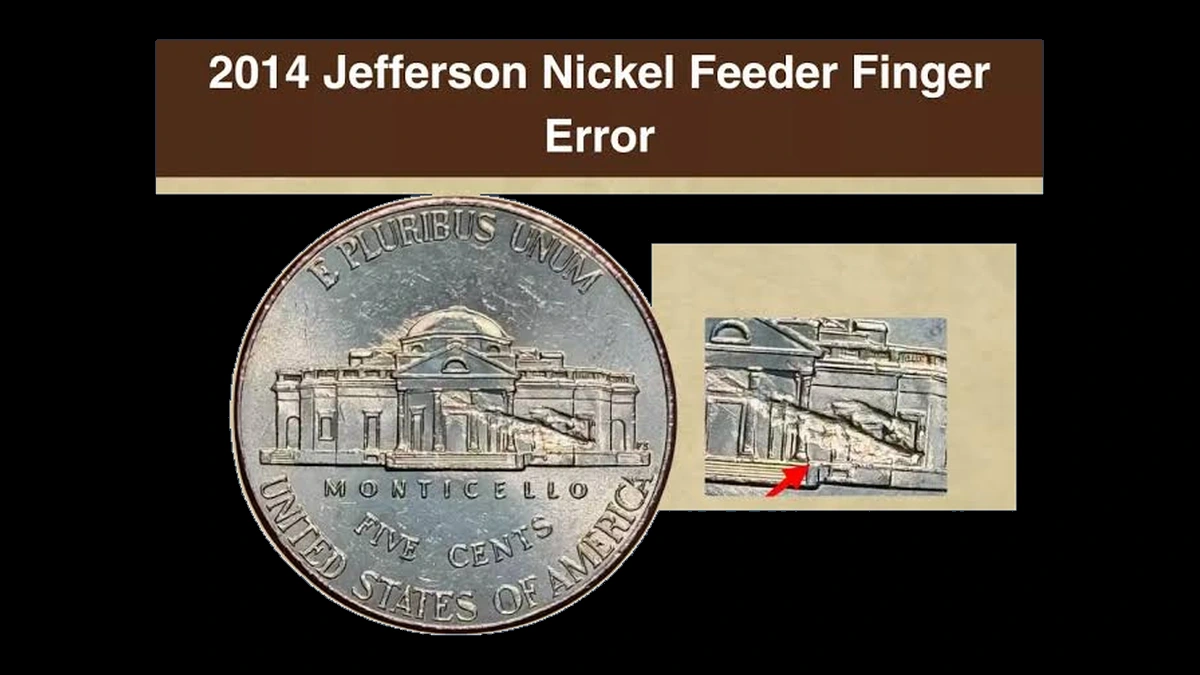
7. 2014 Nickel Parallel Raised Streaks: Feeder-Finger Die Damage Error
Several parallel ridges may record a scrape on the die rather than scratches on the coin. A feeder finger, a press part involved in positioning blanks, can damage the die face.
Grooves in that tool become raised lines on later strikes. Reports describe this type on 2014-D nickels without establishing one path across the portrait.
How to Identify
Light the group from opposite directions to determine whether its lines rise above the surface. Later abrasion usually cuts into finished details and may leave disturbed metal.
Parallel spacing supports a common scraping event but does not identify the press part by itself. Show the whole group and its relationship to nearby letters in photographs.
What It’s Worth
Clear original feeder-related die marks are estimated at $10–$125. Faint ridges among heavy handling marks offer a weaker comparison.
The supplied report does not document a completed sale for its Denver example. Ordinary post-mint scratches do not qualify for this range.
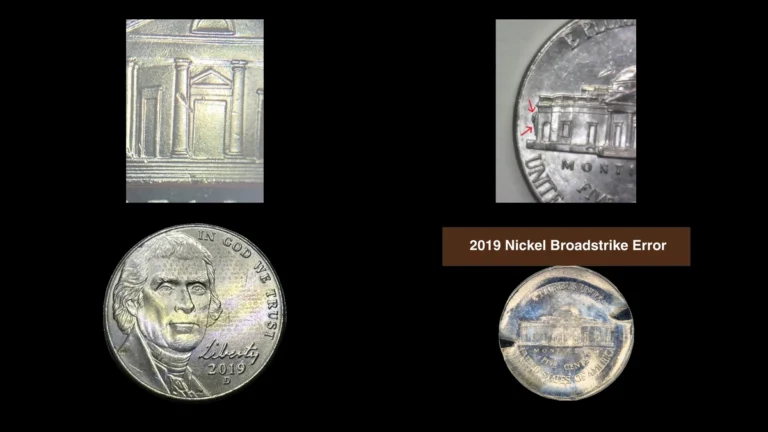
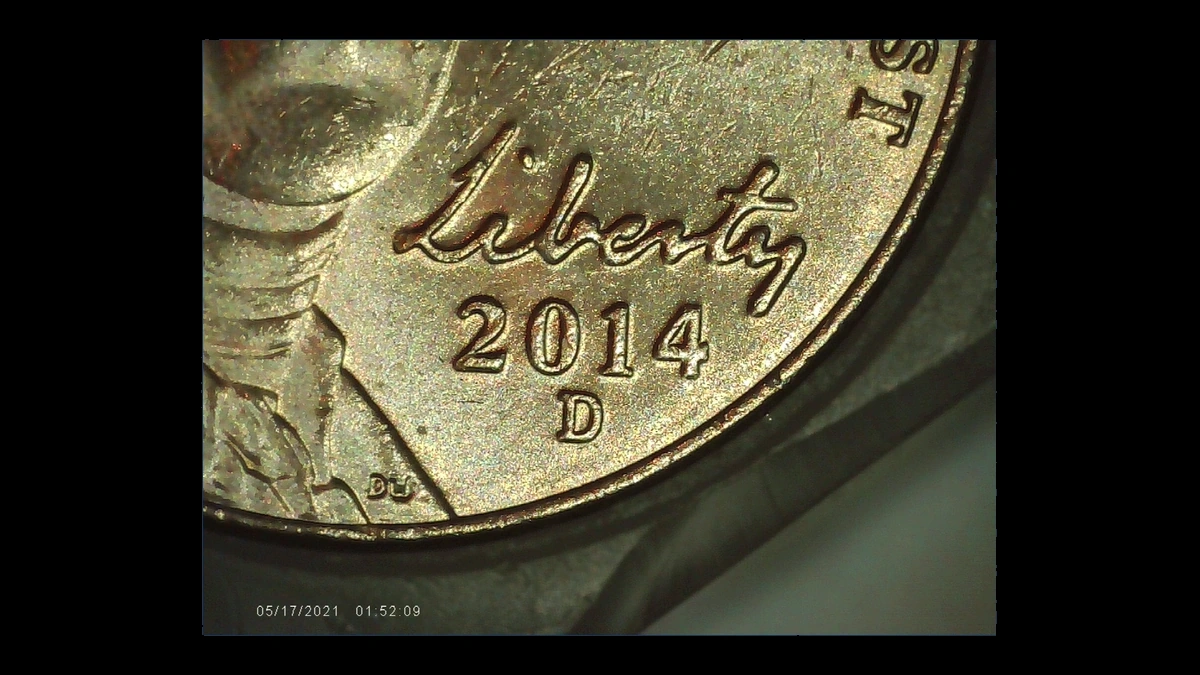
8. 2014 Nickel Extra Nose or Doorway Detail: Doubled Die Error
Two small areas deserve a closer look: Jefferson’s lower-right nose edge and Monticello’s central doorway. Reported Philadelphia obverse varieties affect the nose, while Philadelphia and Denver reverse varieties affect the door area.
These repeated details were built into particular dies. They need not produce doubling across the whole coin.
How to Identify
Compare the full feature with the correct mint’s 2014 variety photographs. Doorway clues can include extra bars below the upper frame or detail near an upper corner.
A flat shelf caused by movement during striking is a different effect. Thick lettering or a shadow alone cannot identify a doubled die.
What It’s Worth
Matched minor varieties are estimated at $10–$30, with clearer attractive examples around $30–$100. These are estimates, not auction results for every catalog entry.
Wear can obscure the small details needed for attribution. When both faces show varieties, the coin still receives one overall valuation.
9. 2014 Nickel Words Crowded Against the Edge: Design Creep Error
Normal coin size can coexist with an oversized-looking design. A documented 2014-P reverse shows outer details spreading toward the edge as the die’s working face expanded during use.
Specialist Mike Diamond called this effect design creep. The spread concerns the tool’s design, whereas a broadstrike involves the coin spreading beyond its usual outline.
How to Identify
Photograph the candidate beside a normal 2014 nickel at the same scale. Compare several outer words instead of focusing on a single close letter.
The documented Philadelphia example shows the expanded reverse design. A narrow rim opposite a wide one calls for a separate alignment check.
What It’s Worth
Estimated values range from $30–$100 for modest matched examples to $100–$500 for stronger, well-preserved pieces. The discovery report supplies no completed sale.
Normal diameter and outward-spread design must be considered together. An uneven rim alone does not establish this error.
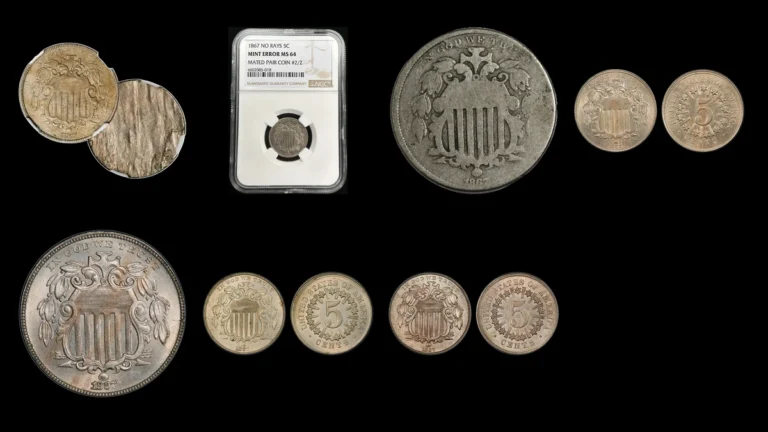
10. 2014 Nickel A Dime Under the Nickel Design: Double Denomination Error
A listed 2014-P nickel on dime is graded NGC MS63, an unworn coin with noticeable marks. The brief record places it among double-denomination pieces but does not describe the earlier design in detail.
The important distinction is whether the press received an already struck dime or an unused dime blank. Only the former can retain an earlier Roosevelt or dime-reverse impression.
How to Identify
Trace any surviving dime details beneath Jefferson or Monticello on both faces. Small size alone cannot prove a finished-dime overstrike.
A standard dime starts at 2.268 grams and 17.91 millimeters, with a copper core between lighter outer layers. Striking can spread its outline, so dimensions support the design evidence rather than replace it.
What It’s Worth
An authenticated finished-dime overstrike matching this type is estimated at $2,000–$5,000. If the host was an unused dime blank, the separate estimated range is $400–$1,500.
Mint Error News records a $4,500 Sullivan asking price for the 2014-P MS63 piece. That offer is not a confirmed sale.
Conclusion
A useful 2014 nickel examination moves from the outline to the surface, then to small repeated details. Record complete views before deciding whether the problem began with the blank, the die or its position in the press.
Keep the strongest claims tied to visible evidence: original missing metal, a matched variety feature or recognizable dime designs. An asking price and a different-year sale provide context, but neither authenticates the coin in hand.