Rare 1940 Dime Errors (List & Pictures)
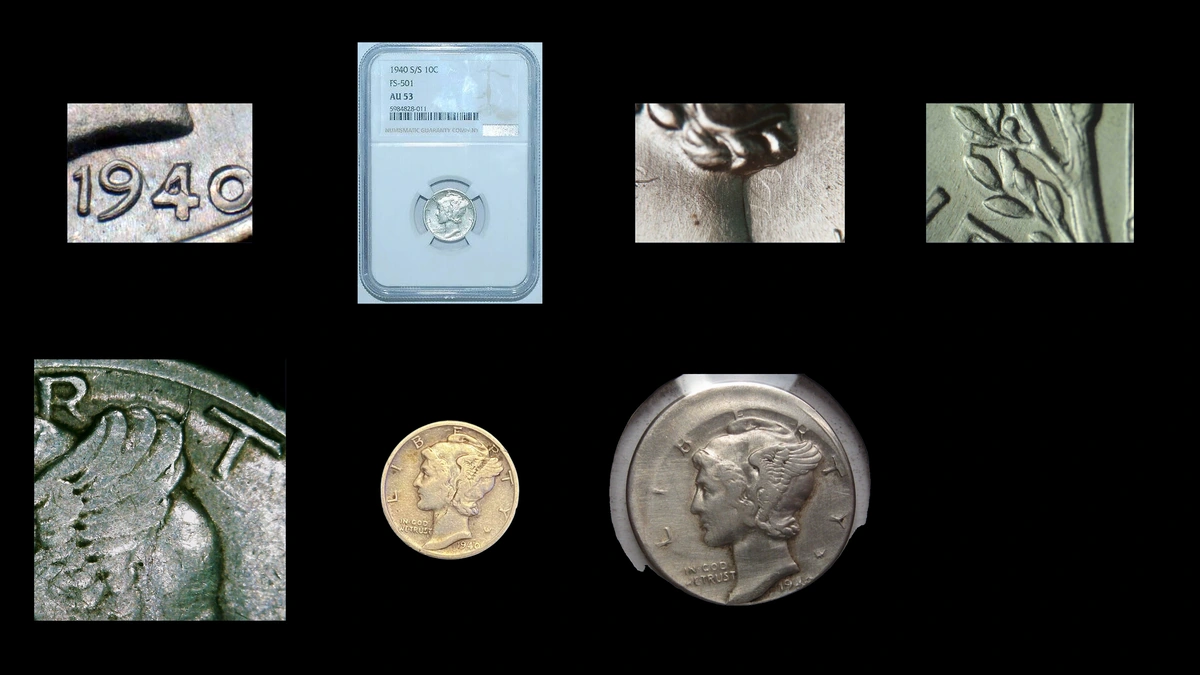
A faint nose bridge on a 1940-S dime may reflect die polishing, while extra outlines can identify a doubled design. The estimated range for 1940 dime errors is $10–$1,200, with a recognized double-face variety selling for $660 in July 2021.
Compare added and missing design details first, then move to the metal and outline.
| What stands out | Possible identification | Estimated value |
|---|---|---|
| Repeated date or lettering | Doubled die | $20–$1,200 |
| Extra D or S strokes | Repunched mintmark | $20–$400 |
| Absent nose or leaf detail | Die abrasion | $10–$250 |
| Faint opposite-design shapes | Die clash | $15–$200 |
| Raised line or rim patch | Die crack or cud | $10–$600 |
| Peeling front metal | Lamination | $15–$200 |
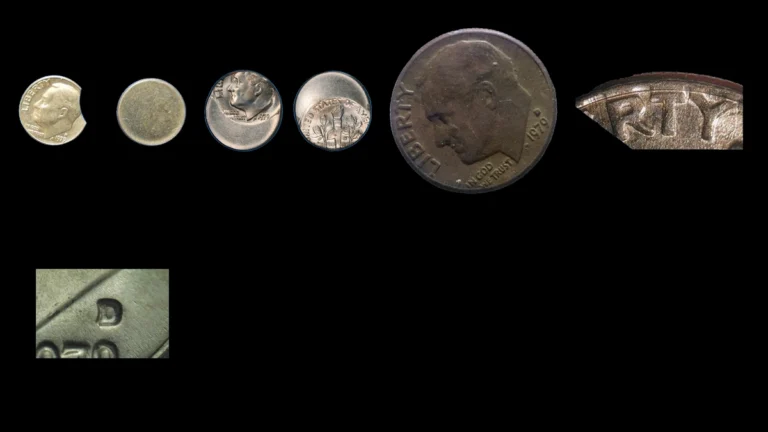
| A missing edge section | Clipped planchet | $30–$400 |
| Uneven wide border with complete design | Uncentered broadstrike | $40–$500 |
| Blank crescent beside cropped design | Off-center strike | $75–$1,000 |
1. 1940 Dime The Date and Reverse Details Have Extra Contours: Doubled Dies Error
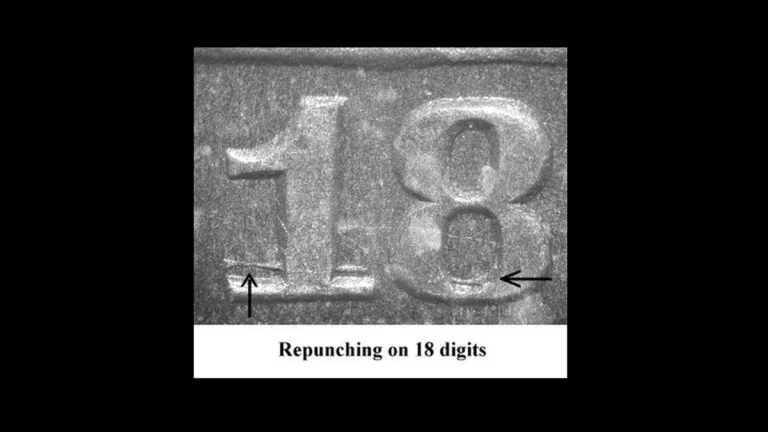
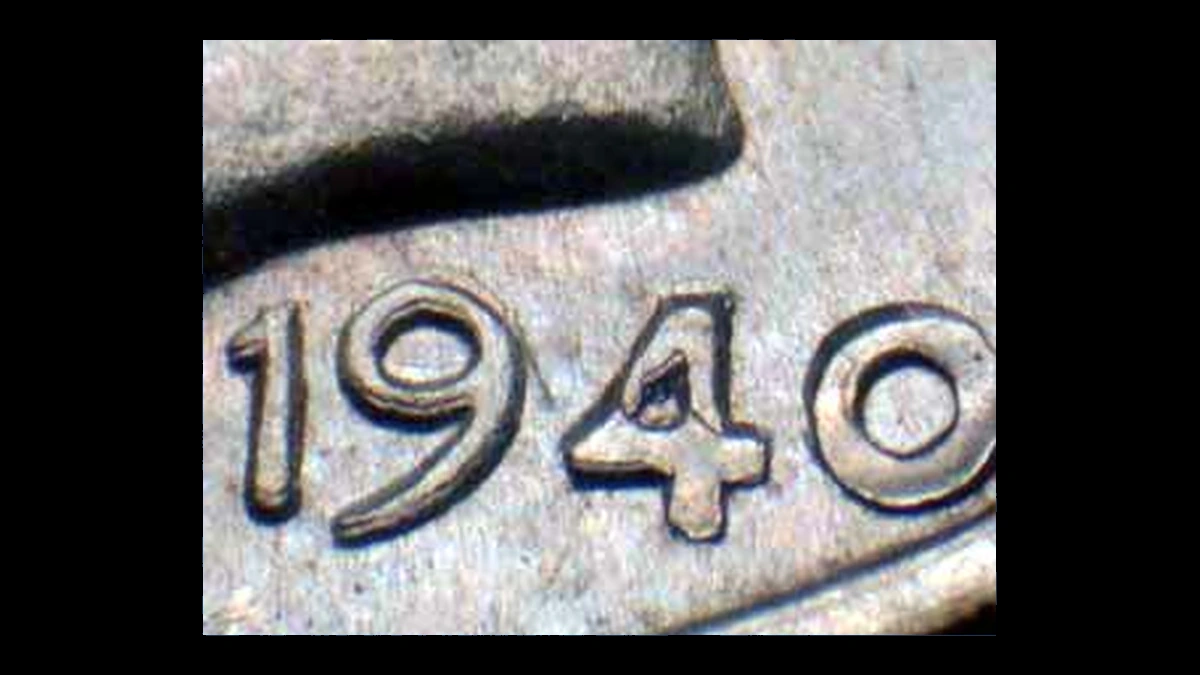
The San Francisco FS-901 pairs a clearly doubled date with lighter front detail and reverse doubling at STATES OF, the upper-right leaves, and the top of the central rods. Both dies carried the repeated design before striking.
Other Philadelphia, Denver, and San Francisco patterns affect different dates, letters, or AW initials. Some show close separation while others primarily show thickening.
How to Identify
For FS-901, compare all four date digits and each named reverse area with the same attributed pairing. A front match from one variety and a reverse match from another do not establish that coin.
Distinguish fixed repeated detail from reflections or flat striking shelves. Ordinary-issue patterns also should not be transferred automatically to specially prepared Proof coins.
What It’s Worth
$20–$300 is the estimate for matched minor patterns, with about $50–$1,200 for stronger recognized double-face examples. PCGS CoinFacts records $660 for an FS-901 graded PCGS MS65 in July 2021.
That result covers both faces of one well-preserved coin. It is not two separately priced doubled-die errors.
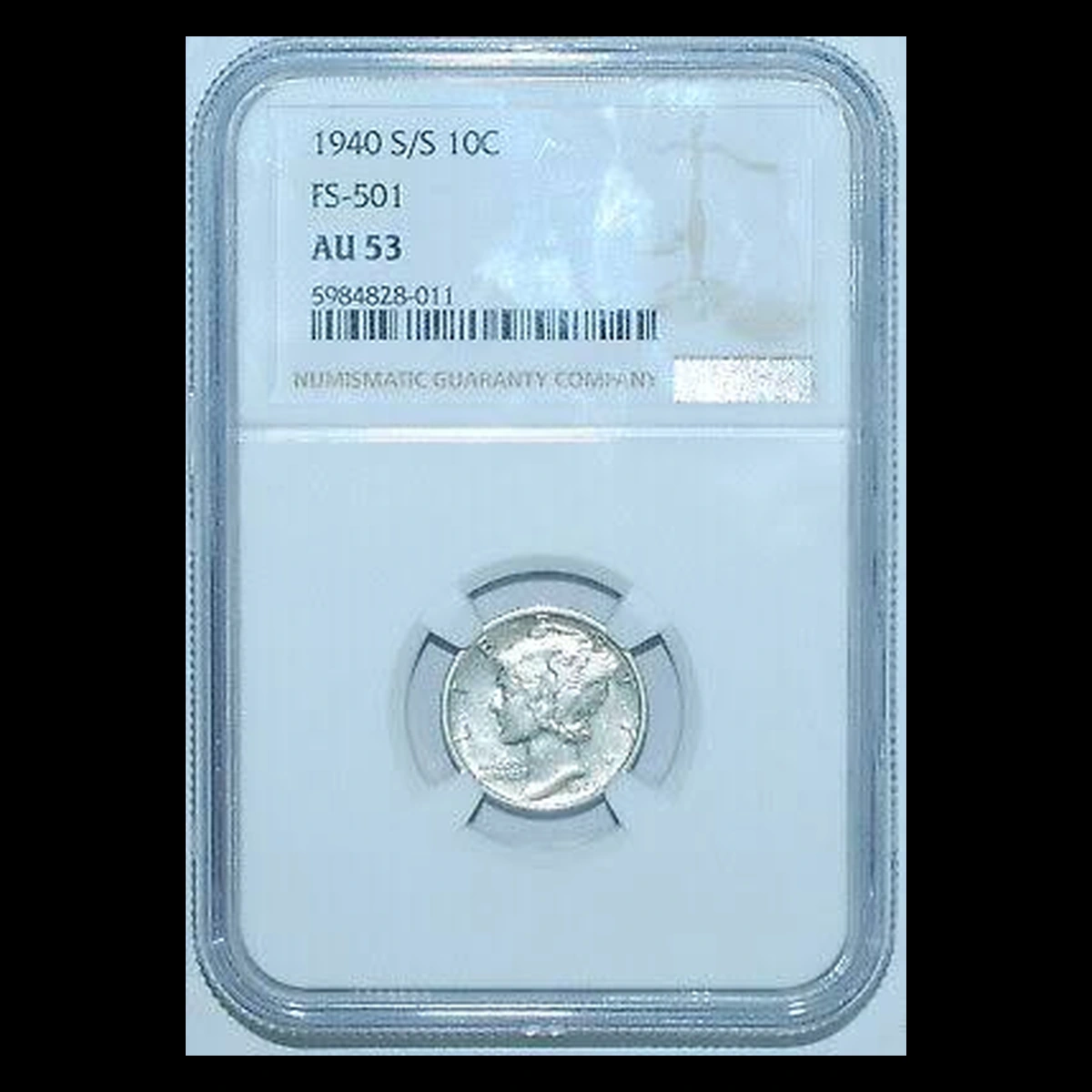
2. 1940 Dime A Second D or S Peeks beside the Mint Letter: Repunched Mintmark Error
A hand-punched mint letter could leave an earlier impression when reapplied in a different position. Denver patterns include north, south, west, southwest, and southeast remnants.
San Francisco patterns include western and tilted impressions. The S/S FS-501 has several overlapping traces, including near the letter’s ends.
How to Identify
Locate the mintmark below the left side of the reverse rods and keep the coin upright while comparing it. Check the earlier letter shape and its spacing from the nearby leaf, not direction alone.
Several Denver patterns point north, so that clue does not settle the attribution. Companion doubled designs must also match the particular pairing, allowing for changes when a front die was replaced.
What It’s Worth
$20–$400 is the estimated range for recognized minor repunched mintmarks. An S/S FS-501 graded PCGS MS65 sold for $216 in June 2024.
Clear earlier strokes and preservation support the comparison. A doubled date, mintmark remnant, and supporting crack on the same coin do not create three full coin prices.
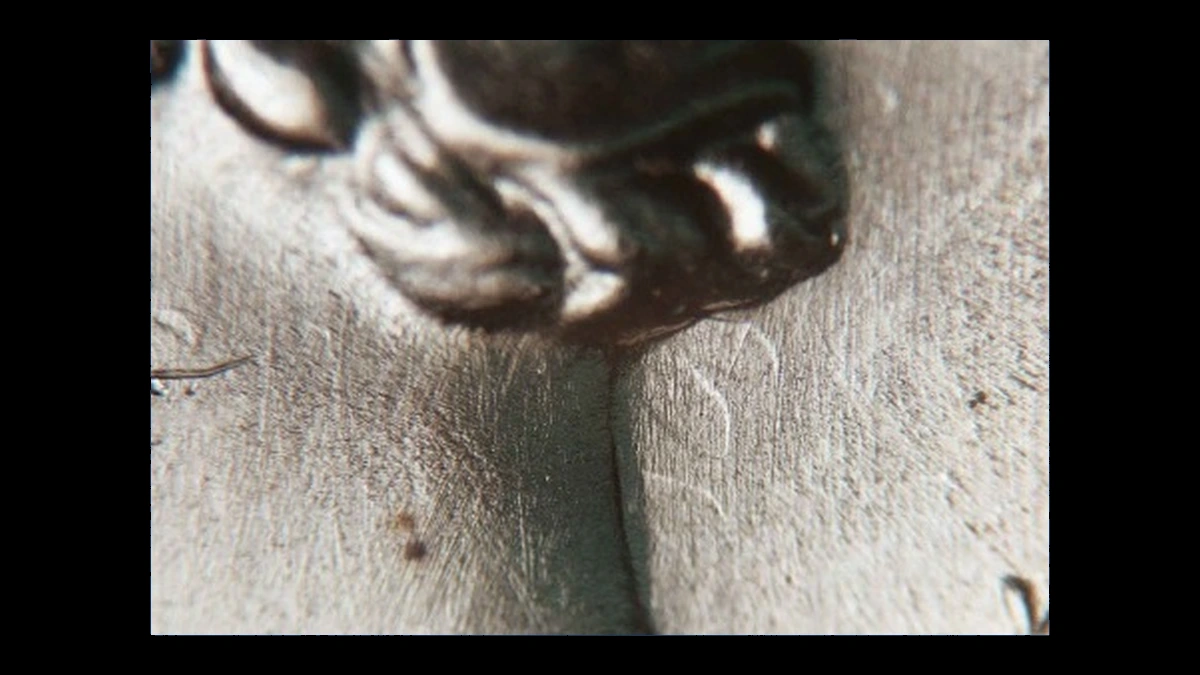
3. 1940 Dime A Nose Bridge or Leaf Connection Is Missing: Die Abrasion Error
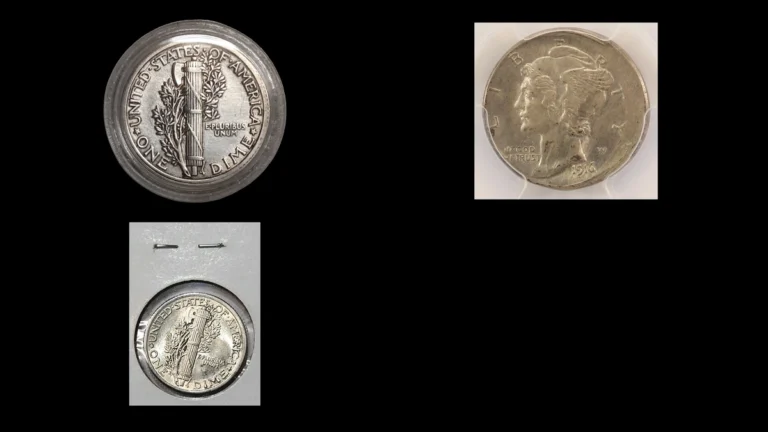
Excessive die polishing can remove details from the design the tool transfers. Separate San Francisco stages show a missing nose bridge, a detached-looking upper-right leaf, or missing lower-left leaves.
Another S-mint example has abrasion above and right of B in LIBERTY from a feeding arm rubbing the die. That mechanism involves tool contact, not an object trapped against the coin during its strike.
How to Identify
Compare the absent feature with a normal dime and assess the surrounding detail. A weak nose bridge amid general portrait wear is less persuasive than a matched die stage with normal adjacent detail.
The leaf changes and B-area marks need their own comparisons. A scraped or locally polished finished coin can remove the same features without sharing the die origin.
What It’s Worth
$10–$250 is the estimate for clearly matched die-abrasion features. No completed sale was supplied for these individual stages.
Some belong to coins with doubled designs or repunched letters, which must be valued together. A recognizable missing detail can have more appeal than faint unidentified background lines.
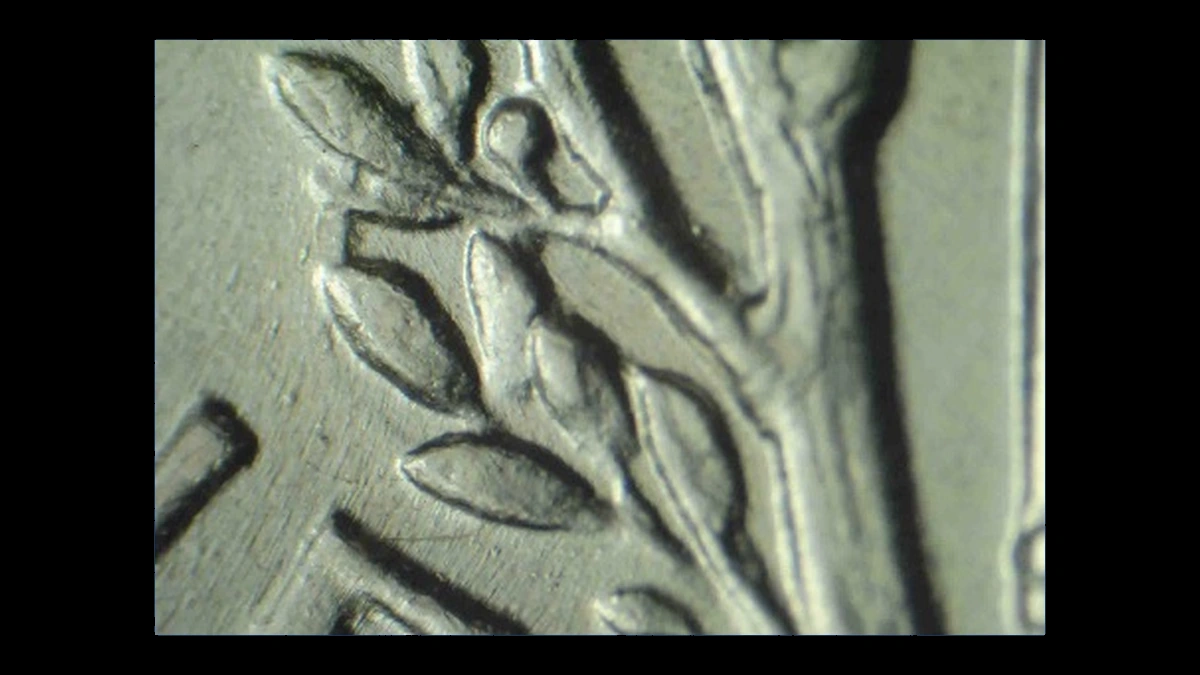
4. 1940 Dime Faint Extra Shapes Echo the Other Face: Die Clash Error
San Francisco reports describe marks near Liberty’s chin, nose, or neck, and near the lower-left reverse branch or beneath AME. The different locations belong to separate die stages.
Dies meeting without a blank can pick up traces of the opposing design. Later coins reproduce those transferred outlines.
How to Identify
Use the opposite face’s design to interpret a suspected mark. A recognizable relationship matters more than finding a line in a familiar location.
Keep each San Francisco stage separate and distinguish fine polishing lines from transferred shapes. Scratches cut into the coin and do not establish a clash.
What It’s Worth
$15–$200 is the estimate for recognizable minor clashes. It is a whole-coin comparison rather than a documented sale for every stage.
Wear can obscure the faint evidence, while cleaning can add misleading lines. Any doubled detail on the same coin remains part of its combined assessment.
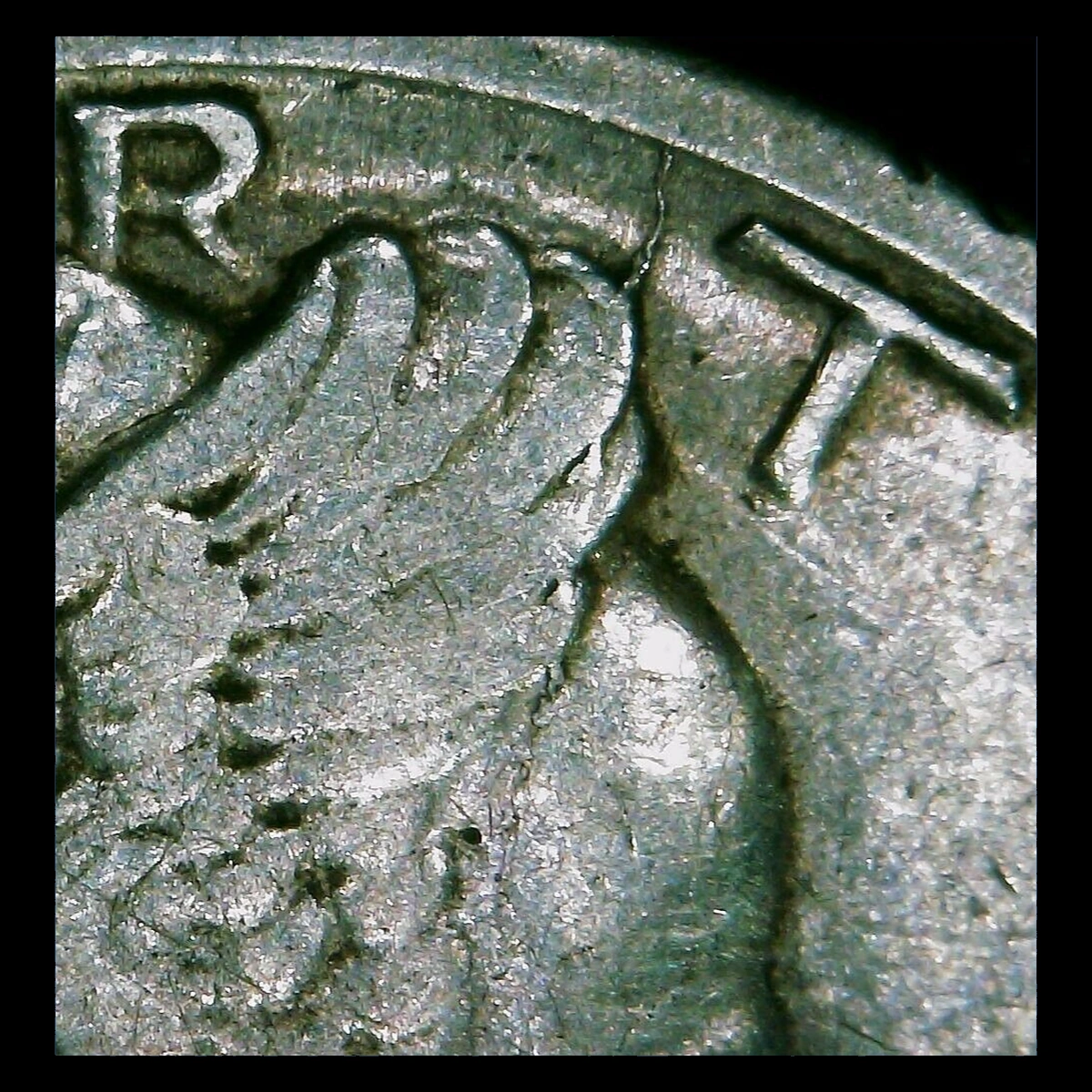
5. 1940 Dime A Ridge or Raised Rim Patch Interrupts the Surface: Die Cracks and Cuds Error
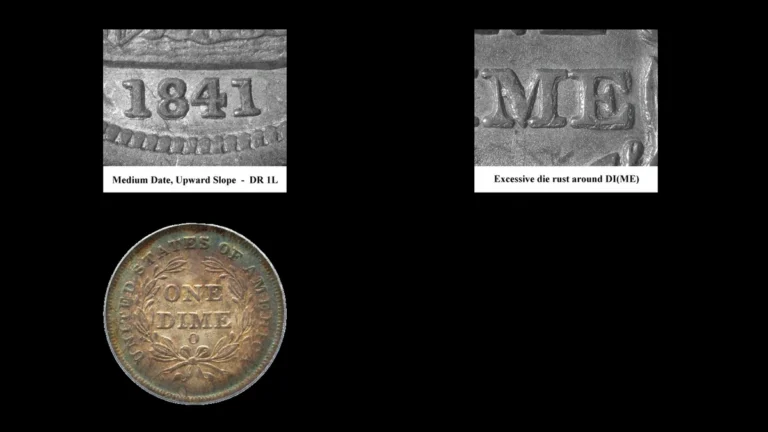
Denver and San Francisco records contain different crack paths through front or reverse detail. A missing die section can leave a broader raised rim-connected patch called a cud.
Separate San Francisco examples place cuds at 2:30, twelve o’clock, or near particular letters. These positions must not be combined into one expected feature.
How to Identify
Determine whether the mark is a thin raised ridge or a broad patch replacing design and reaching the rim. Use angled light to distinguish both from scratches.
Inspect the adjacent edge for an impact that could push up a false lip. An ordinary intact silver dime is about 2.50 grams and 17.9 mm with a reeded edge, and die damage does not itself remove coin metal.
What It’s Worth
$10–$100 is the estimate for modest cracks, with roughly $75–$600 for stronger rim breaks. The San Francisco cud at 2:30 sold for $156 in July 2021.
A separate three-coin group of cracked 1940-S dimes sold for $132 in October 2021. That amount values the lot and does not establish a per-coin or per-crack price.
6. 1940 Dime A Thin Layer Peels from the Front: Lamination Error
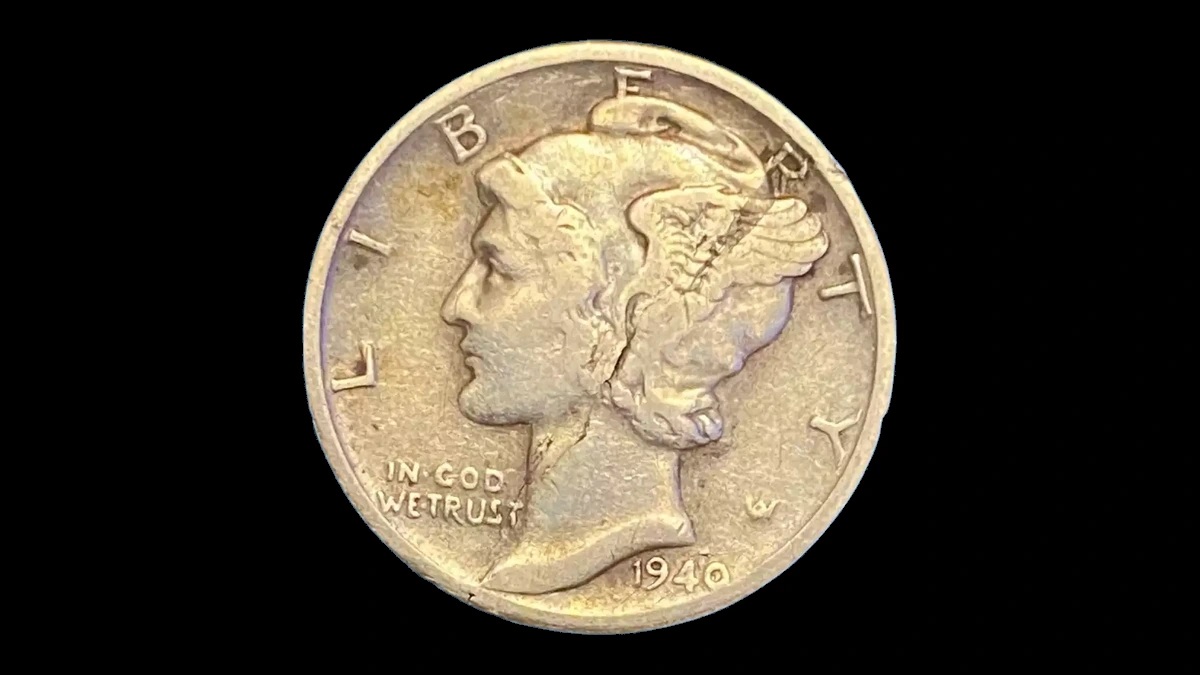
The year guide reports a front lamination on a 1940-D dime without fixing its precise location on Liberty’s portrait. The defect originates in a weak area within the blank’s metal.
Mercury dimes contain silver and copper mixed as an alloy, rather than a modern copper core with clad outer layers. Brown discoloration under a rough patch does not change that construction.
How to Identify
Look for a natural boundary where a sheet separates and follow the surrounding design into it. A later scrape cuts completed detail instead of exposing the same internal weakness.
Leave an attached flake untouched and avoid squeezing it while measuring. Lost metal can lower weight, whereas a retained layer may leave the coin close to normal.
What It’s Worth
$15–$200 is the estimate for genuine Denver front peeling. A 1942 Mercury dime with major front lamination sold for $89 in March 2023.
That is a nearby-year comparison, not a sale of the 1940-D report. Cleaning, heavy wear, and loss across important design can reduce appeal despite a genuine defect.
7. 1940 Dime A Gap Removes Part of the Edge: Clipped Planchet Error
A general 1940 clip report supplies no universal shape, percentage, or mint. A separate Denver listing describes a disk clip on an ANACS AU55 Details coin.
The blank was incomplete before it received its design. AU55 indicates light wear, while Details signals another condition problem whose specific cause is not supplied here.
How to Identify
Examine the actual gap where the struck design and rim meet the missing metal. Saw marks, fresh burrs, and cuts through completed letters suggest later removal.
Opposite-rim weakness can support a genuine clip when present, but each boundary still needs examination. The Denver label does not establish a curved shape or particular clock position.
What It’s Worth
$30–$400 is the estimate for genuine clips in differing conditions. A 1944 Mercury dime graded PCGS MS63 with a 7% clip sold for $126 in July 2021.
That unworn different-year specimen does not price the Denver AU55 Details coin directly. Its additional condition problem may reduce the value of an otherwise genuine clip.
8. 1940 Dime A Complete Design Sits Unevenly in a Wide Border: Uncentered Broadstrike Error
A Philadelphia PCGS MS62 is cataloged as an uncentered broadstrike. Its blank spread without normal collar restraint, while the complete design remained on the available metal.
A separate San Francisco NGC MS61 Full Bands listing uses both broadstrike and off-center wording. Full Bands describes reverse band separation and does not resolve the conflicting terms.
How to Identify
Trace the outer letters on both faces before judging the uneven border. Complete design inside expanded metal supports broadstriking; lost design outside the blank points toward an off-center strike.
Check the edge and high points for natural formation rather than later hammering. On the ambiguous San Francisco listing, use the actual shape to choose the explanation instead of treating both words as additive errors.
What It’s Worth
$40–$500 is the estimate for genuine broadstrikes. A Philadelphia 1944 MS65 broadstrike sold for $94 in October 2022.
That different-year sale is a mechanism comparison, not a result for either 1940 specimen. The San Francisco coin needs a price assessment based on its actual physical form.
9. 1940 Dime A Narrow Blank Crescent Adjoins Cropped Design: Off-Center Strike Error
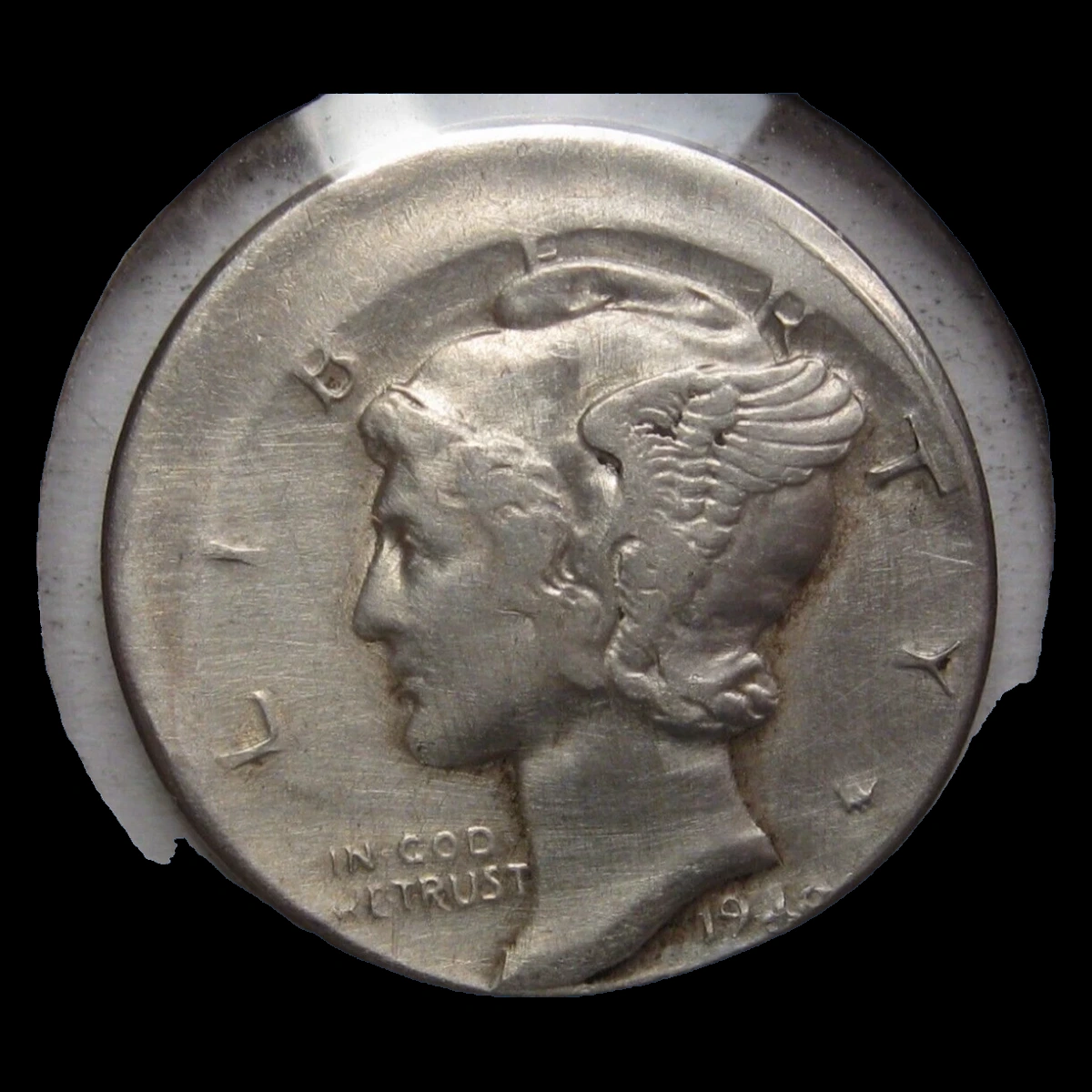
A 1940-S was offered with a PCGS MS61 label identifying a 5% off-center strike. This is separate from the San Francisco listing with ambiguous broadstrike wording.
The blank’s displaced position should leave related untouched areas and missing design on both faces. The supplied description does not establish the shift’s direction.
How to Identify
Read the 1940 date and S and compare the blank crescent with the design lost across from it. A wide border by itself cannot establish an off-center strike.
Inspect the transition into untouched metal for later grinding and confirm that both faces fit the same displacement. If all intended design remains, revisit the uncentered-broadstrike explanation.
What It’s Worth
$75–$1,000 is the estimated range across small shifts and stronger dated examples. The recorded 5% MS61 belongs with modest offsets rather than automatically at the top.
A 1964 silver dime graded ANACS MS65 and struck 60% off center sold for $134 in December 2025. Its different date and condition reinforce that displacement percentage alone does not set the price.
Conclusion
On a 1940 dime, added contours and missing detail can come from different changes to the dies. Match the exact mint and stage before treating a weak nose bridge, extra mintmark stroke, or clash line as a particular variety.
For shape errors, decide whether the design remains complete before choosing broadstrike or off-center terminology. Keep whole-coin features together and retain the three-coin sale as a group result.