Rare 1974 Dime Errors (List & Pictures)
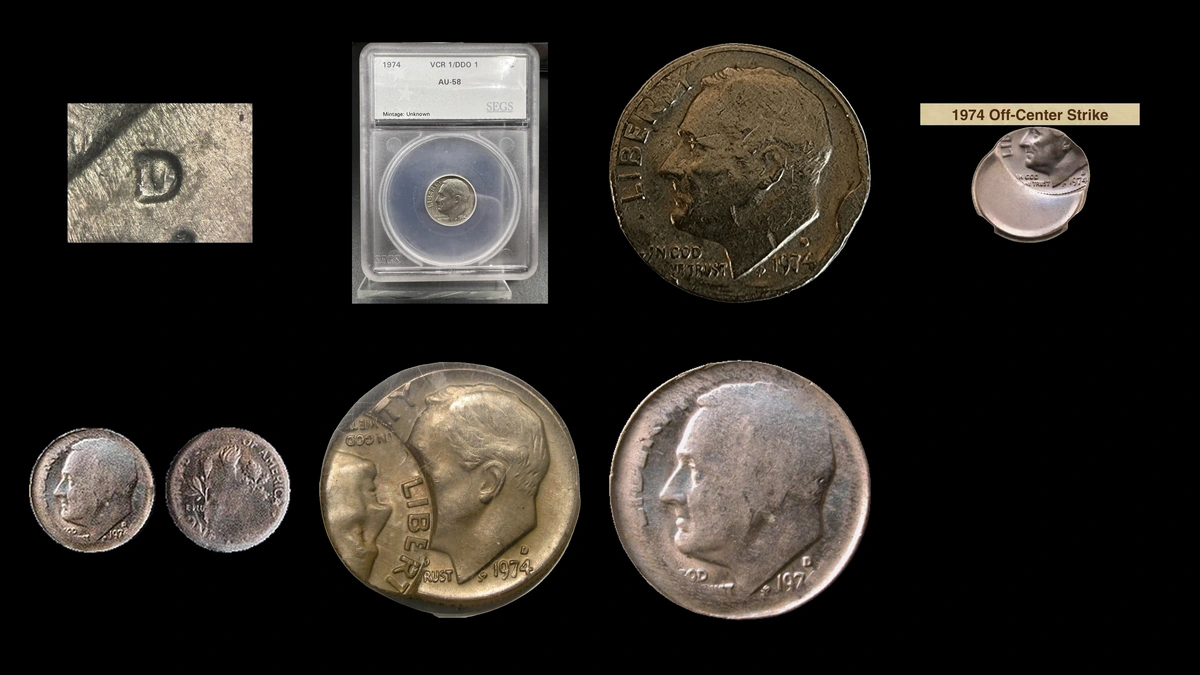
The wrong explanation can make a brown dime sound much rarer than it is. A 1974-D dime with an altered surface weighed 2.30 grams, while a very different coreless example weighed just 0.9 gram.
Among the 1974 dime errors, PCGS records a $375 result for a double-struck coin. Estimated values across this list run from $5–$2,000; use the metal, design, and edge together to find the right category.
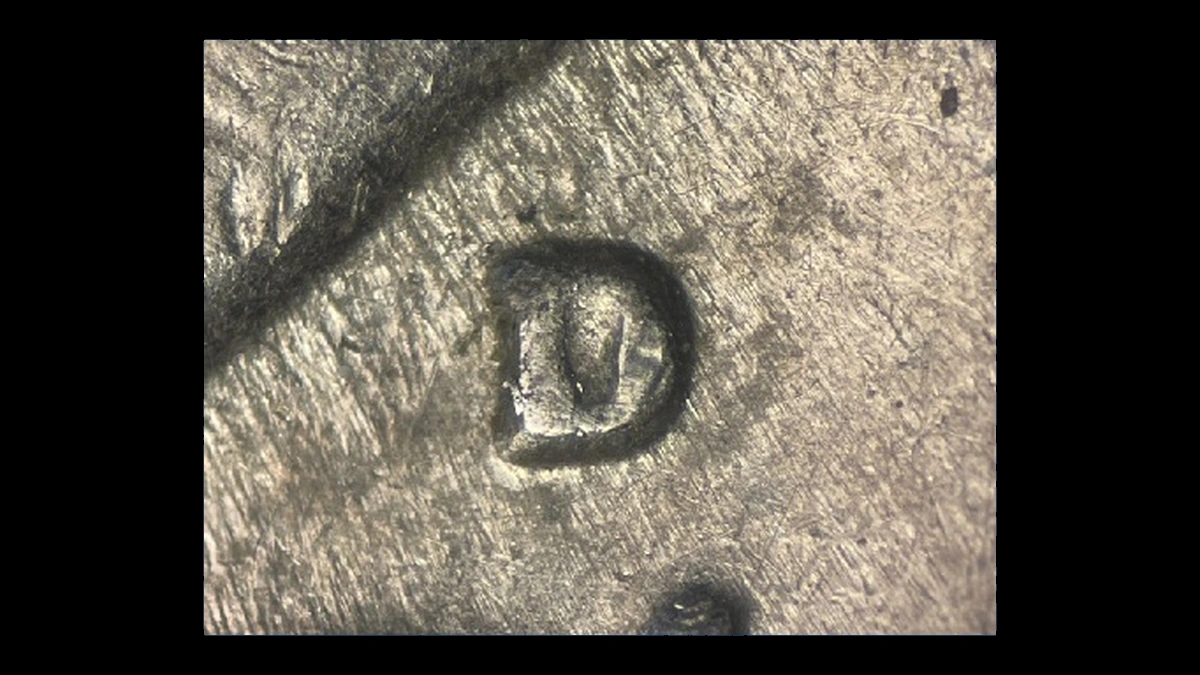
1. 1974 Dime A Forked D or Doubled-Looking S — Mintmark Punch Feature Error
The lower tip of a 1974-D mintmark can look forked because the punch used to make that letter was damaged. A related extra outline on 1974-S Proofs came from a doubled punch.
Two former S repunched-mintmark listings were withdrawn for that reason. These shapes do not prove the letter was punched into the die twice.
How to Identify
Find the mintmark behind Roosevelt’s neck, above and left of the date. Compare the D’s lower tip with Wexler’s damaged-punch example.
The S belongs to a specially made Proof collector coin; the D belongs to an ordinary Denver issue. Philadelphia dimes normally have no mintmark.
What It’s Worth
$5–$40 is an estimated range for clearly identified punch features. Much of the total depends on condition and, for the S, the quality of the Proof finish.
These outlines should not be priced as scarce repunched mintmarks.
2. 1974 Dime Split Edges in LIBERTY — Doubled Die Error
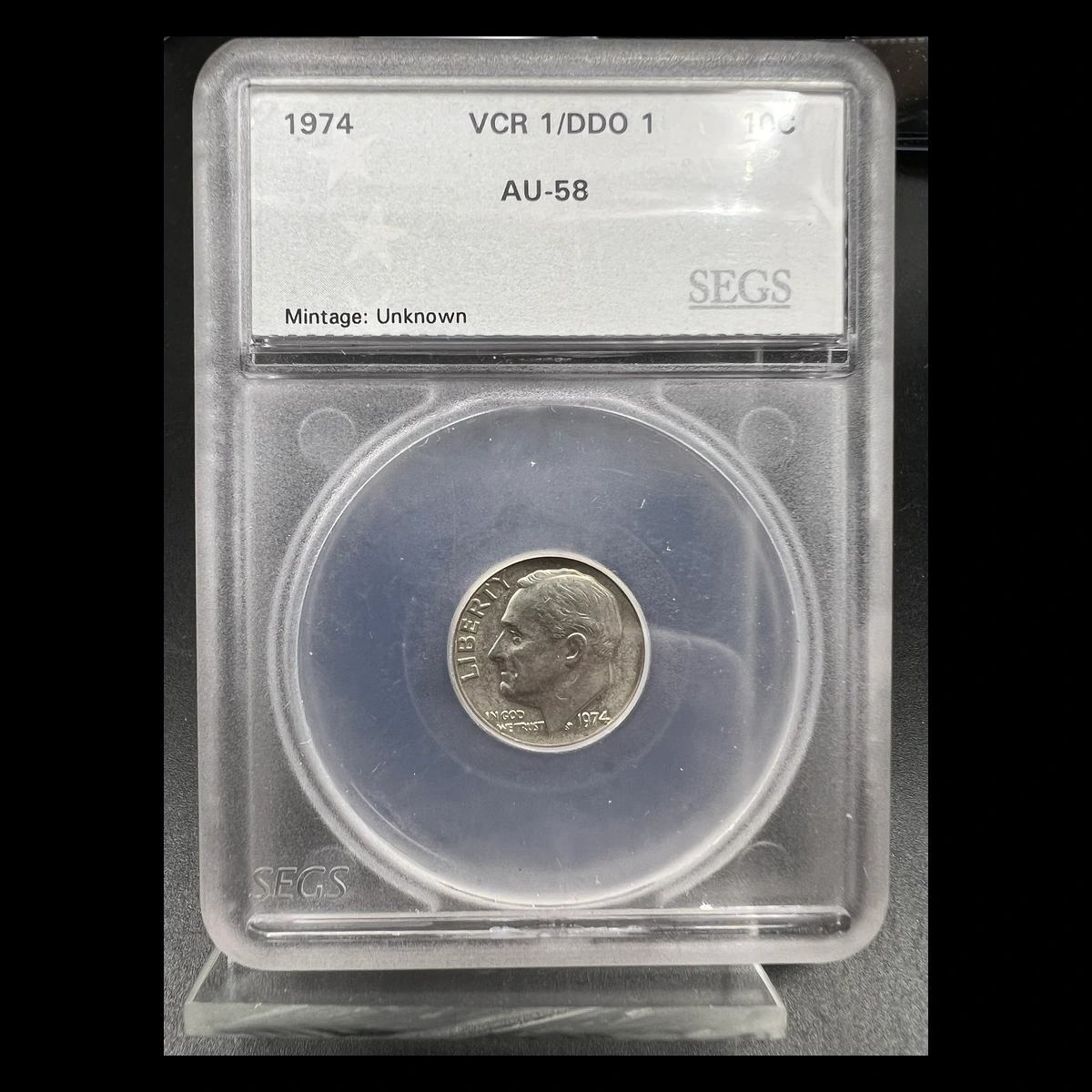
The R and T in LIBERTY are checking points in the reports of front doubling. A doubled die has extra design outlines in the tool itself before it strikes any coins.
The supplied reports do not establish one named variety for every 1974 mint. A generally thick letter is not enough to identify a particular doubled die.
How to Identify
Use a magnifier to look for a split corner or separate rounded edge on the R and T. Try light from both directions to see whether the feature stays fixed.
A lower, flat shelf often comes from movement during striking. Compare the same mint and finish before treating a normal design difference as doubling.
What It’s Worth
$15–$100 is an estimate for a modest properly identified 1974 doubled die. Strong separation and a clean surface make the feature easier to match.
3. 1974 Dime Weak Detail within a Sharper Area — Struck Through Error
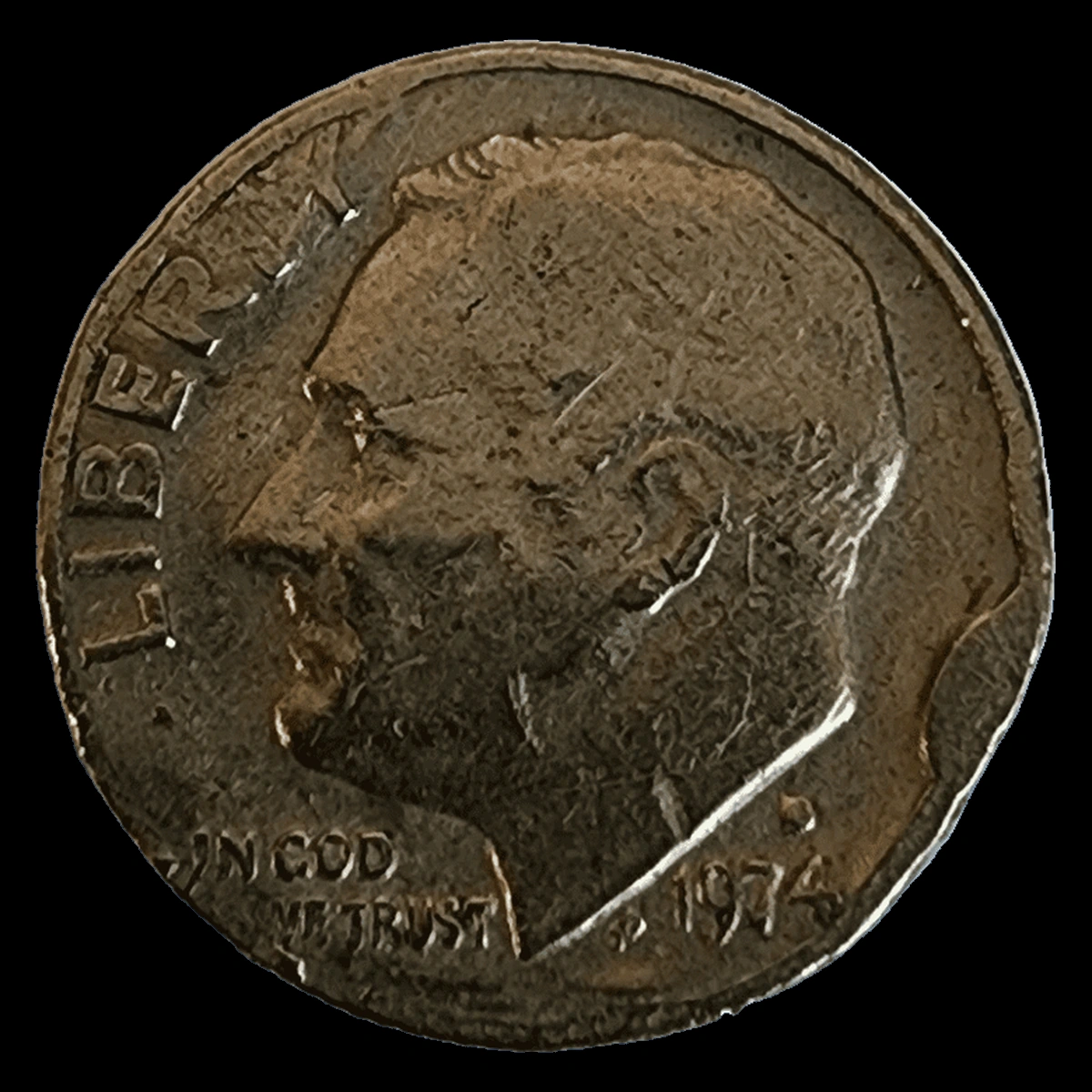
Material between the blank and the die can prevent part of the design from reaching the metal. Soft material may weaken letters, while a harder object can leave a shaped depression.
A year guide reports a 1974 struck-through coin with weak detail, but does not name the material or mint.
How to Identify
Compare the affected patch with nearby protected details and high points. Ordinary wear tends to flatten the exposed parts first, whereas a blockage can interrupt an otherwise sharp area.
Follow the boundary for scraping or a raised impact lip. Do not name the object as wire or cloth unless the impression actually supports it.
What It’s Worth
$10–$125 is an estimated range for small blocked areas through clearer impressions. A recognizable mint-made shape generally has more appeal than a slightly weak letter.
4. 1974 Dime A Smooth Hollow with Metal Still Present — Indent Error
A second blank partly covering a dime can shield it from the die and press a hollow into its surface. This indent is different from a clip because the metal remains.
A dealer catalog describes an unworn 1974 example with a 10% indent at 7:30. The text does not specify which face carries the depression.
How to Identify
Check the curved boundary where normal design stops at the covered area. A plain blank-shaped recess should not contain the backward design expected from brockage.
Inspect both faces for fresh crushing or tool pressure. The stated clock position should be matched to the actual specimen, not assigned to the front by assumption.
What It’s Worth
$15–$125 is an estimate for small genuine indents. The recorded 10% coin had an $11 minimum bid, which was a starting amount rather than a completed sale.
5. 1974 Dime A Notch in the Edge — Straight or Curved Clip Error
A blank punched across an earlier hole can have a curved gap. If the punch crosses the edge of the strip instead, the missing section can be straight.
An NGC MS66 1974 dime provides a documented straight-clip example. Curved clips are separately reported in the year guides.
How to Identify
Look at both ends of the opening for natural flow of the rim and nearby design. A weak rim opposite the gap can provide another clue, though it may be faint or absent.
Saw marks, new burrs, or letters cut sharply through can indicate later removal. Lower weight helps describe the loss but cannot prove it happened before striking.
What It’s Worth
$20–$175 covers estimated values for genuine clips. The unworn NGC MS66 straight-clipped dime sold for $41 in July 2021.
Gap size, a readable date, and original surfaces all affect the comparison.
6. 1974 Dime A Wider Outline with All the Letters — Broadstrike Error
The collar is the ring that limits a dime’s width during striking. When it fails to contain the blank, the metal can spread outward around a complete design.
The 1974 broadstrike report does not specify one mint or provide measurements for an identified specimen.
How to Identify
Trace the outer design on both faces before measuring the coin. The letters should remain on the expanded metal rather than disappearing beyond one side.
A normal 1974 dime is about 17.91 mm across and weighs 2.268 grams. Compare the wider border with those references and check for hammering or squeezed edges.
What It’s Worth
$20–$150 is the estimated range for a straightforward broadstrike. A later 1995-P example graded NGC MS66 with sharp torch bands sold for $45.
That later-year result provides general context, not a recorded 1974 sale.
7. 1974 Dime A Large Unstruck Area beside Cut-Off Design — Off-Center Strike Error
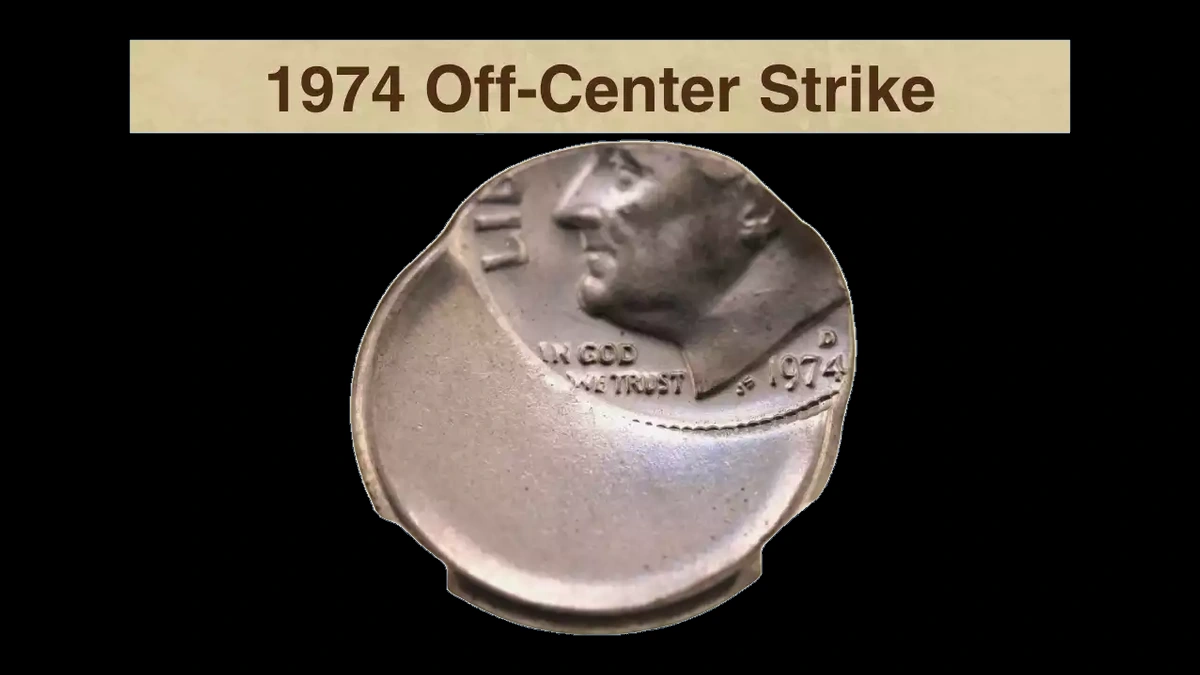
A blank positioned away from the center of the press can receive only part of the intended design. Both faces then show displacement, with bare metal on one side.
The documented 1974-D dime was struck 45% off center toward ten o’clock and graded ANACS MS60. That grade indicates an unworn coin with noticeable marks.
How to Identify
Locate the readable date and follow the design to where it leaves the blank. Check the back for the corresponding displacement.
The remaining bare area should be original unstruck metal. Grinding or cutting can remove detail later, but leaves a different surface and boundary.
What It’s Worth
$35–$300 is an estimated range for dated 1974 off-center dimes. The 45% Denver specimen sold for $45 on January 3, 2022.
A full year and attractive remaining design can matter more than a larger displacement percentage.
8. 1974 Dime The Edge Opens but Stays Attached — Clamshell Split Error
A clamshell split separates part of the blank internally while leaving a connection at one side. From the edge, it can resemble a book opened slightly.
A Stack’s Bowers group catalog includes a 1974 dime labeled Clamshell Defective Planchet, ANACS AU55 Details, Damaged. Its light wear and later damage are condition issues alongside the original blank error.
How to Identify
Follow the opening toward the point where the two sides rejoin. Do not insert a tool, squeeze it closed, or pull it farther apart.
An original internal separation differs from fresh pry marks or a bent surface flap. If all the metal remains attached, the weight may still be close to normal.
What It’s Worth
$50–$350 is an estimated range for comparable clad-dime splits. A clean, clearly attached structure generally offers a stronger example than a damaged shallow opening.
The recorded 1974 coin belonged to a group, so a group total would not be its individual price.
9. 1974 Dime Brown Color with Almost Normal Weight — Sintered Surface Error
Heating or deposits during blank preparation can produce an unusual dark or coppery surface. A 1974-D dime was labeled Sintered Blank and graded ANACS MS64 Red and Brown.
Its recorded weight of 2.30 grams is close to the normal clad standard. That supports a different explanation from a missing layer or bronze cent blank.
How to Identify
Examine the edge for the ordinary pale outer layers around the copper center. Inspect the faces for the nature of the surface change without polishing them.
Soil, chemicals, and ordinary staining can also turn a dime brown. Color and near-normal weight point toward checking the surface; they do not establish a mint preparation error by themselves.
What It’s Worth
$40–$200 is an estimated range for identified examples. The recorded MS64 Red and Brown coin sold for $63 in April 2020.
The premium concerns the diagnosed preparation error, not every brown dime.
10. 1974 Dime Exposed Copper where an Outer Layer Is Missing — Clad Loss Error
Loss of a pale copper-nickel outer layer exposes the copper center. A 1974-D NGC MS63 example has part of its reverse layer missing and weighs 2.1 grams.
Separate records describe a worn Philadelphia dime missing its front layer before striking and an owner-reported Denver front-layer piece with an older ANACS photo certificate.
How to Identify
On a partial loss, follow the boundary between the pale layer and exposed copper. Struck details should meet that boundary naturally.
For a wholly bare face, inspect the design struck into the copper and the surviving edge layers. Scraping and chemical removal after minting need to be ruled out.
The 2.1-gram reading belongs only to the partial reverse-loss coin. The front-loss pieces require their own measurements.
What It’s Worth
$75–$400 is an estimated range across identified partial and complete outer-layer losses. The reverse-loss Denver dime had a $195 asking price at Northeast Numismatics.
That figure was an offer to sell, not a completed auction result.
11. 1974 Dime A Pale, Extremely Light Dime — Missing Copper Core Error
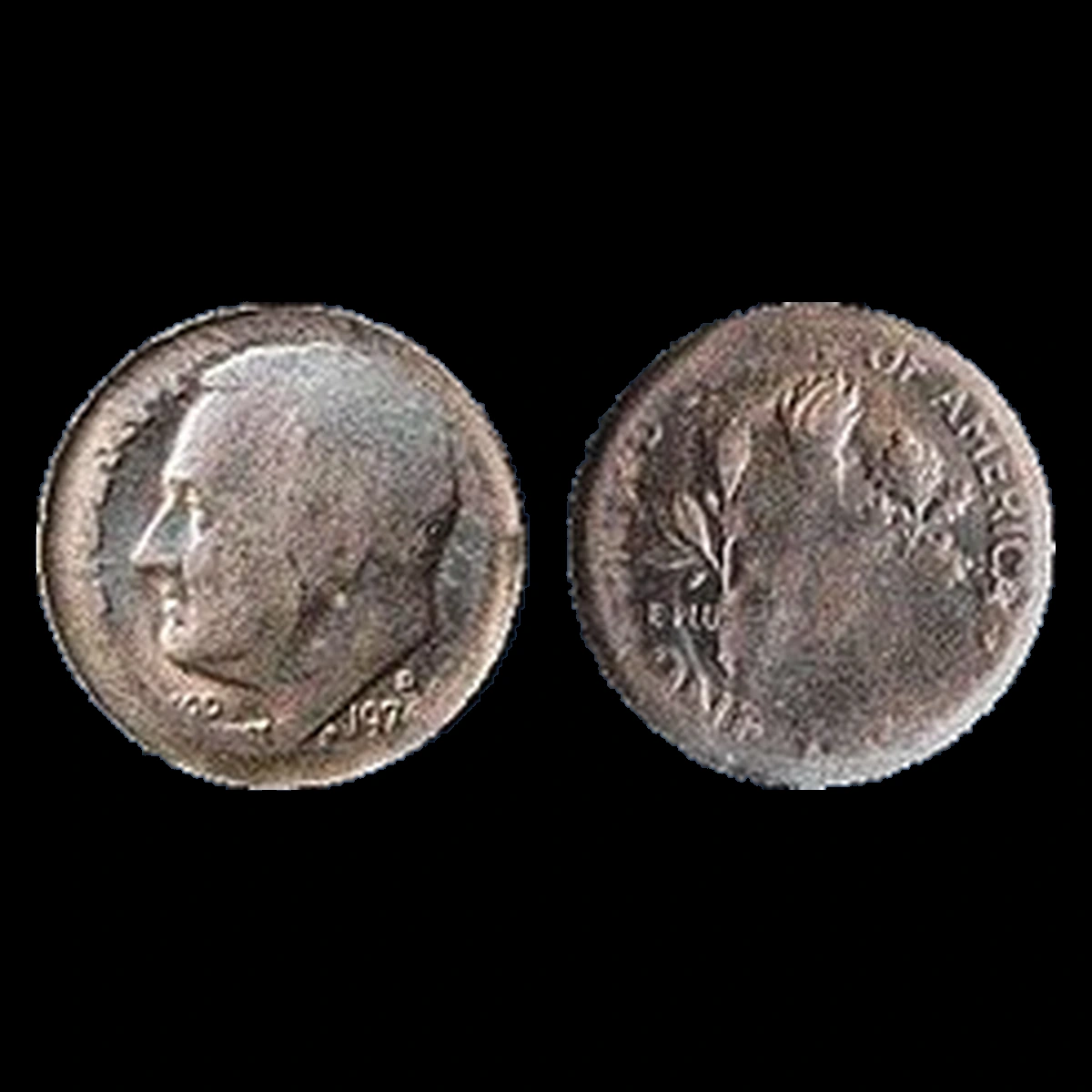
The coreless 1974-D dime has a single thin copper-nickel blank instead of the normal layered construction. It weighs 0.9 gram and remains roughly normal in diameter.
Error-Ref’s example also shows rough parallel lines in unstruck front areas. The reference suggests strip-cleaning brushes as their cause, but the unusual construction is the main identifying feature.
How to Identify
Check the very low weight together with a nearly full-size outline and pale metal through the thin edge. The ordinary copper center should be absent.
The recorded 0.9 gram is more than twice the weight of one normal outer layer. This is not simply a loose single clad layer, and professional composition testing can help confirm the structure.
What It’s Worth
$300–$1,500 is an estimate for an identified coreless dime of this kind. It is a comparison range, not a recorded sale of the illustrated specimen.
12. 1974 Dime Backward Details Pressed into One Area — Partial Brockage Error
When a struck coin comes between a die and a blank, its design can transfer as a sunken mirror image. That impression is called a brockage.
A damaged 1974-D example was cataloged as ANACS MS60 Details without the affected face specified. A separate Philadelphia dime graded PCGS MS65 has a 40% early brockage, with a clearer transfer before repeated strikes blurred the coin acting as the stamp.
How to Identify
Find a recognizable backward letter and confirm that it is below the surface. A smooth hollow without copied design is an indent rather than proof of brockage.
Check both faces and the edge for later squeezing, which can also transfer reversed details. The impression must fit the original strike.
What It’s Worth
$30–$600 is an estimated range across damaged partial impressions and clearer unworn examples. The damaged Denver coin sold for $33 in August 2021.
That sale belongs to the Denver piece, not the separate PCGS MS65 Philadelphia brockage.
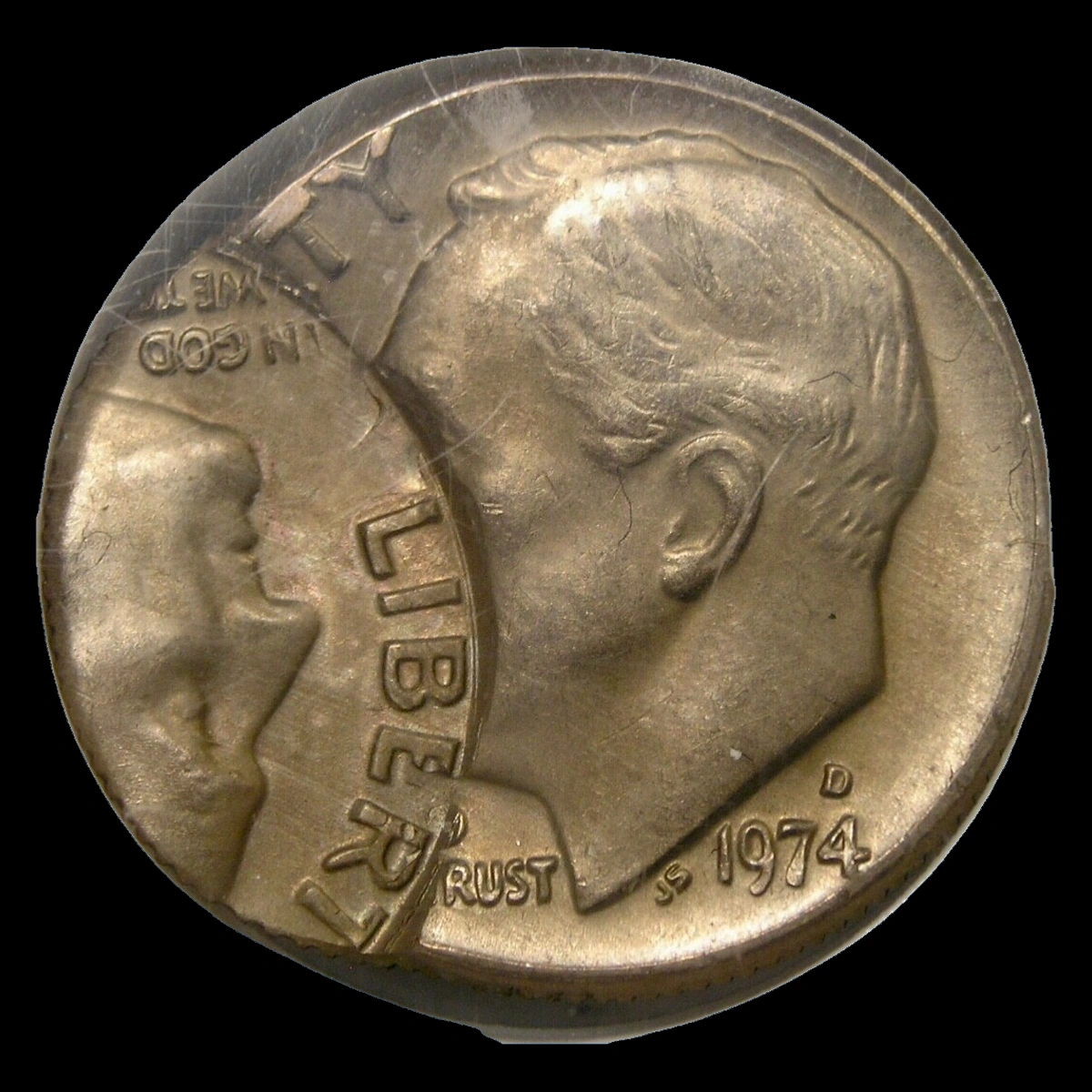
13. 1974 Dime Two Dates in Different Positions — Double Strike Error
A second blow after the coin moves can leave overlapping sets of raised design. One PCGS MS62 1974-D dime has its second strike 70% off center toward eight o’clock, with both dates and D mintmarks complete.
Dies struck both faces during that second blow. A cleaned Philadelphia coin and an NGC Genuine Denver coin are separate double-strike records.
How to Identify
Trace each date and mintmark into its own portrait details. Turn the coin over to find the corresponding second reverse impression.
The 70% position belongs to the PCGS MS62 example only. Do not apply its strike map to another coin merely because both were struck twice.
What It’s Worth
$75–$650 is an estimated range for genuine 1974 double strikes. PCGS records a $375 eBay result in June 2021 for the NGC Genuine Denver coin.
The cleaned Philadelphia example sold for $84 in June 2026, while the PCGS MS62 70% second-strike piece had a $185 dealer asking price. These figures describe three different coins and sale situations.
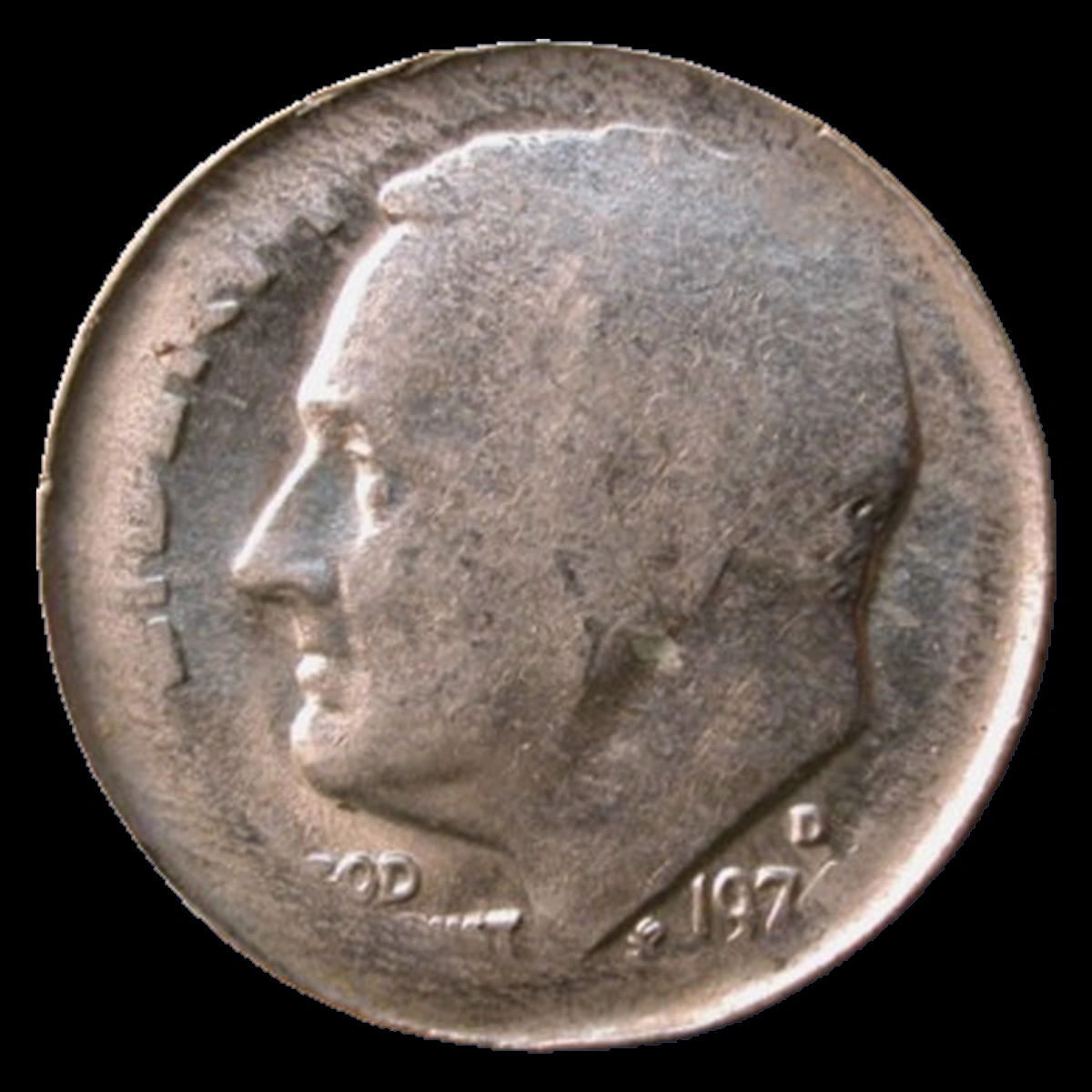
14. 1974 Dime Dime Details on Another Denomination’s Blank — Wrong Planchet Error
A true wrong-planchet dime carries Roosevelt and the torch on metal intended for a different denomination. A Lincoln cent struck on a dime blank is the opposite error and does not establish this category.
The supplied 1974 reports do not identify a specific wrong-denomination Roosevelt specimen. Keep these candidates separate from the documented coreless dime and missing-layer pieces.
How to Identify
Read the design first, then compare the weight, size, and composition. A 1974 bronze cent blank starts at 3.11 grams and 19.05 mm, making it heavier and larger than a normal dime blank.
The proposed blank must explain all those features together. Added color or an unusual weight alone cannot identify another denomination’s metal.
What It’s Worth
$500–$2,000 is an estimated range if examination confirms a recognizable dime strike on a bronze-cent-type blank. It is conditional on that identity and is not a realized price for an established 1974 specimen.
Conclusion
Begin a 1974 dime check with what the coin actually shows: an odd letter, a missing piece, a changed metal surface, or a second design. The correct name should explain the edge and measurements as well as the face.
Especially keep the heavy bronze-blank candidate, light coreless dime, and ordinary-weight brown surface separate. Their prices come from different features, even when photographs make their colors look similar.