Rare 1963 Penny Errors (List & Pictures)
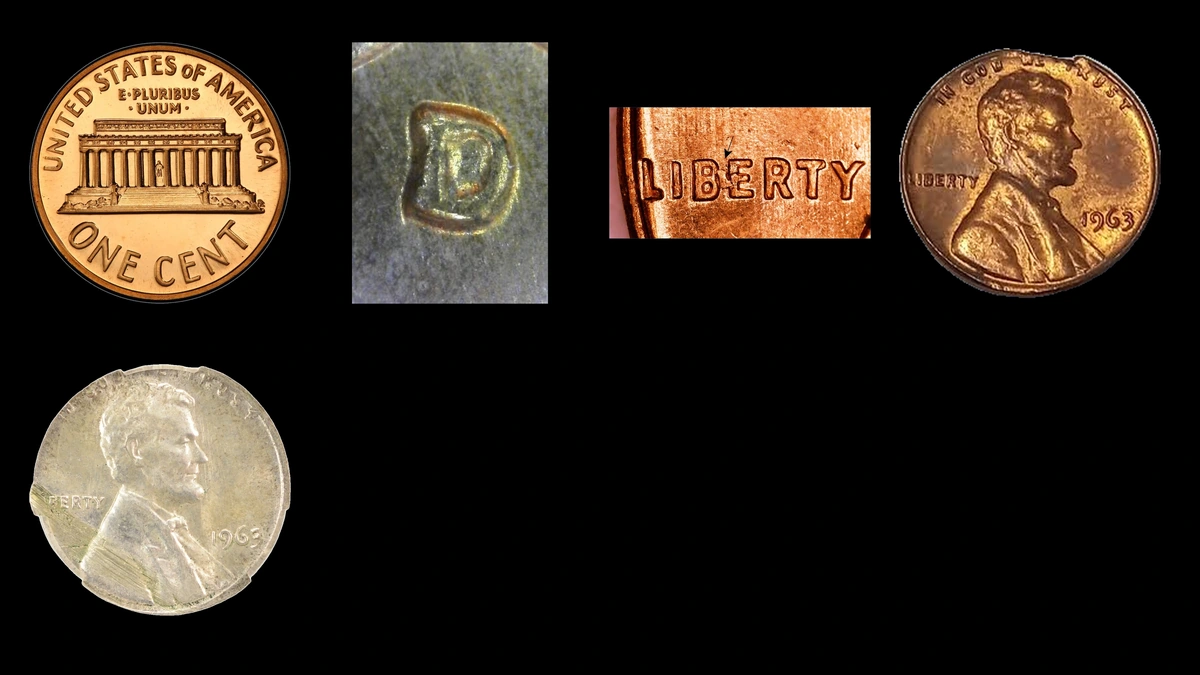
A staple struck into a cent’s reverse accounts for the highest supplied sale among these 1963 penny errors: $3,416 in March 2026. Estimated values across the group range from $2 to $4,000, with ordinary-looking small die defects at one end and clearly retained foreign material at the other.
Use the date, lettering, surface interruptions, and outline to decide which kind of evidence your coin needs.
| Inspection area | Feature to investigate | Estimated range |
|---|---|---|
| Date and lettering | Doubled die, repunched D, or BIE chip | $2–$2,000 |
| Faces | Struck-through object or original hole | $20–$4,000 |
| Outline | Clip or off-center design | $20–$300 |
| Thickness and metal | Split blank or silver dime blank | $50–$2,500 |
The normal copper-alloy cent weighs 3.11 grams, has a diameter near 19.05 millimeters, and carries a plain edge. Weight and thickness checks are most useful when investigating missing metal, a thin blank, or an unexpected composition.
Examine small details with a magnifier and light from several directions. Keep attached objects and original surfaces intact, and do not remove a certified coin from its holder to take measurements.
1. 1963 Penny An extra point in the 3 or repeated lettering: Doubled Die Error
The Denver FS-101 variety can show an extra point within the date’s 3, with an additional trace near the lower curve on earlier examples. Another reported Denver variety affects Lincoln’s eye and the T in TRUST instead.
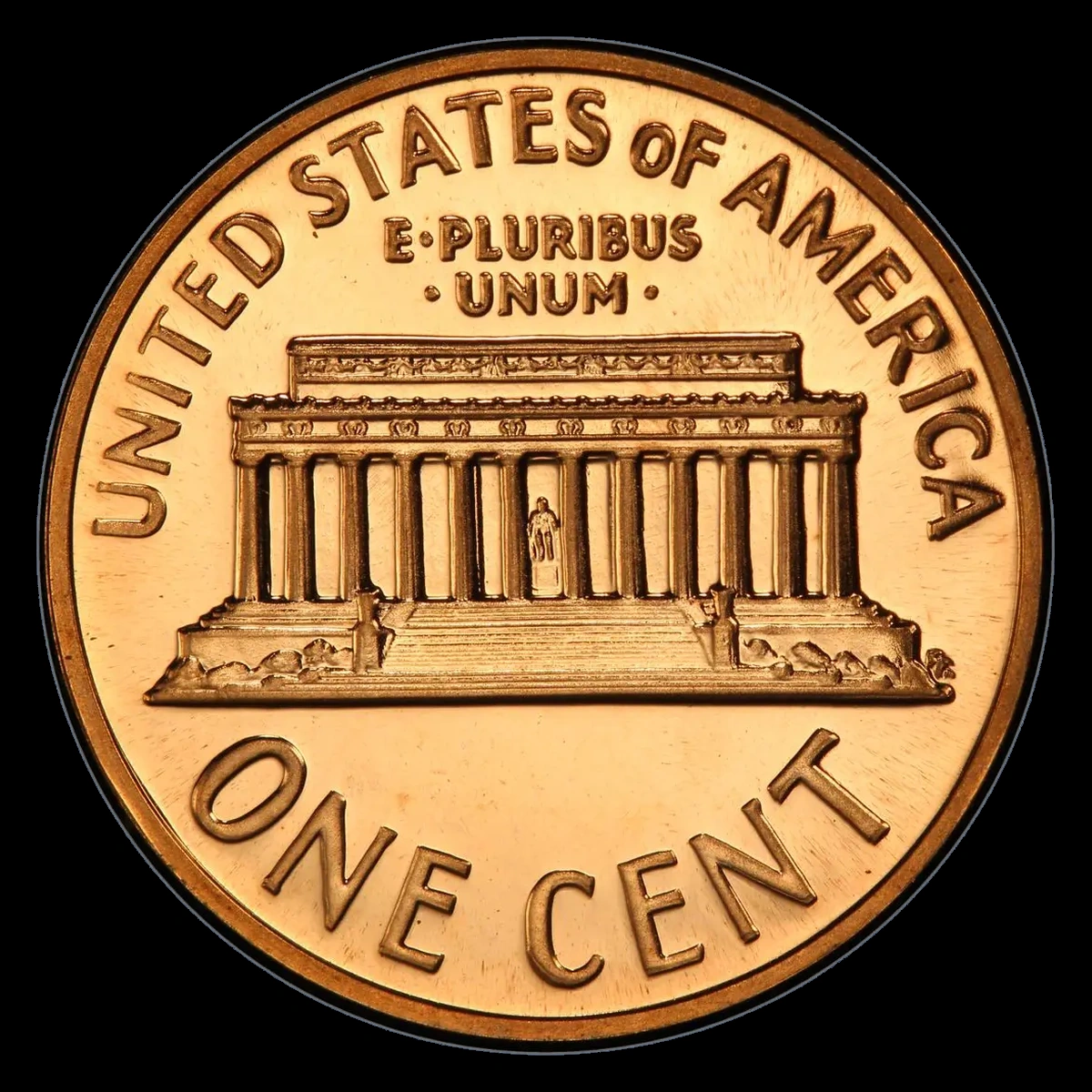
These features originated on the die, the tool that stamped the coins. Philadelphia reports include front-side varieties and a separate Proof reverse variety affecting lettering and the small FG initials.
How to Identify
Establish the mint and whether the coin is a Proof before selecting a variety reference. Philadelphia circulation cents and Philadelphia Proofs both lack a mintmark, so that blank space cannot distinguish them.
Compare the Denver FS-101 candidate’s 3 with the correct diagnostic, rather than searching for any thick-looking letter. On a Proof FS-801 reverse, match the doubled back lettering and FG instead.
A Proof is specially made for collectors, and bright reflections can make its details deceptive in photographs. Flat ledges caused by strike movement also differ from the specific doubled outlines required for an attribution.
What It’s Worth
Minor confirmed obverse varieties are estimated at $5–$150, while the Proof FS-801 reverse variety is estimated at $100–$2,000. Grade and the particular variety must travel together when comparing prices.
The PCGS Proof FS-801 record includes $1,260 for a PR67 Red example in May 2023. A separate Denver FS-101 record gives $40 for an AU55 Brown example in July 2011, a lightly circulated coin of a different variety.
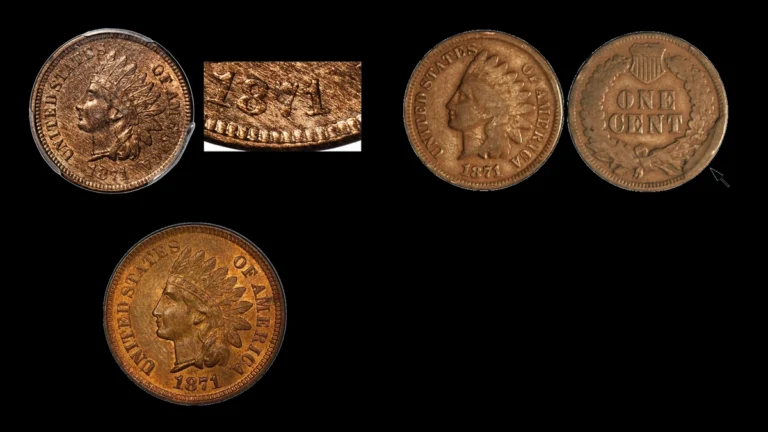
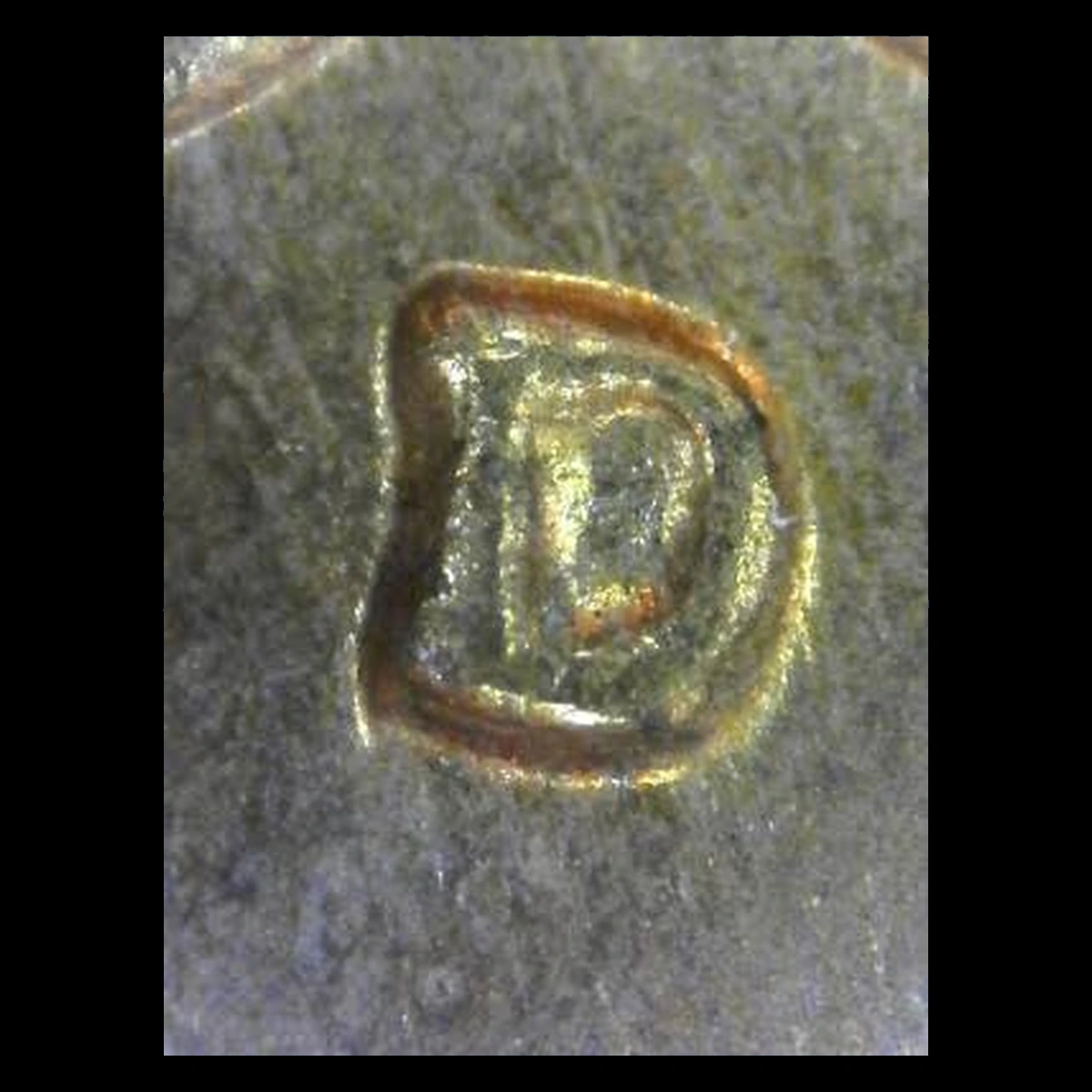
2. 1963 Penny A second stroke beside the D: Repunched Mintmark Error
During this period, a worker punched the mintmark into the die by hand. Repeating that punch in a slightly changed position could leave parts of two D outlines on later coins.
Reported 1963-D varieties include a leftward placement and an upward placement. The extra stroke’s actual position matters more than a catalog label attached to a seller’s photograph.
How to Identify
Find the D below the date and follow its complete outline. A recognizable second curve or upright should correspond to another placement of that same letter.
Check the left side for the left-shifted variety and the upper outline for the upward variety, using separate references for other varieties. A chip, worn die, or flat shelf beside the D is not enough.
A Philadelphia cent with no mintmark cannot have a repunched D. Original Mint Set packaging also does not establish a variety without the matching feature.
What It’s Worth
The estimated range is $3–$150 for a confirmed 1963-D repunched mintmark. Strong separation and good surfaces usually make a more attractive example than a barely visible remnant.
This range covers several varieties; the supplied material does not assign one completed auction price to every reported catalog number.
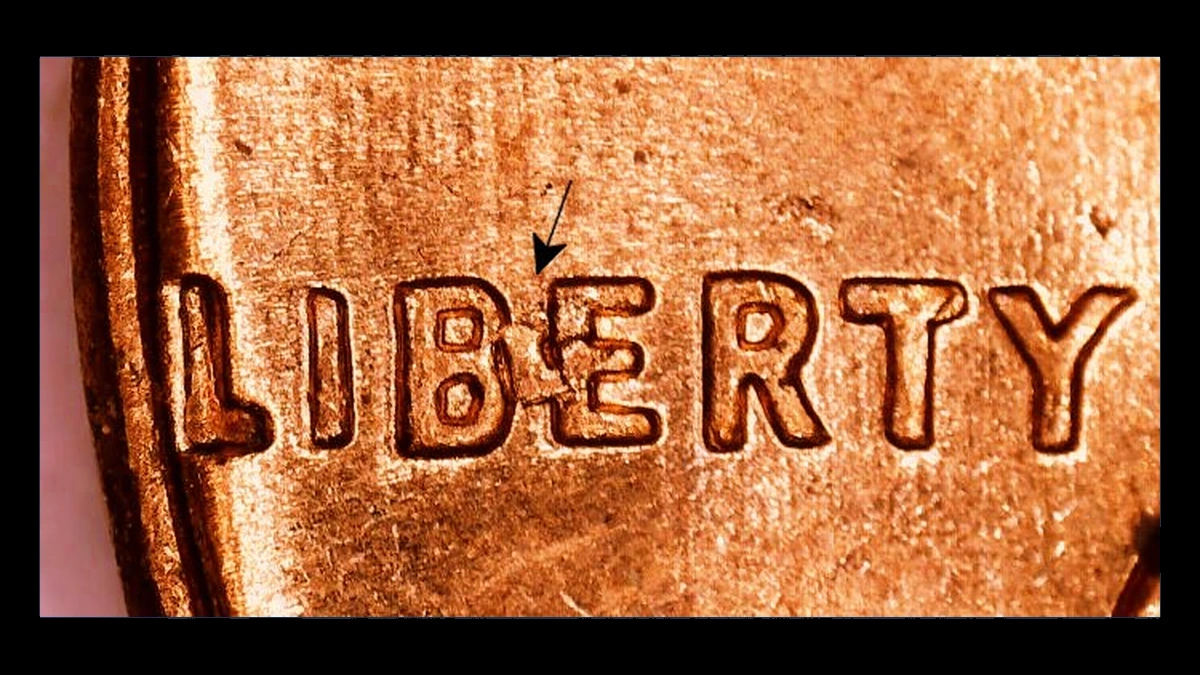
3. 1963 Penny A small raised bar in LIBERTY: BIE Die Chip Error
The gap between B and E can contain a raised sliver that resembles an I. Collectors call that appearance BIE, though no extra letter was deliberately added to the design.
A small piece of the die broke away, leaving a cavity that filled with coin metal during striking. Unlike a large rim-connected cud, this small chip lies within the lettering.
How to Identify
Tilt the coin to establish that the sliver is raised and belongs to the coin’s metal. Check whether scraping nearby has pushed metal into a misleading ridge.
Dirt can also imitate an extra letter. Do not dig between B and E to investigate it; the precise location and naturally formed raised shape are the useful clues.
What It’s Worth
A genuine 1963 BIE chip is estimated at $2–$50. A clear upright shape on a well-preserved cent is generally more appealing than an indistinct speck.
The range reflects minor Lincoln cent chips rather than a recorded sale of the individual reported 1963 example.
4. 1963 Penny A lodged staple or interrupted letter: Struck Through Error
A foreign object between the blank and a die can block the design and become pressed into the coin. If it stays there, collectors describe a retained struck-through error.
The Philadelphia 1963 example retains a small staple on its reverse. A different Denver cent has an interruption at the N in ONE and also carries the FS-101 doubled 3 on the front.
How to Identify
For a retained object, examine how the struck metal surrounds it without moving it. Glue, fresh punctures, or scratches may indicate something attached after minting.
For the Denver example, inspect the reverse interruption independently of the doubled date. One came from an obstruction during the strike; the other was already present on the die.
A weak N from wear does not automatically establish a struck-through error. An attached object’s weight also means that a combined weight cannot be treated as the blank’s weight alone.
What It’s Worth
Small confirmed impressions without retained material are estimated at $20–$150; an attractive retained staple at $1,000–$4,000. The retained object makes the latter a distinct collecting proposition.
The Philadelphia retained-staple cent sold for $3,416 at Heritage in March 2026. NGC graded it MS62 Red and Brown, meaning unworn with mixed original copper coloration and noticeable imperfections.
That sale does not price the Denver combination coin. Its two identified features should be assessed together rather than assigning the staple’s premium to a missing part of N.
5. 1963 Penny An opening through the coin: Defective Planchet Error
A hole can originate in defective blank metal before striking. One reported 1963 cent, certified PCGS MS64 Red and Brown, is described as having a blow-hole defect.
The name alone cannot distinguish it from a drilled coin. The evidence lies where the struck surfaces meet the opening.
How to Identify
View the hole from both faces and inspect its inner wall without inserting a tool. The adjacent metal and design should show how striking acted around an existing defect.
Circular cutting grooves, sharp burrs, or a punched ridge suggest a later alteration. One photograph can hide these signs on the opposite face.
Reduced weight is consistent with missing material but does not date the hole. A drilled cent can also weigh less than normal.
What It’s Worth
A confirmed original blank defect of this type is estimated at $50–$400. Clear mint-made boundaries and good preservation are central to the comparison.
The supplied MS64 example has no verified realized price in the record used here. A hole created after the coin was made does not qualify for this error range.
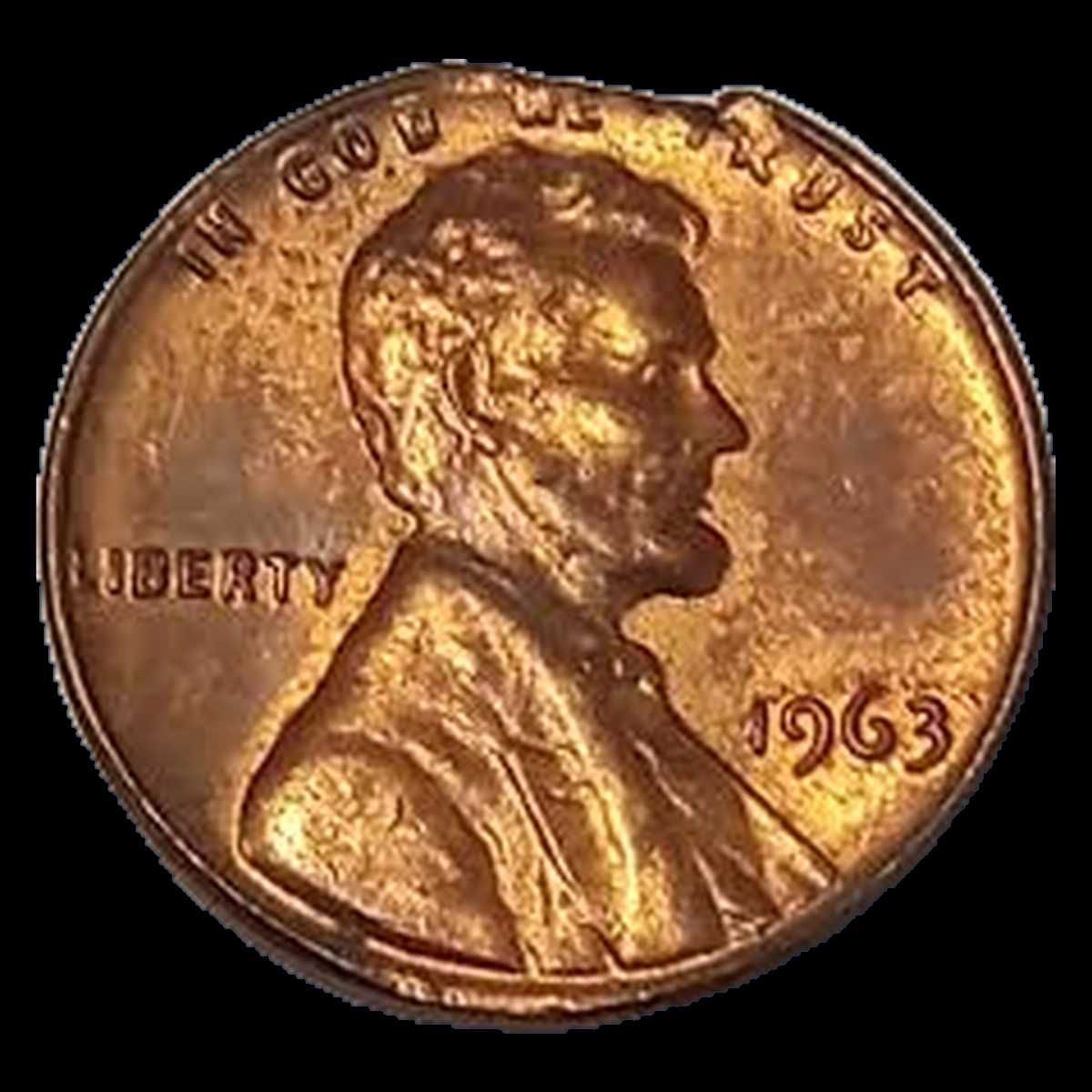
6. 1963 Penny A rough or straight section missing from the edge: Clipped Planchet Error
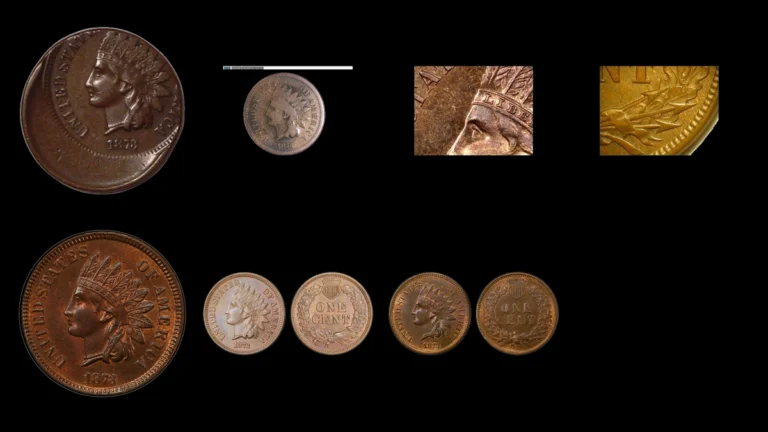
Some 1963 cents were struck on incomplete blanks with rough boundaries, commonly called ragged clips. Reported examples have approximately 4% or 10% missing.
A separate coin combines an 18% straight clip with a 15% off-center strike. Its missing metal and its misplaced design are two different features.
How to Identify
Examine the surviving rim and design as they reach the missing section. Their relationship should be consistent with striking an already incomplete blank.
Fresh cut faces, repeated file marks, and burrs can expose later removal of metal. Corrosion also produces rough boundaries, so irregularity itself does not establish a ragged clip.
On the combination coin, assess the design’s displacement separately. The percentage of metal absent is not the off-center percentage.
What It’s Worth
Clear ragged or straight clips are estimated at $20–$150; convincing clips combined with off-center striking at $75–$300. The combination range applies only when both features are supported.
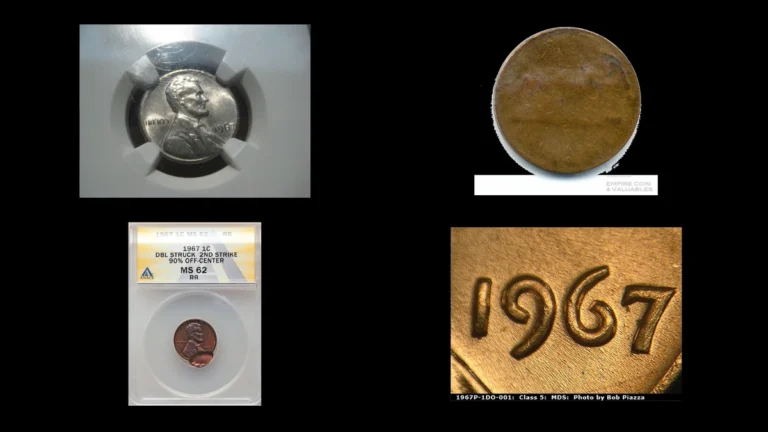
A 1967 cent with a 13% straight clip, graded PCGS MS63 Red, sold for $39 in July 2021. It supplies a nearby-year straight-clip comparison, not a sale price for the 1963 ragged examples.
7. 1963 Penny Blank metal beside an incomplete design: Off-Center Strike Error
If the blank sits partly outside the striking position, some of the die’s design misses the metal. An unstruck crescent and missing outer details can remain on the finished coin.
Both Philadelphia and Denver 1963 examples are reported. A clip can occur on the same coin, but is not required for an off-center strike.
How to Identify
Find enough surviving date to identify 1963 and check for a D where the mintmark area remains. A seller’s label cannot replace a readable year or another sound attribution.
Follow the design on both faces to where it extends beyond the blank. An enlarged coin with all its design present needs a different explanation from a true off-center strike.
If there is also a notch, inspect that edge as a separate possible clip. Missing metal alone does not show that the dies struck out of position.
What It’s Worth
Readable-date 1963 off-center cents are estimated at $20–$250. Clear displacement and undamaged surfaces are useful qualities, but a dramatic shift need not command a large price.
A 1968-D cent struck 60% off center, graded NGC MS62 Red and Brown, sold for $47 in July 2021. That comparison concerns a different date and does not establish the value of a combined 1963 clip error.
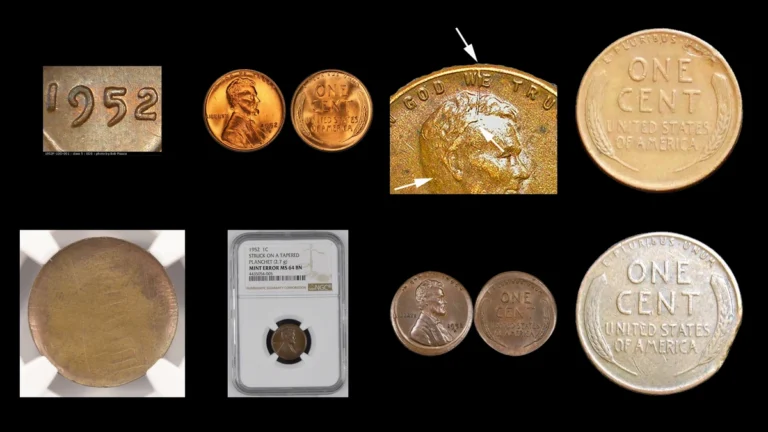
8. 1963 Penny A thin cent with design on the exposed layer: Split Before Strike Error
A planchet is the metal blank prepared for striking. If it separates through its thickness first, one thin layer may still receive the coin’s design.
The reported Philadelphia 1963 split-before-strike cent weighs 1.6 grams. Its reduced thickness can help explain weakly filled detail, but weak detail alone does not identify a split.
How to Identify
Look for original design impressed into the surface exposed by separation. This helps distinguish a layer struck after splitting from one that peeled away after the coin was already finished.
Check for grinding or filing that could have deliberately removed metal. A thin blank may spread differently under pressure, so diameter alone cannot settle its origin.
Use the low weight together with surface evidence and thickness. Normal wear or a poorly struck ordinary cent does not explain all those features in the same way.
What It’s Worth
Comparable genuine examples are estimated at $50–$200. A readable date and intact evidence of the exposed layer make the error easier to evaluate.
A different-year 1971-D split-before-strike cent, also weighing 1.6 grams, sold for $59 in June 2023. Its matching weight is useful context, but it is not a sale of the Philadelphia 1963 coin.
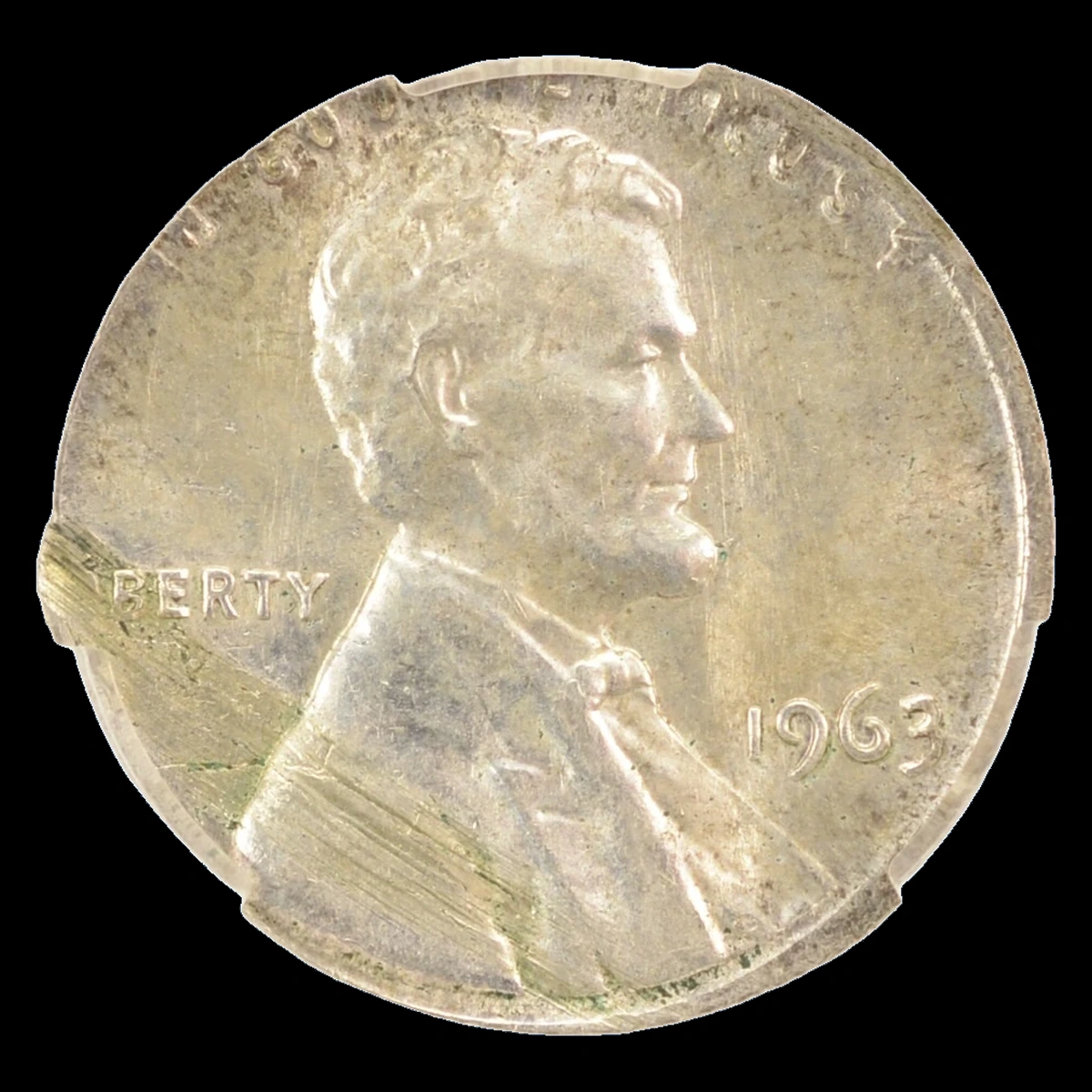
9. 1963 Penny A smaller silver-colored cent: Dime Planchet Error
The cent dies can strike a blank intended for a dime, crowding the design onto less metal. In 1963 the normal United States dime blank was 90% silver.
A recorded Denver example loses the top of IN GOD WE TRUST and has a weak L in LIBERTY. Philadelphia silver-blank examples are reported separately.
How to Identify
A period silver dime blank begins near 2.50 grams and 17.91 millimeters across. Striking can alter its final outline, so evaluate dimensions alongside composition and the cent design.
Inspect for an added coating rather than trusting white color. Have the metal identified without cutting, scratching, or applying acid to the coin.
A description calling a 1963 example clad requires independent authentication: regular United States clad dimes began in 1965. That later layered metal should not be assumed merely because a listing uses the word.
What It’s Worth
Genuine 1963 silver dime-planchet cents are estimated at $500–$2,500. A certified 1963-D example graded PCGS MS62 sold for $990 in May 2022.
The result applies to an identified silver blank, not any silver-colored penny. For an unconfirmed clad claim, this range offers only general wrong-planchet context until the composition and date are authenticated.
Conclusion
For 1963 cents, the best clue may be a very small part of the design or the way metal surrounds a larger defect. Establish exactly what is doubled, missing, embedded, or displaced before choosing a value comparison.
Separate Proofs from circulation coins, keep clip percentages distinct from off-center percentages, and treat unexpected metal claims as identification questions. Preserve the original evidence so those questions remain answerable.