Rare 1967 Penny Errors (List & Pictures)
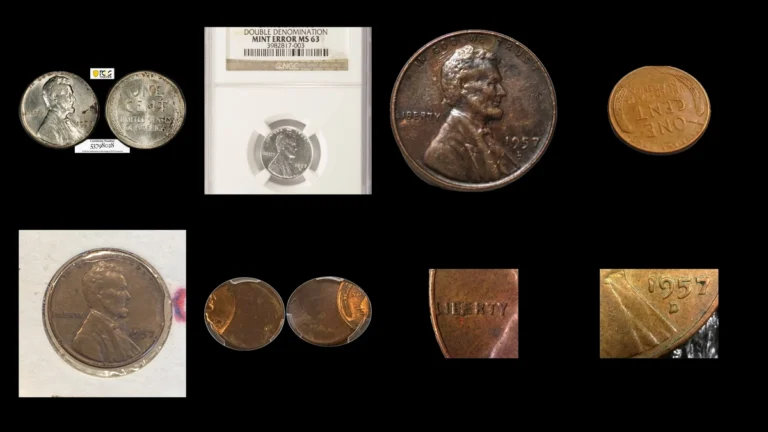
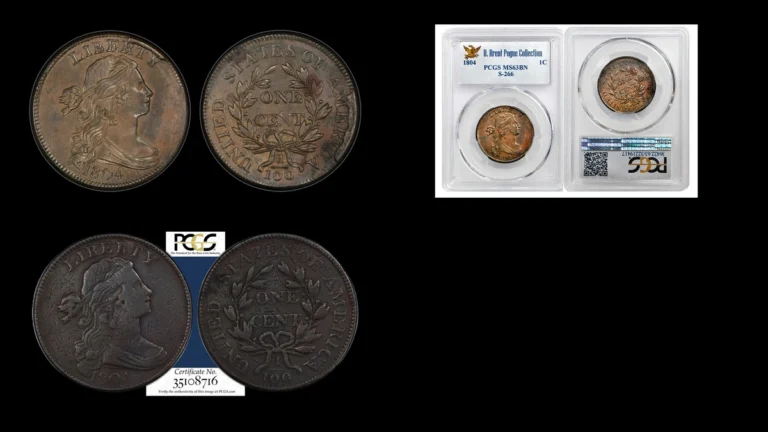
A missing mintmark is normal on a 1967 penny. More useful clues include an incomplete edge, a second design impression, or metal that belongs to a dime blank.
The eight groups of 1967 penny errors have estimated values of $2–$5,000. A saddle-shaped triple strike brought $1,200 in July 2021; start with shape and metal before examining smaller raised details.
| What differs? | Category | Estimated value |
|---|---|---|
| Pale layered metal and crowded design | Dime-disc error | $300–$5,000 by type |
| Metal missing from the outline | Clipped disc | $15–$150 |
| Plain metal beside incomplete designs | Off-center strike | $20–$250 |
| Smooth overlap-shaped hollow | Indent | $20–$200 |
| Wall rises around the design | Die cap | $150–$750 |
| Extra impressions or a raised bridge | Repeated or saddle strike | $60–$1,500 |
| Raised bar, ridge, or rim patch | Chip, crack, or cud | $2–$1,200 |
| Extra rounded design contour | Doubled die | $5–$100 |
The ordinary copper-alloy cent weighs 3.11 g and measures 19.05 mm across a plain edge. Compare accessible coins with a scale and calipers, and use a 10× magnifier without disturbing unusual surfaces.
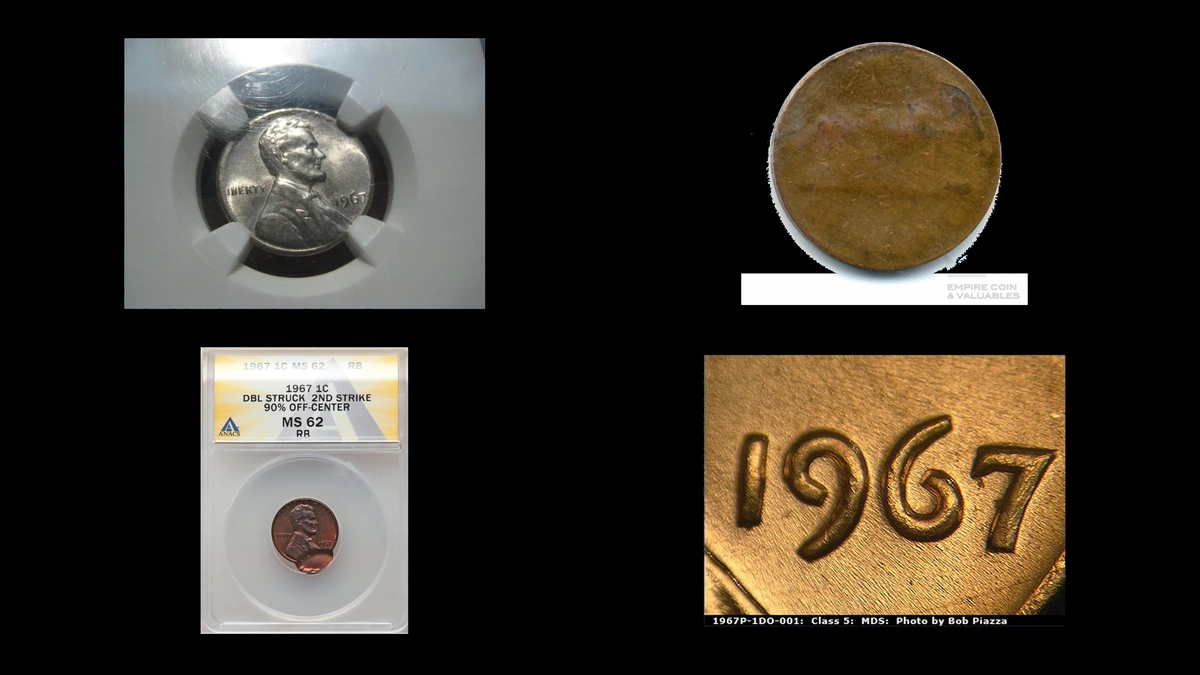
1. 1967 Penny The Metal Fits a Dime: 1967 Dime-Disc Error
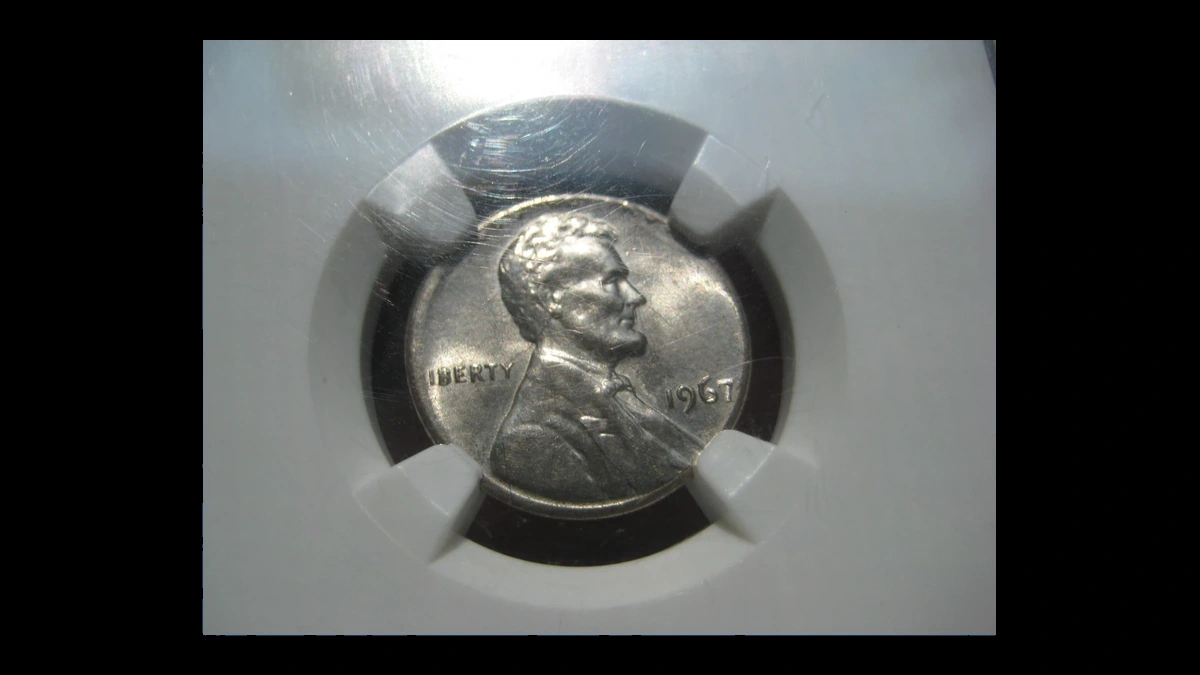
A smaller pale disc can leave little room around the cent lettering. Dime metal has outer layers over a copper center, unlike the ordinary copper-alloy penny.
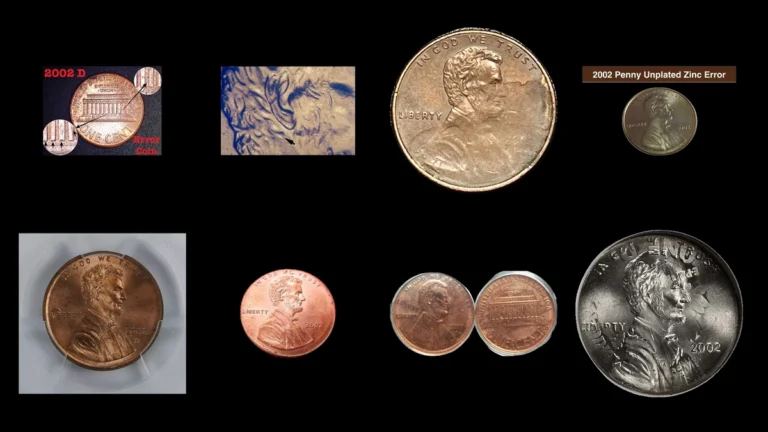
One ordinary 1967 example has a split near UNITED exposing that copper center. A separate Special Mint Set, or SMS, example received multiple strikes on a dime disc, with faint earlier images nearly half a turn from the final design.
How to Identify
Compare a dime disc’s approximate 2.27 g starting weight and 17.91 mm diameter with the cent standard. The cent strike may expand the smaller disc, so its finished width can differ.
Inspect layered metal and crowded outer design without scraping or enlarging a split. An unused dime disc does not need the grooves of a finished dime.
SMS production refers to specially made collector-set coins and requires separate evidence. Shine alone does not establish the finish or the rotated multiple-strike combination.
What It’s Worth
Ordinary dime-disc cents have an estimated $300–$1,500 range, while the rarer SMS multiple-strike combination is estimated at $2,000–$5,000.
A 1966 dime-disc cent in PCGS MS66 brought $1,020 in July 2021. The 1967 SMS offering ended unsold in May 2008, so that listing does not provide a realized sale for the higher range.
2. 1967 Penny A Straight or Curved Missing Edge: 1967 Clipped Discs Error
A punch crossing the edge of the metal strip can create a straight-sided blank. Overlapping an earlier punched hole can instead leave a curved opening.
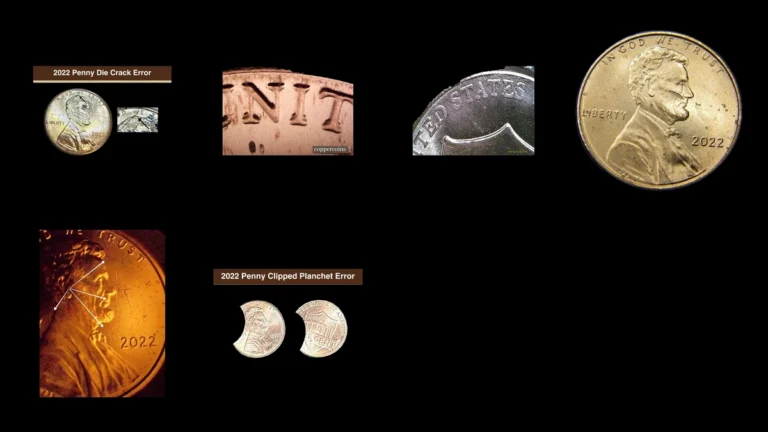
Recorded 1967 examples include a thirteen-percent straight clip and a separate clip of about seven percent. Their shapes began before the remaining metal received its design.
How to Identify
Inspect the missing boundary for natural metal flow and nearby detail formed around the opening. Saw teeth, fresh filing, and a sharp burr can indicate a cut made later.
A weak opposite rim can provide supporting evidence, but its strength varies. Measure intact spans rather than using a line across the gap as the original diameter.
What It’s Worth
Comparable clipped cents have an estimated $15–$150 range. Clear original boundaries and attractive surfaces help support stronger comparisons.
The thirteen-percent straight clip in PCGS MS63 Red brought $39 in July 2021. The seven-percent example sold in a two-coin lot whose total cannot establish its individual price.
3. 1967 Penny A Blank Crescent beyond the Picture: 1967 Off-Center Strike Error
When a blank is displaced between the dies, part remains untouched while some intended design misses the metal. Lincoln and the Memorial should show compatible effects on their respective faces.
A broad border alone does not establish this error. If the entire design survives within expanded metal, broadstriking may provide the explanation instead.
How to Identify
Read the year before judging the size of the plain crescent. A large shift may remove the very detail needed to identify a 1967 cent.
Follow the struck-to-blank boundary and check for grinding lines or a flattened erased area. Original unstruck metal should fit corresponding missing design on both sides.
What It’s Worth
Readable-date examples have an estimated $20–$250 range. Shape, date clarity, and surfaces can matter as much as the percentage.
A 1968-D cent sixty percent off center in NGC MS62 Red and Brown sold for $47 in July 2021. That nearby-year result does not price a particular 1967 specimen.
4. 1967 Penny A Smooth Hollow Replaces Front Detail: 1967 Indent Error
An unstruck disc overlapping a cent can block the die and press a broad hollow into the lower coin. The resulting impression is called an indent.
A documented front-indent example was graded NGC MS65 Brown. An ordinary indent lacks a clear backward design; a transferred mirror picture would raise a brockage question instead.
How to Identify
Examine the hollow’s curved boundary and metal movement under low light. Compare the opposite face for damage from a vise or later impact.
Scrapes and crushed surrounding detail can reveal a dent made after striking. Because an indent moves metal rather than removes it, substantial unexplained weight loss needs another explanation.
What It’s Worth
A confirmed example has an estimated $20–$200 range. The hollow’s clarity, remaining design, and condition determine an appropriate comparison.
The MS65 Brown specimen appeared with a different-year cent in a two-coin lot. Neither the total nor an arbitrary half of it is a documented price for the 1967 indent.
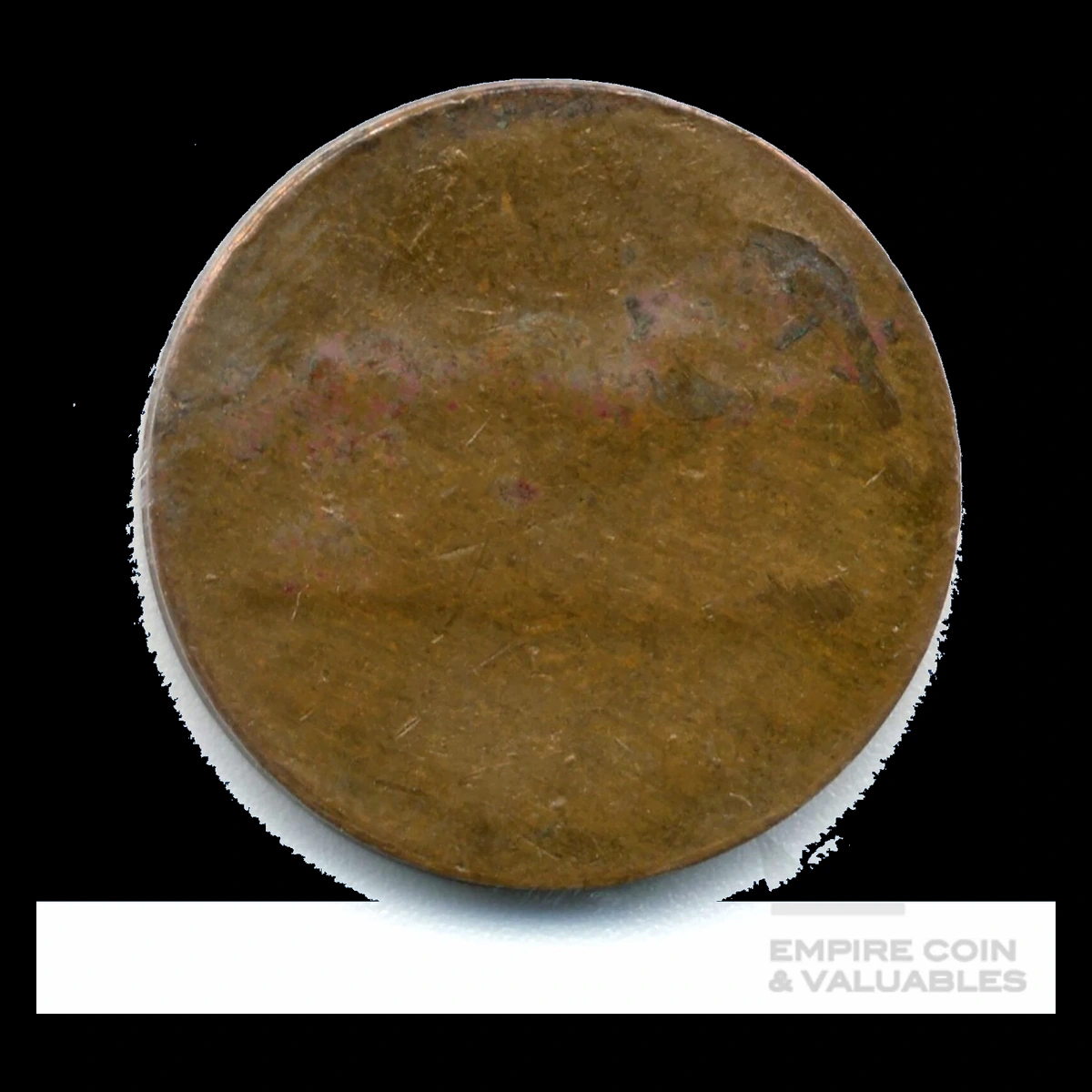
5. 1967 Penny A Wall Wraps around the Coin: Reported 1967 Die Cap Error
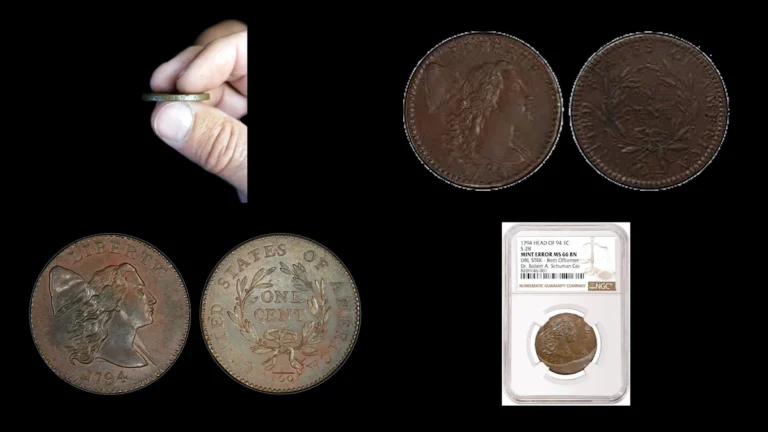
A coin that sticks to a die can spread and wrap around it as the press continues. The trapped, reshaped object is the die cap.
A flatter coin struck beneath an existing cap is a separate result of the same press problem. Faint lettering alone does not show that the examined coin became the cap itself.
How to Identify
Follow original design from the center into naturally stretched walls. Sharp later folds, plier marks, and scratches crossing the bend may reveal shaping after minting.
Compare with an identified cap rather than judging only whether the cent resembles a bowl. Do not press the walls inward to measure it as though it were flat.
What It’s Worth
An authenticated 1967 cap has an estimated $150–$750 range. Wall depth, recognizable design, and preserved surfaces influence appeal.
A 1979-D front cap in PCGS MS64 Red brought $329 in January 2016. That other copper-alloy year supplies context without confirming a sale of the reported 1967 cap.
6. 1967 Penny Separate Impressions and a Bent Bridge: 1967 Repeated and Saddle Strikes Error
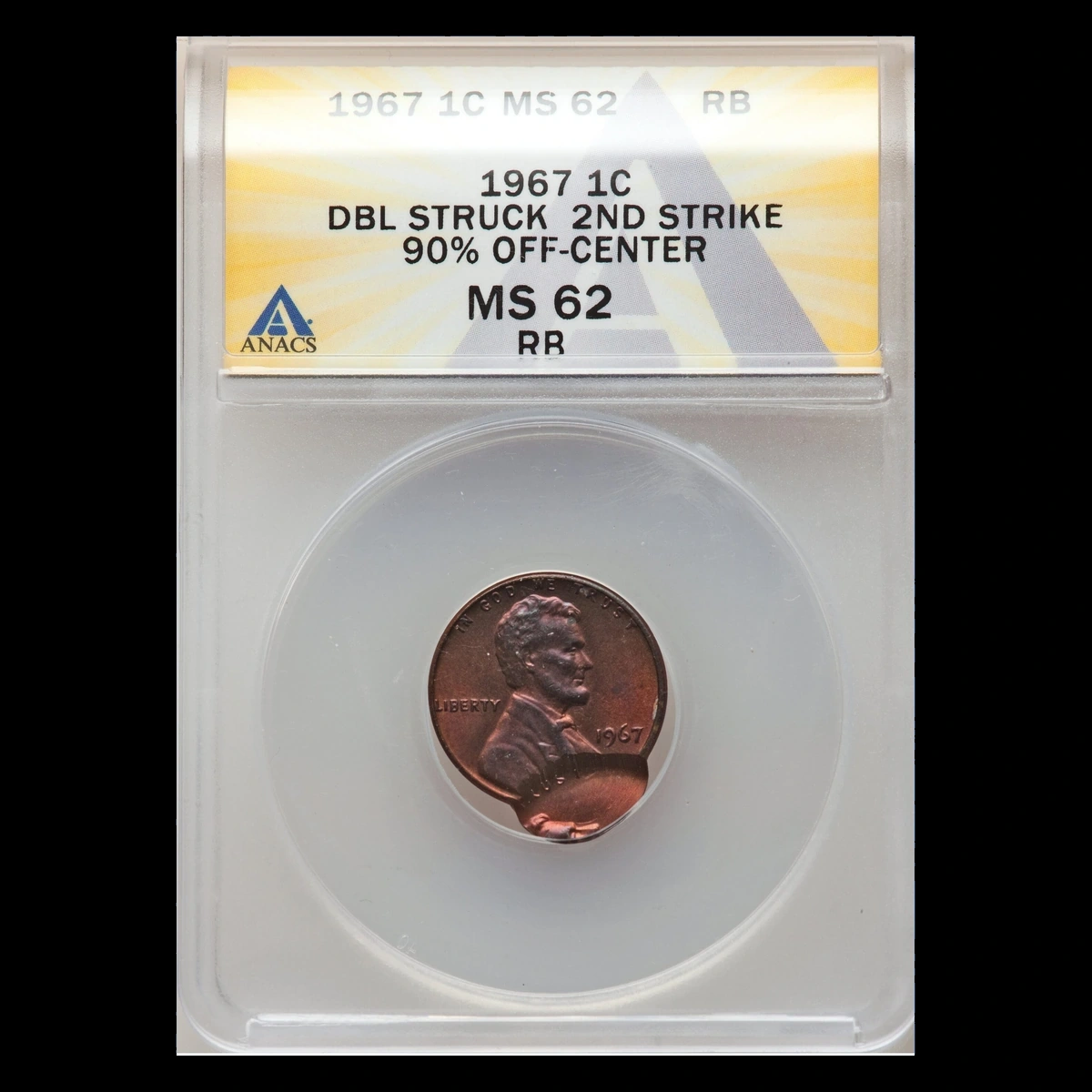
One recorded coin received a second blow about 95% off center, leaving a small extra impression near the edge. Its wheel mark is later damage rather than another minting event.
A different example has three strikes and a saddle-like shape. Its adjacent struck areas and raised connecting middle record a much more conspicuous sequence.
How to Identify
Trace genuine design remnants in each struck area rather than counting doubled-looking letters. For the saddle coin, inspect the bridge from the side without flattening it.
Separate wheel scratches from original impressions and check the edge for cutting or joining. A bent ordinary penny cannot supply the additional authentic design needed for either attribution.
What It’s Worth
Comparable repeated-strike errors have an estimated $60–$1,500 range. Their different shapes and surface quality produce markedly different results.
The PCGS MS66 Red and Brown saddle triple strike brought $1,200 in July 2021, while the damaged double strike sold for $79 in March 2025. The July 2021 Heritage archive provides the saddle comparison.
The wheel-marked coin received an authenticity-and-details description rather than a numerical unworn grade. Its result does not set the value of the better-preserved saddle piece.
7. 1967 Penny Raised Bars, Ridges, or Rim Patches: 1967 Chips, Cracks, and Cuds Error
A small broken area between B and E in the die can leave an I-like bar in LIBERTY, known as BIE. A narrow crack instead leaves a raised line.
A larger break at the die’s edge can produce a rim-connected patch called a cud. These related tool failures differ greatly in size and appearance.
How to Identify
Check the B-to-E gap for the bar and follow a larger patch all the way to the rim. A freestanding blob may be another kind of chip or added material.
Side lighting separates an original raised ridge from a scratch cut into the coin. Do not pick at bumps or scrape suspected solder to test the shape.
What It’s Worth
Small BIE chips and thin cracks have an estimated $2–$40 range. Substantial attractive rim cuds are estimated at $75–$1,200.
A 1979 cud cent in PCGS MS64 Brown brought $1,020 in May 2021. That major copper-alloy rim break does not establish a four-figure value for an ordinary 1967 BIE.
8. 1967 Penny Small Extra Design Contours: 1967 Doubled Dies Error
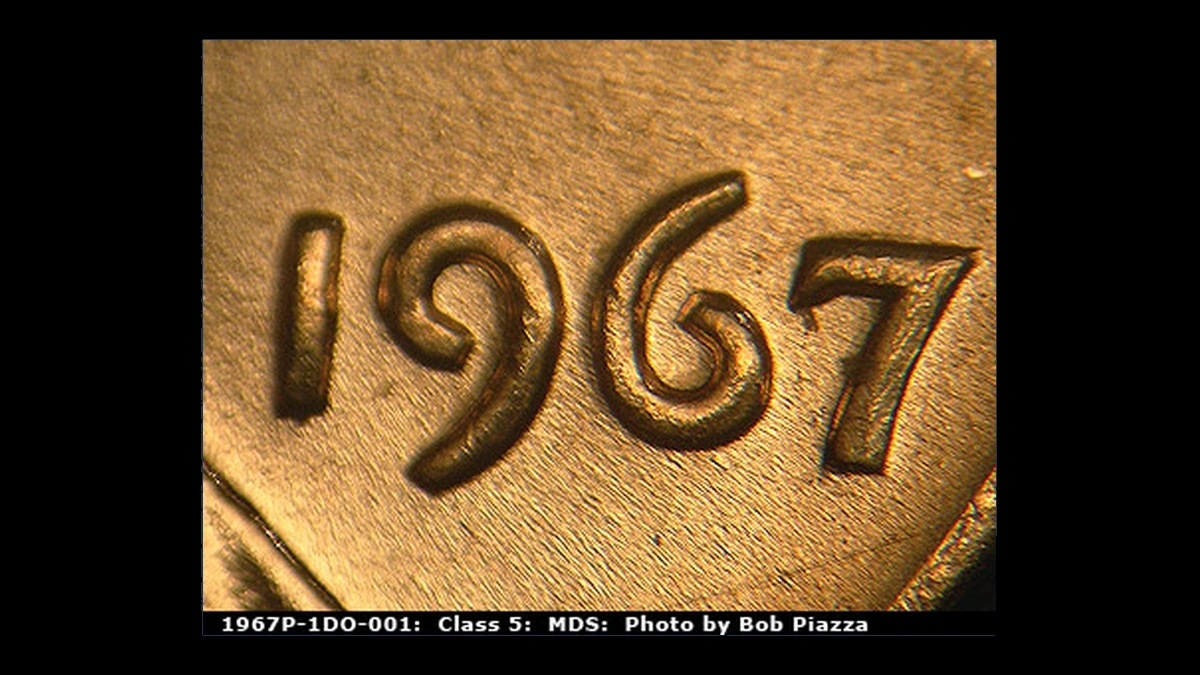
Forked letter corners or rounded second outlines can reveal a doubled design already present in a die. Reports include separate front and back patterns around lettering, date, and Memorial details.
These minor varieties need not show the dramatic separation of famous Lincoln doubled dies from other years. Flat ledges caused by movement during striking have a different origin.
How to Identify
Choose the specific letter or design edge that differs and match its exact extra shape to a confirmed 1967 example. A reverse pattern needs its own comparison rather than a front photograph.
Keep collector-set coins separate from ordinary strikes when selecting references. General thickness or a flat shelf beside reduced lettering does not establish the variety.
What It’s Worth
Confirmed minor doubled dies have an estimated $5–$100 range. Clear extra detail and undamaged surfaces make small patterns easier to appreciate.
The figures are comparison estimates, not recorded transactions for every reported variety. Ordinary strike doubling does not qualify simply because a letter appears repeated.
Conclusion
The correct starting point for 1967 is a copper-alloy cent without a mintmark. From there, missing metal, an overlapping-disc hollow, and an extra struck area lead to different explanations.
Apply the $2–$5,000 estimates only after choosing the right type and finish. Keep SMS claims separate from shine, preserve fragile cap and saddle shapes, and never assign a mixed lot’s total to one coin without an individual result.