Rare 1970 Half Dollar Errors (List & Pictures)
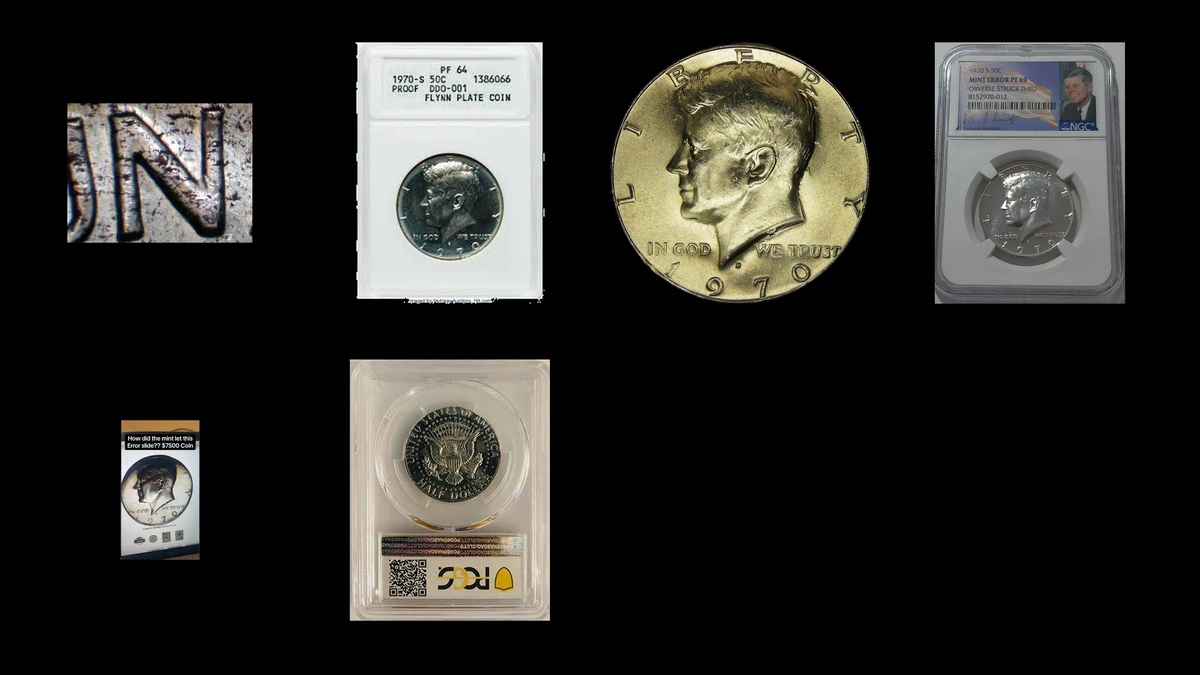
A coin with extra star points asks a different question from a half-dollar design stamped over an aluminum token. Both appear among documented and reported 1970 half dollar errors.
Estimated values run from $25 to $10,000. The largest supplied result is $7,475 for a San Francisco Proof on a quarter blank in January 2007.
Read D or S first, then compare design repetition, local interruptions, the outline, and the metal beneath the design.
| Visible clue | Error | Estimated value |
|---|---|---|
| Repeated reverse stars or words | Doubled and tripled die reverses | $25–$500 |
| Repeated Proof front details | Doubled die obverse | $50–$1,000 |
| Two rotated front positions | Double strike in collar | $800–$2,000 |
| Faint opposing-design trace | Die clash | $50–$600 |
| Local obverse interruption | Reported struck through | $40–$500 |
| Two rim gaps | Double clip | $75–$350 |
| Expanded Proof outline | Broadstrike | $1,200–$3,500 |
| Blank margin and lost design | Off-center Proof | $800–$4,500 |
| Low weight with original surfaces | Underweight Proof blank | $100–$400 |
| Design on a smaller disc | Quarter or nickel blank | $3,000–$10,000 |
| Older token lettering underneath | Aluminum-token overstrike | $4,000–$8,000 |
The Denver Mint-set issue and San Francisco Proof use layered metal containing 40% silver, normally 11.50 grams and about 30.61 millimeters across. Proofs are specially made collector coins; their finish and preservation require comparison with like examples.
1. 1970 Half Dollar Stars and reverse words carry extra contours: Doubled and Tripled Die Reverses Error
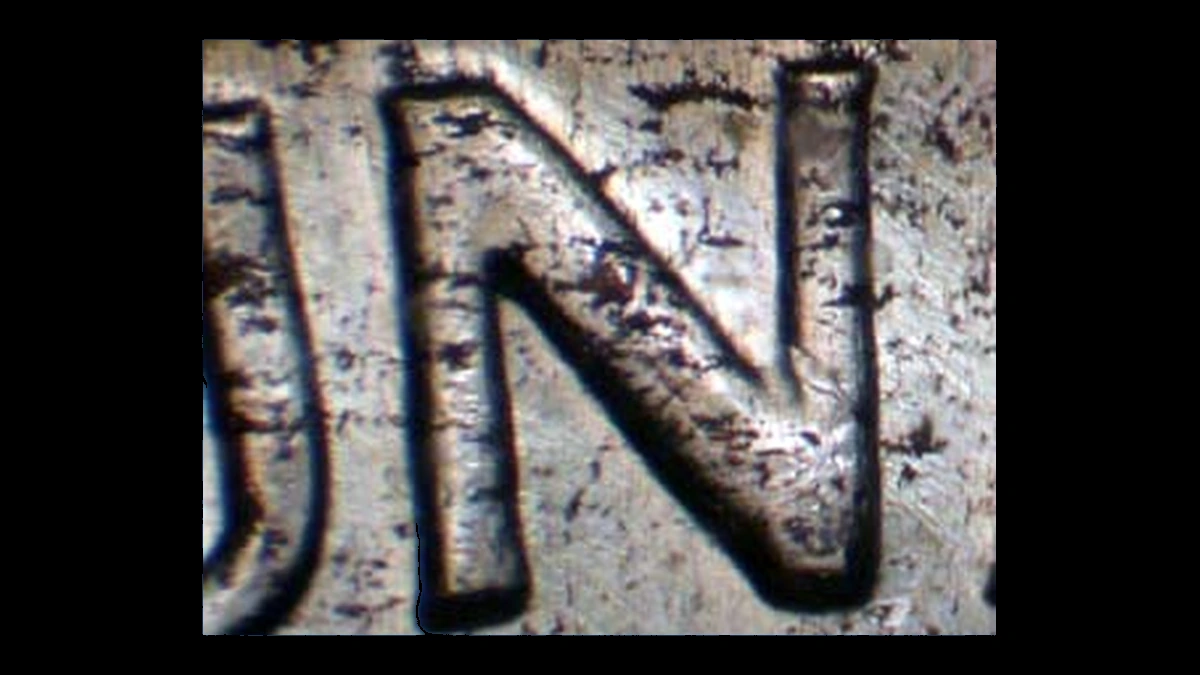
Both Denver and San Francisco references include repeated reverse detail. Some patterns are subtle, while one Wexler Proof listing has at least four images in stars below AMERICA.
Other varieties affect the denomination, arrows, or part of the upper star ring. The duplication already existed in the die and can recur on coins it produced.
How to Identify
Compare adjacent star points for consistent added shapes and spacing, choosing the correct mint and finish reference. One unusual tip cannot establish the full pattern.
Keep the stronger Proof pattern separate from smaller varieties with different affected areas. Different catalog numbers also need image comparison before being assumed to identify different dies.
Move the light to separate fixed rounded extra points from shadows and flat shelves. Use the whole documented pattern rather than assembling the most dramatic details from several dies.
What It’s Worth
Minor reverse varieties have an estimated $25–$150 range; strongly separated recognized Proof patterns are estimated at $100–$500. These are comparisons with modest Kennedy doubled varieties.
No individual realized price is supplied for every catalog entry. Mint, finish, visibility, and preservation determine whether another variety’s result is useful.
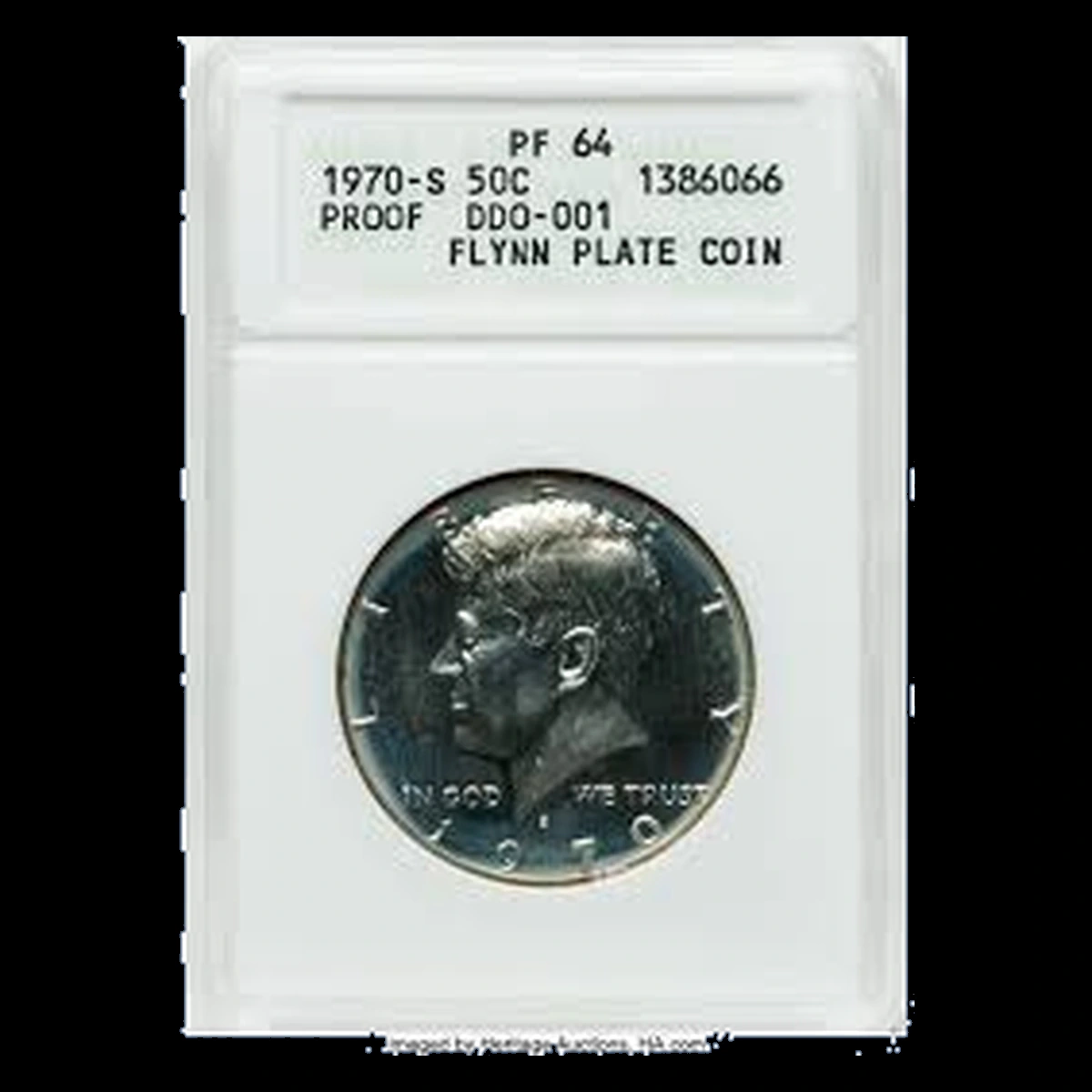
2. 1970 Half Dollar Proof front lettering and hair show duplication: Doubled Die Obverse Error
The strong FS-101 has counterclockwise spread across lettering, date, and hair. FS-102 is a different pattern, with multiple outlines especially useful to examine at ST in TRUST.
Other listed dies have lighter separation, different directions, or smaller hair features. Normal repeated Proof blows do not automatically create a duplicated design in the die.
How to Identify
Compare TRUST and upper hair, then the date and LIBERTY against the same variety reference. Several areas should agree instead of pointing to unrelated dies.
A flat shelf that reduces the normal letter shape can result from movement during striking. Check that rounded raised contours remain fixed under changing light and that the surrounding Proof surfaces are undisturbed.
What It’s Worth
The estimate is $50–$1,000 across minor recognized varieties through stronger attractive examples. The high end should not be copied to every doubled-looking Proof.
PCGS records $940 for an FS-101 PR68 in July 2013, with a separate PR68 Cameo result of $851 in July 2021. Cameo describes contrasting frosted designs and reflective fields, and belongs only to the designated comparison.
3. 1970 Half Dollar The front repeats after a slight turn: Rotated Double Strike in Collar Error
The documented PCGS PR63 has overlapping front letters and ear outlines while its reverse remains normally aligned. Heritage describes the upper die rotating a few degrees clockwise before the next blow.
The collar restrained the coin near normal size, so a broad unstruck crescent is unnecessary here. The changed die position between Proof blows explains the error.
How to Identify
Compare several front features for one coherent rotated second position. The reverse’s unchanged appearance belongs to the recorded mechanism rather than disproving it.
Inspect the edge and surrounding surfaces for squeezing or later damage. A doubled die or isolated flat shelf is a different cause from an entire second front impression with consistent movement.
What It’s Worth
Comparable Proofs with clear impressions and original surfaces have an estimated $800–$2,000 range. The PCGS PR63 sold for $1,150 in January 2007.
The comparison requires the specific changed-position evidence. One doubled-looking side alone does not establish another strike or justify this range.
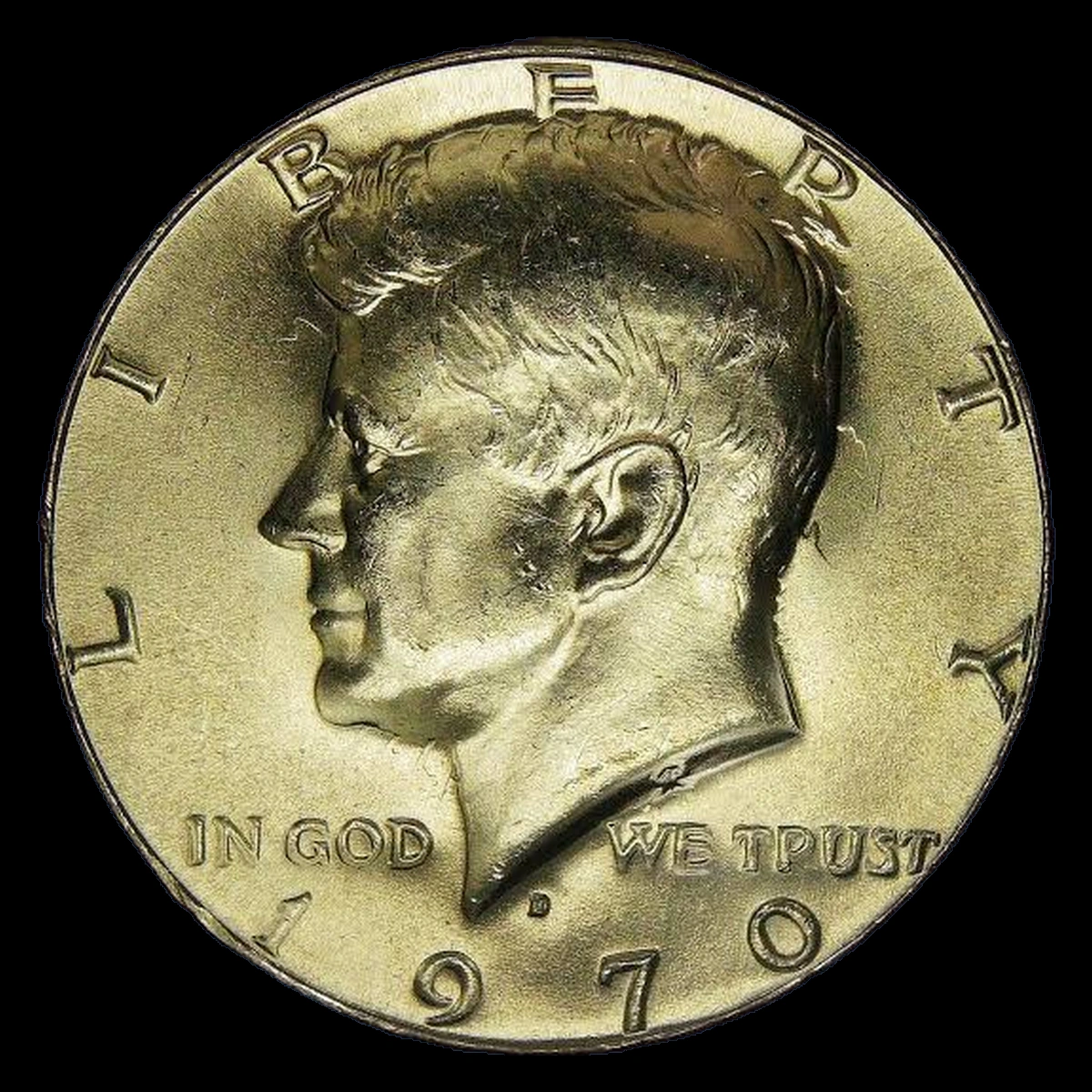
4. 1970 Half Dollar An unfamiliar shape matches the opposite design: Clashed Dies Error
The NGC PR65 Cameo 1970-S is specifically recorded with a clash. Denver references also describe clashes in later stages of use for particular dies.
The traces begin when dies meet without a blank and mark one another. Subsequent coins can carry parts of the opposing picture in unexpected areas.
How to Identify
Compare both faces at the same scale, using a properly aligned mirrored design if helpful. The suspicious shape should fit a recognizable portion of the opposite face.
Do not use a Denver die’s location to map a different Proof’s clash. Narrow raised traces also need to be distinguished from cuts or an unrelated line that only vaguely resembles the other design.
What It’s Worth
The estimated range is $50–$600 for modest through unusually clear examples. The PR65 Cameo sold for $159 at Heritage in April 2022.
A Denver coin may combine clashing with a doubled reverse, but those features still belong to one object. Separate whole-coin estimates should not be added to create its price.
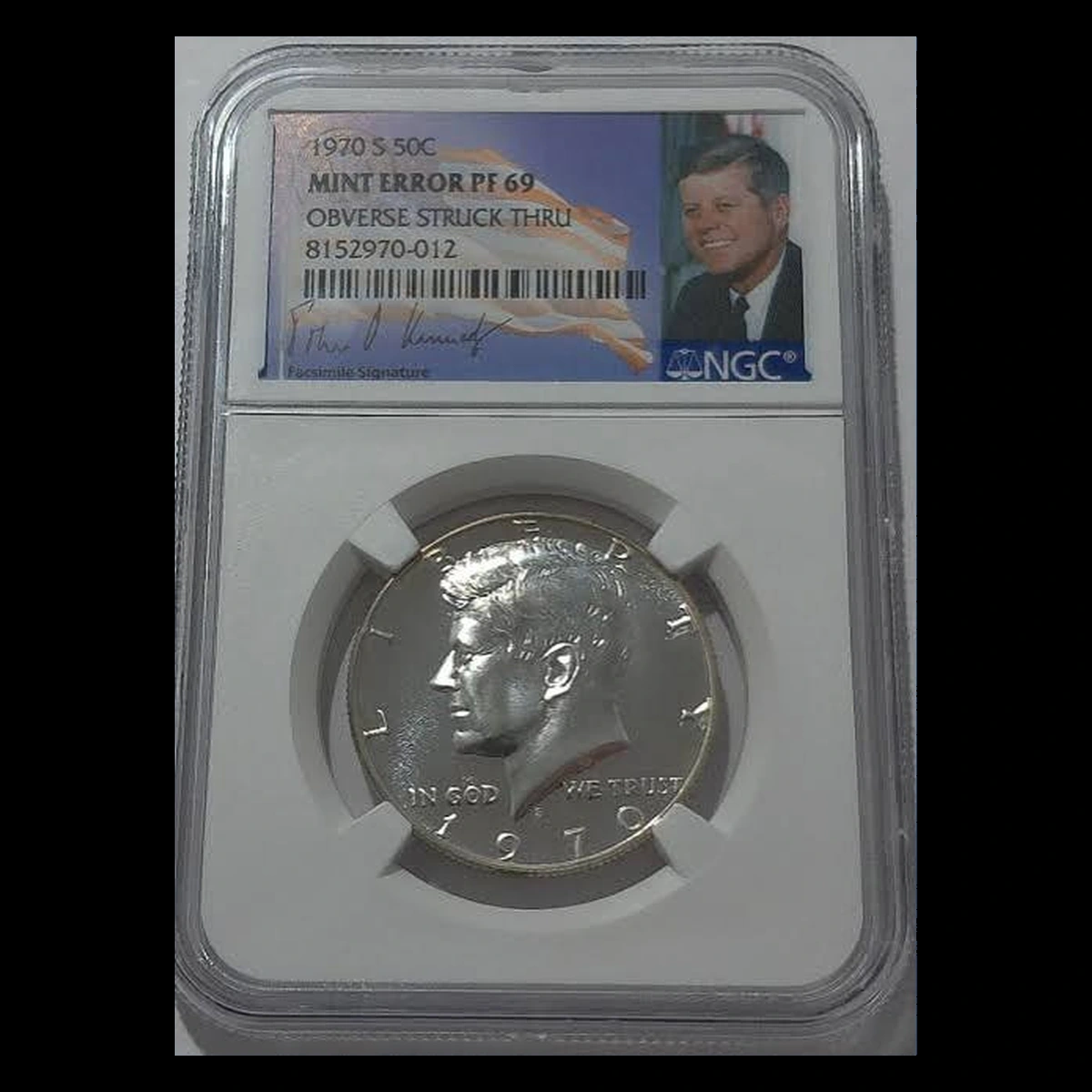
5. 1970 Half Dollar Part of the front design is blocked: Reported Strike-Through Error
The year list reports an obverse strike-through without a precise mint, finish, or location. Material between the die and blank could interrupt design or leave an impression.
The broad description does not identify wire, cloth, or grease. A material claim needs recognizable texture or shape on the actual coin.
How to Identify
Keep the date and mintmark in the record before enlarging the local feature. Inspect where sharp surrounding detail meets the affected surface.
Scraping can cross a completed design and push metal along its edges, while wear follows exposed areas. Look for a local interruption with original surroundings rather than abrasion trails or a later impact lip.
What It’s Worth
Genuine obverse strike-throughs have an estimated $40–$500 range from small marks to larger visible impressions. Proof finish and surface preservation require separate comparison.
A 1967 Special Mint Set MS66 Cameo sold for $159 in January 2023 with this error. It offers a 40% silver comparison but is neither a 1970-S Proof nor the Denver Mint-set issue.
6. 1970 Half Dollar Two sections are missing from the rim: Double Clip Error
The published 1970-D MS64 is described as a 5% double clip, with one gap near 10 o’clock and a smaller rim clip near 11:30. Those positions identify that particular record.
GreatCollections lists another ANACS MS64 whose gaps need their own photographs. In each case, the blank was incomplete before striking, rather than struck twice.
How to Identify
Inspect how the rim tapers into each opening and how the surviving edge grooves meet it. A natural gap on one side cannot authenticate a tool-cut notch on the other.
Compare accessible weight with the missing metal and measure intact spans of the outline. Opposite-rim weakness can support a clip but need not be obvious.
What It’s Worth
Genuine examples have an estimated $75–$350 range depending on preservation and visibility. Two tiny gaps need not attract more than one prominent clip.
The historical Mint Error News offer set a $150 minimum bid for its described MS64. That was a starting bid, not a completed transaction or the result for the separate GreatCollections coin.
7. 1970 Half Dollar Stretched lettering follows an expanded outline: Proof Broadstrike Error
The documented NGC PR65 has stretching at LIBERTY’s E and much of HALF DOLLAR. It is slightly uncentered toward 12 o’clock, while outward spreading remains its principal feature.
The collar failed to restrain the blank normally. Mirrorlike areas and some contrast survive, but the coin did not receive a Cameo designation.
How to Identify
Follow the stretched lettering into the broad margin and inspect the edge for incomplete grooves. The metal should show natural expansion rather than detail crushed by later flattening.
Record its outline when safely accessible and preserve the actual contrast label. Attractive shine does not justify upgrading the description from PR65 to PR65 Cameo.
What It’s Worth
Comparable genuine Proof broadstrikes have an estimated $1,200–$3,500 range. Heritage sold the NGC PR65 for $2,040 in July 2022.
Readable design, expansion, and Proof surface quality affect that comparison. The result belongs to a San Francisco collector issue rather than an ordinary circulation broadstrike from another date.
8. 1970 Half Dollar A Proof design partly misses the blank: Off-Center Strike Error
The records describe 10% and 15% off-center Proof strikes. Their percentages and appearances do not establish whether they represent two surviving coins or two appearances of one specimen.
A true offset leaves original unstruck metal beside a design partly lost beyond the edge. Complete design inside a wider outline may instead describe broadstriking.
How to Identify
Read the surviving date and S, then align both faces to compare their displacement. Follow where struck detail ends and original blank texture begins.
A ground area can imitate an empty margin while retaining removal marks. Check surviving grooves and incomplete design for a coherent strike rather than one uneven border.
What It’s Worth
The estimated range is $800–$4,500. The 15% off-center PCGS PR66 brought $960 in October 2022, while an earlier 10% report records $3,737.50.
The smaller reported percentage brought the larger amount, so displacement alone is not a price formula. Proof surfaces, readable identity, and the circumstances of the transaction matter.
9. 1970 Half Dollar A Proof weighs less than its normal blank: Underweight Planchet Error
The known NGC PR67 Cameo weighs 10.8 grams, about seven-tenths below the 11.50-gram standard. It is described as an underweight planchet, meaning the prepared blank had insufficient weight.
That label does not establish the exact cause of the shortage. Thin starting stock and a missing layer require different physical evidence.
How to Identify
Verify a scale with a calibration weight before interpreting a small shortfall. For a sealed graded coin, use its recorded weight rather than opening the holder.
Inspect thickness, both faces, and layer junctions for original surfaces. Filing, acid damage, or rubbing can remove metal afterward without constituting an underweight original blank.
What It’s Worth
Confirmed underweight Proofs have an estimated $100–$400 range. Heritage records $156 in September 2020 for the 10.8-gram PR67 Cameo.
The degree of shortage and the physical cause matter alongside preservation. A worn or chemically thinned coin does not qualify merely because its scale reading matches.
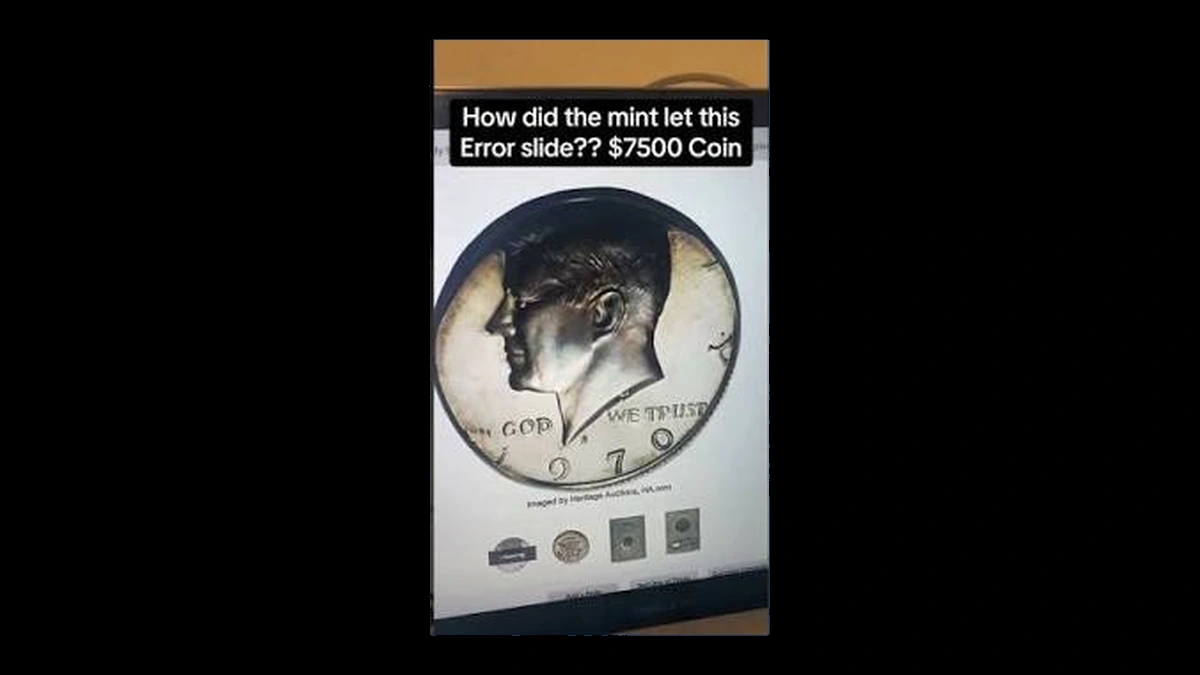
10. 1970 Half Dollar The Proof design overfills a quarter or nickel blank: Wrong Planchet Error
The nickel-blank PR67 weighs 5 grams and retains the upper date portions plus a clear S. Its large Kennedy and eagle designs crowd the smaller disc.
The separate PR66 quarter-blank example is oval and uncentered toward 11 o’clock, with much of HALF DOLLAR beyond the edge. Normal half-dollar dimensions printed in that catalog are not measurements of the error.
How to Identify
Inspect natural cut-off design at the metal boundary and look for machining from later trimming. Record each coin’s own weight and composition.
The nickel example’s 5 grams is a supplied measurement; contemporary nickel and quarter blanks normally start at 5.00 and 5.67 grams respectively. The quarter error still needs its own actual measurement.
Check date portions, S, and any remaining edge grooves without requiring a smaller blank to match the normal half’s outline. Striking can distort or expand its shape.
What It’s Worth
The estimate is $3,000–$10,000 across these major Proof wrong-blank errors. Blank type, surviving identity, and condition affect the comparison.
The quarter-blank PR66 sold for $7,475 at Heritage in January 2007. The nickel-blank PR67 realized $4,080 in August 2020; neither historical result guarantees a later price.
11. 1970 Half Dollar Token words remain beneath Kennedy: Aluminum-Token Overstrike Error
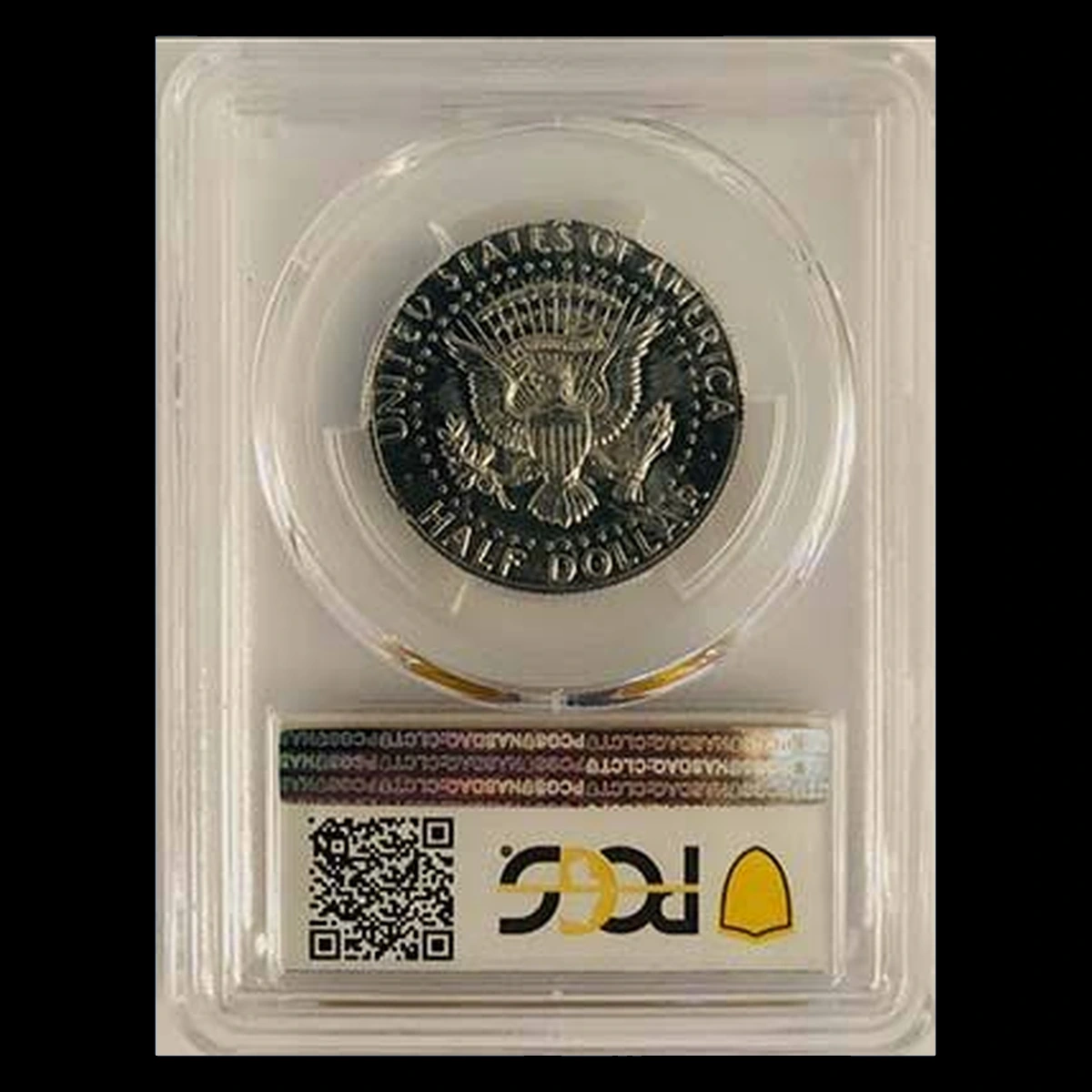
The words COIN and JEFFERSON CITY and concentric rings survive under half-dollar detail on a 1.7-gram aluminum piece. The earlier object was a Missouri Shell token, and PCGS graded the overstrike PR62.
Unlike an unused wrong blank, this token already had a design before the half-dollar impression. It contacted the collar near 12 o’clock and spread, with additional expansion around the date and national lettering.
How to Identify
Trace the older words and rings where the Kennedy design crosses them. The two designs should fit successive striking rather than letters scratched into the metal later.
Compare with a normal Missouri token and inspect collar-contact evidence without requiring full half-dollar grooves. The ordinary token accompanying the auction lot is a separate comparison object.
What It’s Worth
A confirmed Proof overstrike of this kind has an estimated $4,000–$8,000 range. The lot containing the PR62 and the ordinary comparison token sold for $5,760 in April 2021.
That total is not a separately recorded price for each piece and does not value a plain aluminum disc. Surviving Missouri token detail is essential to the documented identity.
Conclusion
Extra outlines in a die, a die that turns between blows, and a token struck beneath a new design record different sequences. Match several related details before naming the event.
Keep every grade, measurement, and sale with its own specimen, especially when similar Proof records appear more than once. The normal token in an auction lot remains a comparison object, while paired features on one error coin receive one whole-coin valuation.