Rare 1978 Half Dollar Errors (List & Pictures)
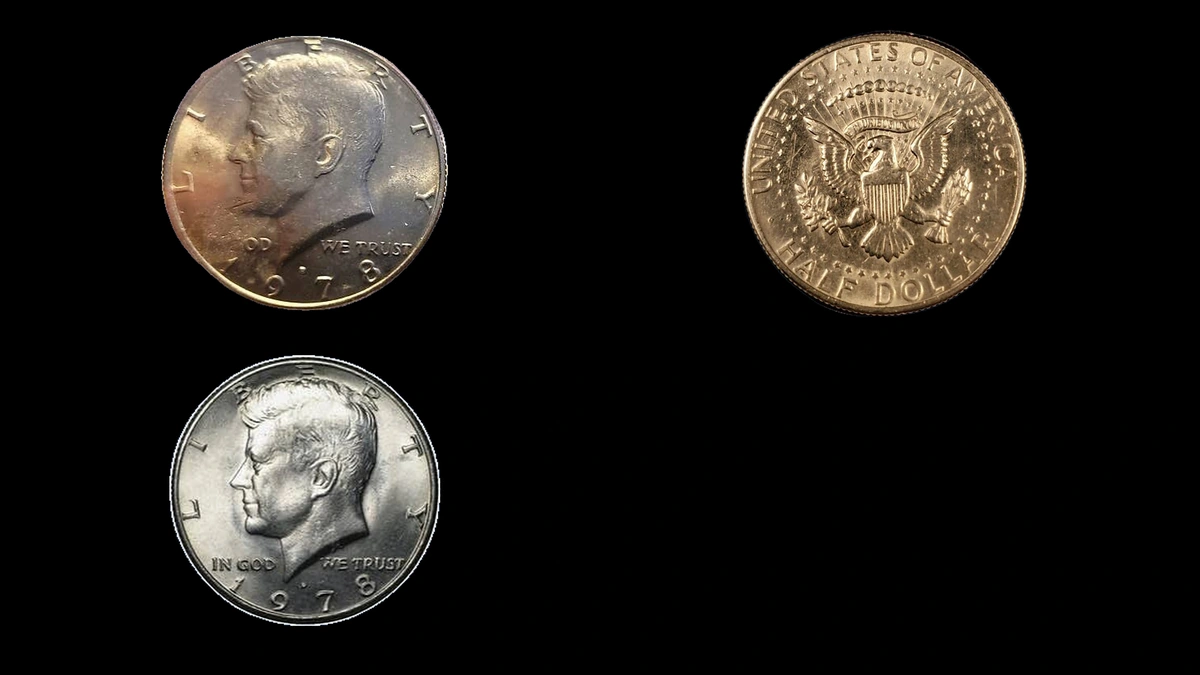
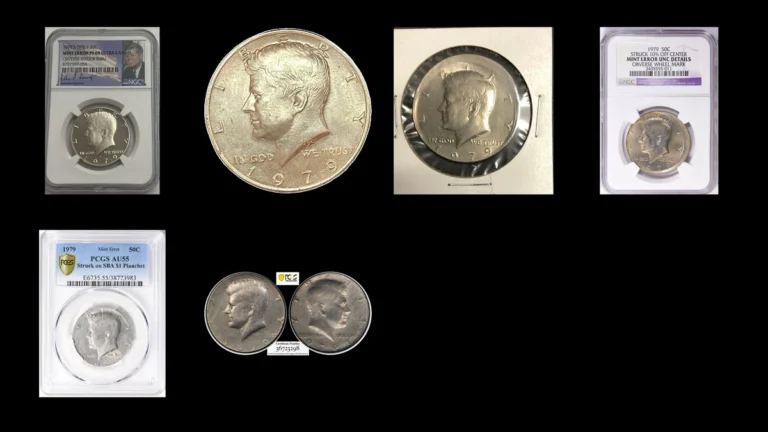
Missing words are a good reason to look twice at a 1978 half dollar, but the surrounding surface tells you much more. This guide to 1978 Kennedy Half Dollar errors covers nine reported types with estimated values of $20–$4,000.
A related 1980-P wrong-blank half sold for $3,840 in 2024; that was a cent-blank error, unlike the 1978 nickel-blank report. Work from small surface clues toward changes in shape and size.
| Clue | What to check | Estimated range |
|---|---|---|
| Peeling metal | Lamination or layer separation | $20–$150 |
| IN GOD missing | Strike-through | $25–$600 |
| No designer initials | Reported No FG | $20–$400 |
| Extra design edges | Doubled die | $25–$350 |
| Missing edge segment | Clipped blank | $25–$300 |
| Complete design on a wide coin | Broadstrike | $80–$500 |
| Bare crescent beside missing design | Off-center strike | $75–$800 |
| Overlapping pictures | In-collar multiple strike | $300–$1,500 |
| Small, five-gram body | Nickel blank | $1,500–$4,000 |
A normal clad half weighs 11.34 grams and measures about 30.61 mm. Philadelphia used no mint letter on 1978 halves, while Denver used D.
1. 1978 Half Dollar A Flake Lifts from the Surface: Lamination and Layer Separation Error
Start by examining the boundary of any peeling patch. A natural split can travel within the metal or along the bond between an outer layer and the copper center.
The 1978 reports include small flakes and larger peels. A shallow flake and a deep split belong to this broad group, but they do not have equal impact or value.
How to Identify
Use a magnifier to see whether the opening continues beneath attached metal. A scrape usually crosses the finished surface rather than following a natural layer.
Keep any flap attached and compare the opening with the edge. Pulling at it can remove the very evidence needed to understand the split.
What It’s Worth
$20–$150 is an estimated range for the reported forms. The source guide places small flakes around $20–$40 and larger peels around $50–$100.
An especially clear retained flap can support the upper allowance. These figures are estimates, rather than completed sales of one identified 1978 coin.
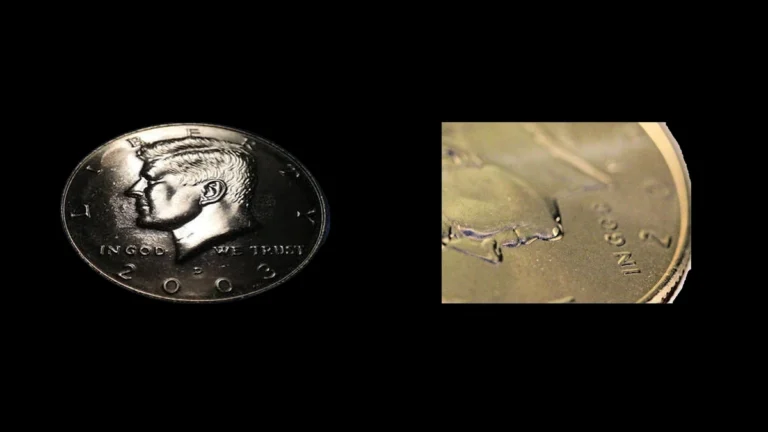
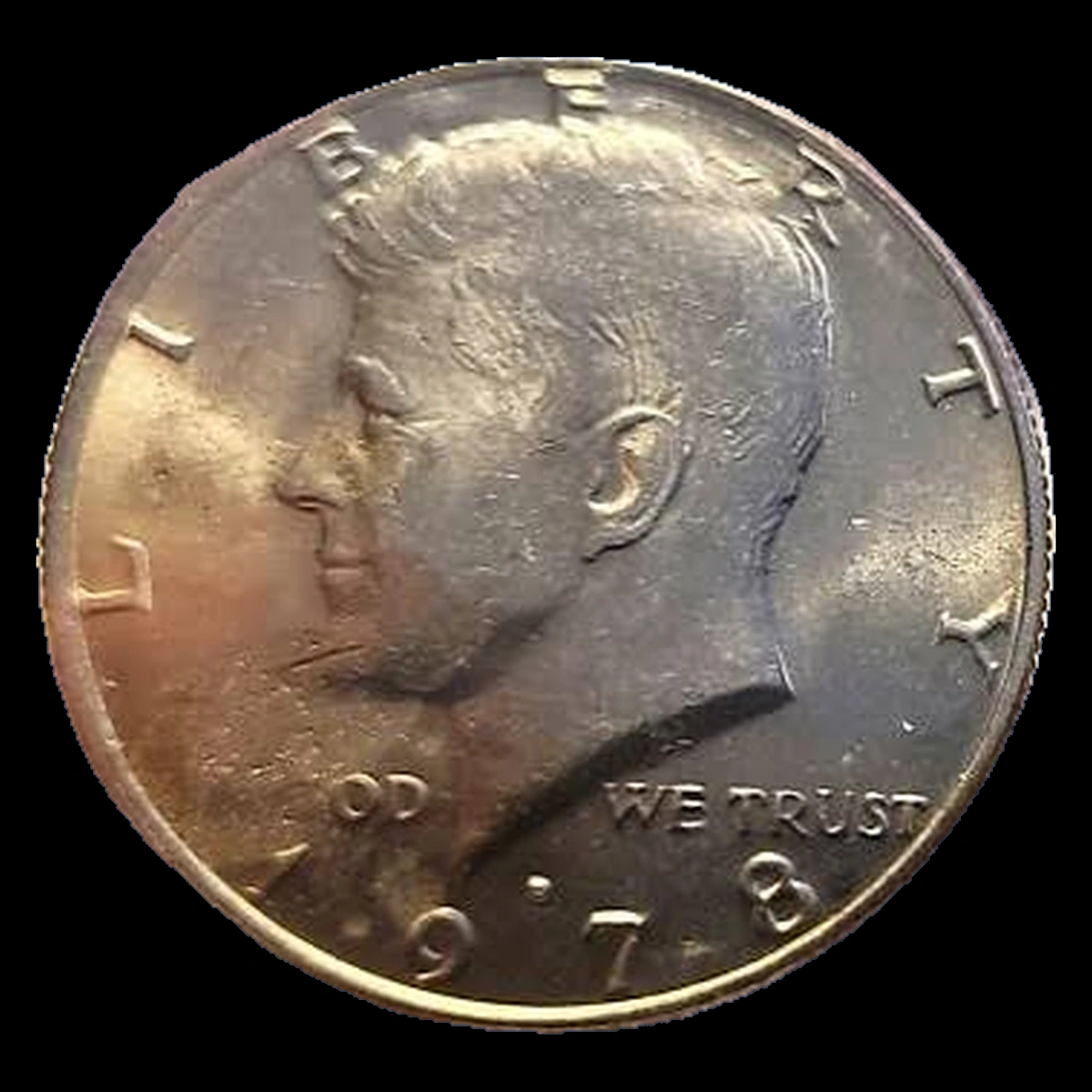
2. 1978 Half Dollar IN GOD Is Missing beside Clear Detail: Strike-Through Error
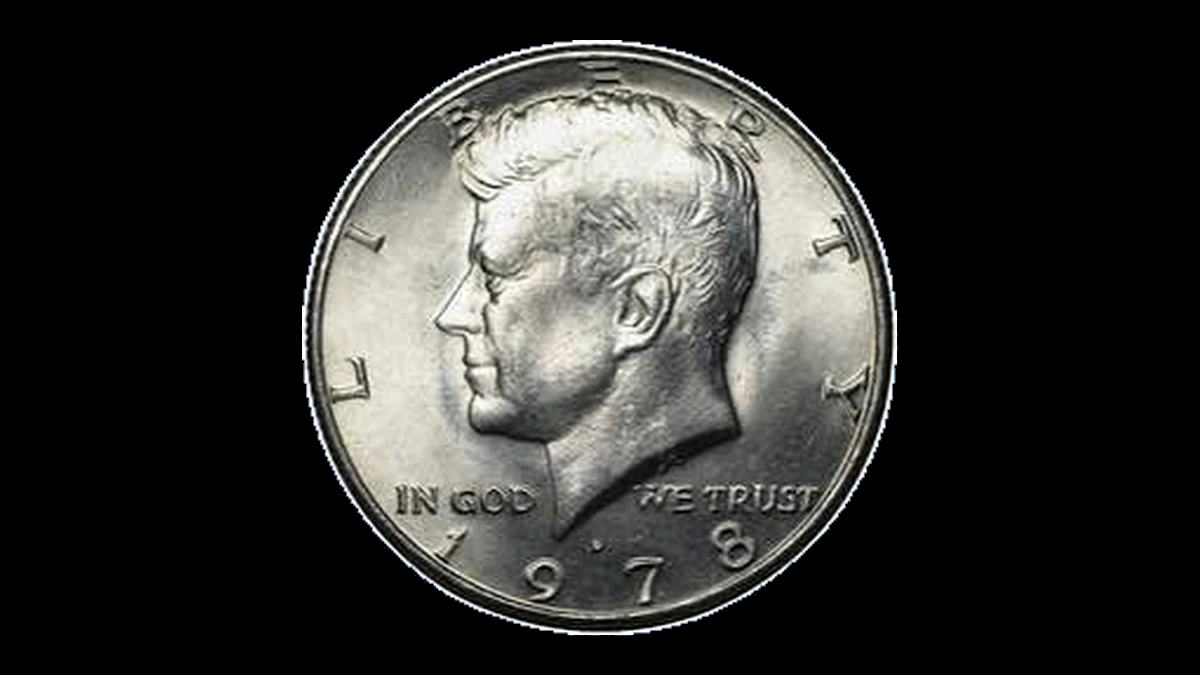
The reported 1978-D strike-through lacks IN GOD while nearby design remains visible. Something between the die and blank prevented those words from forming.
The report does not establish what the obstruction was. Missing lettering alone cannot tell you whether grease, cloth, or a solid fragment caused it.
How to Identify
Compare the missing words with the rest of the motto and portrait. A local interruption surrounded by sharp detail makes a better candidate than a coin worn smooth everywhere.
Scratches, a polished patch, or displaced metal can show that letters were removed later. Leave any embedded material untouched and do not clean the area.
What It’s Worth
$25–$600 gives a working range, with clear loss of major lettering attracting more interest. The actual surface and size of the interruption matter.
Different-year comparisons include a 1988-D front strike-through in MS67 at $59 in July 2021. A clad 1976-D struck through on both faces sold for $114 in March 2025.
3. 1978 Half Dollar The Eagle Has No Nearby FG: Missing Designer Initials Error
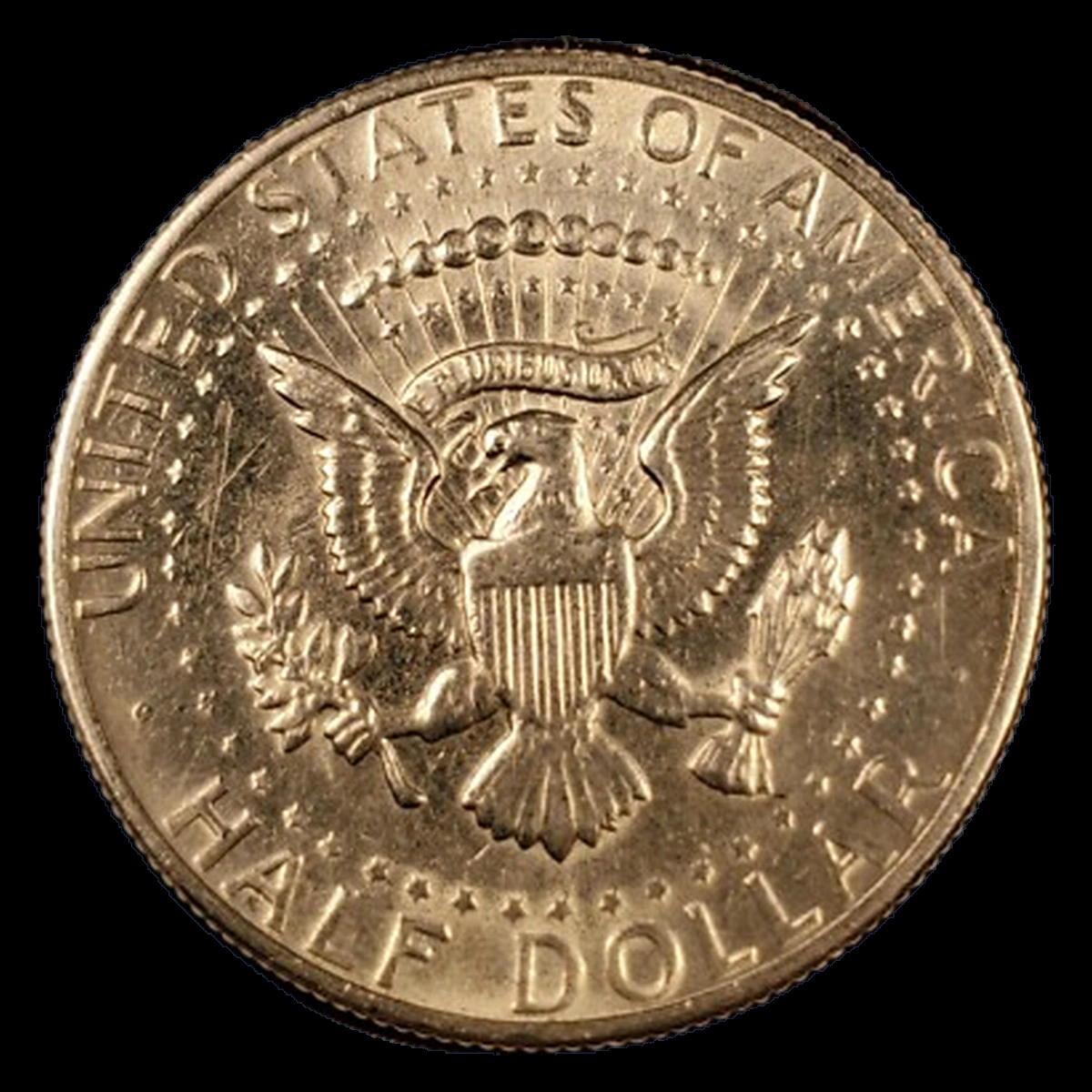
Frank Gasparro’s small FG initials normally sit beside the eagle’s tail. The minor 1978-D report links their absence to polishing of the die, which can remove shallow details from the tool.
This report is not a major named certification variety. Weak initials, wear, and a locally blocked strike can resemble complete absence for other reasons.
How to Identify
Find the initials on a normal coin first, then light the same spot on your candidate from several directions. Even a faint surviving stroke means the letters are weak rather than fully absent.
Nearby feathers help reveal general wear, while local scratches can expose rubbing after minting. Do not rub the spot yourself to make it easier to see.
What It’s Worth
$20–$400 is the estimated range, with the upper end requiring a clear, well-preserved example. Barely visible letters do not automatically earn a No FG premium.
A recognized 1982-P No FG in exceptionally preserved MS66+ condition sold for $384 in May 2024. Its established variety market is a comparison, not proof that the minor 1978-D report has the same value.
4. 1978 Half Dollar Letters or Feathers Have Rounded Extra Edges: Doubled Die Error
The supplied reports describe front doubling and a separate Denver reverse claim. The reverse areas include E PLURIBUS UNUM, the tail feathers, and nearby lettering.
A doubled die has extra detail built into the striking tool. These reports do not supply a matched catalog number or establish all the listed features on one coin.
How to Identify
Inspect the actual face in question and compare its extra contours with a reliable photograph of the same pattern. Rounded separation or split corners are more useful than a generally thick letter.
A flat shelf along a design edge can come from movement during striking. Keep that common form separate from a doubled die, and do not borrow a variety number from another year.
What It’s Worth
$25–$350 is an estimated range for a clearly identified doubled die. Strong visible separation and good preservation support higher prices.
A cataloged 1974-D doubled die in MS64 sold for $49 in May 2026. That recent result concerns a different year and an established variety, rather than every 1978 doubling report.
5. 1978 Half Dollar A Curved Piece Is Missing from the Edge: Clipped Blank Error
A blank punch can overlap a previous hole in the metal strip and cut an incomplete circle. Once struck, the coin has a missing segment with design changes along its boundary.
The 1978 reports cover both Philadelphia and Denver coins. A missing P on a Philadelphia example is normal for this year.
How to Identify
Follow both ends of the gap and look for natural metal flow where the design meets it. Saw marks, burrs, and freshly filed areas point toward later cutting.
A weak rim opposite the clip can support the identification. This is called the Blakesley effect, but it must agree with the rest of the coin rather than serve as the only test.
What It’s Worth
$25–$300 covers modest genuine clips through larger attractive examples. The gap’s shape and a readable date matter alongside condition.
A 1993-D curved clip in MS64 sold for $34.74 including fees in August 2025. It shows how modest the price of a small clip can be, even on an unworn coin.
6. 1978 Half Dollar The Whole Design Fits inside a Wider Outline: Broadstrike Error
When the retaining ring fails to contain the blank, metal can spread farther than usual. That ring is called the collar, and the resulting expanded coin is a broadstrike.
The important clue is a complete design within the wider shape. The supplied 1978 report does not give a measured diameter for one certified example.
How to Identify
Check the outside lettering on both faces and measure several widths. An intact blank may remain near normal weight while spreading beyond the normal diameter.
Flattening a finished coin can also make it wider, but often crushes high details or leaves impact marks. Original design and naturally spread metal should fit the same striking event.
What It’s Worth
$80–$500 is a working estimate for genuine 1978 broadstrikes. A clear expanded shape with appealing surfaces is more desirable than a barely noticeable spread.
A 1990-P broadstrike in MS61 sold for $192 in March 2025. Separately, a 1983-P in MS65 was offered at $175; that is a dealer asking price, not a completed sale.
7. 1978 Half Dollar A Bare Crescent Sits beside Incomplete Design: Off-Center Strike Error
Here the blank was out of position when struck, leaving part of it untouched. Unlike a broadstrike with complete design, an off-center coin loses design beyond the struck area.
The 1978 reports do not establish one example’s exact shift or direction. Those details must come from the individual coin.
How to Identify
Turn the coin over and compare the blank area on both faces. If only one face is shifted, a misaligned die may be the better explanation.
Find the surviving date and examine the boundary between struck and bare metal. A bare crescent is still part of the blank; a clip or later cut actually removes metal.
What It’s Worth
$75–$800 is an estimated range for genuine examples with enough design to identify them. A stronger visible shift and a readable date usually improve appeal.
A 1990-P struck 10% off center in MS66 sold for $198 in September 2025. That result provides a moderate-error comparison without assigning its percentage or grade to a 1978 coin.
8. 1978 Half Dollar Two Pictures Overlap inside the Rim: In-Collar Multiple Strike Error
The reported 1978 double strike remained inside the collar for the extra blow. That can leave overlapping pictures without a dramatically enlarged coin.
A doubled die repeats details from one tool image. A multiple strike instead requires evidence that the coin received separate blows.
How to Identify
Trace pieces of the portrait, letters, or date into two consistent positions. One extra line or a thick rim does not establish a complete second strike.
Study both faces because the later blow can erase different parts of the earlier image. A near-normal diameter is possible when the collar continued to restrain the metal.
What It’s Worth
$300–$1,500 is an estimated range for a clear in-collar multiple strike. The year guide reports an $840 auction figure but does not provide a matched lot or grade.
A 1983-P multistruck broadstrike in MS63 sold for $552 in June 2024. That coin spread outside the collar, so its shape differs from the reported 1978 example.
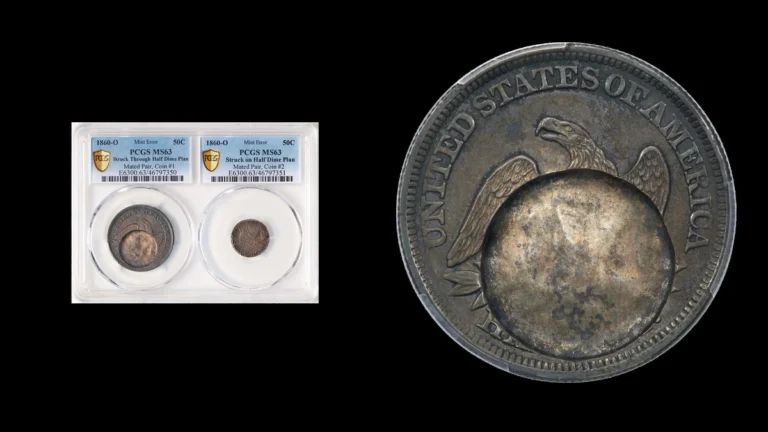
9. 1978 Half Dollar Half-Dollar Details Fill a Small Body: Wrong Nickel Blank Error
The reported wrong-blank error uses a nickel blank in the half-dollar press. The large design does not fit, and outer details fall beyond the smaller edge.
This is a report about an unstruck nickel blank. Calling it an overstrike on a finished Jefferson nickel would require surviving parts of that earlier design.
How to Identify
A nickel blank starts near 5.00 grams and 21.21 mm, far smaller than a normal half. It can spread under the larger dies, so its final width need not remain exactly 21.21 mm.
Look for naturally cut-off half-dollar details and an original surviving date. A specialist can check the metal, while filed edges or plating may expose an altered coin.
What It’s Worth
$1,500–$4,000 is an estimated range for an authenticated example with recognizable year and denomination. The 1978 year guide reports $2,100 at auction without a matched original lot.
A 1980-P half on a cent blank sold for $3,840 in August 2024 in MS64. That is a different-year copper blank comparison, not evidence of a 1978 cent-blank error.
Conclusion
A missing word, weak initial, and peeling layer each need a different close look. Keep the full date and mint area in view so a small crop does not hide an important clue.
For shape errors, compare both faces before choosing a name. If the coin is unusually small, add weight and metal checks rather than relying on the incomplete design alone.