Rare 2003 Half Dollar Errors (List & Pictures)
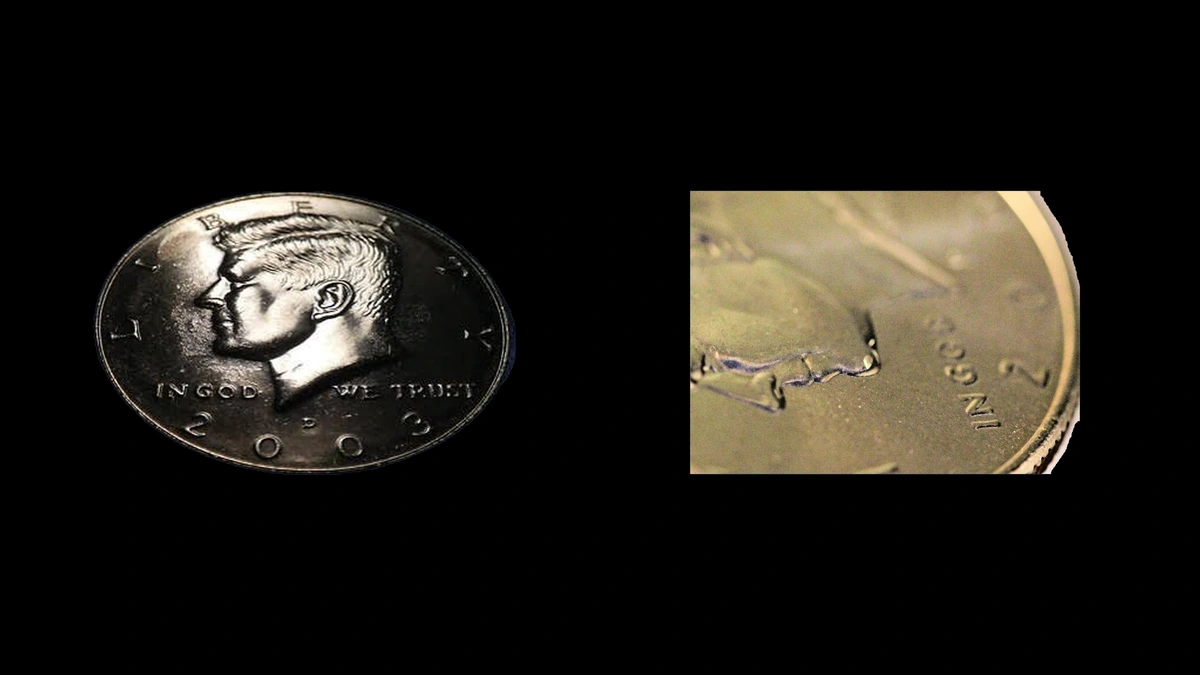
With 2003 half dollar errors, a wide rim and a copper-colored face call for different checks. Reported examples carry estimates from about $5 to $500.
A 1974-D missing its front outer layer sold for $432 in March 2023, providing a documented comparison from another year. Examine the outline first, then the rim, surface color, and fine design details to narrow down what happened.
| Inspection area | Possible error | Estimated value |
|---|---|---|
| Wide outline, complete design | Broadstrike | $30–$250 |
| Blank crescent, missing design | Off-center strike | $50–$300 |
| Raised rim patch | Cud | $50–$350 |
| Copper-colored face | Missing clad layer | $150–$500 |
| Localized weak detail | Grease strike-through | $5–$100 |
| Extra outlines at letters or date | Doubled die obverse | $20–$200 |
| A narrow raised line | Die crack | $5–$100 |
Identify the coin’s construction before using weight as evidence: normal clad halves weigh 11.34 grams, while the 2003-S silver proof weighs 12.50 grams. Both are about 30.61 millimeters across; a proof is a specially manufactured collector coin.
1. 2003 Half Dollar A broad border around intact designs: Broadstrike Error
When the entire portrait and eagle remain present but the surrounding metal has spread outward, a broadstrike is worth considering. The collar normally restrains that expansion and forms the edge grooves; failure to contain the blank allows a wider coin.
How to Identify
Read the lettering around both faces to confirm that the design is complete. Measure the widest and narrowest spans, then examine the edge for absent or abnormal collar grooves.
Later hammering can also spread metal, but typically flattens detail or leaves pressure damage. A genuine broadstrike should combine outward flow, consistent edge changes, and weight near the clad standard because spreading alone removes no metal.
The supplied report names 2003-P but identifies no measured specimen. Do not infer a specific diameter from its category name.
What It’s Worth
Estimated values run from $30–$250, depending on preservation and how conspicuous the spread is. The supplied year guide’s narrower $30–$80 range also represents estimates rather than a recorded auction.
A 1990-P broadstrike graded ANACS MS61 sold for $192 at Heritage in March 2025. It supports broader series context, but does not establish the price of a 2003-P example.
2. 2003 Half Dollar Bare metal beside a displaced design: Off-center strike Error
Compare the circular outline with the location of Kennedy’s portrait and the eagle. An off-center blank receives an incomplete design while part of its surface remains beyond the dies.
How to Identify
The unstruck area and missing design must make sense together on both faces. A shifted front with a centered reverse may instead indicate one misaligned die.
Inspect the plain area’s boundary for scraping or grinding that removed detail after manufacture. Retained portions of the date and P mintmark are important for identifying the reported Philadelphia issue.
No certified 2003-P specimen with a specified offset percentage or direction is identified in the supplied report. Those details must be read from an actual coin.
What It’s Worth
About $50–$300 is the supplied estimate for a recognizable, genuine example, while the year guide gives $50–$250. A clearly readable date, attractive surfaces, and dramatic displacement can increase collector interest.
No documented 2003 sale accompanies the estimate. Equal percentages of offset do not guarantee equal prices when the remaining design and condition differ.
3. 2003 Half Dollar A smooth bulge that meets the rim: Cud Error
A cud occupies an area where normal edge-side design should have appeared. It forms after part of a die breaks away at its perimeter, leaving a space into which metal can rise.
How to Identify
Follow the raised patch to confirm that it joins the rim and replaces design. A small isolated lump inside the coin is a different kind of die break, often called a die chip.
Check adjoining surfaces for evidence of a blow that pushed metal upward, or material added as solder or glue. The 2003 report supplies no exact rim position or mint, so there is no one universal shape to seek.
What It’s Worth
Genuine rim cuds are estimated around $50–$350, with size, visibility, and preservation affecting the result. A fine crack reaching the border is not enough to place a coin in that range.
A 1976-D reverse die break graded NGC MS65 sold for $256 at Heritage in June 2026. Its different date and break shape make it a comparison, not a 2003 cud valuation.
4. 2003 Half Dollar One face looks like copper: Missing clad layer Error
On a normal clad half, pale outer layers cover a copper center. A layer lost before striking can expose copper that receives the design directly, producing an unusual face as well as a lighter coin.
How to Identify
Check weight and the layer boundaries along the edge before relying on color. A missing outer layer should reduce weight below the normal clad standard, though the amount depends on how much metal is absent.
The exposed face should retain a design struck into that surface, rather than the chemical damage or torn texture of later stripping. Staining and plating can also create misleading colors.
A normal 2003-S silver proof uses a different alloy and has no copper-core sandwich. The supplied missing-layer report does not identify a certified 2003 specimen or specify which face was affected.
What It’s Worth
The estimated range is $150–$500 for an authenticated missing-layer coin. Partial loss, a fully exposed face, and damaged surfaces require different comparisons.
A 1974-D missing its obverse clad layer, graded NGC MS64, brought $432 at Heritage in March 2023. This actual sale concerns another year; it does not authenticate a copper-colored 2003 half.
5. 2003 Half Dollar A soft patch among sharp front details: Struck through grease Error
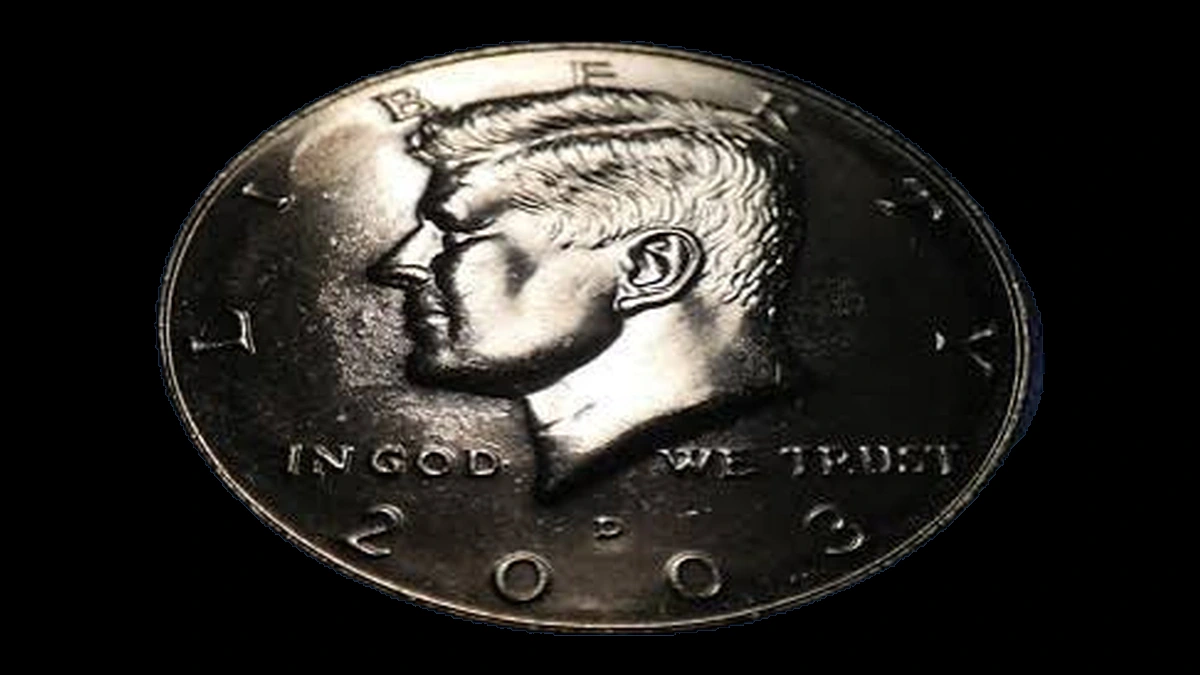
A grease obstruction can keep a small part of the die from forming its intended details. The reported 2003-D example was offered ungraded and described as BU, a dealer term for a bright, unworn coin.
How to Identify
Compare affected letters or portrait detail with equally exposed features nearby. A localized interruption surrounded by crisp detail is more useful evidence than a coin that looks uniformly worn.
Fine scraping lines or disturbed metal can indicate later removal of design. The seller’s description names no particular missing letter or facial feature, so avoid assigning it a pattern the evidence does not show.
What It’s Worth
Approximately $5–$100 covers minor interruptions through larger, clear grease strike-throughs in the supplied estimates. Select Coins & Collectibles asked $8.95 for the ungraded 2003-D example.
That amount was an asking price, and BU was not a numerical certification grade. Stronger visual effects and better surfaces may attract more interest, but weakness from ordinary wear does not earn the same premium.
6. 2003 Half Dollar Extra contours on LIBERTY or the date: Doubled die obverse Error
LIBERTY and the date are the reported locations for 2003-P front-side doubling. A true doubled die contains an extra design outline in the tool itself, allowing that same shape to repeat on coins struck from it.
How to Identify
Look for rounded additional contours rather than simply thick letters. A flat ledge alongside a reduced letter often points to movement during striking, while a worn die can produce rough or swollen edges.
The reported seller coin was circulated and ungraded, and no verified diagnostic map is supplied. Confirm the P mintmark and seek a matching attributed example before treating the report as a settled variety.
This modern date was not individually punched twice by hand. Its appearance must be explained through die manufacture or striking, not a nineteenth-century date-punching process.
What It’s Worth
Convincingly identified examples are estimated at $20–$200, compared with the year guide’s $20–$100 baseline. No authenticated 2003-P auction result in the supplied evidence supports a precise price.
A 1974-D FS-101 doubled die graded ANACS MS64 sold for $49 at Heritage in May 2026. FS-101 identifies that 1974-D variety and must not be applied to the reported 2003-P coin.
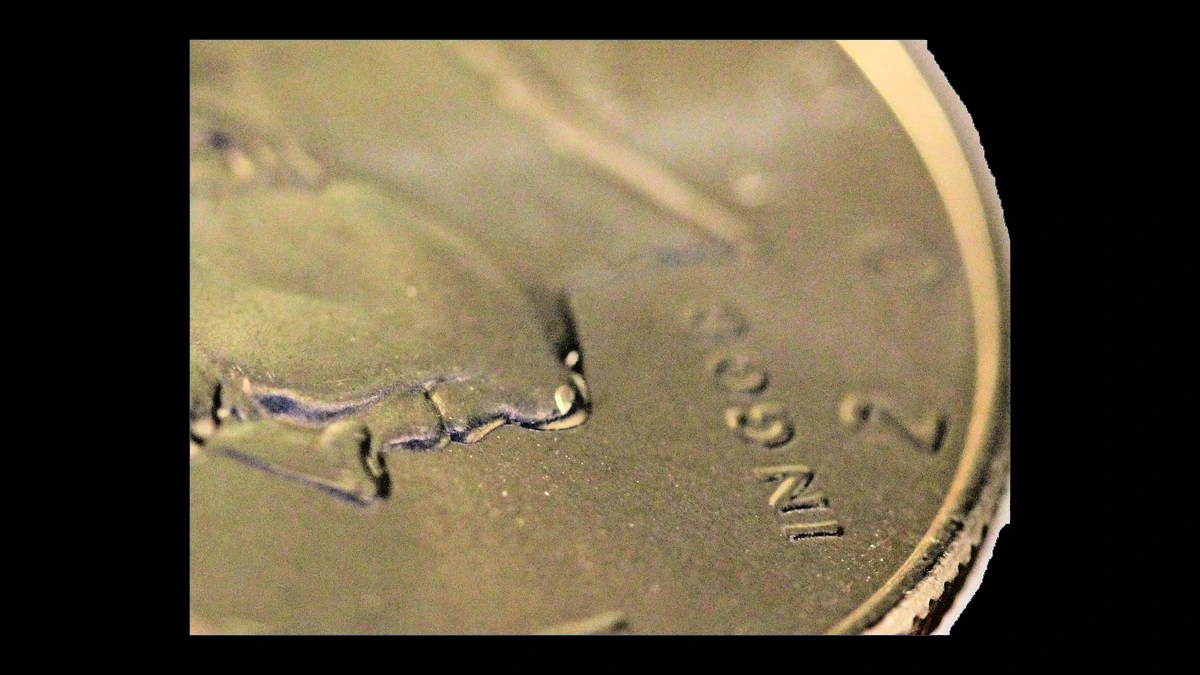
7. 2003 Half Dollar A thin ridge crossing the surface: Die crack Error
A narrow raised line can record a split in the die rather than damage to the coin. Metal presses into that split during striking, leaving a ridge instead of a cut.
How to Identify
Move a light across the suspected line and inspect its center for a groove. Scratches can push up metal along their sides, making them appear raised when viewed from only one angle.
A loose fiber can also imitate a ridge in a photograph. The supplied 2003 guide specifies no side, mint, or path, so an exact crack attribution cannot be made from the year alone.
What It’s Worth
Modest genuine cracks are estimated around $5–$100, with the smallest lines near the low end. The year guide’s typical Kennedy range of $20–$100 is a general estimate rather than a sale record for one 2003 specimen.
A high condition grade may account for much of a coin’s price. It does not automatically make a faint die crack a major error.
Conclusion
Use more than one clue to evaluate a 2003 half: outline and edge for a broadstrike, both faces for an offset, or weight and layer boundaries for a missing outer layer. Fine varieties need a close match to the actual extra contours.
Several categories remain general reports rather than individually documented 2003 sales. Keeping that distinction clear makes the estimates more useful and helps prevent an unusual appearance from becoming an unsupported attribution.