Rare 1981 Penny Errors (List & Pictures)
Some 1981 penny errors fit under a magnifier; others involve a cent design struck onto a much larger coin. A Lincoln impression on a 1981-P Kennedy half dollar sold for $13,200 in July 2021.
The estimated ranges here extend from $2–$20,000. Begin with the date and mintmark, move around the edge, and leave the mixed-denomination pieces for a full view of both faces.
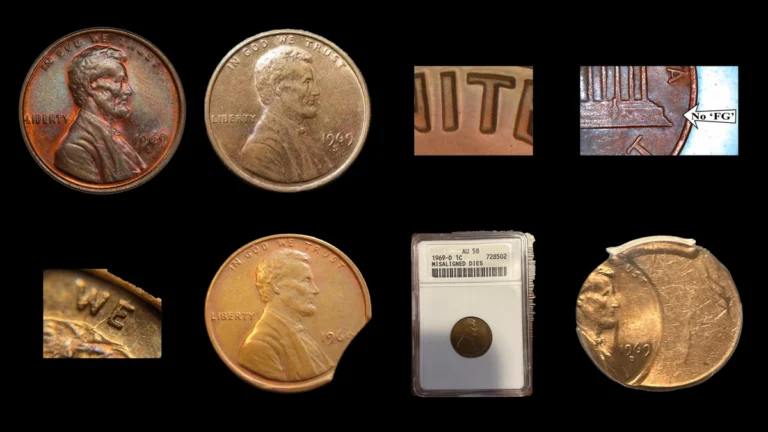
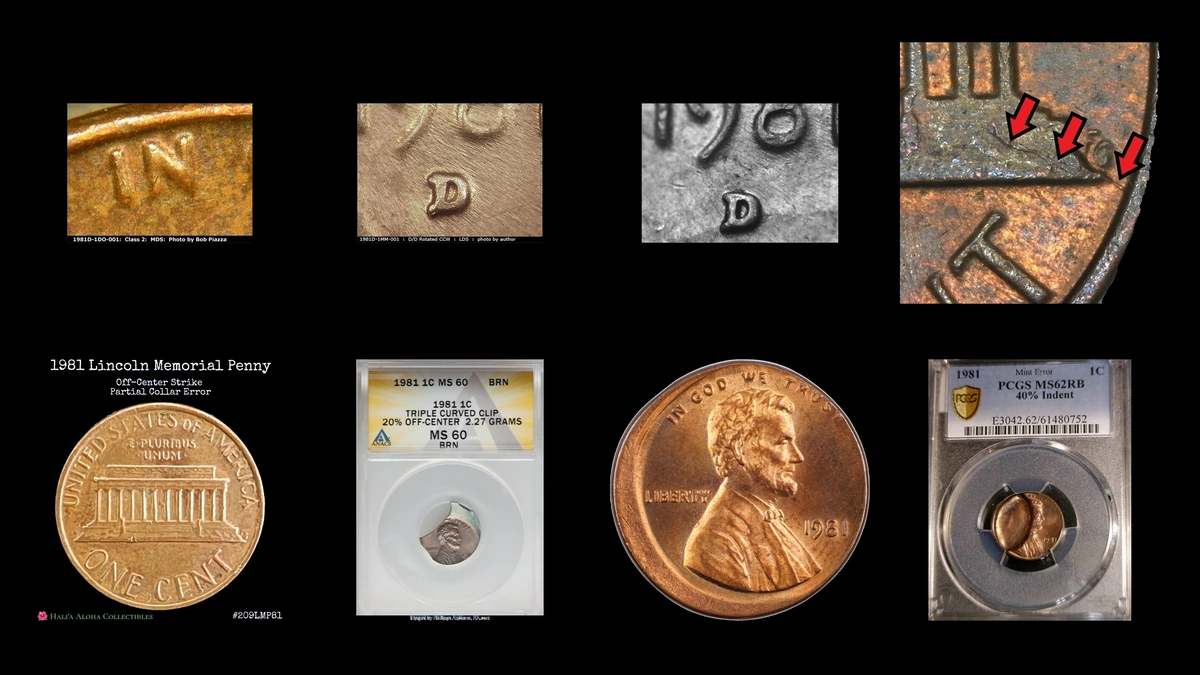
1. 1981 Penny The Date or Motto Shows Extra Contours: Doubled Front Error
Philadelphia’s listed pattern concentrates on inward-separated detail in the first two date digits, 19. Denver’s different variety thickens the motto and LIBERTY, with separation in GOD.
These repeats originated on the dies. The penny did not need a second strike to receive them.
How to Identify
Check for D before selecting a comparison. On Philadelphia’s variety, inspect 19 and the supporting mark near the second T in TRUST.
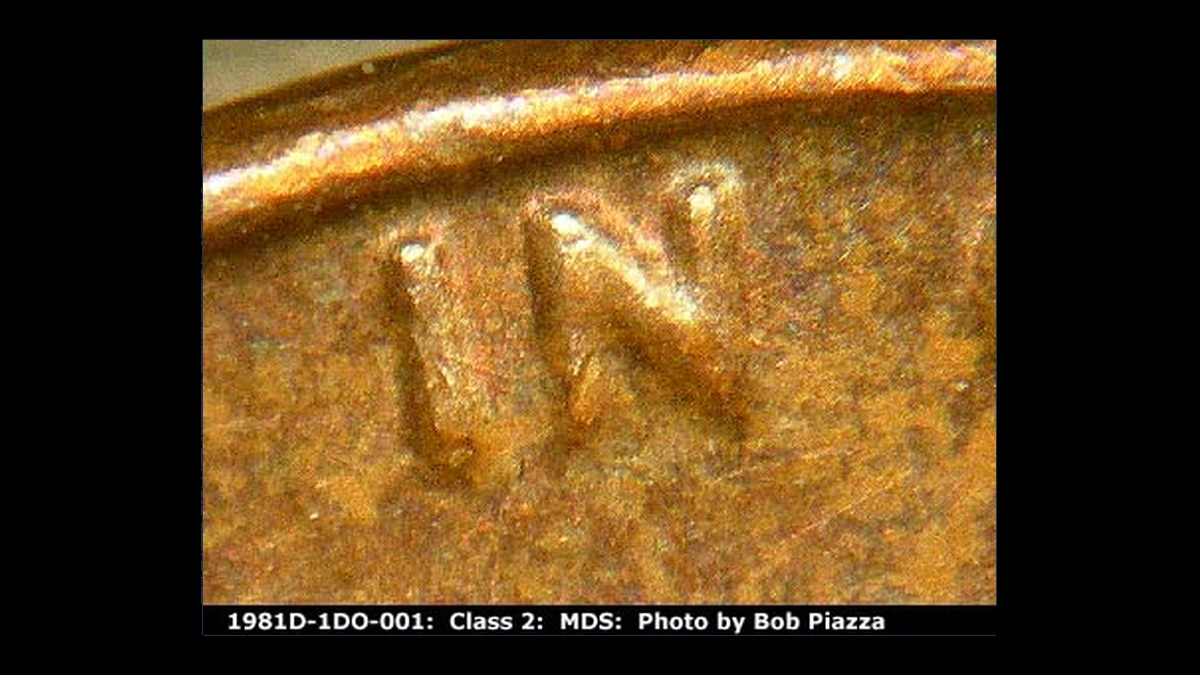
For Denver, compare GOD and the three nearly vertical supporting lines between Lincoln’s head and the O. The Philadelphia date feature is not a substitute for this different pattern.
What It’s Worth
$10–$200 is the estimate for identified minor front varieties. Visible separation and preservation help narrow the range.
The supplied catalog descriptions establish different matches, not realized sales for each die. Bold ordinary lettering does not qualify without the repeated contours.
2. 1981 Penny ONE CENT Has Inward Extra Edges: Doubled Back Error
The first listed 1981 reverse variety repeats detail toward the coin’s center in ONE CENT, FG, UNITED, and AMERICA. “Reverse” refers to the back.
How to Identify
Start with ONE CENT and check several other listed areas. A consistent repeated pattern is stronger evidence than one thick letter.
A short line near the top of Y in LIBERTY is a supporting front-side marker. It helps match the die pair but is not itself the doubled back design.
What It’s Worth
$10–$175 is a comparison-based range for identified examples. Clear separation on an undamaged coin helps its appeal.
No realized sale is supplied for this catalog entry. Red, red-brown, and brown describe surface colors, not separate error types.
3. 1981 Penny Extra D Segments Surround the Mintmark: Repunching Error
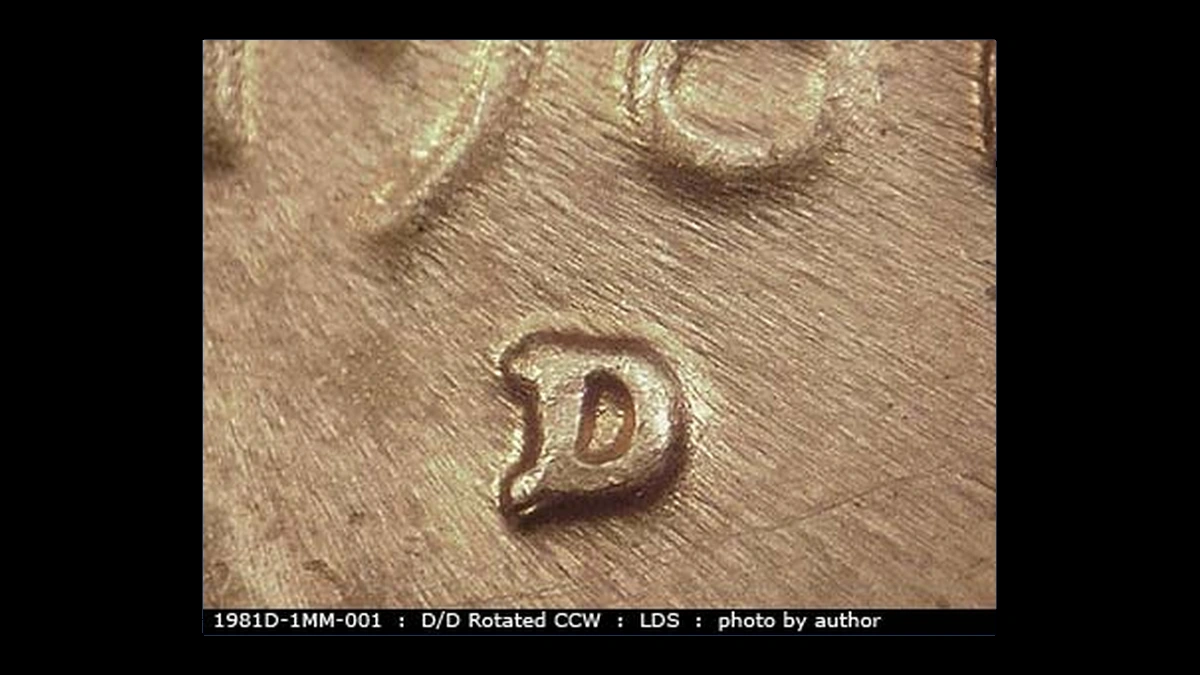
Several 1981-D patterns resulted from repeated placements of the mintmark punch. A strong listed example has extra D detail to the left and below-left of the main letter.
Other varieties show split ends or a tilted outline. Each belongs to its own pattern rather than one universal set of marks.
How to Identify
Trace the extra strokes into a recognizable D shape. On the strong example, the lower-left D can remain separate in a clear die state.
Do not require that separate letter on every minor repunch. Cuts or pushed metal beside the mintmark need to be distinguished from an additional punched outline.
What It’s Worth
$5–$250 is the estimated span for identified repunched D varieties. Strong separation can attract more interest than tiny divided ends.
The range does not assign an auction result to each catalog number. The strongest pattern’s upper estimate should not be transferred to any irregular D.
4. 1981 Penny A Faint S-Like Shape Sits above D: Reported Distant Mark Error
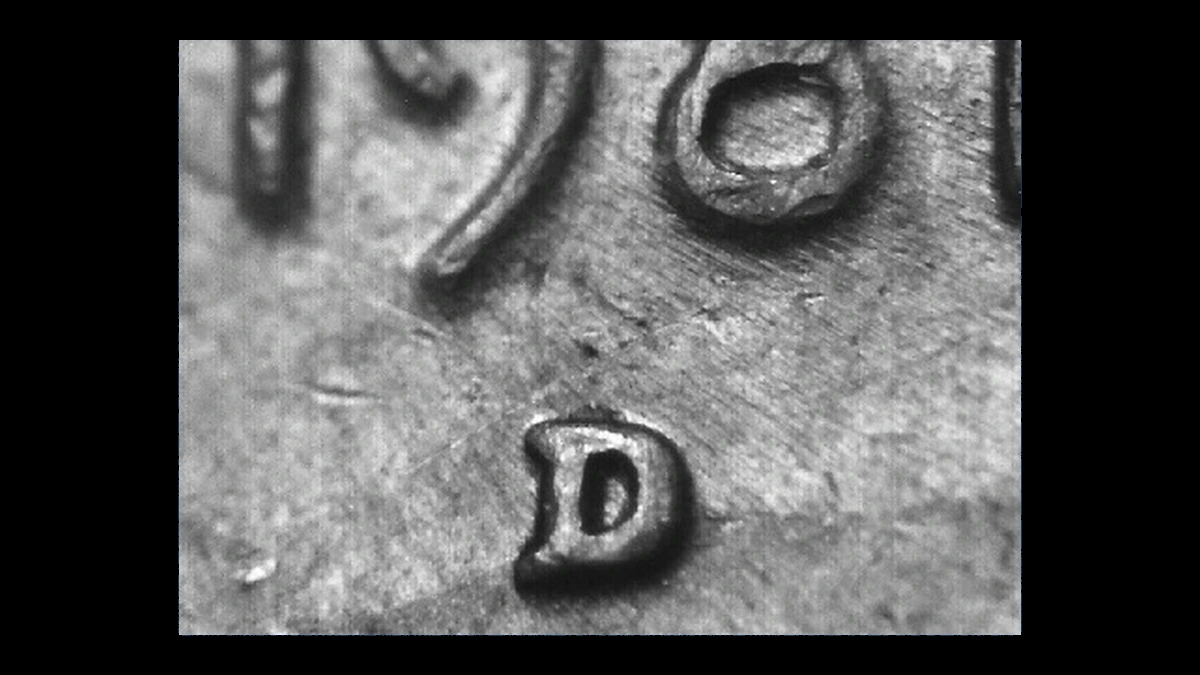
Wexler lists a 1981-D pattern with an S-like curve above D while seeking earlier die-state examples to explain its origin. The visible pattern can be compared without declaring that an S punch caused it.
How to Identify
Keep the curve and D in the same close-up so their distance and direction remain clear. Then compare the supporting line inside the lower-right part of G in GOD and marks near N and T in CENT.
A matching set of marks can identify the reported pattern without proving its original cause. An isolated bump above D is weaker evidence.
What It’s Worth
$10–$150 is the estimate for a clearly matched example of this reported feature. It is not a range for a proven D-over-S error.
No realized auction result is supplied. Better preservation makes the curve easier to examine but does not independently settle its origin.
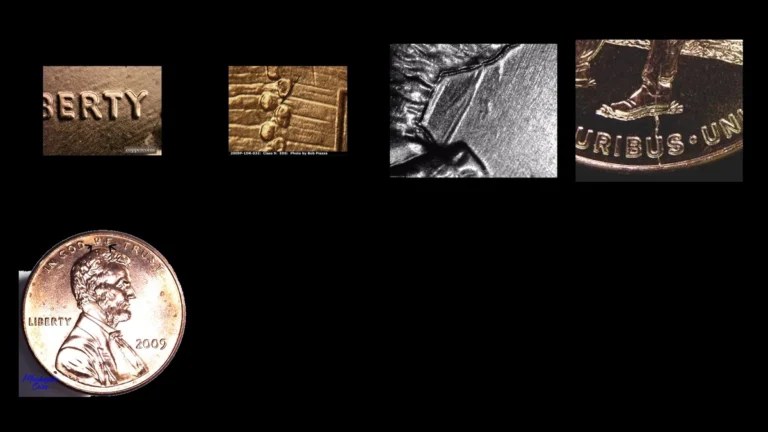
5. 1981 Penny A Thin Ridge Crosses the Surface: Die Crack Error
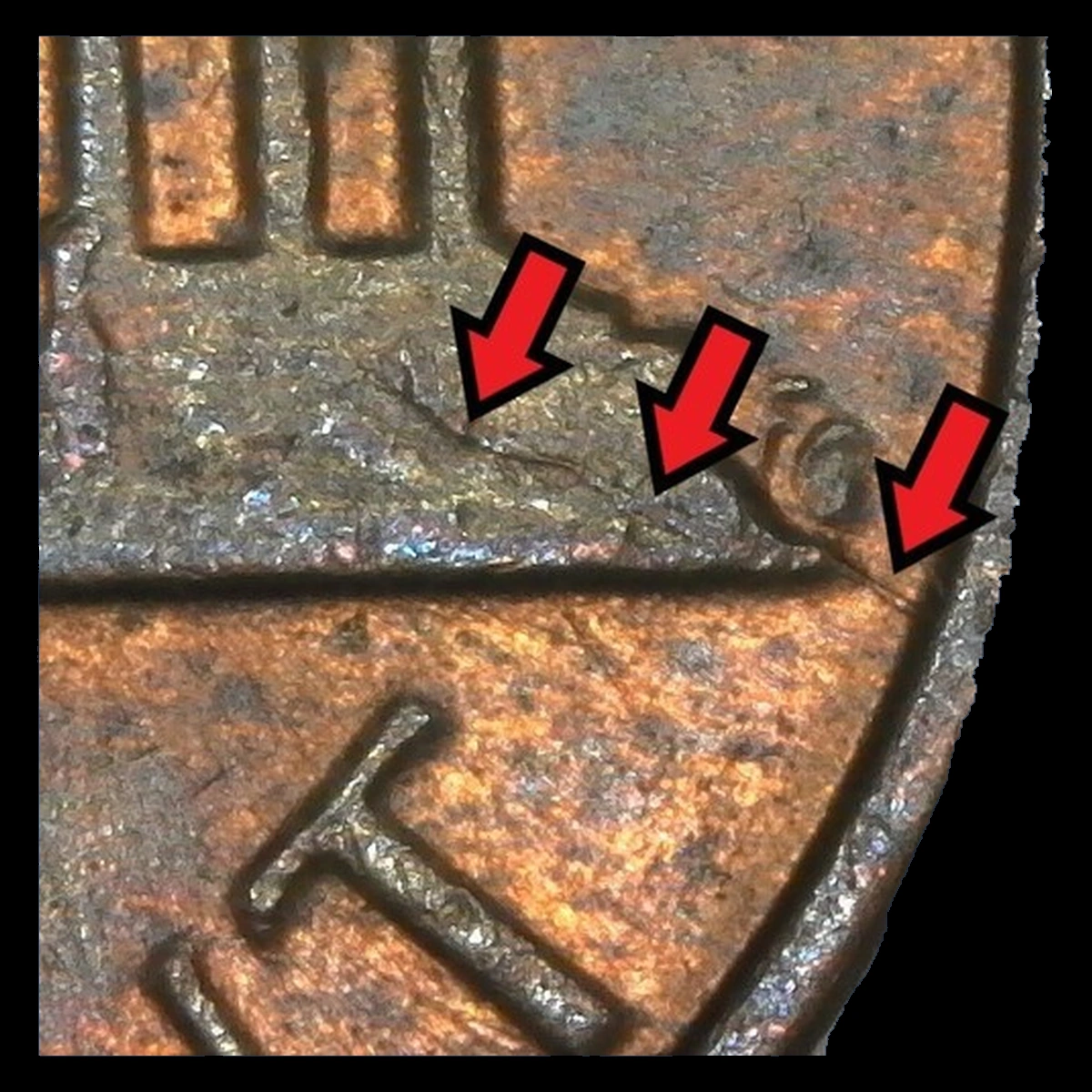
A crack in the steel die can fill with coin metal and leave a raised line on the penny. The year guide reports the type without assigning one route to every 1981 example.
How to Identify
Move side light along the entire ridge. A scratch often has a central groove with displaced metal beside it, while a die-crack line rises from the original struck surface.
A cracked die is different from metal splitting in the coin itself. Larger rim-connected patches also belong with the breaks below.
What It’s Worth
$2–$40 is the estimated range for ordinary identified cracks. A clear long ridge on a clean coin can be more attractive than a tiny trace.
This range does not represent a sale of the guide’s unnamed specimen. Wear or surface damage may make the line harder to establish.
6. 1981 Penny A Letter Gap or Large Rim Area Fills with Metal: Chips and Cuds Error
A BIE chip sits between B and E in LIBERTY, while a separate listed chip affects the R–T area. Larger missing die pieces leave raised rim-connected patches called cuds.
One illustrated 1981 break replaces roughly half of the back design. Other cataloged specimens combine breaks with a bonded pair, brockage, or indent.
How to Identify
Identify the actual letters bordering a small chip. For a cud, trace the whole patch to the rim and note which design it replaces.
Check both faces for related effects, but do not assume all examples share them. A bonded object also needs its own weight record rather than the standard for one cent.
What It’s Worth
$2–$30 is the estimate for ordinary letter chips; rim breaks and exceptional combinations span roughly $30–$3,500. The top end concerns dramatic pieces, not every small cud.
No realized sale is supplied for the roughly half-back break. Related features contribute to one total value rather than separate amounts added together.
7. 1981 Penny The Edge Step Changes Height: Tilted Partial Collar Error
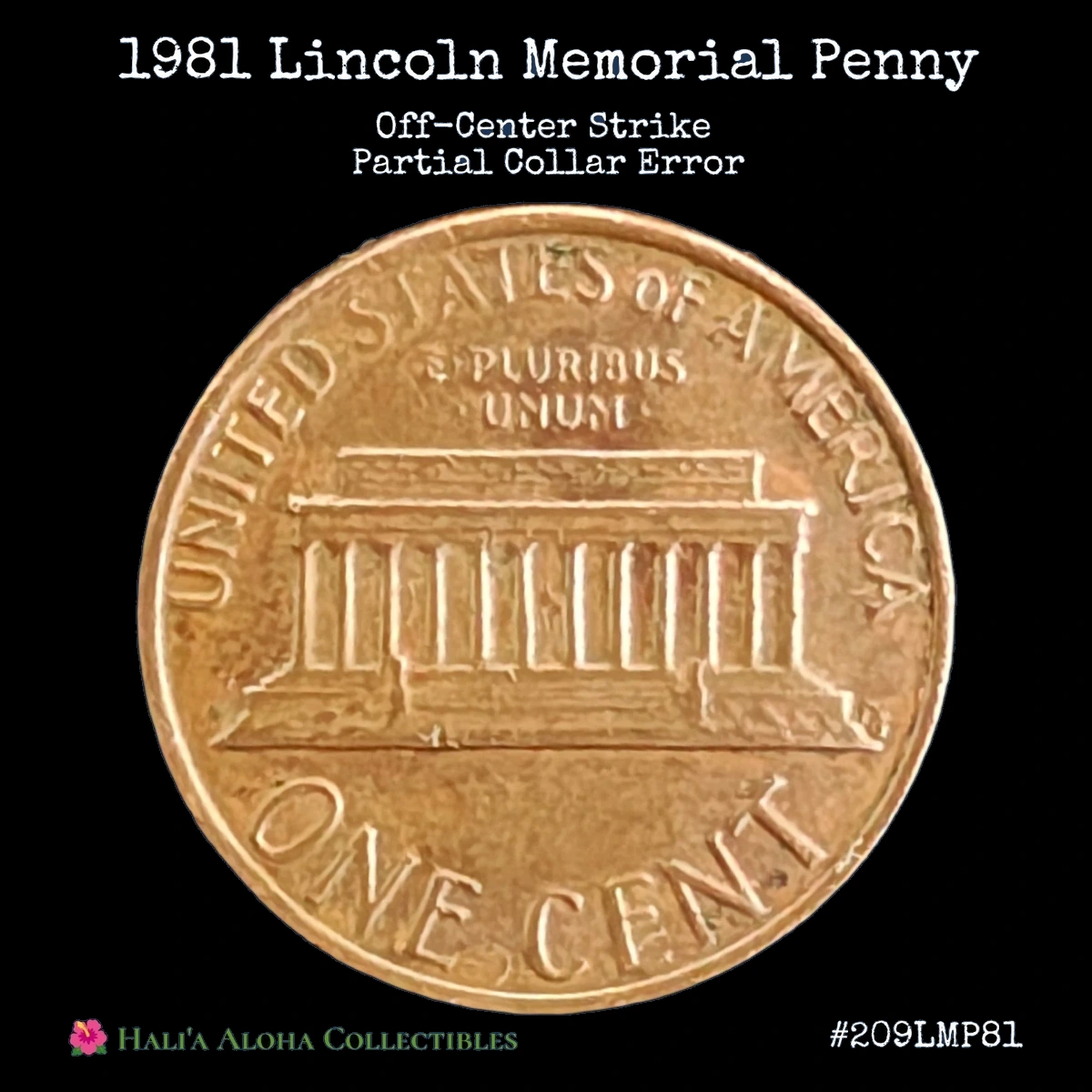
In the reported Philadelphia example, the front appeared slightly wider than the back. Edge photographs supported a tilted partial-collar explanation.
The collar is the ring that holds the blank during striking. Partial contact at a tilt can leave an edge step that rises and falls around the coin.
How to Identify
Turn the edge slowly through side light and photograph several positions. One face-on image or a dark shadow cannot show the changing step clearly.
Look for rolled metal or crushed letters that might explain later squeezing. A normal 1981 copper-alloy cent is about 3.11 grams and 19.05 millimeters wide.
What It’s Worth
$15–$150 is the estimate for an identified tilted partial collar. A continuous, easy-to-see step is more informative than an indistinct thick rim.
The forum report is an observation, not an auction sale. Condition and the strength of the original edge effect determine the comparison.
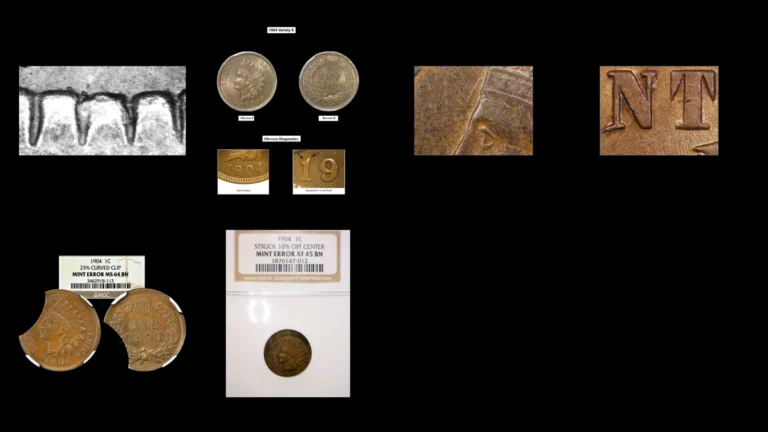
8. 1981 Penny Several Gaps Interrupt the Outline: Clipped Blanks Error
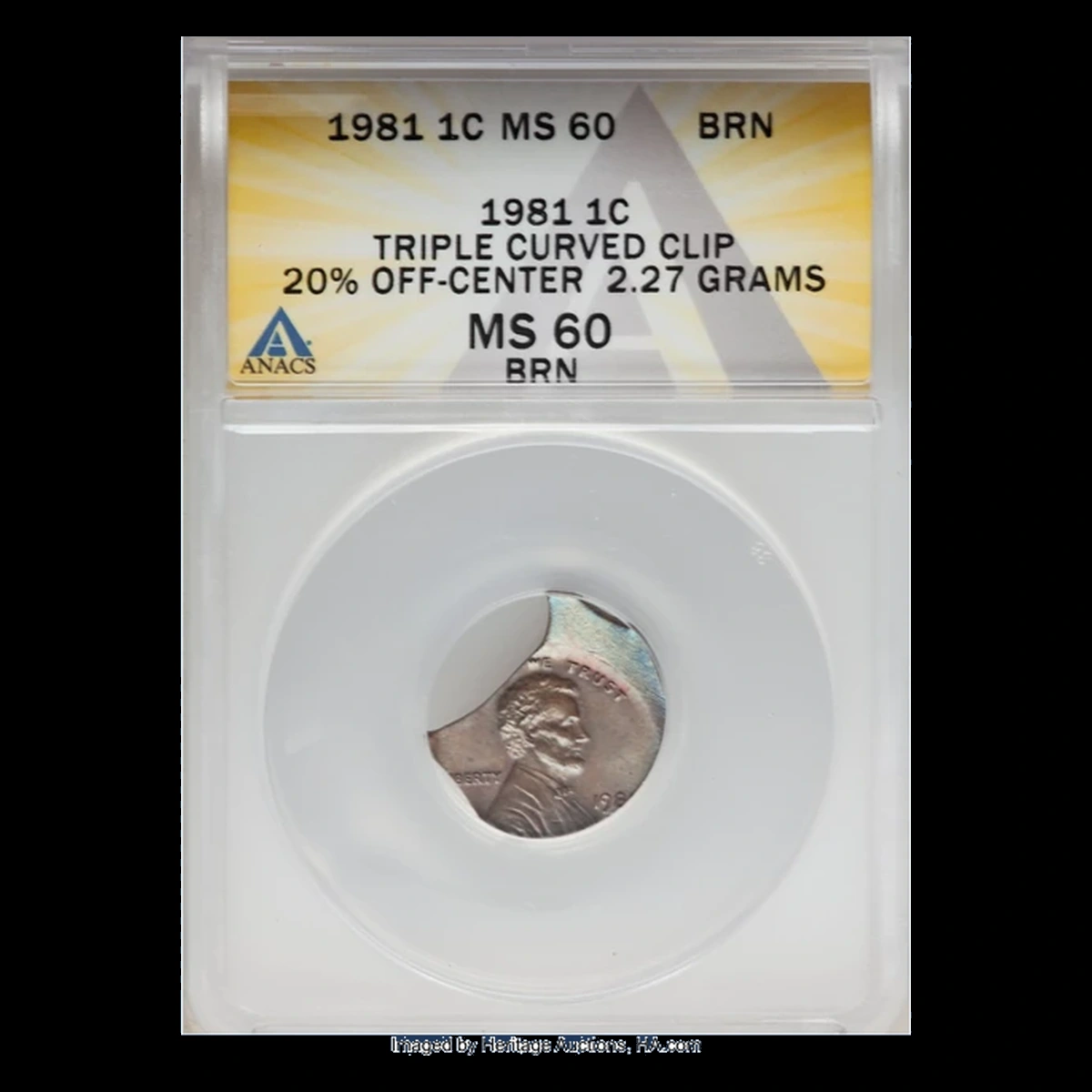
The Denver triple-clip example has three curved missing areas. Other 1981 specimens combine a clip with an off-center strike.
A straight-clip combination weighs 2.51 grams, while a separate triple-clip off-center piece weighs 2.27 grams. A suggested weight in another collector report was only an estimate.
How to Identify
Separate actual missing metal from the intact plain area of an off-center strike. Inspect each clip’s boundary and the way the struck rim reaches its ends.
A weak opposite rim can support a clip, while filing or saw marks point to later removal. Keep measured weights with their own specimens.
What It’s Worth
$15–$600 covers identified clips and stronger combined errors. A readable date and original boundaries improve their appeal.
The Denver triple curved clip sold for $156 in May 2021 as a PCGS MS63 Red and Brown. Three gaps do not create three prices for the same coin.
9. 1981 Penny The Design Shifts, Stretches, or Curves: Off-Center Combinations Error
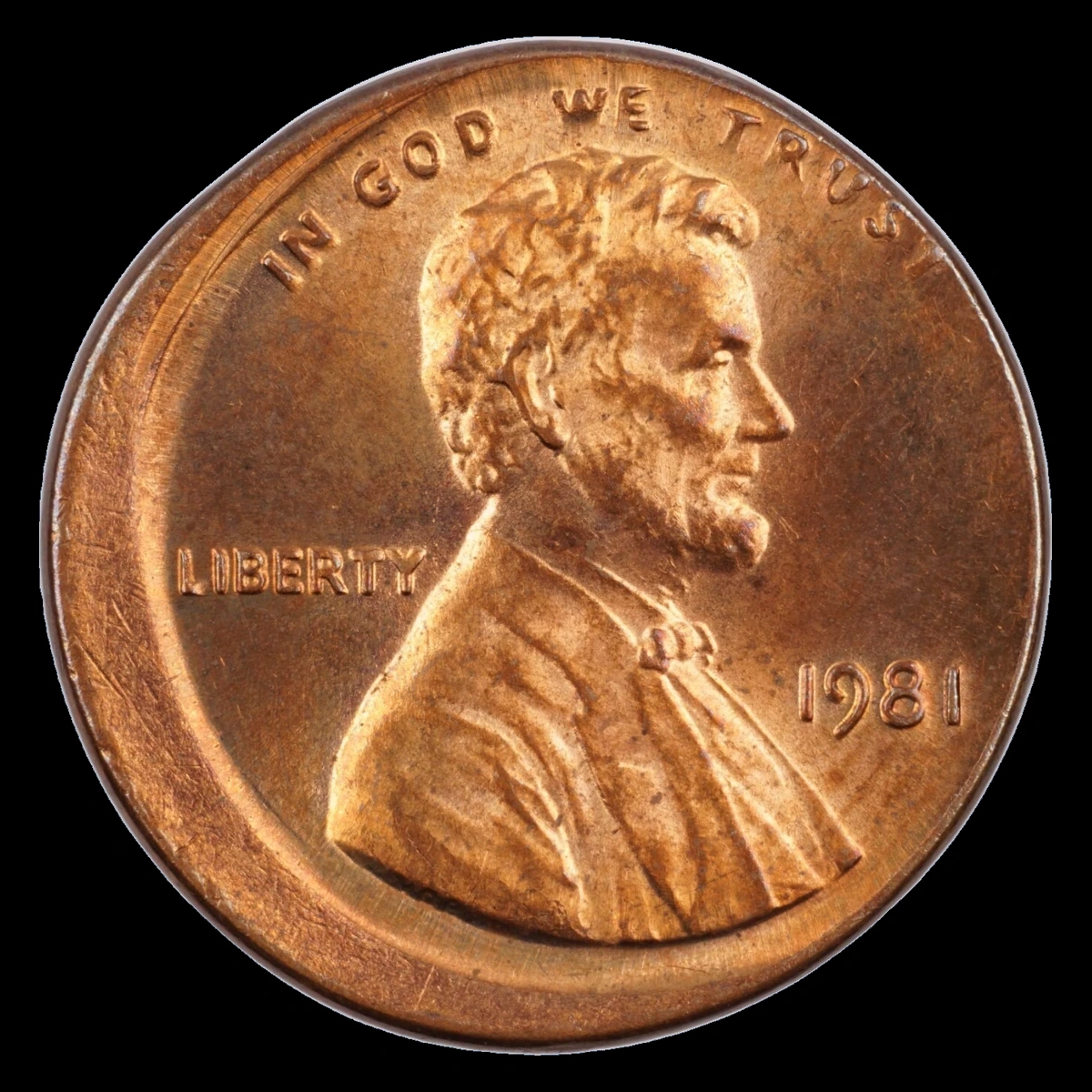
A recorded 75% off-center stretch strike has elongated metal and design. A separate 45% off-center example has a blocked back and an upward-curving edge.
How to Identify
Follow the boundary between original plain metal and the displaced picture on both faces. For the stretch strike, check that the elongated design fits the minting event.
A cupped edge alone does not prove the coin stuck to a die as a cap. Examine the blocked back and displacement together before naming the sequence.
What It’s Worth
$20–$750 is the estimate for ordinary off-center through stronger stretched or cupped examples. Readable identity and clean surfaces remain useful strengths.
The stretch coin is PCGS MS63 Brown and the cupped coin NGC MS64 Brown. These separate grades are not realized sale prices.
10. 1981 Penny An Overlapping Blank Leaves a Hollow: Indent Error
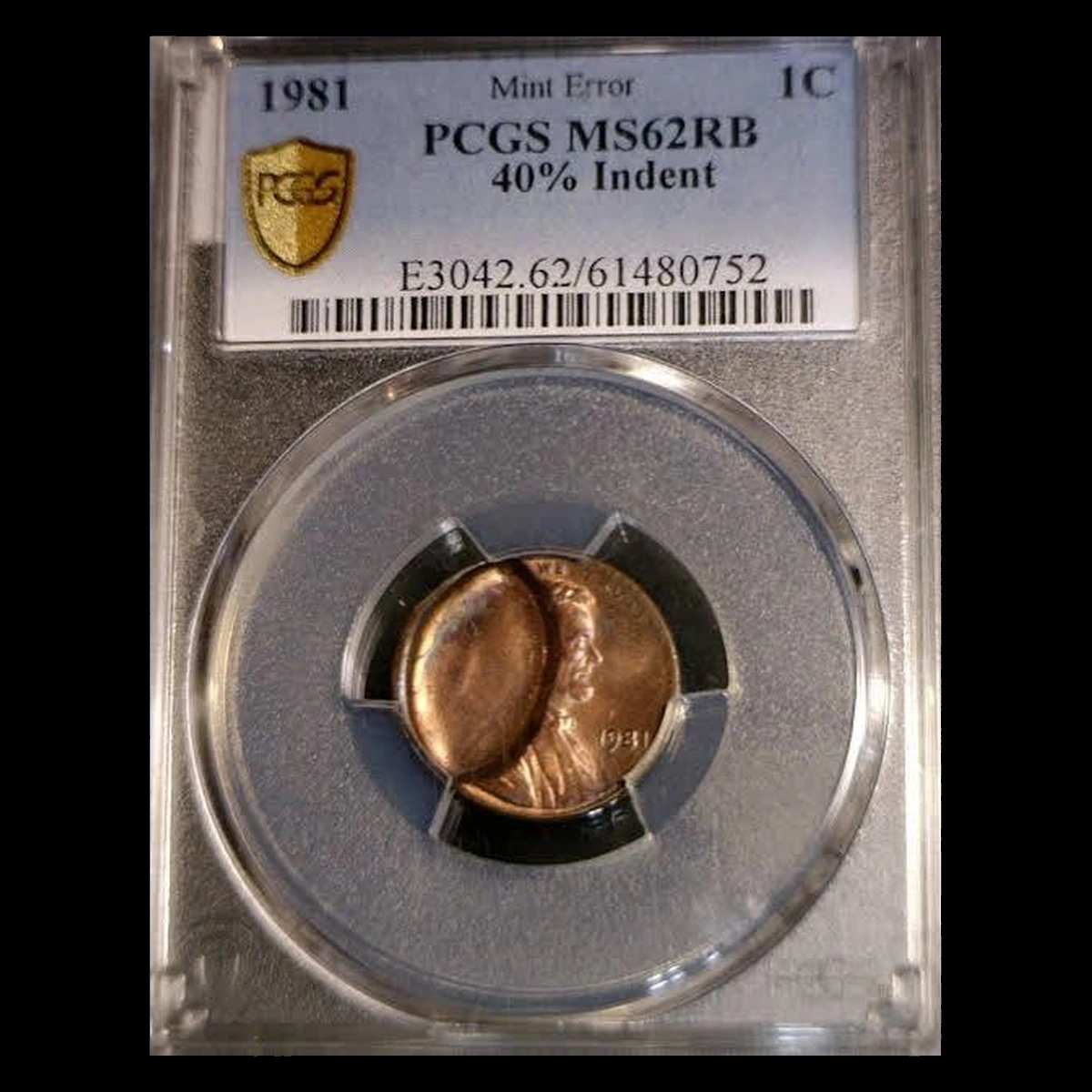
A second blank covering part of a cent can block the design and form a depression during striking. Heritage cataloged a 1981 indent as ANACS MS64 Red and Brown without specifying its affected face or coverage.
How to Identify
Follow how normal design meets the hollow’s boundary. Do not force a portrait into a smooth depression that contains no recognizable design.
A later impact can crush finished detail and push metal at the edge of the dent. Compare the opposite face for a compatible original striking pattern.
What It’s Worth
$30–$500 is the estimated range for identified indents. A clear overlap boundary makes the error easier to understand.
The supplied record gives a condition grade but no realized result used here. Its unspecified face and percentage should remain unspecified.
11. 1981 Penny Sunken Letters Read Backward: Partial Brockage Error
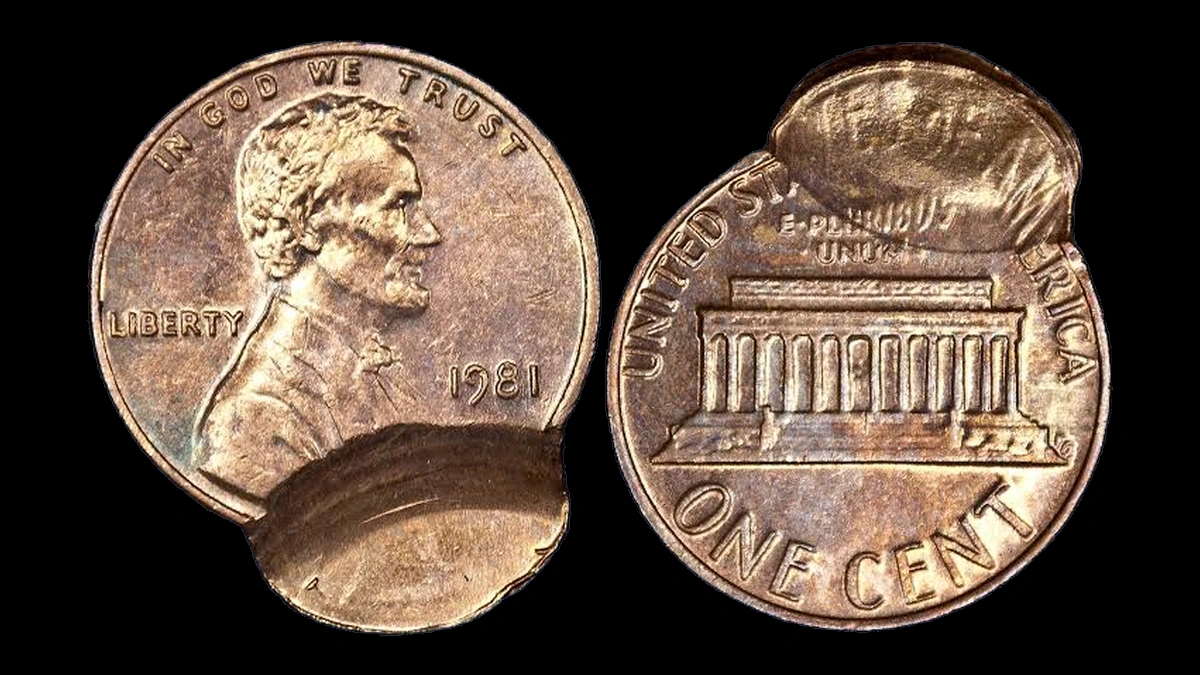
A previously struck coin can impress a mirror image into the next blank. That recessed transferred design is called a brockage.
One listed 1981 example has about 25% coverage; a separate 40% front brockage also has a partial-collar effect. The edge step belongs to the latter coin.
How to Identify
Compare the depth of the backward letters with nearby normal raised lettering. A recognizable sunken image is different from ordinary doubled raised detail.
On the 40% example, record the edge step separately from the mirrored design. Later pressing can also transfer marks, so examine for crushed preexisting detail.
What It’s Worth
$50–$800 is the estimate for clear partial brockages, including supported collar combinations. The visibility of the image helps place a specimen.
A different 2001 partial-front brockage graded MS64 Red sold for $79 in March 2025. Its date, zinc-centered metal, and condition differ from the 1981 records.
12. 1981 Penny Dates and Portraits Occupy Several Positions: Multiple Strikes Error
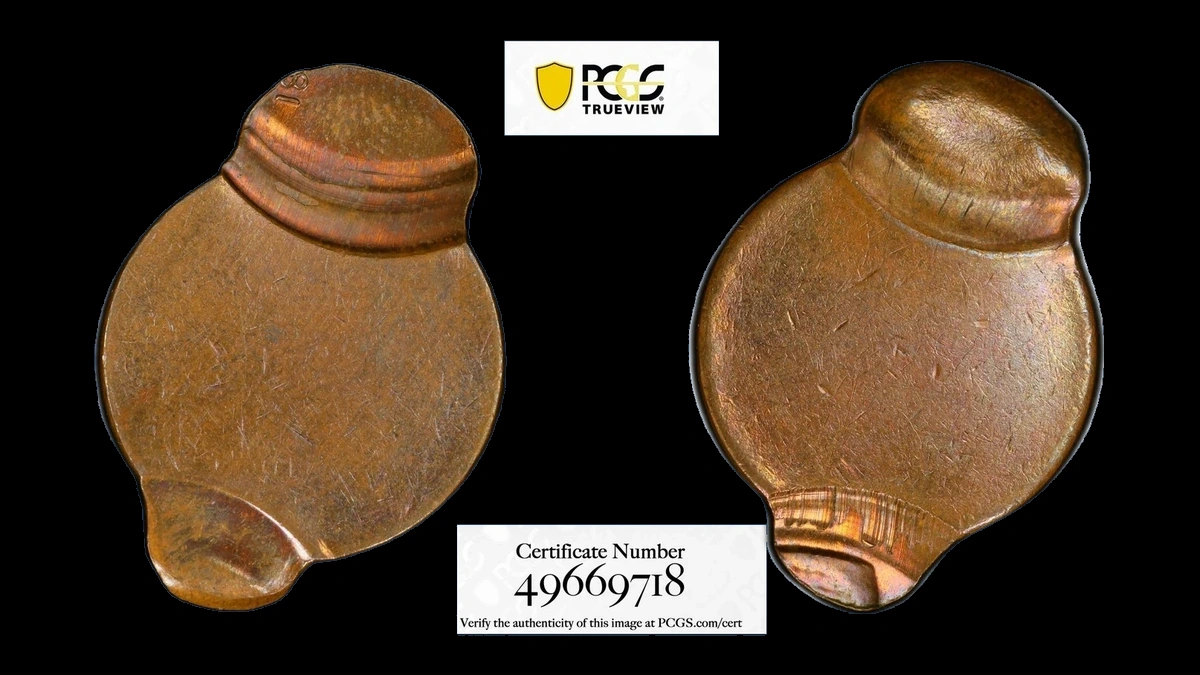
A documented Denver piece was struck off center twice, flipping before the second blow. That record gives no fixed displacement percentage.
A different dealer example has a 90% off-center second strike. A guide separately reports a triple strike with later impressions about 50% and 70% displaced.
How to Identify
Trace a recognizable feature from each impression and check the other face. A flip mixes front and back remnants differently from a simple sideways shift.
Do not import the dealer’s 90% figure into the Denver flipover. Later blows can erase earlier details, so strike counts need visible support.
What It’s Worth
$50–$1,500 is the estimate for identified repeated-strike examples. A clear double strike may be more appealing than three confusing impressions.
The guide reports $1,035 in 2009 for its triple-struck coin. That is a guide-reported figure, not a primary auction result for the separate Denver flipover.
13. 1981 Penny A Struck Ridge Folds the Blank over Itself: Foldover Error
The recorded 1981 foldover received its design while the metal was bent into an altered shape. The NGC MS66 Red and Brown coin preserves that original fold.
How to Identify
Follow the metal around the ridge to see that it is one continuous blank. Two visible layers do not automatically make a bonded pair.
Inspect how the design fits the overlap without opening it. Bending a finished penny later stretches or crushes a design that already existed.
What It’s Worth
$300–$3,000 is the estimate across identified foldovers of differing shape and preservation. An intact fold and readable design strengthen the comparison.
The MS66 Red and Brown example sold for $1,057.50 in January 2015. Later flattening or handling damage can reduce the appeal of a similar coin.
14. 1981 Penny Cent Designs Fit a Smaller Blank: Dime-Blank Strike Error
The Denver example used a 2.2-gram Type One dime blank, whose edge had not received the usual preparatory rim. Separate records concern a Philadelphia piece and a 1981-S Proof with later damage.
How to Identify
A clad dime blank normally starts near 2.268 grams and 17.9 millimeters across. The recorded 2.2 grams is the Denver specimen’s measurement, not a new standard for dimes.
Look for cent designs on layered dime metal without older Roosevelt or torch detail. Type One status belongs to the Denver record, while the S Proof needs its own finish and damage assessment.
What It’s Worth
$200–$2,000 is the estimate for ordinary dime-blank cents; comparable Proof examples fall around $500–$3,500. Later damage must be considered separately.
The Denver Type One coin graded NGC MS64 sold for $299 in June 2004. No realized price is supplied for the damaged Proof.
15. 1981 Penny A Finished Dime Remains beneath the Cent: Double Denomination Error
Recorded combinations include a cent over a 1981-P dime and a Denver cent over a 1981-D dime. On the Denver specimen, both dates and both D letters can be read.
Roosevelt points toward about 1:30 relative to Lincoln on that particular coin. An unused blank would not provide this earlier dime picture.
How to Identify
Follow an older dime feature beneath the cent impression on both faces. Connect each date and mint letter with its own design.
The underlying dime’s nominal weight is 2.268 grams rather than the normal cent’s 3.11 grams. Keep the Denver orientation with that specimen rather than every overstrike.
What It’s Worth
$500–$3,000 is the estimated range for identified 1981 cent-over-dime errors. Readable evidence of both stages helps their appeal.
A 1985 cent over a 1985-P dime graded NGC MS67 sold for $747.50 in April 2011. That comparison is not a sale of either recorded 1981 coin.
16. 1981 Penny Lincoln Sits inside a Gray Cup: Cap on a Nickel Blank Error
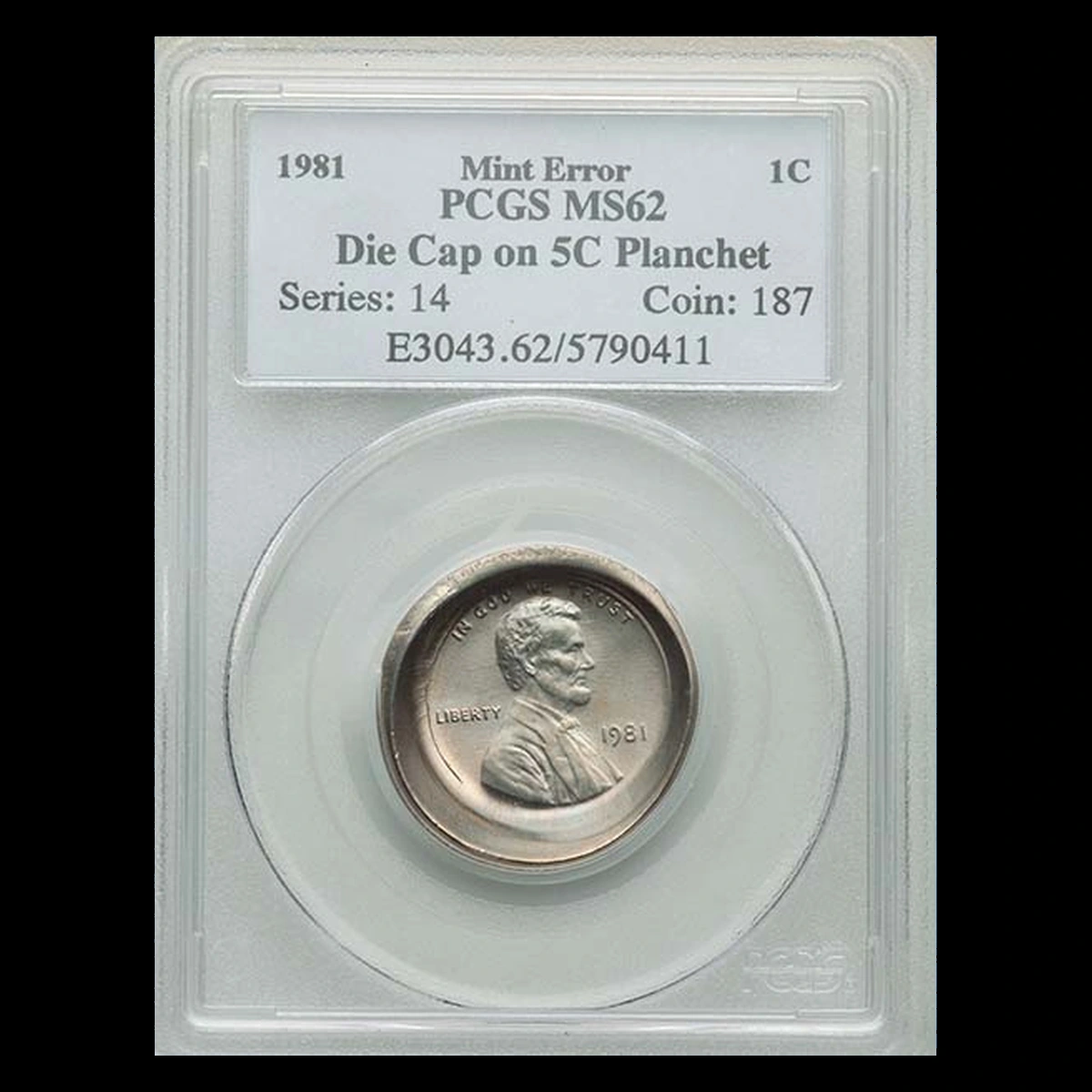
This 1981 error combines a nickel blank with a cent die cap. The wrong blank stayed against the die and developed deep walls around Lincoln’s portrait.
How to Identify
Locate Lincoln inside the cup and follow the continuous metal into the walls. The nickel-type blank must be established independently of its gray color.
A standard nickel blank begins at 5.00 grams and 21.21 millimeters across. Those are reference figures, not supplied measurements of this cap’s final weight or width.
What It’s Worth
$3,500–$10,000 is the estimate for this authenticated combination. It is one cap on one wrong blank, not two separately priced objects.
The PCGS MS62 example sold for $5,820 in April 2021. An ordinary copper cent with a bent rim is a different comparison.
17. 1981 Penny A Cent Cap Receives Dime Designs: Two-Stage Cap Error
Mint Error News describes a 1981 cent cap that later encountered a Roosevelt front die and an already struck dime. The same copper object retained Lincoln remnants while acquiring Roosevelt detail and a recessed backward impression.
How to Identify
Trace the earlier Lincoln detail before comparing the later dime design and brockage. Interior, exterior, and side views help explain the sequence.
These stages concern one cap, not two layers to pull apart. Copper color or tall walls alone cannot prove that two denominations were involved.
What It’s Worth
$2,000–$12,000 is a comparison-based estimate for this identified complex history. No recorded sale of the published specimen is supplied.
The separate nickel-blank cap brought $5,820 in April 2021. It is a major combined-error comparison with different metal and a different sequence.
18. 1981 Penny A Small Lincoln Impression Appears on a Larger Coin: Front-Only Overstrike Error
Reported 1981 cent-front impressions occur on an Anthony dollar and a 1981-P Kennedy half dollar. A collector listing identifies the dollar host as 1979, not 1981.
The half dollar became bowl-shaped and has no Memorial impression on its back. Something blocked direct contact with the cent reverse die.
How to Identify
Separate the small Lincoln impression from the original Anthony or Kennedy design. Read the host date independently from the cent tool’s year.
Reference weights are 8.1 grams for an Anthony dollar and 11.34 grams for a clad half dollar. Their larger bodies and altered final shapes need comparison with those denominations, not with a cent blank.
What It’s Worth
$4,000–$20,000 is the estimate for authenticated large-coin combinations of this kind. Clear earlier design, the cent impression, and preserved shape all matter.
The 1981-P half-dollar example sold for $13,200 in July 2021 as a PCGS MS64. That sale is not a price for the separate Anthony-dollar report.
Conclusion
A 1981 penny check can begin with ordinary lettering and finish with a coin that barely resembles a cent. Use the visible design to choose the category before applying a price.
Keep reported patterns, measured weights, and combined errors attached to their actual specimens. A faint mintmark curve does not prove its cause, and a cup-shaped coin needs more than its shape to establish a rare two-denomination history.