Rare 1986 Half Dollar Errors (List & Pictures)
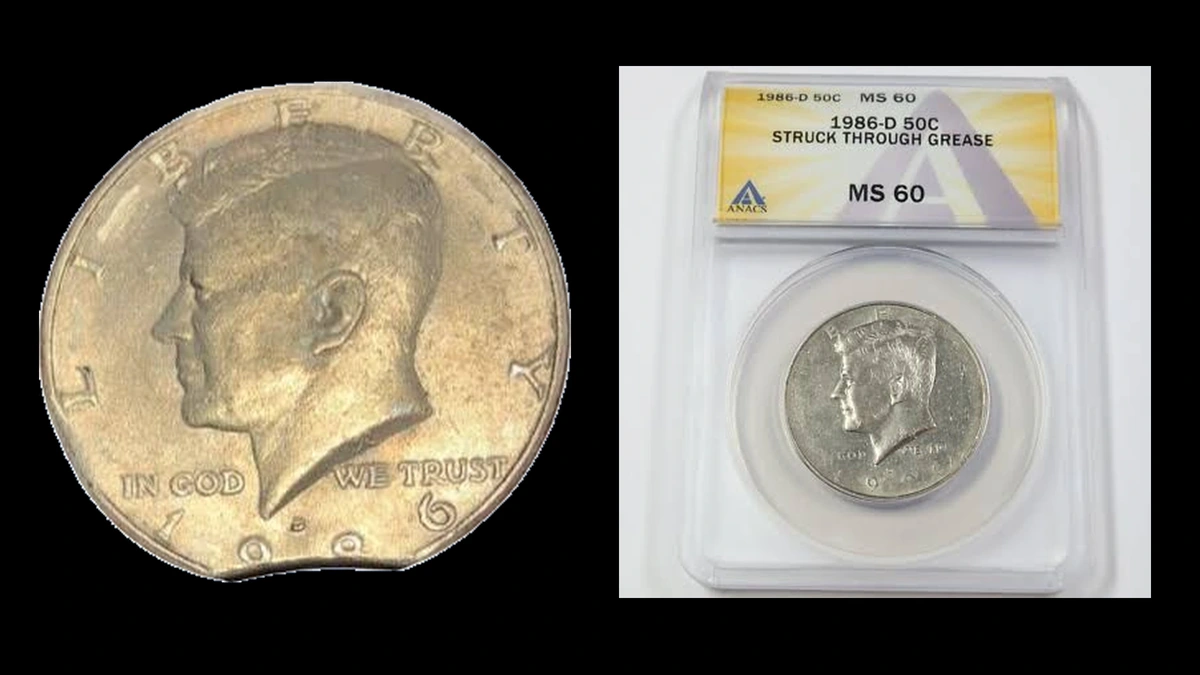
A copper-colored stripe around a 1986 half is normal. A missing piece, peeling layer, or expanded outline calls for a closer look when searching for 1986 Kennedy half dollar errors.
The estimated ranges here run from $15–$800. A strong-clash 1973-S Proof sold for $720 in October 2022, but that specially made collector coin is a different-year comparison, not a typical 1986 value.
Use the outline first to separate edge problems, then inspect smaller marks and letters.
| What you see | Category | Estimated range |
|---|---|---|
| A gap in the edge | Clip | $15–$250 |
| A full picture on an expanded coin | Broadstrike on Type 1 blank | $150–$800 |
| An incomplete picture beside bare metal | Off-center strike | $30–$400 |
| A loose surface layer | Local lamination | $15–$100 |
| A weak patch or object impression | Strike-through | $25–$600 |
| Traces of the opposite design | Clashed dies | $30–$80 |
| A second part of D | Repunched mintmark | $15–$60 |
| Rounded extra front outlines | Doubled die | $50–$200 |
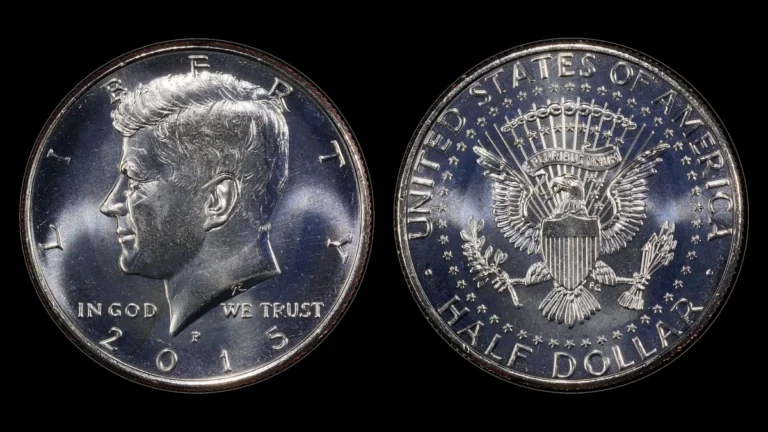
All 1986 halves, including Proofs, use bonded outer layers around a copper core. The normal weight is 11.34 grams, the diameter is about 30.61 mm, and the edge has grooves.
1. 1986 Half Dollar A Piece Is Missing from the Edge: Clipped Blank Error
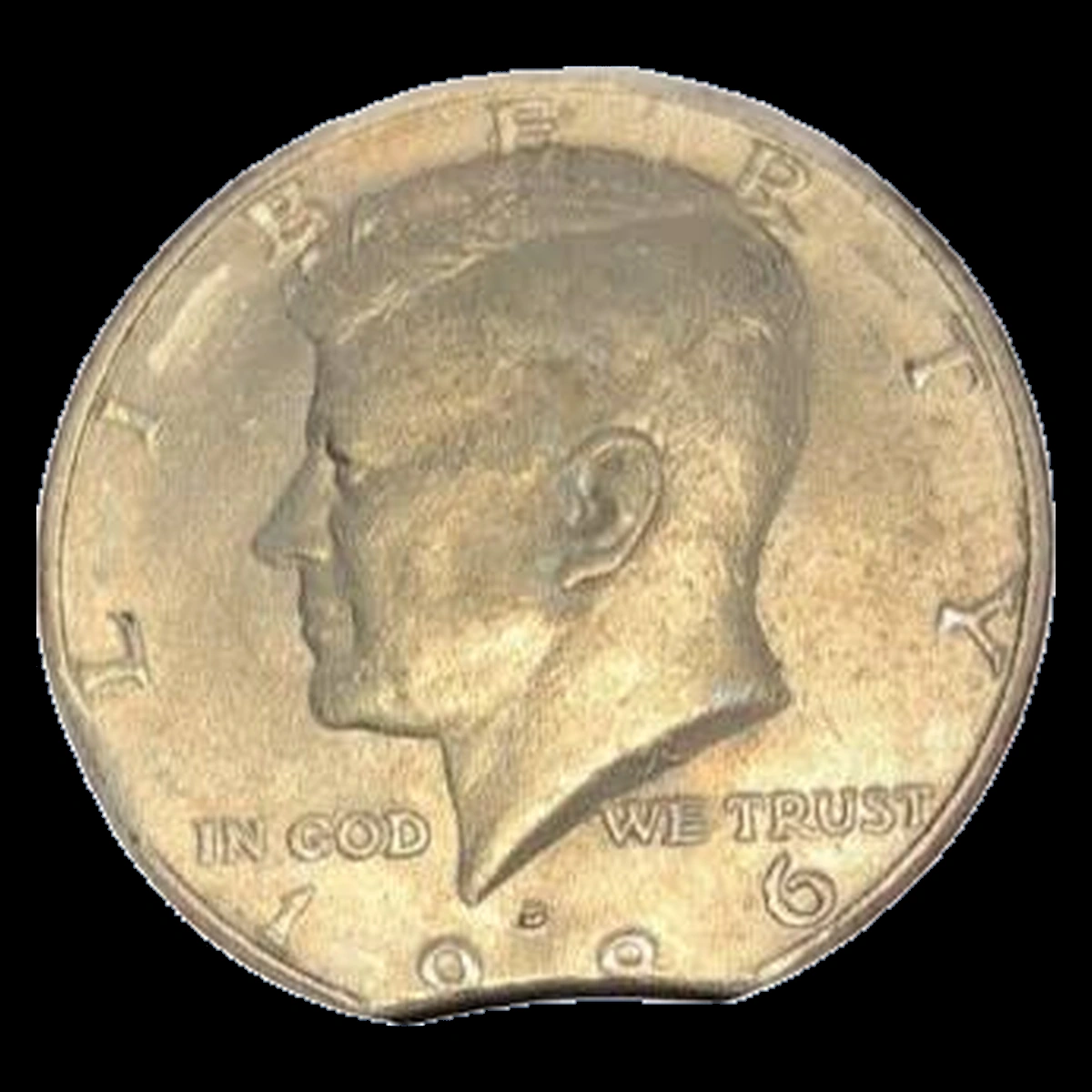
A clip can form when the punch cutting blanks overlaps an earlier opening in the metal strip. Cutting across the strip’s outside boundary can produce a different shape.
The year reports do not identify one 1986 clip’s size or outline. The missing metal must show evidence that it was absent before the design was struck.
How to Identify
Inspect both ends of the gap and follow the rim and nearby details into the opening. Fresh burrs or file tracks cutting through a finished edge suggest later removal.
The exposed wall can show the bonded layers around the copper core. That construction is normal; the timing of the missing segment is the question.
Weakness opposite the gap can support a clip but is not equally visible on every example. Lower weight alone cannot distinguish a mint clip from a later cut.
What It’s Worth
$15–$250 is the estimate for small through conspicuous genuine clips on ordinary 1986 halves. The date, surviving design, and surface condition help collectors compare them.
These are guide estimates rather than documented 1986 auction results. A claimed percentage does not replace an examination of the gap and surrounding strike.
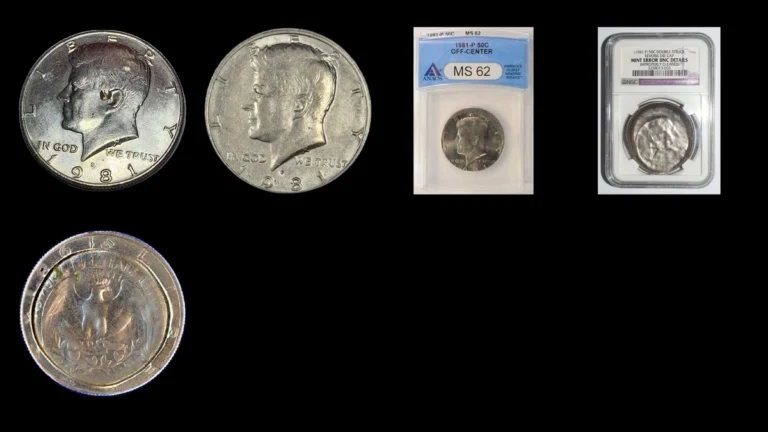
2. 1986 Half Dollar The Whole Design Fits inside a Wide Outline: Type 1 Blank Broadstrike Error
The Calkins collection lists a 1986-P graded PCGS MS62 as a broadstrike on a Type 1 blank. A Type 1 blank skipped the usual edge-squeezing step that prepares a raised rim before striking.
It also spread because the retaining ring did not hold it during the strike. This is an unfinished half-dollar blank, not a blank intended for another denomination.
How to Identify
Look for the complete design within the expanded outline. A partly missing picture beside bare metal points toward an off-center strike instead.
Compare the perimeter with the listed Type 1 example. A wide border by itself cannot prove the skipped rim-preparation step.
Measure several spans and inspect altered or absent edge grooves. The weight should usually remain near normal because broadstriking spreads metal rather than cutting it away.
What It’s Worth
$150–$800 is the estimate for a genuine example with a firm unfinished-blank identification. The collection entry gives no sale price for its MS62 coin.
An ordinary 1990-P broadstrike graded MS61 sold for $192 in March 2025. It is a different-year comparison and was not listed as a Type 1 blank.
3. 1986 Half Dollar Bare Metal Sits beside a Cut-Off Picture: Off-Center Strike Error
An off-center blank receives the design in the wrong position. Part of the picture misses the metal while another area of the blank remains untouched.
The 1986 guides list this category without a specific auctioned coin or measured shift. The full date and any percentage need to come from the individual example.
How to Identify
Turn the coin over and compare both faces. Corresponding missing design and bare areas should support the same misplaced blank.
If only one picture is shifted, a misaligned die may be the cause. Inspect empty-looking metal for polishing or other removal that could imitate an unstruck area.
Record the date and P or D wherever they survive. A partial number should not automatically be completed as 1986.
What It’s Worth
$30–$400 is the guide-based estimate from small shifts to more obvious examples with useful identifying details. A readable year and pleasing surfaces improve the comparison.
A larger bare area does not always bring a higher price if it removes the date or accompanies heavy damage. The range is not a series of confirmed 1986 auction results.
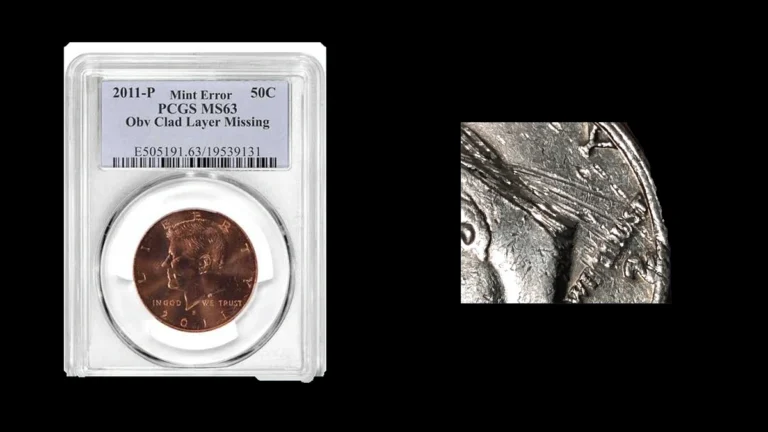
4. 1986 Half Dollar A Small Surface Layer Peels: Local Lamination Error
A local lamination separates a small layer because of a weakness in the metal. It differs from losing an entire outer layer of a clad half dollar.
The 1986 guide reports peeling without identifying one mint or photographed location. The ordinary copper stripe at the edge is not evidence of this defect.
How to Identify
Leave a loose flake attached and follow its seam with a magnifier. Look for an actual separating layer rather than sharp metal ridges pushed up by a scrape.
Trace any unusual edge split onto the face. A copper-colored stain alone does not show that material has peeled away.
Weight may fall below normal when a layer is lost, while an attached flake may leave it nearly unchanged. Wear and damage can also lower weight.
What It’s Worth
$15–$100 is the estimated whole-coin range for a genuine local lamination. The figure follows the year guide’s discussion of defective blanks.
A visible retained flake across part of the design can attract more interest than a short edge seam. Corrosion or deliberate peeling does not receive the same mint-error allowance.
5. 1986 Half Dollar A Detail Is Blocked or an Object Leaves a Mark: Strike-Through Error
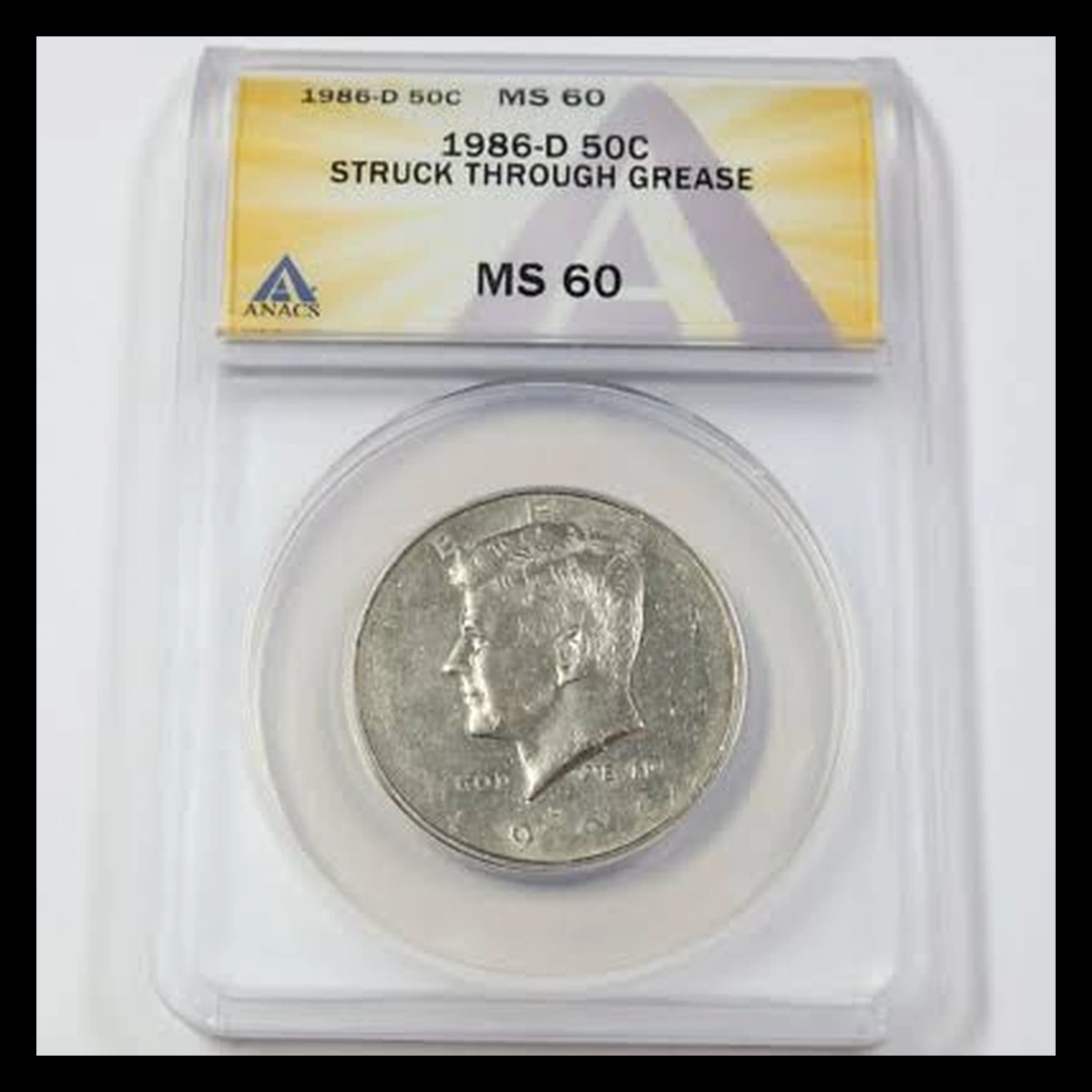
One 1986-P report concerns a weak first date digit; another describes a debris impression on a coin with an ANACS Details label noting scratches. Grease can block small design recesses, while harder material may leave a deeper shape.
A separate Proof-set report places a mark near the short rays above the olive branch around nine o’clock on the back. The set suggests an S-mint coin, but the actual mintmark still needs to confirm it.
How to Identify
For the weak date, compare the missing first digit with its surroundings. Seeing only “986” does not independently prove the full year or the presence of grease.
On the debris coin, distinguish the obstruction impression from scratches crossing the surface. The scratches are separate damage.
View the Proof through its plastic from different angles and confirm S. A line on the holder can look like a line on the coin.
What It’s Worth
$25–$600 is the broader estimate, covering weak details through clearer debris impressions or notable Proof examples. The guide places minor weak features around $25–$150.
A 1976-D struck through material on both faces sold for $114 in March 2025. That different-year result is not a sale price for any of the three 1986 reports.
Scratches on the ANACS example reduce its appeal compared with a similar undamaged coin. Keep condition with the particular strike-through being priced.
6. 1986 Half Dollar Eagle Traces Appear near Kennedy: Clashed Dies Error
Reports about a 1986-D suggest wing or shield outlines on the portrait side. Such traces can result when the two dies strike each other without a blank between them.
The marked tools then transfer unwanted shapes to later coins. The reported example has no established grading-service identification for the clash, so a recognizable match matters.
How to Identify
Compare the suspicious shapes with the eagle on the back. Look for parts of a wing or shield, not just an isolated line.
Correctly oriented outline comparisons can test whether the designs would meet in that position. A shape in the wrong place is not explained by the proposed clash.
Inspect for scratches and crushed metal on both sides. Pressing finished coins together can leave misleading marks with a different cause.
What It’s Worth
$30–$80 is the estimate for a modest clash on a regular 1986 half. Clear recognizable shapes generally attract more interest than faint unexplained lines.
The 1973-S strong-clash Proof sold for $720 in October 2022 in PR68 Deep Cameo condition. Its exceptionally preserved surfaces and strong frosted-to-mirror contrast make it a different comparison from an ordinary 1986 circulation coin.
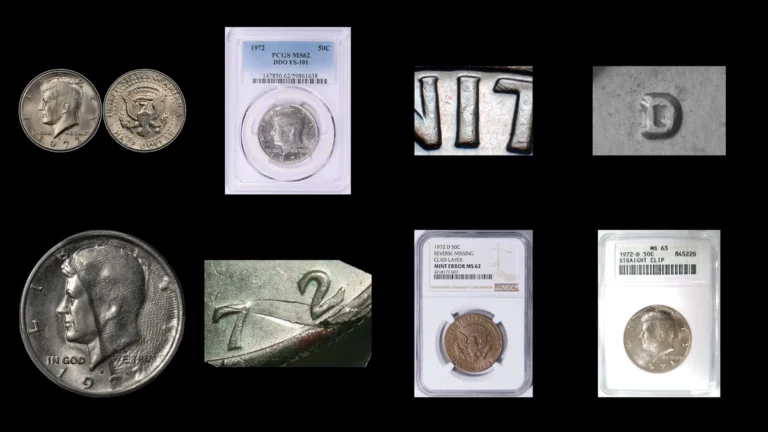
7. 1986 Half Dollar An Extra Curve Sits beside D: Repunched Mintmark Error
The D below Kennedy’s portrait was punched into the die during preparation. An earlier impression could remain if the punch moved before its final placement.
A year guide reports this on 1986-D halves without establishing a matching numbered variety. The extra detail needs to form part of another D.
How to Identify
Follow the D’s straight stem and curved edge under magnification. Look for a second recognizable letter part that remains visible under changing light.
A thin flat ledge can result from movement during striking. General thickness around the letter is also insufficient.
Use a half-dollar reference with the same feature. A 1986-D cent with repunching does not identify a half-dollar variety.
What It’s Worth
$15–$60 is the guide estimate for minor genuine repunching. It is a suggested collector range rather than a confirmed auction result.
A clear extra curve is easier to recognize than a tiny bump surrounded by wear or scratches. Ordinary strike doubling does not receive the same allowance.
8. 1986 Half Dollar Front Letters Have Split Corners: Doubled Die Error
A doubled die carries repeated design detail before it strikes the coin. Reports for Philadelphia and Denver 1986 halves mention LIBERTY, IN GOD WE TRUST, and the date without establishing a numbered variety.
That is different from a tool moving during one coin’s strike. It can leave the same pattern of extra outlines on multiple coins.
How to Identify
Check several letters for small corner splits or rounded extra edges. A consistent pattern is more useful than one reflective date digit.
A low shelf cutting into the main letter can be strike doubling, while soft swollen lettering can come from a worn die. Compare with a normal coin of the same mint under similar lighting.
Keep the full date and mintmark with close-ups of the motto and LIBERTY. That preserves the identity of the coin behind the enlarged detail.
What It’s Worth
$50–$200 is the estimate for a convincing identified example. Better preservation and clearer doubling help support the higher portion.
A recognized 1974-D FS-101 graded MS64 sold for $49 in May 2026. It provides a modest different-year comparison without proving the identity of a 1986 find.
Conclusion
A wide coin with its whole design needs a different explanation from one with a bare crescent and missing picture. Checking that distinction first helps separate the documented Type 1 broadstrike from reported off-center errors.
For smaller features, keep the layer boundary, extra letter shape, or blocked detail visible beside normal design. Leave loose metal untouched and record the date, mintmark, and finish before choosing a value comparison.