Rare 1987 Half Dollar Errors (List & Pictures)
The 1987-P and 1987-D halves went into collector sets, but that does not rule out mistakes made at the Mint. Reports of 1987 Kennedy half dollar errors include missing metal, extra detail, and designs that point the wrong way.
The guide ranges here total $10–$600. A 1976 off-center Kennedy brought $480 in December 2025; it is a comparison from another year, not a sale of a 1987 coin.
Work around the edge first, then inspect each face and check how they line up.
| Inspection area | Possible feature | Estimated range |
|---|---|---|
| Missing edge | Clip | $10–$60 |
| Raised rim patch | Cud | $50–$150 |
| Bare area beside the design | Off-center strike | $75–$600 |
| Front letters | Doubled die | $75–$300 |
| Unexpected design traces | Die clash | $100–$210 |
| Area above the eagle | Strike-through | $100–$450 |
| Eagle’s angle after a flip | Rotated dies | $40–$400 |
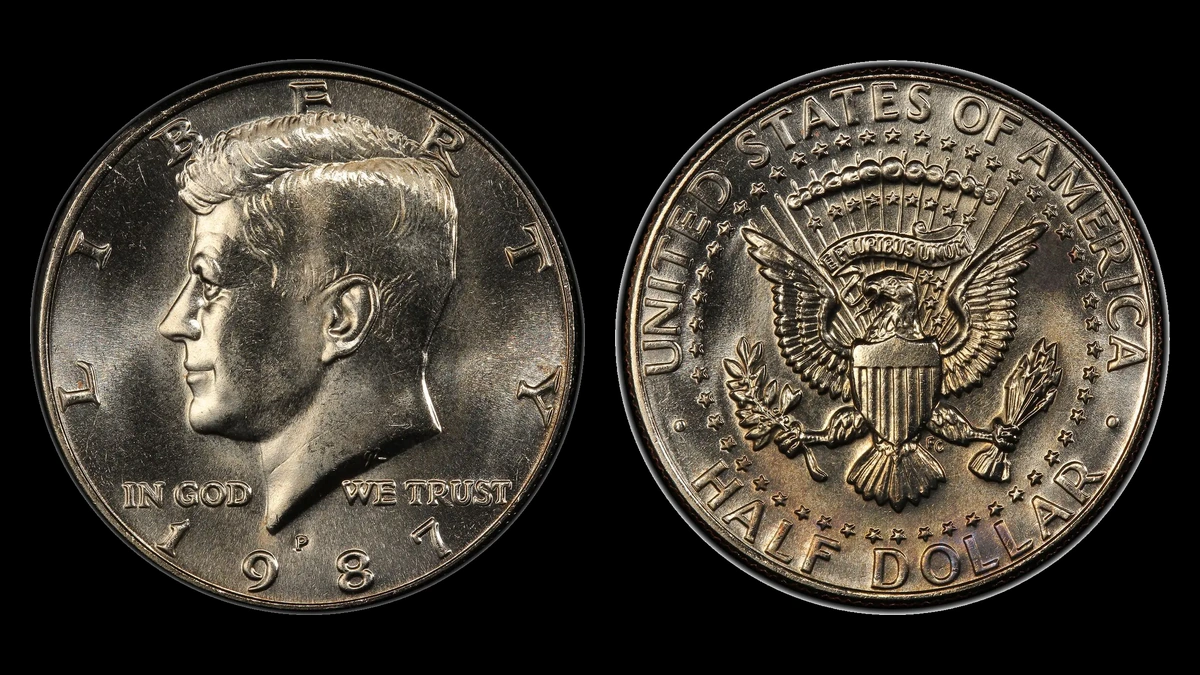
The normal coin weighs 11.34 grams and measures about 30.61 mm across. A copper-colored stripe between its outer layers is ordinary, as are the grooves around the edge.
1. 1987 Half Dollar A Bite at the Edge: Reported Clipped Blank Error
A seller describes a clip on a 1987-P half, but provides no exact missing percentage. The listing is a report of an error, not independent certification.
A real curved clip begins while blanks are being punched from a strip of metal. If a punch overlaps an earlier hole, the next blank comes out with a piece missing.
How to Identify
Check both ends of the gap for filing, sharp burrs, or cuts through finished edge grooves. Those signs suggest that metal was removed after the coin was struck.
The design and rim beside a genuine clip can show metal flowing toward the missing area. Weakness on the opposite rim is another useful clue when present.
Compare the date and P below Kennedy’s neck with the seller’s described coin. A lower weight supports missing metal, but cannot by itself distinguish a clip from a later cut.
What It’s Worth
$10–$60 is the guide-based estimate for a modest genuine clip on a circulated or ordinary unworn 1987-P. It is not a recorded sale price for the listed piece.
A clearly formed clip and clean surfaces make a better comparison than an edge damaged in several places. The shape of a bite alone does not justify an error premium.
2. 1987 Half Dollar A Lump Joined to the Rim: Reported Cud Error
A cud looks like a raised patch where part of the normal picture should be. It reaches the rim because a piece broke away from the edge of the steel stamping tool, or die.
Coin metal filled the resulting hole during striking. The year guide reports a substantial example on a 1987-D, without mapping its exact location.
How to Identify
Follow the patch to the rim and look for an uninterrupted connection. A lone bump inside the design is not the same feature.
Check under side lighting for an added-metal seam or a smeared impact mark. Weak detail directly opposite the patch may help support a genuine cud.
Read the D below the neck before matching the Denver report. Do not copy the location of a cud on a different coin onto this year.
What It’s Worth
$50–$150 is the published estimate for an unworn 1987-D with a clear rim cud. The available account gives no verified auction result for its example.
Size, visibility, and preservation affect where a confirmed piece fits. A bulky damaged rim or added solder needs a different explanation and comparison.
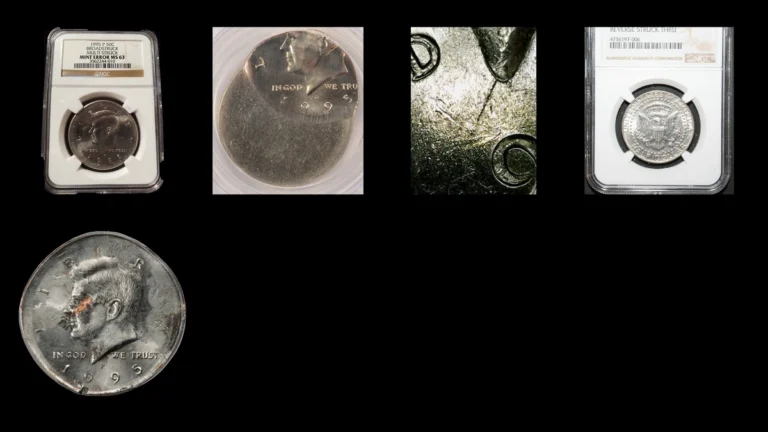
3. 1987 Half Dollar A Shifted Picture Beside Bare Metal: Reported Off-Center Strike Error
An off-center blank sits partly outside the area reached by the dies. Some metal stays unstruck while part of the intended picture misses the coin.
The supplied 1987 list includes this error but identifies no mint or measured shift. The coin in hand must supply those details.
How to Identify
Photograph both sides with the full outline visible. Both designs should show displacement consistent with the same bare area.
Read the surviving date and mint letter rather than filling in missing details. Inspect the blank area for grinding or hammering that could imitate an incomplete strike.
A wide border on one face alone can result from a misaligned die. A full design on an expanded coin also differs from a true off-center strike.
What It’s Worth
$75–$600 is the estimate for a dated, unworn 1987 example with clear displacement on both sides. A readable year and an obvious shift help make the error easier to collect.
A 1976 Kennedy graded MS64 sold for $480 in December 2025 with a 15% off-center strike. That sale supports a same-series comparison, but neither its date nor its percentage describes a 1987 piece.
4. 1987 Half Dollar Repeated Front Letters: Reported Doubled Die Error
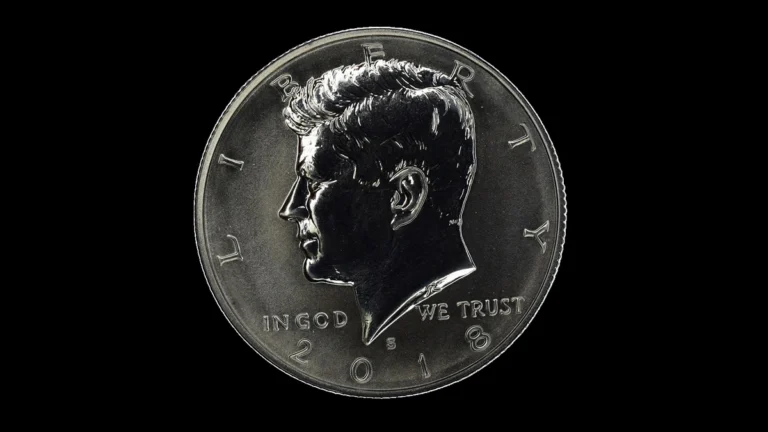
Letters in LIBERTY and IN GOD WE TRUST, along with the date, are useful places to inspect the reported 1987-P doubling. A bright line along Kennedy’s face is less helpful on its own.
A doubled die carries repeated detail in the tool itself. Every coin struck from that tool should show the same pattern.
How to Identify
Look through a 10× magnifier for split corners or separate rounded outlines. Compare several letters so that one reflective edge does not decide the identification.
A low, flat shelf can come from movement during striking instead. Turn the coin under the light to separate that shelf from rounded doubled detail.
The supplied guide mentions an MS66 example but gives no traceable variety number. A confirmed reference match is still needed before assigning a specific doubled-die variety.
What It’s Worth
$75–$300 is a guide-based estimate for a confirmed unworn 1987-P with clear front doubling. It does not price ordinary flat strike doubling.
The high end assumes an obvious repeated pattern and attractive surfaces. MS66 describes a well-preserved unworn coin; the guide’s mention of that grade is not a verified sale record.
5. 1987 Half Dollar Traces of the Other Face: Reported Die Clash Error
An odd mark becomes more meaningful when it resembles part of the design on the opposite side. A clash can transfer such a trace when the two dies hit without a blank between them.
Later coins pick up the unwanted mark. The 1987 guide reports clashes without identifying a mint or an exact transferred shape.
How to Identify
Compare both faces at the same size and look for a shape that explains the extra trace. Merely finding a faint line is not enough.
Change the light direction and inspect how the mark meets the surrounding surface. Scratches and lines left by polishing a die can be unusual without reproducing the opposite design.
What It’s Worth
$100–$210 is the supplied estimate for a clear clash on an attractive unworn coin around MS65–MS66. These grades describe coins with relatively few marks.
The guide does not supply an independently traceable clash sale. A recognizable copied shape is a stronger basis for that range than an unexplained streak.
6. 1987 Half Dollar Missing Detail Above the Eagle: Strike-Through Error
The back of a cataloged 1987 half has a large interruption above the eagle. That area normally contains rays, clouds, and stars.
Something came between the die and blank and blocked the picture during striking. The account does not identify the material, so the patch should not automatically be called cloth, grease, or metal.
How to Identify
Compare the area with a normal reverse, then inspect the boundary of the missing detail. A localized shallow patch with naturally struck surroundings differs from sharp scratches or scattered corrosion pits.
The catalog entry places the feature above the eagle but gives no mint letter or exact outline. Read the coin’s own mintmark on the front.
What It’s Worth
$100–$450 is the estimate for a clear reverse strike-through on an ordinary unworn 1987 half. The cataloged example has no stated numerical grade or sale price.
A 1992-D struck through a piece of edge metal, graded MS64, sold for $336 in July 2021. Its known obstruction helps compare the error class, but does not identify the material involved in 1987.
7. 1987 Half Dollar A Tilted Eagle After Flipping: Reported Rotated Dies Error
A coin can have centered pictures that do not point the right way relative to each other. That happens when one die is turned away from its intended angle.
The Denver report describes about 45 degrees of rotation. Although it also uses “misaligned,” rotation means a change in angle rather than a sideways shift.
How to Identify
Hold Kennedy upright, then flip the coin straight from top to bottom. On a normal piece, the eagle should now stand upright.
Repeat the movement without twisting your fingers sideways. A genuine rotation leaves the eagle at the same tilted angle each time.
A fixed vertical line and protractor help measure the result. Two separate photographs that have each been turned upright cannot demonstrate this error.
What It’s Worth
$40–$400 is the estimate for a confirmed 1987-D with roughly 45-degree rotation, covering ordinary through especially attractive unworn examples. Both preservation and the measured angle matter.
A different 2000-P with 75-degree clockwise rotation sold for $79 in March 2025 in MS61 condition. Its greater angle did not automatically produce a high price, and that sale is not a 1987 record.
Conclusion
The most useful first question is whether you see missing metal, added-looking detail, or a design in the wrong position. Each answer leads to a different check, even when sellers use similar error labels.
Keep the coin’s mint, condition, and actual feature with its price comparison. These seven entries combine a cataloged strike-through with reported categories; a guide estimate and a documented sale serve different purposes.