Rare 1988 Penny Errors (List & Pictures)
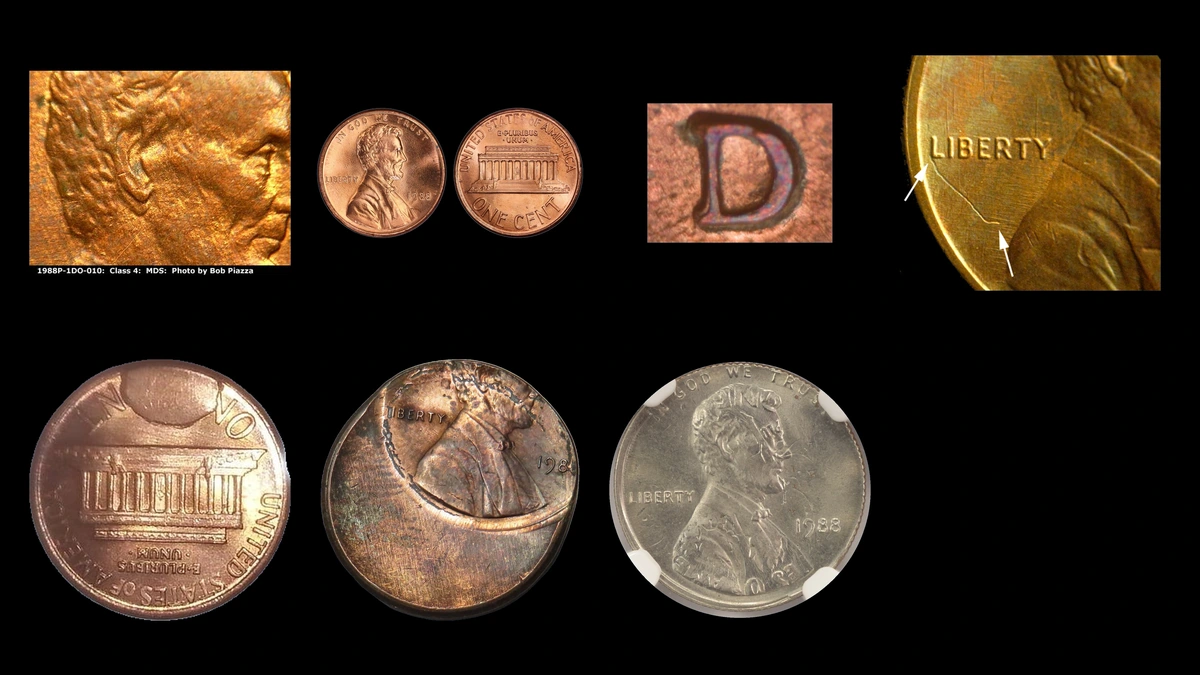
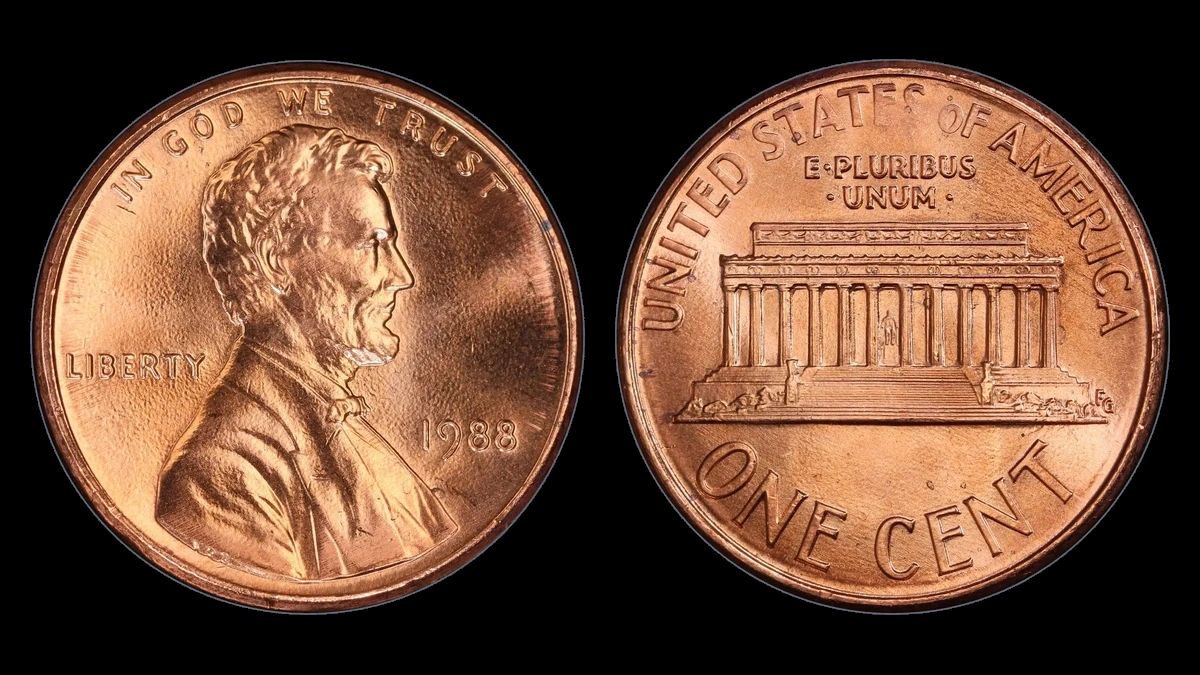
Two tiny spots deserve attention when checking 1988 penny errors: the bottom of Lincoln’s ear and the G in the designer’s initials. A superb doubled-ear example brought $3,120, while other errors can be worth only a few dollars.
The estimates here span $5–$3,500. Start with those small design changes, then use the edge, color, and overlapping pictures to sort the larger striking errors.
1. 1988 Penny Lincoln Has an Extra Lower Earlobe: Doubled Ear Error
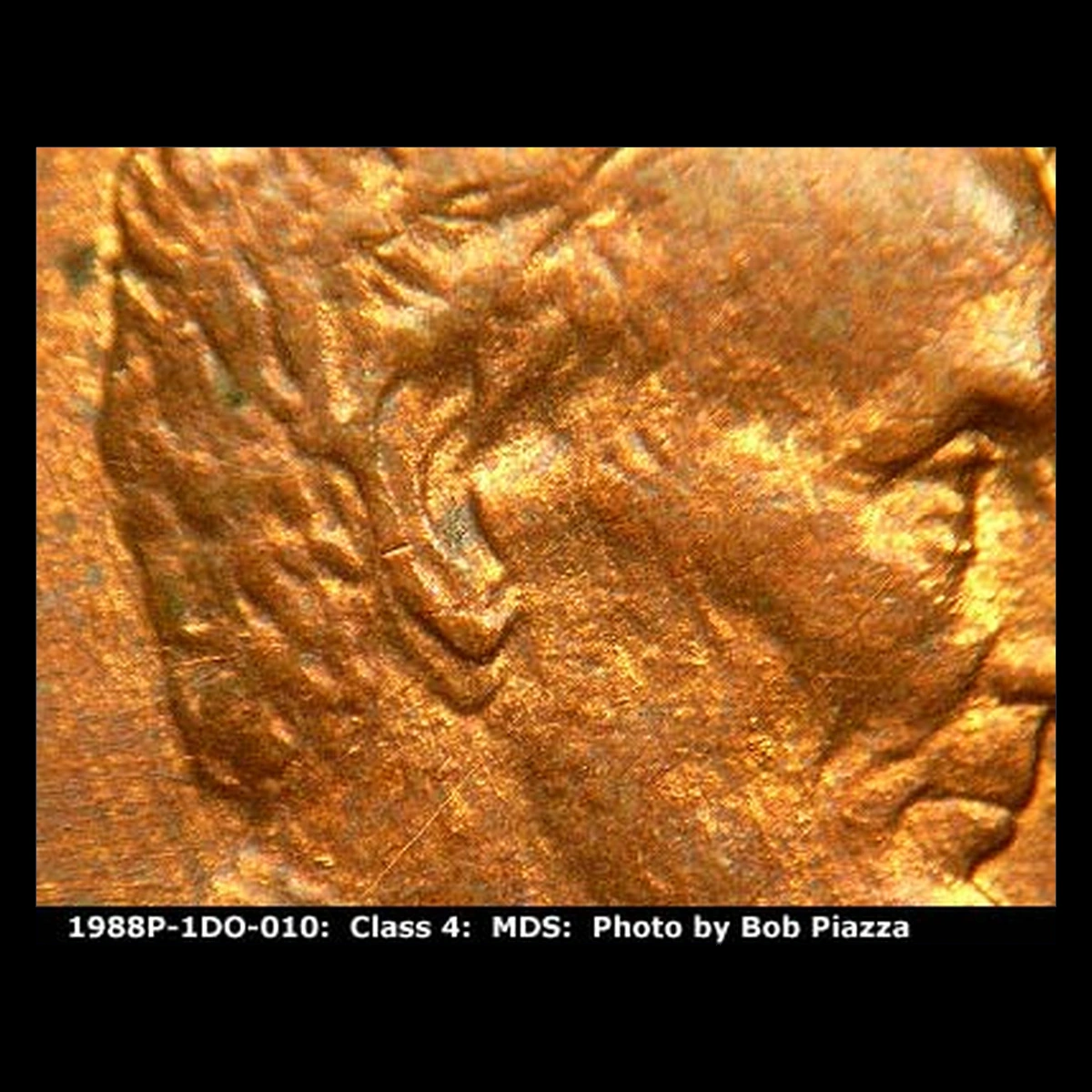
The recognized FS-101 variety has an extra rounded lobe below Lincoln’s ear. The die already carried that detail, so a single strike could place it on each coin made from the tool.
Specialists reported this variety in 2011, well after the pennies entered circulation. FS-101 names the pattern, not the coin’s condition.
How to Identify
Concentrate on the bottom of the ear and compare the two contours with a matching photograph. A random bump beside the ear is not enough.
The PCGS FS-101 record concerns this specific variety. Do not require beard or clothing features found on doubled-ear cents from other years.
A flat ledge or a bright line from split copper plating can imitate an extra edge. The rounded lobe in the correct position is the useful clue.
What It’s Worth
$200–$3,500 is the working range for identified examples in differing condition. Sharp separation and attractive surfaces help support stronger prices.
A PCGS MS66 Red example sold for $3,120 on April 15, 2020. That high grade and remaining copper-red color help explain why its result should not be assigned to every worn candidate.
2. 1988 Penny The Tiny G Has Flared Ends: Reverse of 1989 Error
Find FG beside the Memorial’s lower-right corner. The G can reveal a back design associated with 1989 on a penny dated 1988.
The normal 1988 G has a plain right upright, while the later-style G has small projections at both ends. This variety is called Flared G or Reverse of 1989, with “reverse” meaning the back.
How to Identify
Compare the G with one on an ordinary 1989 penny under magnification. Inspect both ends of the upright rather than a single bright spot or copper bubble.
Both Philadelphia and Denver examples are known, so record whether D is present. Wide spacing between A and M in AMERICA is normal for 1988 and does not identify this variety.
What It’s Worth
$20–$1,000 is the estimated Philadelphia range, while Denver examples span roughly $50–$3,000. Condition strongly affects both.
PCGS records a Philadelphia MS66 Red eBay result of $890 in July 2023 and a Denver MS67 Red result of $2,600 in April 2023. These coins differed in grade as well as mint, so the figures are not a fixed mint-to-mint price ratio.
3. 1988 Penny A Second Stroke Appears Beside D: Repunched Mintmark Error
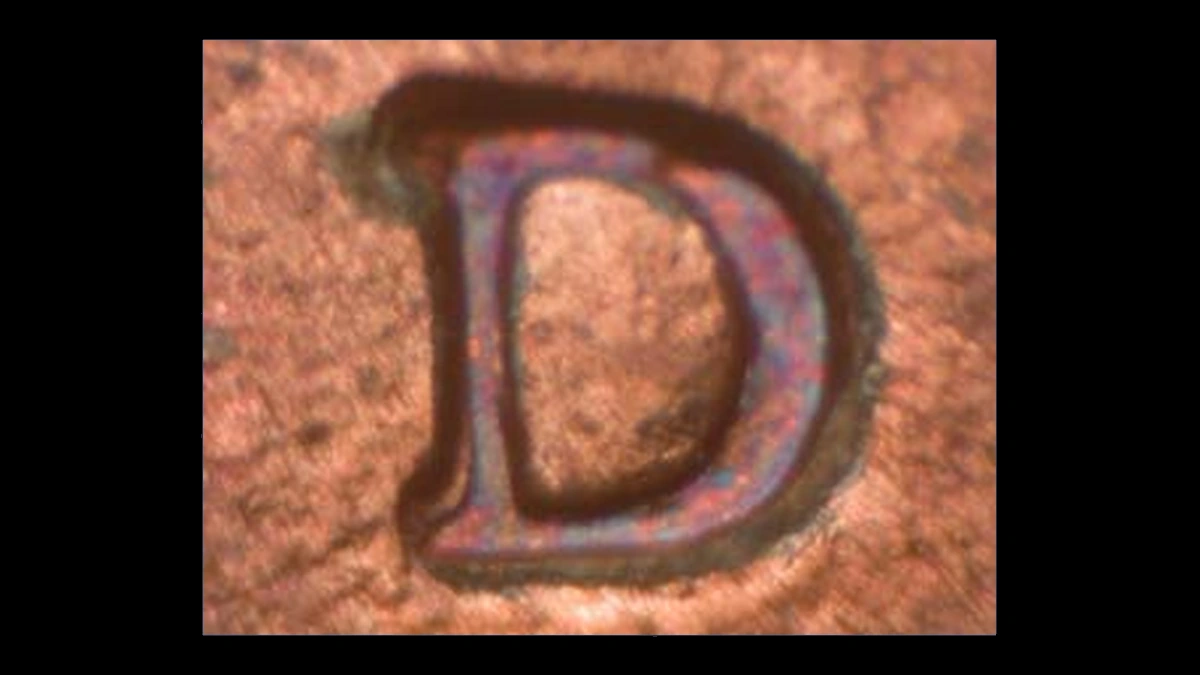
On the reported 1988-D variety, an extra stroke appears at the lower-left part of D. Mint letters were still punched into dies separately at this time.
A shifted repeat of the punch left part of an earlier letter visible. Lincoln and the date therefore do not need matching doubling.
How to Identify
Inspect beside the lower upright of D and change the light angle. A real raised stroke stays in the same position, while a reflection can move.
Check for a pale zinc line where copper has split along the letter. That exposed metal is different from another raised piece of the D.
What It’s Worth
$5–$100 is the estimated range for a clear matching example. Sharp lettering and easy-to-see separation improve appeal.
This comparison-based range is not an auction result for the specific lower-left stroke. Wear or damage that obscures the small feature makes both identification and pricing harder.
4. 1988 Penny A Groove Runs from LIBERTY Toward the Shoulder: Struck-Through Error
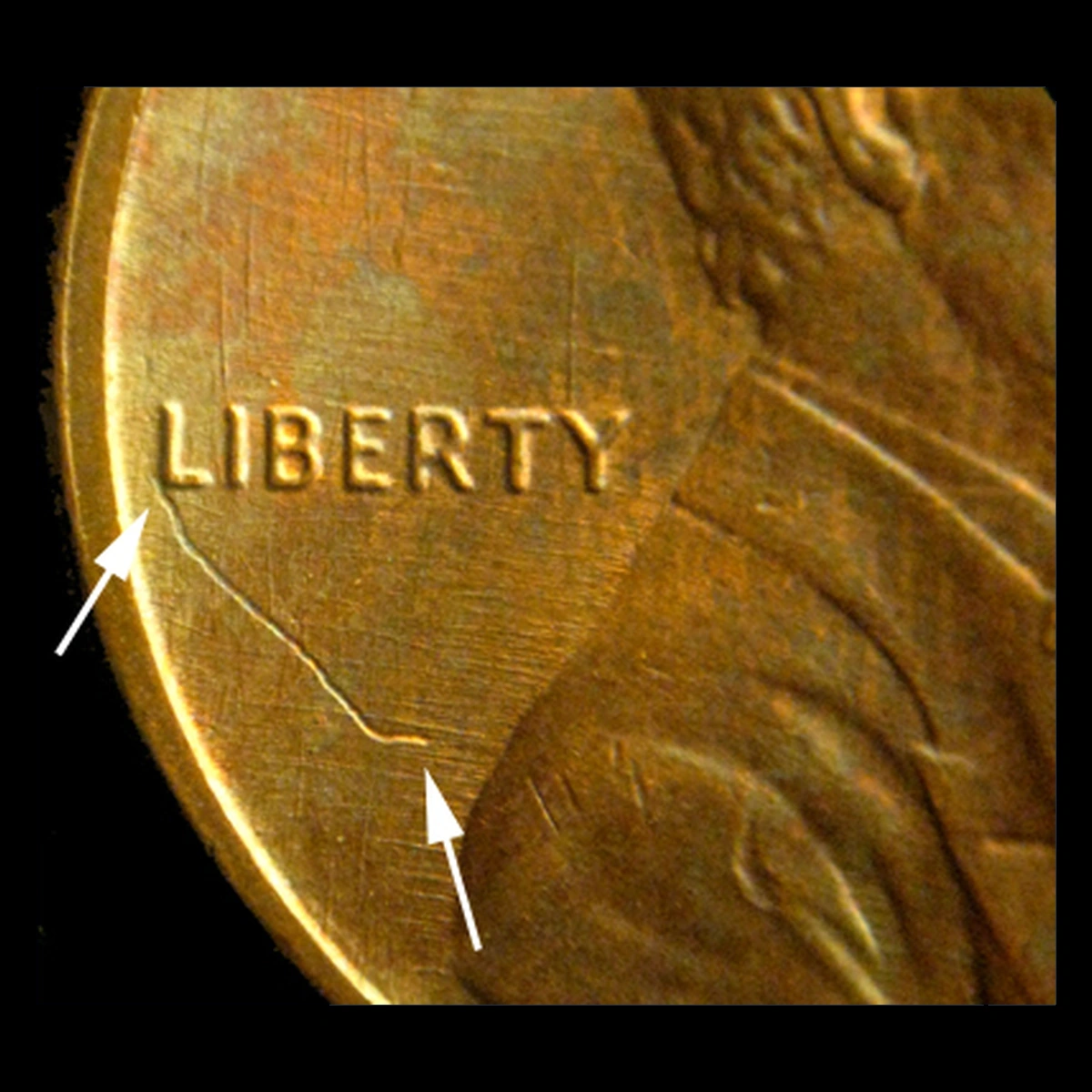
The illustrated strand impression crosses from the L in LIBERTY toward Lincoln’s shoulder. A thin object lay between the die and the coin, leaving a sunken path as the design was struck.
The strand is no longer present, and its material was not established. Separate grease or debris reports concern blocked detail without that same long outline.
How to Identify
Follow how the original design meets the depression. A later scratch cuts a finished surface and can push metal up beside its path.
For a grease-filled area, compare weak letters with nearby sharp detail. Do not identify the strand as steel wool or another specific material from its length alone.
What It’s Worth
$5–$30 suits minor grease-filled detail, while a clear strand impression or stronger obstruction can fit around $30–$300. The preserved surrounding design helps establish the difference.
A 2017-D cent with a front struck-through error brought $228 in March 2025. That Shield-cent comparison is not a sale of the 1988 strand example.
5. 1988 Penny A Raised Rim Patch Comes with Tool Scars: Cuds and Die Damage Error
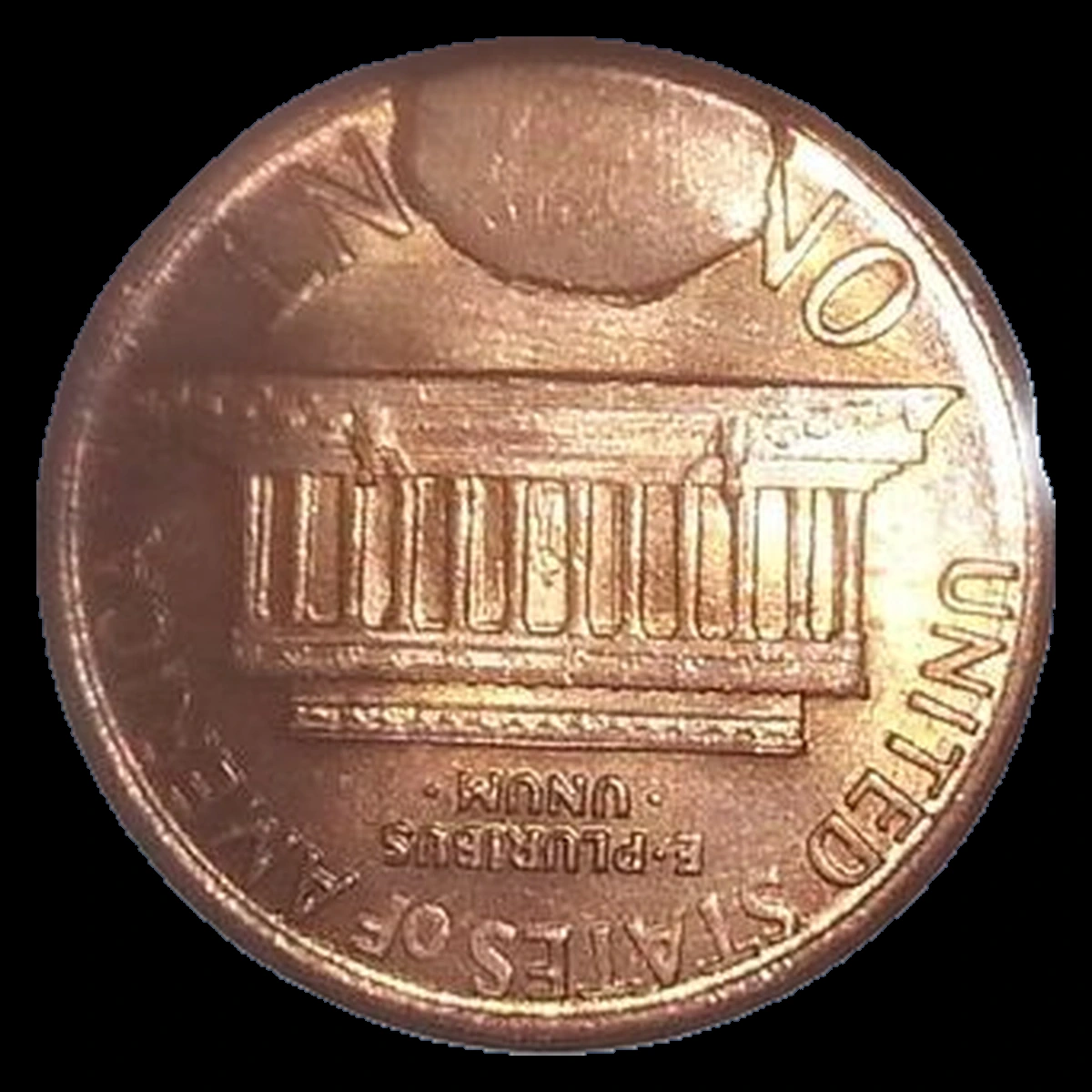
A cud is raised metal connected to the rim where part of a die broke away. One certified 1988 example has a back cud, while a different coin studied by Mike Diamond has a front-right cud and broad raised scars.
On Diamond’s coin, badly dented dies made the scars. Its blank also lost copper around the edge before striking, leaving rough zinc near the rim.
How to Identify
On the complex specimen, the broad scars appear at the upper-left front and lower-left back. They rise from the surface because coin metal filled depressions in the tools.
Inspect the front-right cud’s connection to the rim and the exposed zinc’s relationship to the original strike. The separate back-cud specimen needs its own photograph and should not inherit these locations.
What It’s Worth
$25–$250 is a working range for smaller confirmed cuds; a striking example with severe tool damage can fall around $150–$750. Related features contribute to one total value.
No sale of Diamond’s complex coin is supplied here. A 2021-D retained cud sold for $186 in September 2025, providing a broad comparison rather than an exact match.
6. 1988 Penny The Surface Lacks Its Copper Coat: Unplated Blank Error
Gray zinc is normally hidden beneath a 1988 penny’s thin copper layer. A blank that missed plating can retain that gray appearance after striking.
Certified examples include a Philadelphia ANACS MS63 and a separate Denver ANACS MS61. Their grades and surfaces belong to their individual coins.
How to Identify
Check fine detail inside the letters and around Lincoln for original struck texture. Chemical stripping can remove copper later while leaving roughness, pits, or residue.
A normal cent is about 2.50 grams and 19.05 millimeters across. A slightly lower weight may fit missing copper, but measurements and gray color alone do not prove how the surface formed.
What It’s Worth
$50–$500 is the estimate for genuine examples with differing preservation. The Philadelphia ANACS MS63 sold for $55 in October 2018.
A better-preserved 1995 unplated cent brought $660 in January 2023. Its stronger result is another-date comparison, not a replacement price for the 1988 coin.
7. 1988 Penny The Blank Has a Missing Edge: Clip Error
A 1988 penny inquiry was identified as a clipped-blank error. The missing metal was linked to preparation of the blank before striking.
Year-specific reports include curved and straight gaps. Those shapes should not be combined into one coin without matching evidence.
How to Identify
Keep the full coin in view while examining the gap’s boundary and nearby rim. Cutting grooves or a freshly worked edge suggest later removal.
Lettering may weaken near a genuine clip, and the opposite rim can also be weak. Neither clue replaces examination of the original missing boundary.
What It’s Worth
$10–$150 is an estimated range for genuine clips of different sizes. The surviving date and clean original edge help determine appeal.
A 2021 cent with a 5% straight clip brought $114 in September 2025. This newer Shield cent does not establish a sale for the 1988 inquiry piece.
8. 1988 Penny A Complete Design Sits on Expanded Metal: Broadstrike Error
A cataloged 1988 uncentered broadstrike has an uneven border but retains its design on the enlarged surface. The collar, which normally contains the edge, did not provide normal restraint.
Partial-collar errors are also reported. In those cases, incomplete contact through the coin’s thickness can leave an edge step.
How to Identify
First confirm that the intended design remains present, then inspect the side. Uneven space around the picture does not automatically prove partial-collar contact.
A real edge step needs a side view, while broadstriking is supported by natural spread. Later crushing can widen a penny too, often damaging the finished letters.
What It’s Worth
$20–$350 is the comparison-based range for confirmed broadstrikes and partial-collar pieces. Stronger expansion or a clear edge feature can improve demand.
A 1999 broadstrike graded MS65 Red sold for $67 in March 2023. No individual 1988 partial-collar selling price is supplied.
9. 1988 Penny Part of the Picture Falls Outside the Blank: Off-Center Strike Error
The records include a Philadelphia example about 30% off center and a separate Denver example about 45% off center. In both, a misplaced blank received only part of the design.
The Philadelphia auction listing put its date in parentheses because the full year was not visible. That coin should not be described as fully dated.
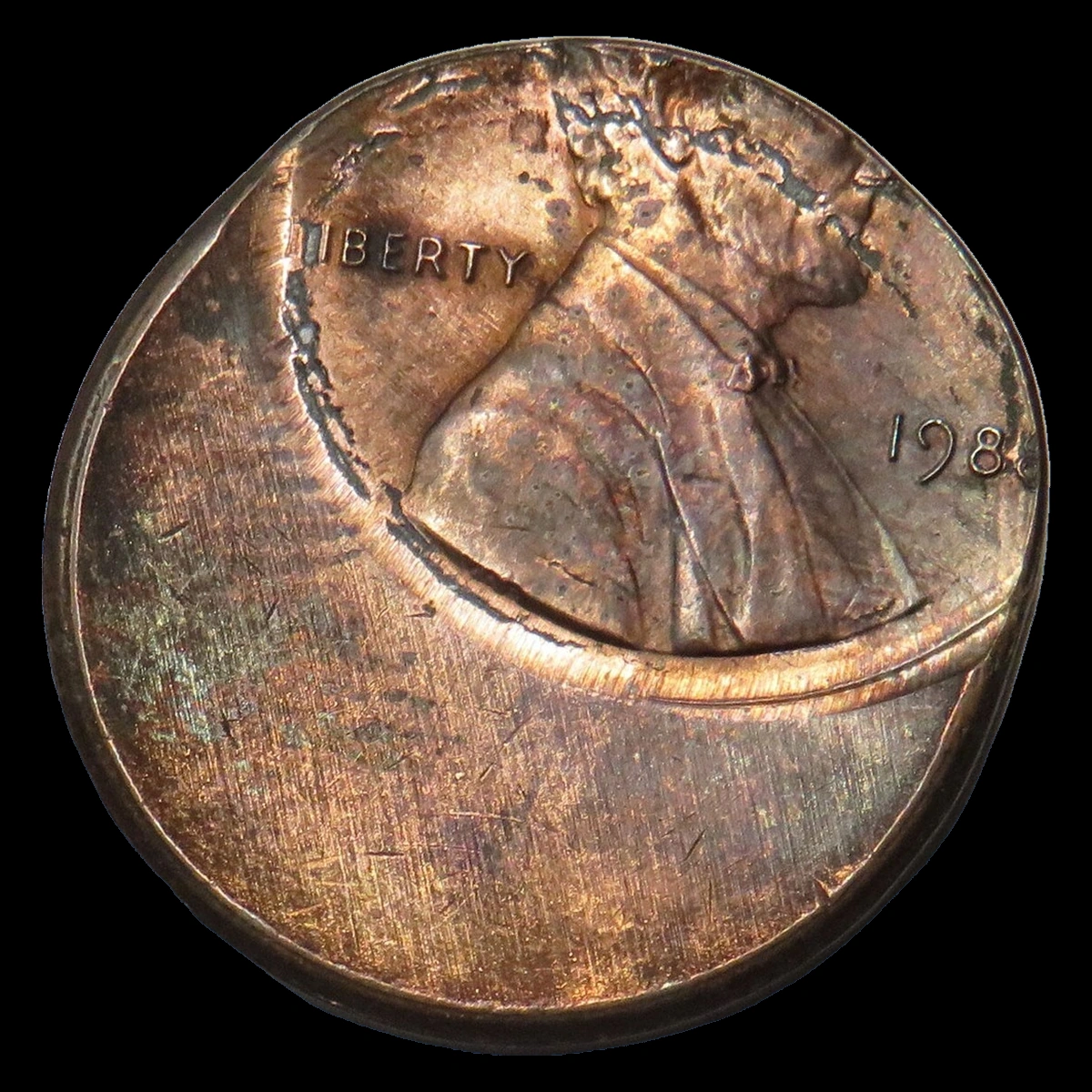
How to Identify
Locate the remaining date fragments and compare both faces for matching displacement. The plain crescent is metal that missed the design, not a piece missing from the coin.
If digits are absent, record what can actually be read. Grinding or scraping can create a bare area after minting and needs to be ruled out.
What It’s Worth
$20–$500 covers genuine examples of varying strength and condition. A readable date is a useful advantage on a large displacement.
A 2006 cent struck only 4% off center sold for $39 in March 2025. That smaller error gives lower-end context without pricing either larger 1988 example directly.
10. 1988 Penny A Second Cent Picture Overlaps the First: Double Strike Error
A certified Philadelphia 1988 cent received a second strike off center. The coin had remained in, or returned to, the striking area rather than leaving normally.
How to Identify
Follow a portrait, letter, or rim from each strike and check how the two positions relate. Thin shelf-like doubling beside one letter does not establish a second full blow.
The catalog does not provide a fixed percentage or turning angle for the second strike. Use the actual overlap instead of borrowing a number from a different example.
What It’s Worth
$100–$800 is the estimated range for a genuine double strike with readable overlap. Clear evidence of both strikes is more useful than a vague extra line.
A 1979 cent with an off-center second strike sold for $204 in September 2023. That earlier copper-rich cent provides a mechanism-based comparison to the zinc-centered 1988 issue.
11. 1988 Penny A Backward Memorial Corner Sinks into the Front: Partial Brockage Error
On the recorded example, the Memorial’s right corner appears backward and sunken on Lincoln’s side. Another struck coin pressed its raised design into the blank.
The brockage covers about 30% of the front near 7:30 and is enlarged and distorted. The same coin also spread outward as a broadstrike.
How to Identify
Inspect the lower-left front and compare the recessed architecture with a mirror image of the Memorial. Follow several connected shapes rather than one unexplained line.
A brockage is sunken, not an ordinary raised design. Later squeezing between finished coins can create misleading impressions, so the original surface and edge must fit the minting event.
What It’s Worth
$100–$1,000 is the estimate for a clear partial brockage. This is one value for the whole coin, including its related broadstrike.
The 1988 specimen was auctioned in 2004, but no result is supplied here. An undated cent with a full front brockage sold for $192 in March 2025, offering a different-coverage comparison.
12. 1988 Penny A Dime’s Design Remains Under the Cent: Double Denomination Error
The documented example began as a finished 1988-P dime before receiving cent designs. Its dime year and P remain complete, while the cent date has two clear final eights and a partial nine.
Roosevelt’s portrait lies almost upside down relative to the Memorial. That relationship helps separate the earlier dime from the later cent strike.
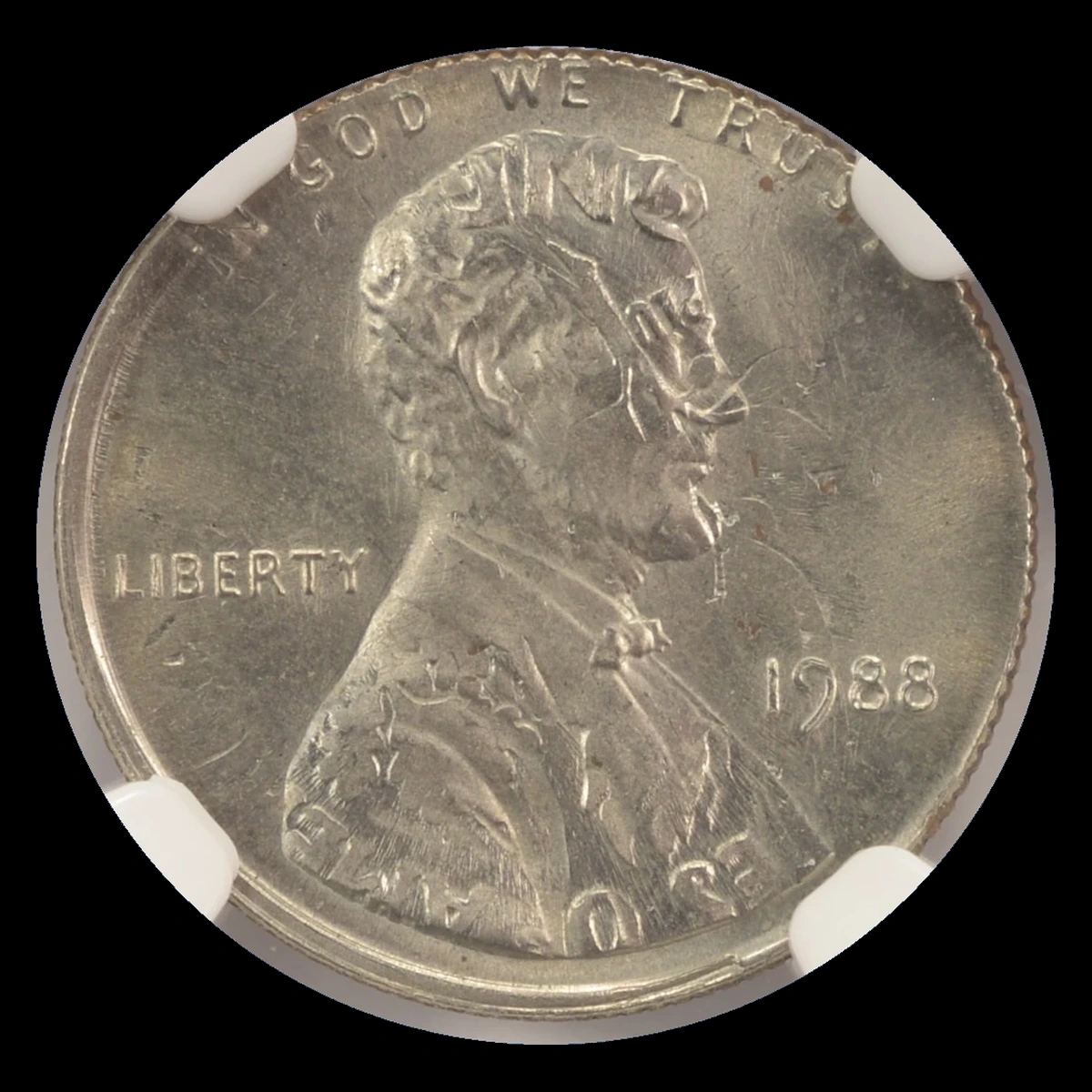
How to Identify
Find the older portrait and dime lettering before interpreting small date fragments. Do not turn the partly visible cent date into a claim of two fully intact years.
The starting coin has a dime’s layered metal and nominal 2.268-gram weight. An unused dime blank could carry a cent design, but would not supply the older Roosevelt picture seen here.
What It’s Worth
$600–$2,000 is a working range for genuine examples with comparable visible identity. Clear remnants of both designs strengthen their appeal.
The NGC MS66 example sold for $1,092.50 on February 11, 2006. A separate 2001 cent over a 2001-P dime brought $1,320 in September 2025.
Conclusion
An extra earlobe and the flared G give a 1988 penny search two specific starting points. For larger errors, the whole coin matters more than a close-up of one odd mark.
Keep the photographed specimen’s details with its price: mint, visible date, surface condition, and exact design overlap. This is especially useful when one coin combines several related effects or loses part of its date during striking.