Rare 2012 Dime Errors (List & Pictures)
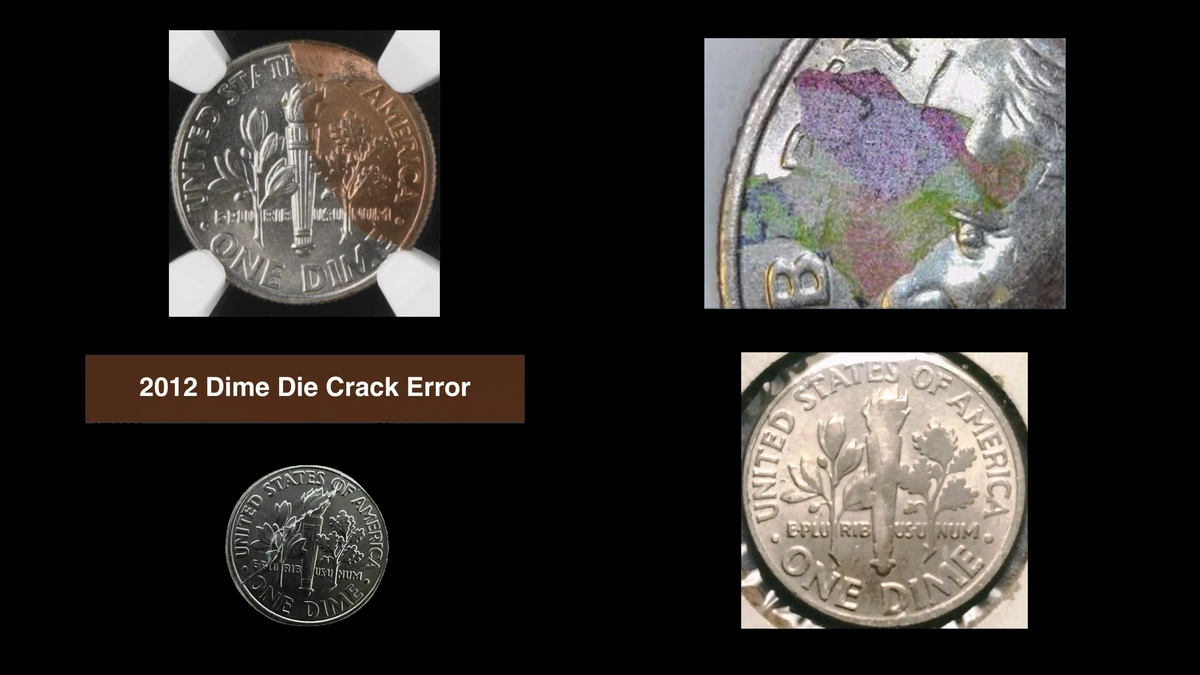
For 2012 Roosevelt Dime errors, a useful clue may be a second outline below TRUST, an altered edge, or exposed copper. The estimated ranges here span $5–$2,500.
A missing-layer dime from a different year, 2018-P, brought $384 in July 2021; that sale supplies context rather than a 2012 price. Begin with the coin’s metal and outline, then compare the edge and small design details.
1. 2012 Dime The Metal and Measurements Do Not Fit: Reported Wrong Planchet Error
The reported 2012-D MS63 wrong-planchet coin has not been tied to a specific intended blank. A planchet is the prepared metal disc, and identifying its original purpose is part of establishing this error.
The appearance of the outer dime design can change with a smaller or larger blank. Color alone cannot establish a cent, nickel, or foreign-coin origin.
How to Identify
A normal clad dime weighs 2.268 grams, measures 17.91 millimeters, and has a grooved edge. A modern cent’s 2.50-gram standard is heavier than a dime’s, not lighter.
Record the candidate’s actual measurements and examine its edge and outer lettering for natural striking. Trimming, added plating, or missing clad metal can otherwise imitate an unusual blank.
Metal testing may be necessary to establish the intended disc. Surviving detail from another completed coin would raise a separate overstrike question rather than automatically prove an unused wrong blank.
What It’s Worth
Once the blank is identified, the conditional estimated range is $250–$2,500. The particular metal, readable design, and preservation determine a meaningful comparison.
The Mint Error News guide lists clad-era Roosevelt dimes on foreign blanks around $1,500–$2,500 across grades. These are guide estimates, and the Denver report does not establish a foreign blank or a 2012 auction result.
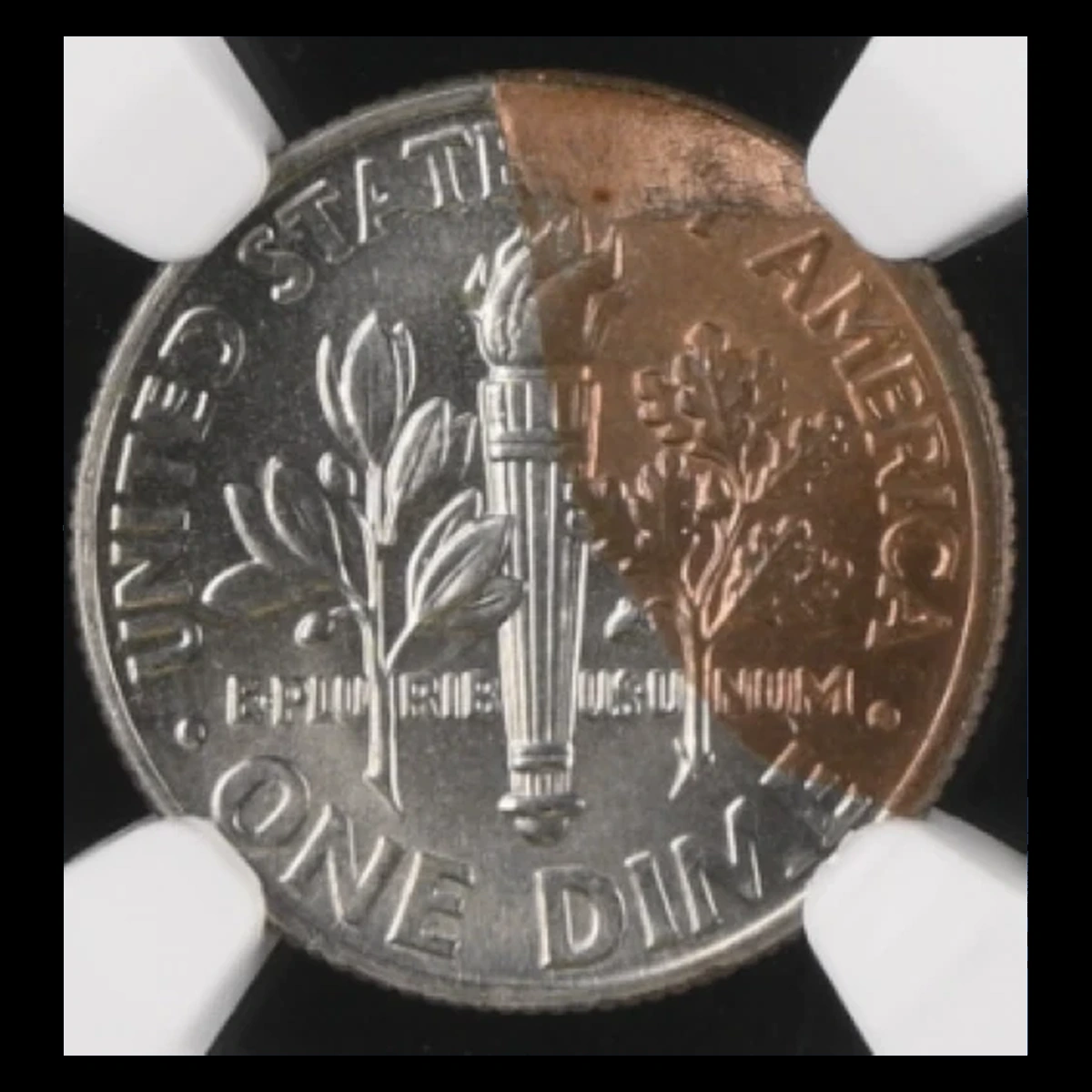
2. 2012 Dime Copper Meets a Remaining Outer Layer: Missing Clad Error
The ordinary dime’s copper-nickel outer layers are bonded to a copper center. Separation of an outer layer can expose that center across part or much of a face.
The 2012-P report includes partial loss, so the entire surface need not appear copper-colored. A silver Proof has different construction and must be assessed separately.
How to Identify
Find the actual boundary between exposed copper and remaining silver-colored metal. A brown coating may cover a complete original outer layer without any loss.
Inspect that boundary for scraping, corrosion pits, or other evidence of later removal. Weight loss must fit the amount missing, but there is no single reduced weight for every partial-layer coin.
What It’s Worth
Genuine partial through extensive layer loss is estimated at $50–$600. Small exposed areas need not approach prices for a largely missing layer.
A 2018-P MS64 dime missing its front outer layer sold for $384 in July 2021. That is an other-year comparison, not a result for the reported 2012-P coin.
3. 2012 Dime A Small Front Flap Lifts: Lamination Error
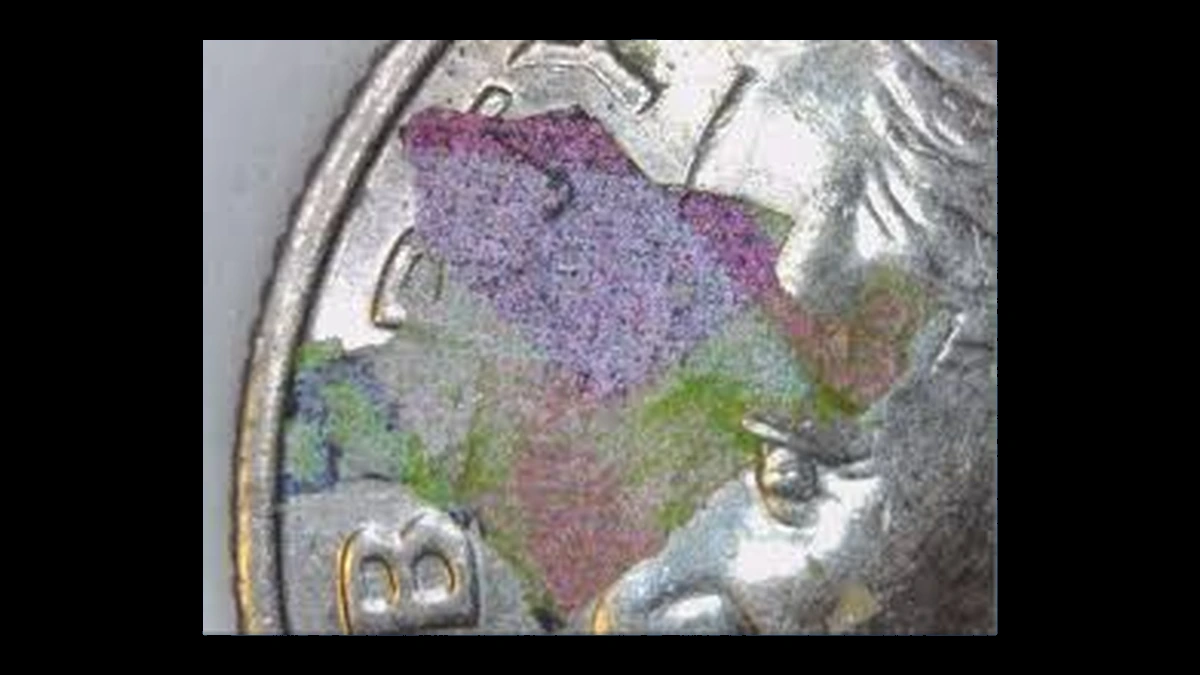
The reported Denver lamination concerns local peeling on the front. Weakness inside the metal can open before or after striking and leave an attached flap carrying part of the design.
This local separation differs from a face losing most of its outer layer. The report does not establish a completely copper-colored surface.
How to Identify
Leave the flap where it sits and inspect its base for a natural layered break. Following stamped detail from the main surface onto the flap can help explain the separation.
Compare the neighboring surface with an ordinary 2012-D coin. Pitting, cuts, or bright pry marks may instead show corrosion or later efforts to lift metal.
What It’s Worth
Genuine local laminations are estimated at $10–$150 as whole coins. No recorded sale is attached to the supplied Denver report.
An intact clearly connected flap can explain the feature better than a tiny rough spot. Pulling it loose would destroy evidence rather than turn it into a more valuable missing-layer error.
4. 2012 Dime A Gap Interrupts the Original Disc: Clipped Planchet Error
Philadelphia and Denver clips are reported for 2012 without a fixed gap shape or location. The blank was incomplete before the press formed its design.
The distinction is one of sequence: the rim forms around an existing shortage, while a later cut removes already struck metal.
How to Identify
Study the rim and lettering at both ends of the opening for naturally formed transitions. A cut through completed letters or file marks on the edge points toward later alteration.
Compare intact full-width spans instead of calling the distance across the gap the diameter. Opposite-rim weakness may support a curved clip, but its absence alone does not rule one out.
What It’s Worth
Genuine 2012 clips are estimated at $15–$300. Larger clear shortages with a readable date and mint make stronger comparisons than small ambiguous notches.
A 1997-P nickel with a 20% clip sold for $124 in March 2025. That other-denomination result does not provide a completed price or a percentage for either 2012 dime report.
5. 2012 Dime A Bare Crescent Faces Missing Design: Off-Center Strike Error
The reported 2012-P MS63 example was struck 25% off center. A misplaced blank left some metal outside the striking area while part of the intended design missed its opposite edge.
No clock direction is supplied. Both faces need to agree with the same placement error.
How to Identify
Confirm the date and P in the surviving struck area, then compare both designs with the blank crescent. A shift confined to one face can have a different cause.
Inspect unused metal for grinding or flattened remnants of removed letters. Off-center striking need not remove metal, so an original example can remain near normal weight despite its changed outline.
What It’s Worth
Genuine dated 2012 off-center dimes are estimated at $50–$750. Readable identity, displacement, and condition all affect their appeal.
A 1977 dime struck 10% off center brought $109 in June 2026. It is a smaller-shift, different-year comparison rather than the reported 25% Philadelphia coin.
6. 2012 Dime A Wide Outline Has a Stepped Edge: Broadstrike and Partial Collar Error
A dealer’s 2012 listing describes an unevenly expanded coin with partial collar contact. Some edge metal was restrained while the exposed portion spread, leaving a ledge between them.
The collar is the ring that limits diameter and forms the edge grooves. A separate Philadelphia broadstrike report also exists, without establishing that it is the same specimen as the combined example.
How to Identify
Inspect the edge from the side for the change between a restrained grooved portion and expanded metal. A partial collar can leave a step rather than simply erase every groove.
Confirm that the complete design remains within the widened outline. Missing outer design suggests an off-center strike, while flattened detail or rolled lips can reveal later pressure.
What It’s Worth
A clear broadstrike or combined partial-collar example is estimated at $40–$1,000. The amount of expansion, edge visibility, and preservation determine the whole-coin comparison.
A 2000-P dime combining broadstriking with multiple strikes sold for $159 in September 2025. Its different date and extra blows prevent treating it as a plain 2012 broadstrike sale.
7. 2012 Dime A Near-Normal Disc Has a Smooth Edge: Reported Missing Reeds Error
The reported 2012-D coin lacks normal edge grooves while remaining close to ordinary diameter. This differs from an obviously expanded broadstrike.
Unusual collar action is one possible manufacturing explanation. Grinding, rolling, or wear after minting can also remove the grooves.
How to Identify
Measure across several directions to establish whether the outline is actually near normal. An oversized or oval disc changes the question.
Turn the entire edge under a magnifier and inspect for grinding scratches, flattened grooves, or a rolled lip. Both face rims should also be checked for squeezing.
Normal weight alone cannot prove a mint error. Original surface texture and expert examination are needed before accepting the collar explanation.
What It’s Worth
A confirmed mint-made smooth edge near normal size is estimated at $30–$300. This range follows modest collar errors rather than greatly expanded coins.
No recorded sale is assigned to the Denver report. An edge altered after minting receives no equivalent error premium.
8. 2012 Dime Raised Cracks or Blocks Meet the Rim: Die Damage Error
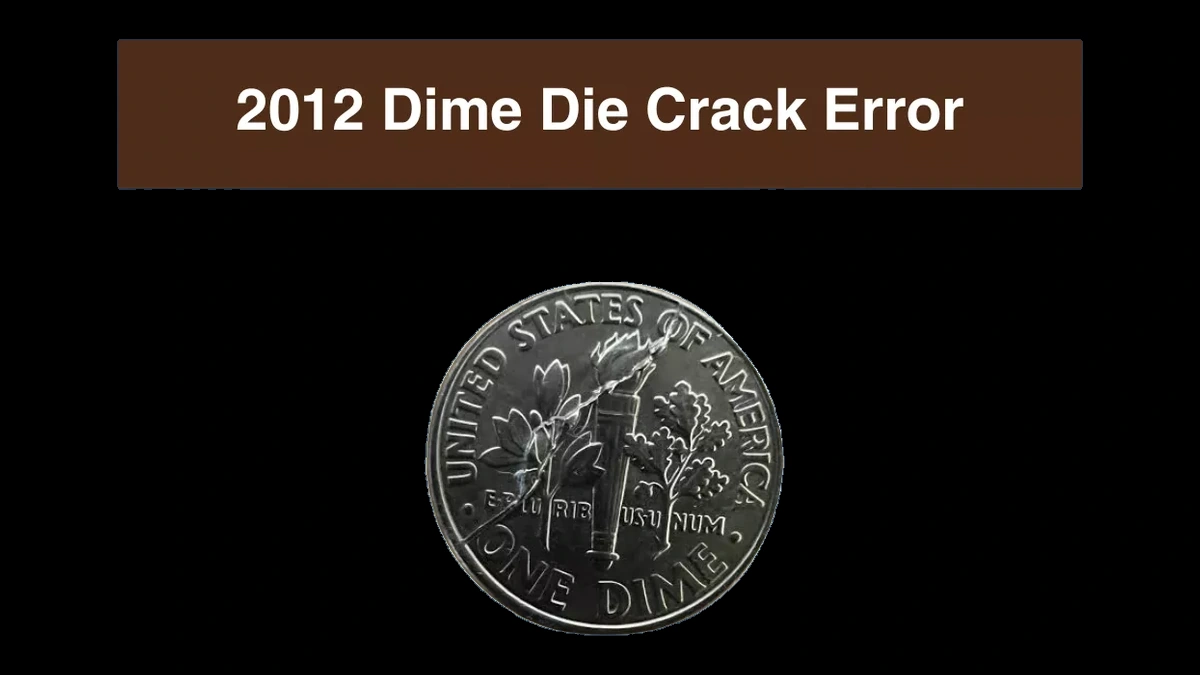
The documented 2012-S clad Proof has a reverse die crack near 6:30, slightly left of the bottom. A crack in the tool leaves raised metal on the coin where metal fills the opening.
Separate Philadelphia reports include raised reverse-rim blocks with a V-shaped gap between them. Another front rim-break report has no established mint.
Small interior lumps are chips, while larger raised patches joining the rim are cuds. These terms describe different appearances and should not be assigned interchangeably.
How to Identify
Select the proper finish and metal first: the recorded S crack is on a clad collector Proof. A normal clad version weighs 2.268 grams, while a 2012 90% silver Proof weighs 2.50 grams; both have the normal 17.91-millimeter diameter.
At the Proof’s reverse 6:30 position, check for a ridge instead of a scratch cut into the surface. For other rim breaks, show how the raised metal connects to the border.
The Philadelphia reverse patterns do not establish the mint of the separate front report. Compare the actual affected face and shape.
What It’s Worth
Small chips through stronger cracks and rim breaks are estimated at $5–$400. Proof preservation and the size of an ordinary coin’s break require separate comparisons.
GreatCollections sold the Proof in August 2012, but the final price is not publicly displayed. The visible $20 starting bid is not its selling price.
9. 2012 Dime Front Detail Stops at a Depression: Struck Through Error
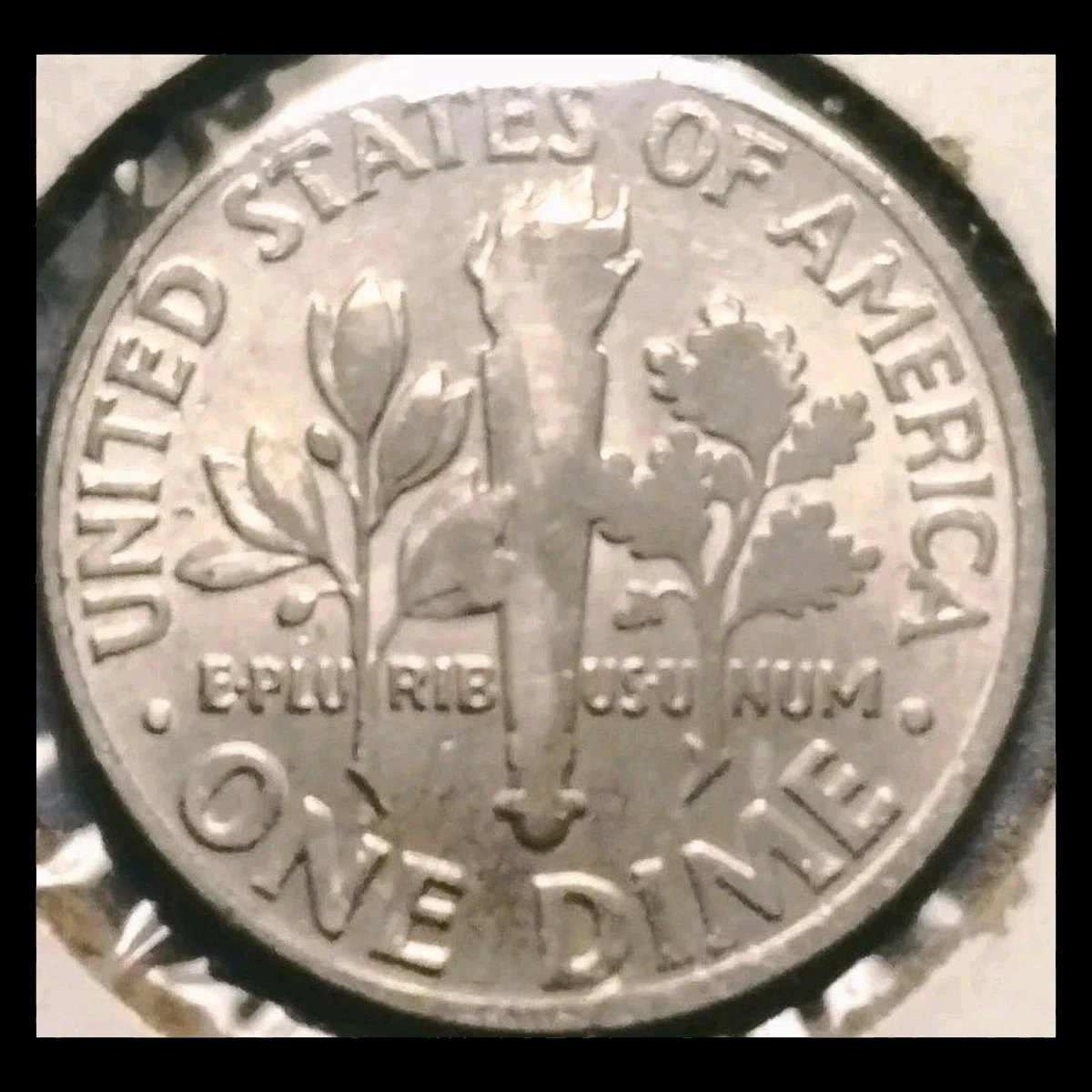
The 2012-P report describes an MS62 front strike-through without identifying the exact location or obstructing material. Something between the die and blank prevented normal detail from forming locally.
A depression must be distinguished from a stain or a later blow. Missing detail alone cannot establish grease, cloth, or wire.
How to Identify
Move the light to confirm an actual change in depth, then trace the design into the low area. A later impact can push metal outward or cut across completed details.
Photograph the whole front along with the boundary of the impression. A material attribution needs its own recognizable pattern, not a guess based on smoothness.
What It’s Worth
A genuine 2012-P strike-through is estimated at $25–$500. Clearly formed impressions compare more strongly than small unexplained weak patches.
No verified sale is supplied for the reported MS62 coin. Its numerical grade does not establish how extensive or visually distinctive the obstruction was.
10. 2012 Dime Extra Traces Fit the Opposite Face: Die Clash Error
The reported Denver clash concerns faint shapes left after the dies met without a blank. Marks transferred between the tools could appear on later coins beside the normal design.
No single diagnostic line is established for every example. The proposed trace must correspond to Roosevelt or the reverse torch and branches.
How to Identify
Compare photographs of the opposite design before interpreting a stray line. Follow connected contours that fit the way the two dies face one another.
Use changing light to separate a genuine surface feature from glare or a scratch. Keep the 2012 date and D in the full photographs so the close-up remains tied to the proper coin.
What It’s Worth
Modest genuine 2012-D clashes are estimated at $10–$200. Several matchable traces generally provide more interest than a lone faint mark.
The range is based on minor Roosevelt clashes, not a completed sale of the reported coin. Wear and scratches can obscure the very shapes needed to identify it.
11. 2012 Dime Extra Outlines Sit below TRUST: Doubled Die Error
TRUST provides a clear starting point for the documented Philadelphia front variety. The added detail extends downward, often described as south.
John Wexler’s description also includes the date, P, designer’s initials, and LIBERTY. Across LIBERTY, the spread becomes weaker from left to right.
This repeated design was present on the die before striking. A separately listed reverse-doubling claim has no matched pattern supplied here.
How to Identify
Hold the coin upright and inspect below the TRUST letters, then check the date and P for corresponding downward outlines. Across LIBERTY, compare the change in strength rather than expecting equal separation on every letter.
Rounded repeated detail or split letter ends are more useful than general thickness or flat shelves. The reverse claim requires a separate match and cannot inherit the front’s positions.
What It’s Worth
Identified 2012 doubled designs are estimated at $20–$300. Clear TRUST separation and preserved surfaces support stronger comparisons.
This is a working range based on minor modern Roosevelt varieties, not a recorded auction result for this front variety. A reverse candidate must first establish its own repeated pattern.
Conclusion
A 2012 dime’s metal, edge, and lettering can each point toward a different production problem. Match those observations before using a price range, especially when a report leaves the blank or obstructing material unidentified.
Separate normal clad coins from silver Proofs, and keep public starting bids distinct from completed sale amounts. On the known doubled front, the downward TRUST outlines and weakening LIBERTY spread provide specific details to compare.