Rare 1888 Half Dollar Errors (List & Pictures)
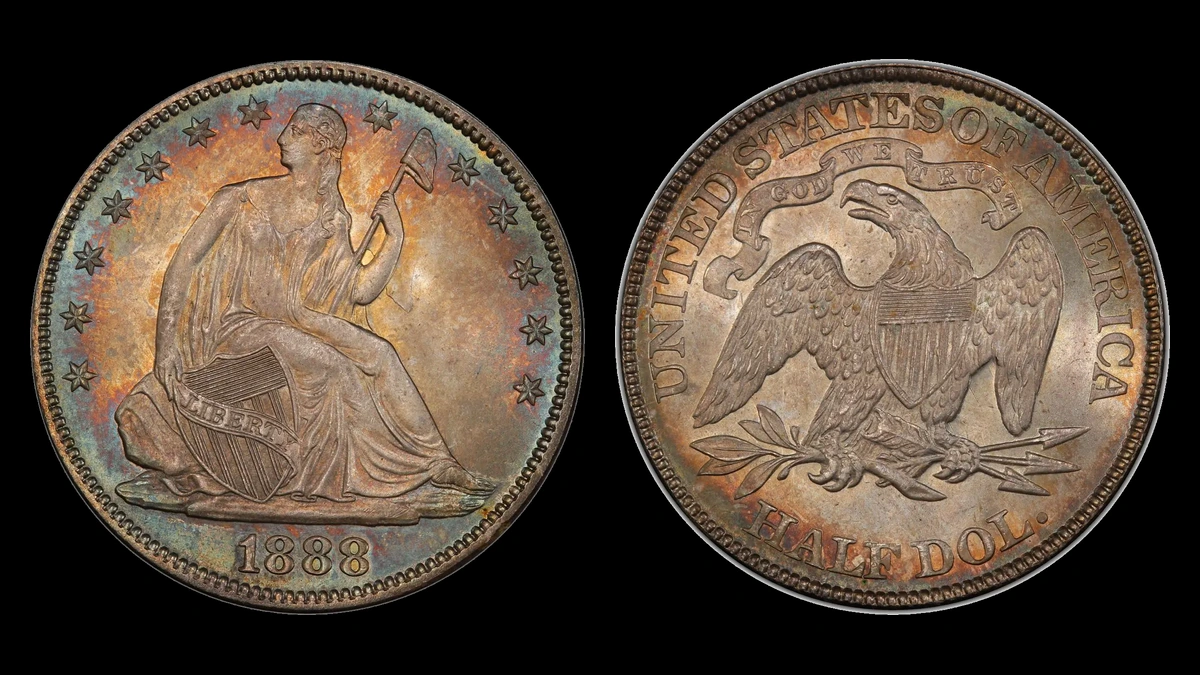
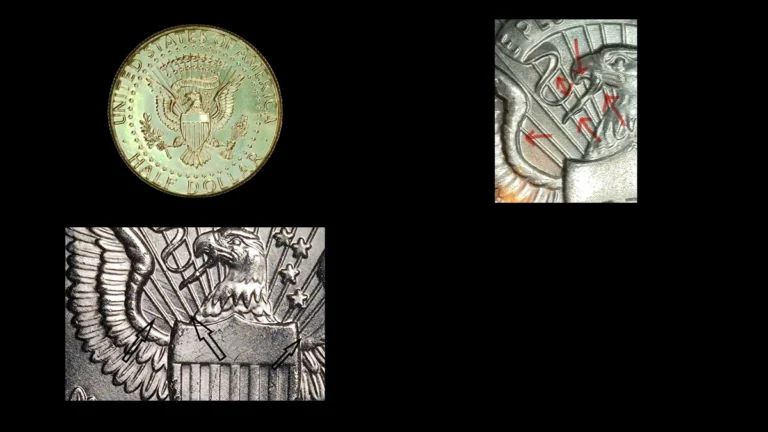
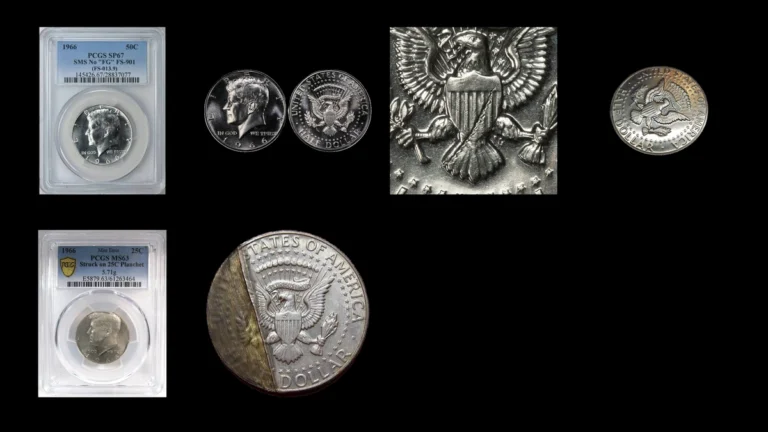
Matching a faint line to the coin’s opposite face is the key task when checking 1888 half dollar errors. A die clash can leave that extra design trace even when the coin received only one strike.
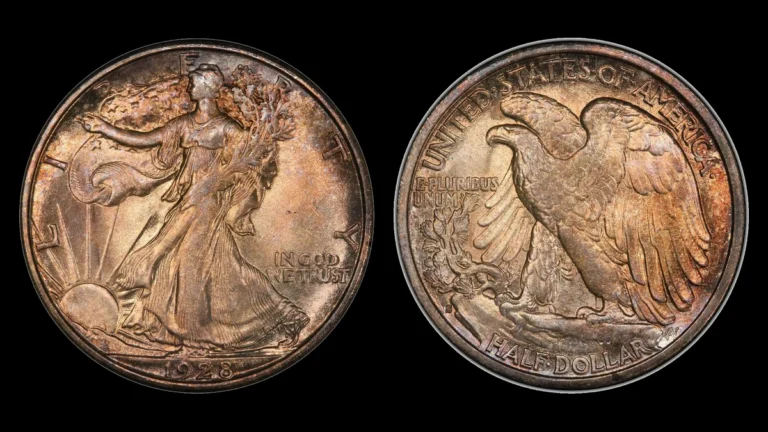
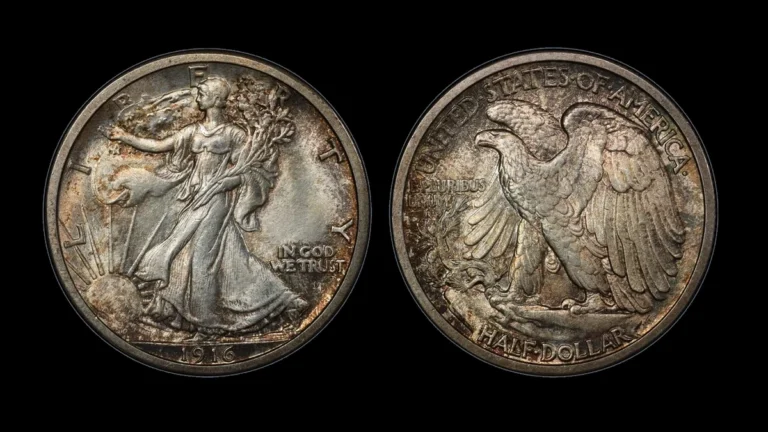
Comparable MS64 regular issues are estimated at $2,000–$4,000, including a Prooflike example sold for $3,600 in July 2025. Examine the shape first, then use those whole-coin prices to assess condition.
1888 Half Dollar Traces of the Opposite Design: Clashed Dies Error
A line between ordinary design features may look accidental, yet form part of a recognizable shape. With clashed dies, the source of that shape is on the other face of the coin.
The mistake occurs before the affected coin reaches the press: the two steel stamping tools meet without a blank to separate them. After this collision, their altered surfaces can leave additional traces on subsequent coins.
A Seated half dollar reference describes clashes as common on regular 1888 issues. It does not specify a single diagnostic location that every coin must share.
How to Identify
Photograph both faces, then choose a faint mark to investigate. Ask which part of the other face could have produced its shape, rather than trying to classify every small line at once.
A magnifier helps trace the complete outline through shallow areas. Several related curves or lines are more persuasive than one short stroke that could fit many explanations.
Inspect the candidate under light from different directions. Scratches tend to cut into the coin, while fine marks left by polishing a die can create raised lines without reproducing the opposite design.
Use a properly aligned comparison of the two faces to test the match. Merely finding a similar curve somewhere on the other side does not establish that the dies could have transferred it to that position.
Reflective backgrounds are a separate feature. “Prooflike” describes their appearance on a regular coin; it does not mean the coin was made as a proof or prove that a clash is present.
For a loose example, normal unworn measurements are about 12.50 grams and 30.6 mm across, with a grooved edge. These checks help establish the basic coin but cannot distinguish clash marks from other surface lines.
What It’s Worth
Estimated range: $2,000–$4,000 for comparable regular-issue coins around MS64. MS indicates no circulation wear, while the number reflects the coin’s overall preservation within that category.
A PCGS MS64 example sold for $2,040 in April 2025. Heritage later sold an MS64 Prooflike coin for $3,600 in July 2025.
These are same-date coin comparisons, not sales that isolate a die-clash premium. The reflective appearance and other qualities of the individual coins matter when interpreting the difference.
A faint clash does not make a worn 1888 half equivalent to an MS64 example. Likewise, several clash traces on one coin do not create several separate values to add to its price.
Conclusion
A useful clash identification connects an extra outline with the design that could have made it. Surface shine, random lines, and normal dimensions each answer different questions and cannot replace that match.
The estimated $2,000–$4,000 range concerns comparable unworn MS64 coins. Treat the $2,040 and $3,600 results as evidence about complete 1888 halves, rather than a price list for their individual surface marks.