Rare 1833 Half Dollar Errors (List & Pictures)
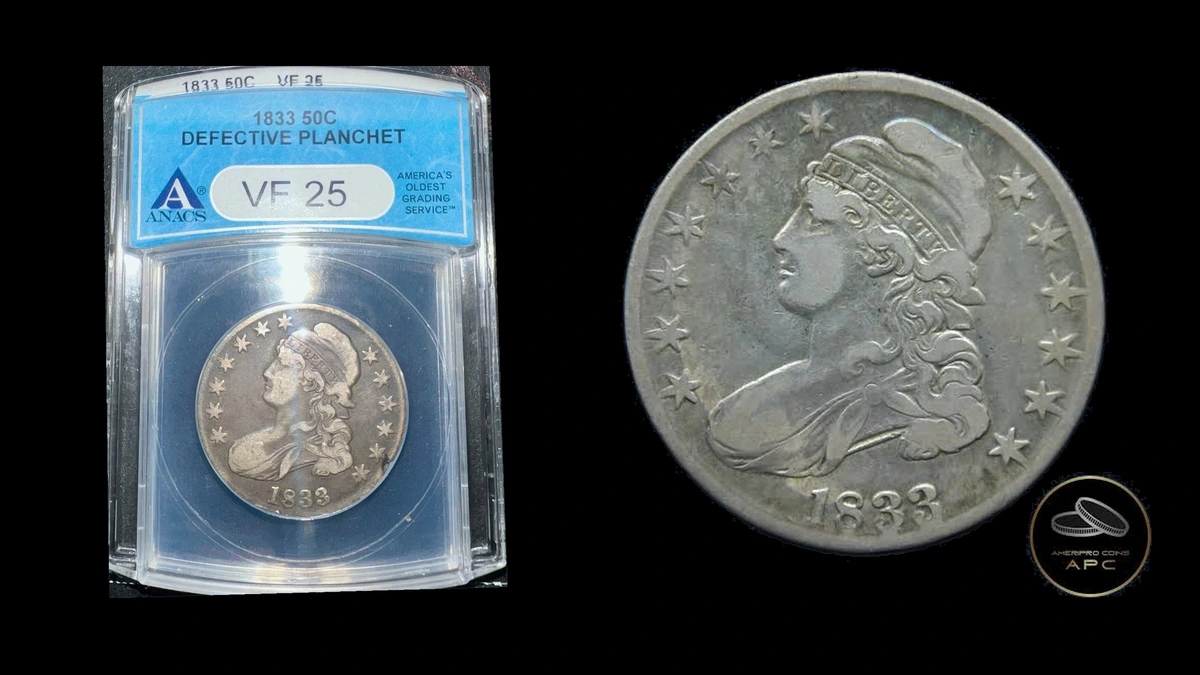
Before naming an unusual mark, ask whether metal is raised, missing, or peeling. That simple distinction helps separate the five 1833 half dollar errors covered here.
Estimated comparisons run from $150–$2,500. A PCGS AU55 CAC coin labeled O-105a brought $2,280 in April 2018, although that label does not by itself confirm the disputed crack described below.
Work from the outside edge to the portrait and reverse, using the location checks for each feature.
| Clue | Error category | Estimated range |
|---|---|---|
| Original irregularity at the edge | Rim or blank defect | $150–$350 |
| Thin layer separating on the front | Lamination | $250–$600 around AU Details |
| Local streaks of weak detail | Grease strike-through | $250–$500 around AU55 |
| An eagle-wing shape beside Liberty | Die clash | $200–$400 for comparable worn or cleaned coins |
| A raised route toward UN | Reported reverse die crack | $1,500–$2,500 around AU55 |
A normal unworn 1833 half weighs 13.48 grams and measures about 32.5 millimeters across, with lettering on its edge. A small flaw may barely affect the weight, so a scale reading cannot replace a close look at the metal.
1. 1833 Half Dollar An Irregular Outside Edge: Rim and Blank Defects Error
A coin starts as a metal disc, or blank. A defect in that disc can survive striking and leave an irregular boundary.
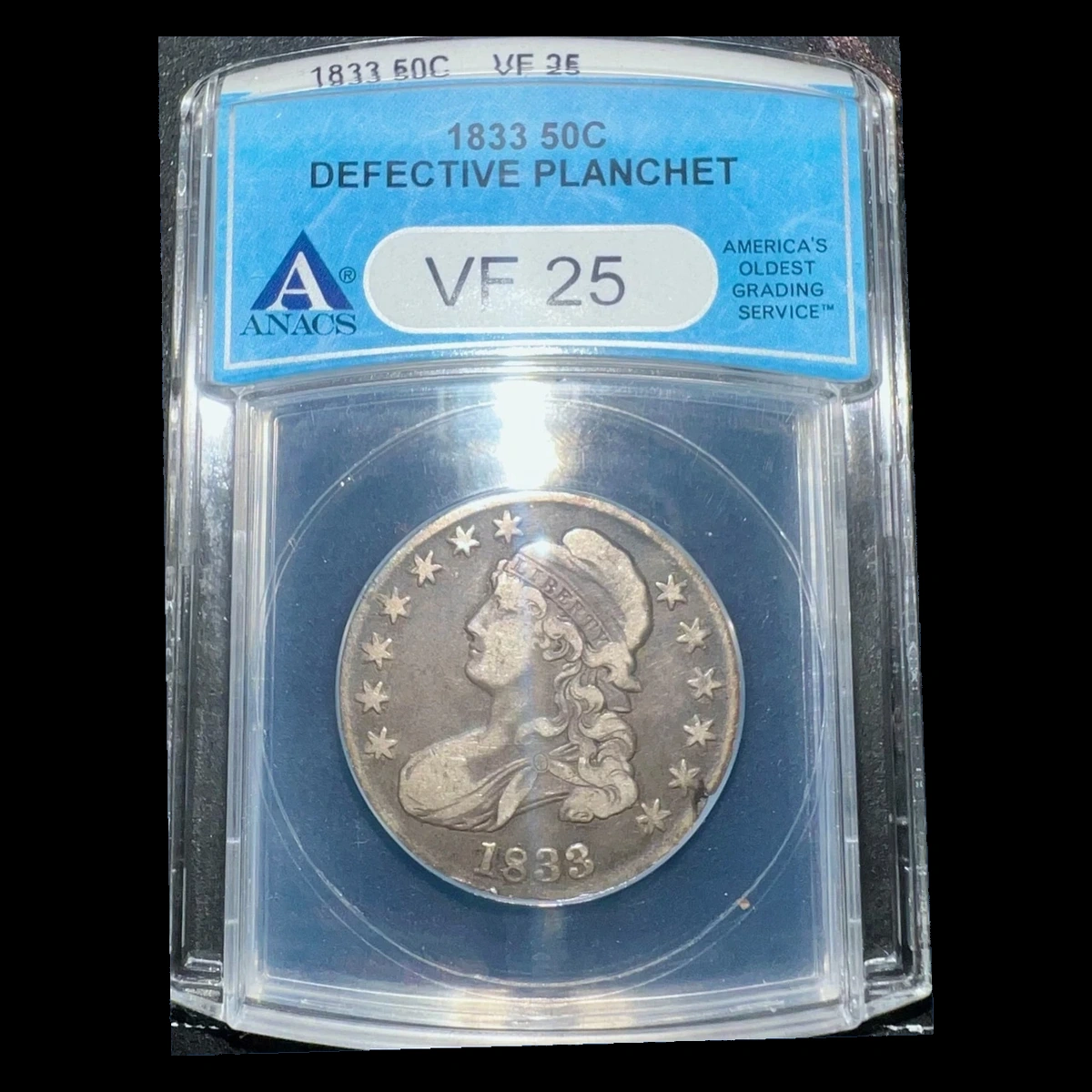
Two reported examples need separate references: an ANACS VF20 in the Rippere collection labeled Minor Rim Defect, and an O-111 discussed by a collector. VF20 describes a worn coin with clear major details.
The collector’s O-111 description identifies an irregularity near stars 8–10 as an end-of-strip blank defect. That location should not be transferred to the separate Rippere coin.
How to Identify
Photograph the complete outline before making a close-up. This shows the flaw’s actual size in relation to the coin.
For the O-111 example, examine the border beside stars 8–10. Use the Rippere coin’s own photograph when comparing the certified Minor Rim Defect.
Look at how the design meets the irregular area. A later hit may push metal aside, and filing can leave tool marks on an already finished edge.
What It’s Worth
Estimated range: $150–$350 for worn examples with visible original blank defects. No sale price is supplied for the Rippere VF20 listing.
A related 1832 ANACS XF45 with a minor rim defect sold for $263.25 in July 2025. That Pristine total includes its stated buyer’s fee.
The comparison is from another year and has more remaining detail. Judge the 1833 coin’s condition and the appearance of its own flaw rather than transferring the price unchanged.
2. 1833 Half Dollar A Thin Layer Lifting from the Front: Lamination Error
A separating silver layer points to a weakness within the blank. The term lamination describes that split or peel.
A GreatCollections coin sold in May 2023 carried an NGC AU Details label and front-side lamination description. AU Details indicates light wear along with a condition problem.
The title does not give the peel’s precise location. A separately listed AU53 lamination coin must not be assigned the same grade details, marks, or sale history.
How to Identify
Leave any loose flap in place. Lifting it can detach metal and destroy part of the evidence.
Use low-angle light to inspect the layer’s boundary. Look for a thin raised edge or the outline of a flake that has already come away.
A gouge or corrosion can also leave missing metal, but neither automatically establishes a layered split. Compare the front with the identified example’s own photograph.
What It’s Worth
Estimated range: $250–$600 for an AU Details coin with visible front-side separation. The May 2023 listing documents the feature, but its final price is hidden.
The $263.25 minor-blank-defect sale mentioned above provides a broad comparison from 1832. It was a related metal flaw rather than the same lamination.
The peel’s visibility matters, as does the condition problem behind a Details label. Neither should be ignored when comparing two coins.
3. 1833 Half Dollar Streaks of Interrupted Detail: Grease Strike-Through Error
Across the middle of one O-102 half’s front, streaks interrupt the intended design. Heritage described the marks as grease-related features made during production.
Grease caught between the die and blank can prevent some detail from forming. The steel stamping tool leaves an incomplete impression in the blocked areas.
The reference coin graded NGC AU55, meaning light wear. The description gives the central location without assigning a precise angle or percentage to the streaks.
How to Identify
Compare the affected central area with sharper detail beside it under soft light. Follow the full streak pattern rather than treating any weak patch as an error.
Ordinary wear tends to affect exposed high points. A local interruption that matches the reference needs a different explanation.
Check for sharp cutting or metal pushed aside by a later scrape. The cataloged production marks should not be confused with damage to the finished surface.
What It’s Worth
Estimated range: $250–$500 for a comparable lightly worn example with a recognizable strike-through. This uses an older documented sale as one reference.
The NGC AU55 O-102 sold for $253 in January 2006. Its description connects the grease streaks to the minting process.
A half dollar worn smooth in normal use is not the same comparison. Remaining detail and surface quality still contribute to the price.
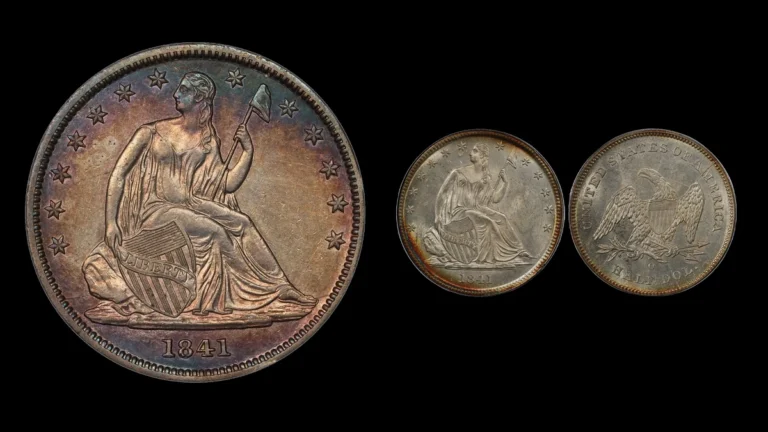
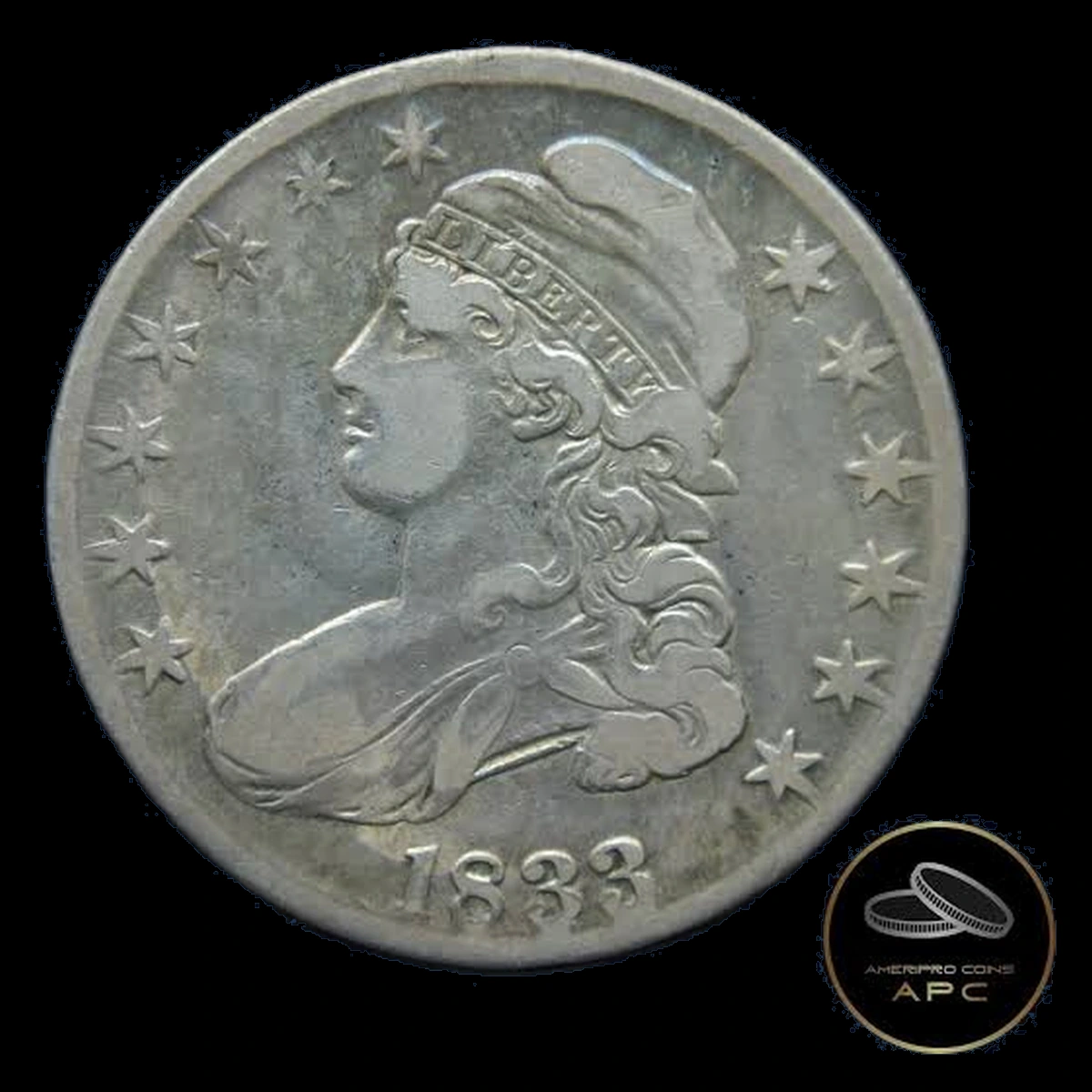
4. 1833 Half Dollar An Eagle’s Wing Beside Liberty: Die Clash Error
An unexpected wing outline appears in the area left of Liberty on an O-114 example. It comes from the reverse design rather than the intended portrait.
The dies had contacted one another without a blank between them. Their surfaces picked up traces of the opposite designs, which could then appear on later coins.
The documented coin also had cleaning damage and an NCS AU Details label. The mint-made clash and the later cleaning are separate features.
How to Identify
Inspect the area left of Liberty using a magnifier and angled light. Look for a recognizable wing shape rather than a random group of lines.
Compare it with the eagle’s wing on the reverse. The opposite design should explain the unexpected front-side pattern when the designs are properly aligned.
Many fine parallel scratches can come from cleaning. Keep those apart from the transferred outline when judging the reference or your own coin.
What It’s Worth
Estimated range: $200–$400 for similar worn or cleaned coins with identifiable wing detail. This is a whole-coin comparison.
The cleaned O-114 brought $230 at Heritage in January 2006. Its surface problems were already part of the coin offered at that sale.
A better-preserved coin with a weaker clash may be worth more. The strength of the extra wing does not outweigh every difference in condition.
5. 1833 Half Dollar A Raised Line from the 5 toward UN: Reported Reverse Die Crack Error
The reported route starts at the border teeth below the denomination’s 5. It crosses the olive-leaf tips toward UN.
Greysheet describes this under O-105a, but specialists have questioned whether the separate die stage is firmly established. A label alone therefore does not confirm that the coin shows the reported line.
If present, a genuine crack would be raised because coin metal entered a fracture in the die. A scratch following a similar route would cut into the surface instead.
How to Identify
Locate the 5 on the reverse, then trace the full described route with a magnifier. Do not bridge separate marks mentally to create a continuous line.
Move the light from one side to the other. A physical ridge stays in place, while changing shadows may make unrelated features seem joined.
Keep the whole reverse visible beside the close-up. If the route cannot be seen, the O-105a label does not replace the missing visual evidence.
What It’s Worth
Estimated range: $1,500–$2,500 for similar lightly worn coins carrying this identification. It reflects the collectible coin and its surfaces rather than a fixed payment for a crack.
Greysheet lists a $2,280 sale in April 2018 for a PCGS AU55 CAC labeled O-105a. The result does not independently verify the reported path on that sold coin.
A heavily worn half with an isolated raised line needs its own comparison. Neither the disputed name nor a single mark puts it automatically in this bracket.
Conclusion
Preserve the clues: leave peeling metal alone, retain wide photographs, and check whether an odd feature is raised or cut into the surface. Those steps help separate blank defects, strike-throughs, clashes, and cracks.
The $150–$2,500 estimates describe different conditions and features. Use the actual visible pattern with the grade, rather than relying on an error label alone.