Rare 1866 Half Dollar Errors (List & Pictures)
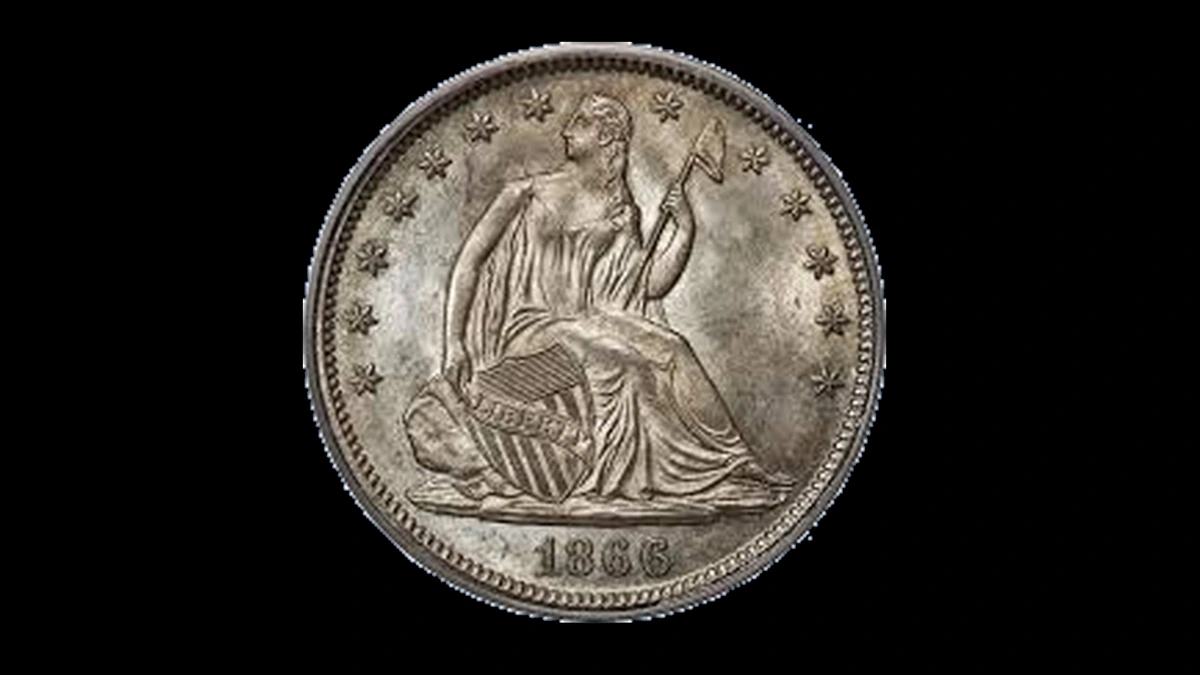
The wording above the eagle is the first checkpoint for 1866 half dollar errors. San Francisco issued normal halves both with and without IN GOD WE TRUST, so absence of those words is not itself an error.
Estimated values below span $200–$3,500, including a documented $3,055 doubled-reverse sale in September 2015. Identify the mint and motto, then follow the front details to the matching back.
| Clue to examine | Relevant coin or area | Category | Estimated value |
|---|---|---|---|
| A digit fragment away from the date | Hand on Philadelphia; lower border on San Francisco | Misplaced date | $200–$600 circulated |
| Repeated front outlines | Philadelphia WB-5 | Doubled die obverse | $200–$400 around VF |
| Raised lines on both faces | San Francisco WB-2 | Extensive die cracks | $200–$450 around VF |
| Small repeated back outlines | San Francisco With Motto reverse C | Doubled die reverse | $2,500–$3,500 around MS64 |
S below the eagle means San Francisco; Philadelphia used no mintmark. The normal coin has a grooved edge, weighs 12.44 grams before wear, and measures about 30.6 mm across.
1. 1866 Half Dollar A Stray Numeral Outside the Date: Misplaced Date Error
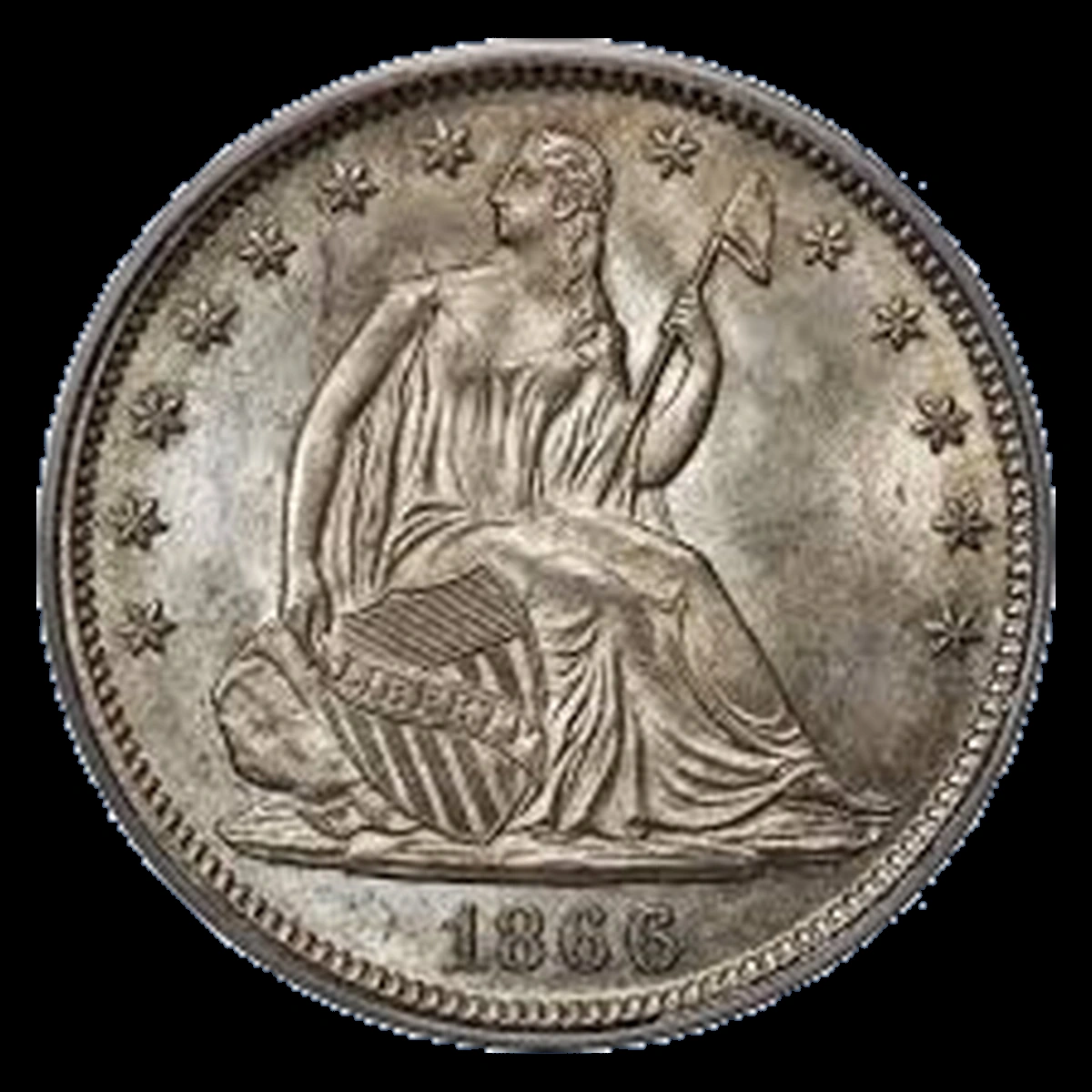
The mintmark determines where this search begins. Philadelphia has a reported piece of a 1 near Liberty’s hand, while San Francisco With Motto examples show parts of 86 among the border teeth below the date.
Those border teeth are called dentils. The unusual numeral fragments came from applying the date punch to the wrong area of a die, the steel tool that stamps the coin.
The hand and lower-border locations describe different coins. They should not be combined into a single diagnostic pattern.
How to Identify
After recording the mint, compare only the corresponding location. Keep Liberty’s hand in context on Philadelphia, or photograph the full date and lower dentils on San Francisco.
A useful match needs a recognizable piece of a numeral in the documented position. A damaged dentil or a nick near the hand can resemble a digit fragment without having come from a date punch.
A date that sits slightly high or low is not enough to establish misplaced punching. Likewise, overlapping strokes at the normal date position need a repunched-date explanation instead.
What It’s Worth
Estimated range: $200–$600 for circulated examples. The mint, wear, and clarity of the misplaced numeral affect the comparison.
An 1866-S With Motto WB-9 graded PCGS VF35 brought $216 at Stack’s Bowers in April 2025. That is a recorded misplaced-date sale.
An ordinary Philadelphia With Motto ANACS VF35 sold for $202.52 at Heritage on April 8, 2026. Its result supplies context for the Philadelphia estimate without establishing a sale of the extra 1 variety.
2. 1866 Half Dollar Repeated Details on the Front: Doubled Die Obverse Error
The Philadelphia With Motto variety cataloged as WB-5 carries doubled detail on its front. The supplied listing does not specify a particular letter or star to use as the diagnostic point.
“Obverse” is the front of the coin. Repeated outlines in a doubled die were already present in the stamping tool and could be copied onto multiple coins.
How to Identify
Confirm the motto above the eagle and the absence of an S below it. Those details identify the issue described in the PCGS WB-5 entry.
Use a clearly attributed WB-5 photograph to locate and compare the repeated front details. The limited text description does not justify assigning an invented diagnostic letter to this variety.
Under magnification, distinguish shaped extra outlines from flat ledges caused by movement during striking. A thick digit or a bright reflection in one view cannot settle the identification.
What It’s Worth
Estimated range: $200–$400 around Very Fine condition. Very Fine coins retain readable design despite moderate wear.
PCGS lists no auction record for this WB-5 entry. The ordinary Philadelphia VF35 sale at $202.52 in April 2026 provides a starting comparison for the complete coin.
Clear variety evidence and surfaces without damage make that comparison more useful. The supplied information does not establish a fixed premium for the doubling.
3. 1866 Half Dollar Ridges Across the Head and Lettering: Extensive Die Cracks Error
On a late San Francisco WB-2, a diagonal line crosses Liberty’s head and other lines occur around her rock and foot. The back adds large cracks near TRUST, AMERICA, and the denomination.
This pattern records deterioration of both stamping tools. Silver forced into their openings left raised ridges on the finished coins.
How to Identify
Begin with the head line, then work downward to the rock and foot. Turn the coin over to compare the three described lettering areas.
The Bugert WB-2 reference allows the two faces to be matched as one die pair. Also verify the S and With Motto reverse.
A scratch cuts below the surface, whereas a die-crack ridge rises above it. Check each section under changed lighting rather than assuming that every line belongs to the same pattern.
One isolated head line is weaker evidence than agreement across the portrait and back lettering. The WB-2 attribution depends on the combination.
What It’s Worth
Estimated range: $200–$450 for circulated examples around Very Fine with the described paths visible. Wear and surface problems can make both identification and price comparison less secure.
The $216 San Francisco VF35 sale from April 2025 concerned the misplaced-date WB-9 discussed earlier. It supplies date, mint, and condition context, but does not show that the sold coin had these WB-2 cracks.
4. 1866 Half Dollar Small Extra Outlines on the Back: Doubled Die Reverse Error
Remain on the back for a subtler feature: minor doubling on the With Motto San Francisco reverse identified as reverse C. Bugert records that this tool was paired with two different front dies.
Heritage’s WB-104, Die Pair 3 example supplies a specific coin for comparison. The repeated outlines were in the reverse die before striking.
How to Identify
Match the motto and S before inspecting the fine repeated detail. The normal 1866-S No Motto issue requires a different reference.
Compare the reverse directly with a documented WB-104 image under magnification. Since the doubling is minor, do not expect every letter to form an obvious separated pair.
Move the light to reduce glare and follow the actual outlines. Front details can differ because the doubled reverse served with two front tools, so a front mismatch alone does not settle the reverse attribution.
What It’s Worth
Estimated range: $2,500–$3,500 for examples comparable to the unworn MS64 reference. MS64 allows some surface marks despite the absence of circulation wear.
The PCGS MS64 sold for $3,055 at Heritage on September 20, 2015. The result covers the whole coin and its preservation.
A circulated coin from the same tool needs a worn-coin comparison. Identifying the small extra outlines does not give it the MS64 example’s condition.
Conclusion
Record the mint and motto before looking for the error. Those two observations direct the search to the proper stray digits, doubled designs, or crack pattern.
The $200–$3,500 estimates mix circulated examples with a well-preserved MS64 reverse variety. Treat the $216 misplaced-date sale, ordinary $202.52 Philadelphia sale, and $3,055 doubled-reverse sale as distinct comparisons with different evidentiary roles.