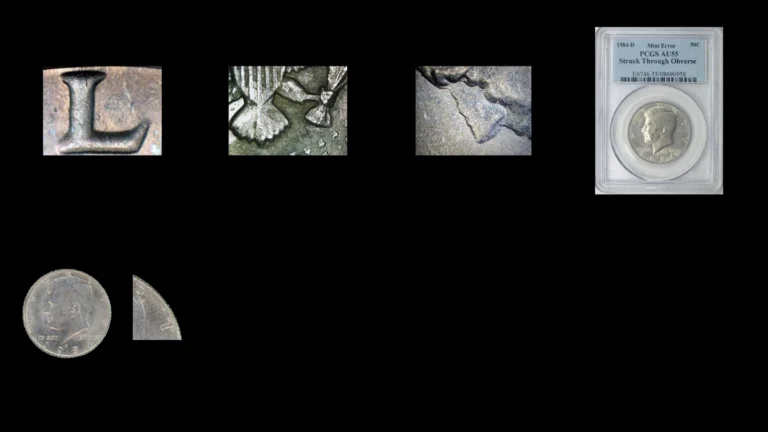
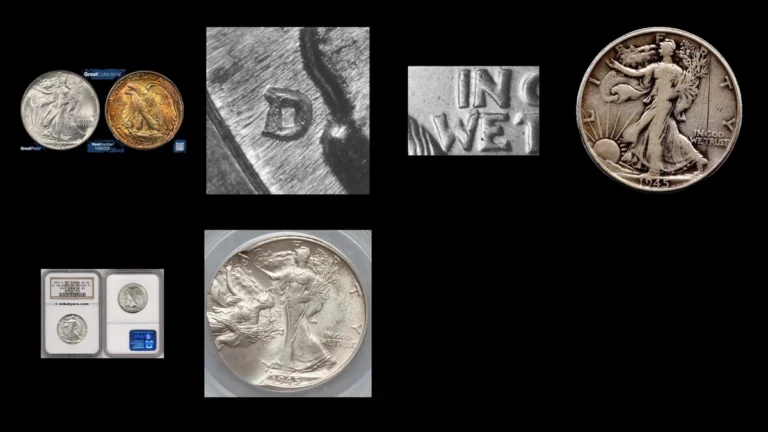
Rare 2015 Half Dollar Errors (List & Pictures)
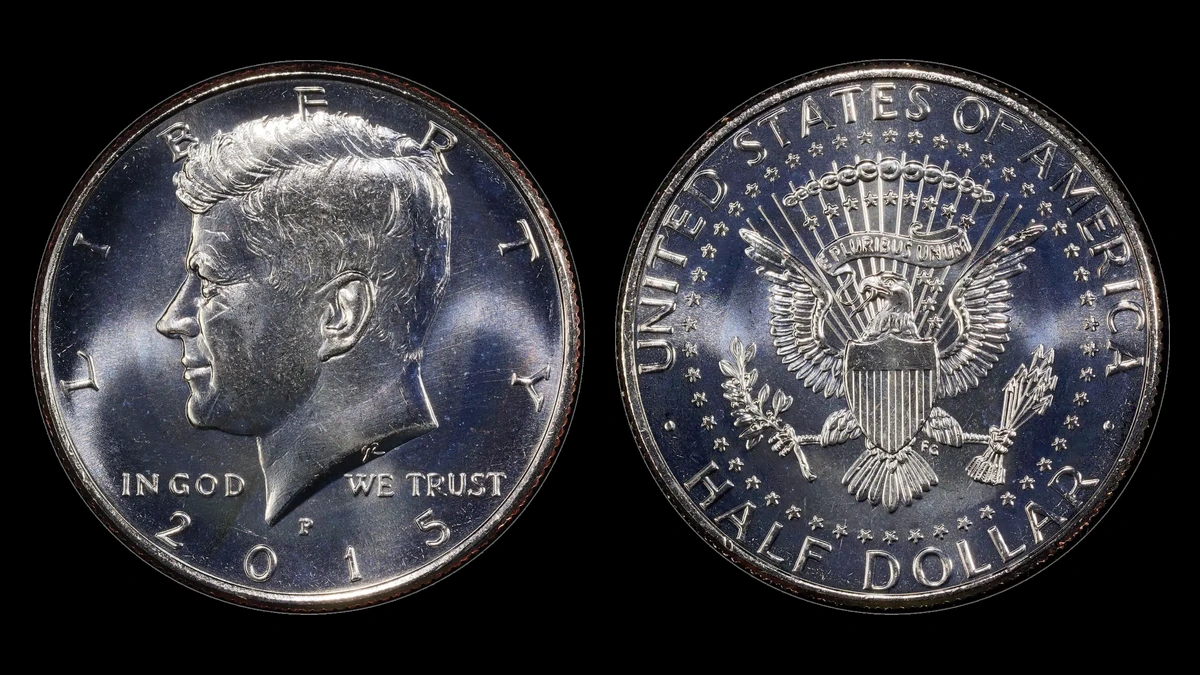
For 2015 half dollar errors, an unusual mark needs identification before it needs a price. The candidates below have comparison-based estimates of $20–$750, while ordinary clad coins with mechanical mintmark doubling remain around $0.50–$3.
An older 1982-P No FG sold for $4,304.25, but that is not a 2015 result. Begin with the outline, compare front detail, then inspect the reverse design and initials.
| Observation | Inspection area | Question to resolve | Estimated value |
|---|---|---|---|
| Blank crescent and missing design | Both faces | Off-center candidate | $50–$200 |
| Repeated letter corners | Front | Doubled-die candidate | $25–$200 |
| Extra mintmark edge | P, D, or S | Mechanical doubling, not an old-style RPM | $0.50–$3 for ordinary clad coins |
| Extra design contours | Reverse letters or eagle | Doubled-die candidate | $25–$750 |
| No visible FG | Between the eagle’s leg and tail | Missing-initials candidate | $20–$250 |
Ordinary clad coins, made from layered metal, weigh about 11.34 grams; silver proofs weigh 12.50 grams. Proofs are specially made collector coins, and both types normally measure about 30.61 mm.
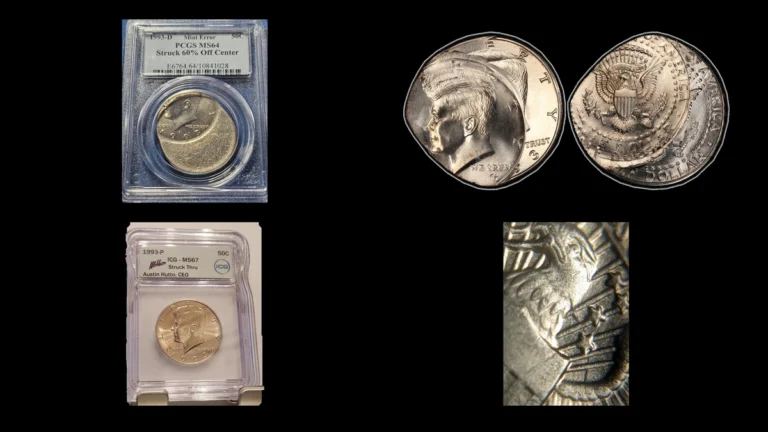
1. 2015 Half Dollar Unstruck Metal Beside a Shifted Design: Off-Center Candidate Error
A misplaced blank can leave part of its metal untouched while the opposite portion of the design falls beyond its edge. This creates the combination to seek on a possible off-center half.
The packet provides inspection criteria and a comparative range, not a documented 2015 sale or confirmed specimen. A readable 2015 date on the candidate remains essential.
How to Identify
Photograph both complete faces with the blank margin visible. Check whether their design loss agrees with the position of that margin.
A shifted front and centered reverse may indicate a misaligned die instead. A wide border with all design present also requires a different diagnosis.
Examine the boundary for abrasion, filing, or later flattening. Silver-colored metal where someone rubbed away a portrait is not the same as an originally unstamped crescent.
What It’s Worth
Comparative estimate: $50–$200 for an identified regular clad candidate with clear displacement and a readable date. The range comes from ordinary clad Kennedy comparisons, not a recorded 2015 transaction.
Large offsets do not guarantee attractive coins when the date is gone or the surfaces are damaged. Those differences need to be considered before applying the estimate.
2. 2015 Half Dollar Small Repeated Corners on the Front: Doubled Die Obverse Error
At an unusual letter, look for a stable notch or rounded extra outline rather than a bright halo. A doubled die contains repeated design detail before it strikes the coin.
Modern doubling may be localized, so it need not affect the entire portrait or every letter. No confirmed 2015 mint, catalog number, or exact pattern is assigned in this entry.
How to Identify
Select the clearest unusual corner and compare it with a normal coin of the same mint and finish. Examine the raised metal directly through a magnifier as well as in photographs.
Change the light direction to test whether the apparent extra edge is just glare. A flat shelf beside a reduced main stroke suggests movement during striking rather than duplicated detail in the die.
Record the date, mint, and whether the surface is an ordinary or proof finish. A candidate should be evaluated from its own repeated feature, not assigned an older coin’s variety number.
What It’s Worth
Comparative estimate: $25–$200 for an identified 2015 candidate. Clearly repeated detail and attractive surfaces make the stronger end more plausible.
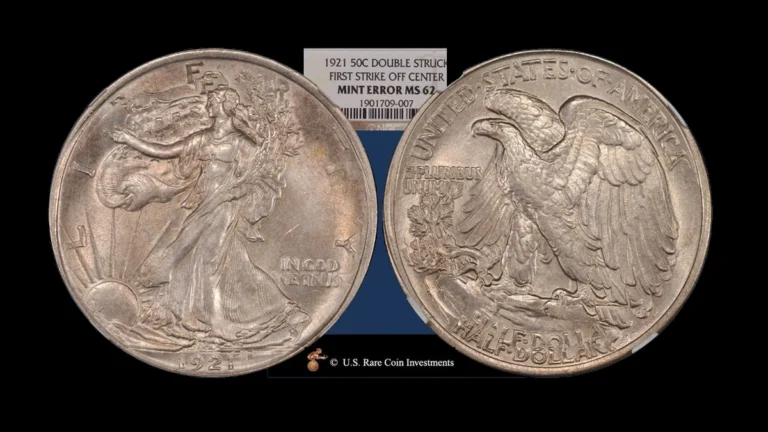
A 1974-D doubled-front Kennedy graded ANACS MS64 sold for $49 at Heritage in May 2026, as recorded by Greysheet. That established older example provides context without proving a discovery or sale for 2015.
3. 2015 Half Dollar An Extra Edge on P, D, or S: The Repunched-Mintmark Claim Error
An RPM is a repunched mintmark, historically made when a worker placed a separate letter punch into a working die more than once. That manufacturing explanation does not fit a 2015 mintmark.
The U.S. Mint’s mintmark explanation describes modern letters entering the design earlier, on a master tool. A doubled-looking edge on a 2015 coin therefore needs another explanation.
How to Identify
Compare the letter with nearby design. Similar low ledges on both can support mechanical doubling caused by tool movement during striking.
Look for a nick, dirt, or a small lump that changes the outline locally. A thicker letter alone cannot establish any particular doubling cause.
Use a matching 2015 mint and finish for the normal reference. An older hand-punched RPM diagram answers a different manufacturing question.
What It’s Worth
Estimated range: $0.50–$3 for ordinary 2015-P or 2015-D clad examples with only flat mechanical doubling. No repunched-mintmark premium is included.
Silver content, proof manufacture, or exceptional preservation can give a coin separate value. That value should not be attributed to a doubled-looking mint letter.
4. 2015 Half Dollar Repeated Feathers or Letter Shapes: Doubled Die Reverse Error
The eagle naturally has many close lines, making a normal reverse look busy under enlargement. A doubled-die candidate needs an extra copy of real design detail rather than merely crowded feather lines.
The repeated feature would already be part of the reverse die. The supplied material identifies no exact 2015 reverse pattern to use as an established attribution.
How to Identify
Compare the candidate and a normal reverse at the same magnification. Start where letters turn corners or design lines meet, then follow any alleged duplicate contour.
Inspect the coin itself to rule out sharpened-image artifacts. A low shelf with a flattened original shape can result from striking movement, while reflections may shift as the lamp moves.
Keep the front date and mint in the record. An older doubled reverse can teach the distinction between forms of doubling without identifying the newer coin.
What It’s Worth
Comparative estimate: $25–$750 spans modest through strong, well-preserved candidates once identified. No completed 2015 transaction supports the range directly.
A 1964 DDR FS-801 graded PCGS MS66 sold for $720 in December 2024. It supplies upper-end Kennedy context but is an older silver coin with an established variety name.
5. 2015 Half Dollar The Designer’s Initials Cannot Be Seen: Missing FG Error
FG stands for Frank Gasparro and normally appears on the viewer’s right between the eagle’s leg and tail feathers. Locate that small area before deciding whether the letters are absent.
On recognized older No FG varieties, excessive polishing removed the shallow initials from the die. The same explanation for a 2015 candidate requires evidence, because wear, blocked die detail, and later rubbing can also obscure letters.
How to Identify
Use low light from several directions and look for the smallest surviving letter remnants. Faint FG and completely missing FG are different observations.
Compare the nearby protected design with the suspected blank area. Broad wear is less consistent with a local change in the die than missing shallow letters amid otherwise preserved detail.
Inspect for grinding lines, polished texture, or a hollow where the letters should be. The surrounding field must support a mint-made explanation before the older variety comparison is useful.
What It’s Worth
Comparative estimate: $20–$250 for an identified 2015 missing-initials candidate. It remains provisional without a documented same-year sale.
GreatCollections records $4,304.25 for a PCGS MS67 1982-P No FG. That recognized older variety at an exceptional grade does not set the price of a newer coin with weak initials.
Conclusion
For 2015, the strongest first step is describing the actual feature: blank metal, repeated raised detail, flat ledges, or genuinely absent letters. The old separate-punch RPM explanation does not apply to this year.
Candidate estimates of $20–$750 depend on identification, while ordinary clad mechanical doubling stays around $0.50–$3. Older auction records offer context and should remain labeled by their actual years.