Rare 1984 Half Dollar Errors (List & Pictures)
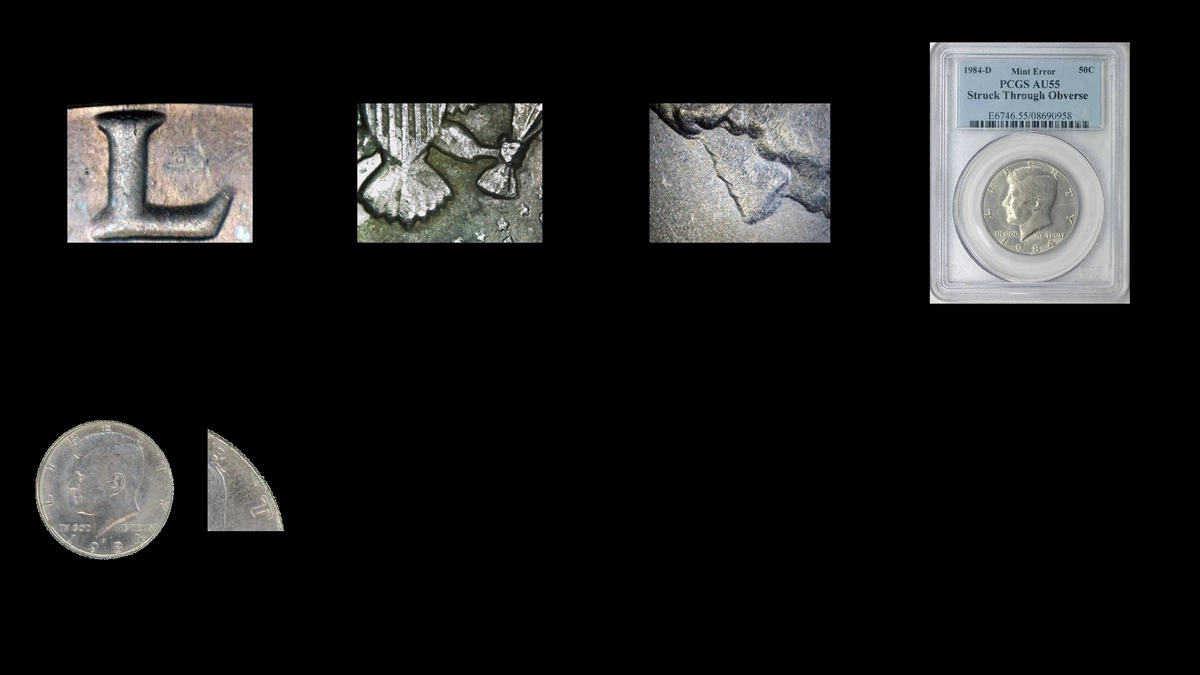
A 1984-S proof with two front images nearly a quarter-turn apart sold for $5,462.50 in January 2007. The obverse die moved between blows while the reverse stayed aligned.
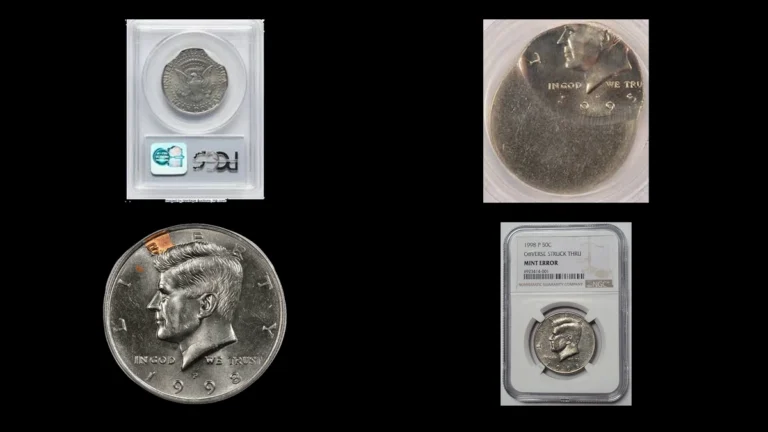
Estimated 1984 half dollar errors values span $20–$10,000. Compare letters and transferred traces first, then inspect edge shape and strike alignment.
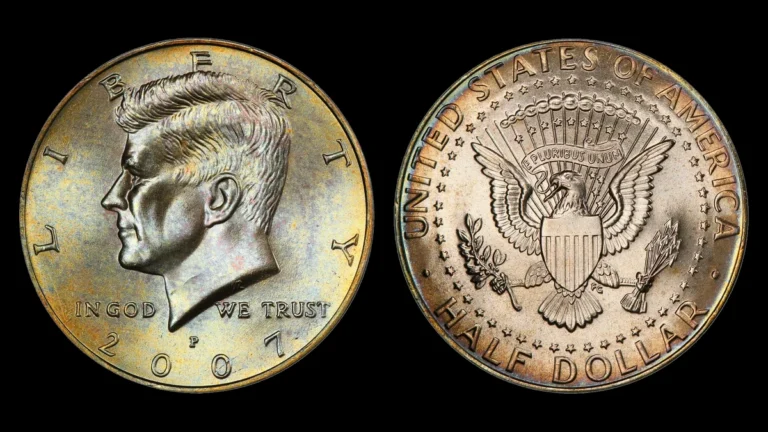
All normal 1984 Kennedy halves, including S proofs, are copper-nickel clad. They weigh 11.34 grams and measure approximately 30.61 millimeters, with reeded edges.
| Inspection point | Feature | Estimated whole-coin value |
|---|---|---|
| Upper-right D | RPM-001 | $20–$125 |
| LIBERTY and supporting markers | Doubled die | $25–$350 |
| Reverse initials | Reported No FG | $20–$400 if confirmed |
| Front and back transferred traces | Misaligned die clash | $50–$650 |
| Interrupted front design | Strike-through | $25–$500 |
| Raised rim feature at1:45 | Obverse cud | $25–$450 |
| Two missing edge areas | Double clip | $30–$350 |
| Small original disc | Quarter blank | $500–$1,800 |
| Complete design in spread metal | Broadstrike | $25–$400 |
| Blank area beside shifted image | Off-center strike | $50–$800 |
| Wrong relative face angle | Rotated dies | $40–$1,000 by finish |
| Two separated proof obverses | Double strike with die rotation | $3,500–$10,000 |
1. 1984 Half Dollar Earlier D Strokes Remain to the Northeast: RPM-001 Error
CONECA’s 1984-D RPM-001 shows mintmark remnants toward the upper right, described as northeast. A second hand-punched placement in the die did not fully cover the first D.
Coins struck from that die reproduced the fragment. Reports of the variety in mint sets do not make packaging an attribution by itself.
How to Identify
Compare the whole D with the RPM-001 photograph, concentrating on the upper-right remnants. They should follow recognizable portions of a letter.
Inspect for corrosion, impact distortion, or a flat shelf that could change the outline another way. Keep the mintmark untouched so the small strokes remain available for comparison.
A full-date photograph with the closeup helps establish which coin is being attributed. Normal measurements cannot confirm repunching.
What It’s Worth
Matching examples have an estimated $20–$125 range. Visible remnants and original surfaces support stronger comparisons.
The catalog supplies an attribution rather than one selling price. A separate guide’s $15–$60 for minor ungraded 1986-D repunched mintmarks is different-year guide context, not a completed auction.
2. 1984 Half Dollar LIBERTY Shows Separation with Chin and Date Markers: Doubled Die Varieties Error
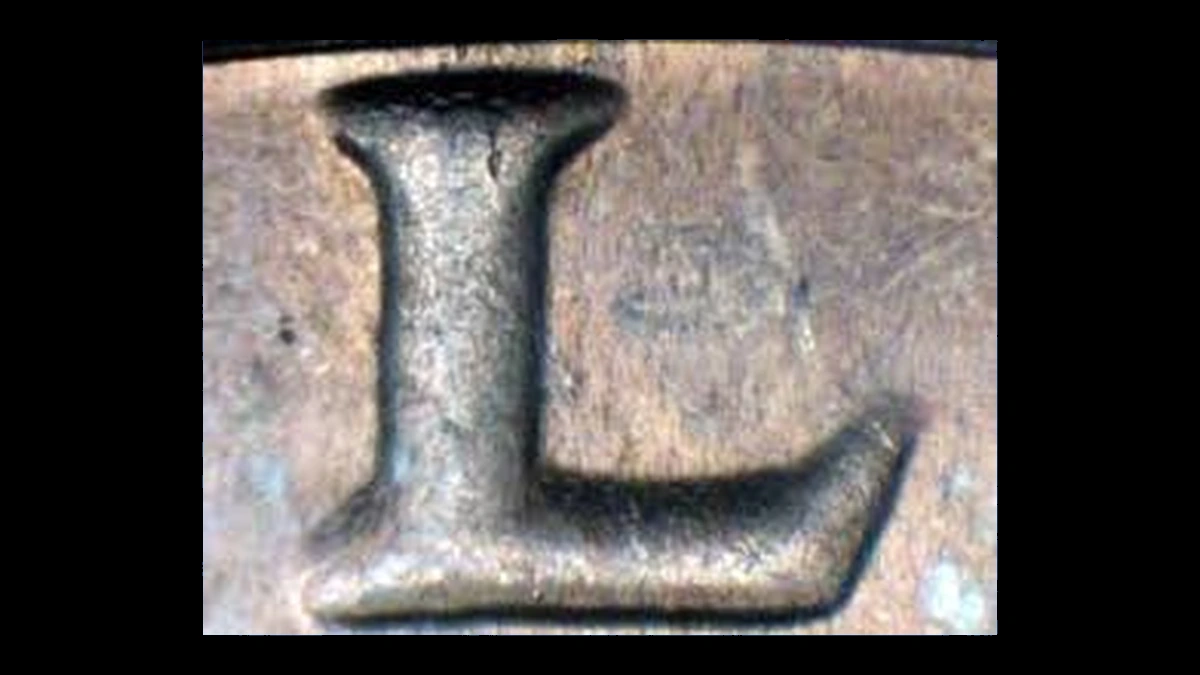
The Philadelphia obverse is called WDDO-001 or DDO-001. It combines separation in LIBERTY with inward thickening elsewhere in the design.
A thin vertical raised line left of the chin and a short raised mark beside the upper 1 of the date help identify the die. Reverse doubling is separately reported without an established matching variety.
How to Identify
Begin with LIBERTY, then compare thickening in the motto, upper hair, and date with a confirmed example. A genuine pattern need not produce two neatly separated outlines at every point.
Check the chin and date markers as supporting evidence. Those marks do not identify an unrelated reverse variety.
Move the light to exclude reflections and distinguish rounded repetition from a flat strike-related shelf. Thick lettering alone is not a match.
What It’s Worth
Confirmed doubled dies have an estimated $25–$350 range. The known obverse offers the clearest attribution, with preservation affecting visibility and appeal.
A 1974-D doubled die graded ANACS MS64 sold for $49 in May 2026. That comparison does not establish a 1984 reverse variety or give an unnumbered report the obverse’s attribution.
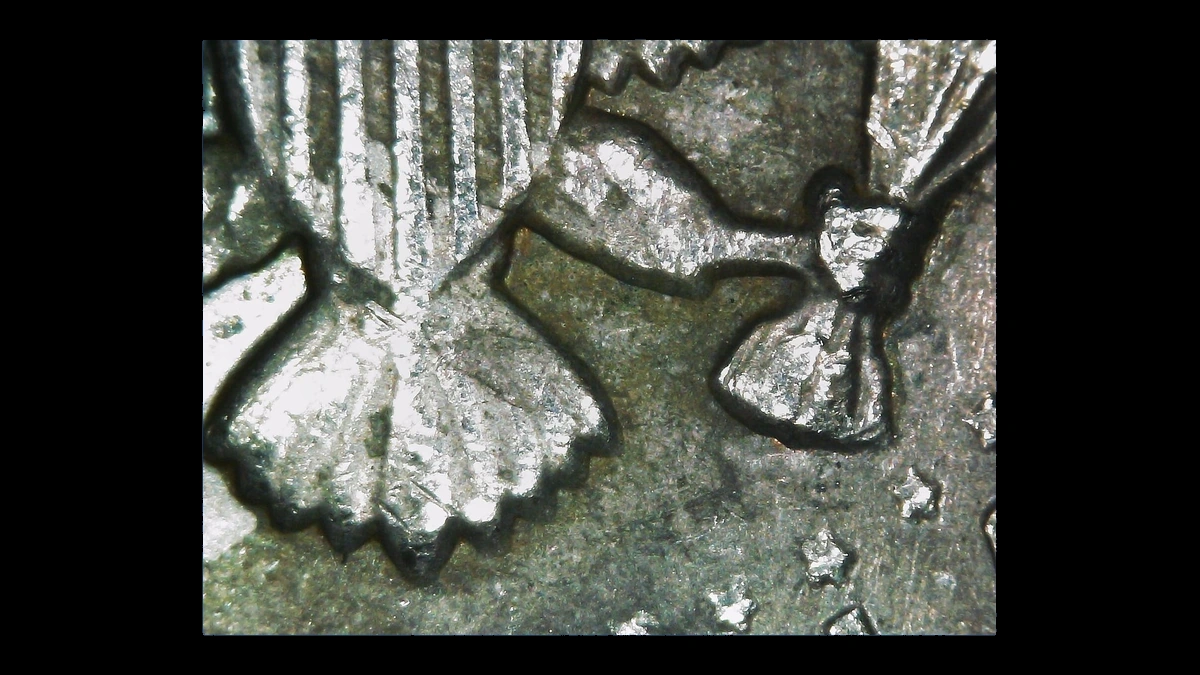
3. 1984 Half Dollar FG Appears Absent near the Tail: Reported Missing Initials Error
A collector reported apparently missing FG on a 1984-P, but a clear confirmed example is not established in the supplied material. The initials normally identify reverse designer Frank Gasparro.
Weak strokes, wear, an obstruction, or deliberate smoothing can all create an empty-looking spot. The report should not automatically be promoted to a recognized die-polished variety.
How to Identify
Locate the initials on a normal coin, then inspect the candidate under several light angles. Any surviving portion of F or G means the initials are weak rather than completely absent.
Keep the nearby leg, feathers, and flat areas in the closeup to assess wear or rubbing. A narrowly cropped blank spot can conceal the reason details are missing.
Do not clean the area. The original candidate needs clearer surface evidence before the absence and cause are settled.
What It’s Worth
A genuinely absent, correctly identified feature has a provisional estimated $20–$400 range. Modest examples belong nearer the lower end.
An established 1982-P No FG graded PCGS MS66+ sold for $384 in May 2024. Its recognized variety and high preservation cannot be transferred to the unconfirmed 1984 report.
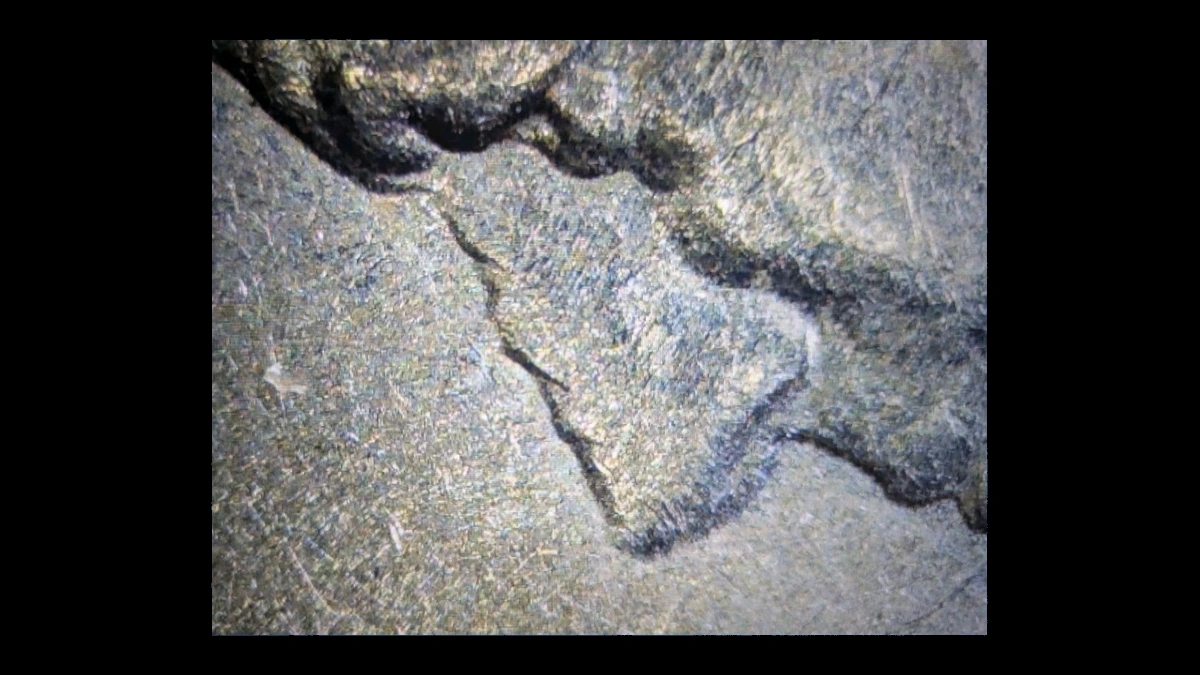
4. 1984 Half Dollar Several Traces Fit Shifted Opposing Designs: Misaligned Die Clash Error
ADC-50c-1984P-01 includes lines in front of Kennedy’s face, behind his head, and part of a facial outline on the reverse. Contact between the dies without a blank produced the transferred marks.
Some traces fit more centered contact, while others suggest shifting, turning, or tilting. The proposed order of contacts and later polishing remains an interpretation of visible evidence.
How to Identify
Compare the front-face area, rear-head area, and reverse traces individually with the catalog photographs. Do not force every mark into one continuous supposed outline.
Align images at the same scale and test each trace against the opposing design. Scratches or polishing lines must not be mistaken for transferred elements merely because they are parallel.
Document what is visible before constructing a sequence of events. Normal dimensions cannot prove how many clashes occurred or in what order.
What It’s Worth
A clear matching complex clash has an estimated $50–$650 value. Multiple recognizable traces can add interest when original surfaces remain attractive.
A strong-clash 1973-S proof graded PCGS PR68 Deep Cameo sold for $720 in October 2022. That collector proof’s finish and preservation differ substantially from an ordinary 1984-P.
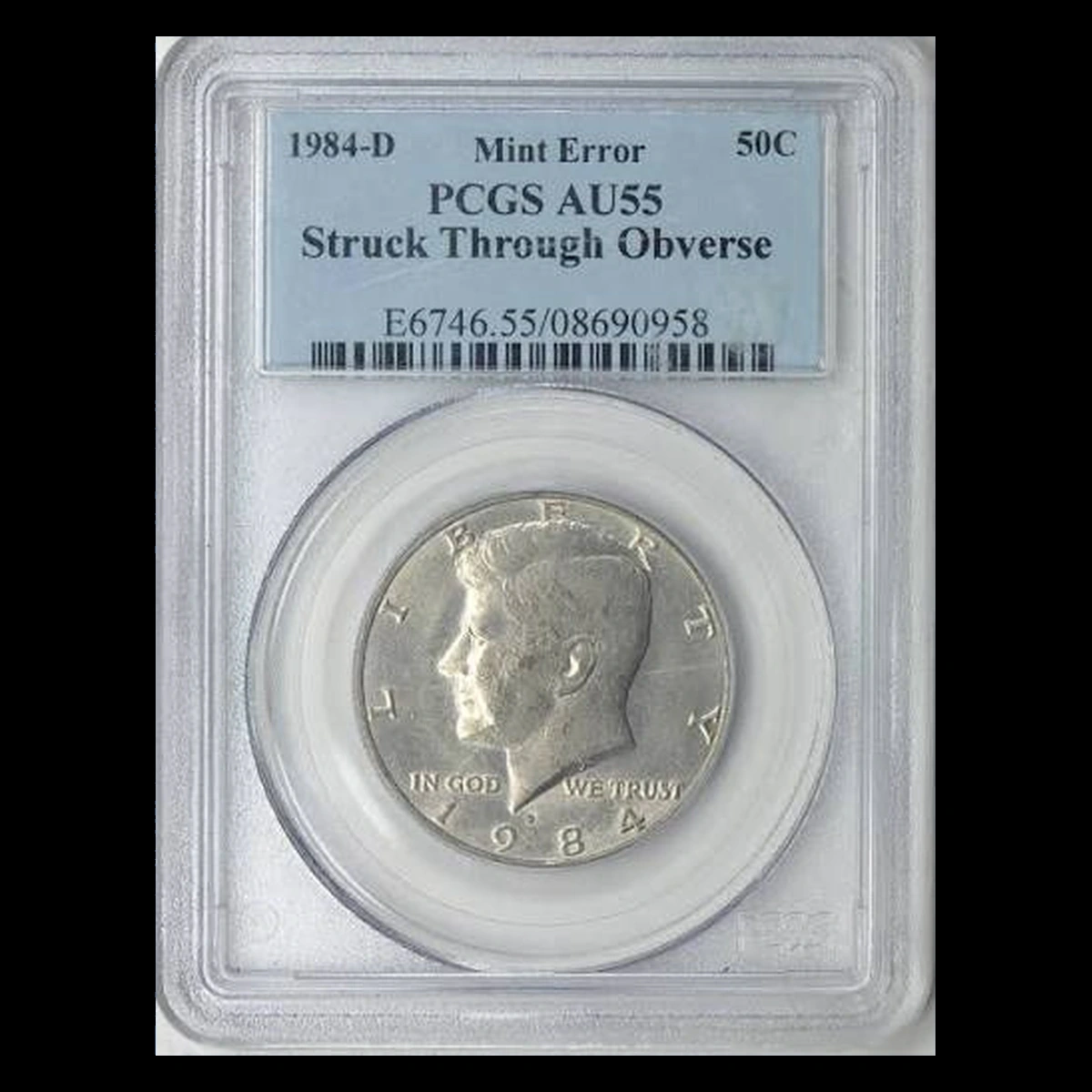
5. 1984 Half Dollar Part of the Front Design Was Blocked: Obverse Strike-Through Error
The listed 1984-D PCGS AU55 has an obverse strike-through. Its light wear is a condition description, while the error identifies interruption of normal contact during striking.
No exact position, shape, or trapped material is supplied in the text. Grease, cloth, wire, and retained objects should not be assumed from the broad label.
How to Identify
Locate the actual affected area and follow its boundary into normal detail. A strike interruption must be distinguished from an impact that crushed the finished design.
Look for torn metal or a raised lip associated with later damage. Keep both full faces beside the closeup rather than judging an isolated depression.
Leave any material in place and inspect the edge for other alteration. Cleaning can remove evidence needed to understand the mark.
What It’s Worth
Estimated values span $25–$500, from small interruptions to prominent clear impressions. The listing’s starting bid is not a realized price.
A 1988-D obverse strike-through graded NGC MS67 sold for $59 in July 2021, and a 1976-D struck through material on both sides brought $114 in March 2025. Their affected areas and grades do not describe the lightly worn 1984-D.
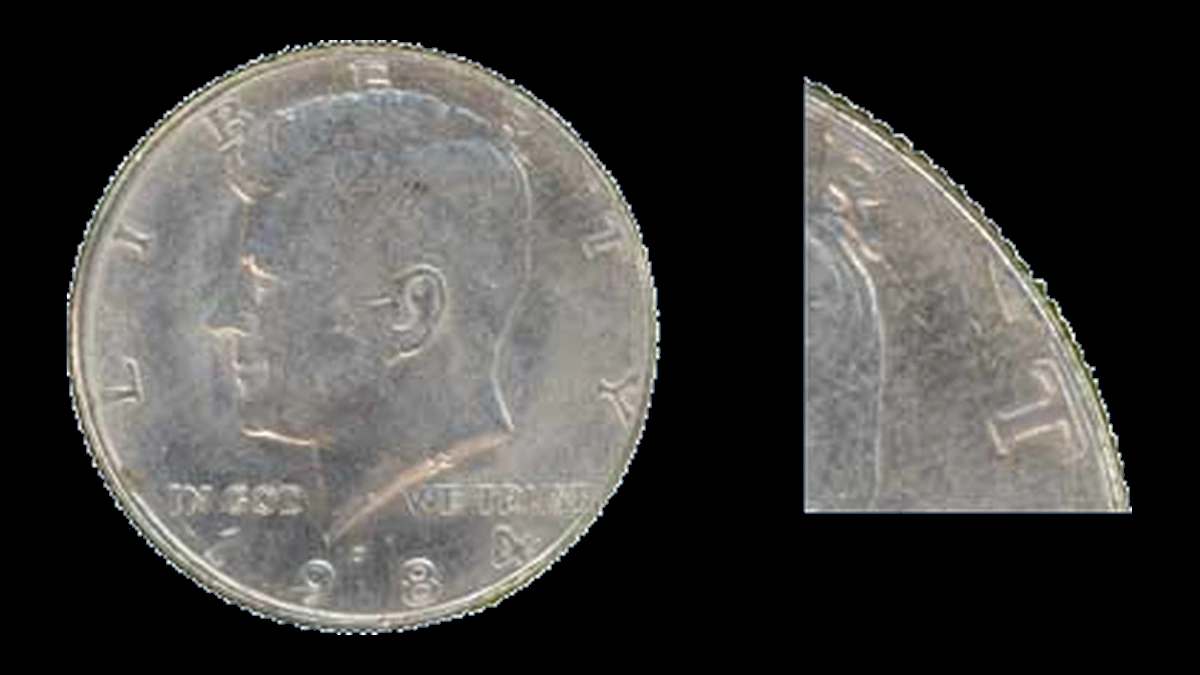
6. 1984 Half Dollar A Half-Arrowhead Shape Rises at the Rim: Obverse Cud Error
The known 1984-P front cud sits near 1:45 with an outline described as an arrowhead split lengthwise. Cud-001, 84P-1, and UVC 262 name the same entry.
A piece breaking from the die’s edge leaves space that metal fills during striking. The raised result is not a hole or percentage of metal missing from the coin.
How to Identify
Hold Kennedy upright and compare the raised rim outline near 1:45 with the catalog image. Confirm the P and date in the full view.
Inspect the edge connection for original formation rather than solder, corrosion, or an impact-folded rim. Keep nearby design visible to locate the small feature accurately.
The catalog’s approximate depth and width percentages are descriptive. They should not become invented exact dimensions or a claim of missing coin mass.
What It’s Worth
Matching genuine examples have an estimated $25–$450 range. Clarity, preservation, and unrelated damage affect the comparison.
A 1976-D reverse die break graded NGC MS65 sold for $256 in June 2026. That different-year larger-break comparison does not fix a price for every example of the small 1984 feature.
7. 1984 Half Dollar Two Areas Are Missing from the Outline: Double Clipped Planchet Error
A double clip requires two gaps already present before striking. The incomplete blank received its rim and design around both missing sections.
The 1984 report supplies no individual mint, shapes, positions, or percentages. One convincing opening cannot establish that a second notch has the same origin.
How to Identify
Photograph both gaps in one whole-coin view, then inspect each separately. Follow its boundary into the surviving rim and lettering.
Look for original weakening toward a gap rather than filing, burrs, or cut-through finished detail. Opposite-rim weakness may support the diagnosis but cannot prove it alone.
Compare the weight shortage with the actual missing areas and wear. Record intact spans without assigning a percentage from a different coin.
What It’s Worth
Genuine double clips have an estimated $30–$350 range. The two gaps’ appearance and the remaining coin’s condition determine whether they justify stronger interest.
A 1993-D single curved clip graded ANACS MS64 sold for $34.74 including the buyer’s fee in August 2025. That modest comparison does not establish a 1984 double-clip sale.
8. 1984 Half Dollar A Small Blank Cannot Hold the Design: Wrong Quarter Blank Error
The documented 1984-P NGC MS63 weighs 5.6 grams and was struck on a quarter blank described as damaged before striking. It is not described as an already minted quarter beneath Kennedy’s image.
Matching descriptions appear in 2022 and 2025 sale records. Without matched coin identities, those records do not establish either two distinct specimens or one known repeat appearance.
How to Identify
Compare the recorded 5.6 grams with a normal clad quarter blank’s 5.67 grams. A quarter starts around 24.26 millimeters across, although the half-dollar strike can spread it wider.
Inspect where the oversized design ends naturally at the small edge and look for trimming or grinding. Compare the pre-strike damage with the design formed over it.
Search for an actual surviving earlier design before claiming a finished-quarter overstrike. No Washington image is established in the supplied description.
What It’s Worth
The estimated range is $500–$1,800. Readable identity, remaining detail, and the original blank’s condition influence the comparison.
The damaged-quarter-blank description appears with $690 in January 2022 and $720 in March 2025, both graded NGC MS63. Treat them as separate records without automatically counting two known coins.
9. 1984 Half Dollar Complete Designs Remain inside a Wide Border: Broadstrike Error
Two 1984-P records demonstrate that a broadstrike can coexist with later wear or cleaning. One is ICG AU58; the other has unworn details but improper cleaning.
The original error resulted from inadequate collar restraint and outward spreading. Cleaning may reduce appeal without causing or erasing the broadened outline.
How to Identify
Trace outer lettering on both faces to confirm a complete design. Inspect the edge and expanded margin for natural striking rather than later crushing.
Measure several widths and compare weight with an intact blank. Spreading alone does not explain a substantial metal shortage.
Evaluate scratches and disturbed shine as a separate surface question. A genuine error can still carry cleaning or other damage that affects its value.
What It’s Worth
The estimated range is $25–$400, allowing greater interest for clean, strongly expanded examples. The AU58 sold for $23 in August 2009, and the cleaned unworn coin brought $31 in February 2009.
A 1990-P ANACS MS61 broadstrike sold for $192 in March 2025. That newer comparison does not convert a cleaned 1984 into a problem-free coin.
10. 1984 Half Dollar Original Plain Metal Accompanies a Shifted Image: Off-Center Strike Error
The recorded 1984-P ANACS MS63 establishes an unworn off-center example with noticeable marks. No percentage or direction is given in its description.
The blank sat partly outside the dies and received an incomplete image. An illustrative percentage in a general guide cannot be assigned to this coin.
How to Identify
Read the actual date and P, then compare missing outer design with the plain crescent on both faces. They should reflect compatible displacement.
Inspect the boundary for cutting or grinding and check remaining edge grooves. A shifted border on one side while the other stays centered may point to die misalignment.
Record any expansion before estimating the shift from a straight-on image. Preserve the full outline in the photograph.
What It’s Worth
Current working comparisons use an estimated $50–$800 range. The indexed Heritage record gives $45 in July 2006 for the ANACS MS63.
A ten-percent-off-center 1990-P NGC MS66 sold for $198 in September 2025. Its percentage and stronger preservation belong to that different-year example.
11. 1984 Half Dollar The Two Faces End at the Wrong Relative Angle: Reported Rotated Dies Error
Specialist-table reports list Denver at 180 degrees and S proofs at 90 degrees clockwise or 180 degrees. These 1984 reports still await confirmation and do not establish completed sales.
The feature concerns final obverse-to-reverse alignment. It differs from the separate proof below, where the obverse die moved between strikes and created two front designs.
How to Identify
Hold Kennedy upright and flip top to bottom without twisting. Repeat the motion to determine whether the eagle consistently lands sideways, upside down, or at another measurable angle.
Preserve the mint and finish in the record rather than assigning one reported angle to every candidate. Independently rotated photographs cannot prove the relationship.
Inspect the edge for seams or machining that might indicate a novelty assembled from separate halves. A proof’s finish does not establish abnormal alignment.
What It’s Worth
Confirmed ordinary rotations are estimated at $40–$300, while substantial proof rotations are estimated at $150–$1,000. Angle, preservation, and finish affect the comparison.
A 2000-P rotated 75 degrees clockwise sold for $79 in March 2025. Two 1988-P examples with matching upright-side alignment brought $288 together in July 2021, a paired total that is neither a per-coin price nor confirmation of a reported 1984 angle.
12. 1984 Half Dollar Two Proof Obverses Are Nearly a Quarter-Turn Apart: Double Strike with Die Rotation Error
The dramatic 1984-S proof has two front images separated by almost 90 degrees counterclockwise. The reverse die remained in position while the collar held the coin through the blows.
Proofs normally receive repeated aligned strikes, but this movement produced an error. A loose obverse die is a proposed cause; the visible evidence is the separated obverses and unchanged reverse alignment.
How to Identify
Trace both front images and their separation, then inspect the reverse for the absence of corresponding rotation between its impressions. Both faces are necessary to understand the mechanism.
Confirm the S and proof manufacture, keeping ordinary aligned proof blows distinct from the error. One image per side facing the wrong direction is the different rotated-dies category.
Inspect the edge and surfaces for later manipulation. The correct original clad construction remains the normal reference for this 1984 host.
What It’s Worth
This overlapping proof error has an estimated $3,500–$10,000 range. Its conspicuous movement attracts interest beyond numerical grade alone.
The PCGS PR62 sold for $5,462.50 on January 6, 2007. That proof grade allows noticeable marks, and the result does not price a normal S proof or an unconfirmed final-angle rotation.
Conclusion
The specific 1984 mintmark, obverse markers, and rim-cud outline provide useful close comparisons, while several broader reports still require confirmation. Keep their evidence at the level the source actually supports.
For the major proof error, compare both obverse impressions with the stable reverse rather than treating it as ordinary side-to-side rotation. Match the actual feature, condition, and finish before applying another coin’s price, especially when a record includes cleaning or a damaged blank.