Rare 1837 Half Dollar Errors (List & Pictures)
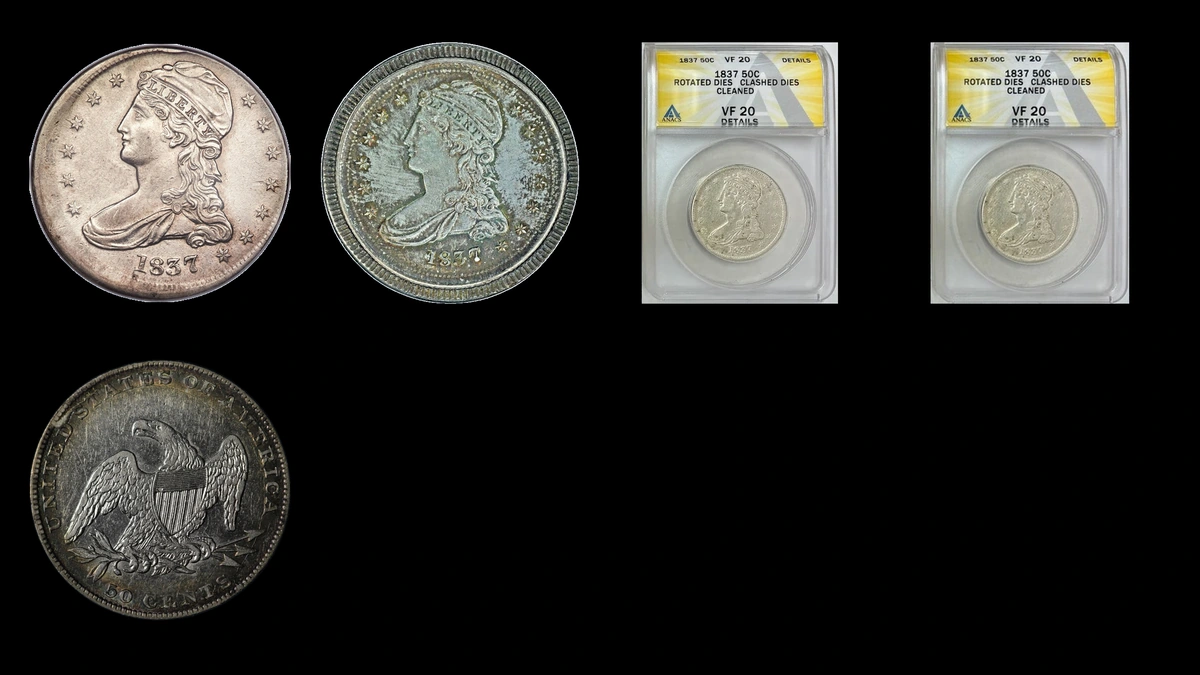
A wider coin with edge grooves, repeated portraits, and an eagle that tilts after a flip need three different explanations. Size alone cannot separate them.
These 1837 half dollar errors have estimated comparisons of $100–$20,000. An exceptional NGC MS66 with cracks, faint clashes, and a rotated reverse sold for $19,550 in August 2006.
Begin with the edge and outline, then study repeated designs and smaller surface marks.
| Clue | Category | Estimated comparison |
|---|---|---|
| A naturally formed missing segment | Rim clip | $150–$350 |
| Matching shifted designs | Off-center strike | $2,000–$4,000 around AU58 |
| Wide body retaining edge grooves | Broad Collar anomaly | $3,000–$8,000 |
| Separated portrait impressions | Multiple strike | $2,500–$6,000 |
| Extra reverse shapes | Die clash | $100–$1,000 circulated |
| Eagle tilted after a fixed flip | Rotated dies | $250–$1,500 circulated to lightly worn |
| Raised branches near UNITED | Die cracks | $1,500–$3,000 in lower unworn grades |
The normal 1837 design reads 50 CENTS and has a grooved edge. Its unworn standard is about 13.36 grams and 30 millimeters across; exceptionally preserved MS66 comparisons below use a separate $15,000–$20,000 bracket.
1. 1837 Half Dollar A Small Missing Edge Section: Rim Clip Error
A seller describes an 1837 as a rim clip in AU, or lightly worn, condition. Neither that grade nor the error was independently certified in the listing.
A real clip starts with an incomplete blank before striking. The listing gives no exact position or percentage, so the coin must supply those details.
How to Identify
Inspect where the edge grooves and struck design meet the gap. Fresh cutting, filing, or an evenly shaved wall suggests later removal.
A weak section of opposite rim can support a clip, though it is not always clear. Compare a loose coin’s remaining weight and intact diameter with the normal figures above.
Keep 1837 and 50 CENTS visible in the photo set. The boundary’s formation is stronger evidence than a listing title.
What It’s Worth
Estimated range: $150–$350 for a modest genuine clip on a circulated example with a readable date. Wear, repairs, and missing-metal size affect the comparison.
The seller asked $211.65 or Best Offer. That does not establish a completed sale or an independent AU grade.
2. 1837 Half Dollar Both Designs Shift toward an Edge: Off-Center Strike Error
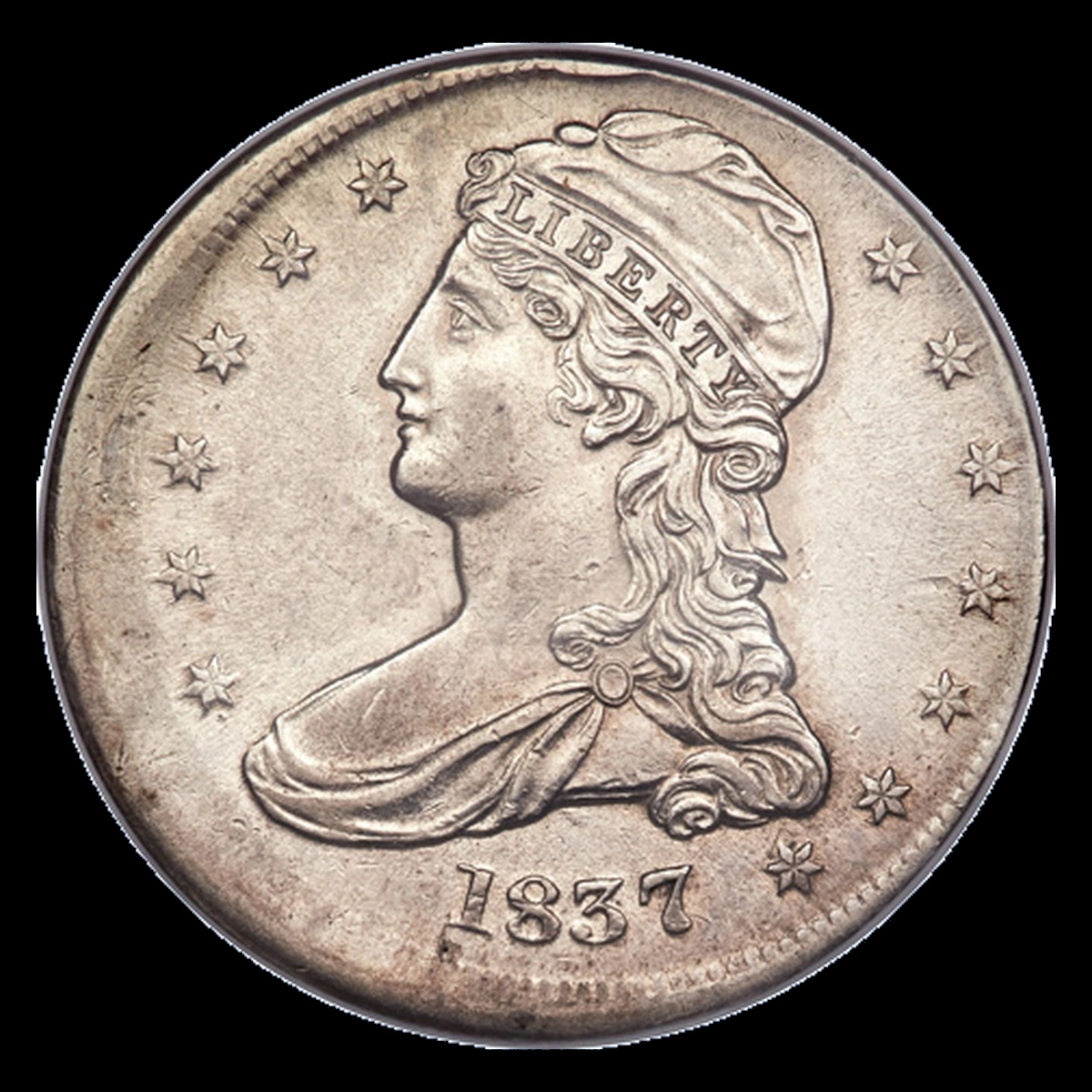
A documented NGC AU58 was described as five percent off center in Heritage’s 2010 FUN sale. Extra blank space remains opposite the displaced design.
The blank sat out of position between the dies. Five percent belongs to that particular example rather than every uneven-looking 1837 border.
How to Identify
Compare both complete faces with the physical edges visible. An off-center photograph can otherwise make a normal coin appear displaced.
Check that both designs support the same shifted blank. An uneven border on only one face can result from one misaligned die.
Inspect the edge for trimming or hammering and record its actual outline. A label or a guessed percentage cannot replace the two-face comparison.
What It’s Worth
Estimated range: $2,000–$4,000 for a comparable confirmed off-center half with very little wear. Mint Error News reports $2,990 for the AU58 at the 2010 FUN auction.
This historical sale does not price every degree of displacement. Major shifts, heavy wear, cleaning, or edge damage need closer comparisons.
3. 1837 Half Dollar Extra Width with Surviving Grooves: Broad Collar Anomaly Error
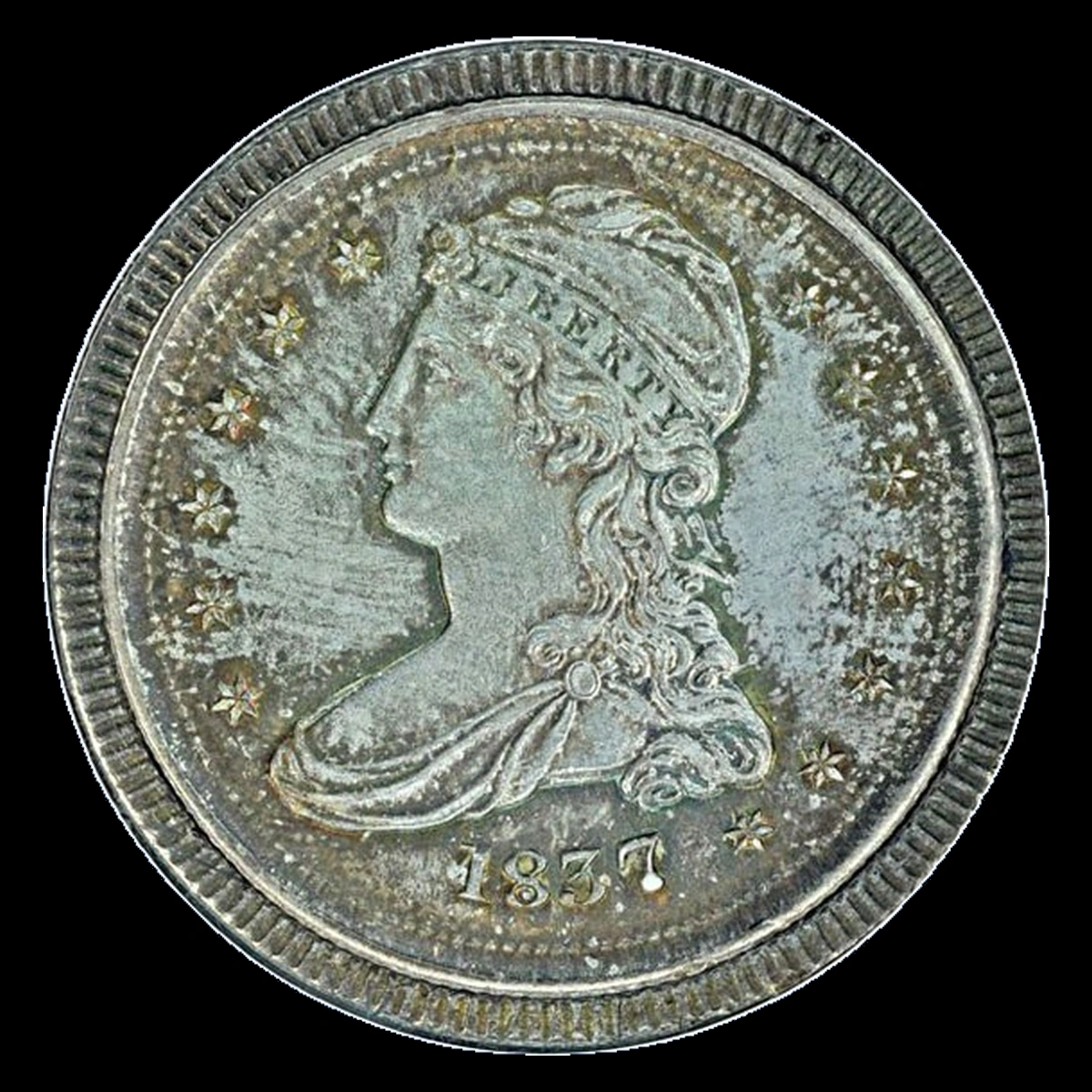
NGC studied an MS61 labeled Broad Collar that is wider than normal but still has edge grooves. It proposed that the grooves were applied before a strike without close-fitting restraint.
The service interpreted the coin as a manufacturing experiment rather than an ordinary broadstrike. Its GR-24 die identification does not mean every GR-24 is oversized.
How to Identify
The NGC study records 31.95 millimeters and 13.30 grams. Compare the oversized body, retained grooves, and stretched outer design together.
For a safely accessible coin, use calipers and a scale rather than judging width from a photograph alone. For a holdered example, use its recorded measurements.
Hammering can also widen a coin. Inspect both surfaces against the studied example for damage inconsistent with its proposed manufacturing process.
What It’s Worth
Estimated range: $3,000–$8,000 for this unusual certified form. NGC’s study does not supply a sale price.
A different cracked MS61 brought $2,040 in 2025, and the AU58 off-center half brought $2,990 in 2010. Neither used the same proposed process, so they give scale rather than matched Broad Collar transactions.
4. 1837 Half Dollar Separated Portraits and an Extra Cap Fold: Multiple Strike Error
The reported triple-struck coin shows widely separated face outlines and an extra cap-fold fragment near the upper rim. Collector Louis Scuderi described it in January 2018.
He interpreted the cap trace as evidence of a first strike about ten percent off center. That sequence is his explanation of the marks, not a separate certification or recorded sale.
How to Identify
Find the separated profiles and then compare the cap-fold remnant with the published collector report. Several recognizable pieces are stronger evidence than one extra-looking edge.
Follow how the repeated details fit together across the coin. Check for crushing or alteration near the edge instead of assuming every repeated line came from another strike.
Retain the identifiable date, denomination, and full outline in photographs. Any expansion should be measured on the actual coin.
What It’s Worth
Estimated range: $2,500–$6,000 for a genuine multiple strike with clear separation in circulated through lightly worn condition. The report supplies no certified grade or sale amount.
The $2,990 off-center 1837 result provides a same-year striking-error comparison. It is not the triple-struck coin’s price, and wear or damage still affects an individual example.
5. 1837 Half Dollar Faint Opposite-Design Shapes on the Back: Clashed Dies Error
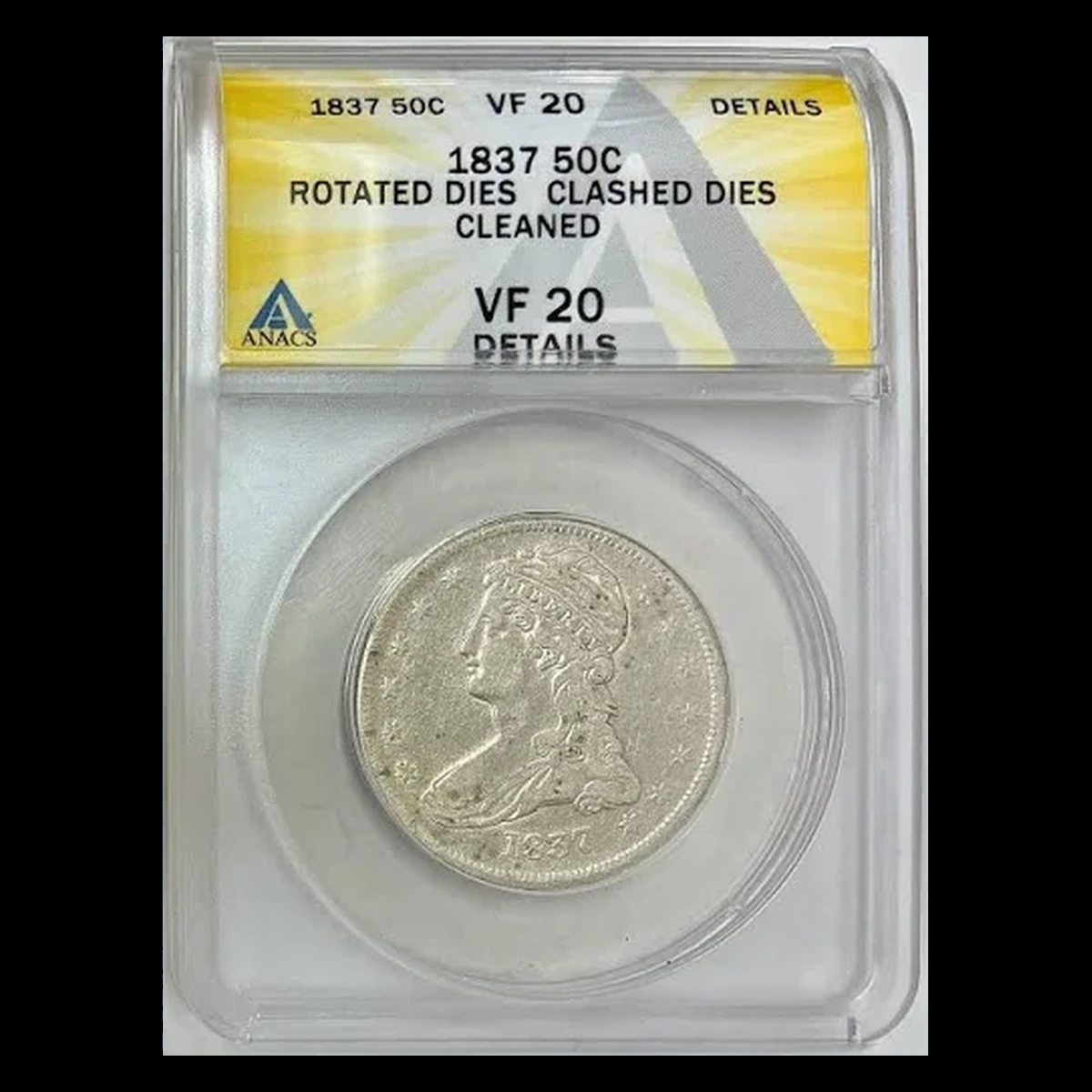
The MS66 sold in 2006 has light reverse clash marks alongside cracks and rotation. Its description does not name one exact transferred portrait detail.
Clashes form when the dies meet without a blank and pick up traces of the opposing design. Later strikes can carry those fragments onto coins.
How to Identify
Compare the suspected reverse shape with the front design under changing light. A recognizable connection matters more than an unexplained line.
A scratch cuts the coin, while a die crack follows broken steel and need not resemble the other face. Use a confirmed clashed example rather than inventing a location from the general catalog description.
What It’s Worth
Estimated range: $100–$1,000 for circulated examples with light clash marks. The exceptional MS66 instead belongs around $15,000–$20,000.
Its $19,550 sale covered preservation, cracks, rotation, and clashes together. It does not establish the amount added by the clash alone.
6. 1837 Half Dollar A Repeatable Tilt of the Eagle: Rotated Dies Error
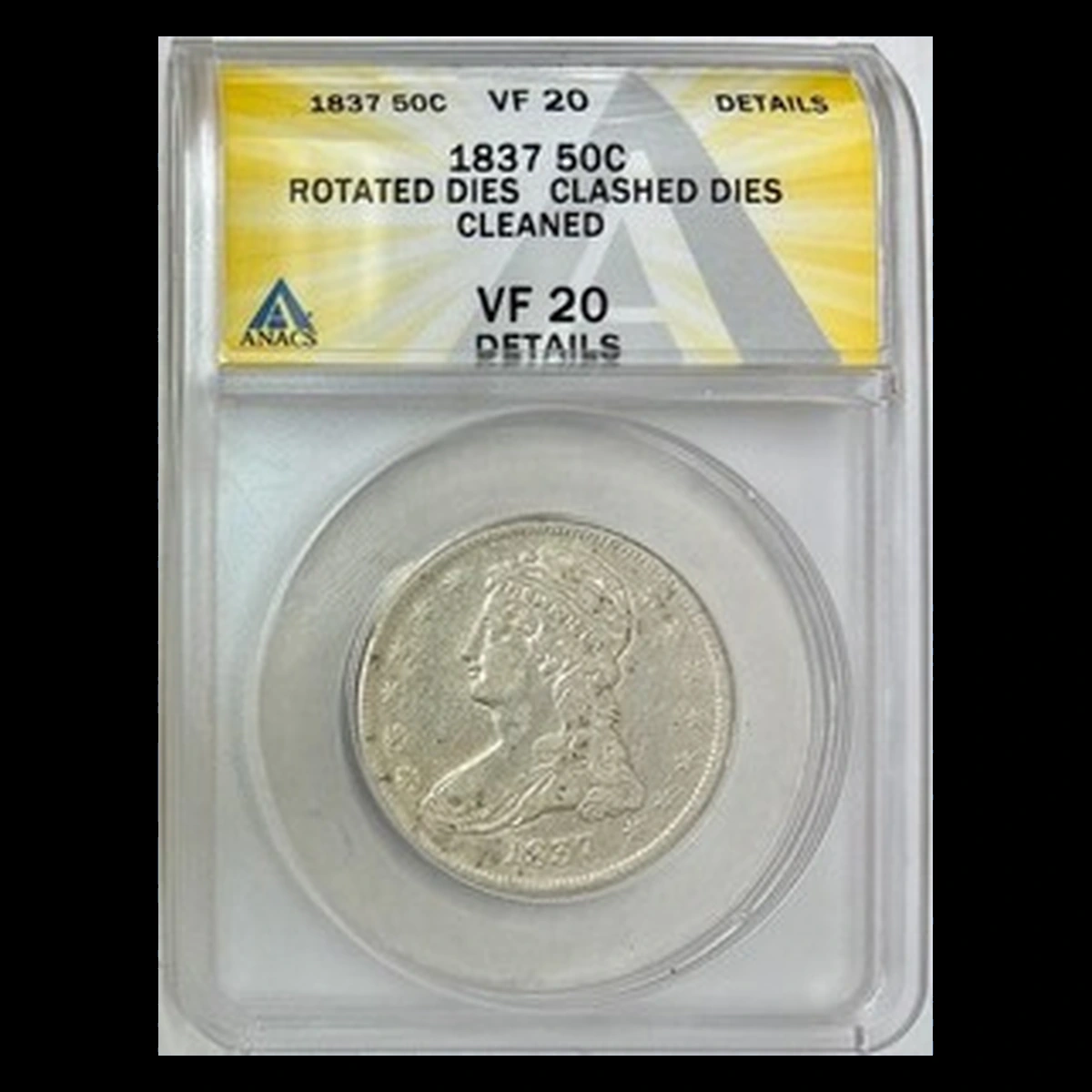
The same MS66 has a reported reverse rotation of about forty-five degrees counterclockwise. The angle concerns how the two designs line up, not their sharpness.
Separately turning each photograph upright hides that relationship. A controlled flip preserves it.
How to Identify
Hold Liberty upright and flip top to bottom without a sideways twist. Repeat beside a fixed vertical line to see whether the eagle returns to the same angle.
The forty-five-degree leftward tilt applies to the reference coin. Inspect the grooved edge for a seam or alteration before applying the same explanation to another piece.
What It’s Worth
Estimated range: $250–$1,500 in circulated through lightly worn condition. A separate $15,000–$20,000 comparison applies to exceptional MS66 preservation.
The $19,550 record is the shared clash-and-crack coin. It is not a stand-alone rotation premium to add to a worn example.
7. 1837 Half Dollar A Raised Fork at D in UNITED: Die Cracks Error
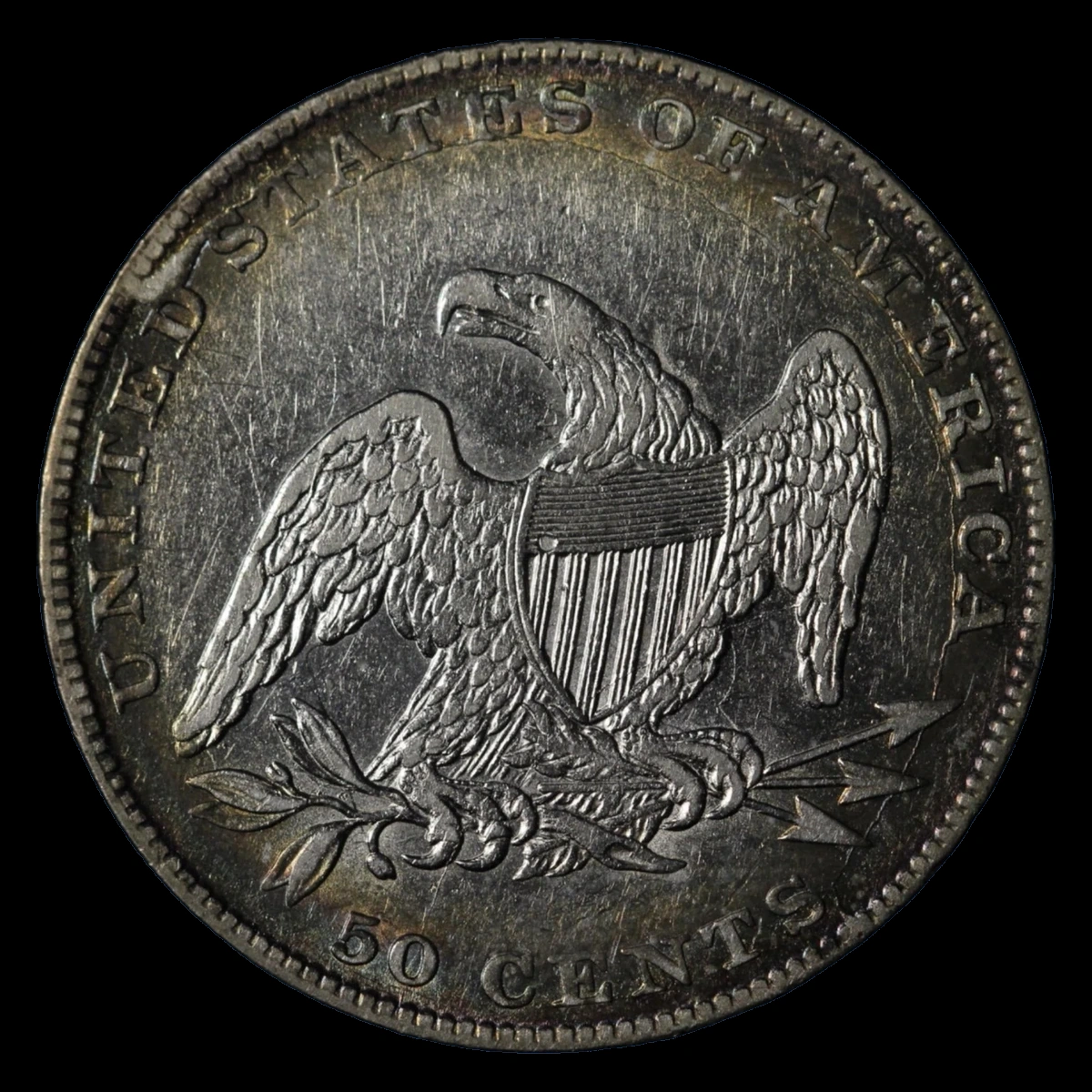
On GR-16, a heavy line reaches the D in UNITED and branches toward the wing. Another section follows the outer lettering through STATES.
These raised paths copy fractures in the stamping tool. Silver entered the openings during striking rather than the finished coin splitting afterward.
How to Identify
Find D and trace both branches with a magnifier, including the wing direction and the line along STATES. A short scratch near the letter does not establish the full pattern.
Tilt the coin to check that the lines rise above the surface. Later scratches can cross a real crack, so judge each feature separately.
What It’s Worth
Estimated range: $1,500–$3,000 for similar lower-unworn-grade coins. The GR-16 NGC MS61 sold for $2,040 on January 14, 2025.
The separate MS66 brought $19,550 in August 2006, supporting its $15,000–$20,000 condition bracket. Neither price isolates a crack’s value, and ordinary worn coins need lower-grade comparisons.
Conclusion
Measure missing metal and extra width, trace repeated design pieces, and use a fixed flip for orientation. Each method answers a different question about the same basic coin.
The $100–$20,000 span crosses worn examples and exceptional MS66 preservation. Several features share the $19,550 specimen, but it remains one coin with one sale price.