Rare 1982 Half Dollar Errors (List & Pictures)
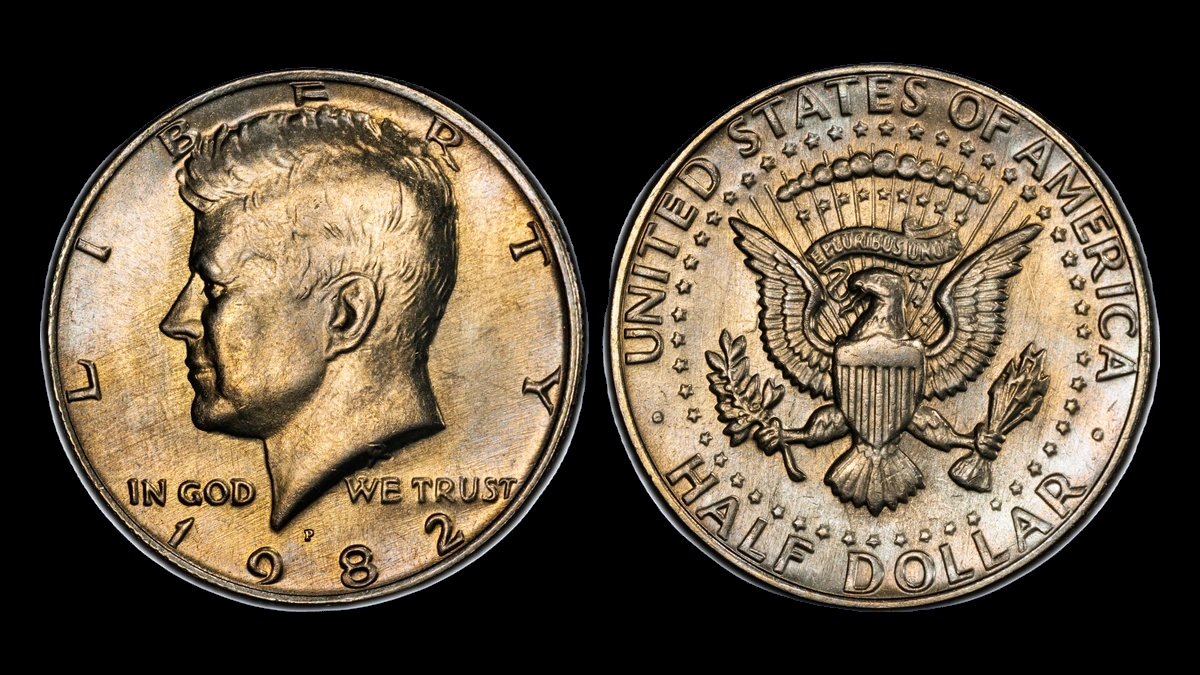
Missing FG initials are a well-known reason to inspect a 1982-P half dollar closely. An exceptional certified example sold for $2,820 in 2016, but ordinary matching coins cost much less.
The 1982 half dollar errors here have ordinary estimates beginning at $20, with that record reaching $2,820. Other clues involve doubled reverse details, missing metal, wider outlines, and trapped material.
Start at the initials, then inspect the letters, edge, and full design.
| Clue | Category | Estimated ordinary range |
|---|---|---|
| Both FG letters absent | 1982-P No FG | $20–$150 |
| Matching repeated reverse details | Doubled die reverse | $20–$150 |
| A natural missing segment | Clipped planchet | $20–$100 |
| Complete design in a wider outline | Broadstrike | $50–$200 |
| Blank crescent beside missing design | Off-center strike | $20–$50 mild; $100–$350 dramatic |
| Impression or embedded material | Strike-through | $100–$250 |
Regular P and D coins have copper-nickel outer layers bonded to a copper core, often visible at the grooved edge. Their normal weight is 11.34 grams and diameter about 30.61 millimeters.
1. 1982 Half Dollar Both Designer’s Initials Are Missing: No FG Error
Frank Gasparro’s FG initials normally appear near the eagle’s leg and tail feathers. On the recognized 1982-P No FG variety, neither letter was transferred to the coin.
Polishing removed the initials from the reverse die. This does not change the coin’s metal or mean that its mintmark is missing.
How to Identify
Look below the eagle’s leg on your right, just above and beside the tail feathers. Compare with a normal reverse using at least 5× magnification.
Check for any surviving part of F or G under several light angles. Weak initials are different from both letters being absent.
Inspect for residue, scraping, or wear that could hide the small letters. Confirm P and the complete 1982 date on the front.
What It’s Worth
Estimated range: $20–$150 for ordinary matching examples from circulated through accessible unworn grades. NGC MS66 No FG coins sold for $84 in early 2022.
The MS67 record was $2,820 in 2016. That outstanding certified coin should not be used as the automatic price for any half whose initials are difficult to see.
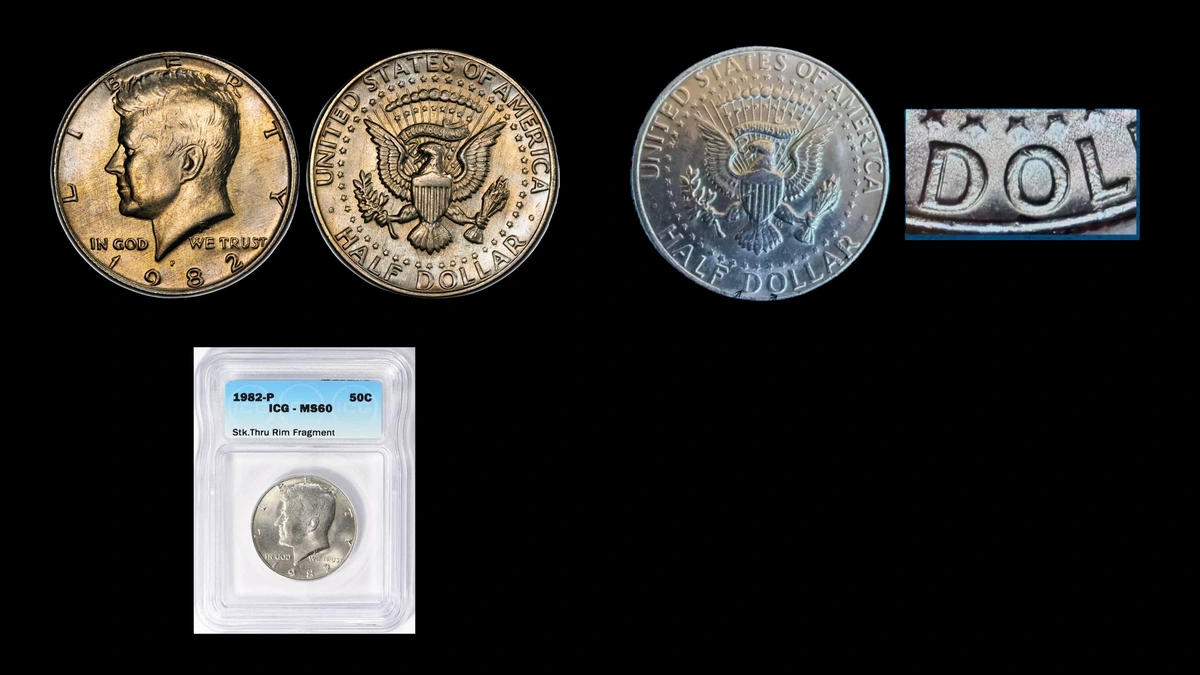
2. 1982 Half Dollar Repeated Reverse Letter Edges: Doubled Die Reverse Error
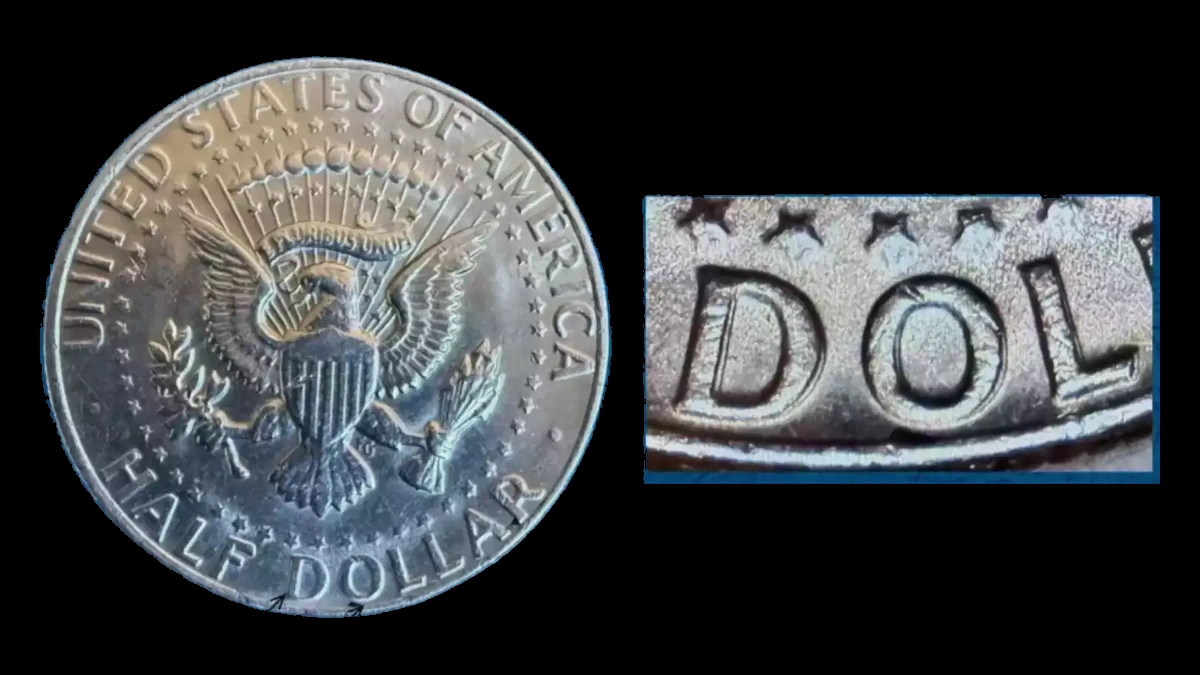
The 1982 error guide directs attention to UNITED STATES OF AMERICA, HALF DOLLAR, and eagle details on reported P and D examples. A doubled die carries repeated design detail before it strikes coins.
The finished coin therefore does not need two blows to show those outlines. The particular mint and variety pattern still need to match.
How to Identify
Compare several reverse letters and the relevant eagle details with an identified example of the same variety. Do not combine marks from unrelated references.
Check for matching raised contours rather than general thickening. A low flat shelf can result from movement during striking, and worn tools can broaden letters without producing the same second outline.
Keep the date and P or D in the photo set. The guide’s broad list of locations is a starting point rather than one universal pattern.
What It’s Worth
Estimated range: $20–$150 for genuine examples with clearly matched reverse doubling. This is the year guide’s estimate, not a specific certified auction result.
Stronger separation and better preservation support the upper comparison. Thick letters or flat shelves that do not match the variety do not qualify for the same price.
3. 1982 Half Dollar A Piece Missing before Striking: Clipped Planchet Error
A punch overlapping an earlier hole or the edge of the metal strip can produce an incomplete blank. Its missing section may be curved or straight.
The guide reports Philadelphia and Denver clips. One recorded Denver coin has a fifteen-percent curved clip and an NGC MS64 grade.
How to Identify
Inspect where the faces meet the missing section. Saw marks, filing, or sharp burrs suggest a cut made after the coin was struck.
Check the opposite rim for weakness that can accompany an original clip. This supporting clue is not equally strong on every example.
Compare a loose coin’s weight with 11.34 grams and measure an intact span against the normal diameter. Substantial missing metal should reduce weight, but weight loss alone does not prove a mint-made clip.
What It’s Worth
Estimated range: $20–$100 for ordinary genuine clips, with larger clearly original gaps tending toward the upper part. Surfaces and remaining design also matter.
A 1982-D with a fifteen-percent curved clip sold for $94 in March 2018. Its MS64 grade describes an unworn coin with some marks.
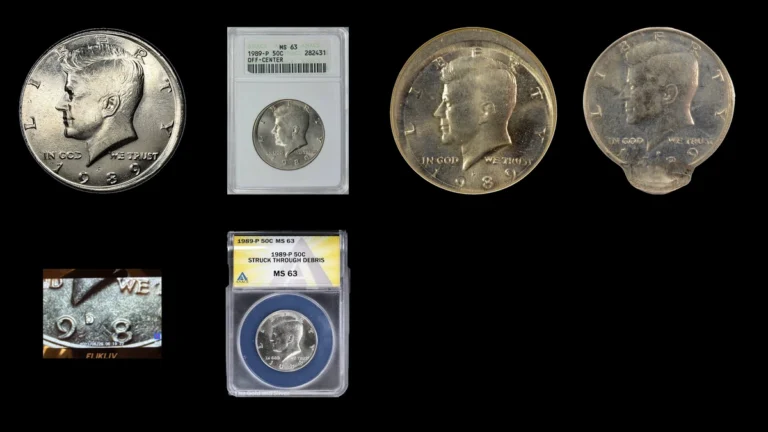
4. 1982 Half Dollar A Wider Coin with Complete Designs: Broadstrike Error
The collar normally controls the coin’s width and forms its edge grooves. If it fails to contain the blank, metal can spread outward while the faces still receive their complete designs.
Reported 1982 P and D broadstrikes can have expanded rims and missing or abnormal edge grooves. One wide-looking border on a single face is not enough.
How to Identify
Trace the complete designs on both faces, then measure several spans of a loose coin. Compare the actual width with 30.61 millimeters.
Weight should remain near the normal standard because spreading does not remove metal. Inspect the wider border’s transition into the edge under magnification.
Later hammering may flatten grooves but usually damages the finished design or leaves impact marks. Look for original expansion rather than simple flattening.
What It’s Worth
Estimated range: $50–$200 from the year guide for 1982 broadstrikes. It is an appearance-and-condition estimate rather than a stated sale for one specimen.
A full date, clear spread, and appealing surfaces support a stronger comparison. Minor expansion, many marks, or later edge damage can limit collector interest.
5. 1982 Half Dollar A Blank Crescent Beside the Design: Off-Center Strike Error
An off-center blank misses part of the intended design. Opposite that missing detail, some of the coin’s metal remains unstruck.
Both faces should reflect the misplaced blank. A local hollow from trapped material does not necessarily move the whole design in this way.
How to Identify
Keep both complete outlines in view and match the design loss with original blank metal. A shift limited to one face can indicate a misaligned die instead.
If both designs remain complete inside an enlarged outline, consider a broadstrike. Inspect the struck-to-unstruck boundary for later trimming or damage.
Read the full 1982 date and record the mintmark where it survives. Measure the actual irregular outline rather than assuming a normal diameter.
What It’s Worth
Estimated range: $20–$50 for mild clearly identified examples, or $100–$350 for more dramatic pieces with visible dates. These follow the year guide rather than a particular certified 1982 auction sale.
The amount of shift is only part of the comparison. An attractive blank crescent, undamaged detail, and a readable year can matter more than an extreme displacement that removes the date.
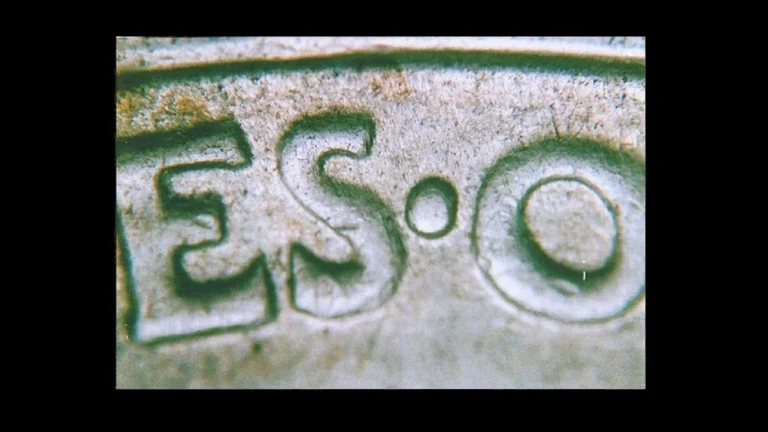
6. 1982 Half Dollar Material Interrupting the Strike: Strike-Through Error
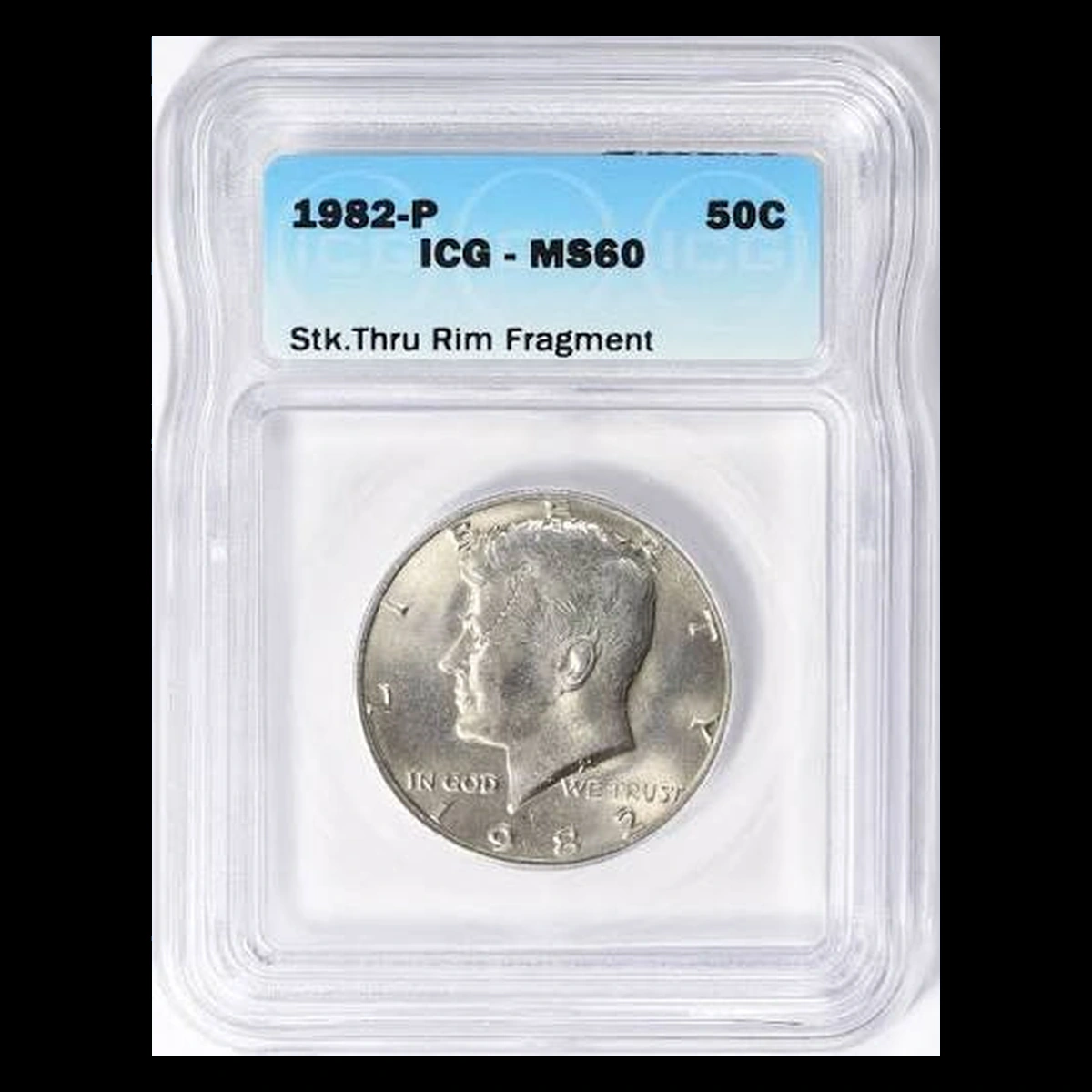
Two 1982-P records show different obstructions: a rim fragment on an ICG MS60 and retained wire on an ANACS MS64. Both are unworn grades, with more marks allowed at MS60.
The wire coin also has No FG. Missing initials concern its die, while the trapped material affected the striking step.
How to Identify
Choose the correct reference for the obstruction. The rim-fragment example needs a different close-up from attached wire.
Inspect how the impression or retained object interrupts the design and meets the surrounding struck metal. Do not remove attached material.
A glued object or a later contact mark does not show the same relationship. Any retained material can also affect the weight reading.
What It’s Worth
Estimated range: $100–$250 for comparable recognizable strike-throughs. The object’s visible effect and the coin’s condition both matter.
Heritage’s No FG coin with retained wire sold for $132 in December 2020. One price covered both features.
The separate rim-fragment listing supplies no price used here. It should not inherit the wire coin’s result simply because both are strike-throughs.
Conclusion
Check complete absence of FG carefully, then use the edge and full outline to separate missing metal, spread metal, and displaced striking. Local impressions and repeated reverse details need their own close-ups.
Ordinary estimates begin at $20, while the $2,820 No FG record belongs to exceptional MS67 preservation. Most matching No FG examples sit in the much lower $20–$150 bracket.