Rare 1959 Half Dollar Errors (List & Pictures)
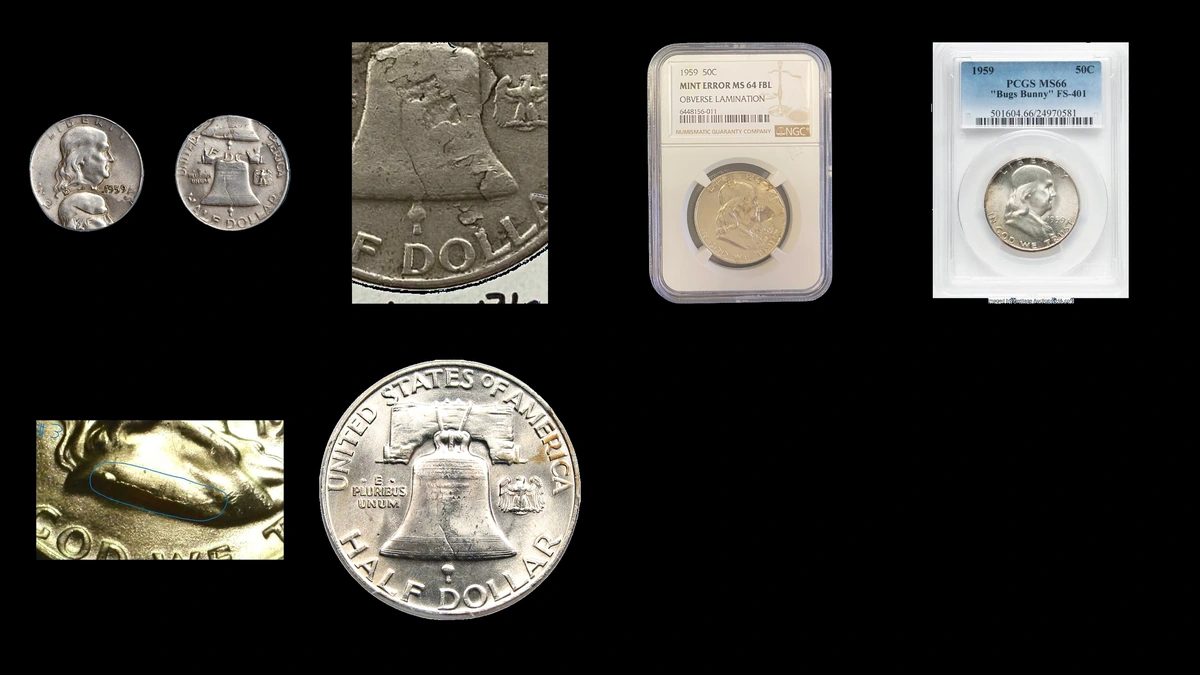
Different metals and repeated designs make some 1959 half dollar errors easy to notice, while others need a close view of Franklin’s lip or throat. Estimated values across the categories span $40–$14,000.
A documented 1959-D on cent metal sold for $7,590; the higher supplied $11,400 double-strike comparison belongs to 1962-D. Start with size and weight, then examine the portrait and reverse details before choosing the matching price tier.
| Clue | Where to begin | Category | Estimated value |
|---|---|---|---|
| Smaller disc or different metal | Weight, composition, and edge | Wrong planchet | $2,500–$10,000 by blank |
| Second portrait and bell | Both complete faces | Double strike | $8,000–$14,000 |
| Underweight original metal | Documented ten-gram example | Defective planchet | $350–$800 |
| Peeling front layer | Physical separation boundary | Lamination | $40–$650 by condition |
| Raised lip projection | Philadelphia mouth | Bugs Bunny clash | $40–$200 ordinary examples |
| Swelling under the chin | Philadelphia throat | Goiter die break | $75–$1,200 by quality |
| Small depressed mark | Denver reverse near AMERICA | Strike-through | $50–$150 |
| Overlapping reverse forms | Eagle, bell support, and motto | Doubled die reverse | $90–$3,500 by quality |
A normal silver half dollar weighs 12.50 grams and measures about 30.6 mm across, with a grooved edge. D above the bell identifies Denver; Philadelphia regular issues have no mintmark.
1. 1959 Half Dollar Half-Dollar Details on Smaller Metal: Wrong Planchet Error
The supplied examples involve three different blanks: a silver quarter, a copper cent, and a five-gram disc for Venezuela’s 12½-centavo coin. Their identities must remain separate.
The quarter example is NGC MS64 FBL at 6.2 grams, and the Denver cent-blank coin is ANACS AU58. The foreign-blank NGC MS64 also has twenty-percent off-centering and is dated “(1959),” indicating an inferred year.
How to Identify
Compare weight, metal, and dimensions together. A quarter blank starts near 6.25 grams and 24.3 mm, while a copper cent blank starts at 3.11 grams and 19.05 mm.
Keep the foreign specimen’s five grams and parenthesized date with its own photographs. Striking can enlarge a small disc, so natural cropped design and an unmachined edge matter alongside measurements.
Look for trimming, plating, or cutting that could imitate wrong metal or size. The appearance must fit a smaller blank present before striking.
What It’s Worth
Estimated ranges: $2,500–$6,000 for quarter blanks, $5,000–$10,000 for Denver cent blanks, and $4,500–$7,500 for the foreign-blank example. No completed quarter-blank sale is quoted here.
The 1959-D ANACS AU58 on cent metal brought $7,590 in January 2006. The foreign-blank NGC MS64 sold for $5,520 in December 2022, including its off-center feature within one coin’s price.
2. 1959 Half Dollar A Second Portrait and Bell Shift Downward: Double Strike Error
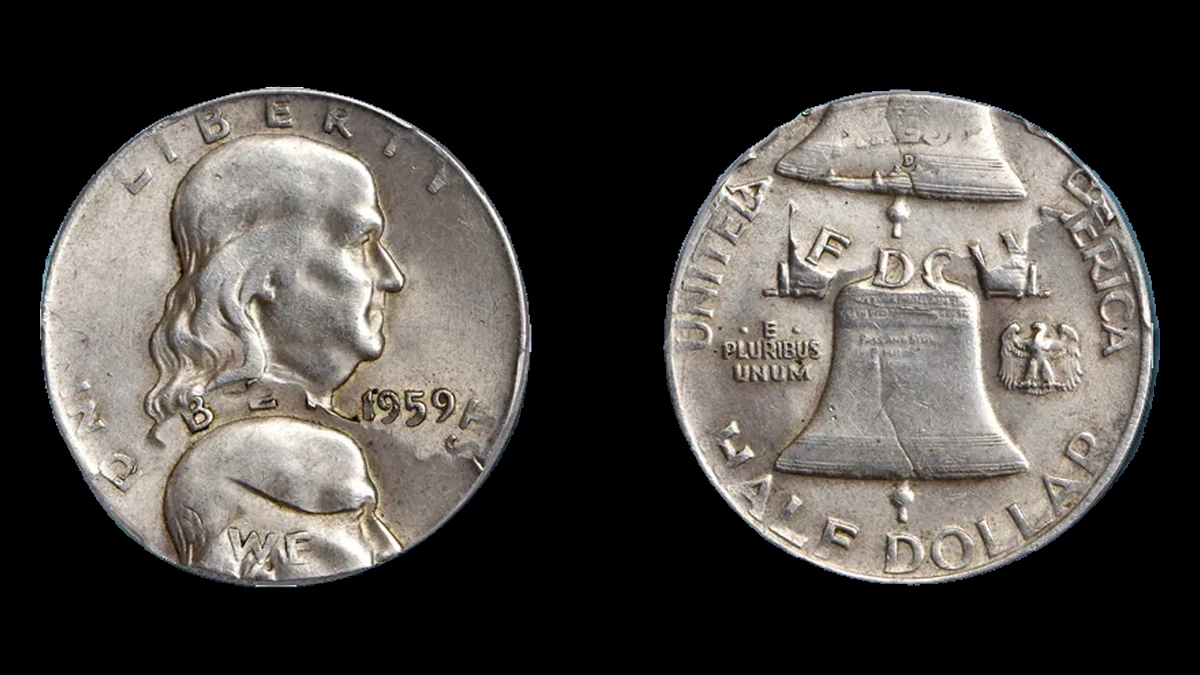
On the documented Denver coin, a normal first impression is joined by a second one fifty-five percent off center toward six o’clock. The designs remain nearly parallel.
Coin World identifies the specimen as PCGS AU58. The coin failed to leave the press and moved before another blow, producing one combined striking accident.
How to Identify
Trace each portrait and bell and compare their shared downward shift with the auctioneer’s description. Keep the readable date and D attached to the complete outline.
The overlap should contain genuine raised impressions. Later sunken pressure marks, machined outlines, or minor die doubling cannot reproduce the same two-design arrangement.
What It’s Worth
Estimated range: $8,000–$14,000 for a certified coin with comparable separation and preservation. No realized price for the published 1959-D is used.
A 1962-D NGC MS60 with a seventy-percent off-center second strike brought $11,400 in November 2022. Its different year, grade, and shift make it a comparison rather than a sale of the AU58 1959-D.
3. 1959 Half Dollar A Ten-Gram Coin With Faulty Metal: Defective Planchet Error
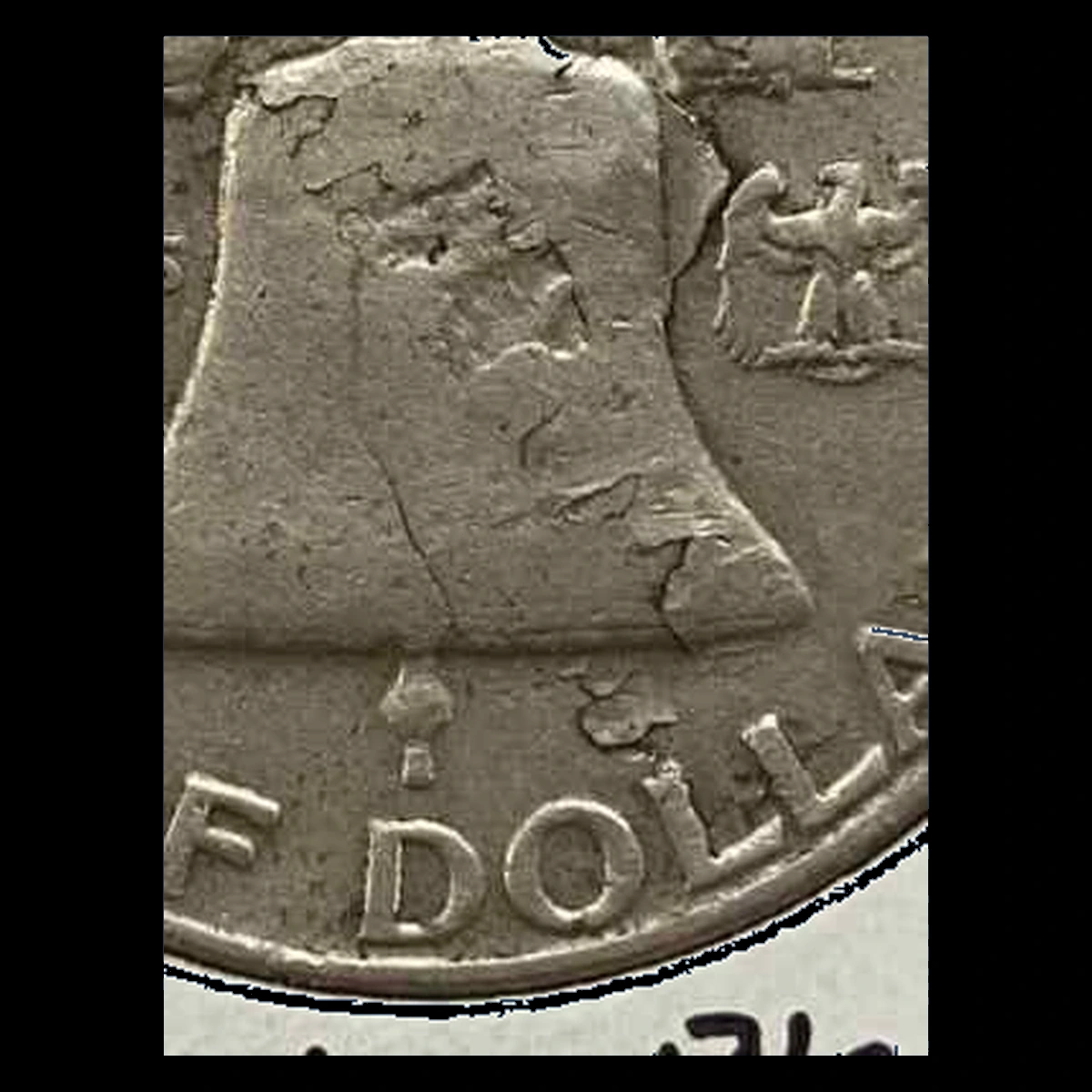
Heritage’s Philadelphia NGC MS63 weighs ten grams and is described as struck on a defective planchet. “Planchet” means the metal disc before stamping.
The description does not establish a clip, complete split, or wrong denomination. Low weight needs to be considered with the actual original-metal defect.
How to Identify
Compare both faces and the irregular metal with the documented specimen. The stamped design should fit the defect without evidence of later cutting or broad corrosion.
Inspect the entire edge for filing and disturbed grooves. Ten grams supports the described identity, but cannot by itself separate faulty blank metal from material removed after manufacture.
What It’s Worth
Estimated range: $350–$800 for a similarly clear certified example. The ten-gram NGC MS63 sold for $540 on July 15, 2021.
That direct result values a specific faulty blank and its preservation. It is not a price for every underweight Franklin half.
4. 1959 Half Dollar A Thin Layer Separates on the Front: Lamination Error
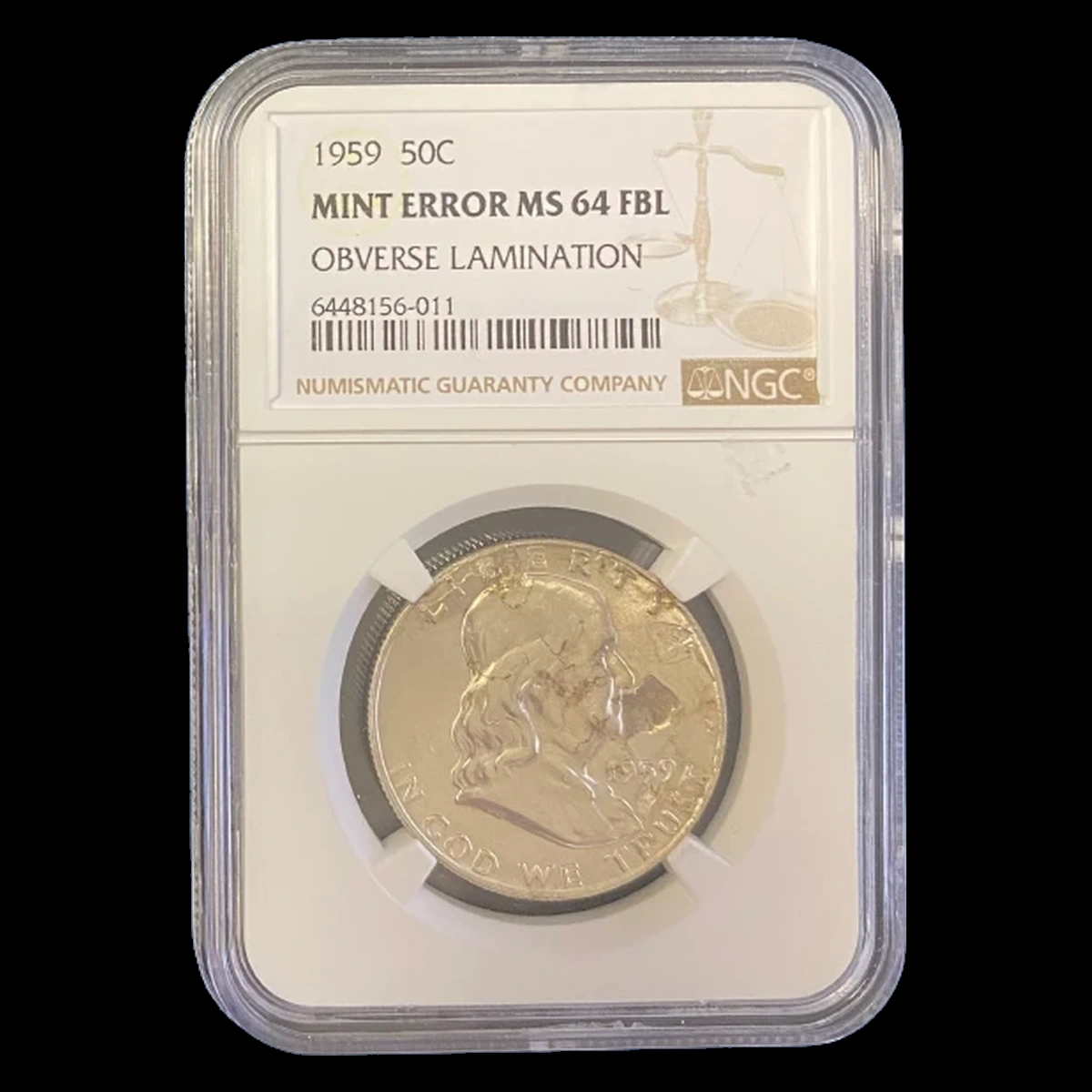
A CoinsTV listing describes obverse lamination on a coin labeled MS64 FBL, without specifying the location. A weak bond within the silver-copper mixture allowed a layer to lift or fall away.
FBL means Full Bell Lines, referring to sharp complete lines at the bottom of the reverse bell. It describes strike quality and does not establish the front-side defect.
How to Identify
Photograph the whole front, then inspect a thin flap or separating boundary under low light. Leave attached metal in place.
Distinguish the layered structure from pits, scraping, and gouges. The source’s missing location cannot be filled by borrowing another coin’s peeling area.
What It’s Worth
Estimated ranges: $40–$100 for small ordinary examples and $250–$650 for a conspicuous defect on an attractive MS64 FBL. These tiers include the coin’s overall quality.
The reported $599.95 CoinsTV figure has no established original transaction status here. Treat it as retail context rather than a confirmed auction realization.
5. 1959 Half Dollar A Toothlike Projection at the Lip: Bugs Bunny Die Clash Error
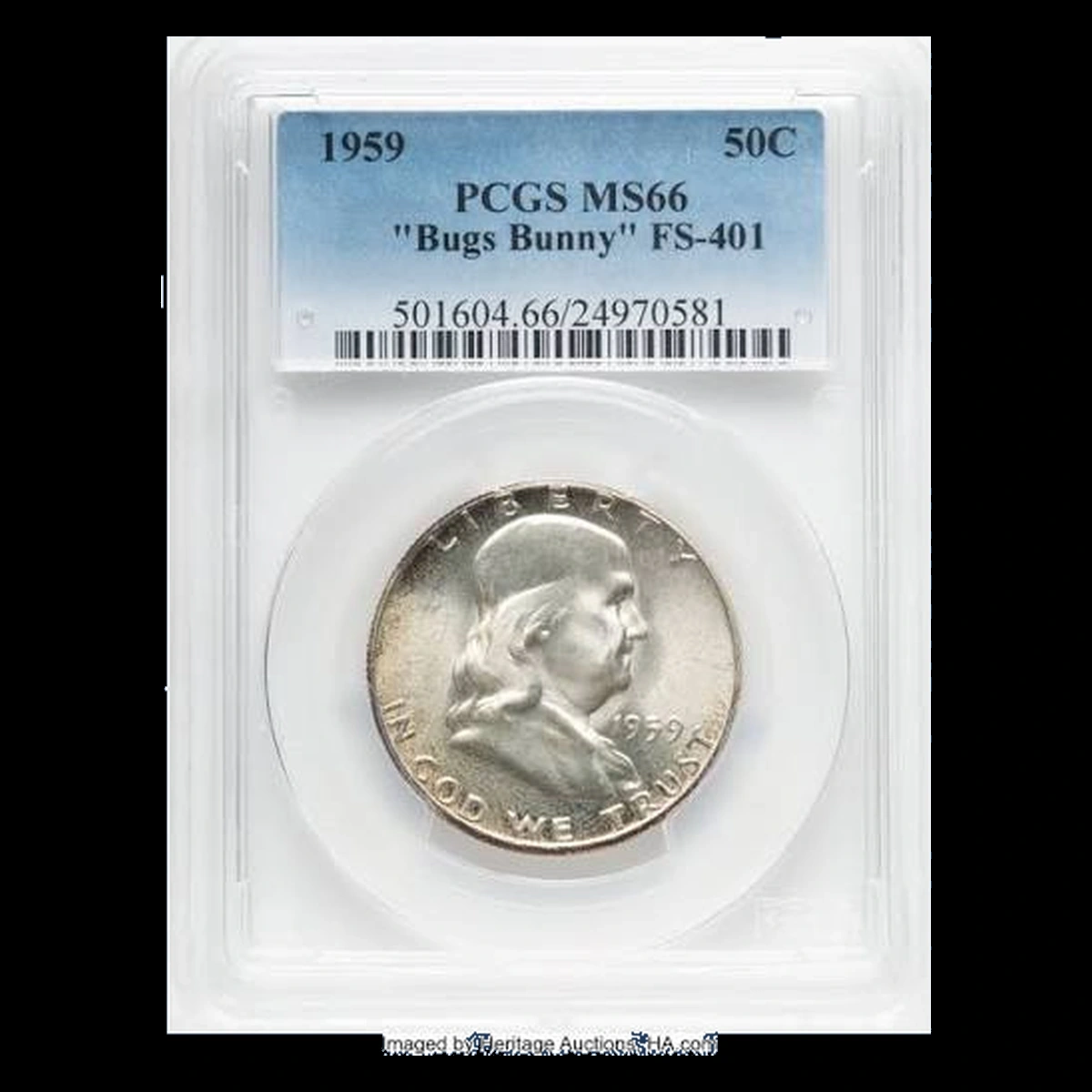
The Philadelphia Bugs Bunny has an added upper-lip shape transferred from part of the eagle’s wing. Its origin is contact between the dies without a blank in place.
The front die then reproduced the unwanted shape on later coins. Other dates share the nickname, but their pictures cannot establish the exact 1959 pattern.
How to Identify
Compare the raised lip projection with a recognized 1959 and confirm no mintmark. A loose speck, fresh cut, or disturbed mouth surface needs another explanation.
Keep the surrounding portrait in the view and consider the transferred wing shape. General toothlike appearance alone is less useful than the correct original raised outline.
What It’s Worth
Estimated range: $40–$200 for recognizable worn through ordinary unworn examples. PCGS records an MS64 at $122 in August 2013.
Exceptional preservation and complete bell lines can place a coin beyond that ordinary bracket. Bell lines remain a quality factor, not a separate error.
6. 1959 Half Dollar Raised Swelling Beneath the Chin: Goiter Die Break Error
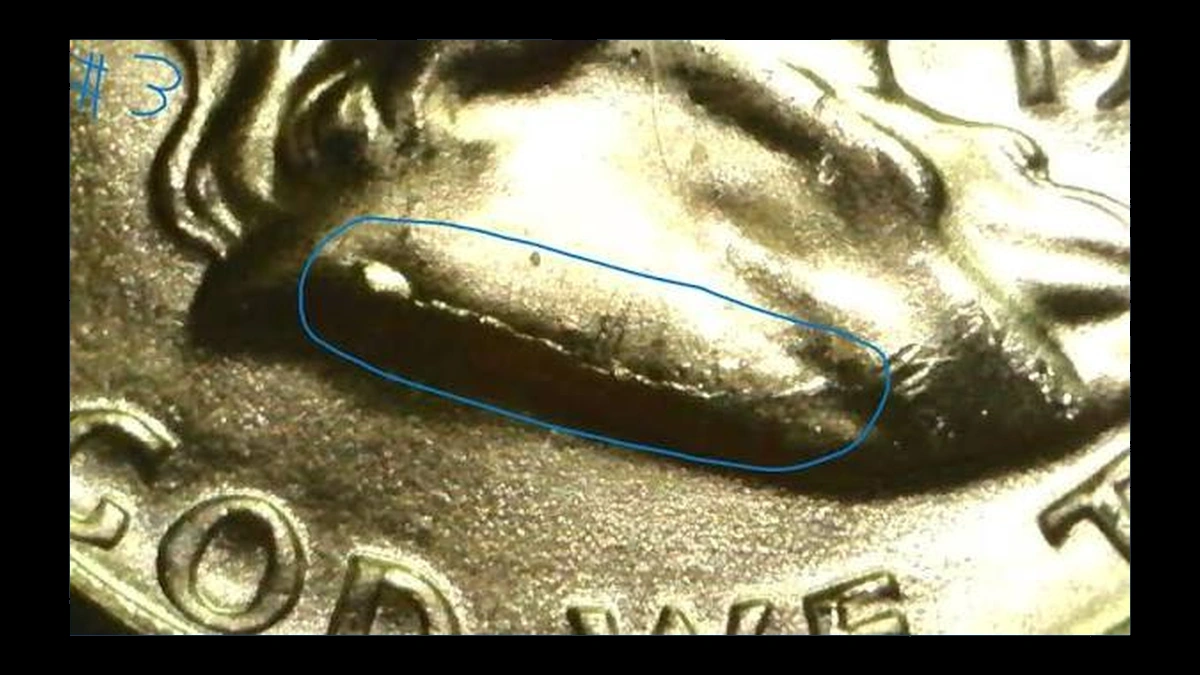
The Goiter feature enlarges Franklin’s throat below the chin. Damage within the die allowed additional metal to rise in this internal part of the portrait.
Heritage included a Philadelphia PCGS MS64 in its 2021 error auction. The feature does not reach the rim, so calling it a rim cud would imply a different location.
How to Identify
Follow the profile from chin to throat and compare a normal portrait with a known Goiter. Look for an original surface continuing across the characteristic swelling.
A deposit or impact can also alter the contour but may disturb neighboring metal. The correct internal shape does not require a connection to the border.
What It’s Worth
Estimated ranges: $75–$350 for ordinary unworn examples and $500–$1,200 for stronger FBL comparisons. The year guide reports a $1,128 FBL auction result in March 2019 without supplying its numerical grade here.
That report is not the price of Heritage’s separate 2021 MS64. Both the swelling and preservation belong within one whole-coin comparison.
7. 1959 Half Dollar A Small Hollow Near AMERICA: Reverse Strike-Through Error
The Denver report places a modest depression near A in AMERICA on an MS64. Material obstructed the die while the design was forming.
The account does not identify the material. The mark therefore cannot be called wire or grease solely from this description.
How to Identify
Inspect how surrounding detail meets the hollow under magnification. An original obstruction interrupts formation, while a later scratch cuts completed elements and may push up sharp edges.
Verify the D and match the location with the reported example. A localized depression need not involve metal loss, and its outline alone cannot name the obstruction.
What It’s Worth
Estimated range: $50–$150 for a similarly modest genuine mark on an attractive Denver coin. The guide reports a sale around $80 but supplies no original transaction reference.
Retain that qualification when using the number. Larger impressions or retained objects need separate comparisons.
8. 1959 Half Dollar Two Reverse Forms Overlap: Doubled Die Reverse Error
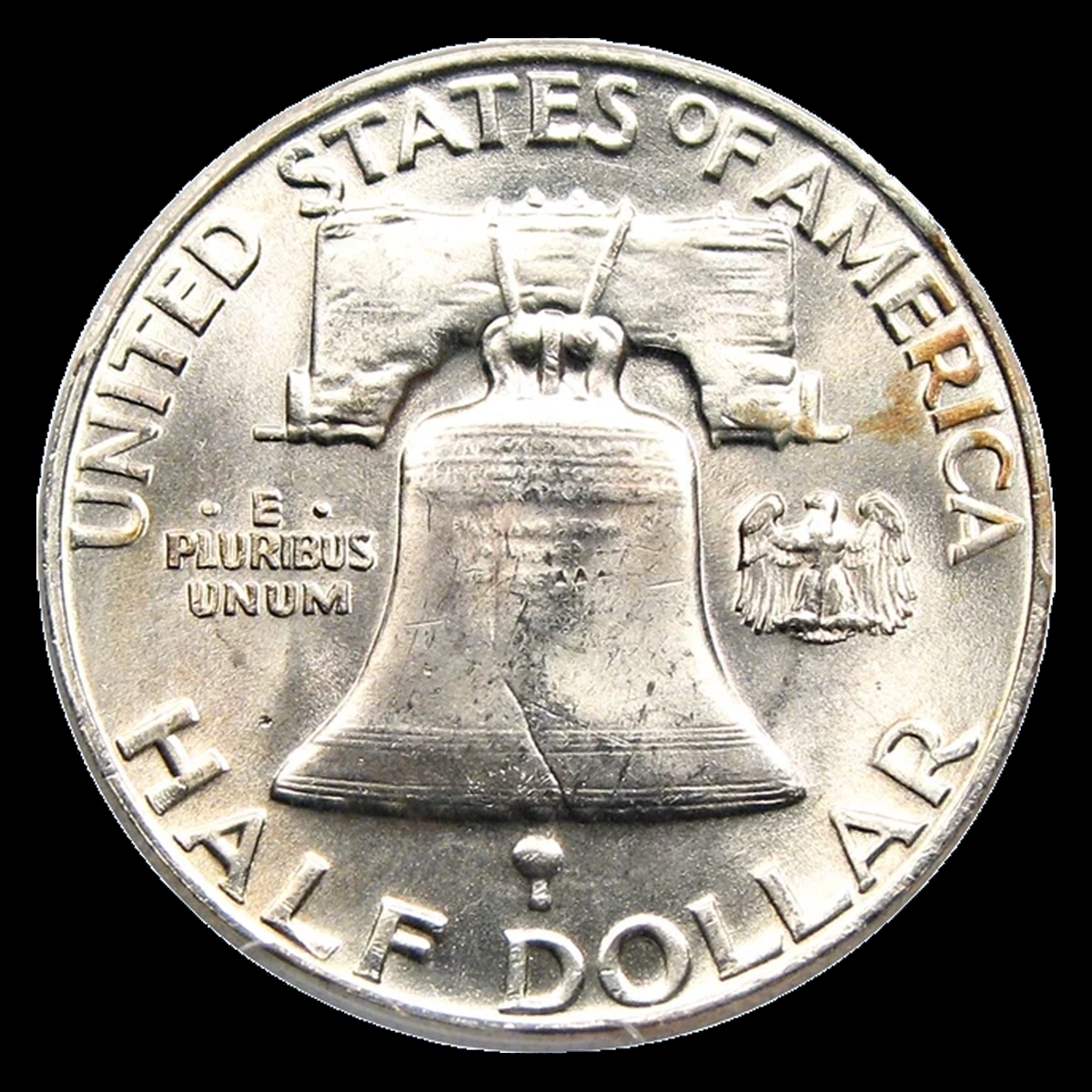
FS-801, also called Type 3, combines detail from two normal reverse designs in one die. The small eagle, bell support, and E PLURIBUS UNUM provide comparison areas.
The overlap arose during die manufacture. It does not mean the finished coin received two blows.
How to Identify
Compare the eagle with normal Type 1 and Type 2 reverses, then check the support and motto for matching extra outlines. Counting feathers alone may merely identify a normal design form.
Confirm a Philadelphia regular issue and distinguish raised overlapping detail from flat shelves caused during striking. FBL cannot establish doubling by itself.
What It’s Worth
Estimated ranges: $90–$500 for ordinary unworn examples and $1,200–$3,500 for strong MS66 FBL comparisons. A nearly unworn AU58 sold-listing reference gives $110 in September 2026.
The PCGS record shows $2,992 for an MS66 FBL in January 2022. Preservation and bell-line quality help explain the difference.
Conclusion
Keep physical metal, portrait changes, and reverse design varieties distinct during inspection. Original surfaces, the correct mint, and complete views help assign each feature to its proper cause.
The $40–$14,000 estimates cover widely different coins. Preserve the inferred “(1959)” date on the foreign blank and value its off-centering, or the Denver double strike’s displaced second blow, as parts of one specimen rather than prices to add.