Rare 1950 Half Dollar Errors (List & Pictures)
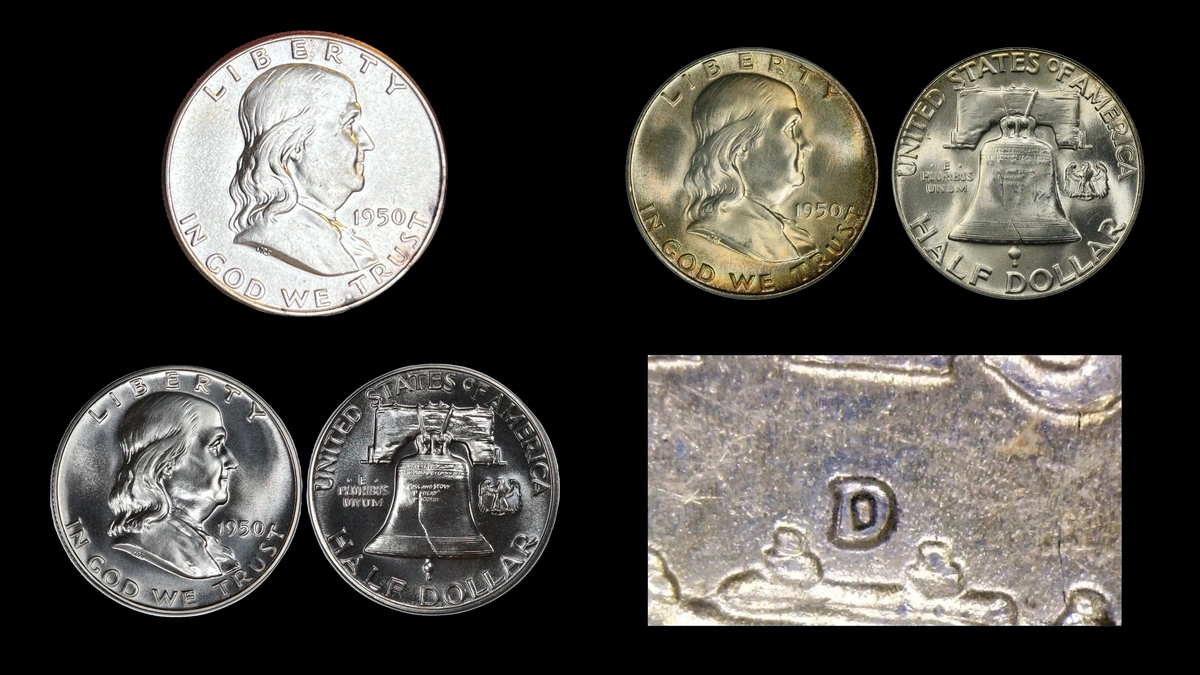
Franklin’s face, the Denver mintmark, and proof lettering reveal different kinds of 1950 half dollar errors. The supplied estimates span $40–$9,600, with the upper figure coming from a $9,600 auction result for a PR67+ quadrupled-die proof in 2018.
Begin with the coin’s outline, then inspect surface defects and portrait features before turning to the mintmark and reverse. Keep reported owner descriptions separate from recognized varieties as you compare the evidence.
| Visible clue | Category | Estimated range |
|---|---|---|
| Bare crescent and shifted design | Off-center candidate | $2,500–$7,500 if authenticated |
| Separating silver layer | Lamination | $50–$300 |
| Weak patch or hollow | Strike-through | $75–$400 |
| Raised cheek line | Die crack or break | $40–$200 |
| Tooth-like mouth projection | Bugs Bunny clash | $100–$1,000 |
| Extra proof date and letter edges | Quadrupled die obverse | $600–$9,600 |
| Additional D fragment | Repunched mintmark | $100–$3,100 |
| Possible S under D plus front doubling | Reported combined features | $100–$600 if established |
| Extra reverse-letter contours | Reported doubled die reverse | $50–$500 ordinary examples |
The usual silver half measures about 30.6 millimeters and weighs 12.50 grams before wear, with grooves around its edge. Philadelphia coins have no mintmark, Denver coins have a D above the bell, and proofs are specially made collector coins rather than simply shiny ordinary strikes.
1. 1950 Half Dollar A plain crescent next to an incomplete design: Off-center candidate Error
An off-center blank can escape part of the strike, leaving original bare metal while some design falls beyond its edge. The supplied material includes this as a 1950 candidate category without an identified specimen securely dated to that year.
How to Identify
Establish the date before comparing both faces for matching design displacement. A Franklin proof described only as belonging to the 1950–1963 series cannot be assumed to be a 1950 coin.
A broadstrike may be wider while retaining complete designs, and a misaligned die can shift only one face. Neither is sufficient evidence that the blank itself was off center.
Inspect the boundary between design and bare metal for grinding or later removal of detail. Original displacement need not reduce weight if all the metal remains.
What It’s Worth
For an authenticated ordinary strike with a secure 1950 date, the estimate is $2,500–$7,500. The February 2026 Mint Error News guide supplies that Franklin series range according to grade and offset.
This is not an auction record for an identified 1950 half. An undated or proof example requires a separate assessment rather than automatically receiving the ordinary-strike range.
2. 1950 Half Dollar A ragged flap or shallow peeled patch: Lamination Error
Silver alloy can separate along an internal weakness, leaving a lifting surface layer or a rough area where one has detached. The supplied year discussion explains this category without identifying an authenticated 1950 specimen.
How to Identify
Examine the thin boundary between intact design and separated metal. An attached flap provides useful evidence, so photograph it without lifting it.
Parallel scrape marks, deep cuts, or scattered corrosion pits can produce roughness for other reasons. A Franklin half is silver alloy throughout, so its lamination is different from a modern coin losing a bonded outer clad layer.
What It’s Worth
A modest genuine lamination is estimated at $50–$300 across circulated through ordinary unworn coins. A 1957 NGC MS63 obverse lamination sold for $74.49 including fees at Pristine in January 2021.
That different-year sale supports context near the lower end, not a specific 1950 result. Large losses or cleaning can reduce appeal even when the original separation was mint-made.
3. 1950 Half Dollar A localized hollow or missing detail: Strike-through Error
An obstruction between a die and the blank can interrupt the design where the two should meet. An illustrated year-specific account reports a 1950 strike-through but does not establish its material, exact location, or mint.
How to Identify
Inspect how the affected area meets the surrounding design. Details that never formed normally differ from a later cut crossing finished letters or a stain that changes only color.
Use the visible shape or retained material before naming a particular obstruction. Wire, cloth, and grease are possibilities in the broader error class, not established causes for this report.
What It’s Worth
Visible strike-throughs on ordinary circulation strikes are estimated around $75–$400. Greysheet records a 1951-S NGC MS64 obverse example at $134 in April 2026.
The comparison concerns another year and mint. A proof, retained object, or unusually recognizable impression may need a different comparison from a modest ordinary-strike patch.
4. 1950 Half Dollar A raised line along the cheek: Die crack or break Error
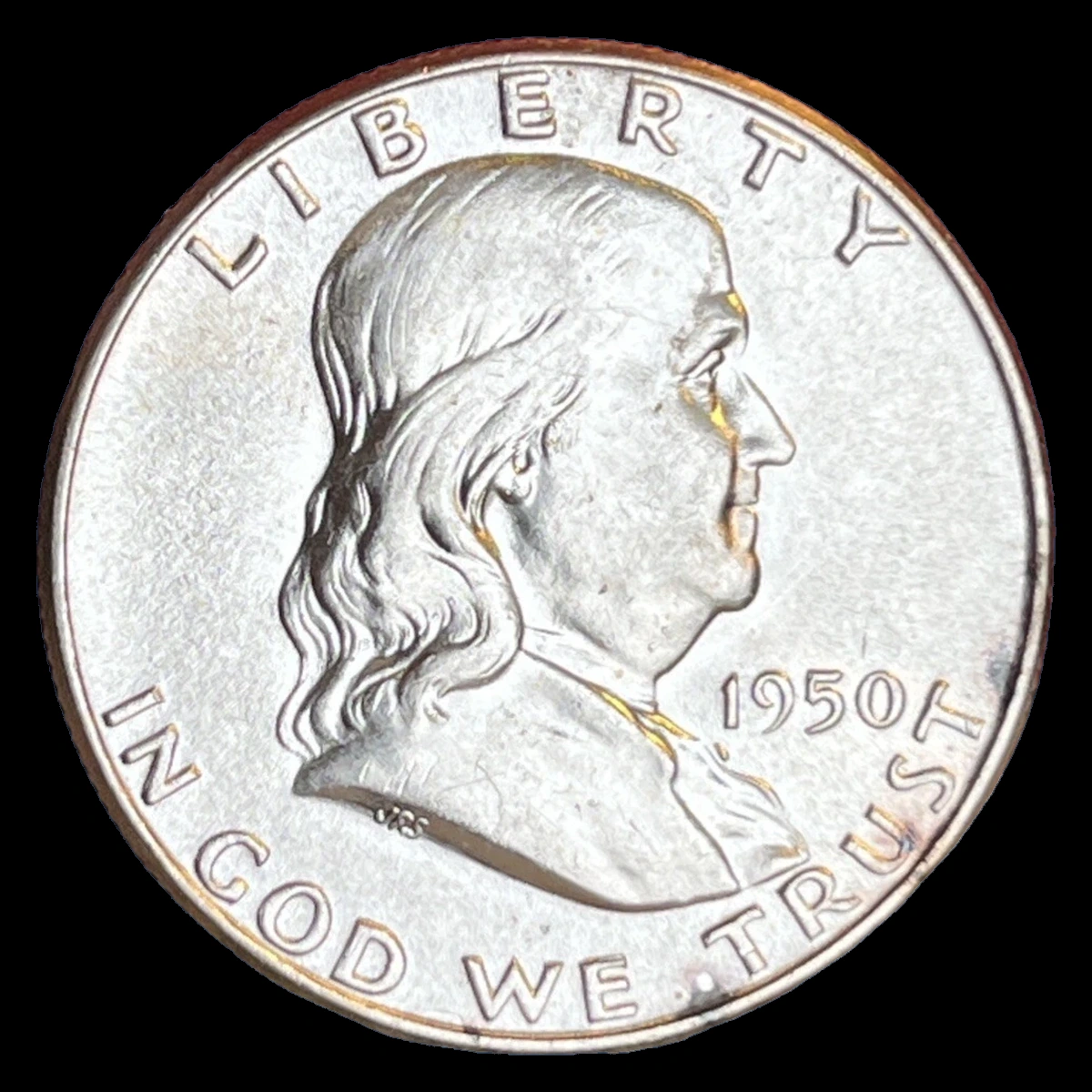
Coinhunters described an ungraded Philadelphia 1950 half with a cheek die break in a 2026 listing. A narrow ridge can form from a crack in the die, while a small lost piece can leave a thicker raised patch.
How to Identify
Franklin’s cheek is exposed to contact, so establish whether the line is raised throughout or has a cut channel. Pushed-up metal beside an ordinary contact mark can appear raised from one angle.
The report supplies no numbered variety or established rim connection. A small interior lump is not a rim cud merely because a seller calls it a break.
What It’s Worth
The estimate is $40–$200 for a genuine cheek ridge on a circulated or ordinary uncirculated coin. Much of the lower end reflects the underlying half dollar rather than a large error premium.
The listing’s GEM and FBL language does not establish a certified grade or completed sale. FBL, or Full Bell Lines, describes sharp fine lines at the bell’s base and is independent of a cheek defect.
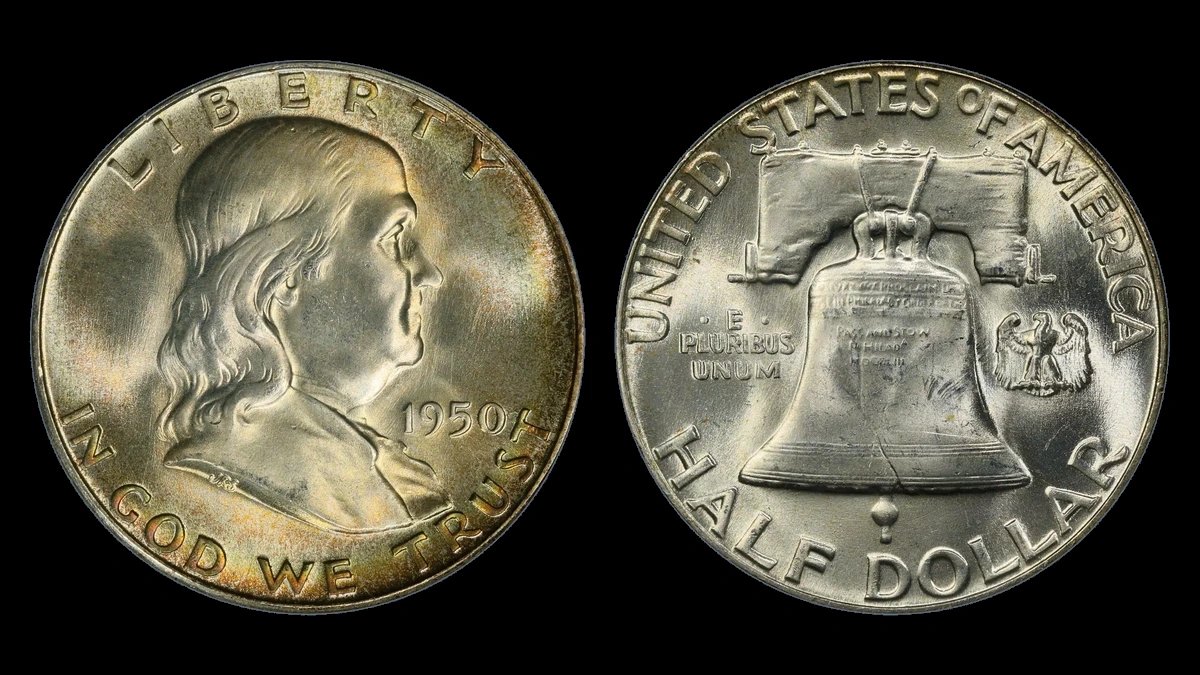
5. 1950 Half Dollar A tooth-like projection at Franklin’s lips: Bugs Bunny clash Error
The documented Philadelphia mouth-clash variety carries a small raised feature resembling an extra tooth. Part of the reverse eagle design marked the obverse die when the dies met without a blank between them.
How to Identify
Match the raised mouth shape with an identified 1950 example, keeping the surrounding face in view. A later date may explain the general clash mechanism but cannot prove the precise same-year pattern.
Check how the projection joins the lips and look for a cut that would suggest later damage. This die feature does not require a second portrait or another strike of the finished coin.
What It’s Worth
Identified circulated through attractive unworn examples are estimated at $100–$1,000. The PCGS auction record lists an MS64 Full Bell Lines specimen at $390.40 through Stack’s Bowers in April 2026.
Higher preservation and a clear mouth feature can strengthen demand. Full Bell Lines contributes its own appeal and should not be treated as another clash error.
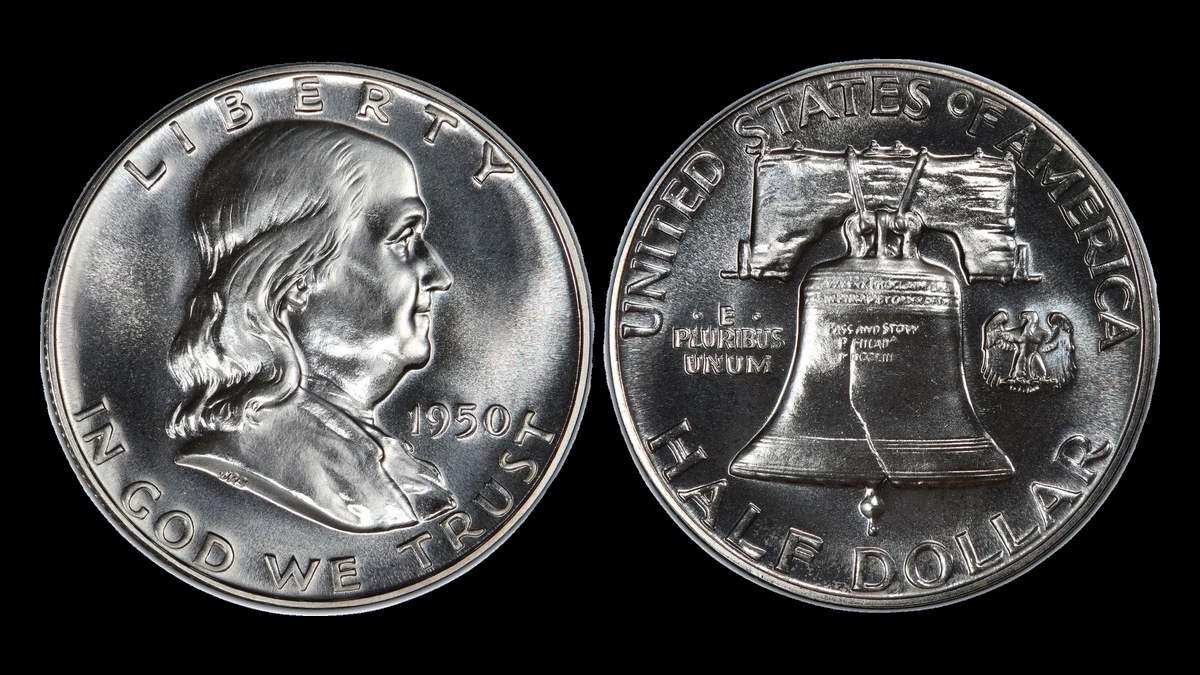
6. 1950 Half Dollar Repeated date and front-letter outlines on a proof: Quadrupled die obverse Error
The recognized FS-101 proof variety carries multiple extra contours in its obverse design because those contours were present in the die. Ordinary repeated proof blows are intended to align and do not themselves establish a quadrupled die.
How to Identify
Compare small sections of IN GOD WE TRUST, LIBERTY, and the date with a certified FS-101 reference. The arrangement across the affected features matters more than finding several unrelated lines.
Reflective fields can create bright halos, so inspect under changing light. A circulation strike with thick lettering or flat striking shelves does not become this recognized proof variety.
Leave a certified proof in its holder during examination. Surface preservation is an important part of both attribution photography and value.
What It’s Worth
Attractive identified proofs below the exceptional level are estimated at $600–$3,500, with coins closer to the cited top specimen around $3,500–$9,600. A PCGS PR67+ sold for $9,600 at Heritage on April 29, 2018.
The sale includes the variety and the complete proof’s exceptional condition. It is not a fixed surcharge to add to an ordinary 1950 proof.
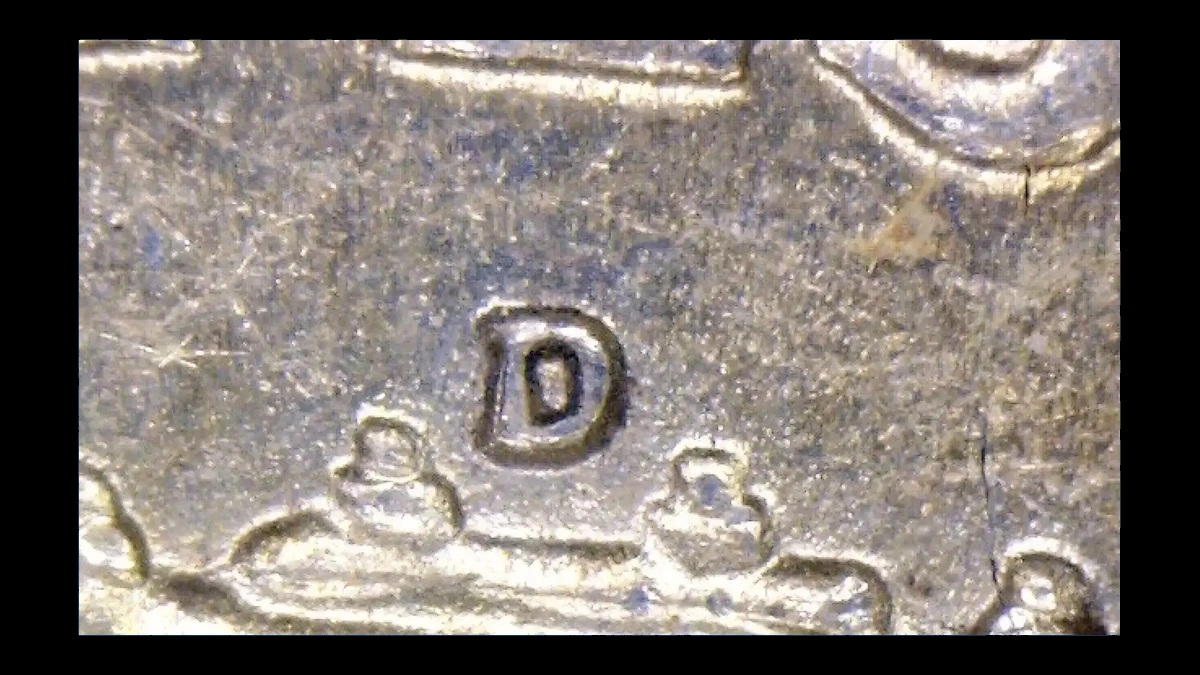
7. 1950 Half Dollar A second D fragment above the bell: Repunched mintmark Error
The recognized 1950-D FS-501 preserves part of an earlier D punch beside the final mintmark. The earlier placement survived in the die and transferred to later strikes.
How to Identify
Trace the principal D and its extra curve separately, then compare their spacing with a certified FS-501 photograph. A clear mintmark close-up is essential, supported by full-face views showing the date and condition.
A loose-looking lump, reflection, or flat ledge is not necessarily another letter impression. An unexplained curve should also not be renamed an S without an S-shaped match.
What It’s Worth
More ordinary identified examples are estimated at $100–$800, while exceptional preservation with strong bell lines can fall around $1,000–$3,100. PCGS records an MS66 Full Bell Lines FS-501 at $3,055 on eBay on July 11, 2019.
That high-grade transaction does not price every doubled-looking D. The visible earlier punch, overall preservation, and bell-line sharpness all belong in the comparison.
8. 1950 Half Dollar A claimed S beneath D with front doubling: Reported combined variety Error
A collector’s entry describes a 1950-D PCGS MS64 Full Bell Lines coin as showing both an S beneath the D and obverse doubling. The stated grade does not itself authenticate either feature, and the custom description is separate from the grading label.
How to Identify
For an overmintmark claim, the surviving fragment must fit an S rather than a repeated D or a lump. There was no regular 1950-S issue, but that fact is not proof of an S hidden in a Denver die.
Inspect the obverse independently for consistent rounded repeated outlines. A mintmark anomaly cannot establish front doubling, and the exact grading-label wording should be checked before making a recognized-variety claim.
What It’s Worth
If both claims are established, the supplied estimate is $100–$600 for a comparable coin near MS63–MS64. This is a whole-coin comparison based on modest Franklin varieties.
No transaction for a recognized 1950-D/S is supplied. The two reported features belong to one coin and do not justify adding two speculative premiums.
9. 1950 Half Dollar Extra contours on reverse lettering: Reported doubled die reverse Error
A collector registry describes an ordinary Philadelphia MS67 Full Bell Lines half as having a doubled reverse. The owner’s wording does not establish that the grading service attributed the doubling or identify its exact letter diagnostics.
How to Identify
Look at letter corners for separated, rounded outlines and compare them with a verified variety. A flat shelf beside a reduced letter commonly points to movement during striking instead.
The bell’s general thickness or sharp basal lines cannot prove reverse doubling. This ordinary-strike report must also remain separate from the recognized obverse quadrupling on proofs.
What It’s Worth
Established minor reverse doubling is estimated at $50–$500 on circulated through ordinary unworn examples. This range does not attempt to price the owner’s exceptional MS67 Full Bell Lines coin.
High preservation and sharp bell lines can make a Franklin valuable without an error. The registry entry supplies no separate sale or measured premium for its reported doubling.
Conclusion
A 1950 half requires different evidence for a cheek ridge, a mouth clash, a mintmark remnant, and repeated proof lettering. Establish the physical shape first, then match mint, finish, and condition before using a price.
Several entries remain reports rather than firmly attributed varieties. Preserving that distinction allows the recognized FS-501 and proof FS-101 records to be useful without lending their certainty to unrelated extra-looking lines.