Rare 1795 Half Dollar Errors (List & Pictures)
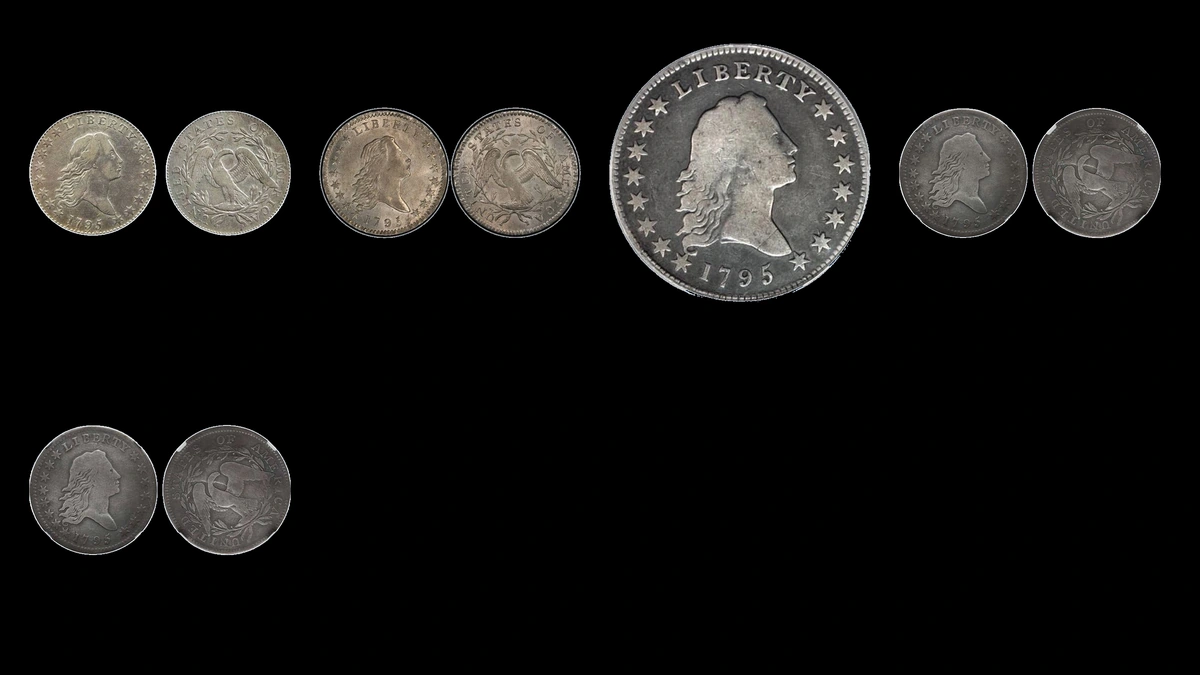
A coin’s full design matters when identifying 1795 half dollar errors, even if one extra letter first catches your eye. Estimates span $1,200–$75,000, with the highest range concerning a historically attributed one-sided piece rather than an ordinary dated half.
A clashed AU55 example realized $19,550 in 2008. Inspect both faces and their alignment, then the date, lettering, surface layers, and die-break paths to find a useful match.
| Visible feature | Identification | Value context |
|---|---|---|
| Design on only one face | Historically attributed uniface | $20,000–$75,000 estimate |
| Multiple design positions | Double strike | $8,000–$25,000 circulated |
| Reverse consistently tilted | Rotated dies | $3,000–$9,000 near VF30 |
| Lower repeated date digits | Recut 1795 date | $3,000–$25,000 by condition |
| Star remnants at Y | Y over star | $2,000–$8,000 |
| D remnants beneath final S | S over D | $2,000–$7,000 circulated |
| E remnants near top of A | A over E | $3,000–$12,000 |
| Shallow separation near stars | Lamination | $1,800–$4,500 comparable coins |
| Narrow raised paths | Die cracks | $1,200–$6,500 typical circulated coins |
| Broken-tool patches | Cuds and retained breaks | $2,000–$15,000 circulated |
| Opposite-design traces | Die clashes | $2,000–$30,000 by condition |
These Philadelphia Flowing Hair halves have a small eagle within a wreath, a lettered edge, and no mintmark. Their original standard was 13.48 grams, about 32.5 millimeters, and 89.24% silver; allow for wear when checking surviving coins.
1. 1795 Half Dollar A struck reverse with a blank opposite face: Uniface attributed to 1795 Error
The historic piece called P3007 carries a half-dollar reverse and edge lettering, but no struck portrait or readable date. Its attribution to 1795 relies on matching reverse H, a known die, rather than reading a year on the coin.
How to Identify
Begin with the eagle, wreath, lettering, and spacing on the struck side. The USPatterns discussion by Saul Teichman favors a mint error over a trial piece, though that interpretation remains part of its history.
Examine the blank face and edge for grinding, removed portrait traces, a separated layer, or a COPY mark. Correct weight and size alone cannot prove the manufacturing sequence.
A reverse-H match, an undisturbed blank face, and original edge lettering must be considered together. A different blank-sided coin does not inherit this specimen’s identity.
What It’s Worth
The comparison-based estimate is $20,000–$75,000 for a historically identified P3007-type piece. No recorded sale of this specimen establishes that range.
The $13,200 double-struck 1795 discussed next is a different major-error comparison. Neither that transaction nor the higher estimate settles the error-versus-trial interpretation of the uniface piece.
2. 1795 Half Dollar Overlapping portraits or opposite-side details: Double strike Error
The NGC VG8 O-129 shows two portrait positions after the obverse die reportedly turned about 45 degrees clockwise between strikes while the reverse die remained still. A separate PCGS VF20 O-131 was described as a flipover double strike, meaning the coin turned over between blows.
How to Identify
Reconstruct coherent pieces of the first and second impressions using full-face photographs. On O-129, their relationship should fit the reported obverse rotation rather than merely one doubled-looking letter.
The flipover coin needs a different comparison involving remnants of the opposite design. A later pressed impression can instead leave a backward sunken copy and damaged surfaces.
The O-129 also has an S-over-D correction in STATES, plus a rim knock near ten-thirty. The die correction and later damage do not themselves prove another strike.
What It’s Worth
Circulated 1795 double strikes with similarly strong evidence are estimated at $8,000–$25,000. The NGC VG8 O-129 sold for $13,200 at Heritage on December 21, 2022.
The result already includes its corrected letter, condition, and damage. It is not automatically the price of the separate VF20 flipover specimen, nor a sum to which another full S-over-D valuation should be added.
3. 1795 Half Dollar The eagle remains tilted after a straight flip: Rotated dies Error
Heritage described an NGC VF30 O-109 as having moderately rotated dies. This concerns the relationship between the front and back tools, not a second portrait produced by movement between strikes.
How to Identify
Hold Liberty upright and flip the coin top to bottom without adding a sideways twist. Under normal coin alignment, the eagle should then stand upright.
Repeat the motion and photograph both faces with a shared top-and-bottom reference. Straightening each photograph independently would hide the relationship being measured.
The catalog supplies neither an exact angle nor direction for O-109. Record the actual slant rather than borrowing a measurement from another rotated coin.
What It’s Worth
A comparable coin near VF30 with moderate rotation is estimated at $3,000–$9,000 as a whole half dollar. No recovered transaction is assigned to the documented O-109 here.
The Small Head VG10 with lamination discussed below brought a $2,600 hammer bid in 2008, illustrating the substantial underlying value of this early issue. The word “moderate” alone does not establish a large rotation premium.
4. 1795 Half Dollar Lower remnants of all four numerals: Recut 1795 date Error
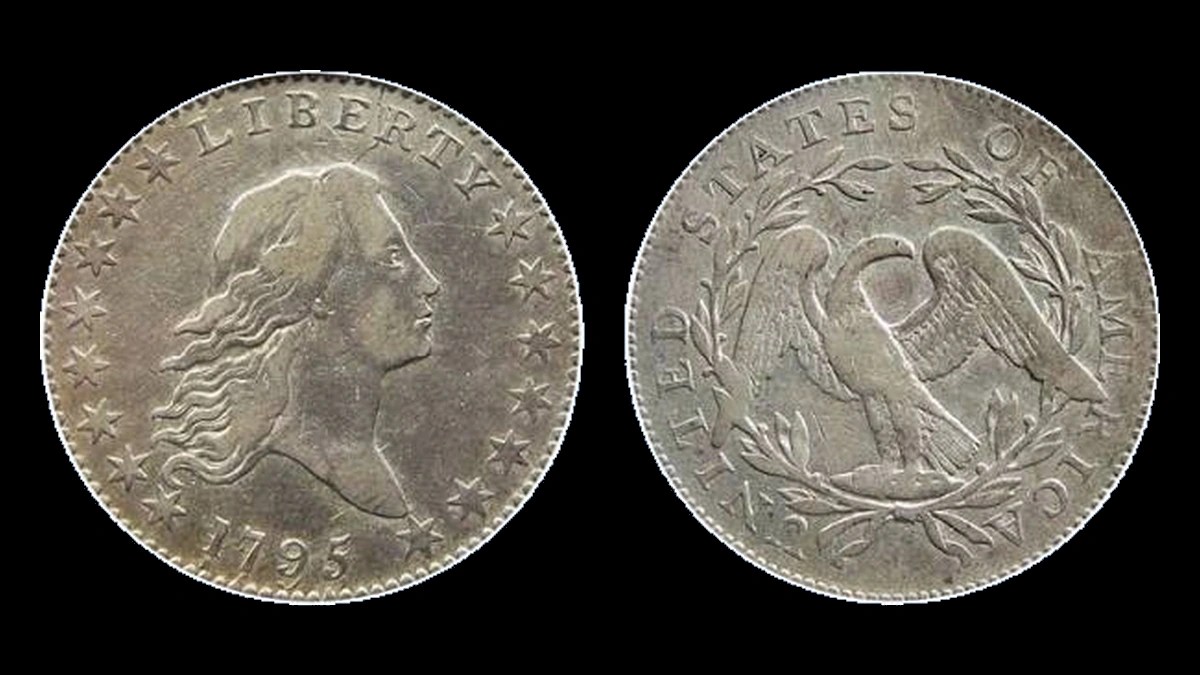
The 1795/1795 appearance comes from the full date first entered low in the die and then repunched higher. It repeats the same year, rather than placing a different year beneath the final digit.
How to Identify
Illuminate the space beneath each numeral from more than one direction and compare the lower remnants as a set. The portrait and stars should not move along with them as they might on a double strike.
The obverse was paired with both the Two Leaves O-112 reverse and Three Leaves O-111 reverse. Confirm the leaf arrangement to identify the complete variety rather than stopping at the repeated date.
What It’s Worth
Clearly identified circulated examples are estimated at $3,000–$10,000, with attractive lightly worn pieces around $12,000–$25,000. PCGS lists a Two Leaves AU55 example at $18,800 in the October 2014 Gardner sale.
Two Leaves and Three Leaves coins need their own comparisons. A heavily worn AG Details offering is at a substantially different preservation level from the cited AU55.
5. 1795 Half Dollar Star-shaped remnants at the Y: Y over star in LIBERTY Error
On O-121, the Y at the end of LIBERTY was punched over an earlier star in the die. Pieces of the first shape survive within and around the intended letter.
How to Identify
Compare the Y with a clear O-121 photograph while retaining the entire word in view. The normal adjacent star and worn ends of the Y should not be mistaken for the underlying punch.
A cataloged NCS VF Details example had cleaning and graffiti on Liberty’s forehead. Those surface problems are separate from the raised star remnants at the Y.
What It’s Worth
An identifiable very fine example with problems is estimated at $2,000–$4,500, compared with $4,500–$8,000 for cleaner circulated coins with stronger detail. No recovered sale price is supplied for the NCS specimen.
A different corrected-letter variety, A over E, brought $8,400 in AU Details in November 2020. Its sharper remaining detail and different identity prevent treating it as a direct price for the cleaned, graffitied Y-over-star coin.
6. 1795 Half Dollar A D beneath the final S of STATES: Corrected letter punch Error
The final S in STATES on O-129 covers remnants of an earlier D. The correction occurred in the reverse die and could appear on normally struck coins as well as the double-struck VG8.
How to Identify
Find the last S, not the initial S of the word, and compare its underlying strokes with an O-129 reference. Their shape should fit parts of a D rather than dirt, reflection, or unrelated wear.
Heritage described this correction on a PCGS Fine 12 and separately on the NGC VG8 double strike. Examine the letter independently from any displaced portrait on the latter coin.
What It’s Worth
Circulated examples around very good through very fine are estimated at $2,000–$7,000. Legibility of the corrected letter and acceptable surfaces help determine an appropriate comparison.
The O-129 VG8’s $13,200 December 2022 result includes its major double strike. An otherwise normally struck S-over-D half should not receive that price simply because its reverse die matches.
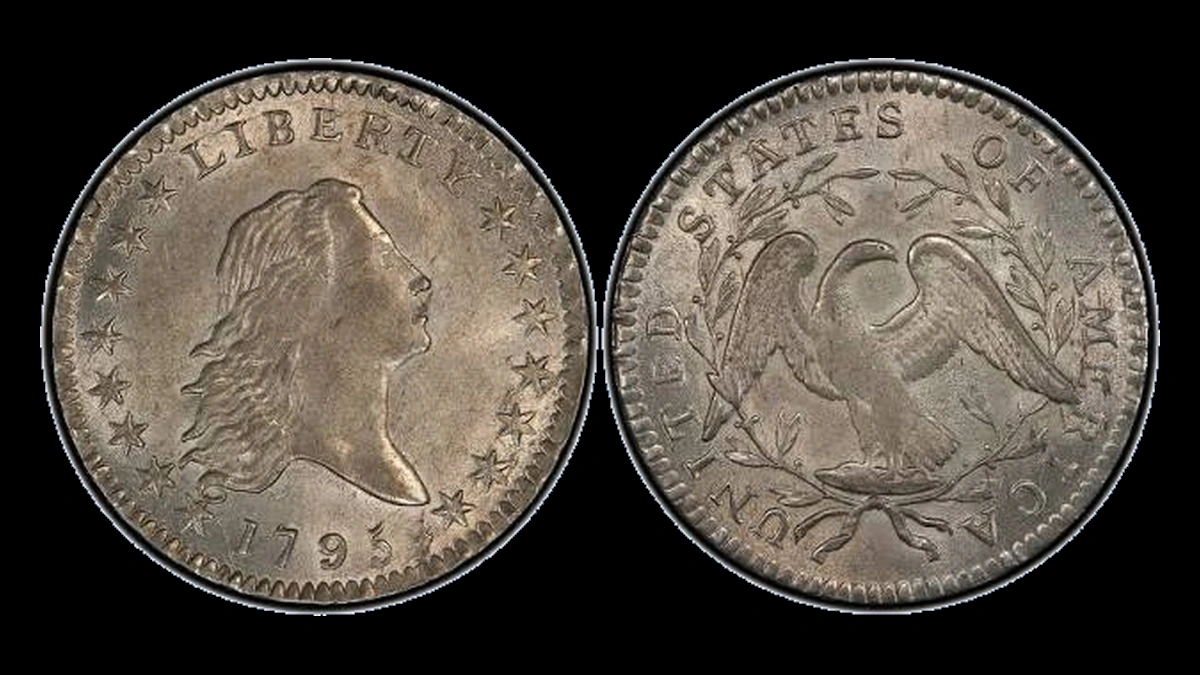
7. 1795 Half Dollar Small E strokes near the top of A: A over E in STATES Error
Within the O-113 family, an E was entered where the A in STATES belonged and was corrected with an A punch. The retained E fragments near the replacement letter’s top identify the correction.
How to Identify
Locate the third letter in STATES and follow its outline from bottom to top. Compare the extra strokes with an O-113 photograph rather than interpreting any flat ledge as a different underlying letter.
The order matters: this is A over E. A later E-over-A half has the reverse correction and cannot supply the correct diagnostic image.
What It’s Worth
Identified circulated through lightly worn problem coins are estimated at $3,000–$12,000. PCGS records an AU Details example at $8,400 in a November 2020 Stack’s Bowers sale.
Scarce late die stages or exceptional preservation require individual comparisons. Even at a low grade, enough of the corrected letter must remain to establish the variety.
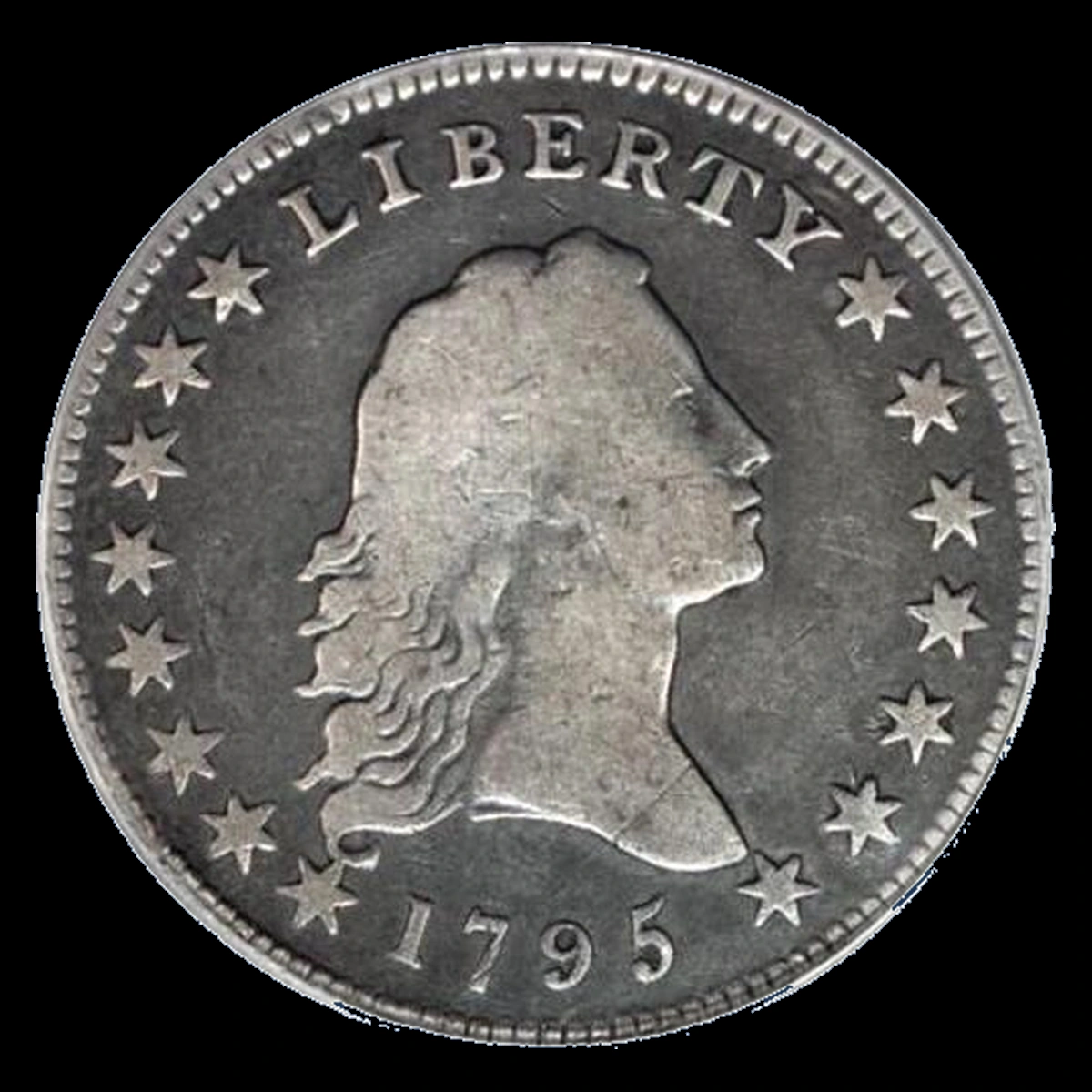
8. 1795 Half Dollar A shallow peeling area beside stars four and five: Lamination Error
A PCGS VG10 Small Head O-128 has cataloged lamination beside the fourth and fifth obverse stars. A weak layer separated within the alloy, leaving a shallow surface change despite the coin’s considerable wear.
How to Identify
Use the specified stars to locate the layer’s boundary, then examine its change in level under side lighting. A dark seam alone is insufficient, and the catalog’s separate scratches should not be called part of the lamination.
Leave any attached flake untouched. Compare the full reverse with a known O-128 to support the Small Head identity as well as the local flaw.
What It’s Worth
A comparable circulated coin with shallow lamination is estimated at $1,800–$4,500. The PCGS VG10 Small Head specimen brought a $2,600 hammer bid in April 2008, before the buyer’s fee.
Its variety and overall condition are included in that result. A larger missing layer across the portrait could reduce appeal rather than add a proportional error premium.
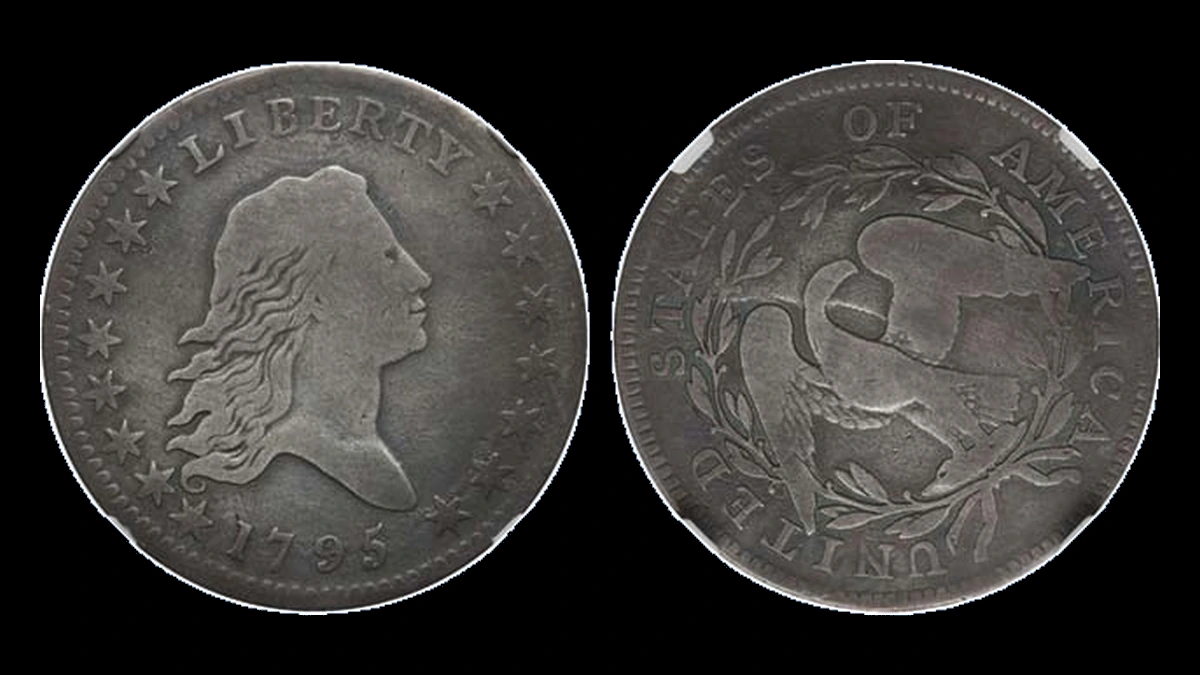
9. 1795 Half Dollar Raised lines above LIBERTY or between reverse words: Die cracks Error
The NGC VG8 O-104 has a crack above LIBERTY heading toward the right-side stars. A separate O-107a has a reverse path between OF and AMERICA toward T in UNITED.
These raised ridges formed when silver entered narrow fractures in the dies. They are different paths on different varieties.
How to Identify
Trace the appropriate route and confirm its height under angled light. Scratches and a split through the coin’s own metal have different structures.
Early Mint weight-adjustment filing left grooves in some blanks. Those cut-down lines should not be confused with raised die cracks merely because both originated during manufacture.
What It’s Worth
Typical circulated examples with readable cracks are estimated at $1,200–$6,500, from heavily worn coins through attractive very fine pieces. Scarce late die stages may warrant separate assessment.
The $2,600 Small Head lamination hammer bid supplies a same-year condition comparison, not a sale tied to either crack network. Length of a crack alone does not determine the coin’s worth.
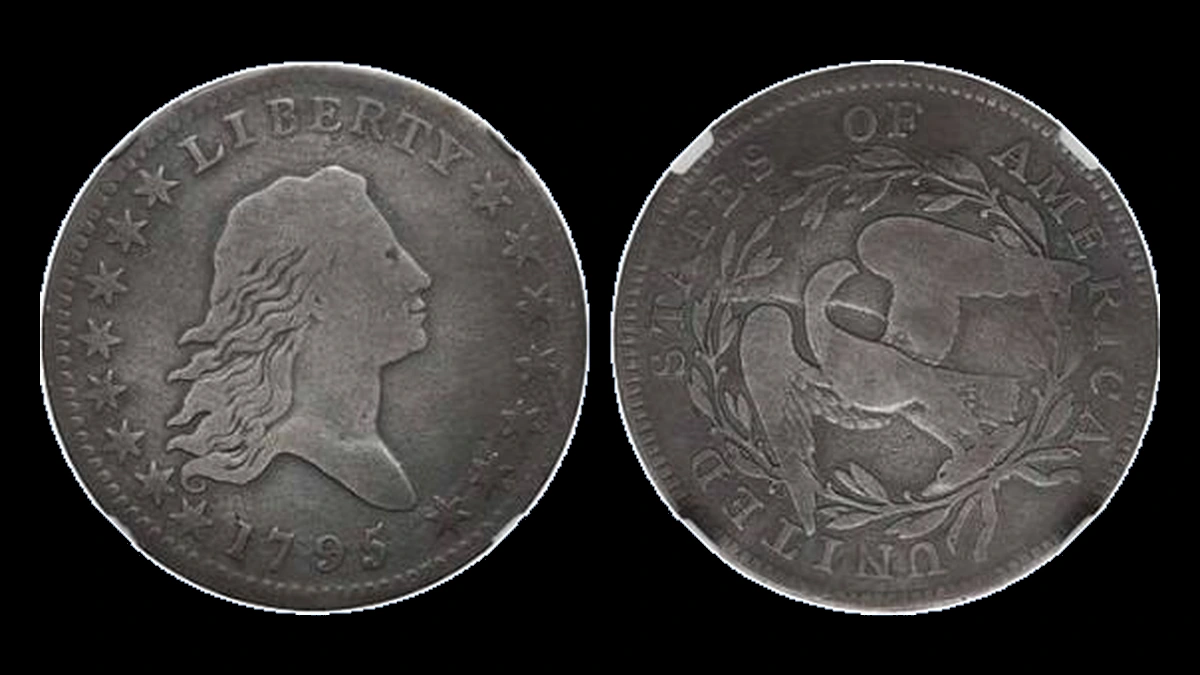
10. 1795 Half Dollar A raised broken area at or near the border: Cuds and retained breaks Error
Documented rim breaks occur above AME in AMERICA and below the wreath’s right ribbon on separate coins. Another break lies internally between OF and AMERICA and is not a rim cud.
A fractured die section may remain in place or fall away. A retained piece can preserve some design within a changed-height area, while a missing perimeter piece permits a raised rim-connected mound.
How to Identify
Follow the complete broken area’s boundary using the JRCS reference photographs. Determine whether it actually reaches the rim before choosing the term cud.
Look for surviving design within a retained break and check adjoining surfaces for later compression. A blow can push metal up, but it does not establish a matching broken-die stage.
What It’s Worth
Clearly identified circulated examples are estimated around $2,000–$15,000. Condition, visibility, and scarcity of the die stage explain the broad span.
The $13,200 VG8 double-strike sale offers same-year major-error context only. A faint retained break and a dramatic missing die section require their own comparisons rather than sharing its price.
11. 1795 Half Dollar Traces beneath the chin or near LIBE: Clashed dies Error
The NGC AU55 O-122 has extra traces beneath Liberty’s chin. On a separate O-116, transferred reverse letters corresponding to UNITE appear near LIBE and the left stars.
These features came from contact between the dies without a blank present. Later strikes carried fragments of the opposite design, rather than a complete second strike.
How to Identify
Compare each fragment with the relevant opposite-side design in its reversed position. The two documented locations belong to different varieties and are not one universal clash pattern.
The O-122 also has mint adjustment filing elsewhere on the obverse. Those grooves are distinct from transferred design contours, as are later scratches or boundaries between colors.
What It’s Worth
Circulated examples with visible clashes are estimated at $2,000–$8,000, while comparable attractive lightly worn pieces can reach $15,000–$30,000. The O-122 NGC AU55 sold for $19,550 on January 10, 2008.
That transaction reflects a sharply detailed early half and its variety. It does not establish a separate $19,550 charge for faint chin traces on a worn coin.
Conclusion
A convincing 1795 attribution ties a small feature to the complete obverse, reverse, and edge. That is especially important for corrected letters, shared die pairings, and the dateless reverse-H uniface piece.
Keep repeated strikes, die rotation, and die corrections distinct even when more than one feature appears on a coin. Early halves already carry substantial collector value, so surface quality and the precise variety remain essential to interpreting every price.