Rare 2005 Half Dollar Errors (List & Pictures)
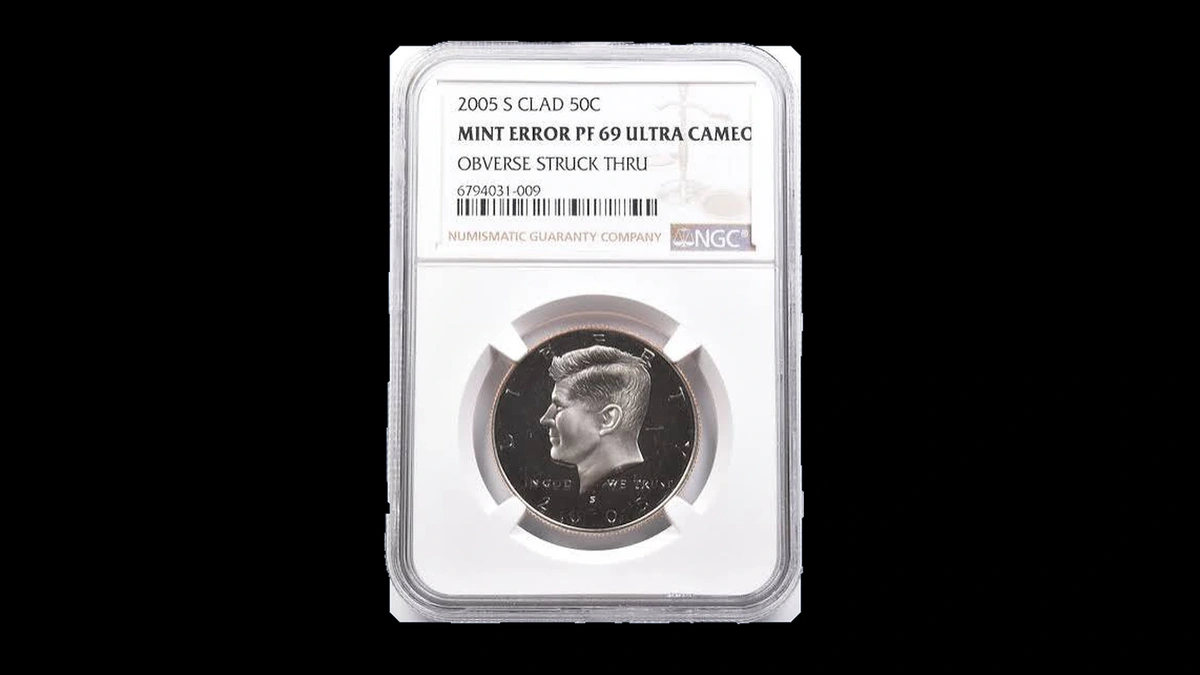
A 1974 Kennedy half on a Taiwan five-dollar blank sold for $2,880 in September 2023. That documented foreign-blank error supplies context for the reported 2005 wrong-planchet category.
Estimated 2005 half dollar errors values span $5–$3,500. Establish the issue and metal first, then inspect its outline, surfaces, and repeated details.
Normal clad halves weigh 11.34 grams; S silver proofs weigh 12.50 grams. Both measure approximately 30.6 millimeters with reeded edges, and satin mint-set texture is an intended finish.
| Observation | Possible category | Estimated whole-coin value |
|---|---|---|
| Unexpected size and metal | Wrong planchet | $750–$3,500 |
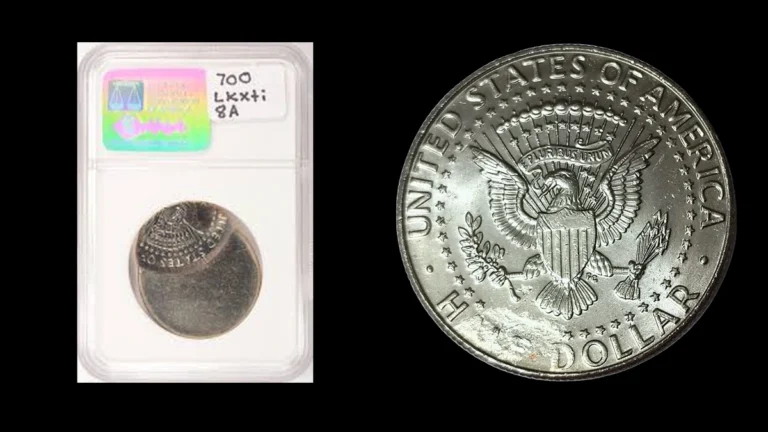
| Missing edge section | Clip | $50–$300 |
| Complete design inside wider outline | Broadstrike candidate | $100–$500 |
| Displaced design beside plain metal | Off-center strike | $75–$650 |
| Interrupted detail | Reported strike-through | $20–$450 |
| Raised line | Die crack | $5–$60 |
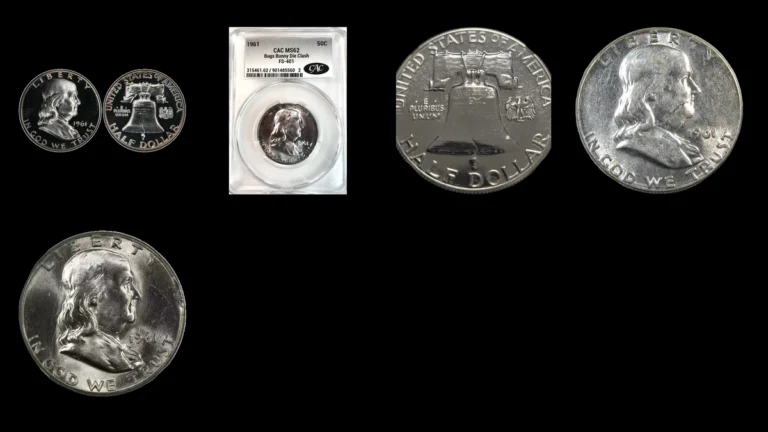
| Fragment of opposite design | Die clash | $20–$175 |
| Repeatable duplicated contour | Doubled die | $60–$350 |
1. 2005 Half Dollar The Metal Does Not Fit the Expected Issue: Reported Wrong Planchet Error
A wrong-planchet coin was struck on a prepared blank intended for another issue. The proposed blank’s metal, weight, size, and surviving design should fit one coherent explanation.
No denomination or alloy is established for a particular 2005 example in the supplied report. A correctly weighted silver proof or an ordinary satin mint-set surface is not evidence of using the wrong blank.
How to Identify
Record the date, mintmark, finish, weight, diameter, and thickness before proposing another blank. Compare with the correct normal issue rather than using the clad weight for every 2005 half.
Inspect how the design reaches the edge, looking for original striking rather than filing, grinding, or chemical removal. Plating can also conceal the metal’s original appearance.
If measurements support a particular alternative blank, nondestructive composition testing can help evaluate it. Unusual color or one unexpected scale reading alone is insufficient.
What It’s Worth
A confirmed 2005 wrong-planchet strike has a provisional estimated $750–$3,500 value. Readable identity and confirmation of the actual blank strongly affect the comparison.
A 1974 Kennedy on a Taiwan five-dollar blank, graded PCGS AU55, sold for $2,880 in September 2023. That lightly worn foreign-blank coin neither identifies a 2005 alloy nor establishes a 2005 sale.
2. 2005 Half Dollar A Gap Existed before the Design: Reported Clipped Planchet Error
An incomplete blank can result when the cutting punch overlaps an earlier hole or reaches the metal strip’s edge. The blank later receives its rim and designs around the gap.
The 2005 guide reports clips without naming a mint, finish, or exact outline. Those details must be established from the candidate.
How to Identify
Inspect each endpoint of the gap and the way lettering and rim approach it. Original striking around absent metal differs from a sharp cut through a completed design.
Look for filing, burrs, and corrosion along the opening. Weakness in the opposite rim can support the diagnosis but is only one clue.
Compare weight with the correct composition and measure across intact areas. Low weight alone cannot determine when the metal disappeared.
What It’s Worth
A confirmed 2005 clip has an estimated $50–$300 value. Preservation and an attractive original gap matter alongside size.
A 1998-D ten-percent triple clip graded PCGS MS63 sold for $99 in March 2025. A separate 45-percent curved clip graded NGC MS66 brought $240 in July 2021; neither establishes the shape or value of a specific 2005 specimen.
3. 2005 Half Dollar The Full Image Fits within Spread Metal: Broadstrike Candidate Error
A broadstrike forms when the collar fails to restrain the blank during striking. The metal spreads beyond normal width while still receiving the complete design.
No correctly dated 2005 specimen is established here. The category remains a candidate requiring physical confirmation, since later pressure can also widen a normal half.
How to Identify
Read the date and trace the outer lettering on both faces before measuring. All intended detail should remain inside the expanded outline.
Measure several directions and inspect the expanded margin and changes in reeding. The surfaces should show original striking with expansion rather than crushed details or pressure scars.
Use the appropriate clad or silver-proof weight standard. Spreading itself does not remove metal, but measurements cannot replace examination of the design.
What It’s Worth
A genuine unworn 2005 broadstrike has a comparison-based estimated $100–$500 range. The estimate assumes natural expansion and a complete original design.
A 1998-P broadstrike on an early-stage blank graded NGC MS65 sold for $106 in January 2010. Its different year and particular blank-preparation combination should remain explicit.
4. 2005 Half Dollar Plain Metal Borders an Incomplete Image: Reported Off-Center Strike Error
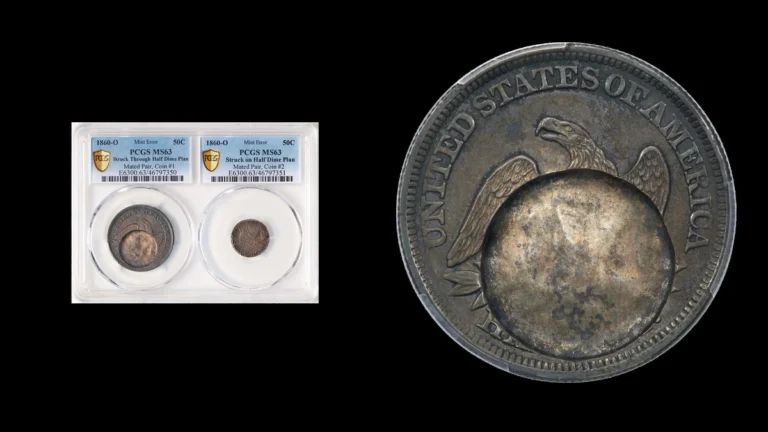
An off-center blank sits partly outside the dies, leaving some metal unstruck while outer details miss the disc. Both faces should reflect that same misplaced position.
The 2005 report establishes no specimen-specific mint, finish, direction, or percentage. A single uneven border cannot fill in those missing details.
How to Identify
Locate a readable date and surviving mintmark, then compare the design-to-blank transition on both sides. If one face remains centered and complete, a misaligned die may explain the other better.
Inspect plain areas for grinding or polishing that erased existing detail. An original unstruck region must fit the way the image missed the blank.
Record remaining reeding and any irregular outline. Do not assign a percentage taken from a comparison coin.
What It’s Worth
Confirmed examples with readable dates have an estimated $75–$650 range. More dramatic displacement can attract interest when surfaces and identity remain appealing.
A 1999-D struck 65 percent off center, graded NGC MS66, sold for $552 in March 2023. That result supports the scale of the comparison but establishes no 65-percent-off-center 2005.
5. 2005 Half Dollar A Date Digit or Other Detail Is Interrupted: Reported Strike-Throughs Error
Two owner reports require separate treatment. One describes grease-related weakness on a coin found while opening a 2005 set, without identifying its mint or affected area.
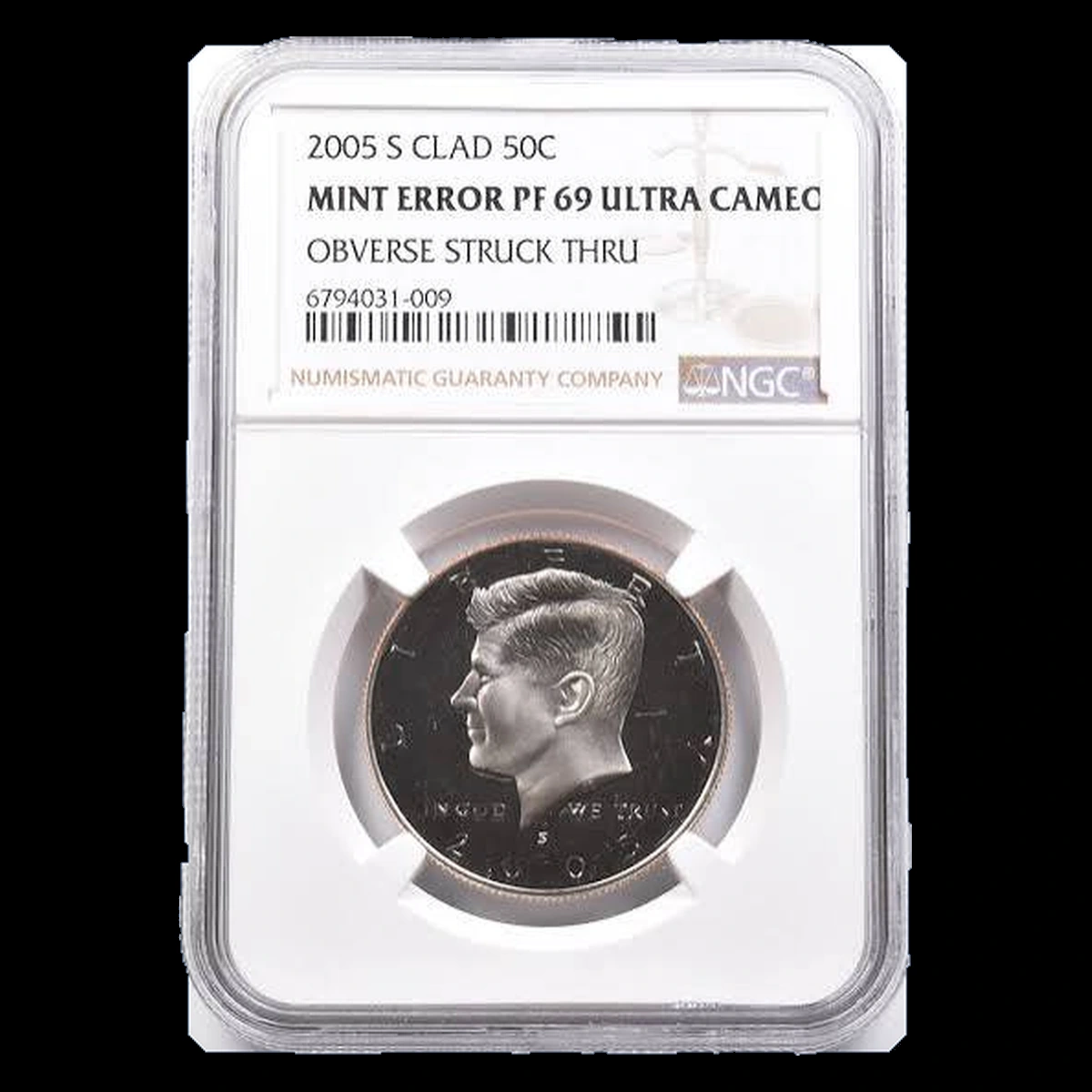
The other concerns an unusual 5 on a 2005-S clad proof, with strike-through and reflections both considered. Material blocking contact during striking can leave weak detail or an impression, but neither report alone resolves the proof digit’s cause.
How to Identify
For the proof, change light and focus between the coin and its holder before interpreting the 5. A plastic scratch or reflection can appear to interrupt the digit without being in the metal.
Compare the affected stroke with adjacent digits and examine the boundary of any genuine mark. Do not infer grease or a specific trapped object from general weakness.
The set-opening report and proof-owner discussion concern different coins. Weigh or measure only loose accessible coins, without opening a holder merely to apply the normal specifications.
What It’s Worth
A confirmed 2005 strike-through is estimated at $20–$450. A minor weak patch and a clear impression on a well-preserved proof need different comparisons.
Neither owner report supplies a sale result used here. A 1992-D struck through a fragment bearing edge grooves, graded NGC MS64, sold for $336 in July 2021; that known object does not identify the cause of the proof’s unusual 5.
6. 2005 Half Dollar A Fine Ridge Crosses the Design: Reported Die Cracks Error
A fracture in a die can receive metal during striking and leave a narrow raised line. Continued use may lengthen the crack’s impression without the coin itself splitting.
The supplied report establishes no exact route or mint for an individual example. The actual line must provide the evidence.
How to Identify
Trace the feature across changes in design height under side lighting. It should remain raised relief rather than resolve into a central groove.
Inspect both sides of the line for lips pushed up by a scratch and for material resting on the coin. Do not probe it with a needle or scrape the surface.
Document the full route with surrounding details. Normal composition and dimensions identify the issue but do not prove the ridge’s origin.
What It’s Worth
Small through visible cracks on collectible unworn halves have an estimated $5–$60 range. Minor cases often add little to ordinary coin value.
This is based on modest modern Kennedy guide comparisons, including $5–$20 for minor cases in a nearby 2008 guide. It is not a realized price for a named 2005 crack.
7. 2005 Half Dollar An Extra Shape Matches the Opposite Face: Reported Die Clash Error
A die clash occurs when the two tools meet without a blank between them. Transferred design traces can then appear on later coins struck from the marked tools.
No fixed 2005 location or named specimen is established in the source. A feather near Kennedy or portrait trace on the reverse should not be invented as a required diagnostic.
How to Identify
Compare one suspected trace with the opposite design at the same scale. Both its shape and position should make sense in the relationship between the dies.
Use changing light to distinguish a physical feature from reflection. Inspect nearby scratches and impressions that might have resulted from pressing finished coins together.
A familiar-looking fragment is only useful when the placement also fits. Keep enough of the whole design visible to test that relationship.
What It’s Worth
A confirmed recognizable clash on an unworn 2005 is estimated at $20–$175. Unexplained faint lines do not automatically qualify.
A strong-clash 1973-S proof graded PCGS PR68 Deep Cameo sold for $720 in October 2022. Its excellent preservation, contrasting proof surfaces, and dramatic clash make it a different comparison class rather than evidence of an equivalent 2005.
8. 2005 Half Dollar Extra Contours Recur in the Design: Reported Doubled Dies Error
A doubled die contains duplicated detail before it strikes a coin. Repeated blows used in normal proof production do not by themselves create a doubled die.
Both front and back doubling are reported for 2005 without specific mint, finish, or numbered varieties. Each face therefore needs an independent identification.
How to Identify
Change the light and viewing angle, especially across reflective proof lettering or a holder. A physical contour remains in the metal when a reflection moves.
Compare with a normal coin of the same finish, looking for a fixed rounded extra shape rather than a flat shelf that reduces the main detail. Seek a reliably identified repeating pattern on another coin.
Do not assume a doubled front establishes a doubled reverse. Preserve separate photographs and observations for each side.
What It’s Worth
A confirmed unworn variety has a provisional estimated $60–$350 range. Strength of repetition, reliable attribution, and condition determine the useful comparison.
The range follows modern Kennedy guide references around $60 and upward, including a 2007 comparison. No completed 2005 doubled-die sale is established, and a proof’s reflected letter edge cannot justify the premium.
Conclusion
A 2005 candidate should first be identified as the correct clad, silver-proof, or satin-finish issue. Normal differences between those products can explain appearance or weight without a mint error.
Then examine the specific feature and preserve uncertainty where the report lacks an individual specimen. The unusual proof 5 especially needs evidence that the mark is in the coin itself before any strike-through estimate becomes relevant.