Rare 1983 Half Dollar Errors (List & Pictures)
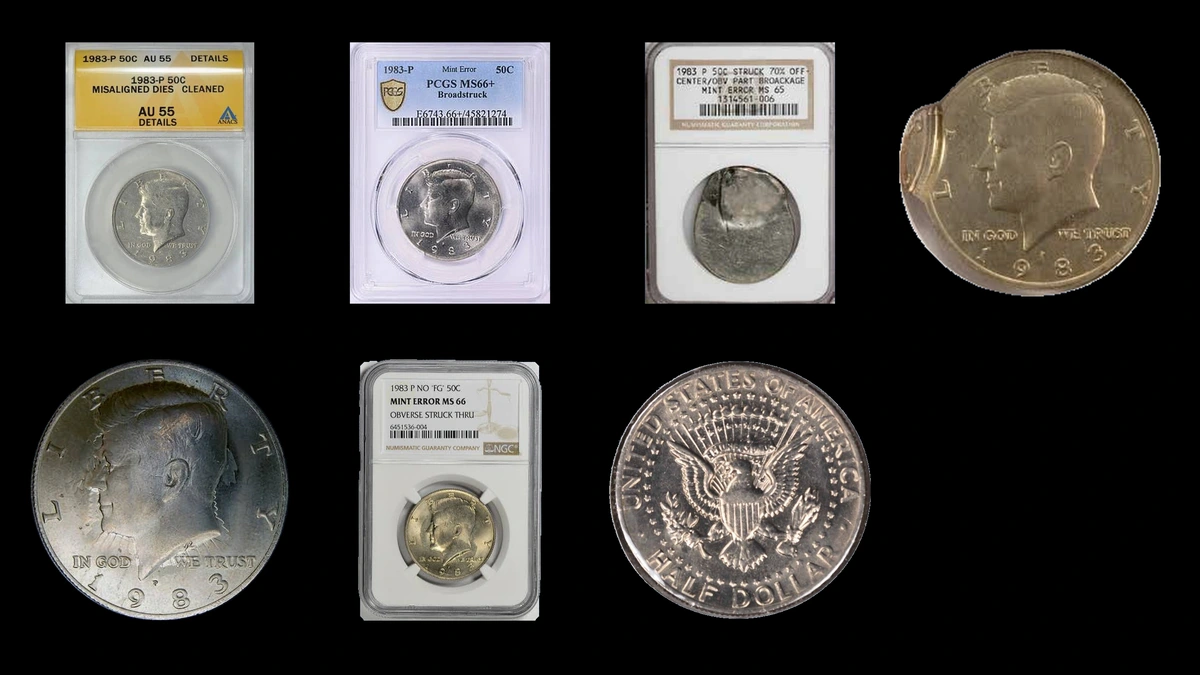
A wide rim, a blank crescent, and a backward sunken picture can look confusing at first. Among 1983 Kennedy half dollar errors, each points toward a different event in the press.
The estimated ranges below span $15–$1,500. A repeatedly struck 1983-P that also spread beyond normal width sold for $552 in June 2024.
Compare the overall pictures first, then inspect the edge and smaller missing or repeated details.
| Clue | Category | Estimated range |
|---|---|---|
| One shifted face | Misaligned die | $15–$150 |
| Full designs on a wide coin | Broadstrike | $100–$500 |
| Bare crescent on both faces | Off-center strike | $75–$800 |
| A separate plain hollow | Off-center strike with indent | $350–$1,000 |
| A backward sunken design | Off-center strike with brockage | $400–$1,200 |
| Overlapping raised pictures | Multiple strike | $300–$1,500 |
| Edge step and copied design traces | Partial collar with clash | $50–$450 |
| A disturbed front patch | Strike-through | $20–$300 |
| Extra front letter outlines | Doubled die | $25–$350 |
| Absent designer initials | Missing FG | $30–$400 |
The normal measurements are 11.34 grams and about 30.61 mm across, with a grooved edge. These standards also fit the 1983-S Proof, a specially made collector coin; safely accessible coins can be checked with a scale and calipers.
1. 1983 Half Dollar One Face Shifts while the Other Stays Centered: Misaligned Die Error
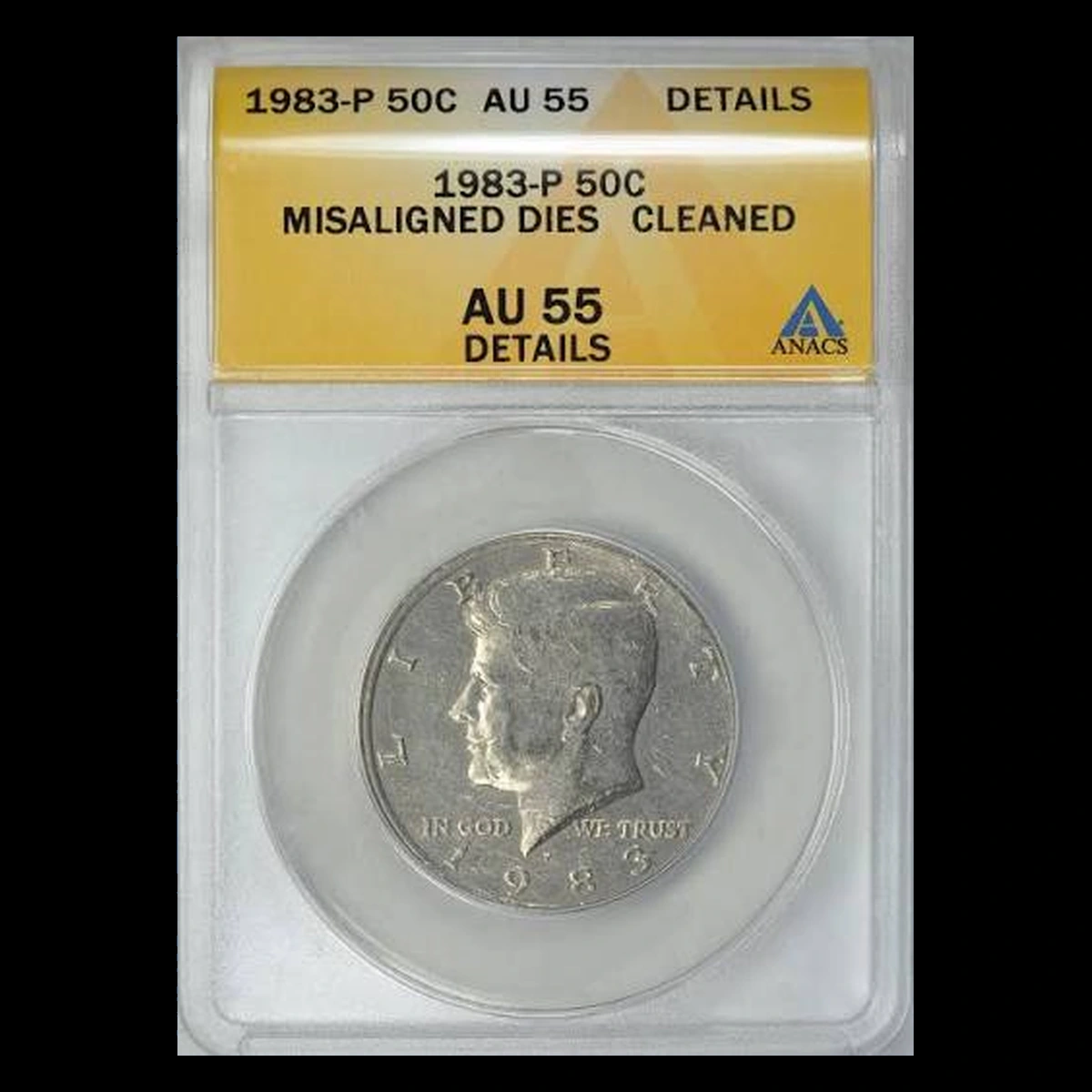
A die is the steel tool that stamps one side of a coin. If one tool moves sideways while the other stays in place, the two faces can have different border balance.
The year guide reports this without a specific mint or amount of movement. An uneven rim in one photograph cannot establish the complete relationship.
How to Identify
Photograph both faces straight on with the full outline visible. Compare each design with the physical edge, rather than trying to align Kennedy’s portrait with the eagle.
A shifted picture on one face alongside a centered opposite design supports die misalignment. Matching displacement on both faces points toward an off-center blank.
Inspect the edge for crushing, filing, or seams that could explain the border differently. An angled photograph can also exaggerate an ordinary rim.
What It’s Worth
$15–$150 is the estimate for a genuine visible shift on an otherwise normally sized half. More obvious movement generally attracts greater interest than a slight imbalance.
A 1990-P struck 10% off center sold for $198 in September 2025 in MS66 condition. That different and more dramatic error provides only broad context, not a misaligned-die sale.
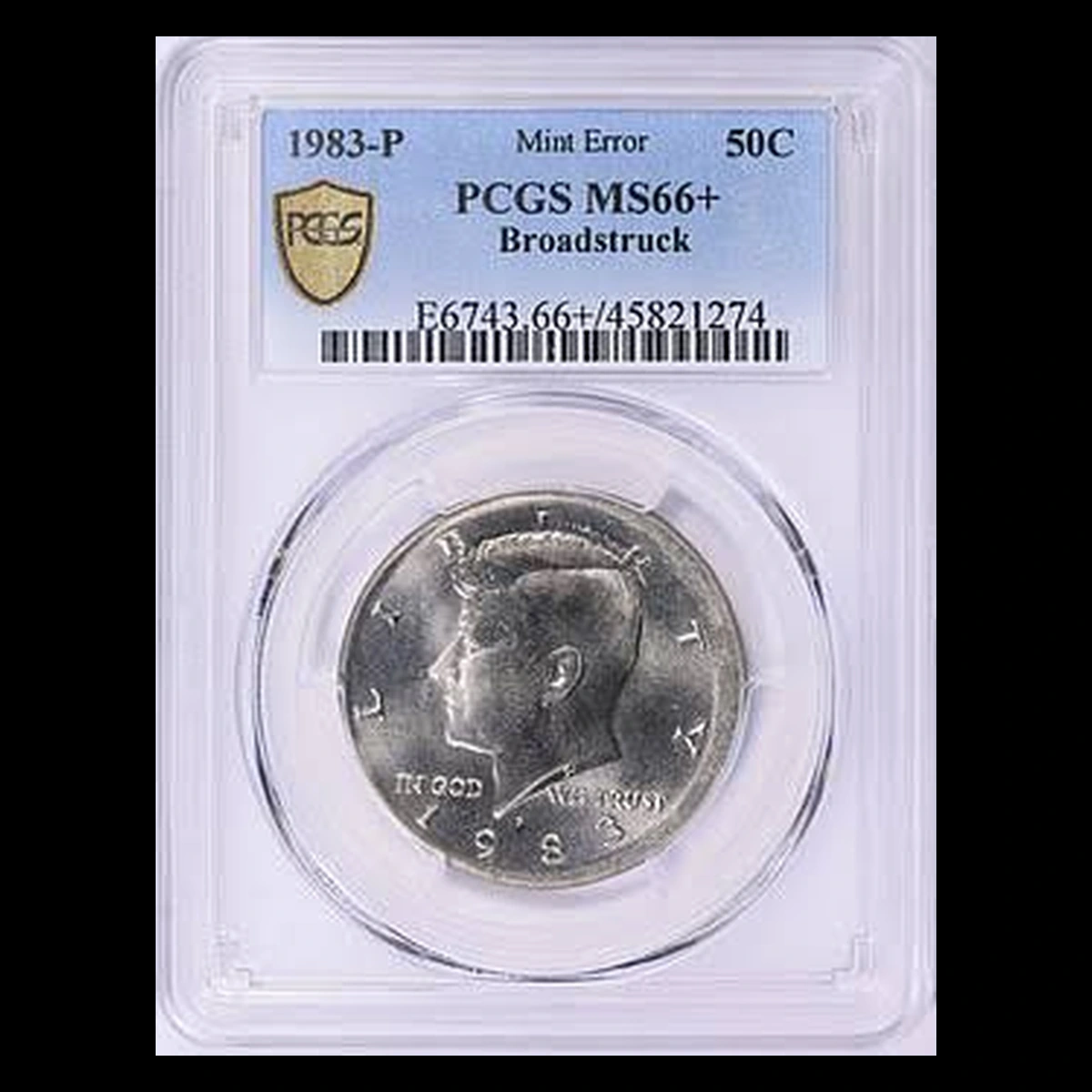
2. 1983 Half Dollar Complete Pictures Remain inside an Expanded Border: Broadstrike Error
A broadstrike spreads because the surrounding collar ring fails to hold the metal to normal width. It can retain both full designs despite a wide or uneven border.
A dealer lists a 1983-P graded NGC MS65 as this type. It is separate from the repeatedly struck broadstrikes later in the article.
How to Identify
Account for the entire date and outer lettering on both sides. Missing picture beyond the edge needs a different explanation from a complete design on a wider blank.
Inspect the expanded metal and interrupted edge grooves for natural flow. Hammering or an attached border can change the outline after a normal strike.
A full-weight coin can spread without losing metal. A second overlapping impression would indicate another error in addition to broadstriking.
What It’s Worth
$100–$500 is the estimated range, depending on surfaces and the appearance of the expansion. Sullivan Numismatics offers the MS65 example at $175.
That is a retail asking price. A regular 1990-P broadstrike in MS61 sold for $192 in March 2025, providing a different-year sale comparison.
3. 1983 Half Dollar A Blank Crescent Matches on Both Sides: Off-Center Strike Error
A listed 1983-P has a 10% off-center strike and an NGC MS64 grade. Its blank sat out of position, leaving bare metal beside an incomplete picture.
Denver examples are also reported. The listed Philadelphia piece’s grade and percentage belong to that individual coin.
How to Identify
Compare the empty crescent and missing design on both faces. They should fit the same misplaced blank.
Look through a magnifier for original bare surface rather than grinding that removed a finished picture. Read the surviving 1983 date and mintmark directly.
A shift confined to one face is more consistent with a moved die. Keep the edge and any expanded areas in the photographs.
What It’s Worth
$75–$800 is the estimate from modest shifts to more dramatic examples with readable dates. The recorded offer for the 10% 1983-P MS64 was $225 asking.
The 10% 1990-P MS66 sale at $198 in September 2025 is a different-year comparison. The upper estimate does not apply automatically to every coin shifted by 10%.
4. 1983 Half Dollar A Plain Hollow Accompanies the Blank Crescent: Off-Center Strike with Indent Error
A reported 1983-P combines a 50% off-center strike with a 25% reverse indent. The indent formed where another blank overlapped the coin during striking.
The blank crescent and the hollow therefore have different causes. The historical account describes the coin as AU with scratches, without assigning a numerical grade.
How to Identify
Locate the unstruck crescent first, then the separate hollow on the back. Inspect where normal design stops at the hollow’s boundary.
A later dent may have metal pushed upward around it. Look inside the depression for any backward sunken letters, which would instead suggest contact with a struck coin.
The scratches remain damage separate from the minting features. Do not use them as evidence for the indent.
What It’s Worth
$350–$1,000 is the estimate for similar combinations. A clear hollow, readable date, and cleaner surfaces support a higher comparison.
Mint Error News issue 24 records a historical $660 sale for the off-center coin with reverse indent. That one amount includes both minting features.
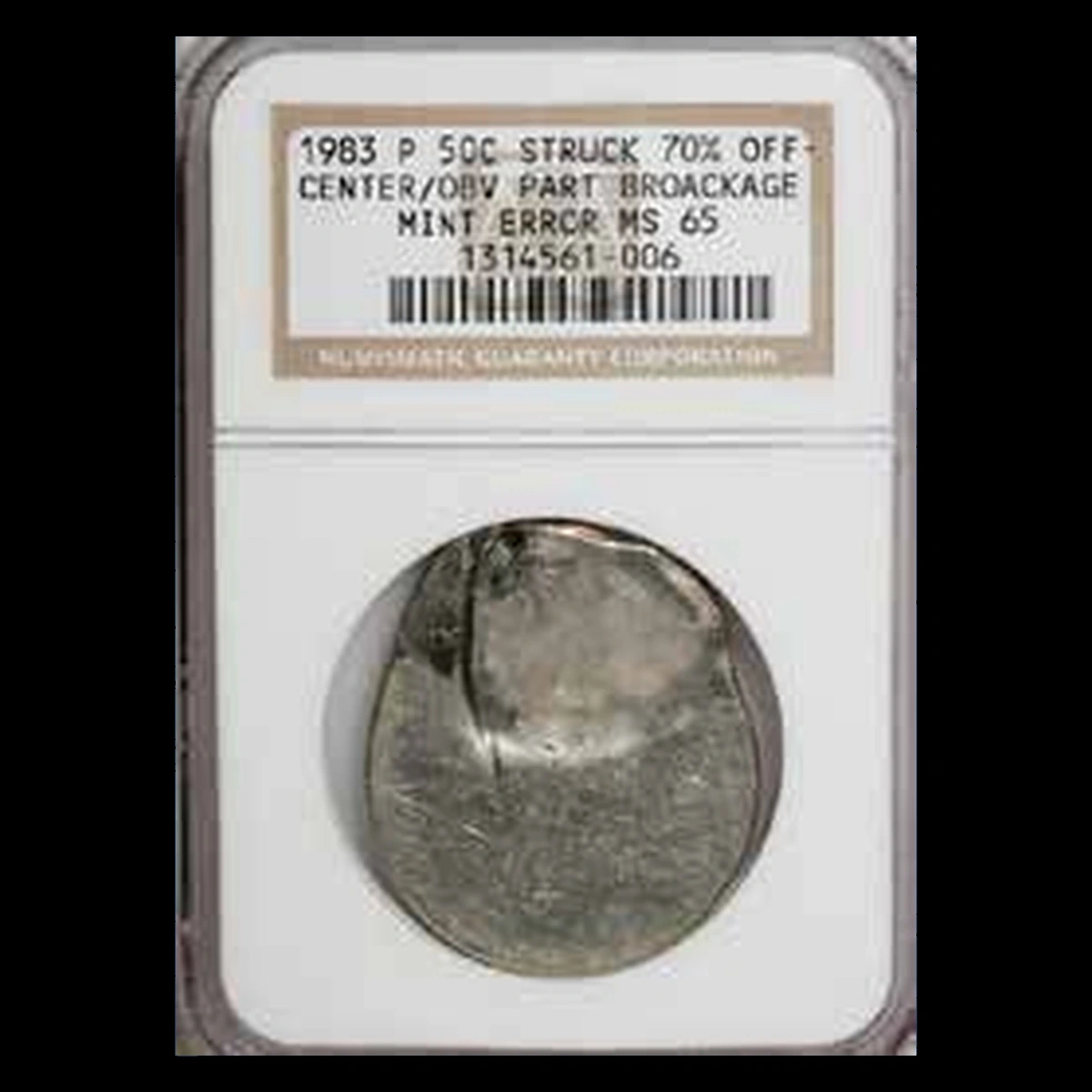
5. 1983 Half Dollar A Backward Picture Sinks into the Front: Partial Brockage Error
A brockage forms when an already struck coin gets between a die and a fresh blank. Its raised design presses a recessed, mirror-image copy into the new coin.
The reported 1983-P combines partial front brockage with a 70% off-center strike. It was graded NGC MS65, an attractive unworn grade.
How to Identify
Check that the copied details are both sunken and backward. A plain indent lacks a recognizable copied design, while a normal additional die strike usually produces raised detail.
Keep the whole coin visible to relate the copied impression to the large blank crescent. A cropped close-up can hide how the features fit together.
What It’s Worth
$400–$1,200 is the estimate for similarly identifiable combinations. Clear backward design is more useful to the comparison than empty space alone.
Mint Error News issue 26 reports $632.50 at a Heritage FUN auction for this combination. The historical price includes both the brockage and off-center strike.
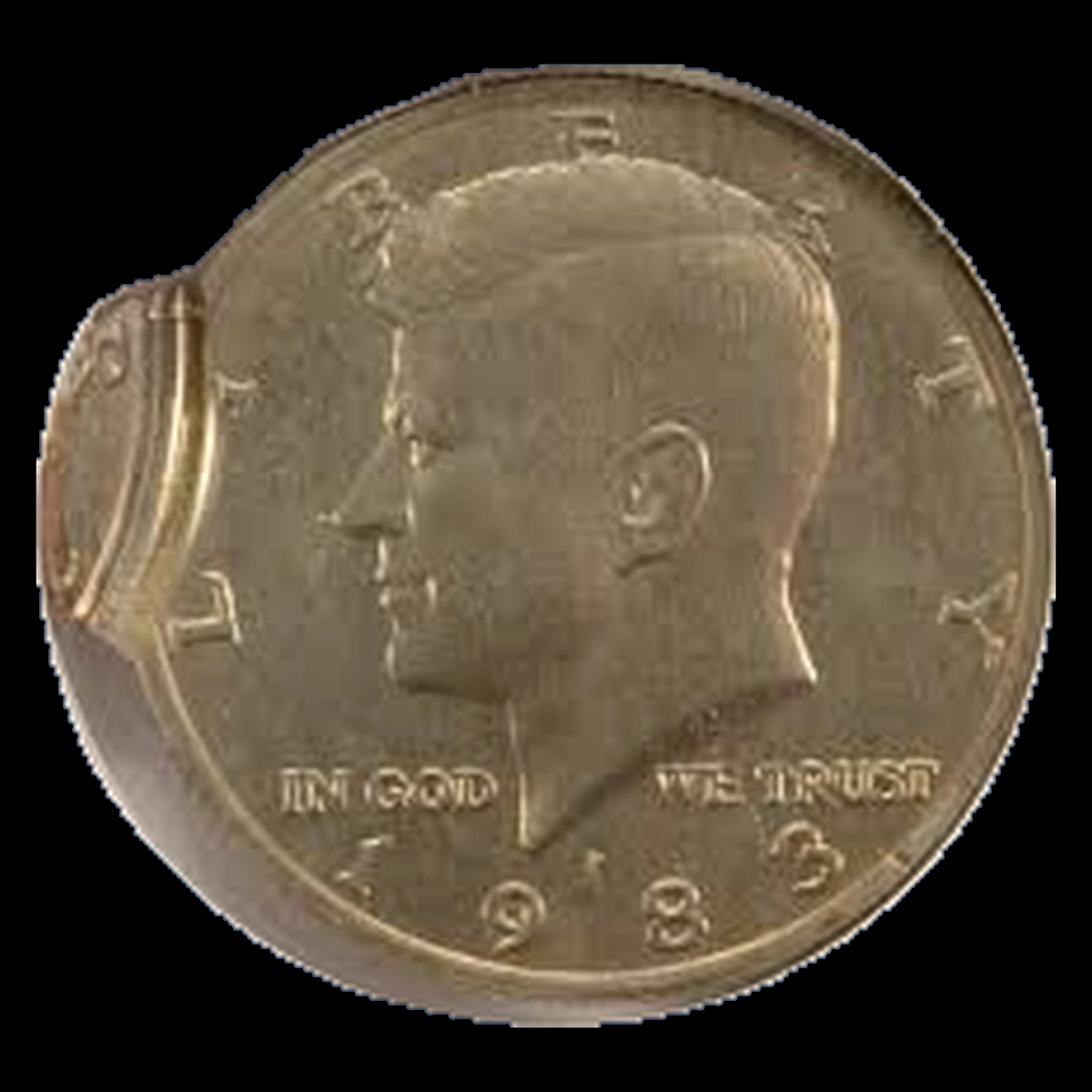
6. 1983 Half Dollar Several Raised Impressions Overlap: Double and Multiple Strikes Error
Several recorded 1983-P examples have different sequences. One NGC MS66 coin has a double strike, broad second impression, and front indent; a separate NGC MS63 repeatedly struck broadstrike sold in 2024.
Another account describes four strikes without establishing that it is the same coin. An ANACS MS63 piece has a second strike 93% off center, with design from that blow appearing normally on only one face.
How to Identify
Trace recognizable date, letter, or portrait fragments through the overlaps. Each proposed impression should fit a distinct striking position.
The 93% example needs a small additional strike with no matching normal design on its opposite side. The MS66 coin instead needs its own check of the front indent.
Do not call a coin four-struck without evidence of four impressions. Tiny doubled edges on one letter cannot establish that count.
What It’s Worth
$300–$1,500 is the estimate for these combinations, depending on how clearly the separate strikes can be followed. The NGC MS63 repeatedly struck broadstrike sold for $552 in June 2024.
A 1998-P double strike with a broad second blow brought $317.20 in June 2026 in CACG MS64 condition. It offers a different-year comparison for a simpler sequence.
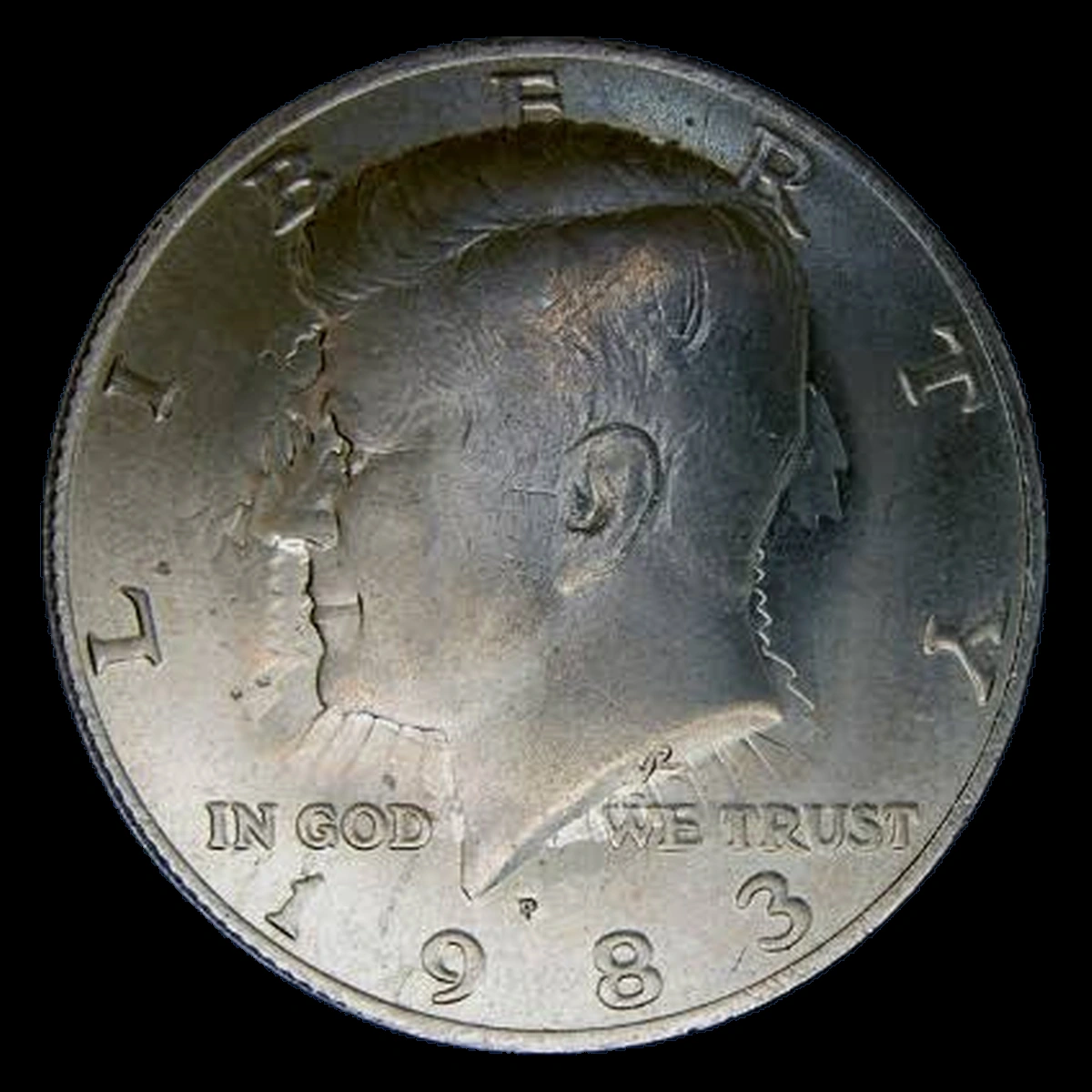
7. 1983 Half Dollar Faint Design Traces Come with a Stepped Edge: Clash and Partial Collar Error
A collector’s Registry display describes a 1983-P with both a die clash and tilted partial collar. The clash followed contact between the dies with no blank present.
The collar problem came from the blank sitting partly outside the ring at an angle. It can create a changing edge step while the clash leaves traces of the opposite design on the faces.
How to Identify
Inspect the full edge for a continuous changing step between restrained metal and the section that spread. One rim nick is not enough.
Then examine the face marks separately and compare them with the opposing picture. Their shapes and positions must make sense for contact between the dies.
The edge step and design traces support different parts of the explanation. Finding one does not prove the other.
What It’s Worth
$50–$450 is the estimate for the reported combination. Clear physical features matter more than having two error names in a description.
A strong-clash 1973-S Proof sold for $720 in October 2022 in PR68 Deep Cameo condition. Its collector finish and stronger marks limit the comparison with an ordinary 1983-P.
8. 1983 Half Dollar A Front Patch Interrupts Normal Detail: Strike-Through Error
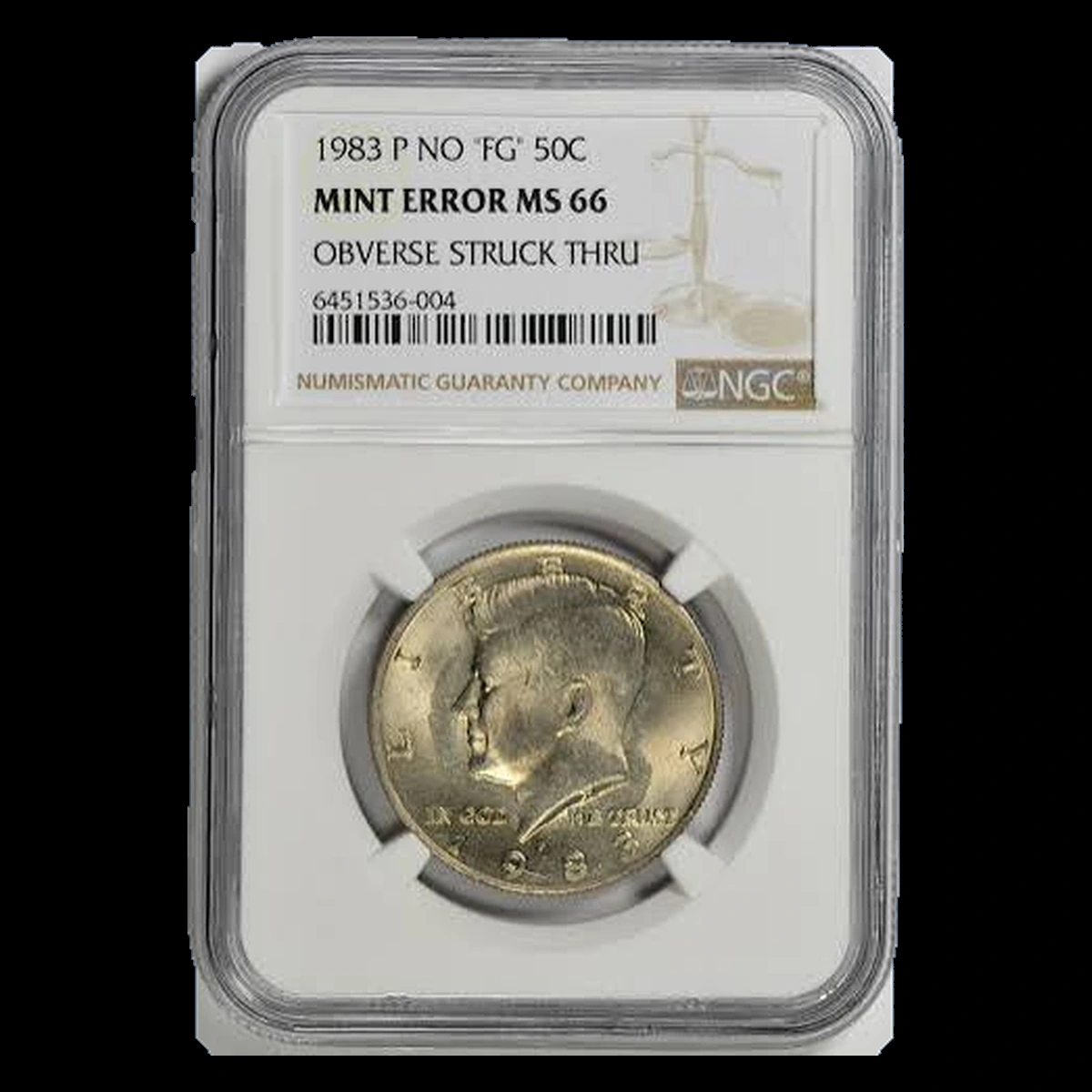
The reported 1983-P has a disturbed front patch and an extra rim outline. Material between the blank and die may have blocked the design or left an impression in the affected area.
The source does not identify that material. The extra rim also needs a separate explanation and does not alone prove a second strike.
How to Identify
Follow the patch’s boundary under slowly changing light. Compare the surface where normal detail stops with any metal pushed up around a later dent.
Photograph the extra rim separately. Without repeated design elsewhere, it cannot establish that the whole coin was struck twice.
Do not name wire or cloth without a matching impression. The local boundary is more informative than a general label.
What It’s Worth
$20–$300 is the estimate for a genuine example, from weak local detail to a clear well-preserved impression. No separate rim premium is established.
A clad 1976-D struck through material on both sides sold for $114 in March 2025. That other-year result compares the broad error class, not the reported 1983-P.
9. 1983 Half Dollar TRUST Has Extra Letter Outlines: Doubled Die Obverse Error
The reports suggest looking at TRUST and other front lettering for repeated contours. A doubled die carries those extra shapes before striking and can repeat the same pattern across coins.
No numbered 1983 variety or mint is established by the supplied account. Another date’s doubled letters do not identify this one.
How to Identify
Inspect letter ends for small splits or two rounded edges, then check neighboring letters for a consistent pattern. Change the light to distinguish physical detail from a reflection.
A flat ledge that reduces the main letter may come from movement during striking. Do not assign a variety number until the complete pattern matches a known example.
What It’s Worth
$25–$350 is the estimate for a correctly identified doubled die. Separation, preservation, and collector recognition all affect the result.
A recognized 1974-D doubled die in MS64 sold for $49 in May 2026. It is a comparison from another year, not proof of the reported 1983 feature.
10. 1983 Half Dollar The Tiny Designer Initials Are Absent: Missing FG Error
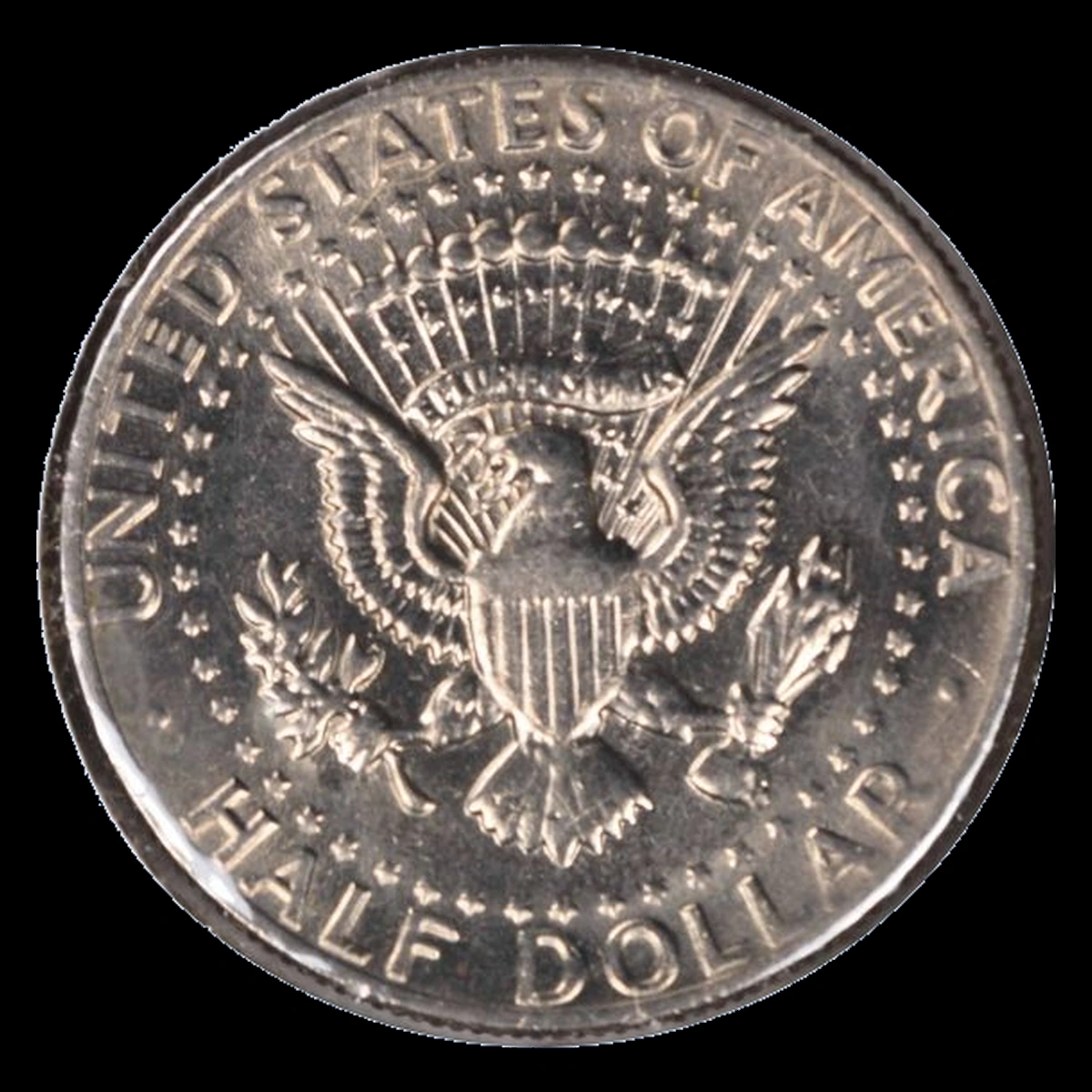
FG normally identifies designer Frank Gasparro beside the eagle’s tail feathers. A Registry owner describes a 1983-P with the initials missing because of grease during striking.
Grease can block the small die recesses, while heavy die polishing can remove them by a different process. Wear or deliberate rubbing can also erase initials after minting.
How to Identify
Use a normal reverse to locate FG, then search for faint surviving strokes under changing light. The letters must actually be absent rather than hidden by glare.
Inspect nearby feathers and the surrounding background. Broad wear or rubbing scratches tell a different story from sharply formed detail beside missing initials.
Local weakness may support a blocked die, but the owner’s proposed cause still needs evidence. An established polished-die variety is a separate comparison.
What It’s Worth
$30–$400 is the estimate, depending on preservation and why the letters are absent. A small grease omission should not automatically receive a recognized variety’s premium.
A 1982-P No FG graded MS66+ sold for $384 in May 2024. That established earlier variety does not give the owner-described 1983-P the same identity or value.
Conclusion
Use the shape of the impression to choose the next check: plain hollow, backward sunken design, and overlapping raised pictures point to different causes. Keep the edge and both faces visible so the sequence can be followed.
Several examples combine errors, but their prices still belong to whole coins. Preserve each specimen’s grade, percentage, and features instead of mixing the most dramatic details from different pieces.