Rare 1880 Dime Errors (List & Pictures)
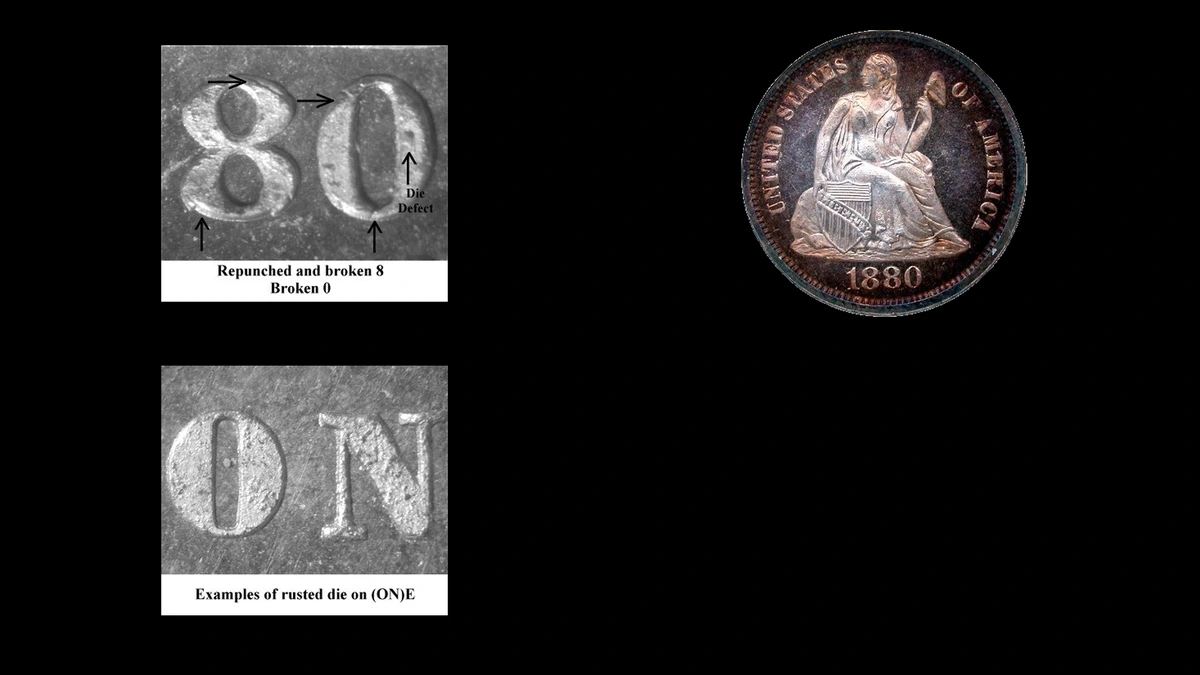
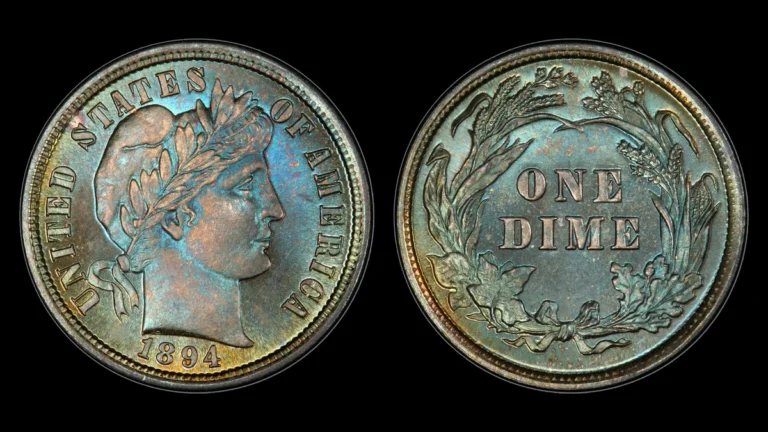
Interrupted numerals and small repeated die marks identify the 1880 dime errors in this guide. Estimated whole-coin values span $250–$5,000; a PR68 sold for $4,800 in November 2025, although that record does not establish the particular defects discussed below.
Examine the date and first S in STATES, then turn to the reverse texture and M while keeping Proof and regular-strike examples distinct.
| Location | Feature | Relevant pairing |
|---|---|---|
| Date | Interrupted second 8 or final 80 | F-101, F-102, F-102a |
| First S in STATES | Doubled outline | F-102, F-102a |
| Reverse surface | Raised texture from die rust | F-102, F-102a |
| M in DIME | Repeated die defect | F-101, F-103 |
These catalog numbers identify die pairings, so several features can belong to the same coin. The ordinary silver dime weighs about 2.50 grams, measures 17.90 millimeters, and has a grooved edge.
1. 1880 Dime Missing Portions of the Date: Broken Date Punch Error
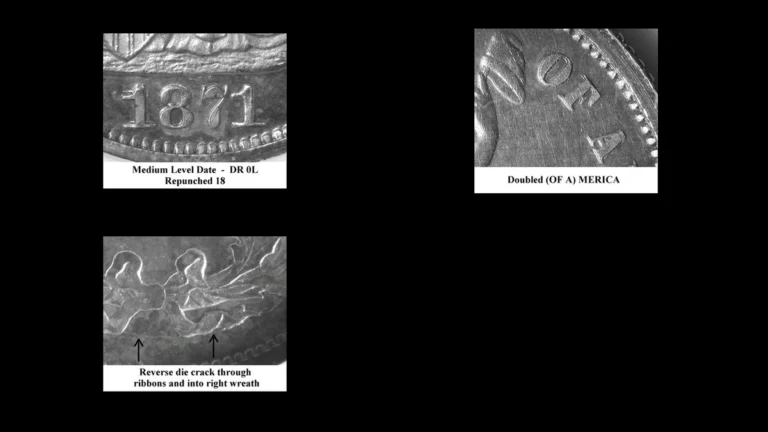
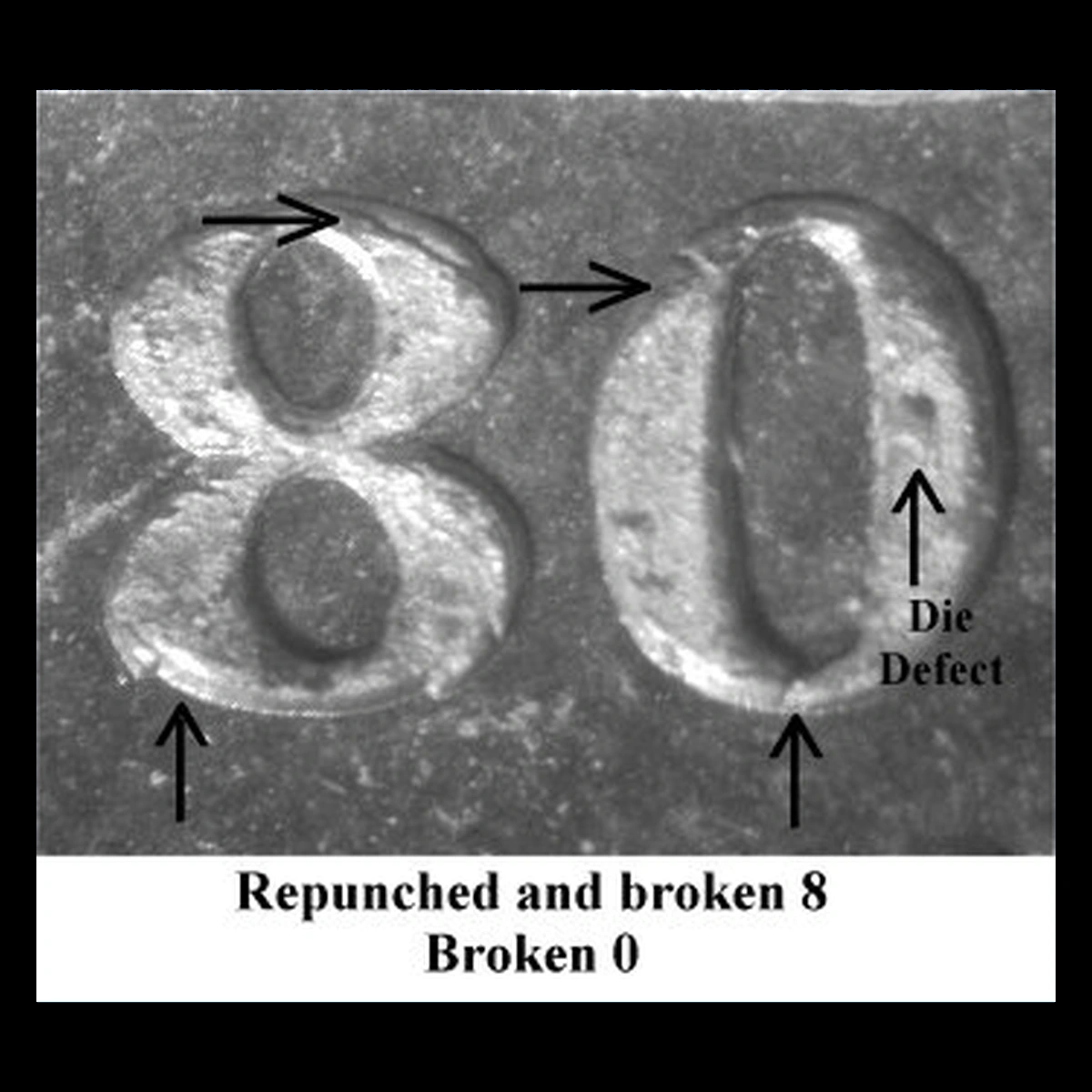
On F-101 Proofs, part of the second 8 is interrupted. The F-102 Proof and related F-102a regular strike instead show the affected final 80.
The incomplete numeral shapes were carried through the dies used to strike the coins. A complete date occurs on F-103, making it a separate comparison rather than another broken-date example.
How to Identify
Compare the entire date before concentrating on one missing stroke. Its exact shape and position should match the appropriate pairing, while surrounding numerals help assess ordinary wear.
A repeated interruption in one part of the design differs from broad flattening across exposed high points. A bright field alone does not determine whether the coin is a Proof.
What It’s Worth
Attributed examples are estimated at $250–$5,000, covering circulated regular strikes through attractive Proofs. An auction index records $660 for an F-102a graded NGC MS62 in 2024.
The $4,800 PR68 result from November 2025 supplies high-grade Proof context without confirming this date defect. Use the finish and actual preservation when selecting a comparison.
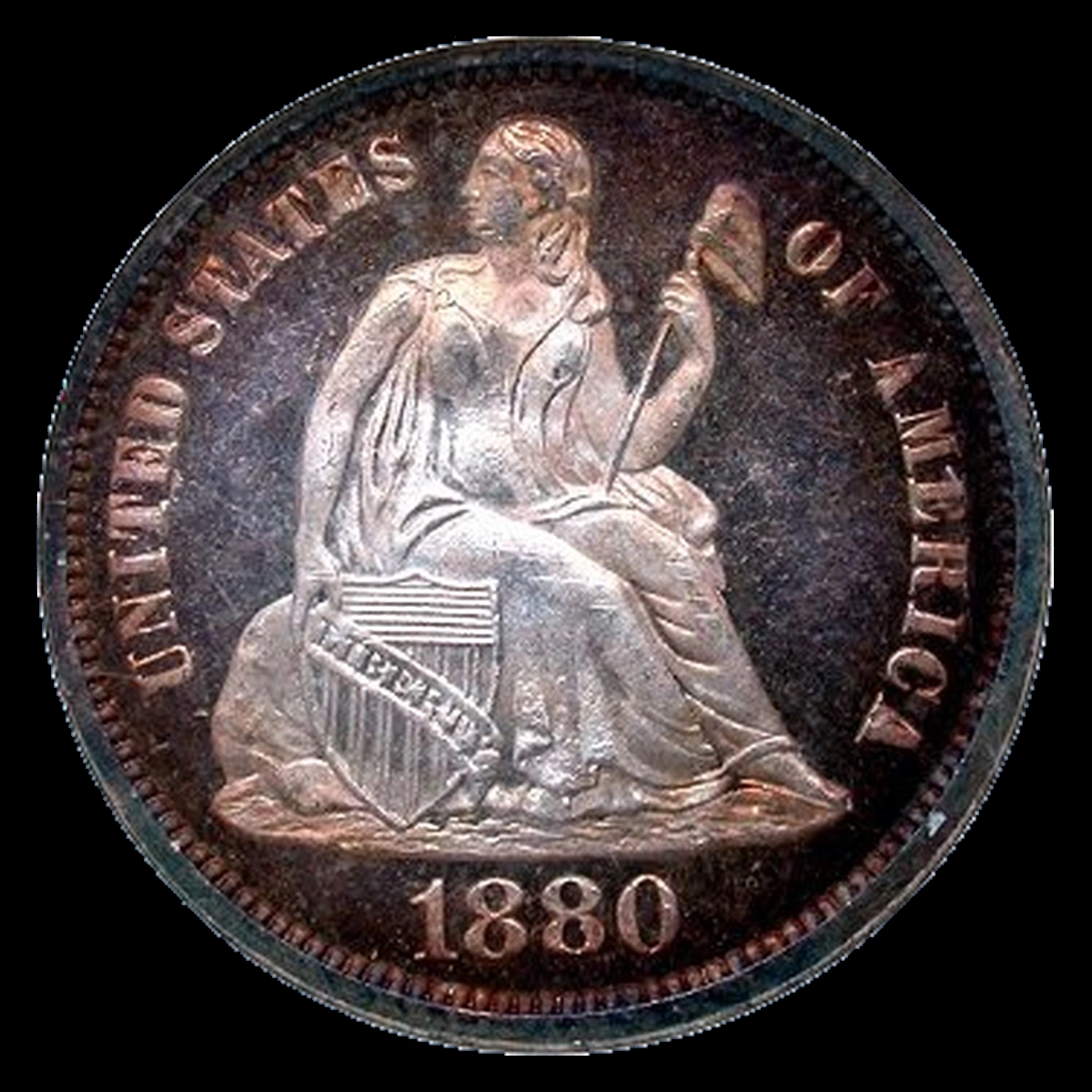
2. 1880 Dime A Second Edge on the First S: Doubled Die Obverse Error
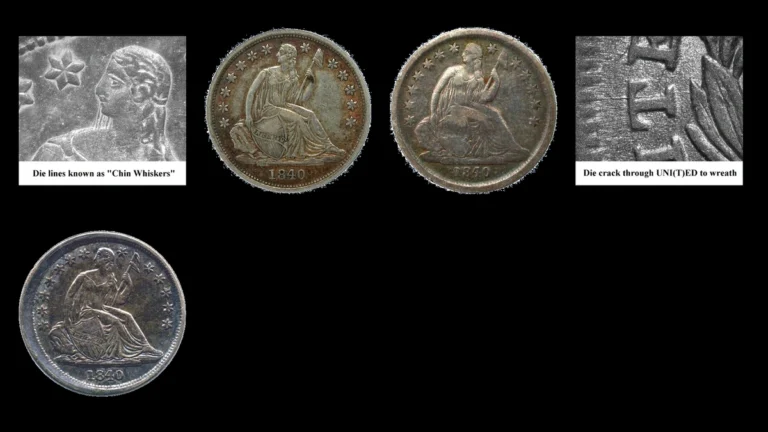
The first S in STATES carries an extra outline on the F-102 family. The feature appears on F-102 Proofs and F-102a regular strikes because it belongs to the obverse die’s design.
How to Identify
Follow the curves of the S alongside a reference at comparable magnification. Check that the added outline remains in the same position as the lighting changes.
A reflection may disappear, while movement during striking can leave a flat shelf with a different form. This localized variety does not require doubling across the entire portrait or every letter.
What It’s Worth
The working whole-coin range is $250–$5,000. The indexed $660 F-102a MS62 sale is relevant to the pairing, but does not isolate a separate price for the S.
MS62 indicates no circulation wear with noticeable marks possible. Any broken date or reverse texture on that same coin remains part of its single total value.
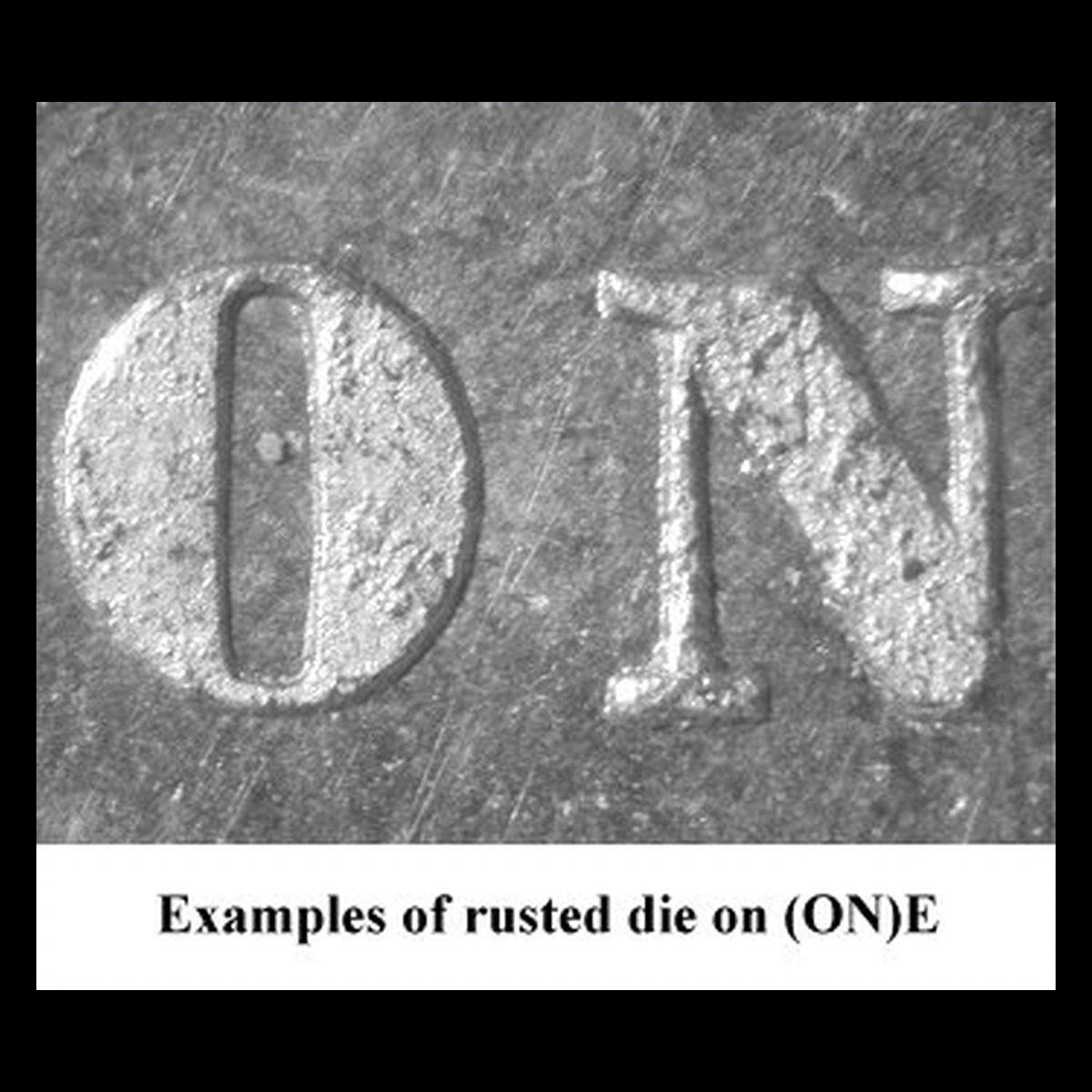
3. 1880 Dime Tiny Raised Spots on the Back: Rusted Reverse Die Error
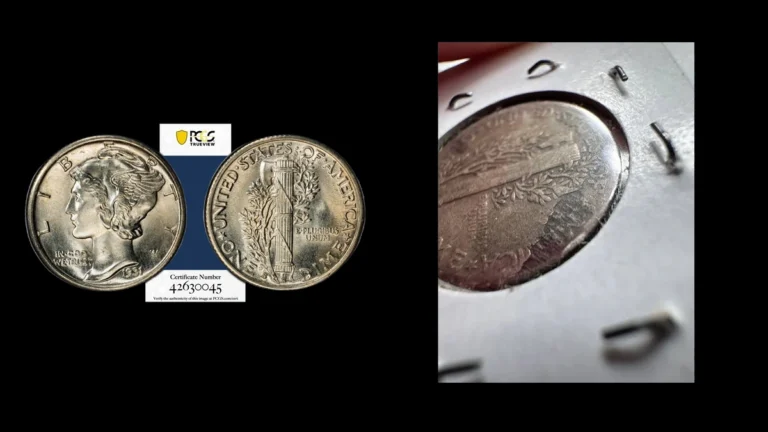
A rough-looking reverse can record rust in the tool rather than corrosion of the silver coin. Small pits in the die filled with metal during striking, leaving raised spots on the dime.
The specialist 1880 gallery identifies a rusted reverse die shared by F-102 and F-102a. Both Proof and regular-strike coins can therefore show the pattern.
How to Identify
Use side lighting to determine whether the texture rises above the surface or consists of pits cut into it. Then compare the distribution of the raised marks with the documented reverse.
Dirt can also sit above a field, and corrosion can roughen many unrelated areas. Leave the surface untouched while checking the surrounding metal and edge for those alternatives.
What It’s Worth
Correctly matched coins are estimated at $250–$5,000 according to finish and condition. The F-102a MS62 at $660 in 2024 provides one relevant whole-coin comparison.
The roughness records a die condition and does not amount to extra silver or an automatic rarity premium. A higher estimate requires the coin’s preservation and finish to support it.
4. 1880 Dime An Unusual M in DIME: Reverse Die Defect Error
The M has an altered shape on the F-101 Proof reverse, with the same back-die family also appearing in the F-103 pairing. F-103 has a complete front date, so broken numerals are not required for this reverse feature.
The catalog describes a die defect without establishing its specific cause. The repeated letter shape is the evidence, rather than a more precise explanation inferred from its appearance.
How to Identify
Keep the full word DIME visible as you compare M with the adjacent letters. A hit can push metal against the letter and residue can hide it, so examine the outline under several lighting angles without rubbing it.
Match both faces and determine the finish separately. An F-103 regular strike does not become a Proof because it shares a reverse mark with F-101.
What It’s Worth
F-101 Proofs with this feature are estimated at $400–$5,000, while F-103 regular strikes fall around $250–$2,500 in the supplied working range. The $4,800 PR68 comparison does not identify the M defect and should remain general Proof-market context.
Conclusion
Each small 1880 feature should agree with its die pairing and finish: interrupted date digits, the doubled S, raised reverse texture, or the altered M. A complete date can coexist with the reverse M defect, while other features share the F-102 family.
Use those relationships to identify the coin, then compare its whole condition and surfaces without adding separate estimates for features appearing together.