Rare 1871 Dime Errors (List & Pictures)
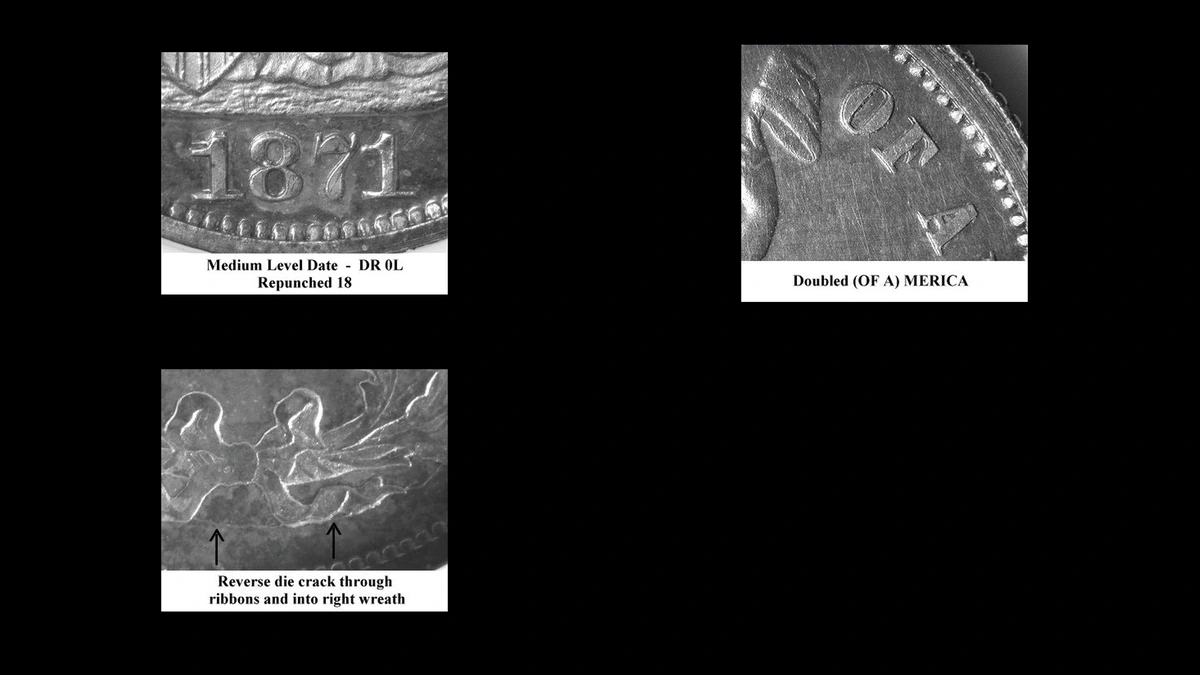
The mintmark and finish strongly influence the prices of 1871 dime errors, whose estimated whole-coin values span $30–$15,000. A cleaned Carson City dime with obverse lamination reportedly sold for $3,881 in 2010, with much of that value belonging to the scarce date and mint.
Check the date and letters, follow any raised reverse line, and examine peeling or curved surface features without assuming they share one cause.
| Area to examine | Feature | Estimated range |
|---|---|---|
| Date | Repunched numerals | $75–$1,500 San Francisco; $500–$4,000 Philadelphia Proof |
| OF and first A in AMERICA | Doubled die on F-103 Proof | $500–$4,000 |
| Lower reverse ribbons and wreath | Die crack | $30–$500 circulated; $500–$3,000 Proof |
| Carson City surfaces | Lamination or unresolved curved mark | $2,000–$15,000 whole coin |
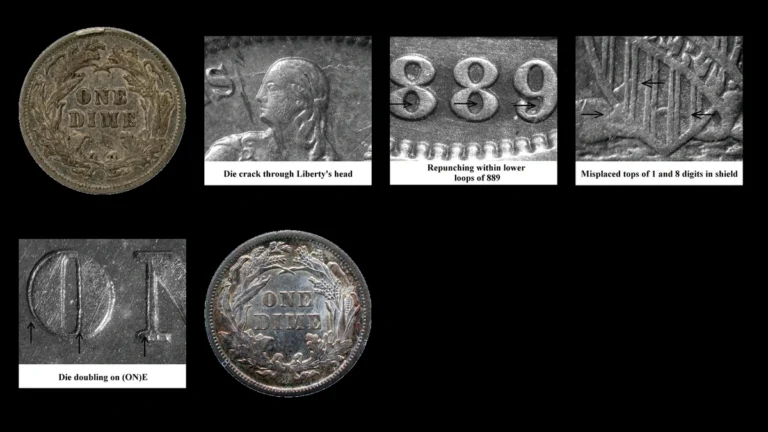
Normal 1871 dimes contain 90% silver, originally weigh about 2.49 grams, and measure 17.9 millimeters with grooved edges. The mintmark, when present, lies below the wreath; a bright surface alone does not establish Proof manufacture.
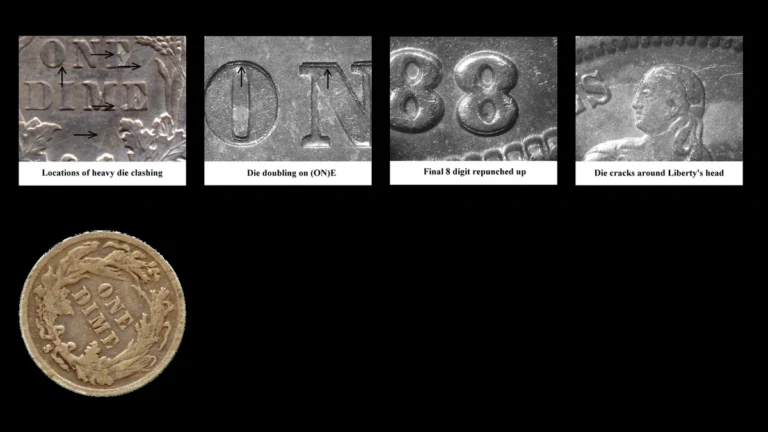
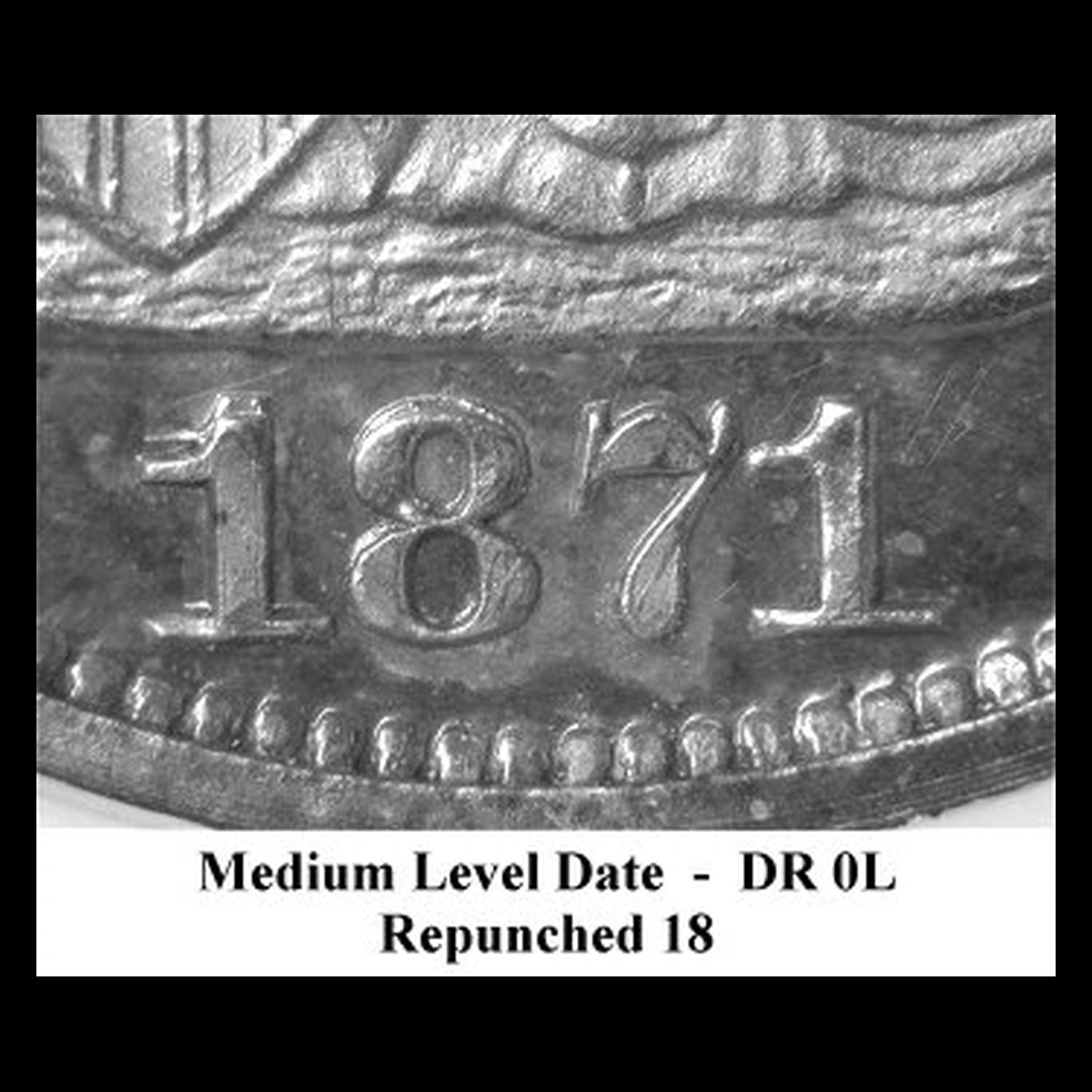
1. 1871 Dime Extra Strokes above the Date: Repunched Date Error
The Philadelphia F-101 Proof has remnants above the first 1 and above the upper loop of 8. An earlier entry of the date punch was not completely covered by the later one.
San Francisco regular strikes also have a recorded repunched 18, but their pattern needs a separate photographic match. The Philadelphia locations cannot simply be transferred to an S-mint dime.
How to Identify
Keep the complete 1 and 8 visible while comparing the extra shapes with the correct mint’s reference. Each remnant should resemble part of an earlier numeral rather than a scratch or a flat shelf.
Then confirm the rest of the coin’s identity and finish. Date repunching happened in the die and does not imply a second displaced portrait on the coin.
What It’s Worth
Philadelphia Proofs are estimated at $500–$4,000; circulated San Francisco examples have a separate $75–$1,500 range. A different-year 1869 PR65 Cameo sold for $900 in October 2024, offering general Proof context rather than a sale of either 1871 pattern.
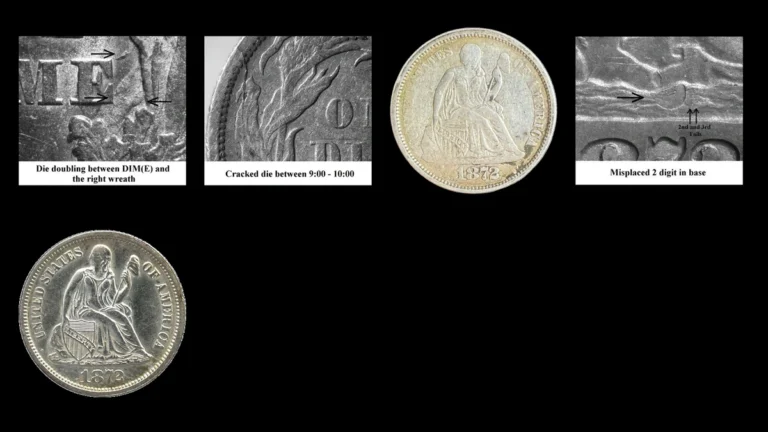
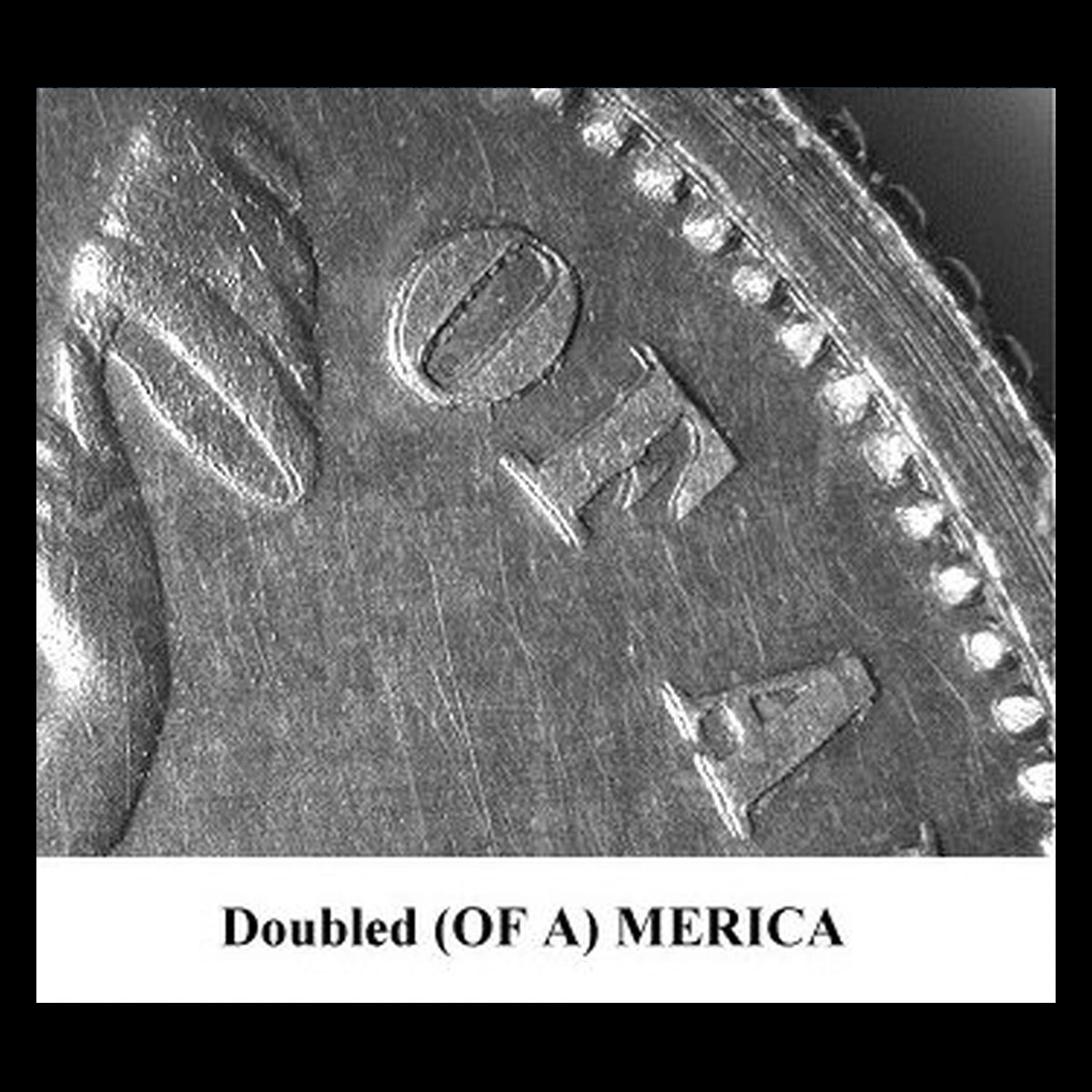
2. 1871 Dime Repeated Outlines on OF and A: Doubled Die Obverse Error
OF and the first A in AMERICA carry the recorded extra outlines on the F-103 Proof. The duplication was part of the die’s design before the coin was struck.
The related F-103a regular-strike entry describes weak lettering and a weak base, without demonstrating equally visible doubling. Weakness and a repeated outline should remain separate observations.
How to Identify
Frame OF and the adjacent A together and compare them with the F-103 reference photographs. Shift the light to see whether the second contours remain as the glare changes.
Neighboring letters provide a useful normal comparison. A cut, flat shelf, or general blur does not supply the same raised pattern, and the whole coin must independently support Proof identification.
What It’s Worth
Attributed collectible F-103 Proofs are estimated at $500–$4,000 for the complete coin. The supplied $900 result for an 1869 PR65 Cameo is nearby-year market context, not a recorded F-103 transaction.
A regular strike with weak letters should not receive this Proof estimate solely because its catalog number is related. The clarity of the actual doubling and the surfaces both matter.
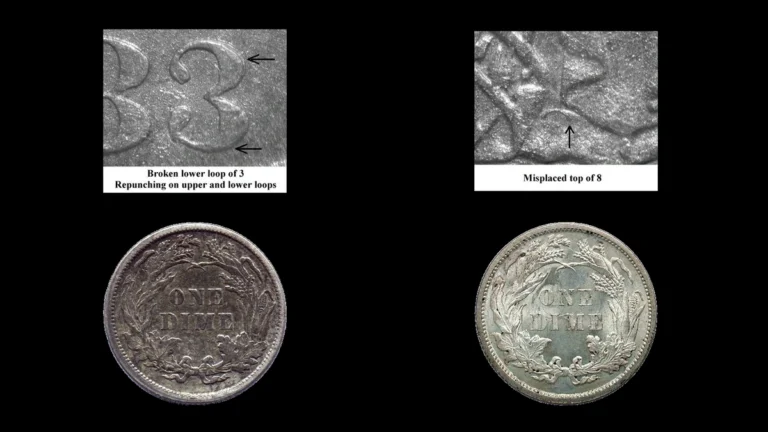
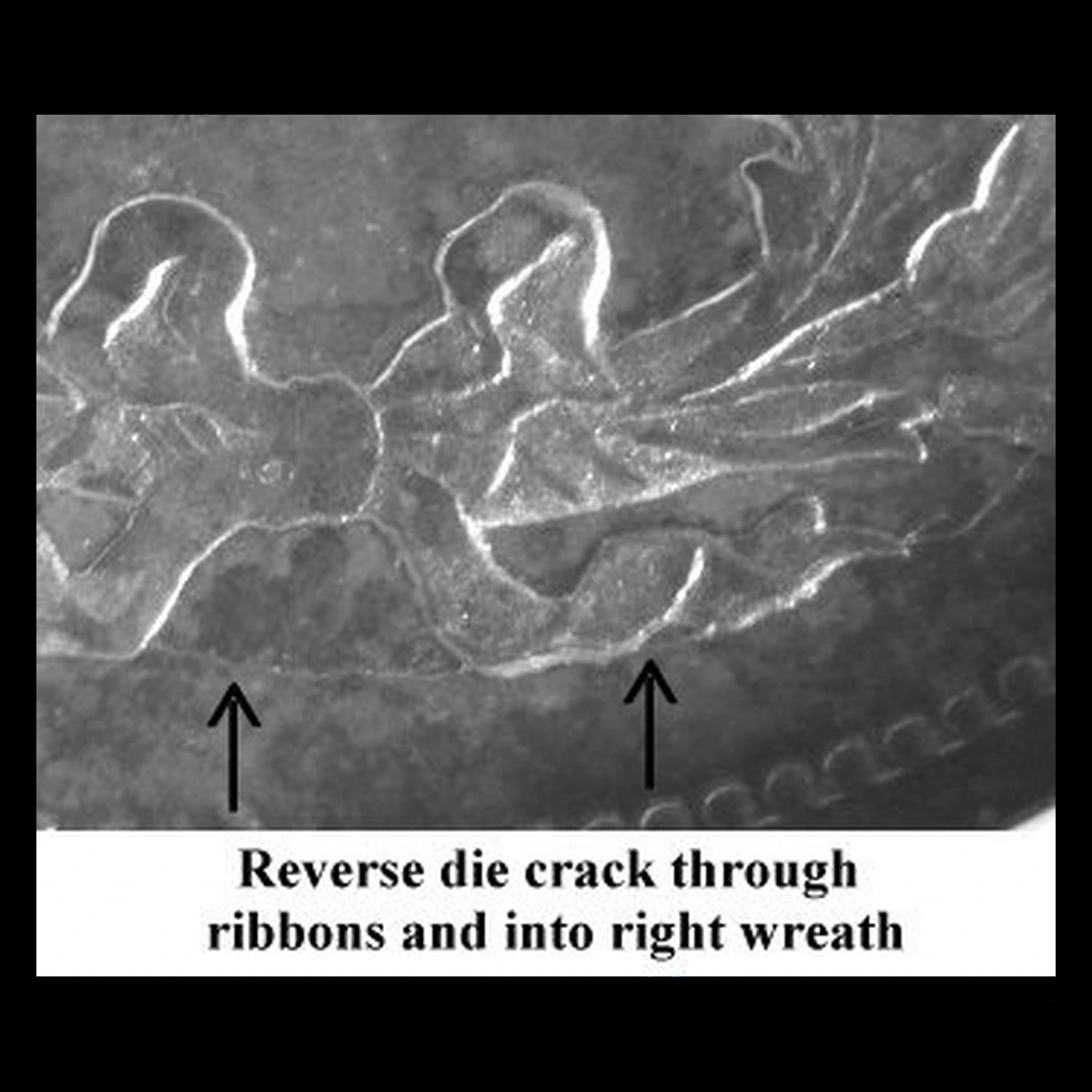
3. 1871 Dime A Line through the Ribbons and Wreath: Reverse Die Crack Error
A raised line crosses the lower reverse ribbons and wreath on recorded Philadelphia pairings. It occurs on F-101 and F-102 Proofs and on F-102a regular strikes.
Silver flowed into an opening in the cracked die and formed a ridge during striking. The shared tool feature does not establish the finish, because a die used for Proofs could later strike ordinary coins.
How to Identify
Trace the continuous line through the lower design under side lighting. It should rise from the surface rather than cut down like a scratch or lift away like peeling metal.
Compare both complete faces with an appropriately identified Proof or regular strike. Polishing a circulated coin can brighten it without reproducing the original manufacturing finish.
What It’s Worth
Circulated Philadelphia pieces are estimated at $30–$500, with collectible Proofs around $500–$3,000. The 1869 PR65 Cameo at $900 illustrates another year’s Proof market and does not assign a separate price to this crack.
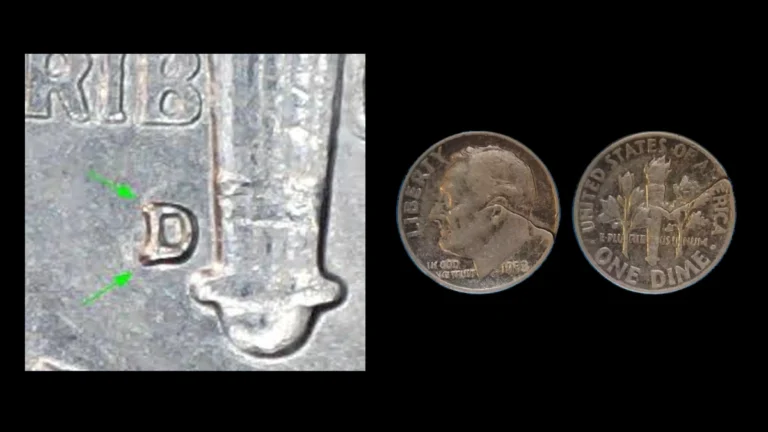
4. 1871 Dime Separation within the Front Metal: Obverse Lamination Error
A reported 1871-CC auction coin had peeling obverse metal and signs of cleaning. Lamination describes separation within the original alloy; cleaning records later treatment of the surface.
This is silver alloy throughout, so its flaw is not missing copper-nickel cladding. The brief auction report gives no exact front location or confirmed attached flap.
How to Identify
Confirm the date and CC mintmark, then inspect the separation boundary for a thin lifted edge or a split continuing beneath the surface. Photograph any attached metal without pulling it up.
Corrosion pits and parallel cleaning lines need different descriptions from a natural metal separation. If cleaning is present alongside genuine lamination, retain both facts in the condition assessment.
What It’s Worth
Comparable circulated Carson City pieces with heavy to moderate wear are estimated at $2,000–$15,000. A 2010 auction column reported $3,881 for the cleaned, laminated example.
The scarce 1871-CC issue and its condition dominate that figure. An original peeling flaw may interest a specialist but does not automatically increase the coin’s value, particularly when cleaning or a conspicuous defect reduces other collectors’ interest.
5. 1871 Dime A Curve Extending from the Edge: Reported Surface Mark Error
Brad Holt illustrated two Carson City dimes in 2015 with similar curved marks, one on an obverse and the other on a reverse. The nickname “banana lamination” accompanied a question about their origin rather than a confirmed diagnosis.
The appearance alone does not settle whether metal separated or whether the starting blank had another problem. Neither illustrated coin is identified as the cleaned example from the 2010 auction report.
How to Identify
Compare the two specimens in the 2015 photographs independently. Follow each curve inward from the edge and record whether its boundary rises, sinks, or lifts like a layer.
Light from opposite directions can help reveal that structure without scraping the coin. Examine nearby edge grooves for cutting or impact before proposing a manufacturing explanation.
What It’s Worth
The $2,000–$15,000 estimate concerns a genuine circulated 1871-CC dime with heavy to moderate wear, with no extra premium assigned to the nickname. The $3,881 lamination result gives scarce-date context but is not a sale of either curved-mark specimen.
Conclusion
On an 1871 dime, the mintmark and finish determine which references are useful before the unusual feature is priced. Match specific numeral or letter outlines, distinguish raised cracks from alloy separation, and keep unresolved curves described by their visible structure.
The Carson City reports concern separate specimens, and a memorable nickname should not replace the evidence needed to explain a mark’s origin.