Rare 1928 Dime Errors (List & Pictures)
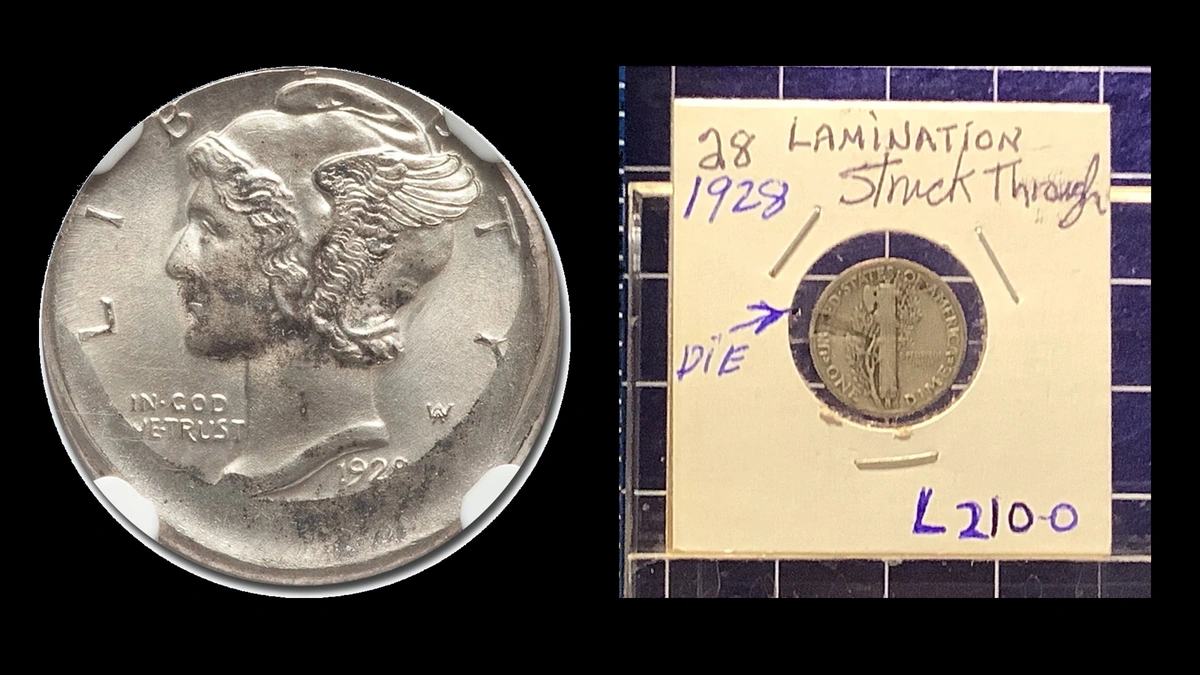
Missing metal, lifting metal, and displaced design point to different 1928 dime errors. Estimated values span $25–$1,500, with an off-center 1928-S graded NGC MS65 bringing $1,086 in August 2020.
Examine the entire outline first, then the surface and rim boundaries that reveal how each feature formed.
| Visible evidence | Error to investigate | Estimated value |
|---|---|---|
| Design cut off beside blank metal | Off-center strike | $150–$1,500 |
| A section absent from the outline | Clipped planchet | $50–$350 |
| A thin surface sheet separates | Silver-alloy lamination | $25–$200 |
| A raised patch reaches the rim | Rim cud | $50–$400 |
1. 1928 Dime The design ends beside an unstruck crescent: Off-Center Strike Error
A misplaced blank can receive only part of the dies’ designs. The finished dime then combines an incomplete struck picture with an area that remained blank.
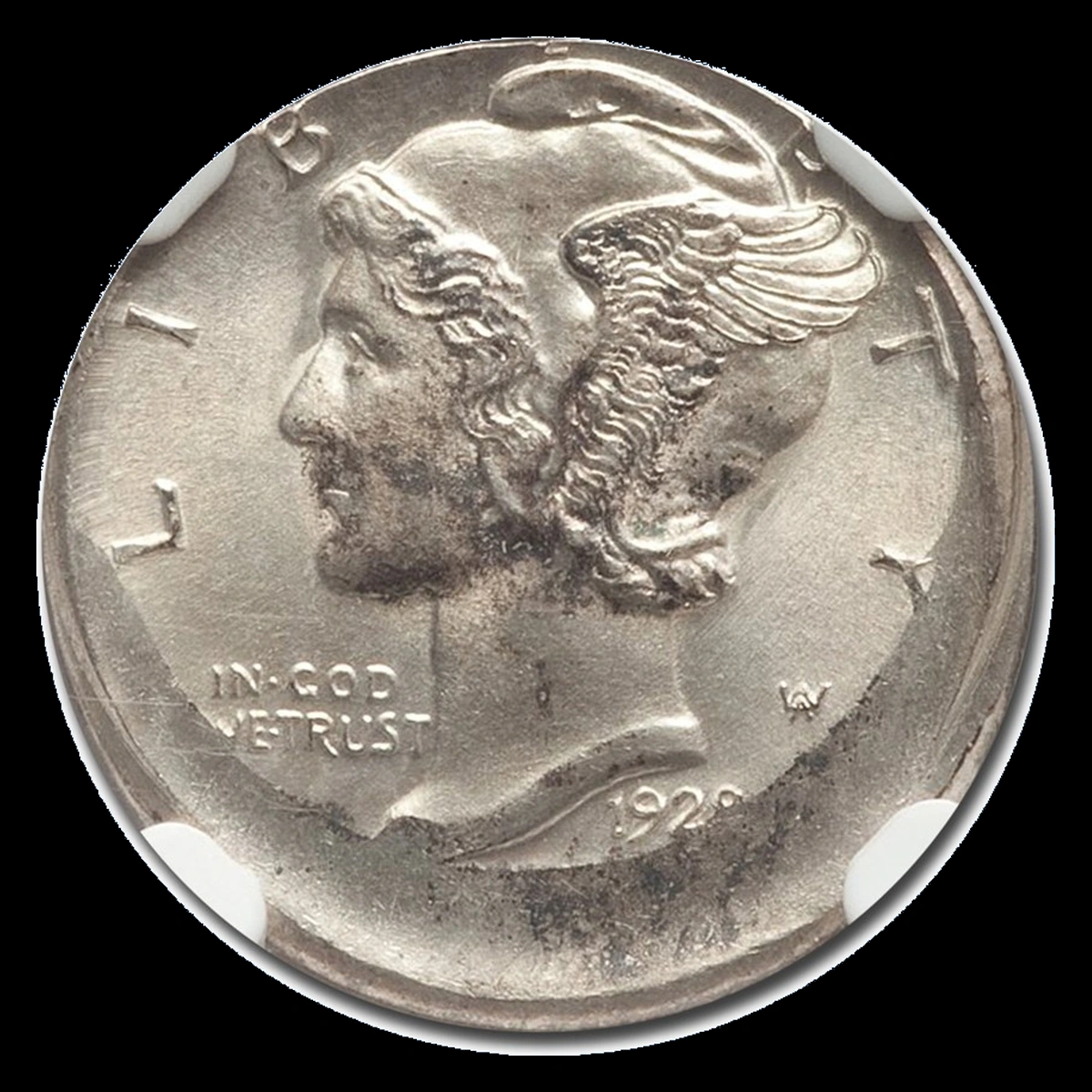
The recorded 1928-S sold in 2020 at NGC MS65. A separate earlier example was described as 15% off center and graded MS63 Full Bands; those details should remain attached to that other coin.
Full Bands describes clearly separated horizontal bands on the reverse bundle. It is a strike-detail designation, not an additional error.
How to Identify
Photograph the whole coin, including the unused metal, and compare both faces. The displaced design must be interrupted beside the original unstruck area, rather than simply appearing uneven inside a wide rim.
Check how much of the date and S mintmark remains readable. Those details establish the identity of the coin even when the strike has omitted other parts of the design.
If Full Bands is claimed, examine the band separation independently. Do not transfer a percentage or designation from another example merely because the overall outline looks similar.
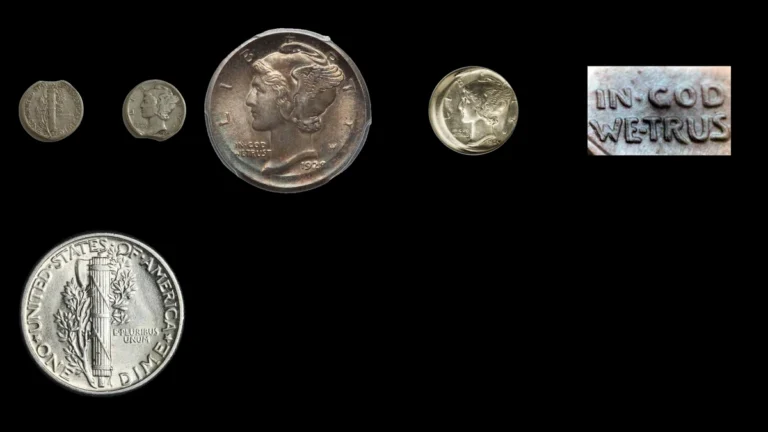
The normal 90% silver Mercury dime started at 2.50 grams and 17.9 millimeters, with a grooved edge. Measurements and an edge examination of an accessible coin can help identify later cutting or flattening, though errors can change its final shape.
What It’s Worth
The estimate is $150–$1,500 for worn through attractive unworn examples. The NGC MS65 example sold for $1,086 on August 12, 2020.
MS65 indicates an unworn coin with relatively few marks. Its surface preservation, visible identity, and displacement belong together in the comparison.
A larger blank crescent does not necessarily mean a higher price. Heavy wear or a difficult date can limit a coin’s appeal despite a dramatic shift.
2. 1928 Dime A curved or straight section is absent: Clipped Planchet Error
An incomplete blank has a missing section before the design is struck. An overlapping blanking punch can leave a curved gap, while cutting across the end or side of a metal strip can leave a straighter missing section.
Both shapes are reported in the supplied 1928 dime error list. That report does not identify a particular mint or a measured clip percentage.
The key question is timing: a clipped planchet was already incomplete at the press. A later saw cut removes metal from a coin that had already received its design.
How to Identify
Inspect both points where the gap meets the surviving rim. Metal flow and rim formation around an original clip can differ from the abrupt cut through a finished edge made by a later tool.
Under a 10× magnifier, look for file or saw marks and compare both faces. A weak rim opposite the gap can support a genuine clip, although it is not visible on every example.
Measure across intact portions if possible and consider the weight alongside the missing area. Reduced weight alone cannot establish that the section was absent before striking.
What It’s Worth
The estimated range is $50–$350, from worn examples through lower unworn grades. No exact 1928 sale is assigned to the report.
A 1943 Mercury dime with a 10% curved clip sold for $264 in July 2021 at NGC MS63 Full Bands. That is a different-year coin, unworn with noticeable marks and clearly separated reverse bands.
Its percentage and grade do not describe the unspecified 1928 example. A smaller or less attractive clip can warrant a lower comparison.
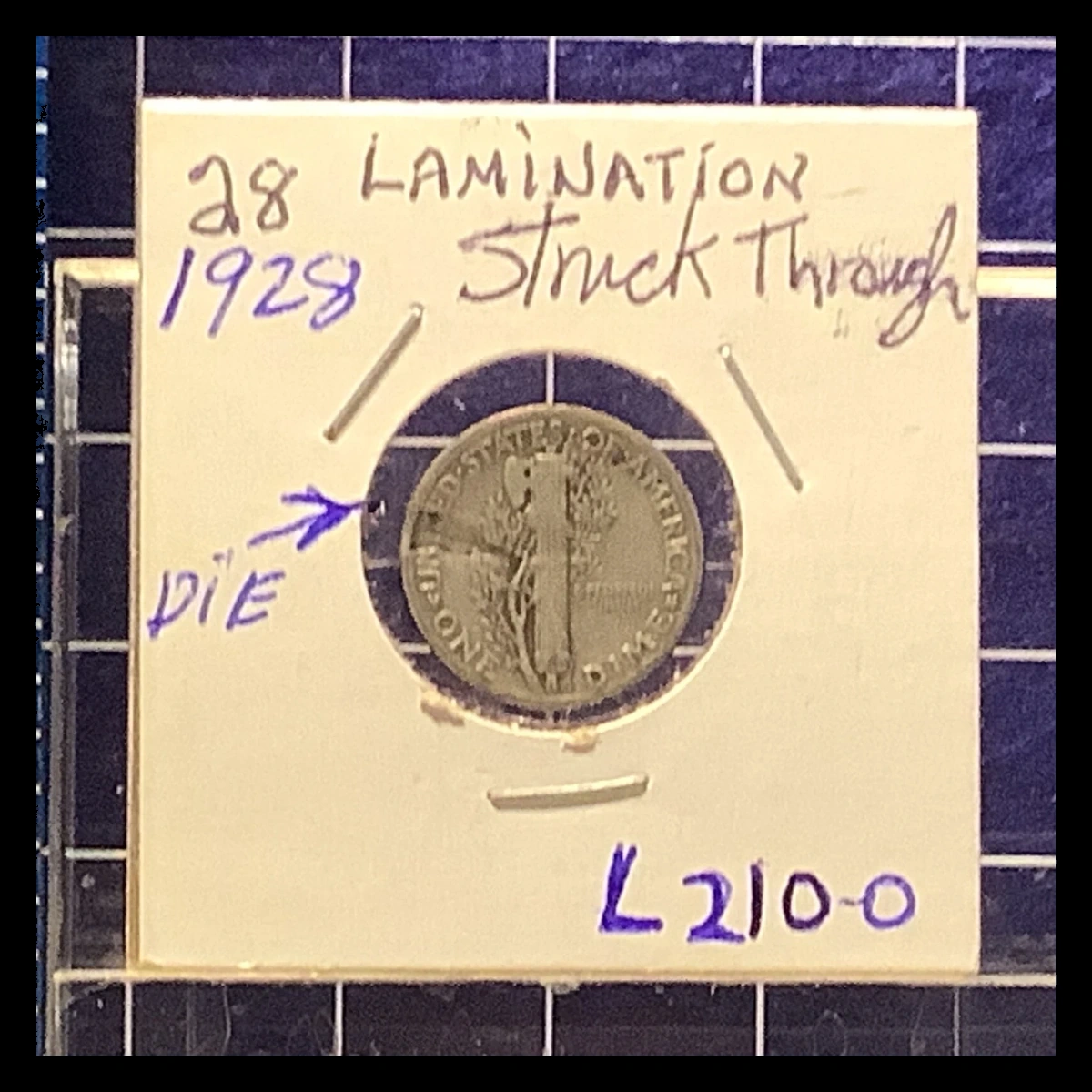
3. 1928 Dime A thin flake lifts from the surface: Silver-Alloy Lamination Error
The 1928 dime contains silver and copper mixed throughout its metal. It does not have the separate outer layers and copper center of a modern clad dime.
A weakness within that alloy can allow a thin sheet to separate from the surface. The resulting lamination may remain attached or leave an area where the flake has naturally detached.
The supplied report does not identify a mint, fixed location, or particular graded specimen. Those details must come from the actual coin being examined.
How to Identify
View the separation from a low angle without moving the flap. Look for a thin sheet following a natural boundary within the metal.
Do not insert a tool beneath it or pull it away. The attachment and boundary help explain the feature, while removing it can destroy useful evidence.
Compare the surrounding surface with a gouge or corrosion patch, which may have different edges and texture. A small attached flake may produce little measurable weight difference, making its physical structure more useful than the scale reading.
What It’s Worth
A worn 1928 dime with a clear original lamination has an estimated $25–$200 range. This is guidance rather than a recorded sale of a named specimen.
Small separations generally sit toward the lower end. A larger attached flap or naturally missing area can draw more interest when the surrounding coin remains appealing.
Deliberately enlarging the missing area does not reliably increase value. It changes the original feature and can damage the coin.
4. 1928 Dime A raised mass joins the edge: Rim Cud Error
A cud replaces normal design with raised metal connected to the rim. It forms when a rim-side fragment breaks away from a die, the steel stamping tool, and silver fills the opening during the strike.
The 1928 report names the error class without specifying a side, mint, or precise location. A small internal bump is not automatically the same feature.
How to Identify
Begin at the rim and follow the raised patch inward. Observe where ordinary design ends at the patch’s boundary.
Change the lighting to examine the boundary and neighboring edge. An impact can push metal upward, while added solder can create a lump without any broken die.
A genuine cud uses the coin’s existing metal rather than attaching a new piece. The rim connection and relationship to the struck design are more informative than the lump’s size alone.
What It’s Worth
The estimated range is $50–$400 for worn through unworn examples. There is no specific 1928 auction result attached to this report.
A small break with limited visual effect generally belongs near the lower end. A larger, clearly formed patch can attract more interest, subject to the whole coin’s condition.
An interior die chip or a damaged rim should not receive this estimate solely because a seller uses the word “cud.” Establish the rim-connected break first.
Conclusion
Each boundary answers a different question: unstruck metal shows displacement, a gap tests the blank’s original shape, a thin flap reveals alloy separation, and a raised rim patch suggests die failure. Preserve those boundaries in photographs and handling.
The $25–$1,500 estimates combine documented and broadly reported categories. Keep the $1,086 sale tied to its specific 1928-S rather than applying it to every unusual dime.